by TCMVET | Feb 8, 2026 | Dog Cancer & Tumors
What “spindle cell” means in dogs
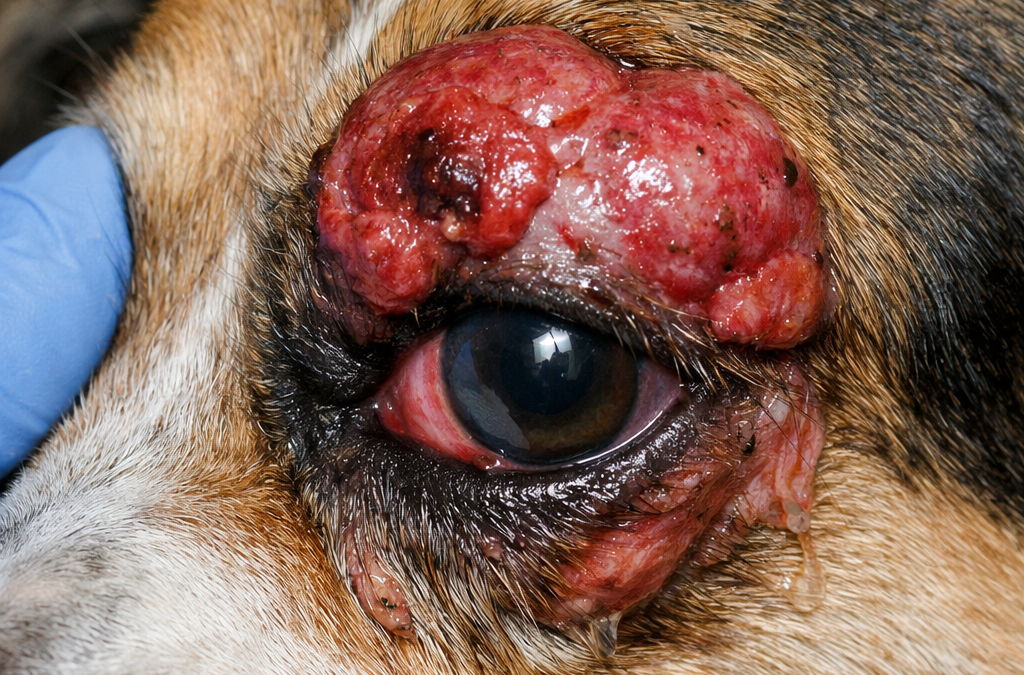
“Spindle cell” usually describes how tumor cells look under the microscope—long, tapered, and fibrous—rather than naming a single cancer type. In dogs, this description often overlaps with soft tissue sarcomas (STS) and related sarcoma-type tumors, which are known for local invasiveness: they can extend microscopically beyond what you can see or feel. That growth pattern is one big reason local recurrence becomes a key concern.
How rare is a spindle cell tumor near the eye?
It depends on whether the mass is a superficial eyelid growth or a deeper periocular/orbital tumor.
Many canine eyelid tumors are common and often benign, which is reassuring in everyday eye practice. However, a malignant spindle-cell/sarcoma-type tumor that is fast-growing or deep around the eye is a different scenario. Orbital and retrobulbar disease (disease in the eye socket or behind the globe) is less common than simple eyelid bumps and typically demands more complex planning.
Symptoms owners commonly notice
A tumor “over the eye” can look like a firm lump or swelling near the brow or eyelids, but deeper disease may show up through function changes. Dogs may squint, tear excessively, develop persistent discharge, rub at the eye or face, or seem head-shy. If the orbit is involved, classic signs can include exophthalmos (a bulging eye), third eyelid protrusion, and pain around the eye.
Pain and suffering: how much does it hurt?
Pain varies widely and is driven by what the tumor is doing locally.
A mass can become very uncomfortable if it distorts eyelid position or causes chronic corneal irritation with blinking. Veterinary ophthalmology guidance notes that eyelid masses often enlarge over time and can irritate the ocular surface, affecting comfort and quality of life. Orbital disease can also be painful—especially when swelling, pressure, or inflammation is present—and pain is frequently mentioned among the clinical signs in orbital conditions.
Why treatment near the eye is so challenging
For sarcoma-type tumors, the goal is usually strong local control, because microscopic tumor “fingers” can extend beyond what looks abnormal. On the trunk or limbs, surgeons often aim for wider margins to remove those invisible extensions. Around the eye, wide margins can be hard to achieve without damaging critical structures, which is why doctors may sound cautious about guarantees.
Treatment options: what’s typically considered
Most treatment plans revolve around local control and comfort, often combining multiple approaches.
Surgery is commonly the cornerstone when feasible, both to remove tumor burden and to obtain definitive pathology. For canine soft tissue sarcomas, completeness of excision strongly influences outcomes; reviews emphasize that incompletely excised tumors carry higher local recurrence risk. In some cases, surgeons may recommend more radical procedures to achieve control in difficult locations (including surgeries involving the orbit) because certain sarcomas can require radical approaches when anatomy limits margin width.
Radiation therapy is often discussed when margins are close or incomplete, or when anatomy makes wide excision impossible. It is used with the intent of controlling microscopic residual cells and lowering the chance of regrowth, though results vary by tumor behavior, dose planning, and the specifics of each case.
Recurrence risk: what the research repeatedly points to
Across canine STS literature, two drivers show up again and again: histologic grade and margin status.
A review on incompletely or narrowly excised canine STS reports published recurrence rates roughly in the 17%–37% range across studies, illustrating why “clean margins” matter so much. Another widely cited overview notes that with complete excision, local recurrence in dogs can be very low, and incomplete margins increase recurrence risk substantially.
Survival outlook and “survival timeline”: the practical way to think about prognosis
Because “spindle cell tumor” can represent multiple tumor types, survival time can’t be reliably summarized with one number. A more dependable way to understand prognosis is to anchor expectations to what most strongly predicts behavior:
A lower-grade tumor that can be completely controlled locally generally carries a better outlook than a higher-grade tumor or one that can’t be fully removed due to location. In canine STS, metastatic risk is commonly described as grade-dependent, with higher-grade tumors carrying a meaningfully higher chance of spread over the course of disease. In periocular tumors specifically, “how well local disease can be controlled” often becomes the dominant factor shaping both quality of life and overall outcome.
What owners can do early that often matters (without getting lost in details)
The most useful focus points early on are confirming the true extent of disease and protecting comfort.
Advanced imaging such as CT or MRI is frequently recommended in orbital/periocular cases because routine exams can’t always show what’s happening behind the eye, and imaging helps guide surgery and radiation planning. Comfort is also central: periocular tumors can trigger corneal irritation and inflammation, and reducing rubbing/trauma and addressing eye-surface irritation can make a meaningful difference in day-to-day wellbeing.
FAQ: quick answers pet owners search for
Is every tumor near the eyelid malignant?
No. Eyelid tumors are common in dogs and many behave in a benign way, although any fast-growing, ulcerated, bleeding, or painful mass needs prompt evaluation.
Why would a vet recommend removing the eye?
When a tumor is deeply invasive or margins can’t be achieved safely, more aggressive local surgery may be recommended to improve local control in a region where space is limited.
Why can’t surgery and radiation guarantee it won’t come back?
Sarcoma-type tumors can extend microscopically, and around the eye it may be difficult to remove enough surrounding tissue. Incompletely excised STS has documented recurrence risk in multiple studies.
What most strongly predicts prognosis?
Pathology grade and whether the tumor was removed with clean margins are repeatedly highlighted as major drivers of recurrence and spread risk in canine STS.
How Baituxiao may help as supportive care
Periocular spindle cell tumors are usually managed with local control first—most often surgery, and sometimes radiation—because these tumors can be locally invasive and the eye region limits wide margins. In that setting, many owners also consider integrative supportive care to help maintain comfort, appetite, and overall quality of life alongside the primary treatment plan.
Baituxiao is a TCVM botanical formula positioned by the manufacturer for dogs and cats with “tumors and lumps,” and it is typically discussed as an adjunct option rather than a stand-alone solution. Because botanical formulas can interact with medications used around surgery, pain control, inflammation, or oncology care, it’s best used as part of a coordinated plan with the veterinary team.
by TCMVET | Dec 23, 2025 | Dog Cancer & Tumors
soft tissue sarcoma is a term that can sound overwhelming when a veterinarian first mentions it, yet understanding what it means—and what it doesn’t mean—can empower dog owners to make thoughtful decisions. These tumors arise in connective tissues such as muscle, fat, or nerves and often behave differently from other dog tumors. While every dog is unique, having a reliable cancer guide helps you process information calmly and support your companion with confidence. This article provides a comprehensive, reader-friendly resource on the topic, blending clear science with practical tips for daily life.
—
Understanding Dog Tumors and the “Soft Tissue Sarcoma” Category
Dog tumors come in many forms. Some are benign and remain localized, while others are malignant and may spread. Soft tissue sarcoma is a broad category of malignant tumors that develop in tissues like cartilage, blood vessels, or lymphatic structures. Although veterinarians consider these tumors a significant diagnosis, they often describe them as slow-growing and locally invasive rather than aggressive travelers through the body.
Why These Tumors Can Be Tricky to Identify
Soft tissue sarcomas frequently develop under the skin, meaning they may not be visible or painful at first. Owners often notice a subtle lump that slowly enlarges over weeks or months. Because these growths are firm but not always attached to skin, they can shift slightly under pressure, which sometimes leads owners to assume they are harmless fatty lumps. However, early veterinary evaluation is key because these tumors can invade nearby tissues, making later removal more complex.
—
How Veterinarians Approach a Cancer Guide for Suspected Sarcomas
When a veterinarian suspects a soft tissue sarcoma, they typically recommend diagnostic tests to understand the tumor’s behavior. Common steps include:
– Physical examination: Evaluating size, firmness, and location.
– Fine-needle aspiration (FNA): Taking a small cell sample with a thin needle.
– Biopsy: Removing a piece—or occasionally the entire mass—for laboratory analysis.
– Imaging: X-rays, ultrasound, or advanced scans to assess surrounding structures.
These tests help determine whether the tumor is malignant, what grade it might be, and how involved local tissues are. Owners often find comfort knowing that this information guides personalized treatment plans.
—
The Grading System: A Key Part of Any Dog Tumor Cancer Guide
Grading describes how abnormal the tumor cells look under a microscope and how they might behave. While terminology varies, most soft tissue sarcomas are graded on a scale (for example, low, intermediate, or high). Understanding grades is essential:
– Low-grade sarcomas tend to grow slowly and stay local. They may be easier to manage surgically.
– Intermediate-grade sarcomas require more careful monitoring, as they can behave unpredictably.
– High-grade sarcomas show more aggressive tendencies, so veterinarians often suggest closer follow-up and additional testing.
Even within the same grade, every dog is different. That’s why a personalized cancer guide combines pathology results with overall health, age, and lifestyle considerations.
—
Treatment Considerations Without Making Medical Claims
Veterinary teams discuss several management options based on the tumor’s size, location, and grade. While this article avoids medical advice or promises, it’s helpful to know the general considerations:
– Surgical planning: Removing the tumor with clean margins is often the primary goal. Because soft tissue sarcomas can push into surrounding tissues, surgeons sometimes plan wider removal around the lump to reduce local recurrence.
– Adjunctive therapies: Depending on the veterinarian’s advice, additional options may include radiation or other modalities aimed at supporting local control. Veterinarians weigh potential benefits with quality-of-life goals.
– Palliative approaches: If a tumor cannot be removed or an owner chooses not to pursue aggressive intervention, veterinarians focus on maintaining comfort through symptom management and supportive care.
It’s important to discuss all questions with your veterinary team. They can explain each option, potential risks, and realistic outcomes so you feel informed without facing pressure.
—
At-Home Observation Tips for Dog Owners
Keeping meticulous notes helps you monitor changes and relay details to your veterinarian. Consider these tips:
1. Create a tumor log: Record the date you first noticed the lump, its approximate size, and any changes in texture or mobility.
2. Photograph the area: Images help track subtle changes. Include a coin or ruler for scale.
3. Note behavioral shifts: Pay attention to appetite, energy level, or reluctance to perform usual activities.
4. Stay consistent with follow-ups: Regular appointments help your veterinarian evaluate progress and discuss next steps promptly.
These simple practices ensure you stay engaged in your dog’s care plan and make it easier for veterinarians to assess the tumor’s trajectory.
—
Soft Tissue Sarcoma in Dogs: Preventing Common Misunderstandings
Many myths circulate about dog tumors. Here are a few clarifications:
– “If it’s not painful, it’s harmless.” Pain is not a reliable indicator. Some malignant tumors remain painless until they affect nearby structures.
– “Lumps that move can’t be dangerous.” Soft tissue sarcomas often feel movable under the skin, so mobility alone is not reassuring.
– “All large breeds are at higher risk.” While certain breeds may have predispositions, soft tissue sarcoma can occur in any dog, regardless of size or age.
– “Waiting to see what happens is safe.” Early evaluation is always best. Veterinary professionals can help you decide whether monitoring, testing, or intervention is appropriate.
By setting realistic expectations, you avoid unnecessary anxiety and focus on actionable steps.
—
Lifestyle Support and Practical Care Tips
Supporting a dog diagnosed with soft tissue sarcoma involves attention to overall well-being. Consider these practical suggestions:
Healthy Routine
– Consistent feeding schedule: Stable routines help dogs feel secure.
– Balanced nutrition: Follow your veterinarian’s dietary recommendations. If your dog has specific needs, ask about appropriate foods or supplements.
– Moderate exercise: Keep your dog active with gentle walks or low-impact play, adjusting according to energy levels.
Comfort Measures
– Cozy resting spaces: Provide soft bedding and make sure favorite spots are easily accessible.
– Gentle grooming: Regular brushing ensures you notice any new lumps and keeps skin healthy.
– Mindful handling: Avoid pressing on the tumor area to prevent irritation.
Emotional Support
Dogs sense owner emotions, so maintain a calm, encouraging presence. Enjoy routine activities together, such as short walks, games, or quiet cuddle sessions. Remember, a diagnosis does not define your dog’s joy or your bond.
—
Working with a Veterinary Team
Collaboration with your veterinarian (and any specialists they recommend) is crucial. Here’s how to keep communication clear:
– Bring notes to appointments. Jot down questions beforehand to ensure you address every concern.
– Ask for explanations in simple terms. Veterinarians expect this and appreciate proactive engagement.
– Clarify follow-up schedules. Confirm when to return for rechecks and what signs require immediate contact.
– Discuss financial planning. Many veterinary teams can outline approximate costs for diagnostics, procedures, or supportive care so you can plan ahead.
A good veterinary partnership emphasizes shared decision-making and respects your role as your dog’s advocate.
—
Integrating Gentle Natural Wellness Approaches
Natural wellness can complement veterinary guidance when used responsibly. Always consult your veterinarian before trying new approaches. Examples include:
– Balanced nutrition with whole-food ingredients.
– Low-stress enrichment such as puzzle toys or scent-based games.
– Mild, vet-approved supplements focused on general wellness, not disease claims.
– Mindful relaxation techniques like massage (if the dog enjoys touch) or calming music.
These strategies focus on comfort and quality of life without replacing professional veterinary care.
—
Frequently Asked Questions
How fast do soft tissue sarcomas grow?
Growth rates vary. Some tumors expand slowly over months, while others accelerate more quickly. Regular exams help track progression.
Are these tumors painful for dogs?
Not always. Pain typically develops if the tumor presses on nerves or other structures. Monitor for subtle signs such as limping, licking, or withdrawal from touch.
Can small lumps be sarcomas?
Yes. Size alone does not determine tumor type. Have any new lump evaluated, regardless of dimensions.
What should I expect after surgery?
Recovery varies with tumor size and location. Follow your veterinarian’s post-surgical instructions, keep the incision clean, and attend recheck appointments.
Is there anything I can do to prevent soft tissue sarcoma?
No known method guarantees prevention. The best approach is prompt veterinary evaluation of new lumps, along with overall wellness practices.
—
Keeping Perspective and Moving Forward
Acknowledging a diagnosis such as soft tissue sarcoma in your dog can feel daunting, yet it also opens the door to proactive care. By staying informed through a reliable cancer guide, collaborating closely with veterinary professionals, and nurturing your dog’s daily comfort, you help maintain a sense of normalcy. Focus on what you can control: scheduling checkups, observing changes, and offering consistent love.
Remember, caring for a dog with any form of tumor involves patience and compassion. Embrace supportive wellness routines, prioritize comfort, and celebrate everyday moments. Your attentive care makes a meaningful difference in your dog’s quality of life, reinforcing the bond you share while honoring a natural approach to overall well-being.
by TCMVET | Dec 16, 2025 | Dog Cancer & Tumors
Borzoi cancer risks, early tumor signs in Borzois, common cancers in this breed are topics that many owners begin to worry about as their elegant, long-legged companions grow older. Understanding which cancers are more likely, how to spot subtle changes early, and how to support a senior Borzoi’s overall health can make a real difference in comfort, quality of life, and outcomes.
—
A. Breed Overview
Graceful, quiet, and often cat-like at home, the Borzoi is a large sighthound originally bred for speed and hunting. Adults typically weigh 60–105 pounds, with males often on the larger end of that range. They are known for:
– Gentle, reserved temperament – affectionate with family, often aloof with strangers.
– Athletic build – deep chest, long limbs, and a flexible spine designed for sprinting.
– Long, silky coat – moderate to heavy shedding, with many coat colors and patterns.
– Typical lifespan – usually around 9–13 years, with some living longer with good care.
Like many large and giant breeds, Borzois are thought to have higher-than-average risks for certain cancers, particularly bone tumors and some internal malignancies. While not every Borzoi will develop cancer, responsible owners should be aware that:
– Size and build (large, deep-chested) can increase risk for some tumor types.
– Breed genetics likely play a role in susceptibility to specific cancers.
– Longer life expectancy compared with past generations means more dogs live to the ages where cancer is common.
The goal is not to cause alarm, but to equip you with knowledge so you can partner effectively with your veterinarian throughout your dog’s life.
—
B. Tumor and Cancer Risks for This Breed
Common cancers in this breed
While individual risk varies, several tumor types are more frequently mentioned in connection with Borzois and similar large sighthounds:
1. Osteosarcoma (bone cancer)
– A malignant tumor usually affecting the long bones of the legs (especially near the shoulder, wrist, or knee).
– Large and giant breeds, including the Borzoi, are generally at higher risk.
– Often appears in middle-aged to older dogs, though it can occur earlier.
2. Hemangiosarcoma (blood vessel cancer)
– An aggressive cancer arising from blood-vessel–forming cells.
– Common sites include the spleen, liver, and heart.
– Often silent until a sudden internal bleed occurs, which is why regular check-ups are so important.
3. Soft tissue sarcomas
– A group of cancers that can develop in connective tissues (muscle, fat, fibrous tissue).
– May appear as firm, slowly growing lumps under the skin or within deeper tissues.
– These lumps often don’t seem painful initially, which can delay detection.
4. Lymphoma
– Cancer of the lymphatic system, involving lymph nodes, spleen, and other organs.
– Can cause generalized enlarged lymph nodes, weight loss, lethargy, or more subtle systemic signs.
5. Skin and subcutaneous tumors
– Borzois have relatively thin skin and a light build, so lumps can be easier to feel than on stockier breeds.
– Masses may be benign (like lipomas) or malignant (mast cell tumors, other skin cancers).
Why Borzois may be at increased risk
Several factors may influence tumor development in this breed:
– Large body size – Larger dogs have more cells dividing over a lifetime and experience greater mechanical stress on bones and joints, which may contribute to osteosarcoma risk.
– Deep chest and athletic lifestyle – High-impact running and turning (especially in dogs that lure-course or sprint) can place stress on limbs and joints. This does not cause cancer by itself, but chronic microtrauma might play a role in some bone conditions.
– Genetic background – As a relatively pure and specialized breed, Borzois may carry hereditary tendencies to certain cancers, even if specific genes are not yet fully identified.
– Age – Cancer becomes more common with age. As nutrition, veterinary care, and general management improve, more Borzois live into their senior years, where cancer risk rises.
None of these factors mean your dog will develop cancer—but they do mean that watchful, informed care is especially important for this breed.
—
C. Early Warning Signs Owners Should Watch For
Cancers can behave differently depending on type and location. In Borzois, you may notice some early, subtle signs if you know what to look for.
1. New or changing lumps and bumps
Because Borzois are lean, you can often detect masses early with gentle hands-on checks.
Watch for:
– A new lump under or on the skin.
– A lump that changes size, shape, or firmness over weeks or months.
– A mass that starts to ulcerate, bleed, or become painful when touched.
At-home tip:
Once a month, gently run your hands over your Borzoi’s entire body, including:
– Along the ribs and chest
– Around the shoulders, thighs, and tail base
– Under the neck and jawline
– Between the thighs and groin area
If you find anything new or changing, note its size (you can compare it to a coin or use a soft measuring tape) and location, then ask your veterinarian to examine it. Do not assume a soft lump is “just fat” without a vet’s input.
2. Limb pain, lameness, or reluctance to move
For a breed built to move gracefully, changes in gait can be an important clue.
Concerning signs include:
– Intermittent or persistent limping, especially on a front leg.
– Localized swelling near a joint or along the leg.
– Crying out when a limb is touched or when standing up.
– Hesitation to jump into the car, climb stairs, or run.
While arthritis and soft-tissue injuries are also common, bone cancer is a serious possibility in large, older Borzois, so any lameness lasting more than a few days—especially if it gets worse—merits a veterinary visit.
3. Weight loss, appetite changes, and low energy
Systemic cancers like lymphoma or hemangiosarcoma can cause:
– Gradual or sudden weight loss, even if your dog is eating.
– Decreased appetite or increased pickiness with food.
– Sleeping more, playing less, or seeming “down” or withdrawn.
– Reduced stamina on walks or in the yard.
These signs are not specific to cancer, but they should never be ignored in a middle-aged or older Borzoi.
4. Bleeding, coughing, or other internal signs
Internal tumors can be hard to detect early. Watch for:
– Sudden weakness, pale gums, or collapse (possible internal bleeding).
– Distended or “tight” abdomen.
– Recurrent coughing, difficulty breathing, or exercise intolerance.
– Unexplained nosebleeds or other unusual bleeding.
Any of these symptoms should be treated as urgent and evaluated by a veterinarian as soon as possible.
When to seek veterinary attention
Contact your vet promptly if:
– A new lump appears and persists for more than 1–2 weeks.
– An existing lump grows, becomes firmer, or changes in texture.
– Lameness lasts more than a few days or worsens.
– Your dog loses noticeable weight over a month or two.
– You see any episodes of collapse, trouble breathing, or sudden extreme weakness.
Early evaluation does not always mean bad news—many lumps are benign and treatable—but time matters when it comes to cancers.
—
D. Senior Care Considerations for This Breed
As Borzois move into their senior years (often around 7–8 years and older), age-related changes can both mimic and interact with cancer risks.
Aging and cancer risk
– The longer cells live, the more opportunities there are for genetic mistakes that can lead to tumors.
– Aging immune systems may be less efficient at identifying and eliminating abnormal cells.
– Chronic conditions (like arthritis or heart disease) can complicate cancer treatment decisions.
This makes proactive, tailored senior care especially valuable for Borzoi owners.
Nutrition and body condition
Maintaining a lean, well-muscled body is critical:
– Avoid excess weight, which can stress joints and potentially increase certain health risks.
– Keep an eye on unintended weight loss, which can indicate underlying disease.
– Ask your veterinarian about:
– Caloric needs for senior or less active dogs.
– Nutrient-dense diets that support joint, heart, and immune health.
– Whether a senior-specific dog food is appropriate for your Borzoi.
Exercise and activity adjustments
Even as seniors, Borzois benefit from regular movement:
– Continue daily walks, but adjust pace and distance to your dog’s comfort.
– Offer short, gentle play sessions instead of intense, prolonged sprints.
– Provide surfaces with good traction in the home to prevent slips and falls.
Consistent, moderate exercise helps maintain muscle, circulation, and mental well-being—which can all support resilience against illness.
Joint care and pain management
Large, long-limbed breeds are prone to orthopedic wear-and-tear:
– Monitor for stiffness on rising, reluctance to jump, or reduced enthusiasm for walks.
– Discuss appropriate pain management strategies with your vet (medications, physical therapy, controlled exercise, etc.).
– Joint discomfort can mask or overlap with cancer-related pain, so regular check-ins are important to distinguish causes.
Weight control
Because Borzois are naturally lean, both overweight and underweight states can be concerning in seniors:
– Use a body condition scoring chart (your vet can provide one) to track fat cover over ribs and waistline.
– Weigh your dog every 1–2 months at home or at the clinic and keep a simple log.
– Report any trend of gradual weight loss or sudden gain to your vet.
Check-up intervals and screening
For senior Borzois, many veterinarians recommend:
– Wellness exams at least every 6 months.
– Regular blood work, urinalysis, and possibly imaging (like X-rays or ultrasound) as recommended, especially if there is any concern about tumors.
– More frequent visits if new symptoms arise.
These appointments are your chance to ask questions, review behavior changes, and consider screening options tailored to your dog’s risk profile.
—
E. General Tumor Prevention & Wellness Support
No method can guarantee that a Borzoi will never develop cancer, but there are sensible, evidence-informed steps that may help support overall health and potentially lower some risks.
Maintain a healthy weight
– Keep your Borzoi slim and athletic, not thin and frail, and not padded with extra weight.
– Excess body fat is associated with increased inflammation and may impact risk of several diseases.
– Regular weigh-ins and body condition checks are simple, practical tools.
Supportive diet and hydration
– Feed a balanced, high-quality diet appropriate for large breeds and your dog’s life stage.
– Ensure constant access to fresh water.
– Avoid frequent, high-fat “people food” treats that add empty calories.
– Discuss any major diet changes, homemade diets, or special formulations with your veterinarian to ensure complete nutrition.
Regular physical activity
– Provide consistent, moderate exercise rather than occasional extreme exertion.
– Mental enrichment (nose work, puzzle toys, gentle training) can reduce stress, which may support overall immune function.
– Avoid overheating and overexertion—Borzois can be sensitive to extreme temperatures.
Environmental and lifestyle considerations
– Avoid exposure to tobacco smoke and unnecessary chemicals when possible.
– Use canine-safe lawn and household products; follow label directions to minimize risk.
– Protect fair or thin-coated areas from excessive sun to reduce skin damage.
Thoughtful use of supplements and integrative support
Some owners explore:
– Omega-3 fatty acids for general inflammatory support.
– Joint-support nutraceuticals for large-breed seniors.
– General wellness formulations marketed for immune health.
It is vital to:
– Consult your veterinarian before starting any supplement.
– Avoid products that promise to “cure” or “shrink” tumors or replace standard care.
– Use supplements as adjuncts, not as stand-alone treatment, if your dog is being managed for cancer.
—
F. Optional Integrative Care: Complementary Approaches for Borzois
Many families are interested in integrative or holistic approaches alongside conventional veterinary care. When used thoughtfully and under professional guidance, these methods can sometimes help support comfort and overall resilience, without claiming to treat cancer directly.
Possible complementary approaches (always veterinarian-guided) may include:
– Acupuncture or therapeutic massage to help manage pain, improve mobility, and promote relaxation.
– Gentle physical therapy or rehabilitation exercises to maintain muscle mass and joint function.
– General wellness frameworks (such as Traditional Chinese Medicine–inspired ideas about balance and vitality) that focus on diet, rest, and environment to support the dog as a whole.
These strategies should never replace diagnostic workups, surgery, chemotherapy, radiation, or other medically recommended treatments. Instead, they may be considered as supportive tools aimed at quality of life and comfort, chosen carefully in collaboration with your veterinarian or a qualified integrative practitioner.
—
Conclusion
For Borzois, large size and breed tendencies make certain cancers—especially bone and internal tumors—important health considerations in middle and later life. By understanding Borzoi cancer risks, watching closely for early tumor signs in Borzois, and monitoring for the common cancers in this breed, you can seek veterinary help sooner, when there may be more options for care. With regular check-ups, thoughtful senior management, and a strong partnership with your veterinary team, you can give your Borzoi the best chance at a long, comfortable, and well-supported life.

by TCMVET | Feb 17, 2024 | Dog Cancer & Tumors
Fibrosarcoma is a malignant tumor that poses a significant health threat to dogs. It originates from fibroblasts, the most abundant cells in connective tissue, and can develop anywhere in a dog’s body, particularly in the skin and subcutaneous tissue. Understanding fibrosarcomas is crucial for dog owners, as early detection and treatment can significantly impact the prognosis.
What Causes Fibrosarcomas?
The exact cause of fibrosarcomas in dogs is not well understood. These tumors arise from a complex mix of genetic, environmental, and possibly hereditary factors. Chronic inflammation, trauma, radiation exposure, and foreign bodies are potential contributors. While no definitive risk factors are identified, certain breeds like Irish Setters, Irish Wolfhounds, Golden Retrievers, and Doberman Pinschers are more susceptible, especially as they age.
Signs and Symptoms
Fibrosarcomas typically present as a single, firm lump or bump on or under the skin, which may ulcerate, bleed, and become infected. Symptoms vary based on the tumor’s location but can include lameness, difficulty in movement, swelling, and pain. Dogs with fibrosarcomas in the nasal cavity or mouth may show signs like mucus discharge, bleeding, difficulty eating, and facial deformity.
Diagnosis
Diagnosis begins with a thorough physical examination, followed by diagnostic imaging like X-rays or CT scans if bone involvement is suspected. A definitive diagnosis requires microscopic examination of tumor cells, typically obtained through tissue biopsy. Fine needle aspiration (FNA) is less effective for fibrosarcomas due to the nature of the cells.
Treatment Options
Surgery is the primary treatment for fibrosarcomas, aiming to remove as much of the tumor as possible. Complete removal can be challenging due to the tumor’s invasive nature. In cases where the tumor is located in the nasal cavity, mouth, or involves the bone, more extensive surgery, including partial jawbone removal or limb amputation, may be necessary.
Post-surgery, histopathology helps determine the likelihood of recurrence or metastasis. Radiation therapy can be beneficial, either alone or following surgery. Chemotherapy, while generally less effective for fibrosarcomas, is sometimes used in conjunction with other treatments.
Prognosis and Progression
Without treatment, fibrosarcomas will continue to grow and may become ulcerated and infected. They are locally invasive and can weaken bones, leading to fractures. The likelihood of metastasis varies, with higher-grade tumors being more prone to spread. Regular monitoring and follow-up care are essential to manage recurrence.
Ongoing Research and Hope for the Future
Continuous research at veterinary colleges and institutions is focused on understanding fibrosarcomas better and improving treatment methods. Although challenging, many dogs with fibrosarcomas can have favorable outcomes with appropriate and timely treatment.
Conclusion
Fibrosarcomas in dogs are a serious concern, but with advances in veterinary medicine, there is hope for effective management and treatment. Early detection, thorough diagnostics, and prompt intervention are key to providing the best possible care for dogs afflicted with this cancer.
