
Los suplementos para perros con cáncer pueden complementar el tratamiento veterinario, mejorar el bienestar y ayudar a mantener la calidad de vida, pero no sustituyen la quimioterapia, la cirugía, la radioterapia ni las indicaciones del especialista. Elegirlos correctamente exige valorar el tipo de tumor, el estado general del animal, los medicamentos que recibe y sus necesidades nutricionales. Una decisión informada evita interacciones, gastos innecesarios y posibles riesgos para la salud.
Tabla de contenidos
- ¿Qué función pueden cumplir los suplementos para perros con cáncer?
- Cómo elegir un suplemento para perro con cáncer
- Ingredientes que suelen considerarse como apoyo
- Apoyo perro cáncer: la alimentación es la base
- Ingredientes y prácticas que requieren precaución
- Señales para suspender un suplemento
- Preguntas frecuentes sobre suplementos y tratamiento
- Una decisión responsable y personalizada
¿Qué función pueden cumplir los suplementos para perros con cáncer?
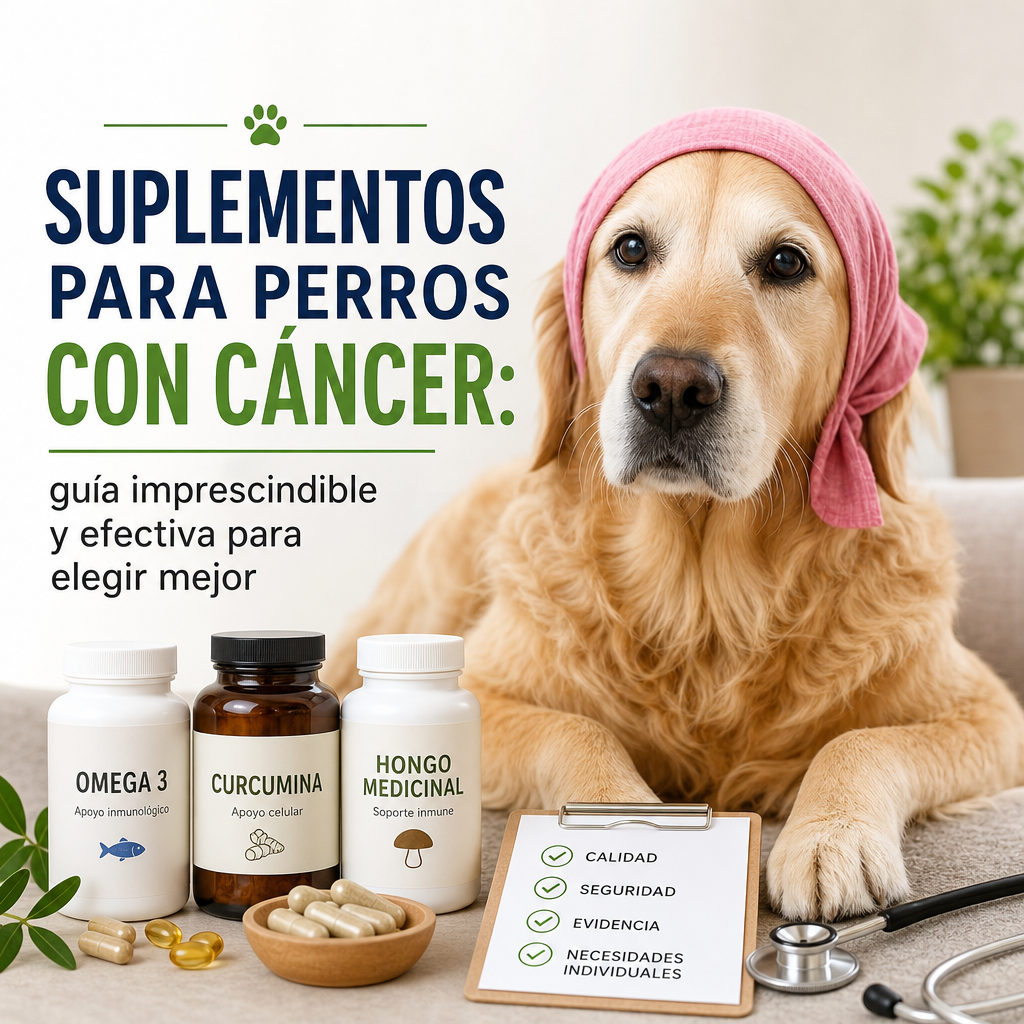
Un suplemento puede aportar apoyo nutricional durante una etapa en la que el perro presenta menos apetito, pérdida de peso, inflamación, alteraciones digestivas o mayor desgaste físico. Algunos productos están diseñados para complementar la alimentación con ácidos grasos, vitaminas, minerales, antioxidantes, aminoácidos o ingredientes destinados a favorecer la función intestinal.
Sin embargo, ningún suplemento ha demostrado curar por sí solo el cáncer. Su utilidad depende de cada caso y debe entenderse como parte de un plan integral. El objetivo principal es que el perro conserve una condición corporal adecuada, tolere mejor el tratamiento y mantenga una vida lo más cómoda y activa posible.
Antes de incorporar cualquier producto, conviene consultar al veterinario que conoce el historial clínico. La misma sustancia puede ser apropiada para un paciente y poco recomendable para otro, especialmente si existen enfermedades renales, hepáticas, cardíacas o problemas de coagulación.
También es importante recordar que el tiempo de uso, la dosis y la forma de administración influyen en el resultado. En algunos casos, un suplemento se utiliza durante una fase concreta del tratamiento; en otros, se mantiene como apoyo de largo plazo si hay buena tolerancia y un beneficio claro.
Cuando se valoran opciones, los suplementos para perros con cáncer deben encajar con el plan clínico general y con la realidad del día a día del animal. Si el perro ya está comiendo mejor, gana peso o tolera bien el tratamiento, el objetivo puede ser mantener ese progreso sin introducir cambios innecesarios.
Cómo elegir un suplemento para perro con cáncer
La elección debe comenzar por una evaluación profesional y no por la publicidad del producto. Un suplemento para perro con cáncer debe seleccionarse teniendo en cuenta varios factores:
Diagnóstico y tratamiento actual
The type of tumor, its location, and the stage of the disease influence the animal's needs. Additionally, some ingredients may modify the absorption or metabolism of certain drugs. For this reason, it is essential to inform the veterinarian about all products administered, including those sold as natural.
Nutritional status
A dog that is losing weight, muscle mass, or appetite may need a specific nutritional strategy. Sometimes, the problem is not solved with vitamins, but with a more energetic diet, wet food, several small meals, or a plan formulated by a veterinarian specialized in nutrition.
Quality and composition
It is preferable to choose products from reliable manufacturers, with clearly specified ingredients and quality controls. The label should indicate the amount of each component, the recommended dosage according to weight, and usage precautions. Products with opaque proprietary blends make it difficult to know the actual amount the dog receives.
It is also useful to check if the manufacturer provides technical information, batch analysis, or support from a veterinary professional. When comparing several suplementos para perros con cáncer, transparency is often as important as the ingredient list.
Another practical aspect is the ease of administration. Some dogs accept soft capsules well, others prefer powder mixed with food, and others tolerate a liquid presentation better. The best option is usually the one that can be given regularly without causing stress or food rejection.
Finally, it is advisable to read the warnings on the packaging carefully. A serious product explains when it should not be used, what to do if digestive discomfort occurs, and in which cases closer supervision is required. This information helps avoid common mistakes and choose more confidently.
Ingredientes que suelen considerarse como apoyo
Omega-3 fatty acids, especially EPA and DHA from fish oil, are studied for their role in modulating inflammation and maintaining body condition. Not all dogs need the same dosage, and oils can cause digestive discomfort if administered in excess. They should also be used with caution in animals with coagulation disorders or those receiving certain medications.
Probiotics and prebiotics can be useful when there are intestinal disturbances, diarrhea, or changes in the microbiota related to stress and treatments. Their effect depends on the strains used and the specific situation of the animal. A product suitable for a healthy dog may not necessarily be the best during oncological therapy.
Amino acids and protein-rich nutritional supplements can help maintain muscle mass when the patient eats little or loses weight. Still, in dogs with kidney or liver disease, the amount and type of protein must be carefully adjusted.
Some antioxidants, such as vitamins C and E, are marketed to support cellular defenses. However, high doses and indiscriminate combinations can be counterproductive, especially during certain treatments. The veterinarian must decide if they are appropriate, in what amount, and when.
In practice, the suplementos para perros con cáncer More useful are usually those that respond to a specific need: helping with appetite, supporting digestion, or facilitating weight maintenance. This logic of use avoids accumulating products without a clear benefit.
In addition, some patients benefit from formulas aimed at joint support or general well-being, especially when the disease limits their mobility. In those cases, the value of the supplement is not in promising spectacular results, but in offering support compatible with the dog's real condition and routine.
Apoyo perro cáncer: la alimentación es la base
The best support for dogs with cancer usually starts with a complete, balanced diet tailored to their tolerance. Many animals accept wet food better, slightly warm foods, or small portions distributed throughout the day. It is important to avoid sudden changes, as they can increase nausea or diarrhea.
Hydration is also essential. Water should always be available, and if the veterinarian deems it appropriate, strategies can be used to stimulate intake, such as adding moisture to the food. When the dog goes too long without eating, vomits repeatedly, or cannot keep water down, veterinary attention is needed.
Pain control, nausea, constipation, and anxiety are essential parts of well-being. Sometimes, improving these symptoms has a much greater impact than adding several supplements to the diet.
At this point, it is worth remembering that the suplementos para perros con cáncer work better when they accompany a well-planned nutritional base. Without an adequate diet, even the most complete product loses practical effectiveness.
In addition, a stable meal routine can help the dog maintain appetite and better accept treatment. In many cases, the veterinarian also assesses whether it is advisable to use high-energy density foods or specific formulas for oncology patients, always according to digestive tolerance and body condition.
A useful strategy is to observe which schedules, textures, and temperatures are more acceptable. Some dogs eat better in the morning; others prefer several small portions. Adjusting these details can make a real difference without the need to add too many products at once.
If the animal shows muscle mass loss, monitoring weight alone may not be sufficient. In those cases, the veterinarian may assess body condition, muscle mass, and overall progression to decide whether to reinforce the diet before considering more. suplementos para perros con cáncer.
Ingredientes y prácticas que requieren precaución
“Natural” does not necessarily mean safe. Medicinal plants, concentrated extracts, and human products can cause toxicity, affect the liver or kidneys, and alter the action of medications. Some supplements also contain xylitol, a dangerous sweetener for dogs, or excessive doses of minerals and vitamins.
Human medications or products intended for other species should never be administered without professional authorization. It is also not advisable to combine several supplements with similar ingredients, as unnecessary accumulation may occur.
During chemotherapy or radiotherapy, any antioxidant, herb, or immunostimulant product should be reviewed with the veterinary oncologist. The priority is not to interfere with the main treatment or delay a necessary intervention.
If you want to expand your information on the clinical basis of oncological management, you can consult the AVMA pet cancer guide, a useful veterinary reference for understanding the overall treatment approach.
It is also advisable to be wary of absolute promises. Phrases like “cure,” “repair,” or “eliminate” the problem are often a sign of aggressive marketing, not scientific backing. In an oncological context, caution always outweighs the spectacularity of the packaging.
When the tutor has doubts, the most sensible thing is to bring the complete label to the consultation. This way, the professional can review the composition, detect possible interactions, and decide if that product makes sense within the current treatment.
Señales para suspender un suplemento
Aunque un producto parezca bien tolerado, hay que vigilar cambios en el comportamiento y la salud. Vómitos, diarrea persistente, picor, hinchazón, decaimiento intenso, sangrado, dificultad respiratoria o empeoramiento repentino requieren suspender la administración y contactar con el veterinario.
También conviene llevar un registro sencillo de la dosis, la fecha de inicio, el apetito, el peso, las heces y cualquier reacción observada. Esta información permite evaluar si el suplemento aporta un beneficio real o si debe cambiarse.
Cuando se documentan bien los cambios, es más fácil distinguir si los suplementos para perros con cáncer están ayudando o si el problema está relacionado con la dieta, la medicación o la progresión de la enfermedad.
Si aparecen efectos secundarios leves al principio, como una pequeña molestia digestiva, el veterinario puede indicar ajustes de dosis o un cambio de producto. En cualquier caso, la observación temprana ayuda a actuar con rapidez y a proteger la seguridad del paciente.
En casa, una buena práctica es revisar si el problema aparece siempre tras la misma toma o si coincide con otros cambios, como un nuevo alimento, una modificación de medicación o un episodio de estrés. Ese tipo de seguimiento aporta pistas muy útiles para la consulta veterinaria.
Preguntas frecuentes sobre suplementos y tratamiento
¿Se pueden usar varios suplementos a la vez?
Only if the veterinarian deems it necessary. Using multiple products at once can duplicate ingredients, increase costs, and complicate the detection of adverse effects. In general, it is preferable to start with a specific need and evaluate the response before adding more things.
Does a supplement replace a complete diet?
No. Supplements are designed to complement an adequate diet, not to replace it. If the dog is not eating well, the problem usually requires a broader review of the nutritional plan.
Are they effective for all types of cancer?
Not necessarily. The value of the suplementos para perros con cáncer changes depending on the tumor, the dog's condition, the medications in use, and the presence of other diseases. That is why the recommendation should be individualized.
What happens if the dog takes a “natural” supplement without supervision?
Nothing may happen, but there may also be interactions, digestive irritation, or unwanted effects. The label does not always reflect the real risk, so professional supervision remains important.
When is it advisable to prioritize nutritional support over the supplement?
When there is loss of appetite, food rejection, weight loss, or weakness, it is usually more useful to first correct the nutritional base. In many cases, a better-adapted diet provides more benefit than adding several isolated products.
What to review before buying
Before buying, it's advisable to ask yourself these questions: Is the objective clear?, Is the dosage easily understood?, Does the product mention possible interactions?, Is there information about purity or quality controls?, Has the veterinarian approved it for this specific case? These checks reduce the margin of error.
- Verify that the product is specific for dogs and not for humans.
- Check that the label indicates dosage, concentration, and complete ingredients.
- Avoid formulas with extensive mixtures if they do not explain the actual amount of each component.
- Confirm if it can be administered alongside the current treatment.
- Observe for several days if there is adequate digestive tolerance and appetite.
Taking these steps helps ensure that the suplementos para perros con cáncer are a supportive tool and not an unnecessary addition.
It is also advisable to keep the original packaging and note the batch, expiration date, and prescribed dosage. This habit facilitates clinical follow-up and allows for quick detection of any problems with the product or the dog's response.
When comparing one option to another, it is not enough to look at whether the packaging is attractive or if the formula includes many ingredients. Often, a simpler and well-explained composition is preferable to a complex mixture that is difficult to interpret.
Si el perro ya está tomando otros productos de apoyo, conviene revisar la lista completa antes de hacer una compra nueva. De ese modo se evita repetir ingredientes y se mantiene una estrategia más ordenada y segura.
Una decisión responsable y personalizada
Los suplementos para perros con cáncer pueden ser útiles cuando responden a una necesidad concreta y se integran en un plan veterinario. La mejor elección no es necesariamente el producto más caro ni el que promete resultados extraordinarios, sino aquel cuya composición, dosis y objetivo están claramente definidos.
El acompañamiento adecuado combina diagnóstico, tratamiento oncológico, nutrición, control de síntomas, actividad adaptada y observación diaria. Con orientación profesional y expectativas realistas, los suplementos pueden convertirse en una herramienta complementaria para proteger el bienestar del perro sin reemplazar la atención médica que necesita.
Si se usan con criterio, los suplementos para perros con cáncer pueden formar parte de un cuidado más completo, prudente y centrado en la calidad de vida. Esa sigue siendo la meta principal: apoyar al animal sin comprometer su seguridad.
En resumen, una decisión responsable prioriza la seguridad, la evidencia disponible y la situación clínica real del perro. Cuando el plan se adapta al paciente, el tutor gana tranquilidad y el animal recibe un apoyo más útil y coherente.
En este contexto, los suplementos para perros con cáncer no son una solución milagrosa, pero sí pueden ser un complemento valioso dentro de un manejo bien supervisado.
Choose calmly, review the composition, and seek professional guidance are simple steps that greatly improve decision-making. Thus, nutritional support is used more intelligently and with less room for avoidable errors.