mennessä TCMVET | helmikuu 8, 2026 | Koiran syöpä ja kasvaimet
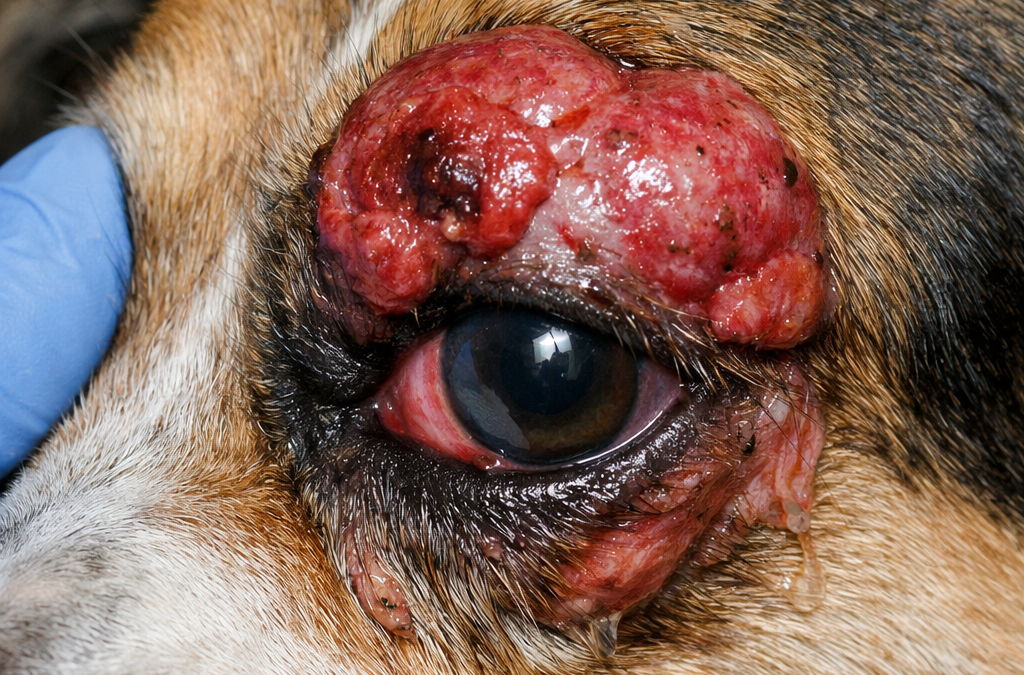
Mitä “spindle cell” tarkoittaa koirilla
“Spindle cell” kuvaa yleensä, miltä kasvaimen solut näyttävät mikroskoopin alla—pitkiltä, kapeilta ja kuitumaisilta—eikä se nimeä yhtä syöpätyyppiä. Koirilla tämä kuvaus usein päällekkäin pehmytkudossarkoomien (STS) ja siihen liittyvien sarkoomatyyppisten kasvainten kanssa, jotka tunnetaan paikallisesta invasiivisuudestaan: ne voivat laajentua mikroskooppisesti yli sen, mitä voit nähdä tai tuntea. Tämä kasvumalli on yksi suuri syy siihen, että paikallinen uusiutuminen on keskeinen huolenaihe.
Kuinka harvinainen on spindeli-solukasvain silmän lähellä?
Se riippuu siitä, onko massa pinnallinen silmäluomen kasvain vai syvempi periokulaarinen/orbitaalikasvain.
Monet koirien silmäluomen kasvaimet ovat yleisiä ja usein hyvänlaatuisia, mikä on rauhoittavaa jokapäiväisessä silmäkäytännössä. Kuitenkin pahanlaatuinen spindeli-solukasvain/sarkoomatyyppinen kasvain, joka kasvaa nopeasti tai on syvällä silmän ympärillä, on erilainen skenaario. Orbitaalinen ja retrobulbaarinen sairaus (sairaus silmäkuopassa tai pallon takana) on harvinaisempaa kuin yksinkertaiset silmäluomen kyhmyt ja vaatii tyypillisesti monimutkaisempaa suunnittelua.
Oireet, joita omistajat yleensä huomaavat
Kasvain “silmän päällä” voi näyttää lujalta kyhmyltä tai turvotukselta kulmakarvojen tai silmäluomien lähellä, mutta syvempi sairaus voi ilmetä toiminnan muutoksina. Koirat saattavat siristää, kyynelöidä liikaa, kehittää pysyvää vuotoa, hangata silmää tai kasvoja tai vaikuttaa varovaisilta pään suhteen. Jos orbita on mukana, klassiset merkit voivat sisältää eksoftalmos (pullistunut silmä), kolmannen silmäluomen ulkonevuuden ja kivun silmän ympärillä.
Kipu ja kärsimys: kuinka paljon se sattuu?
Kipu vaihtelee laajasti ja siihen vaikuttaa se, mitä kasvain tekee paikallisesti.
Massa voi tulla erittäin epämukavaksi, jos se vääristää silmäluomen asentoa tai aiheuttaa kroonista sarveiskalvon ärsytystä vilkkuessa. Eläinlääkärin oftalmologian ohjeet huomauttavat, että silmäluomen massat usein suurenevat ajan myötä ja voivat ärsyttää silmän pintaa, vaikuttaen mukavuuteen ja elämänlaatuun. Orbitaalinen sairaus voi myös olla kivuliasta—erityisesti kun turvotusta, painetta tai tulehdusta on läsnä—ja kipua mainitaan usein kliinisten merkkien joukossa orbitaalisissa olosuhteissa.
Miksi hoito silmän lähellä on niin haastavaa
Sarkoomatyyppisten kasvainten kohdalla tavoite on yleensä vahva paikallinen hallinta, koska mikroskooppiset kasvaimen “sormet” voivat ulottua yli sen, mikä näyttää epänormaalilta. Rungolla tai raajoissa kirurgit pyrkivät usein laajempiin marginaaleihin poistaakseen nuo näkymättömät laajennukset. Silmän ympärillä laajat marginaalit voivat olla vaikeita saavuttaa ilman kriittisten rakenteiden vaurioittamista, minkä vuoksi lääkärit saattavat kuulostaa varovaisilta takuista.
Hoitovaihtoehdot: mitä yleensä harkitaan
Useimmat hoitosuunnitelmat keskittyvät paikalliseen hallintaan ja mukavuuteen, usein yhdistäen useita lähestymistapoja.
Leikkaus on yleensä perusta, kun se on mahdollista, sekä kasvaimen kuormituksen poistamiseksi että lopullisen patologian saamiseksi. Koirien pehmytkudossarkoomien kohdalla poiston täydellisyys vaikuttaa voimakkaasti tuloksiin; arvostelut korostavat, että osittain poistetuilla kasvaimilla on suurempi paikallisen uusiutumisen riski. Joissakin tapauksissa kirurgit saattavat suositella radikaalimpia toimenpiteitä hallinnan saavuttamiseksi vaikeissa paikoissa (mukaan lukien orbitaaliin liittyvät leikkaukset), koska tietyt sarkoomat voivat vaatia radikaaleja lähestymistapoja, kun anatomia rajoittaa marginaalin leveyttä.
Sädehoitoa käsitellään usein, kun marginaalit ovat lähellä tai puutteellisia, tai kun anatomia tekee laajan poiston mahdottomaksi. Sitä käytetään mikroskooppisten jäännösolujen hallitsemiseksi ja uudelleen kasvun mahdollisuuden vähentämiseksi, vaikka tulokset vaihtelevat kasvaimen käyttäytymisen, annossuunnittelun ja kunkin tapauksen erityispiirteiden mukaan.
Uusiutumisriski: mihin tutkimus toistuvasti viittaa
Koirien STS-kirjallisuudessa kaksi tekijää nousee esiin yhä uudelleen: histologinen aste ja marginaalinen tila.
Arvostelu osittain tai kapeasti poistetuista koirien STS:stä raportoi julkaistuja uusiutumisasteita, jotka vaihtelevat suunnilleen 17%–37% välillä eri tutkimuksissa, mikä havainnollistaa, miksi “puhtaat marginaalit” ovat niin tärkeitä. Toinen laajasti siteerattu yleiskatsaus huomauttaa, että täydellisen poiston yhteydessä paikallinen uusiutuminen koirilla voi olla erittäin alhainen, ja puutteelliset marginaalit lisäävät uusiutumisriskiä merkittävästi.
Eloonjäämisen näkymät ja “eloonjäämisaikajana”: käytännöllinen tapa ajatella ennustetta
Koska “spindle cell tumor” voi edustaa useita kasvaintyyppisiä, eloonjäämisaikaa ei voida luotettavasti tiivistää yhteen numeroon. Luotettavampi tapa ymmärtää ennustetta on sitoa odotukset siihen, mikä ennustaa käyttäytymistä vahvimmin:
Alhaisemman asteen kasvain, jota voidaan täysin hallita paikallisesti, tuo yleensä paremman näkymän kuin korkeampi asteen kasvain tai sellainen, jota ei voida täysin poistaa sijainnin vuoksi. Koiran STS:ssä etäpesäkkeen riski kuvataan yleisesti asteen mukaan, korkeampi asteen kasvaimilla on merkittävästi suurempi mahdollisuus leviämiseen taudin aikana. Erityisesti silmän ympärillä olevissa kasvaimissa “kuinka hyvin paikallista tautia voidaan hallita” muuttuu usein hallitsevaksi tekijäksi, joka muokkaa sekä elämänlaatua että kokonaisuutta.
Mitä omistajat voivat tehdä aikaisin, mikä usein on tärkeää (ilman yksityiskohtiin eksymistä)
Varhaisessa vaiheessa hyödyllisimmät keskipisteet ovat taudin todellisen laajuuden vahvistaminen ja mukavuuden suojaaminen.
Edistyksellisiä kuvantamismenetelmiä, kuten CT tai MRI, suositellaan usein silmäkuoppa/ silmän ympärillä olevissa tapauksissa, koska rutiinitutkimukset eivät aina voi näyttää, mitä silmän takana tapahtuu, ja kuvantaminen auttaa ohjaamaan leikkausta ja sädehoidon suunnittelua. Mukavuus on myös keskeistä: silmän ympärillä olevat kasvaimet voivat aiheuttaa sarveiskalvon ärsytystä ja tulehdusta, ja hankauksen/trauman vähentäminen sekä silmän pinnan ärsytyksen käsittely voivat tehdä merkittävän eron päivittäisessä hyvinvoinnissa.
UKK: nopeita vastauksia lemmikinomistajien etsimään
Onko jokainen silmäluomen lähellä oleva kasvain pahanlaatuinen?
Ei. Silmäluomen kasvaimet ovat yleisiä koirilla ja monet käyttäytyvät hyvänlaatuisesti, vaikka mikä tahansa nopeasti kasvava, haavautunut, verenvuotoa aiheuttava tai kivulias massa tarvitsee nopeaa arviointia.
Miksi eläinlääkäri suosittelisi silmän poistamista?
Kun kasvain on syvästi invasiivinen tai reunoja ei voida saavuttaa turvallisesti, aggressiivisempaa paikallista leikkausta voidaan suositella paikallisen hallinnan parantamiseksi alueella, jossa tila on rajallinen.
Miksi leikkaus ja sädehoito eivät voi taata, ettei se palaa?
Sarkoomatyypin kasvaimet voivat ulottua mikroskooppisesti, ja silmän ympärillä voi olla vaikeaa poistaa tarpeeksi ympäröivää kudosta. Osittain poistettujen STS:ien on dokumentoitu uusiutumisriski useissa tutkimuksissa.
Mikä ennustaa ennustetta vahvimmin?
Patologinen aste ja se, poistettiinko kasvain puhtailla reunoilla, korostuvat toistuvasti merkittävinä uusiutumisen ja leviämisen riskin ajureina koiran STS:ssä.
Kuinka Baituxiao voi auttaa tukevana hoitona
Silmän ympärillä olevia spindelisolukasvaimia hallitaan yleensä ensin paikallisella kontrollilla—useimmiten leikkauksella ja joskus sädehoidolla—koska nämä kasvaimet voivat olla paikallisesti invasiivisia ja silmäalue rajoittaa laajoja reunoja. Tässä asetelmassa monet omistajat harkitsevat myös integroivaa tukevan hoidon, joka auttaa ylläpitämään mukavuutta, ruokahalua ja yleistä elämänlaatua yhdessä ensisijaisen hoitosuunnitelman kanssa.
Baituxiao on TCVM-kasviperäinen kaava, jonka valmistaja on asemoitu koirille ja kissoille, joilla on “kasvaimia ja kyhmyjä”, ja sitä käsitellään tyypillisesti lisäoptiona eikä itsenäisenä ratkaisuna. Koska kasviperäiset kaavat voivat vaikuttaa leikkauksen, kivunhallinnan, tulehduksen tai onkologisen hoidon ympärillä käytettäviin lääkkeisiin, sitä on parasta käyttää osana koordinoitua suunnitelmaa eläinlääkintätiimin kanssa.
mennessä TCMVET | tammikuu 14, 2026 | Koiran syöpä ja kasvaimet
Häntäkyhmyt koirilla voivat olla häiritseviä mille tahansa lemmikin omistajalle, erityisesti kun huolestuttavat ajatukset peräaukon rauhasten kasvaimista nousevat esiin. Ymmärtäminen siitä, mitä nämä kyhmyt saattavat tarkoittaa – ja miten toimia tietoisesti ja vastuullisesti – voi tuoda rauhoitusta samalla kun tuetaan lemmikkisi hyvinvointia. Tämä kattava opas tutkii mahdollisia syitä häntäkyhmyille koirilla, merkkejä, joihin kiinnittää huomiota, tapoja, joilla eläinlääkärit arvioivat peräaukon rauhasten kasvaimia, päivittäisiä hoitovinkkejä ja miten pysyä proaktiivisena koirasi mukavuuden ja elämänlaadun suhteen.
—
Ymmärtäminen häntäkyhmystä koirilla
Häntäkyhmyjä voi kehittyä useista syistä, hyvänlaatuisista kasvaimista vakavampiin huoliin. Vaikka jotkut kyhmyt pysyvät pieninä ja harmittomina, toiset saattavat vaatia eläinlääkärin huomiota niiden luonteen arvioimiseksi.
Mahdolliset syyt häntäkyhmille
– Rasvaontelot: Pieniä, hitaasti kasvavia pusseja, jotka sisältävät öljyistä materiaalia.
– Lipoomat: Rasvakasvaimia, joita esiintyy usein vanhemmilla koirilla, yleensä pehmeitä ja liikkuvia.
– Ihotulehdukset tai paiseet: Vaurioista tai tukkeutuneista karvatupeista johtuen.
– Peräaukon rauhasiin liittyvät massat: Massat, jotka syntyvät peräaukon lähellä olevista rauhasista.
– Muut kasvaimet tai kyhmyt: Voivat kehittyä erilaisista kudostyypeistä.
Ei jokainen kyhmy ole vaarallinen, mutta on tärkeää seurata mahdollisia muutoksia ajan myötä, erityisesti lähellä häntätyveä.
—
Peräaukon rauhasten kasvaimet: Mitä lemmikin omistajien tulisi tietää
Peräaukon rauhasten kasvaimet ovat kasvaimia, jotka syntyvät peräaukon molemmin puolin sijaitsevista rauhasista. Nämä kasvaimet voivat vaihdella hyvänlaatuisista pahanlaatuisiksi, ja varhainen eläinlääkärin arviointi on kriittistä niiden luonteen ja parhaan toimintatavan määrittämiseksi.
Miksi peräaukon rauhaset ovat tärkeitä
– Sijainti: Häntä alla sijaitsevat rauhaset voivat kehittää poikkeavuuksia, jotka ilmenevät kyhmyinä tai turvotuksina.
– Toiminto: Ne vapauttavat hajua, jota käytetään viestintään koirien välillä.
– Riskit: Tulehdus, rakenteelliset muutokset tai kasvaimet voivat aiheuttaa epämukavuutta, hajua tai muita komplikaatioita.
Yleisiä havaintoja
– Vaikeus istua mukavasti
– Liukuminen tai peräaukon alueen nuoleminen
– Turvotus tai kovuus peräaukon lähellä
– Häntä nykiminen tai haluttomuus heiluttaa
Aina kun uusia tai jatkuvia merkkejä ilmenee, varaa aika eläinlääkärille. Ammatillinen arviointi estää oireiden väärinymmärryksen ja auttaa tunnistamaan, onko lisätutkimuksia tarpeen.
—
Häntälumpit koirilla: Merkkien varhainen tunnistaminen
Koska häntälumpit koirilla voivat kehittyä vähitellen, valppaus auttaa havaitsemaan ongelmat aikaisin. Pyri tarkistamaan koirasi hännän aluetta hellävaraisesti hoitotilanteissa, havainnoiden muutoksia koossa tai rakenteessa.
Huomionarvoiset merkit
– Jatkuva turvotus: Erityisesti jos ne ovat kovat tai kasvavat.
– Ihon muutokset: Punaisuus, karvanlähtö tai karkea rakenne.
– Epämukavuus: Reagointi, kun aluetta kosketetaan.
– Käyttäytymisen muutokset: Vähentynyt energia, huono ruokahalu tai epätavallinen piiloutuminen.
Nämä merkit eivät automaattisesti viittaa peräaukon rauhasten kasvaimiin, mutta ne oikeuttavat eläinlääkärikäynnin selvyyden ja mielenrauhan vuoksi.
—
Kuinka eläinlääkärit arvioivat häntälumpit
Eläinlääketieteen ammattilaiset käyttävät erilaisia testejä lumpujen arvioimiseksi ja seuraavien vaiheiden määrittämiseksi. Tarkka lähestymistapa riippuu koirasi iästä, sairaushistoriasta ja lumpujen ominaisuuksista.
Tyypilliset diagnostiikkavaiheet
1. Lääkärintarkastus: Koon, sijainnin ja koostumuksen tarkistaminen.
2. Hienoneulanäytteitä tai biopsioita: Solujen tai kudoksen kerääminen analyysiä varten.
3. Kuvantaminen: Ultraääni, röntgen tai CT-skannaus sisäisten rakenteiden arvioimiseksi.
4. Verikoe: Antaa tietoa yleisestä terveydestä.
Keskustele prosessista avoimesti eläinlääkärisi kanssa, pyytäen ymmärrettäviä selityksiä siitä, mitä kukin testi voi paljastaa. Lemmikkivanhemmat, jotka pysyvät mukana ja tietoisina, tuntevat usein itsensä varmemmiksi tukemaan koiraansa arvioinnin aikana.
—
Koirien tukeminen peräaukon rauhasten kasvainten hoidossa
Kun eläinlääkäri tunnistaa peräaukon rauhasten kasvaimia, suunnitellaan huolellinen suunnitelma koiran ainutlaatuisen tilanteen perusteella. Koska lääketieteellinen ohjeistus kuuluu kliiniseen ympäristöön, lemmikinomistajat voivat keskittyä rauhallisen kodin tarjoamiseen ja ammatillisten suositusten tarkkaan noudattamiseen.
Käytännön vinkkejä kotitukeen
– Pidä päiväkirjaa: Kirjaa havaintoja, mukaan lukien ruokahalu, energiataso ja ulosteen laatu.
– Seuraa kehon kuntoa: Säilytä terve paino vähentääksesi lisäkuormitusta.
– Tarjoa kevyttä liikuntaa: Keveät kävelyt tai henkisesti stimuloivat pelit pitävät koirasi aktiivisena.
– Tarjoa mukavia lepopaikkoja: Pehmeä vuode auttaa lievittämään painetta herkillä alueilla.
– Pysy ajan tasalla tarkastuksista: Seurantakäynnit antavat eläinlääkäreille mahdollisuuden seurata edistymistä ja säätää hoitosuunnitelmia.
Keskittymällä mukavuuteen, johdonmukaisuuteen ja eläinlääkärin ohjaukseen omistajat voivat auttaa koiria tuntemaan olonsa turvalliseksi hoitomatkansa aikana.
—
Ravitsemus- ja luonnonmukaisen hyvinvoinnin näkökohdat
Vaikka ruoka ja lisäravinteet eivät voi diagnosoida tai parantaa vakavia sairauksia, ravitseva ruokavalio tukee yleistä elinvoimaa. Kysy eläinlääkäriltäsi tasapainoisista ruokavalioista, jotka sopivat koirasi ikään, rotuun ja aktiivisuustasoon.
Yleisiä ravitsemustietoja
– Tasapainoiset proteiinit ja rasvat: Tukevat lihasten terveyttä ja energiaa.
– Kuitulähteet: Edistävät ruoansulatusta ja säännöllistä poistumista.
– Omega-rasvahapot: Voi auttaa ylläpitämään ihon terveyttä ja kiiltävää turkkia.
– Nesteytys: Varmista jatkuva pääsy raikkaaseen veteen.
Luonnolliset hyvinvointimenetelmät—kuten rauhalliset ympäristöt, lempeä hoito ja rikastuttavat aktiviteetit—voivat myös edistää turvallisuuden tunnetta. Konsultoi aina eläinlääkäriäsi ennen uusien ruokavalion muutosten tai lisäravinteiden käyttöönottoa.
—
Ennaltaehkäisy ja varhaisen havaitsemisen käytännöt
Vaikka kaikkia häntäkyhmyjä ei voida estää, rutiininomainen tarkkailu ja ennaltaehkäisevä eläinlääkärinhoito tekevät merkittävän eron.
Hyödyllisiä tapoja
– Säännöllinen hoito: Auttaa sinua havaitsemaan uusia kyhmyjä varhain.
– Säännöllinen kylpyohjelma: Pitää ihon puhtaana ja mahdollistaa ongelmien tarkistamisen.
– Rutiininomaiset eläinlääkärikäynnit: Hyvinvointitarkastukset havaitsevat hienovaraisia muutoksia.
– Koulutus ja käsittely: Opeta koirasi sietämään häntää ja takapäätä käsittelyä, jotta tarkastukset ovat helpompia.
Näiden tapojen luominen edistää yhteistyösuhdetta eläinlääkärisi kanssa ja pitää lemmikkisi mukavana.
—
Kysymyksiä eläinlääkärillesi
Tieto antaa koiranomistajille valtaa tehdä tietoon perustuvia päätöksiä. Harkitse kysymyslistan tuomista tapaamisiin.
Keskustelun aloittajat
– Minkä tyyppinen kyhmy koirallani on, ja mitkä testit vahvistavat sen?
– Onko olemassa elämäntapamuutoksia, jotka voisivat pitää koirani mukavana?
– Kuinka usein minun tulisi seurata kyhmyn tilaa?
– Mitkä merkit viittaavat siihen, että minun tulisi varata kiireellinen seurantatapaaminen?
Aktiivinen viestintä varmistaa, että ymmärrät jokaisen vaiheen koirasi hoitosuunnitelmassa.
—
Emotionaalinen tuki lemmikkien omistajille
Kyhmyn löytäminen koirasi hännästä voi olla emotionaalisesti haastavaa. Ota aikaa käsitellä tietoa ja pyydä tukea tarvittaessa.
Selviytymisstrategiat
– Nojaudu eläinlääkäritiimiisi: He voivat selventää havaintoja ja seuraavia vaiheita.
– Yhdistä tukevien yhteisöjen kanssa: Verkkoforumit tai paikalliset ryhmät voivat jakaa hyödyllisiä kokemuksia.
– Harjoittele itsehoitoa: Tasapainoiset ateriat, lepo ja ulkoilu vahvistavat kestävyyttä.
– Juhli arjen hetkiä: Lempeät kävelyt, halailuhetket ja leikki vahvistavat sidettänne.
Maassa pysyminen ja toiveikkuus auttavat sinua pysymään rauhallisena tukipilarina lemmikillesi.
—
Tietoinen pysyminen peräaukon rauhasten kasvaimista
Luotettava tieto muokkaa vastuullisia päätöksiä. Keskity näyttöön perustuviin resursseihin, kuten hallituksen sertifioimiin eläinlääkärispesialisteihin, vertaisarvioituihin artikkeleihin ja arvostettuihin eläinten terveysjärjestöihin.
Tietolähteiden arviointi
– Tarkista pätevyydet: Etsi lisensoitua eläinlääkäriä tai tunnustettuja laitoksia.
– Varo nopeita ratkaisuja: Vältä vahvistamattomia väitteitä tai hoitoja.
– Kysy eläinlääkäriltäsi: He voivat suositella luotettavia lukumateriaaleja tai asiantuntijoita.
Tietoisesti valikoiva tieto pitää koirasi hyvinvoinnin oikealla tiellä ja välttää väärinkäsityksiä.
—
Holistinen ajattelutapa koiran hyvinvoinnille
Holistinen hoito tarkoittaa fyysisen mukavuuden, emotionaalisen hyvinvoinnin ja rauhallisen ympäristön huomioon ottamista. Pehmeä vuode, johdonmukaiset rutiinit, hellävarainen hoito ja rauhalliset vuorovaikutukset kaikki edistävät yleistä turvallisuuden tunnetta.
Yksinkertaisia holistisia käytäntöjä
– Tietoiset kävelyt: Rauhalliset kävelyt mahdollistavat nuuhkimisen ja tutkimisen.
– Hieronta ja hellä kosketus: Kun eläinlääkärisi hyväksyy, kevyt hieronta voi auttaa rentouttamaan lihaksia.
– Rikastuttavat lelut: Palapeli-ruokinta, hitaat nuuhkimispelit ja pehmeät purulelut pitävät mielet aktiivisina.
– Musiikki ja aromaterapia: Rauhoittavat äänet tai eläinlääkärin hyväksymät tuoksut voivat luoda rauhallisen tunnelman.
Tarkkaile aina koirasi reaktioita ja lopeta kaikki, mikä aiheuttaa epämukavuutta.
—
Johtopäätös: Luonnollisen hyvinvoinnin tukeminen huolenpidolla
Jokainen koira ansaitsee myötätuntoista huomiota, erityisesti kun uudet kyhmyt herättävät kysymyksiä. Ole tarkkaavainen, tee yhteistyötä eläinlääkärin kanssa ja luo lohduttava kodin ympäristö, jotta voit navigoida häntäkymmyissä luottamuksella ja huolella. Muista lähestyä jokaista askelta kärsivällisyydellä, ylläpitää avointa viestintää lemmikkisi hoitotiimin kanssa ja jatkaa lempeiden luonnollisten hyvinvointikäytäntöjen tutkimista, jotka ravitsevat koirasi kokonaisvaltaista tasapainoa.
mennessä TCMVET | tammikuu 14, 2026 | Koiran syöpä ja kasvaimet
Vanhojen koirien yrtit voivat näytellä lempeää, tukevää roolia koirasi kultaisina vuosina, tarjoten luonnollista lohtua säännöllisen eläinlääkärinhoidon ohella. Kun koirat ikääntyvät, niiden tarpeet muuttuvat – liikkuvuus hidastuu, ruoansulatus muuttuu ja yleinen hyvinvointi vaatii enemmän huomiota. Monet lemmikkivanhemmat etsivät holistisia vaihtoehtoja, kuten yrttejä ja elämäntapamuutoksia osana tasapainoista hoitosuunnitelmaa. Tämä opas tutkii, kuinka käyttää vanhoja koirien yrttejä harkiten, mitä ottaa huomioon ja kuinka parantaa ikääntyvän kumppanisi mukavuutta käytännön strategioiden ja tietoisesti hoidon avulla.
—
Ikääntymisen ymmärtäminen vanhoissa koirissa
Koirat siirtyvät tyypillisesti vanhoille vuosilleen noin seitsemän vuoden iässä, vaikka tämä vaihtelee rodun ja koon mukaan. Kun aineenvaihdunta hidastuu ja elimet kypsyvät, koirat tulevat herkemmiksi stressille, ruokavaliolle, aktiivisuustasoille ja ympäristön muutoksille. Ikään liittyvät muutokset voivat sisältää:
– Alhaisemmat energiatasot
– Herkkä ruoansulatus tai vähentynyt ruokahalu
– Nivelten jäykkyys tai haluttomuus liikkua
– Käyttäytymismuutoksia, kuten lisääntynyttä ääntelyä, hämmennystä tai levottomuutta
– Lisääntynyt tarve lämpöön, rutiiniin ja tuttuuteen
Näiden siirtymien ymmärtäminen auttaa sinua tukemaan koiraasi kärsivällisyydellä ja myötätunnolla, samalla kun teet yhteistyötä eläinlääkärin kanssa ja tutkit lempeitä, yrttipohjaisia lohtustrategioita.
—
Mitä ovat vanhojen koirien yrtit?
Vanhojen koirien yrtit ovat kasveja, jotka voivat helpottaa yleisiä ikääntymishaasteita turvallisella ja mitatulla tavalla. Yrtit voivat olla kuivia, tuoreita tai formula-muodossa (kapselit, jauheet, teet tai tinktuurat). Ne ovat peräisin perinteisistä käytännöistä ympäri maailmaa – ayurvedisistä lännen yrttilääkintään – joissa luonnollisia kasveja käytettiin hyvinvoinnin tukemiseen.
Keskeiset periaatteet sisältävät:
– Elinvoiman tukeminen, ei oireiden tukahduttaminen
– Eläinlääkärinhoidon täydentäminen, ei sen korvaaminen
– Kuuntele koirasi reaktioita yrtteihin ja säädä tarpeen mukaan
Yrtit sisältävät monenlaisia ominaisuuksia, kuten rauhoittavia, ruoansulatusta helpottavia tai yleistä ravitsemusta, jotka voivat olla hyödyllisiä vanhoilla vuosilla. Konsultoi aina eläinlääkäriä, mieluiten sellaista, joka on kokenut yrtti- tai integroivassa hoidossa, ennen kuin esittelet uusia kasveja.
—
Vanhojen koirien yrtit, joita kannattaa tutkia mukavuuden vuoksi
Kamomilla ja sen rauhoittava vaikutus
Kamomillan lempeä aromi lohduttaa usein ahdistuneita tai levottomia koiria. Se voi auttaa, kun vanha koira kokee yöllistä vaeltamista, lievää ruoansulatushäiriötä tai yleistä epämukavuutta. Kamomillaa tarjotaan yleisesti teeinfuusiona, jonka voit lisätä ruokaan tai veteen, tai kuivana yrttinä sekoitettuna aterioihin. Koska kamomilla on mietoa, monet koirat sietävät sitä hyvin, mutta allergioiden seuraaminen on silti tärkeää.
Rentokukka rentoutumiseen
Rentokukka on yrtti, jota arvostetaan sen rentouttavien ominaisuuksien vuoksi ilman voimakasta rauhoittavaa vaikutusta. Se voi olla hyödyllinen vanhemmille koirille, jotka näyttävät olevan kireitä, reaktiivisia tai herkkiä melulle ja muutoksille. Yhdistettynä elämäntapamuutoksiin (johdonmukaiset rutiinit, rauhalliset tilat, ennakoitavat ruokinta-ajat) rentokukka voi tukea emotionaalista tasapainoa.
Maitohorsma lempeäksi maksan tueksi
Maksa näyttelee keskeistä roolia aineenvaihdunnassa ja detoksifikaatiossa, ja vanhemmat koirat hyötyvät usein lempeästä maksan tuesta. Maitohorsma, joka on rikas silymariinista, on yleisesti käytetty käytännön lääkäreiden toimesta sen antioksidanttisten ominaisuuksien ja mahdollisten suojaavien vaikutusten vuoksi. Monet lemmikkien hoitajat sisällyttävät maitohorsmaa vuorotellen tai satunnaisina kuureina sen sijaan, että luottaisivat siihen jatkuvasti. Taas kerran, eläinlääkärin tulisi ohjata kestoa ja sopivuutta, erityisesti jos koirasi käyttää lääkkeitä.
Kurkuma ja sen antioksidanttiset ominaisuudet
Kurkuma sisältää kurkumiinia, yhdistettä, jolla on laajasti tutkittuja antioksidanttisia ja rauhoittavia ominaisuuksia. Vanhemmat koirat saattavat arvostaa kurkumalla maustettuja aterioita yleisen mukavuuden vuoksi, vaikka se tulisi yhdistää rasvoihin, kuten kookosöljyyn tai kalaliemeen, imeytymisen parantamiseksi. Koska kurkuma voi vaikuttaa joidenkin lääkkeiden tai ruoansulatusongelmien kanssa, tarkista eläinlääkäriltäsi ennen sen säännöllistä käyttöä.
Villiviini sydämen ja verenkierron tueksi
Villiviinin marjoja ja lehtiä on pitkään käytetty verenkierron hyvinvoinnin tukemiseen. Jotkut integraatiolääkärit esittelevät villiviiniä vanhemmille koirille, jotka osoittavat ikääntymisen merkkejä sydän- ja verisuonijärjestelmässä, vaikka huolellinen valvonta on välttämätöntä. Se on usein osa laajempaa protokollaa, johon kuuluu ruokavalio, hallittu liikunta ja säännölliset tarkastukset.
Spirulina ja apila ravinteiden lisäämiseksi
Spirulina ja apila ovat ravinteita tiheitä yrttilisäaineita, jotka voivat tarjota lisätukea kasvipohjaiselle energialle ja immuunikestävyydelle. Spirulina on rikas klorofyllistä ja aminohapoista, kun taas apila sisältää vitamiineja, mineraaleja ja tukevia kuituja. Näiden lisääminen koiran ruokavalioon kohtuullisina määrinä voi auttaa täyttämään ravitsemuksellisia aukkoja.
—
Tärkeitä huomioita vanhempien koirien yrttien valinnassa
1. Konsultaatio: Eläinlääkäri, joka tuntee yrttilääkinnän, voi suositella sopivia yrttejä, auttaa välttämään vaarallisia yhteisvaikutuksia ja seurata edistymistä.
2. Laatu: Valitse yrttejä luotettavilta lähteiltä, jotka tarjoavat läpinäkyvää hankintaa ja kolmannen osapuolen testausta epäpuhtauksien varalta.
3. Lomake: Päätä jauheiden, kapselien, tinktuurien tai teiden välillä. Jotkut koirat pitävät yrttejä kosteassa ruoassa sekoitettuna; toiset sietävät kapselit paremmin.
4. Allergiat: Esittele yksi yrtti kerrallaan pieninä määrinä, tarkkaillen suvaitsemattomuuden merkkejä, kuten kutinaa, oksentelua tai ripulia.
5. Johdonmukaisuus: Yrtit vaikuttavat yleensä vähitellen. Johdonmukainen, mitattu käyttö toimii usein paremmin kuin satunnainen annostelu.
—
Ympäristön mukavuusvinkit vanhemmille koirille
Yrtit yhdistyvät parhaiten käytännön, jokapäiväisiin mukavuusstrategioihin. Harkitse seuraavia tapoja auttaa vanhempaa koiraasi tuntemaan olonsa turvalliseksi, tuetuksi ja tyytyväiseksi:
– Mukava peti: Ortopediset sängyt, kohotetut reunat tai lämmitettävät patjat (suunniteltu lemmikeille) voivat rauhoittaa jäykkiä niveliä ja tarjota lämpöä.
– Liukumattomat pinnat: Matot tai juoksijat vähentävät liukastumista kovilla lattioilla, vähentäen nivelten rasitusta ja lisäten itseluottamusta.
– Saatavilla oleva vesi ja ruoka: Aseta kulhot liukumattomille matoille ja harkitse hieman kohotettuja ruokintapaikkoja.
– Rutiininomainen hoito: Säännöllinen harjaus ja hellä hieronta parantavat verenkiertoa ja tarjoavat yhteistä aikaa.
– Hiljaiset vetäytymispaikat: Määrätty lepoalue kaukana kotitalouden melusta auttaa koiria rentoutumaan ja tuntemaan olonsa turvalliseksi.
– Pehmeä valaistus yöllä: Himmeät valot tai yövalot ohjaavat vanhempia koiria, joilla on heikentynyt näkö tai yön ahdistusta.
—
Ruokavalio ja ruoansulatustuki
Tasapainoisen ravitsemuksen tärkeys
Vanhemmat koirat hyötyvät usein ravinteikkaista, helposti sulavista ruokavalioista. Vaikka kaupallisia seniorikaavoja on olemassa, kysy eläinlääkäriltä tai koiran ravitsemusasiantuntijalta varmistaaksesi, että koirasi ruoka täyttää yksilölliset tarpeet. Proteiinien vuorottelu, pehmeästi kypsennettyjen vihannesten lisääminen ja terveellisten rasvojen sisällyttäminen voivat ylläpitää kiinnostusta aterioihin ja tukea tervettä painoa.
Ruoansulatusta tukevat yrtit
– Inkivääri: Tunnetaan vatsavaivojen lievittäjänä, inkivääri voi auttaa koiria, jotka kokevat satunnaista pahoinvointia. Käytä säästeliäästi ja kysy eläinlääkärin neuvoa verenohennuslääkkeitä käyttäviltä koirilta.
– Voikukanjuuri: Käytetään joskus ruoansulatuksen ja maksan toiminnan tukemiseen, voikukanjuurta voidaan lisätä aterioihin pieninä määrinä.
– Fenkoli: Voi lievittää lievää kaasua tai turvotusta. Sen lakritsimainen maku on yleensä hyvin siedetty koirien keskuudessa.
Nesteytys
Vanhemmilla koirilla tulisi aina olla pääsy tuoreeseen veteen. Voit parantaa nesteytystä lisäämällä kosteuspitoisia ruokia, kuten luuliemiä, soseutettuja vihanneksia tai vettä sisältäviä nappuloita.
—
Aktiivisuus ja liikkuvuus
Lempeä liikunta vanhemmille koirille
Myös vanhemmat koirat hyötyvät liikkumisesta, joka pitää lihakset vahvoina ja nivelet joustavina. Tavoittele pieniä, usein toistuvia kävelylenkkejä sen sijaan, että tekisit yhden pitkän vaelluksen. Seuraa koirasi vauhtia ja anna nuuhkimisaikaa—mielentila on yhtä tärkeä kuin fyysinen.
Liikkuvuuteen keskittyvät yrtit
Jotkut yrtit tukevat nivelten mukavuutta ja joustavuutta:
– Boswellia: Käytetään usein perinteisissä hyvinvointisuunnitelmissa nivelten tueksi sen hartsipitoisten yhdisteiden vuoksi.
– Paholaisen kynsi: Yleensä holististen käytäntöjen suosittelema nivelhoitoon; kuitenkin sitä tulisi välttää koirilla, joilla on tiettyjä terveysongelmia.
Keskustele yhdistelmistä tai pitkäaikaisesta käytöstä eläinlääkärisi kanssa varmistaaksesi turvallisuuden.
Täydentävät hoidot
Akupunktio, hieronta, vesiterapia tai fysioterapiaharjoitukset voivat lievittää jännitystä ja kannustaa liikkumiseen. Näiden menetelmien tulisi olla asiantuntevien ammattilaisten ohjaamia, jotka ovat kokeneita vanhempien koirien kanssa työskentelyssä.
—
Emotionaalinen hyvinvointi ja käyttäytyminen
Emotionaalisten muutosten tunnistaminen
Vanhemmat koirat saattavat kokea kognitiivisia muutoksia tai ahdistusta. Merkkejä ovat paikallaan pyöriminen, yöheräily, ääntely tai lisääntynyt kiinnittyminen. Kärsivällisyys ja johdonmukainen rauhoittaminen ovat ratkaisevan tärkeitä näinä elämänvaiheina.
Yrttipohjainen rauhoittava tuki
– Valerianjuuri: Käytetään usein satunnaiseen stressin lievitykseen. Esittele se vähitellen, sillä sen maamainen haju voi olla voimakas.
– Intoherne: Lempeä yrtti, joka voi vähentää levottomuutta ja tukea emotionaalista tasapainoa.
Yhdistämällä nämä elämäntapamuutoksiin (pehmeä musiikki, aromaterapia diffuusereissa, joissa käytetään koiraturvallisia tuoksuja, ennakoitavat rutiinit) voidaan edistää rentoutumista.
—
Vanhemman koiran yrttityökalupakin luominen
Harkitse yrttituotteidesi ja tukitarvikkeidesi järjestämistä yhteen paikkaan:
1. Merkitse astiat yrtin nimellä, tarkoitetulla tarkoituksella ja mahdollisilla muistiinpanoilla.
2. Seuraa käyttöä päiväkirjassa, merkitse käyttäytyminen, ruokahalu ja mahdolliset muutokset.
3. Aikatauluta tarkastuksia eläinlääkärisi kanssa tarkistaaksesi yrttisuunnitelman ja varmistaaksesi, että se edelleen sopii koirasi terveysprofiiliin.
4. Vaihda yrttejä kun se on tarpeen, antaen taukoja liiallisen riippuvuuden välttämiseksi.
—
Yhteistyössä eläinlääkärien kanssa
Eläinlääkärit, jotka ovat koulutettuja yrttilääketieteessä, integroivassa hoidossa tai perinteisessä kiinalaisessa eläinlääketieteessä (TCVM), voivat suunnitella räätälöityjä protokollia. He arvioivat:
– Ikä, rotu ja yleinen terveys
– Nykyiset lääkkeet tai lisäravinteet
– Ravintotottumukset ja aktiivisuustaso
– Käyttäytymisindikaattorit
Tämä yhteistyömenetelmä varmistaa, että yrtit ovat lisä säännöllisiin eläinlääkärintarkastuksiin, verikokeisiin, hammashoitoon ja kaikkiin tarvittaviin diagnostiikkaan.
—
Vanhojen koirien yrtit ja turvallisuus
Turvallisuus on pysyttävä ensisijaisena:
– Tiedä vasta-aiheet: Jotkut yrtit eivät välttämättä ole sopivia koirille, joilla on munuais-, maksa- tai sydänsairauksia.
– Vältä eteerisiä öljyjä sisäisesti: Monet öljyt, jopa kun ne on saatu yrtistä, eivät ole turvallisia nautittavaksi.
– Säilytä yrtit oikein: Pidä ne poissa kosteudesta, auringonvalosta ja uteliailta lemmikeiltä.
– Tarkkaile koiraasi tarkasti: Jos huomaat muutoksia ulosteessa, ruokahalussa, hengityksessä tai käytöksessä, lopeta yrtin käyttö ja ota yhteyttä eläinlääkäriisi.
—
Rutiinin ja vakauden kunnioittaminen
Vanhemmat koirat menestyvät ennakoitavuudessa. Yhdistä yrttituki tietoisesti muodostettuihin rutiineihin:
– Johdonmukaiset herätys-, ruokailu- ja ulkoiluaikataulut
– Vähäinen häiriö nukkumisalueilla
– Hitaat esittelyt, kun vieraat tulevat kylään
– Tutut tuoksut, lelut ja peitot
Nämä askeleet vähentävät stressiä ja helpottavat koirasi sopeutumista hienovaraisiin muutoksiin.
—
Luonnollinen hyvinvointi yrtin ulkopuolella
Vanhempien koirien yrttien lisäksi harkitse laajempia luonnollisia hyvinvointistrategioita:
– Ravitsevat herkut: Valitse pehmeitä purtavia tai hellävaraisesti kuivattuja herkkuja, jotka ovat hellävaraisia hampaille.
– Tietoinen ulkonäkö: Käytä lämpimiä pyyhkeitä, hellävaraisia harjaksia ja rauhoittavia silittelyjä.
– Ulkoilu: Auringonvalolle altistuminen (sään salliessa) auttaa säätelemään unta ja mielialaa.
– Mielenterveysongelmat: Palapeli-ruokinta, tuoksupelit tai lyhyet koulutussessiot pitävät mielen aktiivisena.
Luonnollinen hyvinvointi tarkoittaa koirasi koko olemuksen - kehon, mielen ja sydämen - hoitamista.
—
Pienten hetkien juhlistaminen
Jokaisella vanhalla koiralla on ainutlaatuisia tarpeita ja iloja. Juhli pieniä voittoja: mukava päiväuni, heiluttava häntä tai rauhallinen ilta vierelläsi. Yrttituki, yhdistettynä kärsivällisyyteen, ymmärrykseen ja eläinlääkärin ohjaukseen, luo hoitavan ympäristön koirasi myöhemmille vuosille.
—
Johtopäätös
Vanhojen koirien yrtit, kun niitä käytetään harkiten, tarjoavat lempeää lohtua osana kattavaa hyvinvointisuunnitelmaa. Yhteistyössä eläinlääkärisi kanssa, valitsemalla korkealaatuisia kasveja ja ylläpitämällä johdonmukaisia rutiineja, voit auttaa koiraasi ikääntymään arvokkaasti ja vaivattomasti. Jatka kumppanisi tarpeiden tarkkailua, hoitokäytäntöjen säätämistä ja jakamasi ajan nauttimista. Luonnolliset lähestymistavat, jotka perustuvat myötätuntoon ja tietoon, voivat tuoda rikastusta ja harmoniaa vanhan koirasi elämään.
mennessä TCMVET | tammikuu 14, 2026 | Koiran syöpä ja kasvaimet
Kemoterapiaan liittyvä luonnollinen tuki on tärkeä aihe koiranomistajille, kun heidän lemmikkinsä käyvät läpi kemoterapiaa. Tuntemukset voivat olla voimakkaita, ja on luonnollista etsiä lempeitä tapoja pitää kumppanisi mukavana samalla kun pysyt eläinlääkärin neuvojen mukaisena. Ymmärtäminen siitä, mitä “luonnollinen tuki” todella tarkoittaa - ravitsevat rutiinit, emotionaalinen mukavuus ja harkitut elämäntapamuutokset - auttaa sinua tekemään tietoisia valintoja, jotka kunnioittavat sekä tiedettä että koirasi ainutlaatuisia tarpeita.
Miksi tukevalla hoidolla on merkitystä kemoterapian aikana
Kemoterapia voi olla merkittävä haaste mille tahansa koiralle, vaikuttaen kaikkeen energiatasoista ruokahaluun. Vaikka eläinlääkärit valvovat lääketieteellistä suunnitelmaa, lemmikinomistajilla on suuri rooli rauhallisen ja ravitsevan ympäristön luomisessa kotiin. Tukevat hoidot eivät korvaa lääkkeitä tai ammatillista ohjausta; sen sijaan ne parantavat koirasi yleistä hyvinvointia johdonmukaisilla rutiineilla, henkisellä aktivoinnilla ja huolellisella tarkkailulla.
Kemoterapiaan liittyvän luonnollisen tuen perusteet
Kemoterapiaan liittyvän luonnollisen tuen kehittäminen tarkoittaa kolmen pilarin keskittymistä: ravitsemus, stressinhallinta ja jokapäiväinen mukavuus. Jokainen pilari toimii yhdessä auttaakseen koiraasi tuntemaan olonsa turvalliseksi ja hoidetuksi hoidon aikana. Pienet muutokset - kuten rauhallisen lepopaikan tarjoaminen tai rikastuttavien pulmien tarjoaminen - voivat tehdä huomattavan eron.
Ravitsemus- ja nesteytysohjeet
Hyvin tasapainoinen ruokavalio antaa koirallesi rakennuspalikat voimaa varten. Vaikka sinun tulisi aina noudattaa eläinlääkärisi suosituksia, muutama perusidea voi auttaa ohjaamaan valintojasi:
– Tasapainoiset ateriat: Etsi ruokia, jotka tarjoavat vähärasvaisia proteiineja, monimutkaisia hiilihydraatteja ja hyödyllisiä rasvoja tasaisen energian ylläpitämiseksi.
– Lempeät ainesosat: Helposti sulavat vaihtoehdot - kuten kypsennetyt vihannekset tai yksinkertaiset proteiinit - voivat olla hyödyllisiä, jos koirasi vatsa vaikuttaa herkältä.
– Nesteytyksen keskittyminen: Tuoreen veden vaihdot tulisi olla tiheitä. Jotkut koirat nauttivat maustetuista jääkuutioista tai laimennetuista vähäsuolaisista liemistä vaihtelun vuoksi.
– Pienet, tiheät annokset: Pienempien annosten tarjoaminen useammin voi kannustaa syömään, kun ruokahalu vaihtelee.
– Reaktioiden tarkkailu: Pidä yksinkertaista ruokapäiväkirjaa muuttaaksesi huomioita ulosteen, energian tai kiinnostuksen suhteen tiettyihin ruokiin. Jaa havainnot eläinlääkärisi kanssa.
Emotionaalinen mukavuus ja johdonmukaiset rutiinit
Koirat saavat usein turvallisuutta ennakoitavista aikatauluista. Tutun rituaalin ylläpitäminen - aamukävelyt, iltakosketukset tai lempeät hoitohetket - rauhoittaa kumppaniasi, että elämässä on edelleen mukavuutta ja vakautta.
– Hiljaiset alueet: Luo kodikas lepopaikka pois kotitalouden melusta, jossa on peittoja ja suosikkileluja.
– Aistillinen rikastaminen: Tarjoa pehmeää musiikkia, hajuttomia tiloja tai hajautettua luonnonvaloa ylivirittymisen helpottamiseksi.
– Tietoinen vuorovaikutus: Kiinnitä huomiota koirasi signaaleihin. Jotkut päivät ne saattavat kaivata rakkautta; toisina päivinä ne saattavat haluta enemmän henkilökohtaista tilaa.
Hellävarainen toiminta ja liikkuvuuden tuki
Kevyt liikunta pitää nivelet voideltuina ja lihakset aktiivisina. Keskustele sopivista aktiviteettitasoista eläinlääkärisi kanssa ja mukauta tarpeen mukaan:
– Lyhyet kävelyt: Lyhyet kävelyt pehmeillä pinnoilla voivat olla helpompia tassuille ja nivelille.
– Palapelilelut: Mielenterveysliikunta, kuten herkkuja jakavat lelut, aktivoi mieltä ilman voimakasta fyysistä ponnistelua.
– Mukavat vuodevaatteet: Ortopediset sängyt tai tukevat matot auttavat pehmentämään herkkiä alueita ja kannustavat oikeaan lepoon.
Yhteistyö eläinlääkärisi tiimin kanssa
Avoin viestintä eläinlääkärin onkologin tai yleislääkärin kanssa on keskeistä kemoterapian luonnollisessa tuessa. He voivat ehdottaa tarkistusten aikataulua, nostaa varoitusmerkkejä ja auttaa sinua tulkitsemaan käyttäytymisen muutoksia. Harkitse seuraavien kirjaamista:
– Ruokailutottumukset
– Veden saantia
– Leikki- tai lepo- mieltymykset
– Reaktiot rauhoittamistekniikoihin
– Kaikki uudet käyttäytymiset, jotka ilmenevät tapaamisten välillä
Näiden havaintojen jakaminen mahdollistaa eläinlääkärisi räätälöidä suosituksia erityisesti koirasi kokemuksen mukaan.
Holistiset kosketuspisteet ilman lääketieteellisiä väitteitä
Jotkut huoltajat tutkivat lempeitä hyvinvointikäytäntöjä, kuten aromaterapiaa lemmikkiturvallisilla eteerisillä öljyillä (aina laimennettuna ja eläinlääkärin hyväksymänä), hitaita hierontatekniikoita tai valvottua aikaa auringossa. Nämä lähestymistavat keskittyvät rentoutumiseen eikä hoitoon. Muista:
– Eläinlääkärin hyväksyntä on avain: Jopa luonnolliset tuotteet voivat vaikuttaa lääkkeisiin.
– Vähemmän on enemmän: Esittele yksi uusi elementti kerrallaan, jotta voit havaita, miten koirasi reagoi.
– Mukavuus ensin: Jos koirasi osoittaa kiinnostuksen puutetta tai epämukavuutta, lopeta se käytäntö ja palaa tuttuihin mukavuuksiin.
Käytännön vinkkejä päivittäiseen tukeen
Päivittäiset rutiinit voivat olla helpompia navigoida, kun käytössä on joukko strategioita:
1. Suunnittele aterian valmistelu etukäteen: Ruokien ennakkoannostelu voi vähentää stressiä kiireisinä päivinä.
2. Aseta muistutushälytykset: Käytä puhelimen hälytyksiä lääkkeiden ottamiseen, tuoreen veden tarkistamiseen tai lyhyisiin liikuntaharjoituksiin.
3. Kierrätä rikastusta: Pidä pieni valikoima leluja ja vaihda niitä viikoittain kiinnostuksen ylläpitämiseksi.
4. Käytä hellävaraisia hoitovälineitä: Pehmeät harjat tai hoitohanskat voivat auttaa poistamaan irtoavaa karvaa ilman ärsytystä.
5. Seuraa kotitalouden energiaa: Pyydä perheenjäseniä pitämään melutaso alhaisena ja välttämään äkillisiä muutoksia rutiinissa.
Koirasi signaalien lukeminen
Koiran kehonkieli paljastaa paljon mukavuustasoista. Koska kemoterapia voi lisätä herkkyyttä, etsi vihjeitä:
– Rentoutunut asento: Ilmaisee tyytyväisyyttä.
– Haukkuminen tai huulien nuoleminen: Voi viestiä lievästä stressistä.
– Vaeltaminen tai levottomuus: Saattaa tarkoittaa epämukavuutta tai tarvetta rauhalliselle tauolle.
– Kiintymyksen etsiminen: Monet koirat nojaavat enemmän omistajiinsa, kun ne tarvitsevat varmuutta.
Vastaa säätämällä ympäristöä—himmentämällä valoja, vähentämällä melua tai tarjoamalla hellä hieronta, jos koirasi nauttii kosketuksesta.
Luonnollisten hyvinvointinäkökulmien integroiminen
Luonnollinen hyvinvointi korostaa harmoniaa fyysisten tarpeiden ja emotionaalisen tasapainon välillä. Kemoterapiassa oleville koirille tämä saattaa tarkoittaa:
– Raikasta ilmaa tauot: Lyhyet hetket ulkona voivat tarjota uusia tuoksuja ja lempeää stimulaatiota.
– Tietoinen seura: Pelkästään istuminen koirasi vieressä, lukeminen tai pehmeä puhuminen, edistää yhteyttä ilman energian vaatimista.
– Puhtaat asuintilat: Pese säännöllisesti vuodevaatteet, kulhot ja lelut miedolla, lemmikkiturvallisella puhdistusaineella hygienian ylläpitämiseksi.
– Positiivinen vahvistus: Juhli pieniä voittoja—aterian loppuun saattaminen, pihan tutkiminen tai leluun tarttuminen.
Optimismin tasapainottaminen realististen odotusten kanssa
On luonnollista toivoa parasta, mutta maanläheisyys auttaa sinua reagoimaan tehokkaasti. Luota eläinlääkärisi asiantuntemukseen ja ole lempeä itsellesi prosessin aikana. Jotkut päivät voivat tuntua haastavilta; toiset saattavat tuoda sydäntä lämmittäviä yllätyksiä. Nojaudu perheen, ystävien tai lemmikkienhoitoyhteisöjen tukeen, kun tarvitset kannustusta.
Johtopäätös
Koiran tukeminen kemoterapian läpi vaatii kärsivällisyyttä, havainnointia ja jatkuvaa keskittymistä mukavuuteen. Integroimalla kemoterapian luonnollisia tukimenetelmiä—tasapainoinen ravinto, rauhalliset ympäristöt, lempeät aktiviteetit ja tiivis kommunikaatio eläinlääkärisi kanssa—luot rauhoittavia rutiineja, jotka kunnioittavat koirasi tarpeita. Jokainen tietoinen valinta edistää rakastavaa, maanläheistä lähestymistapaa luonnolliseen hyvinvointiin.
mennessä TCMVET | tammikuu 14, 2026 | Koiran syöpä ja kasvaimet
Kavaljeerien syöpäriskit, varhaiset kasvaimen merkit kavaljeereissa, tämän rodun yleiset syövät ovat aiheita, joita monet rakastavat omistajat lopulta etsivät koiriensa vanhetessa. Kavaljeeri King Charles Spanielit ovat arvostettuja lempeän luonteensa, ilmeikkäiden silmiensä ja ihmisseuran rakastamisen vuoksi—mutta kuten kaikilla roduilla, niillä on tiettyjä terveyshaasteita, mukaan lukien kasvaimet ja syöpä. Ymmärtäminen, mihin kavaljeerisi saattaa olla alttiina, kuinka havaita varhaisia varoitusmerkkejä ja kuinka tukea niitä vanhemmilla vuosilla voi tehdä todellisen eron elämänlaadussa.
—
A. Rodun yleiskatsaus
Kavaljeeri King Charles Spanielit ovat pieniä seuralaiskoiria, jotka painavat tyypillisesti 13–18 paunaa. Ne ovat rakastavia, ihmisläheisiä ja usein kuvataan “tarrakoiriksi”, koska ne haluavat pysyä lähellä perhettään. Niiden luonne on yleensä:
– Lempeä ja ystävällinen
– Hyvä lasten ja muiden lemmikkien kanssa
– Sopeutuvia sekä kerrostalo- että omakotitaloasumiseen, kunhan ne saavat päivittäistä vuorovaikutusta ja kohtuullista liikuntaa
Niiden keskimääräinen elinikä on noin 10–14 vuotta, vaikka tämä voi vaihdella perimän, ympäristön ja yleisen terveydenhuollon mukaan.
Kavaljeerit tunnetaan erityisistä perinnöllisistä ongelmista, erityisesti:
– Sydänsairaudet (erityisesti mitraaliläppävika)
– Neurologiset ongelmat, kuten Chiari-tyyppinen epämuodostuma ja syringomyelia
– Ortopediset ongelmat, kuten luksatoivat patellat
Vaikka niitä ei yleisesti pidetä “korkean syöpäriskin” rotuna kuten joitakin jättirotuja, monet kavaljeerit kokevat kasvaimia ja syöpiä vanhetessaan. Joitakin tyyppejä esiintyy yleisesti pienirotuisilla koirilla ja niitä on myös raportoitu usein kavaljeereista, erityisesti ihon ja pehmytkudosten kasvaimia sekä tiettyjä verisairauksiin liittyviä syöpiä.
—
B. Kavaljeerien syöpäriskien, varhaisten kasvaimen merkkien kavaljeereissa, tämän rodun yleisten syöpien ymmärtäminen
Ei jokainen kavaljeeri kehitä syöpää, mutta rodun näkemien kaavojen tiedostaminen auttaa sinua pysymään proaktiivisena. Seuraavat kasvaimen ja syövän tyypit raportoidaan usein kavaljeereissa ja samankaltaisissa pienissä roduissa:
1. Mastosolukasvaimet (MCT)
Mastisolukasvaimet ovat yksi yleisimmistä ihosyövistä koirilla ja niitä nähdään suhteellisen usein kavaljeereissa. Ne ilmestyvät yleensä seuraavasti:
– Iho lumpuina tai kyhmyinä, jotka saattavat kasvaa, kutistua tai muuttua äkillisesti
– Vauriot, jotka saattavat olla kutisevia, punaisia tai tulehtuneita
Pienissä roduissa nämä kasvaimet saatetaan ensin huomata vähäisinä “hyönteisten puremista” muistuttavina kyhmyinä, jotka eivät katoa. Koska mastisolukasvaimet voivat vaihdella matalasta (hitaasti kasvavasta) erittäin aggressiiviseen, minkä tahansa uuden kyhmyn nopea eläinlääkärin arviointi on välttämätöntä.
2. Lipoomat ja pehmytkudoskaiut
Hyvänlaatuiset rasvakasvaimet (lipoomat) ovat yleisiä keski-ikäisillä ja vanhemmilla koirilla, mukaan lukien kavaljeerit. Nämä tuntuvat yleensä:
– Pehmeiltä, liikkuvilta ja juuri ihon alla
– Ei kivuliailta kosketettaessa
Kuitenkin ei jokainen “rasvaiselta tuntuva” kyhmy ole hyvänlaatuinen. Jotkut pehmytkudossarkoomat voivat jäljitellä lipoomia tunteeltaan ja ulkonäöltään. Tästä syystä mikä tahansa kyhmy tulisi tarkistaa sen sijaan, että oletettaisiin sen olevan harmiton, erityisesti vanhalla Cavalierilla.
3. Lymfooma (lymfosarkooma)
Lymfooma on syöpä imukudosjärjestelmässä (imusolmukkeet ja siihen liittyvät elimet). Cavalierit, kuten monet rodut, voivat olla alttiita. Omistajat voivat ensin huomata:
– Kiinteät, suurentuneet imusolmukkeet leuan alla, hartioiden edessä tai polvien takana
– Yleistynyt turvotus, väsymys tai painonlasku
Lymfooma on hoidettavissa, ja varhainen diagnoosi tarjoaa enemmän vaihtoehtoja, joten säännölliset kehon tarkastukset ja eläinlääkärikäynnit ovat tärkeitä, erityisesti keski-iän jälkeen.
4. Hemangiosarkooma (HSA)
Hemangiosarkooma on pahanlaatuinen syöpä verisuonisoluille, joka vaikuttaa usein pernaan, maksaan tai sydämeen. Se on tunnetumpi suurilla roduilla, mutta se voi esiintyä myös pienemmillä koirilla, kuten Cavalierilla. Se on usein “hiljainen”, kunnes se aiheuttaa sisäistä verenvuotoa. Oireita voivat olla:
– Äkillinen heikkous tai romahdus
– Vaaleat ikenet
– Turvonnut vatsa
Koska oireet voivat olla hienovaraisia, kunnes ne etenevät, säännölliset hyvinvointitarkastukset ja verikokeet vanhemmilla koirilla voivat joskus havaita siihen liittyviä ongelmia aikaisemmin.
5. Aivo- tai selkäydinkasvaimet
Cavalierit ovat jo rodullisesti alttiita neurologisille ongelmille, jotka eivät liity syöpään, joten on erityisen hankalaa kertoa, mitä tapahtuu, kun uusia neurologisia oireita ilmenee. Aivokasvaimet tai selkäytimen kasvaimet voivat aiheuttaa:
– Uudet takavarikoinnit
– Äkillisiä käyttäytymisen muutoksia
– Vaikeuksia kävellä, ympyröidä tai kallistaa päätä
Mikä tahansa uusi tai paheneva neurologinen oire Cavalierilla tulisi ottaa vakavasti ja keskustella eläinlääkärin kanssa, sillä useat sairaudet (eivät vain syöpä) voivat olla mukana.
Miksi Cavalierit voivat olla riskissä
Useat tekijät vaikuttavat syöpäriskiin tässä rodussa:
– Koko ja kestävyys: Pienemmät rodut elävät usein pidempään, joten niillä on enemmän vuosia, jolloin syöpä voi kehittyä.
– Geneettiset pullonkaulat: Suositut puhdasrotuiset, kuten Cavalierit, voivat jakaa geenejä, jotka altistavat tietyille sairauksille.
– Kehon kunto: Kuten kaikki koirat, ylipainoiset tai lihavat Cavalierit voivat olla suuremmassa riskissä joillekin kasvaimille ja heillä voi olla vaikeampaa selviytyä sairaudesta.
Näiden taipumusten tiedostaminen antaa omistajille mahdollisuuden olla valppaita ilman, että he pelkäävät.
—
C. Varhaiset varoitusmerkit, joihin omistajien tulisi kiinnittää huomiota
Kasvaimen varhainen havaitseminen voi antaa koirallesi enemmän vaihtoehtoja ja paremman mahdollisuuden mukavuuteen. Kiinnitä huomiota:
1. Iho- ja ihonalaiset muutokset
– Uusia kyhmyjä tai möykkyjä
– Olemassa olevat kyhmyt, jotka kasvavat, muuttavat väriä tai muuttuvat koviksi
– Paranemattomat haavat
– Hiustenlähtö paikallisella alueella
Suorita hellä “kuukausittainen kehon tarkistus”:
1. Käytä käsiäsi hitaasti koko Cavalierisi keholla, mukaan lukien kainalot, nivuset, rinta, vatsa ja hännän tyvi.
2. Huomaa kaikki uudet kyhmyt tai muutokset olemassa olevien kyhmyjen koossa/tekstuurissa.
3. Pidä lokia päivämääristä ja arvioiduista koista (esim. “herneen kokoinen”, “rypäleen kokoinen”).
Hakeudu eläinlääkärin hoitoon, jos:
– Kyhmy on uusi ja pysyy yli 2–4 viikkoa.
– Kyhmy kasvaa nopeasti, muuttuu kivuliaaksi tai haavautuu.
– Lyhyessä ajassa ilmestyy useita kyhmyjä.
2. Yleiset terveysmuutokset
– Painon lasku ilman ruokavalion muutoksia
– Ruokahalun heikkeneminen tai nirsoilu ruoan suhteen
– Lisääntynyt juominen tai virtsaaminen
– Väsymys, vähentynyt kiinnostus kävelyihin tai leikkiin
Nämä merkit voivat johtua monista sairauksista, eivätkä vain syövästä, mutta ne tulisi aina aiheuttaa eläinlääkärikäynnin.
3. Liikkuvuus, kipu ja käyttäytymisen muutokset
– Jäykkyys, ontuminen tai haluttomuus hypätä huonekaluille
– Huutaminen, kun nostetaan tai kosketetaan tietyiltä alueilta
– Yhtäkkiä portaiden tai suosikkitoimintojen välttäminen
Koska Cavaliers ovat stoisia ja alttiita nivel- ja neurologisille ongelmille, mikä tahansa uusi tai paheneva liikkuvuusongelma ansaitsee nopean arvioinnin.
4. Hengitys, verenvuoto ja muut varoitusmerkit
– Jatkuva yskä
– Hengitysvaikeudet tai nopea hengitys levossa
– Nenäverenvuoto tai selittämättömiä mustelmia
– Turvonnut vatsa, erityisesti jos se on äkillinen
Mitä tahansa näistä oireista tulisi käsitellä kiireellisinä, mikä vaatii välitöntä eläinlääkärinhoitoa tai hätäarviointia.
—
D. Cavalier-koirien ikääntyneiden hoitoa koskevat näkökohdat
Kun Cavaliers saavuttavat seniorivuotensa (usein noin 8-vuotiaana ja vanhempana), niiden riski kasvaimille ja muille sairauksille lisääntyy. Huolellinen seniorinhoito voi tukea yleistä terveyttä ja auttaa havaitsemaan ongelmia aikaisemmin.
1. Ravitsemus ja kehon kunto
Cavaliers rakastavat ruokaa ja voivat helposti lihoa, mikä rasittaa heidän sydäntään ja niveliään ja voi vaikeuttaa syövän hoitoa.
– Tavoittele näkyvää vyötäröä ja helposti tuntuvia kylkiluita (ilman terävää korostumista).
– Harkitse eläinlääkärin suosittelemia seniori- tai painonhallintaruokia, jotka sopivat koirasi terveydentilaan.
– Seuraa painoa joka 1–2 kuukautta kotona tai klinikalla.
Kaikki ruokavalion muutokset tulisi keskustella eläinlääkärisi kanssa, erityisesti jos koirallasi on sydänsairaus tai muita kroonisia sairauksia.
2. Liikunnan ja aktiivisuuden muutokset
Vanhemmat Cavaliers hyötyvät edelleen päivittäisestä liikunnasta:
– Lyhyet, tiheät kävelyt ovat usein parempia kuin pitkät, intensiiviset ulkoilut.
– Lempeä leikki ja henkinen rikastaminen (nuuskintapelit, pulmapelit) auttavat ylläpitämään yleistä hyvinvointia.
– Vältä liiallista rasitusta, erityisesti kuumalla säällä tai jos koirallasi on sydän- tai hengitysongelmia.
3. Nivelten hoito ja kivunhallinta
Iän myötä voi kehittyä nivelrikkoa ja selkärangan ongelmia:
– Tarjoa pehmeät vuodevaatteet ja liukumaton lattia mahdollisuuksien mukaan.
– Käytä ramppia tai askelmia vähentääksesi hyppimistä huonekaluille.
– Keskustele nivelten tukilisistä, lääkkeistä tai muista kivunhallintastrategioista eläinlääkärisi kanssa – älä koskaan aloita tai muuta kipulääkitystä ilman ammatillista ohjausta.
4. Eläinlääkärintarkastukset ja seulonta
Terveelle aikuiselle Cavalierille suositellaan yleensä vuosittaisia tarkastuksia. Vanhemmille koirille monet eläinlääkärit neuvovat:
– Hyvinvointitarkastukset 6 kuukauden välein
– Säännöllisiä verikokeita ja virtsatestejä
– Verenpaineen tarkistuksia ja sydämen arviointeja (erityisen tärkeitä tässä rodussa)
– Aikavälein kuvantamista (esim. röntgen tai ultraääni) jos kliinisten merkkien perusteella on tarpeen
Nämä käynnit antavat eläinlääkärillesi mahdollisuuden havaita hienovaraisia muutoksia varhaisessa vaiheessa, mukaan lukien mahdollinen kasvaimen kehittyminen.
—
E. Yleinen kasvainten ehkäisy ja hyvinvointituki
Mikään strategia ei voi täysin estää syöpää, mutta Cavalierisi yleisen terveyden tukeminen voi vähentää joitakin riskitekijöitä ja parantaa kestävyyttä.
1. Pidä painosi terveellisenä
– Käytä mitattuja aterioita vapaasti syötettävien aterioiden sijaan.
– Rajoita korkeakalorisia herkkuja ja jaa pieniä annoksia terveellisiä vaihtoehtoja (kuten pelkkiä vihanneksia), jos eläinlääkärisi hyväksyy.
– Yhdistä kalorien hallinta päivittäiseen liikuntaan, joka on räätälöity koirasi kunnon mukaan.
2. Tasapainoinen ruokavalio ja nesteytys
– Syötä täydellistä, tasapainoista ruokavaliota, joka on suunniteltu koirasi elämänvaiheeseen ja lääketieteellisiin tarpeisiin.
– Varmista jatkuva pääsy raikkaaseen veteen.
– Jos olet kiinnostunut kotitekoisista tai erikoisruokavalioista, työskentele eläinlääkärisi tai hallituksen sertifioidun eläinlääkärin ravitsemusterapeutin kanssa välttääksesi ravitsemuksellisia puutteita.
3. Säännöllinen fyysinen ja henkinen aktiivisuus
– Päivittäiset kävelyt, sopiva leikki ja rikastuttavat pelit auttavat pitämään lihakset, nivelet ja immuunijärjestelmän paremmassa kunnossa.
– Henkinen stimulaatio vähentää stressiä, mikä voi epäsuorasti tukea yleistä terveyttä.
4. Minimoi ympäristöriskit mahdollisuuksien mukaan
– Vältä altistumista tupakansavulle.
– Käytä lemmikkiturvallisia puhdistusaineita ja vältä koirasi päästämistä kävelemään juuri kemikaaleilla käsitellyillä nurmikoilla, kunnes ne ovat täysin kuivia ja turvallisia tuotteen ohjeiden mukaan.
– Suojaa Cavalierisi liialliselta auringolta vaaleasti pigmentoiduilla alueilla vähentääksesi joidenkin ihosyöpien riskiä.
5. Lisäravinteiden harkittu käyttö ja integroiva tuki
Jotkut omistajat tutkivat:
– Omega-3-rasvahapot nivelten ja ihon yleiseen tukeen
– Antioksidanttipitoiset ruokavaliot tai ravintolisät
– Yrtti- tai sienipohjaiset tuotteet, joita mainostetaan “immuunituen” tarjoajina”
Näiden tuotteiden todisteet vaihtelevat, eikä niitä tule käyttää lääkinnällisen hoidon sijasta. Aina:
– Keskustele kaikista lisäravinteista eläinlääkärisi kanssa ennen aloittamista.
– Ilmoita eläinlääkärin onkologille, jos koirasi saa syöpähoitoa, sillä jotkin lisäravinteet voivat vaikuttaa lääkkeisiin tai hoitoihin.
—
F. Valinnainen integroivan hoidon osio: Täydentävät lähestymistavat kavaljeereille
Integroivat tai holistiset lähestymistavat voivat tukea kavaljeereita, joilla on kasvaimia tai syöpää, kun niitä käytetään yhdessä tavanomaisen eläinlääkärinhoidon kanssa.
Jotkut perheet tutkivat:
– Akupunktio mukavuuden ja liikkuvuuden tukemiseksi
– Hieronta tai lempeä fysioterapia rentoutumiseen ja nivelten tueksi
– TCM-inspiroituneet tai yrttimuotoilut, jotka on suunnattu elinvoiman ja kestävyyden tukemiseen
Nämä menetelmät eivät ole parannuksia, eikä niitä tule koskaan käyttää leikkauksen, kemoterapian, sädehoidon tai muiden suositeltujen hoitojen sijasta. Jos olet kiinnostunut näistä vaihtoehdoista:
– Etsi eläinlääkäri, joka on koulutettu integroivassa lääketieteessä.
– Varmista, että kaikki hoitajat koordinoivat pääeläinlääkärisi tai eläinlääkärin onkologin kanssa.
– Vältä kaikkia tuotteita tai hoitoja, jotka väittävät “parantavansa” syövän tai korvaavan lääkinnällisen hoidon.
—
Johtopäätös
Kavaljeerit kohtaavat monia samoja kasvaimiin ja syöpään liittyviä riskejä kuin muut koirat, ja ihon ja pehmytkudosten kasvaimet, lymfooma ja sisäiset syövät ovat yleisimpiä ongelmia, joita nähdään tässä rodussa. Varhaisten varoitusmerkkien tunnistaminen ja huomaavainen suhtautuminen koirasi käyttäytymisen, ruokahalun tai liikkuvuuden hienovaraisiin muutoksiin voivat johtaa aikaisempaan havaitsemiseen ja parempiin vaihtoehtoihin. Huolellisella seniorinhoidolla, säännöllisillä eläinlääkärintarkastuksilla ja ennakoivalla, rodun tuntevalle hyvinvointilähestymistavalla voit auttaa kavaljeeriasi nauttimaan mahdollisimman monista mukavista ja onnellisista vuosista kanssasi.
mennessä TCMVET | tammikuu 14, 2026 | Koiran syöpä ja kasvaimet
Kasvainten kasvu koirilla voi olla yksi häiritsevimmistä löydöksistä mille tahansa lemmikin omistajalle, ja se herättää usein monia kysymyksiä siitä, mitä se tarkoittaa heidän kumppaninsa pitkäaikaiselle hyvinvoinnille. Vaikka ei jokainen kyhmy ole vaarallinen, on luonnollista haluta selkeyttä, hyödyllistä tietoa ja luotettavaa ohjausta siihen, miten reagoida. Tämä pitkä muoto-opas tutkii, mitä koiranomistajien on tiedettävä kasvainten kehittymisestä, tekijöistä, jotka mahdollisesti vaikuttavat syövän etenemiseen, ja käytännön askelista, jotka tukevat hoitoa koko terveysmatkan ajan.
—
Kasvaimen kasvun ymmärtäminen koirilla
Koiran kyhmyjen merkityksen tunnistaminen
Kyhmyt voivat vaihdella hyvänlaatuisista rasvamassoista huolestuttavampiin kasvaimiin. Kun uusi kyhmy ilmestyy, se on merkki kiinnittää huomiota—ilman, että oletetaan pahinta. Tekijät, kuten rakenne, koko, sijainti ja kasvunopeus, auttavat eläinlääkäreitä tekemään tarkemman arvion.
– Hyvänlaatuiset kyhmyt voi kasvaa hitaasti ja pysyä paikallisena.
– Pahanlaatuiset kasvaimet voi levitä ympäröiviin kudoksiin.
Vaikka eläinlääkärin tekemä fyysinen tutkimus ja diagnostiset testit ovat tarpeen sen vahvistamiseksi, että mitä on tapahtumassa, koiran kehon säännöllinen seuranta varmistaa, että muutokset havaitaan varhain.
Syövän etenemisen rooli
Syövän eteneminen viittaa siihen, kuinka nopeasti poikkeavat solut lisääntyvät ja siirtyvät muihin kudoksiin tai elimiin. Koska jokainen kasvain käyttäytyy ainutlaatuisesti, tämä eteneminen voi olla hidasta yhdessä koirassa ja nopeaa toisessa. Ikä, rotu, immuunistatus ja yleinen elämäntapa kaikki vaikuttavat asiaan. Vaikka koiranomistajat eivät voi hallita monia biologisia muuttujia, tietoisuus ja nopea eläinlääkärin osallistuminen auttavat muokkaamaan tietoisempaa polkua eteenpäin.
—
Miksi jotkut koirat kehittävät kasvaimia
Geneettiset ja ympäristötekijät
Tietyillä roduilla, kuten kultaisilla noutajilla ja bokserilla, on suurempi alttius tietyille kasvaimille. Geneettinen alttius ei takaa syöpää, mutta se vaatii tarkkaavaista seurantaa ja säännöllistä eläinlääkärinhoitoa. Ympäristötekijät—kuten pitkäaikainen auringonpaiste tai läheinen kosketus myrkkyjen kanssa—voivat vaikuttaa kasvainten kehittymiseen, joten niiden minimointi on merkittävä ennaltaehkäisevä askel.
Hormonaaliset ja immuunijärjestelmän dynamiikat
Hormoonit voivat vaikuttaa tiettyjen kasvainten käyttäytymiseen, erityisesti niihin, jotka liittyvät lisääntymiselimiin. Tämä on yksi syy, miksi sterilointi tai kastraatio voi olla suositeltavaa eläinlääkärin ohjauksessa. Immuunijärjestelmällä on keskeinen rooli poikkeavien solujen tunnistamisessa. Vaikka voimakas immuunivaste ei aina estä kasvainten kehittymistä, immuuniterveyden tukeminen hyvin tasapainoisella elämäntavalla voi tuoda etuja.
—
Valokeila “kasvainten kasvusta koirilla” päivittäisessä elämässä
Rutiininomainen tarkkailu ja kirjanpito
Varhainen havaitseminen voi alkaa kotona. Monet lemmikinomistajat silittävät kevyesti koiransa kehoa hoitotilanteessa, kiinnittäen erityistä huomiota alueisiin, joilla kyhmyjä usein esiintyy:
– Rintakehä ja vatsa
– Raajat ja nivelet
– Kaula ja pää
Muutosten kirjaaminen—kuten äkillinen koon kasvu tai uudet kyhmyt—helpottaa tarkkojen tietojen antamista eläinlääkärillesi.
Eläinlääketieteellinen diagnostiikka
Kun kyhmy löydetään, eläinlääketieteen ammattilaiset suosittelevat usein testejä, kuten:
– Ohutneulabiopsiat: soluja poistetaan ja tutkitaan mikroskoopin alla.
– Biopsiat: pieniä kudosnäytteitä analysoidaan laajemmin.
– Kuvantaminen: Röntgenkuvat, ultraäänet tai TT-kuvat paljastavat kasvaimen laajuuden.
Nämä lähestymistavat auttavat määrittämään kasvun tyypin ja ohjaavat päätöksentekoa seuraavista vaiheista, olipa kyseessä seuranta, ei-kirurginen hoito tai muut toimenpiteet.
—
Kuinka elämäntapa vaikuttaa syövän etenemiseen
Holistiset tekijät
Vaikka mikään elämäntapamuutos ei estä kasvaimen muodostumista kokonaan, tukevat tavat voivat luoda terveellisemmän ympäristön kehon sisällä:
– Tasapainoinen ravitsemus: Keskity korkealaatuisiin ainesosiin ja varmista, että ruoka täyttää koirasi ravitsemukselliset vaatimukset jokaisessa elämänvaiheessa.
– Säännöllinen liikunta: Säilytä sopivat aktiivisuustasot ilman liiallista rasitusta, pitäen lihakset vahvoina ja painon hallinnassa.
– Stressin vähentäminen: Koirat kokevat myös stressiä. Tarjoa rauhoittavia rutiineja, vakaata seuraa ja lempeää koulutusta ahdistuksen vähentämiseksi.
Painonhallinta
Terveellisen painon ylläpitäminen on olennaista. Liikalihavuus voi vaikuttaa hormonitasoihin ja aineenvaihduntaprosesseihin, mikä voi mahdollisesti vaikuttaa kasvaimen käyttäytymiseen. Tee yhteistyötä eläinlääkärisi kanssa varmistaaksesi, että koirasi ruokavalio ja liikuntasuunnitelma vastaavat sen energiatarpeita.
—
Käytännön vinkkejä koiran kyhmyjen seurantaan
1. Pidä kyhmyn päiväkirjaa: Merkitse ylös löydön päivämäärä, arvioitu koko ja mahdolliset muutokset ajan myötä.
2. Hanki ammatillista ohjausta: Aikatauluta säännöllisiä eläinlääkärintarkastuksia ja keskustele kaikista uusista havainnoista viipymättä.
3. Ota käyttöön lempeä käsittely: Kun tutkit herkkää aluetta, pidä rauhallinen ja rauhoittava kosketus välttääksesi epämukavuutta.
4. Tarkkaile toissijaisia oireita: Muutokset ruokahalussa, energiatasoissa tai liikkuvuudessa voivat viitata siihen, että lääkärin arvio on tarpeen.
—
Yhteistyö eläinlääkärin kanssa
Viestinnällä on merkitystä
Jaa mahdollisimman paljon tietoja - milloin kyhmy ensimmäisen kerran ilmestyi, onko se muuttunut, onko koirallasi ollut aiempia ongelmia ja muita terveyshuolia. Täydellinen yleiskatsaus mahdollistaa eläinlääkärisi räätälöidä diagnostiikkasuunnitelmat.
Vaihtoehtojen tutkiminen
Eläinlääkärit saattavat ehdottaa erilaisia lähestymistapoja tilanteen mukaan, kuten pienten hyvänlaatuisten kyhmyjen seuraamista tai kirurgista poistoa. Avain on arvioida mahdollisia etuja, niihin liittyviä riskejä ja mikä on parasta koiran mukavuudelle ja elämänlaadulle.
—
Luonnollisen hyvinvoinnin huomioon ottaminen
Tukitoimet
Luonnollinen hyvinvointi keskittyy kehon hoitamiseen lempeiden, tasapainoisten tapojen kautta sen sijaan, että etsittäisiin nopeita ratkaisuja. Harkitse:
– Ravinnon optimointi: Tee yhteistyötä eläinlääkärisi kanssa valitaksesi ruokia, joissa on tukevia ainesosia.
– Nesteytys: Riittävä veden saanti auttaa ylläpitämään yleistä terveyttä.
– Rentoutumistrategiat: Hieronta, aromaterapia (vain koirille turvalliset tuoksut) tai rauhallinen yhdessäolo voi edistää rauhallista käyttäytymistä.
Yhteistyö ammattilaisten kanssa
Jos haluat tutkia luonnollisia hyvinvointituotteita, keskustele niistä eläinlääkärisi kanssa varmistaaksesi niiden yhteensopivuuden koirasi kokonaishoitosuunnitelman kanssa. On tärkeää varmistaa minkä tahansa lisäravinteen tai holistisen työkalun turvallisuus ennen sen lisäämistä koirasi rutiiniin.
—
Emotionaalinen tuki koiranomistajille
Yhteisön etsiminen
Koiran hoitaminen, jolla on kasvain, voi tuntua eristyneeltä. Yhdistä paikallisiin tai verkossa oleviin tukiryhmiin lemmikkivanhemmille, jotka kohtaavat samanlaisia haasteita. Kokemusten ja vinkkien jakaminen voi tuoda lohtua ja käytännön näkemyksiä.
Tieto voimaannuttaminen
Luota arvostettuihin lähteisiin ja eläinlääkärin ohjaukseen. Ole valppaana hyvin tarkoitetulle mutta vahvistamattomalle neuvonnalle verkossa. Tiedostavat päätökset ovat usein myötätuntoisimpia päätöksiä.
—
Tulevaisuuteen katsoen
Kasvaimen kasvun käsitteleminen koirilla vaatii havainnointia, kärsivällisyyttä ja vahvoja suhteita eläinlääketieteen ammattilaisiin. Seuraamalla muutoksia, hakemalla ajankohtaista lääketieteellistä arviointia ja omaksumalla elämäntapakäytäntöjä, jotka tukevat koko kehon hyvinvointia, lemmikinomistajat luovat hoivan ja huolenpidon ympäristön. Vaikka tulokset pysyvät epävarmoina, tasainen, hoitava lähestymistapa voi tehdä jokapäiväisestä elämästä turvallisempaa ja mukavampaa koirakumppaneillemme.
Muista, että jokaisen koiran matka on ainutlaatuinen, ja pienten muutosten huomaaminen voi tarjota merkityksellisiä oivalluksia. Luonnollinen hyvinvointi - mukaan lukien korkealaatuinen ravinto, rauhallinen kodin ympäristö ja säännöllinen fyysinen aktiivisuus - voi tarjota lempeää tukea tulevalla tiellä.
