
Face à un cancer chien opération impossible, le diagnostic bouleverse toute la famille. Pourtant, une intervention irréalisable ne signifie pas qu’il n’existe plus de solutions. Les soins vétérinaires peuvent encore soulager la douleur, ralentir l’évolution de la maladie et préserver le confort de l’animal. L’objectif devient alors d’adapter l’accompagnement à chaque chien, en tenant compte de son âge, de son état général, du type de tumeur et de sa qualité de vie.
Dans certaines situations, un complément alimentaire peut aussi être discuté avec le vétérinaire pour renforcer le confort et l’appétit. Pour aller plus loin, vous pouvez consulter ce guide pratique sur le complément alimentaire chien cancer.
Table of contents
Comprendre une tumeur chien inopérable
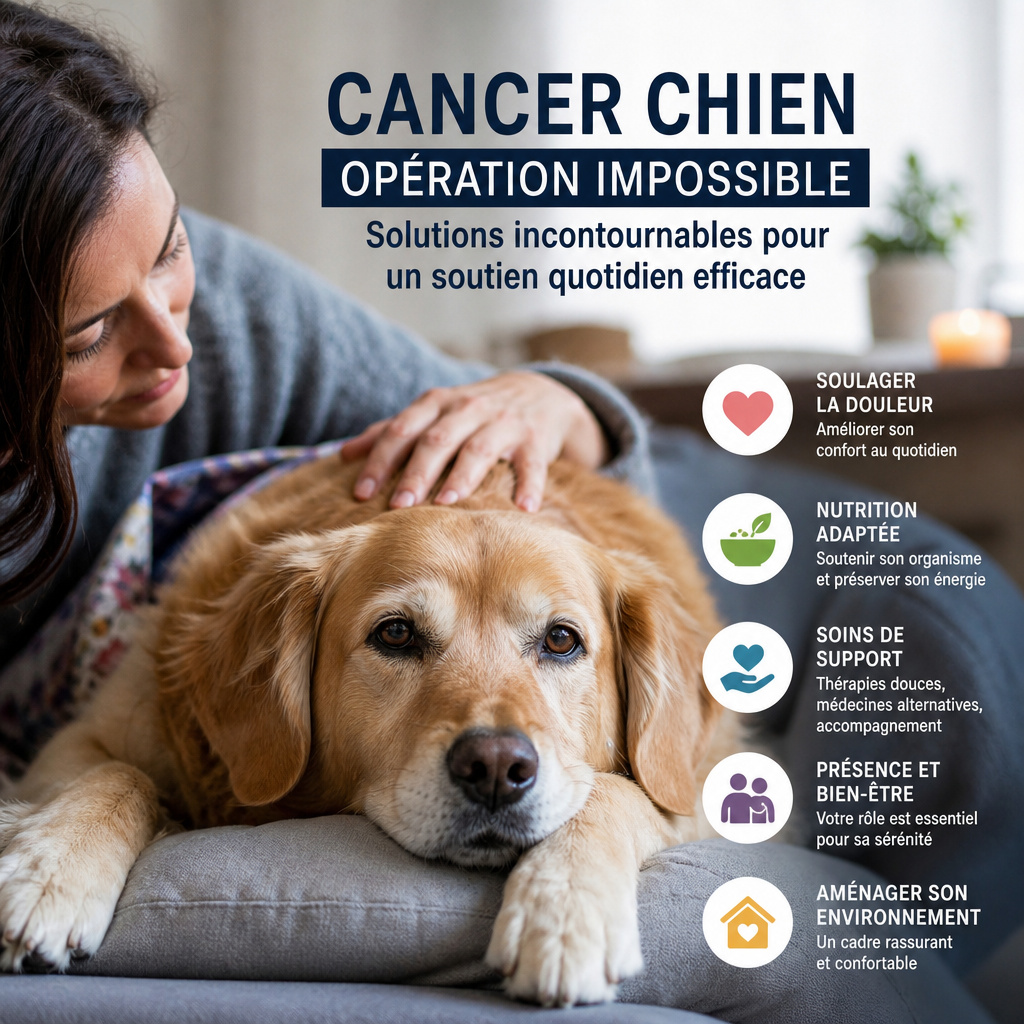
Une tumeur chien inopérable peut l’être pour plusieurs raisons. Elle peut être située près d’un organe vital, infiltrer des tissus difficiles à séparer ou être déjà trop étendue. Dans certains cas, l’état général du chien ne permet pas de supporter une anesthésie ou une opération lourde. La décision repose généralement sur des examens comme l’imagerie, la biopsie, les analyses sanguines et l’évaluation clinique globale.
The veterinarian does not limit himself to determining whether a mass can be removed. He also seeks to understand how the disease progresses, what symptoms it causes, and what options may improve daily life. An inoperable tumor is therefore not necessarily synonymous with a lack of treatment. Radiotherapy, certain medications, chemotherapy, or palliative care may be considered depending on the situation.
In practice, it is often useful to ask what the priorities are: reducing pain, slowing tumor growth, limiting inflammation, or preserving appetite. This discussion helps the family understand the care plan and participate in decisions calmly. The clearer the framework, the more cancer chien opération impossible it becomes a manageable situation on a daily basis, even if it remains emotionally difficult.
It is also important to keep in mind that some cancers progress slowly while others progress rapidly. The monitoring frequency may therefore vary depending on the type of tumor and the dog's response to treatment. Regular monitoring allows for early detection of new pain, loss of appetite, or changes in behavior, before the situation becomes more difficult to correct.
Les traitements possibles lorsque la chirurgie est exclue
Treatment depends on the type of cancer and its location. Chemotherapy may be proposed to slow progression or reduce certain symptoms. In dogs, it is often tailored to preserve comfort rather than seek significant side effects. Veterinary protocols are not always comparable to those used in humans.
Radiotherapy can also represent a solution when the tumor is localized, painful, or responsible for compression. It can help reduce tumor volume and relieve certain neurological or respiratory signs. However, access depends on available equipment, the number of necessary sessions, and the dog's ability to tolerate them.
In other situations, the veterinarian prescribes a medical treatment aimed at controlling symptoms. Pain relievers, anti-inflammatories, antiemetics, or medications intended to stimulate appetite can significantly improve comfort. It is essential to strictly adhere to prescribed doses and never give a human medication without veterinary validation.
Beyond the main treatments, supportive care is extremely important. Some dogs cope better with their care when they benefit from a stable routine, sufficient rest, and constant attention to pain. The cancer chien opération impossible impose souvent d’alterner médecine, observation et ajustements pratiques pour que les journées restent les plus douces possible.
Pour les familles qui cherchent des conseils concrets sur l’accompagnement nutritionnel, ce dossier complémentaire sur le better dog cancer dietary supplement peut aussi aider à comparer les options avec plus de sérénité.
Soutien chien cancer : soulager la douleur au quotidien
The soutien chien cancer commence par une observation attentive. La douleur ne se manifeste pas toujours par des gémissements. Un chien peut devenir plus distant, haleter au repos, changer de position fréquemment, refuser les escaliers, perdre l’envie de jouer ou présenter une irritabilité inhabituelle. Une diminution du toilettage, une posture voûtée ou des difficultés à se coucher doivent également être signalées.
Pour favoriser le bien-être, aménagez un espace calme, chaud et facilement accessible. Un matelas suffisamment épais peut réduire la pression sur les articulations et les zones sensibles. Les gamelles doivent être placées à une hauteur confortable, notamment si le chien souffre du cou ou de difficultés à se pencher.
Les promenades restent intéressantes, mais elles doivent être courtes et adaptées à son énergie. Plusieurs sorties tranquilles peuvent être préférables à une longue balade. Il faut éviter les efforts forcés, les escaliers répétés et les sols glissants. Des tapis antidérapants dans la maison peuvent prévenir les chutes et rassurer un animal affaibli.
Adapter les gestes du quotidien
Un animal malade supporte souvent mieux des routines simples et prévisibles. Garder les horaires habituels, limiter les changements brusques et parler doucement peuvent réduire le stress. Si le chien a besoin d’aide pour monter dans la voiture ou franchir une marche, un harnais de soutien ou une rampe peut préserver son autonomie tout en évitant les douleurs inutiles.
La présence humaine compte énormément. Beaucoup de chiens ressentent un apaisement réel lorsqu’ils restent près de leurs repères et de leurs proches. Le contact, les caresses et une attention régulière participent aussi au bien-être émotionnel.
Il est également utile de préparer la maison pour les jours plus difficiles. Placer l’eau à plusieurs endroits, éviter les obstacles dans les couloirs et réserver un coin de repos calme peuvent faciliter les déplacements. Dans un cancer chien opération impossible, ces petits aménagements ont souvent un effet très concret sur la qualité de vie et sur le niveau de stress de l’animal.
Certains chiens apprécient aussi des moments courts mais fréquents de stimulation douce : renifler dans le jardin, recevoir une friandise autorisée, suivre leur humain dans la maison ou profiter d’une présence tranquille. L’idée n’est pas d’en faire trop, mais de conserver des plaisirs simples sans fatiguer inutilement l’organisme.
Cancer chien opération impossible : mieux gérer le quotidien
Quand un cancer chien opération impossible cannot be removed, daily life becomes the heart of care. It is no longer just about treating the illness, but about organizing each day to reduce discomfort. Split meals, longer rest periods, and a secure environment can already make a real difference.
It is helpful to maintain stable reference points, especially if the dog seems tired or disoriented. A reassuring routine limits stress and can improve adherence to care. In this context, a cancer chien opération impossible often requires simple but regular adjustments to maintain the animal's balance and soothe the whole family.
Follow-up can also include daily notes. Some owners observe appetite, sleep, mobility, desire to go out, and level of interaction with the family. This logbook allows to see if the care provides real benefits or if the strategy needs to be reassessed with the veterinarian. This is particularly useful when the clinical picture evolves in small steps rather than abruptly.
One must not underestimate the emotional impact of this situation. A dog with difficult-to-operate cancer may have uneven days, with moments when everything seems almost normal and others more concerning. Accepting this fluctuation often helps the family maintain a realistic view, without dramatizing every dip in condition or minimizing the signs that require adjustment.
Maintenir l’alimentation et l’hydratation
Loss of appetite is common in dogs with cancer.
Any dietary changes should ideally be discussed with the veterinarian, especially in the presence of vomiting, diarrhea, kidney disease, or marked weight loss. Dietary supplements do not replace treatment and some may interact with medications. For background information on this topic, the National Cancer Institute provides useful information on supportive care and symptom management: official resources on complementary approaches.
Hydration should also be monitored. Several bowls of fresh water can be placed in areas where the dog rests. A significant decrease in consumption, dry gums, or sudden fatigue requires professional advice.
Monitor appetite without pressure
Forcing a dog to eat can sometimes worsen its stress. It is better to test different textures, offer smaller meals, and respect its pace. In some cases, the veterinarian may recommend temporary medication support to improve appetite or limit nausea.
If the dog refuses several meals in a row, it is important not to conclude too quickly that it is simply being stubborn. In a cancer chien opération impossible, decreased appetite may signal inadequately controlled pain, digestive discomfort, or disease progression. A consultation can then help distinguish between temporary discomfort and a genuine need for therapeutic adjustment.
The taste and smell of food also play an important role. Soft textures, warm foods, or more aromatic rations can sometimes help. The veterinarian may suggest a diet more suited to the dog's overall condition, in order to best maintain its weight and energy. Each change should remain gradual to avoid further disturbing an already fragile organism.
Surveiller la qualité de vie
In the context of a cancer chien opération impossible, quality of life becomes an essential benchmark. It can be helpful to note daily appetite, mobility, sleep, pain, interactions, and moments of pleasure. This tracking helps identify trends and provides the veterinarian with more precise information than a simple momentary feeling.
A dog generally maintains an acceptable quality of life when it can still eat or drink enough, rest comfortably, interact with its loved ones, and enjoy certain activities. Conversely, persistent pain, respiratory distress, repeated vomiting, or an inability to move should be taken very seriously.
Veterinary emergencies are necessary in cases of difficulty breathing, collapse, significant bleeding, uncontrollable pain, a suddenly bloated abdomen, or total inability to drink. A quick consultation can sometimes adjust treatment and avoid unnecessary suffering.
When monitoring becomes more complex, it may be helpful to ask the veterinarian for a simple assessment grid. This tool helps objectify the progression of the disease and decide more calmly on the next steps.
Il est souvent rassurant de se poser quelques questions concrètes : le chien se lève-t-il encore volontiers ? Cherche-t-il le contact ? Mange-t-il avec intérêt ? Peut-il se reposer sans agitation ? Ces repères ne remplacent pas un examen médical, mais ils aident à mieux lire ce que le chien exprime au quotidien. Dans une situation de cancer chien opération impossible, cette lecture régulière évite de rester dans le flou et facilite les décisions.
Quand consulter rapidement en cas de cancer chien opération impossible
Certains signes exigent une réaction rapide, surtout si un cancer chien opération impossible est déjà connu. Une respiration anormale, une faiblesse marquée, des vomissements répétés, un refus total de boire ou une douleur qui s’intensifie doivent alerter. Plus la prise en charge est précoce, plus il est possible d’ajuster les soins avant que l’état général ne se dégrade.
Il est aussi important de consulter si le chien devient soudainement confus, s’isole complètement ou cesse de s’intéresser à ses repères habituels. Ces changements peuvent traduire une aggravation de la maladie ou un effet secondaire des traitements. Dans tous les cas, mieux vaut demander l’avis du vétérinaire trop tôt que trop tard.
D’autres situations méritent également une vigilance accrue : difficulté à uriner, saignement anormal, perte de poids rapide, toux persistante ou déséquilibre inhabituel.
In practice, families are often surprised to see that an adjustment in pain or appetite significantly improves things within a few days. That’s why it is essential to report any changes, even subtle ones, so that the veterinarian can intervene at the right time.
Accompagner les décisions avec le vétérinaire
Dialogue with the veterinarian is essential to define a realistic plan. Ask what the treatment goals are, the expected benefits, possible side effects, and the signs that should lead to a consultation. It is also relevant to address palliative care early enough, as it does not mean abandoning care.
When the disease progresses, the veterinary team can help evaluate options with compassion and objectivity. The decision to end an animal's suffering is extremely difficult, but it can sometimes be the last act of protection and love. It should be made with a professional, based on the actual condition of the dog rather than guilt or fear.
The veterinarian's role is also to support the family over time, not just during emergency consultations. In a cancer chien opération impossible, follow-up appointments allow for dose adjustments, discussions of new symptoms, and choosing the best approach at the right time. This gradual support often reduces anxiety and gives the feeling of acting consistently.
It can also be helpful to address practical questions: what to do if the animal stops eating? When to call the clinic? What signs indicate an emergency? What options exist if pain becomes difficult to control? The more these points are clarified in advance, the more the family feels ready to react without panic.
Even when surgery is impossible, presence, gentleness, and daily attention remain valuable. A stable environment, appropriate care, and regular follow-up can offer the dog more comfortable days and preserve the moments of companionship that matter most. In a cancer chien opération impossible, these simple gestures often make a big difference in daily life.
With appropriate care, regular dialogue with the veterinarian, and simple adjustments at home, it is often possible to maintain more comfort than one imagines at the time of diagnosis. The key is to move forward step by step, with clarity and kindness, to provide the dog with the best possible support.