
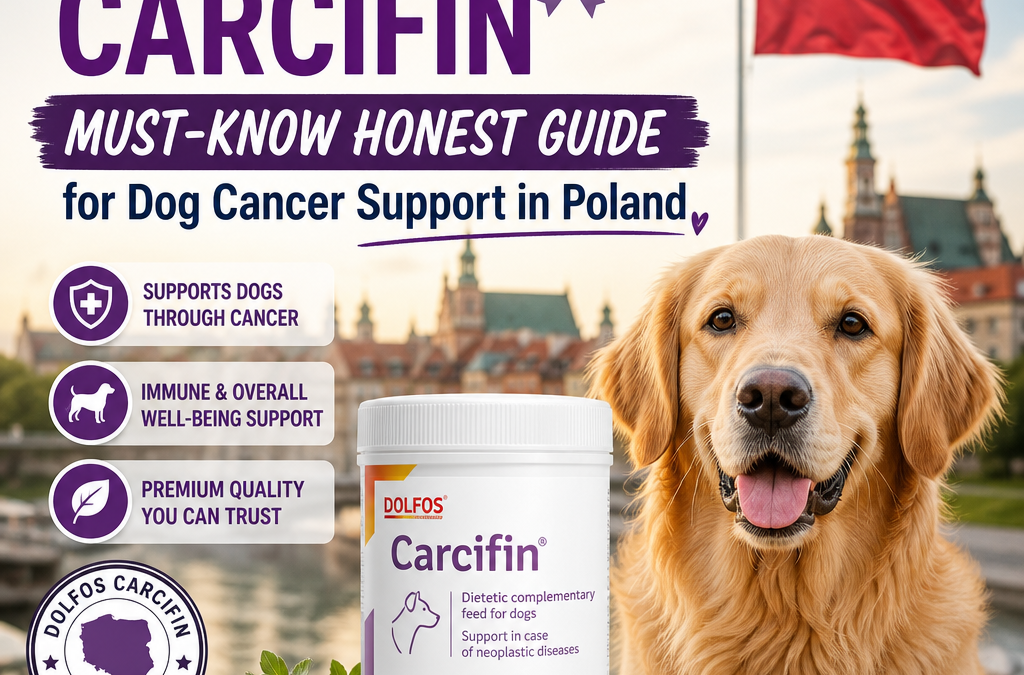
Dolfos Carcifin è un integratore nutrizionale specialistico discusso dai proprietari di cani in Polonia che cercano supporto aggiuntivo durante il trattamento del cancro. È importante comprendere cosa può e cosa non può fare questo prodotto prima di aggiungerlo alla routine di un cane. Un integratore può aiutare a fornire supporto nutrizionale, ma non è una cura per il cancro e non dovrebbe mai sostituire la diagnosi veterinaria, la chirurgia, la chemioterapia, la radioterapia, la gestione del dolore o altre cure raccomandate.
Se stai confrontando opzioni per la cura di supporto, può anche essere utile rivedere linee guida più ampie sulla cura del cancro per gli animali domestici in modo da poter collocare qualsiasi integratore nel giusto contesto. Per informazioni su come gli integratori vengono valutati nella nutrizione veterinaria, il guida dell'FDA sugli integratori dietetici veterinari è un riferimento utile.
Indice dei Contenuti
- Cos'è Dolfos Carcifin?
- Supporto al cancro nei cani Dolfos Carcifin: cosa dovrebbero sapere i proprietari
- Una recensione realistica di Dolfos Carcifin
- Come utilizzare il prodotto in modo responsabile
- Dolfos Carcifin Polonia: acquisto e guida veterinaria
- Domande da porre prima di iniziare
- Alimentazione e supporto nutrizionale durante il trattamento
- Monitoraggio a casa tra le visite veterinarie
- Quando un integratore potrebbe non essere la scelta migliore
- Prospettiva finale
Cos'è Dolfos Carcifin?
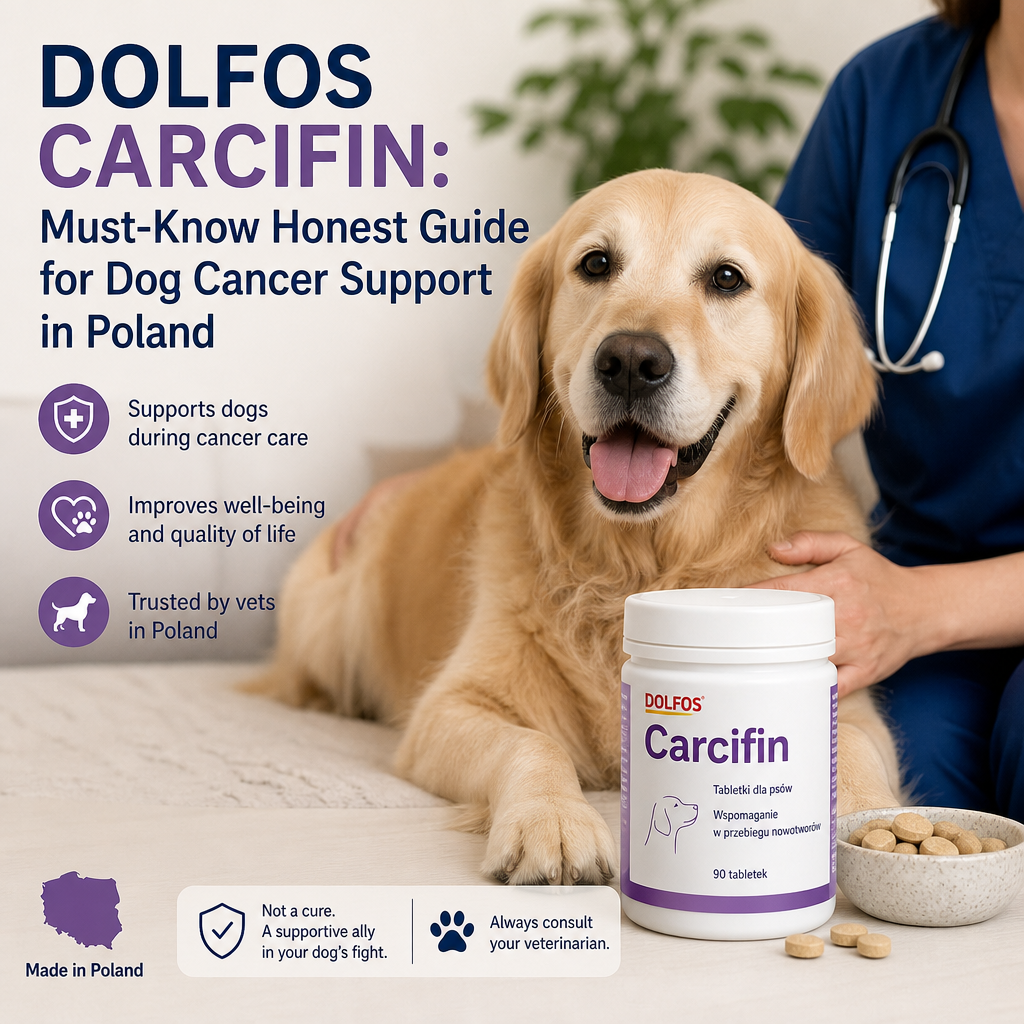
Dolfos Carcifin è un prodotto complementare destinato a supportare i cani durante periodi di malattia, comprese situazioni in cui il cancro influisce sull'appetito, sulla condizione corporea, sull'immunità o sulla vitalità generale. I prodotti in questa categoria sono solitamente progettati per fornire nutrienti selezionati o ingredienti biologicamente attivi che possono aiutare il corpo a far fronte a richieste nutrizionali aumentate.
Il cancro può influenzare i cani in modi diversi. Alcuni animali perdono peso, mangiano meno, diventano stanchi o sperimentano problemi digestivi. Altri possono mantenere un appetito normale ma perdere gradualmente massa muscolare. Questi cambiamenti possono derivare dalla malattia stessa, dall'infiammazione, dagli effetti collaterali del trattamento o da una combinazione di fattori. Il supporto nutrizionale può quindi essere utile, ma la sua idoneità dipende dalla diagnosi, dall'età, dal peso, dai farmaci e dalla salute generale del singolo cane.
La formulazione esatta, le istruzioni per il dosaggio e l'uso previsto devono sempre essere confermati sull'etichetta del prodotto attuale o attraverso le informazioni del produttore. Le formule e il packaging possono cambiare, e le descrizioni online non sono sempre accurate o complete.
Per molti proprietari, la prima preoccupazione è semplicemente se il cane può continuare a mangiare abbastanza per mantenere la forza durante la terapia. Questa preoccupazione è comprensibile. Quando appare una diagnosi seria, anche piccoli cambiamenti nell'appetito o nelle feci possono sembrare urgenti. Un integratore può sembrare un passo pratico, ma dovrebbe far parte di una strategia più ampia che tenga conto del tipo di tumore, dello stadio della malattia, dei farmaci attuali e della qualità della vita.
Vale anche la pena notare che diversi tumori pongono diverse richieste sul corpo. Un cane con una massa in crescita lenta e un appetito stabile potrebbe aver bisogno di un piano molto diverso rispetto a un cane con vomito, anemia o perdita di peso rapida. Ecco perché i prodotti venduti come nutrizione di supporto non dovrebbero mai essere scelti solo in base alle affermazioni di marketing. Il valore di qualsiasi prodotto dipende dal paziente di fronte a te.
Supporto al cancro nei cani Dolfos Carcifin: cosa dovrebbero sapere i proprietari
La frase “Dolfos Carcifin supporto per il cancro del cane” dovrebbe essere compresa come assistenza di supporto piuttosto che come trattamento diretto del cancro. Nessun supplemento dovrebbe essere presentato come capace di eliminare tumori, prevenire metastasi o garantire un miglior esito. Il cancro è un gruppo complesso di malattie e le decisioni terapeutiche devono basarsi su esami veterinari, test di laboratorio, imaging e, quando necessario, citologia o biopsia.
Un supplemento può avere un ruolo pratico in un piano di cura più ampio aiutando a colmare lacune nutrizionali o supportando un cane la cui condizione ha ridotto il suo appetito e resilienza. Tuttavia, i benefici possono variare considerevolmente. Un prodotto che è ben tollerato da un cane può causare disturbi digestivi o essere inadatto per un altro, particolarmente quando sono presenti anche malattie renali, epatiche, gastrointestinali o pancreatiche.
I proprietari dovrebbero chiedere al veterinario se il prodotto è appropriato insieme al trattamento attuale del cane. Questo è particolarmente importante quando il cane sta ricevendo chemioterapia, corticosteroidi, farmaci antinfiammatori non steroidei, antibiotici, anticoagulanti o farmaci per le crisi. Anche gli ingredienti naturali possono interagire con i farmaci o complicare l'interpretazione dei test del sangue.
I team veterinari guardano anche al quadro generale. Un cane che sembra più debole potrebbe affrontare dolore, nausea, disidratazione, infezione o anemia piuttosto che una semplice mancanza di vitamine. Se quei problemi non vengono affrontati per primi, qualsiasi supplemento avrà un effetto limitato. Il modo più onesto di pensare alla nutrizione di supporto è come uno strumento piccolo in un piano di cura molto più ampio.
In Polonia, come in altri paesi, i proprietari possono a volte sentirsi sopraffatti dalle affermazioni online, dalle raccomandazioni locali e dalle emozioni urgenti dopo una diagnosi. Questo è comprensibile. Tuttavia, la scelta più sicura è rallentare, confrontare le informazioni e utilizzare un prodotto solo dopo aver verificato se si adatta alla situazione medica del cane. Un approccio calmo e misurato spesso previene errori.
Una recensione realistica di Dolfos Carcifin
Una recensione equa di Dolfos Carcifin dovrebbe considerare sia la potenziale utilità che le limitazioni. Il principale punto positivo è che un supplemento veterinario dedicato può essere più facile da somministrare rispetto a cercare di combinare diversi prodotti umani o ingredienti fatti in casa. Un prodotto commerciale può anche offrire chiare indicazioni sul dosaggio basate sul peso corporeo e può essere prodotto secondo procedure di controllo qualità.
Un altro possibile vantaggio è la comodità. I cani sottoposti a trattamento per il cancro spesso necessitano di una routine semplice perché cambiamenti frequenti possono aumentare lo stress. Se il supplemento è accettato dal cane e non interferisce con i pasti o i farmaci, può adattarsi comodamente nella cura quotidiana.
Le limitazioni sono altrettanto importanti. Le prove per i supplementi nella cura del cancro nei cani sono spesso più limitate rispetto alle prove per i trattamenti convenzionali. Le testimonianze e le recensioni online possono descrivere esperienze personali, ma non possono dimostrare che un prodotto abbia causato un miglioramento. Un cane può apparire meglio a causa del sollievo dal dolore, di una migliore idratazione, di un trattamento riuscito, di cambiamenti nella dieta o di fluttuazioni naturali nella malattia.
I proprietari dovrebbero anche evitare di giudicare l'efficacia solo in base all'appetito o all'energia. Un cane può mangiare bene mentre il cancro progredisce, o sembrare stanco a causa della chemioterapia piuttosto che perché un supplemento è inefficace. Il monitoraggio regolare da parte del veterinario fornisce una valutazione più affidabile.
In pratica, la domanda più utile non è se un supplemento sia “buono” in generale, ma se corrisponda ai bisogni immediati del cane. Un paziente con perdita di peso potrebbe aver bisogno di strategie alimentari ad alta densità calorica, mentre un cane con nausea potrebbe aver bisogno di controllo dei sintomi prima che venga introdotto qualsiasi supplemento. Ecco perché una recensione di Dolfos Carcifin dovrebbe sempre essere abbinata alla diagnosi e al piano di trattamento del cane.
Alcuni proprietari chiedono anche se dovrebbero aspettarsi cambiamenti visibili in pochi giorni o se sia necessario un periodo di prova più lungo. Questo dipende dal motivo dell'uso. Se il prodotto supporta l'assunzione e il cane lo tollera bene, i miglioramenti possono manifestarsi come un appetito più costante, una migliore qualità delle feci o una più facile gestione del peso nel tempo. Tuttavia, se il cane ha una malattia avanzata o effetti collaterali gravi del trattamento, non si dovrebbe aspettare che un supplemento crei cambiamenti drammatici da solo.
Cosa può considerare un veterinario prima di raccomandarlo
Un veterinario può esaminare le tendenze del peso corporeo, le condizioni muscolari, lo stato di idratazione, la chimica del sangue, la funzione renale e epatica, e i farmaci attuali prima di consigliare una nutrizione di supporto. Se il cane ha vomito, diarrea, scarsa assorbimento, o una storia di pancreatite, la scelta potrebbe dover essere regolata o rinviata.
Per alcuni cani, il miglior risultato deriva dalla semplificazione del piano piuttosto che dall'aggiunta di più prodotti. L'obiettivo è supportare il comfort e l'assunzione senza creare un ulteriore carico digestivo o confusione nel dosaggio.
Le cliniche possono anche chiedere se il cane sta già seguendo una dieta terapeutica, se i bocconcini stanno influenzando l'appetito, e se la routine domestica consente un'amministrazione costante. Anche un prodotto ben progettato può essere compromesso da un uso incoerente o da un programma alimentare che non si adatta al paziente.
Come utilizzare il prodotto in modo responsabile
Prima di somministrare Dolfos Carcifin, registra il peso attuale del cane, l'appetito, la qualità delle feci, l'attività e i farmaci. Segui l'etichetta o le istruzioni del veterinario invece di aumentare la quantità nella speranza di ottenere risultati più rapidi. Maggiore non significa necessariamente migliore, e un'integrazione eccessiva può creare squilibri nutrizionali o problemi digestivi.
Introdurre qualsiasi nuovo prodotto con cautela, in particolare se il cane ha uno stomaco sensibile. Osservare eventuali vomito, diarrea, stitichezza, prurito, rifiuto di mangiare, stanchezza insolita o altri cambiamenti. Contattare un veterinario se compaiono o peggiorano i sintomi. Un cane che riceve un trattamento per il cancro può già essere vulnerabile alla disidratazione e alla perdita di peso, quindi i problemi digestivi persistenti non devono essere ignorati.
Il supplemento dovrebbe essere conservato anche secondo le istruzioni sulla confezione. Controllare la data di scadenza, il sigillo, le informazioni sul lotto e il metodo di somministrazione. Non utilizzare un prodotto danneggiato o mal etichettato.
Se il cane salta una dose, evitare di raddoppiare la dose successiva a meno che un veterinario non lo consigli esplicitamente. È solitamente più sicuro riprendere il programma normale e osservare la risposta del cane nei giorni successivi.
Molti proprietari trovano utile creare un semplice registro domestico. Annotare l'orario in cui è stato somministrato il prodotto, quanto cibo è stato mangiato, se l'assunzione di acqua è cambiata e se ci sono stati segni di nausea o disagio. Un breve resoconto può rendere le conversazioni di follow-up con la clinica molto più utili e può aiutare a identificare schemi che altrimenti verrebbero persi.
Segni che il piano potrebbe necessitare di aggiustamenti
- Appetito in calo o rifiuto di mangiare per più di un giorno
- Vomito ripetuto o feci molli
- Perdita di peso visibile o peggioramento della perdita muscolare
- Nuova letargia, irrequietezza o disagio
- Difficoltà a prendere farmaci o integratori insieme
Questi segni non significano automaticamente che il supplemento sia dannoso, ma significano che l'intero piano di cura dovrebbe essere rivisto rapidamente.
Se non si è sicuri se un cambiamento sia minore o urgente, è più sicuro contattare la clinica prima piuttosto che dopo. I cani con cancro possono disidratarsi o indebolirsi più rapidamente dei cani sani, quindi anche un breve periodo di scarsa assunzione può essere importante.
Dolfos Carcifin Polonia: acquisto e guida veterinaria
Per le persone che cercano Dolfos Carcifin in Polonia, l'approccio più sicuro è utilizzare cliniche veterinarie affidabili, farmacie per animali consolidate o rivenditori online autorizzati. Confrontare il nome del prodotto, la dimensione della confezione, l'elenco degli ingredienti, le istruzioni per il dosaggio e i dettagli del produttore. Evitare le inserzioni che fanno promesse drammatiche come curare il cancro o sostituire il trattamento professionale.
I proprietari di cani polacchi dovrebbero anche considerare di chiedere a un veterinario locale o a un oncologo veterinario per orientamenti. Un professionista può valutare se il cane ha effettivamente bisogno di ulteriore supporto nutrizionale e può raccomandare alternative se il prodotto non è disponibile. In alcuni casi, la priorità potrebbe essere una dieta veterinaria ad alta energia, supporto per l'appetito, farmaci anti-nausea, controllo del dolore, idratazione o trattamento di un'infezione sottostante piuttosto che un supplemento.
I proprietari potrebbero anche voler tenere copie dell'etichetta, del numero di lotto e della ricevuta d'acquisto. Questo rende più facile confermare cosa è stato utilizzato se sorgono domande durante gli appuntamenti di follow-up.
Quando si acquista online, è sensato controllare se il venditore fornisce l'etichetta completa del prodotto, le istruzioni per la conservazione e una chiara politica di reso. Se l'elenco è vago o le foto non corrispondono all'imballaggio ufficiale, questo è un segnale di avvertimento. I prodotti utilizzati in un paziente vulnerabile dovrebbero provenire da fonti che possono essere tracciate e verificate.
Quando cercare un consiglio veterinario più rapido
Contattare prontamente la clinica se il cane sviluppa disidratazione, vomito prolungato, feci nere o sanguinolente, debolezza estrema o cambiamenti respiratori improvvisi. Questi non sono effetti collaterali di routine e possono indicare un problema più serio che necessita di cure urgenti.
Un'azione rapida è particolarmente importante se il cane sta già ricevendo chemioterapia o ha un problema noto di coagulazione del sangue. In questi casi, aspettare di vedere se i sintomi passano da soli può portare a un'emergenza prevenibile.
Domande da porre prima di iniziare
Domande utili includono:
- Questo prodotto è adatto per il tipo e lo stadio di cancro del mio cane?
- Potrebbe interagire con i farmaci attuali?
- Il mio cane ha bisogno di esami del sangue prima o durante l'uso?
- Dovrebbe essere somministrato con cibo o separatamente?
- Quali segni indicherebbero che dovrebbe essere interrotto?
- Come misureremo se sta aiutando?
Queste domande incoraggiano un approccio pratico e basato su prove invece di fare affidamento su affermazioni di marketing.
Può anche essere utile chiedere se il supplemento dovrebbe essere introdotto prima o dopo i pasti e se il programma alimentare attuale del cane dovrebbe essere modificato per migliorare l'accettazione. I piccoli dettagli spesso contano più del prodotto stesso.
Un'altra domanda utile è se la dieta attuale del cane copre già le esigenze che il supplemento è destinato a soddisfare. Se il cane mangia bene e mantiene la condizione corporea, il veterinario potrebbe decidere che non è necessario alcun supporto extra. D'altra parte, se c'è una perdita di peso continua o un'assunzione scarsa, la clinica potrebbe suggerire un piano nutrizionale più ampio che includa il supplemento solo se aggiunge un reale valore.
Alimentazione e supporto nutrizionale durante il trattamento
La nutrizione è una delle questioni pratiche più importanti durante la cura del cancro. I cani che si sentono male possono mangiare meno, e anche una breve riduzione dell'assunzione può peggiorare la debolezza. I proprietari spesso si concentrano su un singolo supplemento, ma il piano alimentare quotidiano può contare altrettanto, o anche di più.
Alcuni cani stanno meglio con pasti più piccoli e frequenti. Altri preferiscono una routine costante e mangeranno meglio quando il cibo viene offerto a orari prevedibili. La palatabilità, la consistenza e la temperatura possono anche influenzare se un cane accetta il cibo. Un pasto leggermente riscaldato può avere un odore più forte e risultare più appetitoso, mentre un pasto freddo può essere rifiutato. Questi aggiustamenti non sostituiscono il trattamento, ma possono aiutare a mantenere l'assunzione.
Se il cane ha nausea, la prima priorità è di solito controllare quel sintomo piuttosto che aggiungere immediatamente nutrizione extra. Se il dolore limita l'alimentazione, il controllo del dolore può migliorare l'accettazione del cibo più di qualsiasi supplemento. Questo è uno dei motivi per cui il piano di supporto più efficace è spesso personalizzato e regolato nel tempo.
Per i cani con significativa perdita di peso, il team veterinario può discutere di una dieta più densa di calorie o di altre strategie alimentari. In alcuni casi, l'obiettivo non è semplicemente mantenere il cane che mangia, ma rallentare la perdita muscolare e preservare la forza. Questo potrebbe richiedere una combinazione di cambiamenti nella dieta, farmaci e monitoraggio attento piuttosto che un singolo prodotto.
I proprietari dovrebbero anche ricordare che “naturale” non significa automaticamente sicuro per ogni paziente. Un cane con malattia epatica, malattia renale o una storia di sensibilità digestiva potrebbe aver bisogno di un approccio più cauto. Ogni volta che un cane è già medicalmente complesso, una breve discussione con il veterinario può prevenire problemi a lungo termine.
Monitoraggio a casa tra le visite veterinarie
Il monitoraggio a casa può fare una differenza significativa durante il trattamento del cancro. I proprietari vedono il cane ogni giorno e sono di solito i primi a notare piccoli cambiamenti nel comportamento, nell'appetito o nel comfort. Monitorare questi cambiamenti aiuta il veterinario a prendere decisioni migliori e può mostrare se il piano attuale sta funzionando.
Cose utili da monitorare includono appetito, assunzione di acqua, livello di energia, consistenza delle feci, vomito, tosse, mobilità, respirazione e eventuali nuovi noduli o gonfiori. Una nota giornaliera non deve essere complicata. Anche solo poche parole su un calendario o un'app per il telefono possono rivelare tendenze nel tempo.
È anche saggio controllare se il cane è in grado di mantenere il farmaco. Se compresse, liquidi e integratori causano stress, l'intera routine potrebbe dover essere semplificata. Un cane che rifiuta tutti i prodotti orali potrebbe aver bisogno di un piano diverso piuttosto che di dosaggi forzati ripetuti.
I controlli del peso sono particolarmente utili. Idealmente, il cane dovrebbe essere pesato in modo coerente, utilizzando la stessa bilancia e orari simili se possibile. Cali improvvisi possono mostrare che la malattia o il trattamento stanno influenzando la nutrizione più del previsto, anche se il cane sembra esternamente stabile.
Se il cane ha giorni buoni e giorni cattivi, quel modello dovrebbe essere discusso anche con la clinica. Le fluttuazioni possono aiutare a identificare se il trattamento attuale sta alleviando i sintomi o se è necessario un nuovo supporto. Questo è un modo pratico per valutare se un integratore sta realmente aggiungendo valore.
Quando un integratore potrebbe non essere la scelta migliore
Ci sono momenti in cui anche un prodotto di supporto ben noto non è l'opzione giusta. I cani con vomito severo, diarrea incontrollata, disidratazione marcata o difficoltà a deglutire potrebbero aver bisogno prima di cure mediche immediate. In tali casi, gli integratori orali possono peggiorare lo stress o semplicemente non rimanere giù a lungo abbastanza per aiutare.
I cani con pancreatite, malattia epatica avanzata o problemi gastrointestinali complessi potrebbero anche aver bisogno di un piano nutrizionale personalizzato. Se un prodotto è ricco di ingredienti che non si adattano al paziente, il rischio potrebbe superare il potenziale beneficio. Allo stesso modo, se il cane sta già assumendo diversi farmaci e la routine sta diventando difficile da gestire, la semplificazione potrebbe essere la scelta migliore.
A volte il problema più grande è la qualità della vita. Se il cane non mangia più con interesse, è scomodo per la maggior parte della giornata o sta perdendo funzionalità nonostante il trattamento, la conversazione dovrebbe spostarsi verso una cura incentrata sul comfort. Questo non significa arrendersi. Significa scegliere gli interventi più probabili per aiutare il cane a sentirsi meglio ora.
Qui è dove le aspettative oneste contano di più. I prodotti di supporto possono essere utili, ma non sono magici. Un integratore può essere appropriato per un cane e non necessario per un altro. La decisione migliore è quella che corrisponde alla condizione del paziente, agli obiettivi della famiglia e alla guida del veterinario.
Prospettiva finale
Dolfos Carcifin può essere considerato come un elemento di supporto per alcuni cani, ma le aspettative dovrebbero rimanere realistiche. Gli obiettivi più importanti sono mantenere il comfort, una nutrizione adeguata, l’idratazione, la mobilità e la qualità della vita seguendo il piano di trattamento veterinario. Una revisione attenta di Dolfos Carcifin dovrebbe quindi riconoscere che i supplementi possono talvolta completare le cure per il cancro, ma non possono sostituire la diagnosi o la terapia. Usato con cautela, con guida professionale e monitoraggio regolare, il prodotto può avere un posto in un piano personalizzato per un cane che vive con il cancro in Polonia.
Nello scenario migliore, le cure di supporto offrono al cane giorni più stabili, un’alimentazione più facile e una migliore tolleranza al trattamento. Questo è un obiettivo significativo, anche quando la malattia stessa richiede ancora una gestione veterinaria continua.
Per i proprietari che affrontano una nuova diagnosi, la mentalità più utile è spesso quella di un’osservazione costante piuttosto che di urgenza. Chiedi cosa ha bisogno il cane ora, cosa si aspetta il veterinario dopo e se il supplemento supporta realmente quegli obiettivi. Quando il piano è pratico e attentamente monitorato, anche miglioramenti modesti possono rendere la vita quotidiana più confortevole sia per il cane che per la famiglia.