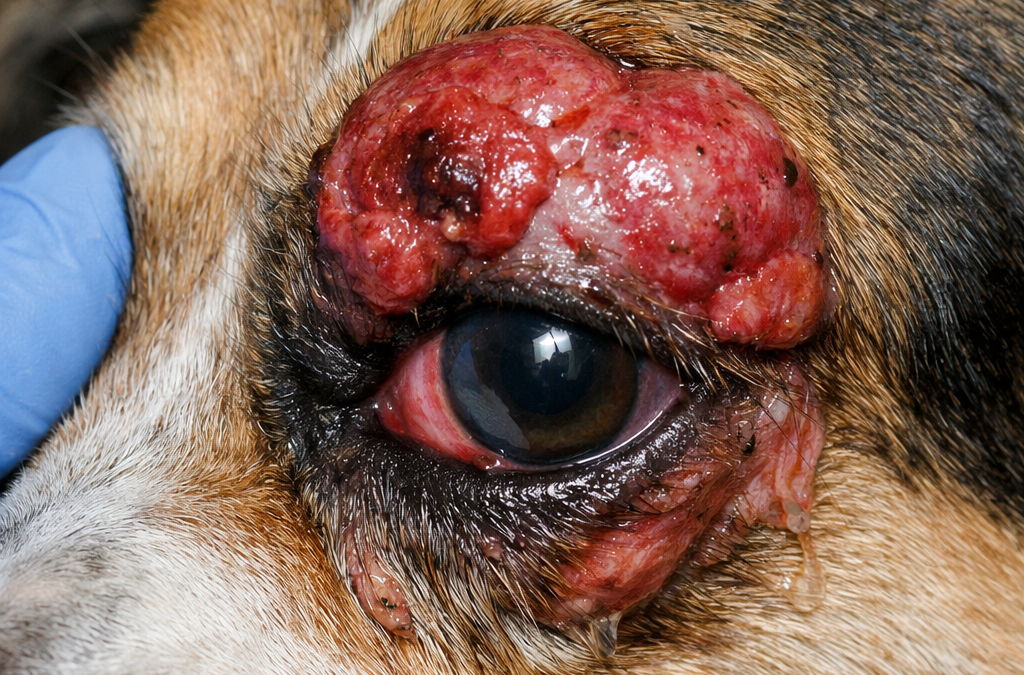
da TCMVET | 8 feb 2026 | Cancro e tumori del cane
Cosa significa “cellula fusiforme” nei cani
“Cellula fusiforme” descrive solitamente l'aspetto delle cellule tumorali al microscopio: lunghe, affusolate e fibrose, piuttosto che nominare un singolo tipo di cancro. Nei cani, questa descrizione spesso si sovrappone ai sarcomi dei tessuti molli (STS) e ai tumori di tipo sarcomatoso correlati, noti per la loro invasività locale: possono estendersi microscopicamente oltre ciò che puoi vedere o sentire. Questo modello di crescita è una delle principali ragioni per cui la recidiva locale diventa una preoccupazione chiave.
Quanto è raro un tumore a cellule fusiformi vicino all'occhio?
Dipende se la massa è una crescita superficiale della palpebra o un tumore perioculare/orbitale più profondo.
Molti tumori palpebrali nei cani sono comuni e spesso benigni, il che è rassicurante nella pratica oculistica quotidiana. Tuttavia, un tumore maligno di tipo fusiforme/sarcoma che cresce rapidamente o è profondo attorno all'occhio è uno scenario diverso. La malattia orbitale e retrobulbare (malattia nella cavità oculare o dietro il bulbo) è meno comune rispetto ai semplici rigonfiamenti palpebrali e richiede tipicamente una pianificazione più complessa.
Sintomi che i proprietari notano comunemente
Un tumore “sopra l'occhio” può apparire come un nodulo o un gonfiore fermo vicino al sopracciglio o alle palpebre, ma una malattia più profonda può manifestarsi attraverso cambiamenti funzionali. I cani possono strizzare gli occhi, lacrimare eccessivamente, sviluppare secrezioni persistenti, strofinarsi l'occhio o il viso, o sembrare timorosi della testa. Se l'orbita è coinvolta, i segni classici possono includere esoftalmo (un occhio sporgente), protrusione della terza palpebra e dolore attorno all'occhio.
Dolore e sofferenza: quanto fa male?
Il dolore varia ampiamente ed è influenzato da ciò che il tumore sta facendo localmente.
Una massa può diventare molto scomoda se distorce la posizione della palpebra o causa irritazione corneale cronica con il battito delle palpebre. Le linee guida in oftalmologia veterinaria notano che le masse palpebrali spesso aumentano di dimensioni nel tempo e possono irritare la superficie oculare, influenzando il comfort e la qualità della vita. Anche la malattia orbitale può essere dolorosa, specialmente quando è presente gonfiore, pressione o infiammazione, e il dolore è frequentemente menzionato tra i segni clinici nelle condizioni orbitali.
Perché il trattamento vicino all'occhio è così impegnativo
Per i tumori di tipo sarcoma, l'obiettivo è solitamente un forte controllo locale, perché le “dita” tumorali microscopiche possono estendersi oltre ciò che appare anormale. Sul tronco o sugli arti, i chirurghi spesso mirano a margini più ampi per rimuovere quelle estensioni invisibili. Attorno all'occhio, ottenere margini ampi può essere difficile senza danneggiare strutture critiche, motivo per cui i medici possono sembrare cauti riguardo alle garanzie.
Opzioni di trattamento: cosa viene tipicamente considerato
La maggior parte dei piani di trattamento ruota attorno al controllo locale e al comfort, spesso combinando più approcci.
La chirurgia è comunemente la pietra angolare quando possibile, sia per rimuovere il carico tumorale sia per ottenere una patologia definitiva. Per i sarcomi dei tessuti molli nei cani, la completezza dell'escissione influisce fortemente sugli esiti; le revisioni sottolineano che i tumori escissi in modo incompleto presentano un rischio maggiore di recidiva locale. In alcuni casi, i chirurghi possono raccomandare procedure più radicali per ottenere il controllo in posizioni difficili (inclusi interventi chirurgici che coinvolgono l'orbita) perché alcuni sarcomi possono richiedere approcci radicali quando l'anatomia limita la larghezza del margine.
La radioterapia è spesso discussa quando i margini sono vicini o incompleti, o quando l'anatomia rende impossibile l'escissione ampia. Viene utilizzata con l'intento di controllare le cellule residue microscopiche e ridurre la possibilità di ricrescita, anche se i risultati variano in base al comportamento del tumore, alla pianificazione della dose e alle specifiche di ciascun caso.
Rischio di recidiva: cosa indicano ripetutamente le ricerche
Nella letteratura sui STS canini, due fattori emergono ripetutamente: grado istologico e stato del margine.
Una revisione sui STS canini escissi in modo incompleto o stretto riporta tassi di recidiva pubblicati approssimativamente nell'intervallo 17%–37% tra gli studi, illustrando perché i “margini puliti” siano così importanti. Un'altra panoramica ampiamente citata nota che con escissione completa, la recidiva locale nei cani può essere molto bassa, e margini incompleti aumentano sostanzialmente il rischio di recidiva.
Prospettive di sopravvivenza e “cronologia della sopravvivenza”: il modo pratico di pensare alla prognosi
Poiché il “tumore a cellule fusiformi” può rappresentare più tipi di tumore, il tempo di sopravvivenza non può essere riassunto in modo affidabile con un solo numero. Un modo più affidabile per comprendere la prognosi è ancorare le aspettative a ciò che predice più fortemente il comportamento:
Un tumore a basso grado che può essere completamente controllato localmente generalmente ha una prospettiva migliore rispetto a un tumore ad alto grado o a uno che non può essere completamente rimosso a causa della posizione. Nei STS canini, il rischio metastatico è comunemente descritto come dipendente dal grado, con tumori ad alto grado che presentano una possibilità significativamente maggiore di diffusione nel corso della malattia. Nei tumori perioculari in particolare, “quanto bene può essere controllata la malattia locale” diventa spesso il fattore dominante che plasma sia la qualità della vita che l'esito complessivo.
Cosa possono fare i proprietari precocemente che spesso conta (senza perdersi nei dettagli)
I punti di focalizzazione più utili all'inizio sono confermare la vera estensione della malattia e proteggere il comfort.
Imaging avanzato come CT o MRI è frequentemente raccomandato nei casi orbitali/perioculari perché gli esami di routine non possono sempre mostrare cosa sta accadendo dietro l'occhio, e l'imaging aiuta a guidare la pianificazione chirurgica e della radioterapia. Il comfort è anche centrale: i tumori perioculari possono scatenare irritazione e infiammazione corneale, e ridurre il sfregamento/trauma e affrontare l'irritazione della superficie oculare può fare una differenza significativa nel benessere quotidiano.
FAQ: risposte rapide che i proprietari di animali cercano
Ogni tumore vicino alla palpebra è maligno?
No. I tumori della palpebra sono comuni nei cani e molti si comportano in modo benigno, anche se qualsiasi massa che cresce rapidamente, ulcerata, sanguinante o dolorosa necessita di una valutazione tempestiva.
Perché un veterinario raccomanderebbe di rimuovere l'occhio?
Quando un tumore è profondamente invasivo o i margini non possono essere ottenuti in modo sicuro, può essere raccomandata una chirurgia locale più aggressiva per migliorare il controllo locale in una regione dove lo spazio è limitato.
Perché la chirurgia e la radioterapia non possono garantire che non torni?
I tumori di tipo sarcoma possono estendersi microscopicamente, e attorno all'occhio può essere difficile rimuovere abbastanza tessuto circostante. Gli STS escissi incompletamente hanno un rischio di recidiva documentato in più studi.
Cosa predice più fortemente la prognosi?
Il grado di patologia e se il tumore è stato rimosso con margini puliti sono ripetutamente evidenziati come principali fattori di rischio di recidiva e diffusione negli STS canini.
Come Baituxiao può aiutare come cura di supporto
I tumori a cellule fusiformi perioculari sono solitamente gestiti prima con controllo locale—più spesso chirurgia, e talvolta radioterapia—perché questi tumori possono essere localmente invasivi e la regione oculare limita margini ampi. In quel contesto, molti proprietari considerano anche cure di supporto integrative per aiutare a mantenere il comfort, l'appetito e la qualità della vita complessiva insieme al piano di trattamento principale.
Baituxiao è una formula botanica TCVM posizionata dal produttore per cani e gatti con “tumori e protuberanze,” ed è tipicamente discussa come un'opzione aggiuntiva piuttosto che una soluzione autonoma. Poiché le formule botaniche possono interagire con i farmaci utilizzati attorno alla chirurgia, al controllo del dolore, all'infiammazione o alla cura oncologica, è meglio utilizzarla come parte di un piano coordinato con il team veterinario.
da TCMVET | Gen 14, 2026 | Cancro e tumori del cane
I rigonfiamenti alla coda nei cani possono essere inquietanti per qualsiasi custode di animali domestici, specialmente quando sorgono pensieri preoccupanti riguardo ai tumori delle ghiandole anali. Comprendere cosa potrebbero indicare questi rigonfiamenti—e come intraprendere azioni consapevoli e responsabili—può portare rassicurazione mentre si supporta il benessere del proprio animale. Questa guida completa esplora le potenziali cause dei rigonfiamenti alla coda nei cani, i segni da osservare, i modi in cui i veterinari valutano i tumori delle ghiandole anali, suggerimenti per la cura quotidiana e come rimanere proattivi per il comfort e la qualità della vita del tuo cane.
—
Comprendere i Rigonfiamenti alla Coda nei Cani
I rigonfiamenti alla coda possono svilupparsi per diversi motivi, che vanno da crescita benigna a preoccupazioni più serie. Mentre alcuni rigonfiamenti rimangono piccoli e innocui, altri possono richiedere attenzione veterinaria per valutare la loro natura.
Possibili Cause dei Rigonfiamenti alla Coda
– Cisti sebacee: Piccole sacche a crescita lenta contenenti materiale oleoso.
– Lipomi: Tumori adiposi spesso trovati in cani più anziani, di solito morbidi e mobili.
– Infezioni cutanee o ascessi: Risultanti da infortuni o follicoli ostruiti.
– Masse correlate alle ghiandole anali: Masse che originano da ghiandole vicino all'ano.
– Altri tumori o noduli: Potrebbero svilupparsi da vari tipi di tessuto.
Non ogni rigonfiamento è pericoloso, ma è essenziale monitorare eventuali cambiamenti nel tempo, specialmente vicino alla base della coda.
—
Tumori delle Ghiandole Anali: Cosa Dovrebbero Sapere i Proprietari di Animali
I tumori delle ghiandole anali sono crescite che originano dalle sacche anali situate su entrambi i lati dell'ano. Questi tumori possono variare da benigni a maligni, e una valutazione veterinaria precoce è fondamentale per determinare la loro natura e il miglior corso d'azione.
Perché le Ghiandole Anali Sono Importanti
– Posizione: Situate sotto la coda, le ghiandole possono sviluppare anomalie che si manifestano come rigonfiamenti o gonfiore.
– Funzione: Rilasciano un profumo usato per la comunicazione tra cani.
– Rischi: Infiammazione, cambiamenti strutturali o tumori possono causare disagio, odore o altre complicazioni.
Osservazioni comuni
– Difficoltà a sedersi comodamente
– Strusciarsi o leccare l'area anale
– Gonfiore o durezza vicino all'ano
– Tremolio della coda o riluttanza a scodinzolare
Ogni volta che compaiono segni nuovi o persistenti, prenota un esame con un veterinario. La valutazione professionale previene l'errata interpretazione dei sintomi e aiuta a identificare se sono necessari ulteriori esami.
—
Tumori della coda nei cani: riconoscere i segni precocemente
Poiché i tumori della coda che i cani possono sperimentare possono emergere gradualmente, rimanere vigili aiuta a cogliere i problemi precocemente. Cerca di esaminare delicatamente l'area della coda del tuo cane durante le sessioni di toelettatura, osservando eventuali cambiamenti nelle dimensioni o nella consistenza.
Segni da notare
– Gonfiore persistente: Soprattutto se sono fermi o in crescita.
– Cambiamenti della pelle: Rossore, perdita di pelo o consistenza ruvida.
– Disagio: Reagire quando l'area viene toccata.
– Cambiamenti comportamentali: Energia ridotta, scarsa appetito o nascondersi in modo insolito.
Questi segni non indicano automaticamente tumori delle ghiandole anali, ma giustificano una visita veterinaria per chiarezza e tranquillità.
—
Come i veterinari valutano i tumori della coda
I professionisti veterinari utilizzano vari test per valutare i tumori e determinare i passi successivi. L'approccio esatto dipende dall'età del tuo cane, dalla sua storia medica e dalle caratteristiche del tumore.
Passaggi Diagnostici Tipici
1. Physical examination: Controllare dimensioni, posizione e consistenza.
2. Aspirato con ago sottile o biopsia: Raccogliere cellule o tessuti per l'analisi.
3. Immagine: Ecografia, radiografia o TAC per valutare le strutture interne.
4. Esami del sangue: Fornisce informazioni sulla salute generale.
Discuti il processo apertamente con il tuo veterinario, chiedendo spiegazioni comprensibili su cosa può rivelare ciascun test. I genitori di animali domestici che rimangono coinvolti e informati spesso si sentono più sicuri nel supportare il proprio cane durante la valutazione.
—
Supportare i cani durante la cura dei tumori delle ghiandole anali
Quando un veterinario identifica tumori delle ghiandole anali, viene progettato un piano ponderato basato sulla situazione unica del cane. Poiché le istruzioni mediche appartengono a un contesto clinico, i proprietari di animali domestici possono concentrarsi nel fornire un ambiente domestico tranquillo e seguire da vicino le raccomandazioni professionali.
Suggerimenti pratici per il supporto a casa
– Tieni un diario: Registra le osservazioni, inclusi appetito, livello di energia e qualità delle feci.
– Monitorare le condizioni del corpo: Mantieni un peso sano per ridurre lo stress aggiuntivo.
– Fornisci esercizio leggero: Passeggiate leggere o giochi mentalmente stimolanti tengono il tuo cane impegnato.
– Offri posti comodi per riposare: Letti morbidi aiutano ad alleviare la pressione su aree sensibili.
– Rimani aggiornato sulle visite di controllo: Le visite di follow-up consentono ai veterinari di monitorare i progressi e adattare i piani di cura.
Concentrandosi su comfort, coerenza e guida veterinaria, i proprietari possono aiutare i cani a sentirsi sicuri durante il loro percorso di cura.
—
Considerazioni su nutrizione e benessere naturale
Sebbene cibo e integratori non possano diagnosticare o curare condizioni gravi, una nutrizione sana supporta la vitalità complessiva. Chiedi al tuo veterinario riguardo a diete bilanciate adatte all'età, alla razza e al livello di attività del tuo cane.
Informazioni generali sulla nutrizione
– Proteine e grassi bilanciati: Supportano la salute muscolare e l'energia.
– Fonti di fibra: Favoriscono la digestione e l'eliminazione regolare.
– Acidi grassi omega: Può aiutare a mantenere la salute della pelle e un pelo lucido.
– Idratazione: Assicurati di avere sempre accesso a acqua fresca.
Approcci naturali al benessere—come ambienti tranquilli, toelettatura delicata e attività di arricchimento—possono anche promuovere un senso di sicurezza. Consulta sempre il tuo veterinario prima di introdurre qualsiasi cambiamento dietetico o integratori.
—
Pratiche di prevenzione e rilevamento precoce
Anche se non tutti i tumori alla coda possono essere prevenuti, l'osservazione di routine e le cure veterinarie preventive fanno una differenza significativa.
Abitudini Utili
– Toelettatura regolare: Ti aiuta a individuare nuovi tumori precocemente.
– Programma di bagni costante: Mantiene la pelle pulita e ti consente di controllare eventuali problemi.
– Visite veterinarie di routine: Gli esami di benessere catturano cambiamenti sottili.
– Addestramento e gestione: Insegna al tuo cane a tollerare la manipolazione della coda e della parte posteriore in modo che le ispezioni siano più facili.
Stabilire queste abitudini favorisce una relazione collaborativa con il tuo veterinario e mantiene il tuo animale domestico a suo agio.
—
Domande da porre al veterinario
La conoscenza consente ai proprietari di cani di prendere decisioni informate. Considera di portare un elenco di domande agli appuntamenti.
Argomenti di discussione
– Che tipo di tumore ha il mio cane e quali test lo verificano?
– Ci sono modifiche allo stile di vita che potrebbero mantenere il mio cane a suo agio?
– Con quale frequenza dovrei monitorare il tumore?
– Quali segni indicano che dovrei programmare un follow-up urgente?
Una comunicazione attiva assicura che tu comprenda ogni passo nel piano di cura del tuo cane.
—
Supporto emotivo per i proprietari di animali domestici
Scoprire un tumore sulla coda del tuo cane può essere emotivamente impegnativo. Prenditi del tempo per elaborare le informazioni e chiedere supporto quando necessario.
Strategie di coping
– Fai affidamento sul tuo team veterinario: Possono chiarire i risultati e i prossimi passi.
– Connettiti con comunità di supporto: I forum online o i gruppi locali possono condividere esperienze utili.
– Prenditi cura di te stesso: Pasti equilibrati, riposo e tempo all'aperto rafforzano la resilienza.
– Celebra i momenti quotidiani: Passeggiate tranquille, tempo di coccole e gioco rafforzano il tuo legame.
Rimanere radicati e speranzosi ti aiuta a rimanere un pilastro di supporto calmo per il tuo animale domestico.
—
Rimanere informati sui tumori delle ghiandole anali
Informazioni affidabili plasmano decisioni responsabili. Concentrati su risorse basate su prove come specialisti veterinari certificati, articoli sottoposti a revisione paritaria e organizzazioni di salute animale rispettabili.
Valutare le fonti di informazione
– Controlla le credenziali: Cerca veterinari autorizzati o istituzioni riconosciute.
– Fai attenzione alle soluzioni rapide: Evita affermazioni o trattamenti non verificati.
– Chiedi al tuo veterinario: Possono raccomandare materiali di lettura affidabili o specialisti.
Essere selettivi riguardo alle informazioni mantiene il benessere del tuo cane in carreggiata ed evita malintesi.
—
Una mentalità olistica per il benessere del cane
La cura olistica significa considerare il comfort fisico, il benessere emotivo e un ambiente pacifico. Letti morbidi, routine costanti, toelettatura delicata e interazioni calme contribuiscono a un senso generale di sicurezza.
Pratiche olistiche semplici
– Passeggiate consapevoli: Passeggiate tranquille permettono di annusare ed esplorare.
– Massaggio e tocco delicato: Quando approvato dal tuo veterinario, un leggero massaggio può aiutare a rilassare i muscoli.
– Giocattoli di arricchimento: I distributori di puzzle, i giochi di annusamento lenti e i giocattoli morbidi da masticare mantengono attiva la mente.
– Musica e aromaterapia: Suoni rilassanti o profumi approvati dal veterinario possono creare un'atmosfera tranquilla.
Osserva sempre le reazioni del tuo cane e interrompi qualsiasi cosa che causi disagio.
—
Conclusione: Sostenere il Benessere Naturale con Cura
Ogni cane merita attenzione compassionevole, specialmente quando nuovi rigonfiamenti sollevano domande. Rimanendo osservante, collaborando con professionisti veterinari e creando un ambiente domestico confortante, puoi affrontare i rigonfiamenti della coda con fiducia e cura. Ricorda di affrontare ogni passo con pazienza, mantenere una comunicazione aperta con il team di cura del tuo animale e continuare a esplorare pratiche di benessere naturale gentili che nutrono il senso di equilibrio complessivo del tuo cane.
da TCMVET | Gen 14, 2026 | Cancro e tumori del cane
Le erbe per cani anziani possono svolgere un ruolo delicato e di supporto negli anni d'oro del tuo cane, offrendo comfort naturale insieme a cure veterinarie regolari. Man mano che i cani invecchiano, le loro esigenze cambiano: la mobilità rallenta, la digestione si modifica e il benessere generale richiede maggiore attenzione. Molti genitori di animali domestici si rivolgono a opzioni olistiche come erbe e cambiamenti nello stile di vita come parte di un piano di cura equilibrato. Questa guida esplora come utilizzare con attenzione le erbe per cani anziani, cosa considerare e come migliorare il comfort del tuo compagno invecchiante attraverso strategie pratiche e cura consapevole.
—
Comprendere l'invecchiamento nei cani anziani
I cani entrano tipicamente nei loro anni senior intorno ai sette anni, anche se questo varia in base alla razza e alla taglia. Man mano che il metabolismo rallenta e gli organi maturano, i cani diventano più sensibili allo stress, alla dieta, ai livelli di attività e ai cambiamenti ambientali. I cambiamenti legati all'età possono includere:
– Livelli di energia più bassi
– Digestione sensibile o appetito ridotto
– Rigidità articolare o riluttanza a muoversi
– Cambiamenti comportamentali come aumento della vocalizzazione, confusione o irrequietezza
– Maggiore bisogno di calore, routine e familiarità
Comprendere queste transizioni ti aiuta a supportare il tuo cane con pazienza e compassione, mentre collabori con un veterinario ed esplori strategie di comfort delicate a base di erbe.
—
Cosa sono le erbe per cani anziani?
Le erbe per cani anziani sono botaniche che possono alleviare le comuni sfide dell'invecchiamento in modo sicuro e misurato. Le erbe possono essere essiccate, fresche o in forma di formula (capsule, polveri, tè o tinture). Sono emerse da pratiche tradizionali in tutto il mondo—dall'Ayurveda all'erboristeria occidentale—dove le piante naturali venivano utilizzate per supportare il benessere.
I principi chiave includono:
– Supportare la vitalità, non sopprimere i sintomi
– Complementare le cure veterinarie piuttosto che sostituirle
– Ascoltare le risposte del tuo cane alle erbe e adattarsi secondo necessità
Le erbe presentano diverse proprietà, come calmanti, digestive lenitive o nutrimento generale, che possono essere utili durante gli anni senior. Consulta sempre un veterinario, idealmente uno esperto in cure erboristiche o integrative, prima di introdurre nuove piante.
—
Erbe per Cani Anziani da Esplorare per il Comfort
Camomilla e il Suo Influsso Calmante
L'aroma delicato della camomilla spesso conforta i cani ansiosi o irrequieti. Può essere utile quando un cane anziano sperimenta un'andatura notturna, un lieve disturbo digestivo o una generale sensazione di disagio. La camomilla è comunemente offerta come infusione di tè che puoi aggiungere al cibo o all'acqua, o come erba secca mescolata ai pasti. Poiché la camomilla è delicata, molti cani la tollerano bene, ma è importante monitorare eventuali allergie.
Scutellaria per il Rilassamento
La scutellaria è un'erba venerata per le sue proprietà rilassanti senza sedazione pesante. Può essere utile per i cani più anziani che sembrano tesi, reattivi o sensibili ai rumori e ai cambiamenti. In combinazione con modifiche dello stile di vita (routine costanti, spazi tranquilli, orari di alimentazione prevedibili), la scutellaria può supportare l'equilibrio emotivo.
Cardo Mariano per un Delicato Supporto al Fegato
Il fegato gioca un ruolo centrale nel metabolismo e nella disintossicazione, e i cani anziani spesso beneficiano di un delicato supporto epatico. Il cardo mariano, ricco di silimarina, è comunemente usato dai professionisti per le sue qualità antiossidanti e potenziali effetti protettivi. Molti proprietari di animali domestici incorporano il cardo mariano in rotazione o in corsi occasionali, piuttosto che fare affidamento su di esso continuamente. Ancora una volta, un veterinario dovrebbe guidare la durata e l'idoneità, specialmente se il tuo cane assume farmaci.
Curcuma e le Sue Qualità Antiossidanti
La curcuma contiene curcumina, un composto con proprietà antiossidanti e lenitive ampiamente studiate. I cani anziani possono apprezzare i pasti infusi di curcuma per un comfort generale, anche se dovrebbe essere abbinata a grassi come l'olio di cocco o l'olio di pesce per migliorare l'assorbimento. Poiché la curcuma può interagire con alcuni farmaci o condizioni digestive, consulta il tuo veterinario prima di usarla regolarmente.
Biancospino per il Supporto Cardiaco e Circolatorio
Le bacche e le foglie di biancospino sono state a lungo utilizzate per supportare il benessere circolatorio. Alcuni veterinari integrativi introducono il biancospino per i cani anziani che mostrano segni di invecchiamento dei sistemi cardiovascolari, sebbene sia essenziale un attento monitoraggio. È spesso parte di un protocollo più ampio che include dieta, esercizio controllato e controlli di routine.
Spirulina e Erba Medica per Aumenti Nutrizionali
La spirulina e l'erba medica sono integratori erboristici ricchi di nutrienti che possono fornire ulteriore supporto vegetale per energia e resilienza immunitaria. La spirulina è ricca di clorofilla e aminoacidi, mentre l'erba medica contiene vitamine, minerali e fibra di supporto. Aggiungere questi in quantità moderate alla dieta di un cane anziano può aiutare a colmare le lacune nutrizionali.
—
Considerazioni Chiave Quando Selezioni Erbe per Cani Anziani
1. Consultation: Un veterinario esperto in medicina erboristica può raccomandare erbe appropriate, aiutare a evitare interazioni pericolose e monitorare i progressi.
2. Qualità: Scegli erbe da fonti affidabili che offrono una provenienza trasparente e test di terze parti per contaminanti.
3. Modulo: Decidi tra polveri, capsule, tinture o tè. Alcuni cani preferiscono le erbe mescolate con cibo umido; altri gestiscono meglio le capsule.
4. Allergie: Introduci un'erba alla volta in piccole quantità, osservando segni di intolleranza come prurito, vomito o diarrea.
5. Consistency: Le erbe di solito agiscono gradualmente. L'uso costante e misurato spesso funziona meglio della somministrazione sporadica.
—
Consigli per il Comfort Ambientale per Cani Anziani
Le erbe si abbinano meglio a strategie di comfort pratiche e quotidiane. Considera i seguenti modi per aiutare il tuo cane anziano a sentirsi al sicuro, supportato e contento:
– Letti accoglienti: Letti ortopedici, bordi rialzati o cuscini riscaldati (progettati per animali domestici) possono lenire le articolazioni rigide e fornire calore.
– Superfici antiscivolo: Tappetini o corridoi riducono lo scivolamento su pavimenti in legno, riducendo lo stress sulle articolazioni e aumentando la fiducia.
– Acqua e cibo accessibili: Posiziona le ciotole su tappetini antiscivolo e considera stazioni di alimentazione leggermente elevate.
– Toelettatura di routine: Spazzolature regolari e massaggi delicati migliorano la circolazione e offrono tempo di legame.
– Ritiri tranquilli: Un'area di riposo designata lontano dal rumore domestico aiuta i cani a rilassarsi e sentirsi al sicuro.
– Illuminazione soffusa di notte: Luci soffuse o luci notturne guidano i cani anziani che hanno una visione ridotta o ansia notturna.
—
Dieta e Supporto Digestivo
Importanza di una Nutrizione Bilanciata
I cani anziani spesso traggono beneficio da diete ricche di nutrienti e facilmente digeribili. Sebbene esistano formule commerciali per cani anziani, consulta un veterinario o un nutrizionista canino per assicurarti che il cibo del tuo cane soddisfi le esigenze individuali. Ruotare le proteine, incorporare verdure cotte dolcemente e includere grassi sani può mantenere l'interesse per i pasti e supportare un peso sano.
Erbe che Supportano la Digestione
– Zenzero: Conosciuto per lenire il disagio allo stomaco, lo zenzero può aiutare i cani che sperimentano nausea occasionale. Usare con parsimonia e chiedere consiglio veterinario per i cani in terapia con farmaci anticoagulanti.
– Radice di tarassaco: A volte usata per supportare la digestione e la funzione epatica, la radice di tarassaco può essere aggiunta ai pasti in piccole quantità.
– Finocchio: Può alleviare gas o gonfiore lievi. Il suo sapore simile alla liquirizia è solitamente ben tollerato dai cani.
Idratazione
I cani anziani dovrebbero sempre avere accesso ad acqua fresca. Puoi migliorare l'idratazione incorporando cibi ricchi di umidità come brodo di ossa, verdure frullate o topper per crocchette ricchi d'acqua.
—
Attività e Mobilità
Esercizio Delicato per Cani Anziani
Anche i cani più anziani traggono beneficio dal movimento, che mantiene i muscoli forti e le articolazioni flessibili. Punta a passeggiate brevi e frequenti piuttosto che a un'unica lunga camminata. Monitora il passo del tuo cane e consenti il tempo per annusare: la stimolazione mentale è importante quanto quella fisica.
Erbe Focalizzate sulla Mobilità
Alcune erbe supportano il comfort e la flessibilità delle articolazioni:
– Boswellia: Spesso usata nei piani di benessere tradizionali per il supporto delle articolazioni grazie ai suoi composti resinosi.
– Artiglio del diavolo: Tipicamente raccomandato da professionisti olistici per la cura delle articolazioni; tuttavia, dovrebbe essere evitato nei cani con determinate condizioni di salute.
Discuti combinazioni o uso a lungo termine con il tuo veterinario per garantire la sicurezza.
Terapie complementari
L'agopuntura, il massaggio, l'idroterapia o gli esercizi di fisioterapia possono alleviare la tensione e incoraggiare il movimento. Queste modalità dovrebbero essere guidate da professionisti accreditati esperti nel lavorare con cani anziani.
—
Benessere Emotivo e Comportamento
Riconoscere i Cambiamenti Emotivi
I cani anziani possono sperimentare cambiamenti cognitivi o ansia. I segni includono camminare avanti e indietro, risvegli notturni, vocalizzazioni o maggiore attaccamento. La pazienza e la rassicurazione costante sono cruciali durante queste fasi della vita.
Supporto calmante a base di erbe
– Radice di valeriana: Spesso usata per il sollievo occasionale dallo stress. Introdurla gradualmente, poiché il suo odore terroso può essere forte.
– Passiflora: Un'erba delicata che può ridurre l'irrequietezza e supportare l'equilibrio emotivo.
Combinare queste con aggiustamenti dello stile di vita (musica soft, diffusori di aromaterapia con profumi sicuri per i cani, routine prevedibili) può favorire il rilassamento.
—
Creare un kit di erbe per cani anziani
Considera di organizzare i tuoi prodotti erboristici e gli articoli di supporto in un unico posto:
1. Etichetta i contenitori con il nome dell'erba, lo scopo previsto e eventuali note.
2. Tieni traccia dell'uso in un diario, annotando comportamenti, appetito e eventuali cambiamenti.
3. Pianifica controlli con il tuo veterinario per rivedere il piano erboristico e assicurarti che si adatti ancora al profilo di salute del tuo cane.
4. Ruota le erbe quando appropriato, dando pause per evitare un'eccessiva dipendenza.
—
Collaborare con i professionisti veterinari
I veterinari formati in medicina erboristica, cure integrative o Medicina Veterinaria Tradizionale Cinese (TCVM) possono progettare protocolli personalizzati. Valuteranno:
– Età, razza e salute generale
– Farmaci o integratori attuali
– Assunzione nutrizionale e livello di attività
– Indicatori comportamentali
Questo approccio collaborativo garantisce che le erbe siano un complemento ai controlli veterinari regolari, agli esami del sangue, alla cura dentale e a qualsiasi diagnostica necessaria.
—
Erbe per cani anziani e sicurezza
La sicurezza deve rimanere la massima priorità:
– Conoscere le controindicazioni: Alcune erbe potrebbero non essere appropriate per cani con condizioni renali, epatiche o cardiache.
– Evitare gli oli essenziali internamente: Molti oli, anche se derivati da erbe, non sono sicuri per l'ingestione.
– Conservare le erbe correttamente: Tienile lontane da umidità, luce solare e animali curiosi.
– Osserva attentamente il tuo cane: Se noti cambiamenti nelle feci, nell'appetito, nella respirazione o nel comportamento, interrompi l'uso dell'erba e consulta il tuo veterinario.
—
Onorare la routine e la stabilità
I cani anziani prosperano nella prevedibilità. Abbina il supporto erboristico a routine consapevoli:
– Orari di sveglia, pasti e passeggiate coerenti
– Minima interruzione delle aree di riposo
– Introduzioni lente quando arrivano visitatori
– Profumi, giocattoli e coperte familiari
Questi passaggi riducono lo stress e rendono più facile per il tuo cane adattarsi a cambiamenti sottili.
—
Benessere naturale oltre le erbe
Oltre alle erbe per cani anziani, considera strategie di benessere naturale più ampie:
– Snack nutrienti: Opta per masticabili morbidi o snack delicatamente disidratati che siano facili per i denti.
– Toelettatura consapevole: Usa asciugamani caldi, spazzole delicate e carezze calmanti.
– Tempo all'aperto: L'esposizione alla luce solare (durante il tempo appropriato) aiuta a regolare il sonno e l'umore.
– Stimolazione mentale: I distributori di puzzle, i giochi olfattivi o brevi sessioni di addestramento mantengono attiva la mente.
Il benessere naturale riguarda la cura dell'intero essere del tuo cane: corpo, mente e cuore.
—
Celebrare i piccoli momenti
Ogni cane anziano ha bisogni e gioie uniche. Celebra le piccole vittorie: un sonnellino confortevole, una coda che scodinzola o una serata tranquilla al tuo fianco. Il supporto erboristico, combinato con pazienza, comprensione e guida veterinaria, crea un ambiente nutriente per gli ultimi anni del tuo cane.
—
Conclusione
Le erbe per cani anziani, se usate con attenzione, offrono un comfort delicato come parte di un piano di benessere completo. Collaborando con il tuo veterinario, scegliendo botaniche di alta qualità e mantenendo routine costanti, puoi aiutare il tuo cane a invecchiare con dignità e facilità. Continua a osservare i bisogni del tuo compagno, adattando le pratiche di cura e assaporando il tempo che condividi. Approcci naturali, radicati nella compassione e nella conoscenza, possono portare arricchimento e armonia nella vita del tuo cane anziano.
da TCMVET | Gen 14, 2026 | Cancro e tumori del cane
Il supporto naturale durante la chemioterapia diventa un argomento importante per i custodi dei cani quando i loro animali affrontano la chemioterapia. Le emozioni possono essere intense, ed è naturale cercare modi delicati per mantenere il tuo compagno a suo agio rimanendo in linea con i consigli veterinari. Comprendere cosa significa realmente “supporto naturale”—routine nutrizionali, comfort emotivo e aggiustamenti di stile di vita ponderati—ti aiuta a fare scelte informate che rispettano sia la scienza che i bisogni unici del tuo cane.
Perché la cura di supporto è importante durante la chemioterapia
La chemioterapia può essere un impegno significativo per qualsiasi cane, toccando tutto, dai livelli di energia all'appetito. Mentre i veterinari supervisionano il piano medico, i custodi degli animali giocano un ruolo enorme nel creare un ambiente calmo e nutriente a casa. La cura di supporto non sostituisce i farmaci o la guida professionale; piuttosto, migliora il benessere generale del tuo cane attraverso routine costanti, coinvolgimento mentale e attenta osservazione.
Fondamenti del supporto naturale durante la chemioterapia
Costruire un quadro per il supporto naturale durante la chemioterapia significa concentrarsi su tre pilastri: nutrizione, gestione dello stress e comfort quotidiano. Ogni pilastro lavora insieme per aiutare il tuo cane a sentirsi sicuro e accudito durante il trattamento. Piccole modifiche—come fornire un luogo di riposo tranquillo o offrire puzzle di arricchimento—possono fare una differenza notevole.
Considerazioni su nutrizione e idratazione
Una dieta equilibrata fornisce al tuo cane i mattoni per la forza. Anche se dovresti sempre seguire le raccomandazioni del tuo veterinario, alcune idee fondamentali possono aiutarti a guidare le tue scelte:
– Pasti equilibrati: Cerca cibi che offrano proteine magre, carboidrati complessi e grassi benefici per mantenere un'energia costante.
– Ingredienti delicati: Opzioni facilmente digeribili—come verdure cotte o proteine semplici—possono essere utili se lo stomaco del tuo cane sembra sensibile.
– Focus sull'idratazione: I cambiamenti dell'acqua fresca dovrebbero essere frequenti. Alcuni cani apprezzano i cubetti di ghiaccio aromatizzati o brodi a basso contenuto di sodio diluiti per varietà.
– Piccole porzioni frequenti: Servire porzioni più piccole più spesso può incoraggiare a mangiare quando l'appetito oscilla.
– Monitorare le reazioni: Tieni un semplice diario alimentare per annotare eventuali cambiamenti nelle feci, nell'energia o nell'interesse per determinati cibi. Condividi le osservazioni con il tuo veterinario.
Comfort emotivo e routine costanti
I cani spesso traggono sicurezza da orari prevedibili. Mantenere rituali familiari—passeggiate mattutine, coccole serali o sessioni di toelettatura delicate—assicura al tuo compagno che la vita offre ancora comfort e stabilità.
– Zone tranquille: Crea un'area di riposo accogliente lontano dal rumore domestico, completa di coperte e giocattoli preferiti.
– Arricchimento sensoriale: Offri musica soft, spazi privi di odori o illuminazione naturale diffusa per alleviare l'iperstimolazione.
– Interazione consapevole: Fai attenzione ai segnali del tuo cane. Alcuni giorni potrebbero desiderare affetto; altri giorni potrebbero volere più spazio personale.
Attività delicata e supporto alla mobilità
Un movimento leggero mantiene le articolazioni lubrificate e i muscoli attivi. Discusso i livelli di attività appropriati con il tuo veterinario, poi adatta secondo necessità:
– Passeggiate brevi: Brevi passeggiate su superfici morbide possono essere più facili per zampe e articolazioni.
– Giocattoli puzzle: Esercizi mentali, come i giocattoli dispenser di snack, coinvolgono la mente senza richiedere uno sforzo fisico intenso.
– Letti confortevoli: Letti ortopedici o tappetini di supporto aiutano a cuscire le aree delicate e incoraggiano un riposo adeguato.
Collaborare con il tuo team veterinario
Una comunicazione aperta con il tuo oncologo veterinario o medico di base è centrale per il supporto naturale alla chemioterapia. Possono suggerire tempistiche per i controlli, segnalare segnali di allerta e aiutarti a interpretare i cambiamenti comportamentali. Considera di tenere un registro di:
– Abitudini alimentari
– Assunzione di acqua
– Preferenze di gioco o riposo
– Risposte alle tecniche di rilassamento
– Qualsiasi nuovo comportamento che si presenta tra un appuntamento e l'altro
Condividere queste osservazioni consente al tuo veterinario di personalizzare le raccomandazioni specificamente per l'esperienza del tuo cane.
Punti di contatto olistici senza affermazioni mediche
Alcuni tutori esplorano pratiche di benessere delicate come l'aromaterapia con oli essenziali sicuri per gli animali domestici (sempre diluiti e approvati da un veterinario), tecniche di massaggio lento o tempo supervisionato al sole. Questi approcci si concentrano sul rilassamento piuttosto che sul trattamento. Ricorda:
– L'approvazione del veterinario è fondamentale: Anche i prodotti naturali possono interagire con i farmaci.
– Meno è di più: Introduci un nuovo elemento alla volta in modo da poter osservare come risponde il tuo cane.
– Comfort prima di tutto: Se il tuo cane mostra disinteresse o disagio, interrompi quella pratica e torna ai comfort familiari.
Suggerimenti pratici per il supporto quotidiano
Le routine quotidiane possono diventare più facili da gestire con un insieme di strategie di riferimento:
1. Pianifica la preparazione dei pasti in anticipo: Porzionare il cibo in anticipo può ridurre lo stress nei giorni impegnativi.
2. Imposta avvisi di promemoria: Usa le sveglie del telefono per i tempi di assunzione dei farmaci, i controlli dell'acqua fresca o brevi sessioni di esercizio.
3. Ruota l'arricchimento: Tieni una piccola selezione di giocattoli e ruotali settimanalmente per mantenere l'interesse.
4. Usa strumenti per la toelettatura delicati: Spazzole morbide o guanti da toelettatura possono aiutare a rimuovere il pelo sciolto senza irritazione.
5. Monitora il consumo energetico domestico: Chiedi ai membri della famiglia di mantenere i livelli di rumore bassi ed evitare cambiamenti improvvisi nella routine.
Leggere i segnali del tuo cane
Il linguaggio del corpo canino rivela molto sui livelli di comfort. Poiché la chemioterapia può aumentare la sensibilità, cerca segnali:
– Postura rilassata: Indica contentezza.
– Sbadigliare o leccarsi le labbra: Può segnalare lieve stress.
– Camminare avanti e indietro o irrequietezza: Potrebbe significare disagio o la necessità di una pausa tranquilla.
– Ricerca di affetto: Molti cani si appoggiano di più ai loro tutori quando hanno bisogno di rassicurazione.
Rispondi regolando l'ambiente: abbassa le luci, riduci il rumore o offri una carezza delicata se il tuo cane ama il contatto.
Integrare le prospettive di benessere naturale
Il benessere naturale enfatizza l'armonia tra le esigenze fisiche e l'equilibrio emotivo. Per i cani in chemioterapia, questo potrebbe significare:
– Pause all'aria aperta: Brevi periodi all'esterno possono fornire nuovi odori e stimolazione delicata.
– Compagnia consapevole: Semplicemente sedersi accanto al tuo cane, leggere o parlare dolcemente, favorisce la connessione senza richiedere energia.
– Spazi abitativi puliti: Lava regolarmente la biancheria da letto, le ciotole e i giocattoli con detergenti delicati e sicuri per gli animali per mantenere l'igiene.
– Rinforzo positivo: Celebra le piccole vittorie: finire un pasto, esplorare il giardino o interagire con un giocattolo.
Bilanciare l'ottimismo con aspettative realistiche
È naturale sperare per il meglio, ma rimanere con i piedi per terra ti aiuta a rispondere in modo efficace. Fai affidamento sull'esperienza del tuo team veterinario e sii gentile con te stesso durante il processo. Alcuni giorni possono sembrare difficili; altri potrebbero portare sorprese commoventi. Fai affidamento sul supporto di familiari, amici o comunità di cura degli animali quando hai bisogno di incoraggiamento.
Conclusione
Supportare un cane durante la chemioterapia richiede pazienza, osservazione e un costante focus sul comfort. Integrando pratiche di supporto naturale alla chemioterapia—nutrizione equilibrata, ambienti tranquilli, attività dolci e comunicazione ravvicinata con il tuo veterinario—crei routine rassicuranti che onorano le esigenze del tuo cane. Ogni scelta consapevole contribuisce a un approccio amorevole e radicato al benessere naturale.
da TCMVET | Gen 14, 2026 | Cancro e tumori del cane
I rischi di cancro nei Cavalier, i segni precoci dei tumori nei Cavalier e i tumori comuni in questa razza sono argomenti che molti proprietari affettuosi cercano alla fine mentre i loro cani invecchiano. I Cavalier King Charles Spaniels sono apprezzati per la loro natura gentile, gli occhi espressivi e l'amore per la compagnia umana—ma come tutte le razze, affrontano certe sfide di salute, inclusi tumori e cancro. Comprendere a cosa il tuo Cavalier potrebbe essere predisposto, come individuare i segni di avvertimento precoci e come supportarli nei loro anni da senior può fare una reale differenza nella qualità della vita.
—
A. Panoramica della razza
I Cavalier King Charles Spaniels sono piccoli cani da compagnia, che pesano tipicamente tra i 13 e i 18 libbre. Sono affettuosi, orientati verso le persone e spesso descritti come “cani velcro” perché amano stare vicino alle loro famiglie. Il loro temperamento è generalmente:
– Gentile e amichevole
– Buoni con i bambini e altri animali domestici
– Adattabili sia alla vita in appartamento che in casa, a patto che ricevano interazione quotidiana e esercizio moderato
La loro aspettativa di vita media è di circa 10-14 anni, anche se questo può variare in base alla genetica, all'ambiente e alla cura della salute complessiva.
I Cavalier sono noti per specifici problemi ereditari, in particolare:
– Malattie cardiache (in particolare la malattia della valvola mitrale)
– Problemi neurologici come la malformazione simile a Chiari e la syringomielia
– Problemi ortopedici come le patelle lussanti
Anche se non sono universalmente considerati una razza “ad alto rischio di cancro” come alcune razze giganti, molti Cavalier sperimentano tumori e cancro con l'età. Alcuni tipi sono comunemente visti nei cani di piccola taglia e sono stati segnalati frequentemente nei Cavalier, in particolare tumori della pelle e dei tessuti molli, così come alcuni tumori legati al sangue.
—
B. Comprendere i rischi di cancro nei Cavalier, i segni precoci dei tumori nei Cavalier, i tumori comuni in questa razza
Non ogni Cavalier svilupperà un cancro, ma essere consapevoli dei modelli visti nella razza ti aiuta a rimanere proattivo. I seguenti tipi di tumori e cancro sono spesso segnalati nei Cavalier e in razze simili di piccola taglia:
1. Tumori dei mastociti (MCT)
I tumori delle cellule mastocitarie sono uno dei tumori cutanei più comuni nei cani e si vedono relativamente spesso nei Cavalier. Di solito appaiono come:
– Protuberanze o rigonfiamenti cutanei che possono crescere, ridursi o cambiare improvvisamente
– Lesioni che possono essere pruriginose, rosse o infiammate
Nelle razze piccole, questi tumori possono essere notati inizialmente come piccole protuberanze simili a “punture di insetto” che non scompaiono. Poiché i tumori delle cellule mastocitarie possono variare da basso grado (a crescita lenta) a molto aggressivi, è essenziale una valutazione veterinaria tempestiva di qualsiasi nuova protuberanza.
2. Lipomi e Tumori dei Tessuti Molli
I tumori benigni di grasso (lipomi) sono comuni nei cani di mezza età e anziani, compresi i Cavalier. Questi di solito si sentono:
– Morbidi, mobili e appena sotto la pelle
– Non dolorosi al tatto
Tuttavia, non ogni protuberanza “che sembra grassa” è benigna. Alcuni sarcomi dei tessuti molli possono imitare i lipomi nella consistenza e nell'aspetto. Per questo motivo, qualsiasi protuberanza dovrebbe essere controllata piuttosto che presumere che sia innocua, in particolare in un Cavalier anziano.
3. Linfoma (linfosarcoma)
Il linfoma è un cancro del sistema linfatico (linfonodi e organi correlati). I Cavalier, come molte razze, possono essere colpiti. I proprietari possono notare per primi:
– Linfonodi ingrossati e sodi sotto la mascella, davanti alle spalle o dietro le ginocchia
– Gonfiore generalizzato, letargia o perdita di peso
Il linfoma è trattabile, e una diagnosi precoce offre più opzioni, rendendo importanti controlli regolari del corpo e visite veterinarie, specialmente dopo la mezza età.
4. Emangiosarcoma (HSA)
L'emangiosarcoma è un cancro maligno delle cellule dei vasi sanguigni, che colpisce spesso la milza, il fegato o il cuore. È più noto nelle razze grandi, ma può verificarsi anche in cani più piccoli come i Cavalier. Spesso è “silenzioso” fino a quando non causa emorragie interne. I segni possono includere:
– Debolezza o collasso improvviso
– Gengive pallide
– Addome disteso
Poiché i segni possono essere sottili fino a stadi avanzati, esami di benessere regolari e analisi del sangue negli anziani possono a volte rilevare problemi correlati prima.
5. Tumori al cervello o al midollo spinale
I Cavalier hanno già una predisposizione razziale a problemi neurologici non correlati al cancro, quindi può essere particolarmente difficile capire cosa stia succedendo quando compaiono nuovi segni neurologici. I tumori nel cervello o nel midollo spinale possono causare:
– Nuove crisi epilettiche
– Cambiamenti improvvisi nel comportamento
– Difficoltà a camminare, girare o inclinazione della testa
Qualsiasi nuovo o peggioramento sintomo neurologico in un Cavalier dovrebbe essere preso sul serio e discusso con un veterinario, poiché potrebbero essere coinvolte più condizioni (non solo il cancro).
Perché i Cavalier possono essere a rischio
Diversi fattori influenzano il rischio di cancro in questa razza:
– Dimensioni e longevità: Le razze più piccole spesso vivono più a lungo, quindi hanno più anni in cui il cancro può svilupparsi.
– Collo di bottiglia genetico: Razze pure popolari come i Cavalier possono condividere genetica che predispone a certe malattie.
– Condizione fisica: Come tutti i cani, i Cavalier che sono in sovrappeso o obesi possono essere a maggior rischio per alcuni tumori e avere più difficoltà a far fronte alla malattia.
Essere consapevoli di queste tendenze consente ai proprietari di essere vigili senza allarmarsi.
—
C. Segnali di allarme precoce a cui i proprietari dovrebbero prestare attenzione
Rilevare un tumore precocemente può dare al tuo cane più opzioni e una migliore possibilità di comfort. Fai attenzione a:
1. Cambiamenti della pelle e sottocutanei
– Nuovi grumi o protuberanze
– Noduli esistenti che crescono, cambiano colore o diventano duri
– Piaghe che non guariscono
– Perdita di pelo in un'area localizzata
Esegui un delicato “controllo del corpo una volta al mese”:
1. Fai scorrere le mani lentamente lungo l'intero corpo del tuo Cavalier, comprese le ascelle, l'inguine, il petto, la pancia e la base della coda.
2. Nota eventuali nuove protuberanze o cambiamenti nelle dimensioni/texture di quelle esistenti.
3. Tieni un registro con date e dimensioni approssimative (ad es., “dimensione di un pisello”, “dimensione di un'uva”).
Rivolgersi al veterinario se:
– Un nodulo è nuovo e persiste per più di 2–4 settimane.
– Un nodulo cresce rapidamente, diventa doloroso o ulcerato.
– Ci sono più noduli che appaiono in un breve periodo.
2. Cambiamenti generali della salute
– Perdita di peso senza cambiamenti nella dieta
– Appetito diminuito o diventare schizzinoso con il cibo
– Aumento del consumo di bevande o della minzione
– Letargia, meno interesse per le passeggiate o il gioco
Questi segni possono derivare da molte condizioni, non solo dal cancro, ma dovrebbero sempre richiedere una visita veterinaria.
3. Mobilità, dolore e cambiamenti comportamentali
– Rigidità, zoppia o riluttanza a saltare sui mobili
– Gridare quando viene sollevato o toccato in aree specifiche
– Evitare improvvisamente scale o attività preferite
Poiché i Cavalier sono stoici e anche inclini a problemi articolari e neurologici, qualsiasi nuovo o peggioramento del problema di mobilità merita una valutazione tempestiva.
4. Respirazione, sanguinamento e altri segnali d'allarme
– Tosse persistente
– Difficoltà respiratorie o respirazione rapida a riposo
– Epistassi o lividi inspiegabili
– Pancia gonfia, specialmente se improvvisa
Qualsiasi di questi sintomi dovrebbe essere trattato come urgente, richiedendo cure veterinarie immediate o valutazione d'emergenza.
—
D. Considerazioni sull'assistenza agli anziani per i Cavalier
Man mano che i Cavalier entrano negli anni senior (spesso intorno agli 8 anni e oltre), il loro rischio di tumori e altre malattie aumenta. Una cura senior attenta può supportare la salute generale e aiutare a rilevare problemi prima.
1. Nutrizione e condizione fisica
I Cavalier amano il cibo e possono guadagnare peso facilmente, il che stressa il loro cuore e le articolazioni e può complicare la gestione del cancro.
– Punta a una vita visibile e a costole facilmente percepibili (senza prominenza acuta).
– Considera una dieta senior o di controllo del peso raccomandata dal veterinario adatta allo stato di salute del tuo cane.
– Monitora il peso ogni 1–2 mesi a casa o in clinica.
Qualsiasi cambiamento dietetico dovrebbe essere discusso con il tuo veterinario, in particolare se il tuo cane ha malattie cardiache o altre condizioni croniche.
2. Esercizio e aggiustamenti dell'attività
I Cavalier più anziani traggono ancora beneficio dal movimento quotidiano:
– Passeggiate brevi e frequenti sono spesso migliori di uscite lunghe e intense.
– Gioco delicato e arricchimento mentale (giochi di annusare, giocattoli puzzle) aiutano a mantenere il benessere generale.
– Evita l'eccessivo sforzo, specialmente in caso di caldo o se il tuo cane ha problemi cardiaci o respiratori.
3. Cura delle articolazioni e gestione del dolore
Con l'età, possono svilupparsi artrite e problemi spinali:
– Ove possibile, fornire lettiere morbide e pavimenti antiscivolo.
– Usa rampe o gradini per ridurre i salti su e giù dai mobili.
– Discusso integratori per il supporto delle articolazioni, farmaci o altre strategie di gestione del dolore con il tuo veterinario: non iniziare o cambiare farmaci per il dolore senza guida professionale.
4. Controlli e screening veterinari
Per un Cavalier adulto sano, di solito si raccomandano controlli annuali. Per i senior, molti veterinari consigliano:
– Esami di benessere ogni 6 mesi
– Esami del sangue e test delle urine regolari
– Controlli della pressione sanguigna e valutazioni cardiache (soprattutto importanti in questa razza)
– Imaging periodico (ad es., raggi X o ecografia) se indicato in base ai segni clinici
Queste visite consentono al tuo veterinario di rilevare cambiamenti sottili precocemente, inclusa la potenziale sviluppo di tumori.
—
E. Prevenzione generale dei tumori e supporto al benessere
Nessuna strategia può prevenire completamente il cancro, ma supportare la salute generale del tuo Cavalier può ridurre alcuni fattori di rischio e migliorare la resilienza.
1. Mantenere un peso sano
– Utilizzare pasti misurati anziché pasti liberi.
– Limita i trattamenti ad alto contenuto calorico e condividi piccole porzioni di opzioni salutari (come verdure semplici) se il tuo veterinario approva.
– Combina il controllo delle calorie con esercizio quotidiano adattato alla condizione del tuo cane.
2. Dieta equilibrata e idratazione
– Dai da mangiare una dieta completa e bilanciata formulata per la fase della vita e le esigenze mediche del tuo cane.
– Garantire un accesso costante all’acqua fresca.
– Se sei interessato a diete cucinate in casa o specializzate, collabora con il tuo veterinario o un nutrizionista veterinario certificato per evitare lacune nutrizionali.
3. Attività fisica e mentale regolare
– Passeggiate quotidiane, giochi appropriati e giochi di arricchimento aiutano a mantenere muscoli, articolazioni e sistema immunitario in migliore forma.
– La stimolazione mentale riduce lo stress, che può supportare indirettamente la salute generale.
4. Ridurre al minimo i rischi ambientali ove possibile
– Evitare l’esposizione al fumo di tabacco.
– Usa prodotti per la pulizia sicuri per gli animali e evita di far camminare il tuo cane su prati appena trattati con sostanze chimiche fino a quando non sono completamente asciutti e sicuri secondo le istruzioni del prodotto.
– Proteggi il tuo Cavalier dal sole eccessivo su aree leggermente pigmentate per ridurre il rischio di alcuni tumori della pelle.
5. Uso ponderato di integratori e supporto integrativo
Alcuni proprietari esplorano:
– Acidi grassi Omega-3 per il supporto generale di articolazioni e pelle
– Diete o integratori ricchi di antiossidanti
– Prodotti a base di erbe o funghi pubblicizzati per il “supporto immunitario”
Le prove per questi prodotti variano e non sono un sostituto delle cure mediche. Sempre:
– Prima di iniziare, parla con il tuo veterinario di qualsiasi integratore.
– Informare il tuo oncologo veterinario se il tuo cane sta ricevendo un trattamento per il cancro, poiché alcuni integratori possono interagire con farmaci o terapie.
—
F. Sezione di Cura Integrativa Opzionale: Approcci Complementari per Cavalier
Gli approcci integrativi o olistici possono svolgere un ruolo di supporto per i Cavalier che vivono con tumori o cancro, se usati insieme alle cure veterinarie standard.
Alcune famiglie esplorano:
– Agopuntura per favorire il comfort e la mobilità
– Massaggio o fisioterapia delicata per rilassamento e supporto articolare
– Formulazioni ispirate alla MTC o a base di erbe mirate a supportare vitalità e resilienza
Questi metodi non sono cure e non dovrebbero mai sostituire chirurgia, chemioterapia, radioterapia o altri trattamenti raccomandati. Se sei interessato a queste opzioni:
– Cerca un veterinario formato in medicina integrativa.
– Assicurati che tutti i professionisti coordinino con il tuo veterinario primario o oncologo veterinario.
– Evita qualsiasi prodotto o terapia che afferma di “curare” il cancro o sostituire il trattamento medico.
—
Conclusione
I Cavalieri affrontano molti degli stessi rischi di tumori e cancro degli altri cani, con tumori della pelle e dei tessuti molli, linfomi e tumori interni tra i problemi più comuni riscontrati in questa razza.
da TCMVET | Gen 14, 2026 | Cancro e tumori del cane
La crescita dei tumori nei cani può essere una delle scoperte più angoscianti per qualsiasi genitore di animali domestici e spesso solleva molte domande su cosa significhi per il benessere a lungo termine del loro compagno. Anche se non ogni protuberanza è pericolosa, è naturale desiderare chiarezza, informazioni utili e indicazioni affidabili su come rispondere. Questa guida approfondita esplora ciò che i proprietari di cani devono sapere sullo sviluppo dei tumori, i fattori che possono influenzare la progressione del cancro e i passi pratici che favoriscono una cura di supporto durante il percorso di salute.
—
Capire la crescita del tumore nei cani
Riconoscere l'importanza delle protuberanze nei cani
Le protuberanze possono variare da masse grasse benigne a tumori più preoccupanti. Quando appare un nuovo rigonfiamento, è un segnale per prestare attenzione, senza presumere il peggio. Fattori come la consistenza, la dimensione, la posizione e il tasso di crescita aiutano i veterinari a fare una valutazione più precisa.
– noduli benigni può crescere lentamente e rimanere localizzato.
– Tumori maligni può diffondersi ai tessuti circostanti.
Sebbene un esame fisico e test diagnostici da parte di un veterinario siano necessari per confermare cosa stia accadendo, monitorare regolarmente il corpo di un cane assicura che i cambiamenti vengano rilevati precocemente.
Il ruolo della progressione del cancro
La progressione del cancro si riferisce a quanto rapidamente le cellule anormali si replicano e si spostano in altri tessuti o organi. Poiché ogni tumore si comporta in modo unico, questa progressione può essere lenta in un cane e veloce in un altro. Età, tendenze razziali, stato immunitario e stile di vita complessivo giocano tutti un ruolo. Anche se i proprietari di cani non possono controllare molte variabili biologiche, la consapevolezza e il coinvolgimento veterinario tempestivo aiutano a plasmare un percorso più informato.
—
Perché alcuni cani sviluppano tumori
Considerazioni genetiche e ambientali
Alcune razze, come i Golden Retriever e i Boxer, hanno una maggiore predisposizione per tumori specifici. La predisposizione genetica non garantisce il cancro, ma richiede un'osservazione attenta e cure veterinarie di routine. I fattori ambientali, come l'esposizione prolungata al sole o il contatto ravvicinato con tossine, possono influenzare lo sviluppo dei tumori, quindi minimizzarli è un passo preventivo significativo.
Dinamiche ormonali e del sistema immunitario
Gli ormoni possono influenzare il comportamento di alcuni tumori, specialmente quelli legati agli organi riproduttivi. Questo è uno dei motivi per cui la sterilizzazione o la castrazione possono essere raccomandate sotto la guida di un veterinario. Il sistema immunitario gioca un ruolo critico nel riconoscere le cellule anormali. Anche se una risposta immunitaria robusta non ferma sempre lo sviluppo dei tumori, supportare la salute immunitaria attraverso uno stile di vita ben bilanciato può avere benefici.
—
In evidenza “crescita dei tumori nei cani” nella vita quotidiana
Osservazione di routine e registrazione
La rilevazione precoce può iniziare a casa. Molti proprietari di animali domestici accarezzano leggermente il corpo del loro cane durante il momento della toelettatura, prestando particolare attenzione alle aree in cui spesso si formano le protuberanze:
– Torace e addome
– Arti e articolazioni
– Collo e testa
Registrare i cambiamenti, come un improvviso aumento di dimensione o nuove protuberanze, rende più facile fornire informazioni precise al veterinario.
Diagnostica veterinaria
Quando viene scoperta una protuberanza, i professionisti veterinari spesso raccomandano test, come:
– Aspirati con ago sottile: le cellule vengono rimosse e esaminate al microscopio.
– Biopsie: piccoli campioni di tessuto vengono analizzati in modo più approfondito.
– Imaging: raggi X, ecografie o TAC rivelano l'estensione di un tumore.
Questi approcci aiutano a determinare il tipo di crescita e guidano la decisione sui passi successivi, che possono comportare monitoraggio, gestione non chirurgica o altre interventi.
—
Come lo Stile di Vita Influenza la Progressione del Cancro
Fattori Olistici
Anche se nessun cambiamento nello stile di vita ferma completamente la formazione di tumori, abitudini di supporto possono creare un terreno più sano all'interno del corpo:
– Nutrizione equilibrata: Concentrati su ingredienti di alta qualità e assicurati che il cibo soddisfi i requisiti nutrizionali del tuo cane in ogni fase della vita.
– Esercizio fisico regolare: Mantieni livelli di attività appropriati senza sforzi eccessivi, mantenendo i muscoli forti e il peso sotto controllo.
– Riduzione dello stress: Anche i cani provano stress. Fornisci routine calmanti, compagnia costante e addestramento delicato per ridurre l'ansia.
Gestione del peso
Mantenere un peso sano è essenziale. L'obesità può influenzare i livelli ormonali e i processi metabolici, potenzialmente influenzando il comportamento del tumore. Collabora con il tuo veterinario per garantire che la dieta e il piano di esercizio del tuo cane siano in linea con le sue esigenze energetiche.
—
Suggerimenti pratici per monitorare i noduli nei cani
1. Tieni un Diario dei Noduli: Annota la data di scoperta, la dimensione approssimativa e eventuali cambiamenti nel tempo.
2. Ottieni Consulenza Professionale: Pianifica controlli veterinari regolari e discuti tempestivamente eventuali nuove osservazioni.
3. Adotta un Trattamento Delicato: Quando esamini un'area sensibile, mantieni un contatto calmo e rassicurante per evitare disagio.
4. Fai Attenzione ai Sintomi Secondari: Cambiamenti nell'appetito, nei livelli di energia o nella mobilità potrebbero segnalare che è necessaria una valutazione medica.
—
Collaborare con il tuo veterinario
La Comunicazione Conta
Condividi quanti più dettagli possibile: quando è comparso il nodulo per la prima volta, se è cambiato, se il tuo cane ha avuto problemi simili in passato e qualsiasi altra preoccupazione sanitaria. Una panoramica completa consente al tuo veterinario di personalizzare i piani diagnostici.
Esplorare le Opzioni
I veterinari possono suggerire approcci diversi in base alla situazione, come monitorare piccoli noduli benigni o considerare la rimozione chirurgica. La chiave è valutare i potenziali benefici, i rischi associati e ciò che è meglio per il comfort e la qualità della vita del cane.
—
Considerare il Benessere Naturale
Misure di Supporto
Il benessere naturale ruota attorno alla cura del corpo attraverso abitudini dolci e bilanciate piuttosto che cercare soluzioni rapide. Considera:
– Ottimizzazione della nutrizione: Collabora con il tuo team veterinario per selezionare alimenti con ingredienti di supporto.
– Idratazione: Un adeguato apporto di acqua aiuta a mantenere la salute generale.
– Strategie di rilassamento: Massaggio, aromaterapia (solo profumi sicuri per i cani) o momenti di legame tranquillo possono promuovere un comportamento calmo.
Collaborazione con professionisti
Se desideri esplorare prodotti per il benessere naturale, discutine con il tuo veterinario per garantire la compatibilità con il piano di cura complessivo del tuo cane. È essenziale verificare la sicurezza di qualsiasi integratore o strumento olistico prima di aggiungerlo alla routine del tuo cane.
—
Supporto emotivo per i proprietari di cani
Cercare Comunità
Prendersi cura di un cane con un tumore può sembrare isolante. Connettiti con gruppi di supporto locali o online per genitori di animali domestici che affrontano sfide simili. Condividere esperienze e suggerimenti può portare conforto e intuizioni pratiche.
Rafforzare te stesso con la conoscenza
Fai affidamento su fonti affidabili e sulla guida veterinaria. Rimani vigile nei confronti di consigli benintenzionati ma non verificati online. Decisioni informate sono spesso le decisioni più compassionevoli.
—
Guardando avanti
Affrontare la crescita di tumori nei cani richiede osservazione, pazienza e forti relazioni con i professionisti veterinari. Monitorando i cambiamenti, cercando una valutazione medica tempestiva e abbracciando pratiche di vita che supportano il benessere dell'intero corpo, i proprietari di animali domestici creano un ambiente di cura e attenzione. Anche quando i risultati rimangono incerti, un approccio costante e nutriente può rendere la vita quotidiana più sicura e confortevole per i nostri compagni canini.
Ricorda che il viaggio di ogni cane è unico e rimanere sintonizzati su piccoli cambiamenti può fornire intuizioni significative. Il benessere naturale—compreso un'alimentazione di alta qualità, un ambiente domestico tranquillo e un'attività fisica regolare—può offrire un supporto delicato lungo il cammino.
