
Mondmelanoom hondensupplementen kunnen ondersteunende voedingszorg bieden voor honden die gediagnosticeerd zijn met mondmelanoom, maar ze mogen nooit de veterinaire behandeling vervangen. Deze agressieve kanker kan de tandvlees, tong, gehemelte of andere weefsels van de mond aantasten en kan zich verspreiden naar nabijgelegen lymfeklieren en de longen. Omdat elke hond verschillende behoeften heeft, moeten supplementbeslissingen gebaseerd zijn op het kankerstadium, het behandelplan, de algehele gezondheid, medicatie, eetlust en laboratoriumresultaten.
Mondmelanoom bij honden begrijpen
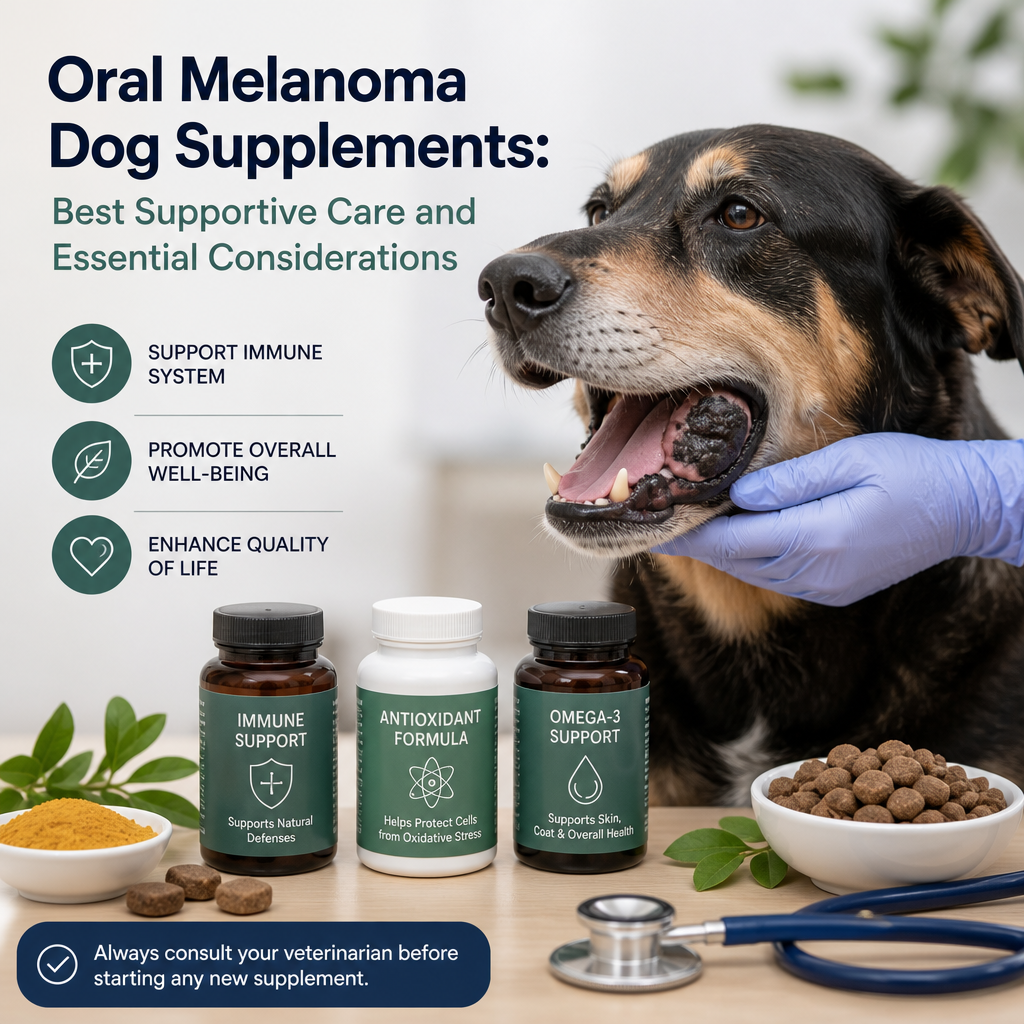
Canine mondmelanoom is een kwaadaardige tumor die zich ontwikkelt uit pigmentproducerende cellen in de mond. Het is een van de meer voorkomende mondkankers bij honden, vooral bij oudere dieren. Rassen met sterk gepigmenteerde monden kunnen een verhoogd risico hebben, hoewel elke hond de ziekte kan ontwikkelen.
Symptomen kunnen onder andere slechte adem, overmatig kwijlen, moeite met eten, losse tanden, zwelling van het gezicht, bloeden uit de mond, gewichtsverlies of een zichtbare massa omvatten. Sommige honden vertonen in de vroege stadia weinig symptomen. Een dierenarts kan een biopsie, tandheelkundig onderzoek, bloedonderzoek, beeldvorming van de borst, evaluatie van lymfeklieren of geavanceerde scans aanbevelen om te bepalen hoe ver de ziekte gevorderd is.
Behandeling kan chirurgie, radiotherapie, immunotherapie, chemotherapie, pijnbestrijding en voedingsondersteuning omvatten. De meest geschikte aanpak hangt af van of de tumor kan worden verwijderd, of deze zich heeft verspreid en de kwaliteit van leven van de hond.
Wanneer een gezin voor het eerst met deze diagnose wordt geconfronteerd, is de prioriteit meestal om de ziekte te begrijpen, staginginformatie te verzamelen en realistische doelen te bespreken. Ondersteunende zorg kan een hond helpen zich beter te voelen, maar het behandelplan moet altijd worden opgebouwd rond het tumorfase en de aanbevelingen van de veterinaire oncoloog.
Voor een breder overzicht van tumorgedrag bij huisdieren, zie deze nuttige gids op soorten hondentumoren. Het kan het gemakkelijker maken om te begrijpen waarom sommige kankers agressief worden behandeld terwijl andere meer conservatief worden gemonitord.
Voor algemene kanker begeleiding en context is het overzicht van het National Cancer Institute over wat kanker is een betrouwbare educatieve bron voor huisdiereigenaren die willen begrijpen hoe abnormale cellen groeien en zich verspreiden.
Waar mondmelanoom hondensupplementen kunnen passen
Supplementen worden het beste gezien als een aanvulling op een uitgebreid zorgplan in plaats van een directe genezing. Hun potentiële rollen kunnen onder andere het ondersteunen van de eetlust, het behouden van spiermassa, het helpen beheren van voedingsdeficiënties en het bevorderen van algemeen welzijn tijdens de behandeling omvatten. In die context zijn mondmelanoom hondensupplementen bedoeld om zorg te ondersteunen, niet om deze te vervangen.
Echter, supplementen kunnen ook problemen veroorzaken. Sommige ingrediënten beïnvloeden de bloedstolling, leverenzymen, bloeddruk of de manier waarop medicijnen worden opgenomen en verwerkt. Producten die als “natuurlijk” worden gepromoot zijn niet automatisch veilig, en veel zijn niet bestudeerd bij honden met kanker.
Voordat u een product toevoegt, geef uw dierenarts het volledige etiket, inclusief actieve ingrediënten, doseringen, conserveermiddelen en kruidenextracten. Een veterinaire oncoloog of veterinaire voedingsdeskundige kan helpen bepalen of een supplement geschikt is en hoe het moet worden gebruikt.
In veel gevallen worden orale melanoom hondensupplementen overwogen nadat de meest urgente behandelingsbeslissingen zijn genomen. Die timing is belangrijk omdat het verkeerde supplement het herstel na de operatie, anesthesie, radiotherapieplanning of een chemotherapieprotocol kan verstoren.
Wanneer ze zorgvuldig worden gebruikt, kunnen hondkanker-supplementen helpen om voedingshiaten op te vullen tijdens perioden van verminderde eetlust. Het doel is niet om het lichaam te overweldigen met extra producten, maar om een constante inname te ondersteunen, stress rond de maaltijd te verminderen en de kracht tijdens de zorg te behouden.
Veelvoorkomende soorten ondersteuning bij hondmelanoom
Omega-3 vetzuren
Visolie levert EPA en DHA, twee omega-3-vetzuren die kunnen helpen de huidgezondheid, ontstekingsregulatie en algehele voeding te ondersteunen. Ze kunnen bijzonder nuttig zijn wanneer het dieet van een hond niet voldoende omega-3's biedt.
Kwaliteit en dosering zijn belangrijk. Visolie kan spijsverteringsproblemen veroorzaken en kan de functie van bloedplaatjes beïnvloeden, vooral bij hoge doses of wanneer gecombineerd met medicijnen die de bloeding beïnvloeden. Producten moeten worden getest op zuiverheid en nauwkeurig worden gelabeld voor hun EPA- en DHA-gehalte.
Omdat orale tumoren het eten ongemakkelijk kunnen maken, kan een vetbron die de calorie-inname ondersteunt nuttig zijn als de dierenarts dit goedkeurt. Toch moet de dosis worden afgestemd op de grootte, het dieet en het behandelplan van de hond. Dit is een van de redenen waarom orale melanoom hondensupplementen met professionele input moeten worden gekozen in plaats van te worden geraden op basis van online advies.
Antioxidant voedingsstoffen
Vitaminen C en E, selenium en andere antioxidanten worden vaak opgenomen in hondkanker-supplementen. Antioxidanten helpen cellen te beschermen tegen oxidatieve schade, maar hun gebruik tijdens radiotherapie of bepaalde chemotherapieprotocollen vereist professionele begeleiding. In sommige situaties kan suppletie met hoge doses antioxidanten de behandelingsdoelen verstoren.
Een uitgebalanceerd commercieel dieet levert vaak al geschikte niveaus van essentiële vitaminen en mineralen. Meer toevoegen is niet per se beter en kan leiden tot een overmatige inname.
Dit is vooral belangrijk wanneer gezinnen meerdere producten tegelijk proberen. Een hond kan uiteindelijk dubbele voedingsstoffen ontvangen uit het dieet, een multivitamine en een apart kankersupplement. Dat kan onevenwichtigheden creëren zonder de uitkomst te verbeteren.
Medicinale paddenstoelen en kruidenproducten
Paddenstoelenextracten, kurkuma, mariadistel en andere botanische ingrediënten worden vaak gepromoot voor de ondersteuning van canine melanoom. Sommige kunnen laboratoriumbewijs hebben dat suggereert dat ze immuun-modulerende, ontstekingsremmende of leverondersteunende effecten hebben. Laboratoriumbevindingen bewijzen echter niet dat een supplement tumoren zal verkleinen of de overleving bij honden zal verlengen.
Kruidenproducten kunnen interageren met anesthesie, chemotherapie, steroïden, pijnmedicatie en medicijnen die door de lever worden verwerkt. De kwaliteit varieert ook aanzienlijk tussen fabrikanten. Vermijd producten die gegarandeerde genezing claims maken of die exacte hoeveelheden ingrediënten niet openbaar maken.
Als een product wordt overwogen vanwege een specifieke zorg, zoals leverstress of misselijkheid, moet het veterinaire team het eerst beoordelen. Het is vaak veiliger om een enkele goed geformuleerde supplement te kiezen dan verschillende overlappende kruiden. Voor gezinnen die op zoek zijn naar educatieve achtergrond over het kanker risico bij honden, kan het artikel op hond kanker statistieken nuttige context bieden over hoe vaak deze ziekten voorkomen in de hondenpopulatie.
Spijsverterings- en eetlustondersteuning
Honden met orale tumoren kunnen moeite hebben met kauwen of kunnen terughoudend worden om te eten vanwege pijn. Afhankelijk van het individuele geval kunnen dierenartsen zachte, calorie-dense voeding, medicijnen ter ondersteuning van de eetlust, probiotica of spijsverteringsondersteuning aanbevelen.
Het handhaven van calorie- en eiwitinname is vaak belangrijker dan het toevoegen van meerdere supplementen. Als een hond gewicht verliest, aanhoudende misselijkheid heeft of niet comfortabel kan eten, verdienen deze problemen snelle veterinaire aandacht.
Eetlustverlies kan een cyclus worden: pijn leidt tot verminderd eten, verminderd eten leidt tot zwakte, en zwakte maakt herstel moeilijker. Ondersteunende zorg is gericht op het onderbreken van die cyclus met pijnbestrijding, textuurveranderingen en zorgvuldig geselecteerde orale melanoom hondensupplementen wanneer dat gepast is.
Doelen van ondersteunende zorg tijdens de behandeling
Ondersteunende zorg moet zich richten op comfort, hydratatie, voeding en functie. Die doelen kunnen er anders uitzien, afhankelijk van of de hond zich voorbereidt op een operatie, herstelt van een procedure, bestraling ontvangt of leeft met een tumor die niet volledig kan worden verwijderd.
Voor sommige honden is het belangrijkste doel om genoeg te blijven eten om het lichaamsgewicht en de spieren te behouden. Voor anderen is de prioriteit het verminderen van orale ongemakken zodat de hond kan rusten, interactie kan hebben en kan genieten van dagelijkse routines. Ondersteunende zorg is niet hetzelfde als niets doen; het is actieve zorg die de kwaliteit van leven verbetert.
Zorgplannen omvatten vaak zachte voeding, regelmatige mondcontroles, medicatiebeoordeling en frequente communicatie met het veterinaire team. Als er veranderingen zijn in kauwen, slikken, kwijlen of mondgeur, kunnen die veranderingen pijn, infectie of tumor groei signaleren en mogen ze niet worden genegeerd.
Voeding en comfort blijven centraal
Voeding kan een betekenisvol verschil maken in comfort en veerkracht, zelfs wanneer het de kanker zelf niet kan behandelen. Een compleet en uitgebalanceerd dieet helpt om magere lichaamsmassa te behouden, ondersteunt de immuunfunctie en geeft de hond de energie die nodig is voor herstel en dagelijkse activiteit. In praktische termen kunnen orale melanoom hondensupplementen alleen helpen wanneer ze passen in dat bredere voedingsplan.
Honden met orale melanoom kunnen het beter doen met vochtige voeding, verwarmde voeding, gemixte maaltijden of veterinaire therapeutische diëten. Sterk ruikende voedingsmiddelen kunnen aantrekkelijker zijn wanneer het smaakvermogen of het vermogen om te kauwen van de hond is verminderd. In sommige gevallen zijn kleinere frequente maaltijden gemakkelijker dan een paar grote.
Ondersteunende voeding kan ook textuurmodificatie omvatten. Zacht, glad of gemalen voedsel kan pijn tijdens het kauwen verminderen. De juiste consistentie is voor elke hond anders, dus gezinnen moeten vaak experimenteren onder veterinaire begeleiding om te vinden wat het beste werkt.
Omdat uitdroging zwakte en verlies van eetlust kan verergeren, moet de waterinname ook nauwlettend in de gaten worden gehouden. Sommige honden drinken minder wanneer hun mond pijn doet, dus het aanbieden van vocht in de vorm van bouillon alleen als goedgekeurd door de dierenarts kan soms helpen.
Comfortzorg omvat ook een rustige omgeving, gemakkelijke toegang tot water en zachte behandeling. Deze eenvoudige veranderingen kunnen het geven van orale melanoom hondensupplementen en medicatieroutines gemakkelijker maken omdat de hond zich minder gestrest voelt tijdens de maaltijd.
Hoe hondenkanker supplementen te evalueren
Veilig kiezen van hondenkanker supplementen begint met het etiket. Zoek naar de exacte hoeveelheid van elk ingrediënt, doseringsinstructies, vervaldatum en de kwaliteitsnormen van de fabrikant. Vermijd vage propriëtaire mengsels die niet onthullen wat erin zit.
Menselijke supplementen zijn geen ideale vervangers voor veterinaire producten. Ze kunnen smaakstoffen, zoetstoffen of concentraties bevatten die ongeschikt zijn voor honden. Xylitol is bijzonder gevaarlijk, en knoflook, ui of overmatige vitamine D kunnen ook schadelijk zijn.
Een praktische benadering is om slechts één nieuw supplement tegelijk toe te voegen, tenzij de dierenarts anders aangeeft. Dat maakt het gemakkelijker om bijwerkingen zoals braken, diarree, jeuk, lethargie of veranderingen in eetlust te identificeren. Houd een schriftelijke lijst bij van elk supplement en medicijn, inclusief dosis en timing.
Het oncologieteam wil mogelijk ook supplementen beoordelen vóór anesthesie of een tandheelkundige procedure. Sommige producten moeten vóór de operatie worden gepauzeerd omdat ze invloed kunnen hebben op bloeding, bloeddruk of levermetabolisme. Als een hond nierziekte, leverziekte of een geschiedenis van spijsverteringsgevoeligheid heeft, is extra voorzichtigheid geboden.
Voor gezinnen die merken vergelijken, is het redelijk om te vragen of het supplement enige gepubliceerde gegevens over honden heeft, of het door een derde partij is getest en of het bedrijf de bron onthult. Die soort beoordeling kan nuttiger zijn dan alleen winkelen op basis van marketingclaims. Orale melanoom hondensupplementen moeten worden geselecteerd op veiligheid en geschiktheid, niet op hype.
Wat ondersteunende voeding kan doen
Voeding kan een betekenisvol verschil maken in comfort en veerkracht, zelfs wanneer het de kanker zelf niet kan behandelen. Een complete en uitgebalanceerde voeding helpt om de magere lichaamsmassa te behouden, ondersteunt de immuunfunctie en geeft de hond de energie die nodig is voor herstel en dagelijkse activiteit.
Honden met orale melanoom kunnen het beter doen met vochtige voeding, verwarmde voeding, gemixte maaltijden of veterinaire therapeutische diëten. Sterk ruikende voedingsmiddelen kunnen aantrekkelijker zijn wanneer het smaakvermogen of het vermogen om te kauwen van de hond is verminderd. In sommige gevallen zijn kleinere frequente maaltijden gemakkelijker dan een paar grote.
Ondersteunende voeding kan ook textuurmodificatie omvatten. Zacht, glad of gemalen voedsel kan pijn tijdens het kauwen verminderen. De juiste consistentie is voor elke hond anders, dus gezinnen moeten vaak experimenteren onder veterinaire begeleiding om te vinden wat het beste werkt.
Omdat uitdroging zwakte en verlies van eetlust kan verergeren, moet de waterinname ook nauwlettend in de gaten worden gehouden. Sommige honden drinken minder wanneer hun mond pijn doet, dus het aanbieden van vocht in de vorm van bouillon alleen als goedgekeurd door de dierenarts kan soms helpen.
Wanneer orale melanoom hondensupplementen goed worden gebruikt, dienen ze meestal een van de drie doelen: de hond helpen comfortabeler te eten, een specifieke voedingsbehoefte ondersteunen, of een tekort aanvullen dat het huidige dieet niet kan dekken.
Comfort, pijnbestrijding en dagelijkse monitoring
Pijnbeheer is even belangrijk. Orale tumoren kunnen het eten, drinken, verzorgen en rusten ongemakkelijk maken. Door de dierenarts voorgeschreven pijnverlichting, tandheelkundige zorg, ontstekingsremmende behandeling wanneer nodig, en behandeling van secundaire infecties kunnen het dagelijkse comfort aanzienlijk verbeteren.
Regelmatige monitoring helpt bepalen of de ondersteunende zorg werkt. Houd de eetlust, het lichaamsgewicht, de waterinname, de energie, de ademhaling, de mondgeur, het kwijlen en het vermogen om te eten bij. Een plotselinge verandering kan wijzen op tumorprogressie, bijwerkingen van de behandeling, infectie, uitdroging of een ander medisch probleem.
Het kan helpen om een eenvoudig dagboek bij te houden. Noteer wat de hond at, hoe gemakkelijk het kauwde, hoeveel het dronk, of de medicatie op tijd werd gegeven, en of er bloedingen of zwellingen waren. Na verloop van tijd bieden deze aantekeningen een duidelijker beeld dan alleen het geheugen.
Ondersteunende zorg is ook emotionele zorg. Honden met een chronische ziekte voelen zich vaak kalmer wanneer routines voorspelbaar blijven. Rustige eetruimtes, vertrouwde beddengoed en zachte behandeling kunnen allemaal helpen om stress tijdens de behandeling te verminderen.
Die emotionele stabiliteit kan het ook gemakkelijker maken om een supplementroutine vol te houden, als het team er een heeft goedgekeurd. Consistentie is belangrijker dan het toevoegen van veel producten tegelijk, vooral wanneer orale melanoom hondensupplementen worden gebruikt naast medicatie en dieetveranderingen.
Wanneer snel contact op te nemen met de dierenarts
Sommige veranderingen vereisen snelle veterinaire aandacht. Neem snel contact op met de kliniek als de hond meer dan een dag voedsel weigert, zichtbare bloedingen uit de mond ontwikkelt, moeite heeft met ademhalen, ongewoon zwak wordt, of significant pijn lijkt te hebben.
Andere urgente tekenen zijn herhaaldelijk braken, zwarte ontlasting, geelverkleuring van de ogen of het tandvlees, ineenstorting, of snelle zwelling in het gezicht of de kaak. Deze symptomen kunnen gerelateerd zijn aan de kanker, een bijwerking van de behandeling, of een apart medisch probleem.
Zelfs wanneer de oorzaak onzeker is, is het veiliger om te vragen. Orale melanoom hondensupplementen moeten worden gepauzeerd en herzien als er een nieuw symptoom verschijnt kort nadat een product is gestart, vooral als de hond ook voorgeschreven medicatie gebruikt.
Vragen om aan het oncologieteam te stellen
Voordat u een supplement start of wijzigt, is het nuttig om een paar gerichte vragen te stellen. Welke ingrediënten zijn veilig met het huidige behandelplan? Zijn er producten die vermeden moeten worden voor een operatie of bestraling? Kan dit supplement de bloedstolling, eetlust of leverfunctie beïnvloeden?
Het is ook redelijk om te vragen of een supplement waarschijnlijk meetbare voordelen zal bieden. Als het antwoord onduidelijk is, kan het team voorstellen om te wachten of een eenvoudigere optie te kiezen. Minder producten kunnen minder risico's, minder verwarring en gemakkelijker toezicht betekenen.
Sommige gezinnen vragen ook of een bepaald voedsel of supplement de overleving kan verbeteren. Hoewel voeding belangrijk is, ondersteunt het beste bewijs nog steeds een gecombineerde aanpak: geschikte kankerbehandeling, pijnbestrijding, follow-up bezoeken en doordachte ondersteunende zorg. Dat is waar orale melanoom hondensupplementen hun meest realistische rol kunnen hebben.
Het kan ook helpen om te vragen hoe het plan moet veranderen als de eetlust afneemt, als slikken moeilijk wordt, of als de hond begint te vermijden harde brokken. Die vragen houden de focus op de dagelijkse functie en kwaliteit van leven.
Bespreek supplementen met het oncologieteam
De veiligste aanpak voor orale melanoom hondensupplementen is individuele planning. Een veterinaire professional kan het dieet van de hond, de nier- en leverfunctie, huidige medicatie en behandeldoelen beoordelen voordat hij iets aanbeveelt.
Ondersteunende zorg moet zich richten op het behouden van comfort, hydratatie, voeding, mobiliteit en betekenisvolle dagelijkse activiteiten. Supplementen kunnen een rol spelen in dat plan, maar ze zijn slechts een klein onderdeel van het beheer van canine orale melanoom. Bewijsgebaseerde kankerbehandeling, regelmatige veterinaire monitoring en aandacht voor de kwaliteit van leven moeten de prioriteiten blijven.
Voor veel honden komt de beste uitkomst voort uit een gebalanceerde routine in plaats van een agressieve supplementenstapel. Wanneer het plan zorgvuldig is afgestemd, kunnen orale melanoom hondensupplementen de medische zorg aanvullen zonder deze te compliceren.
Als je zorgopties vergelijkt, houd dan het gesprek gericht op veiligheid, consistentie en het dagelijkse comfort van de hond. Die aanpak geeft gezinnen de beste kans om voeding te ondersteunen terwijl onnodige risico's worden vermeden.
Kortom, orale melanoom hondensupplementen kunnen nuttig zijn als onderdeel van een groter plan, maar ze werken het beste wanneer een dierenarts helpt om het juiste product, de juiste dosis en het juiste tijdstip voor de individuele hond te kiezen.