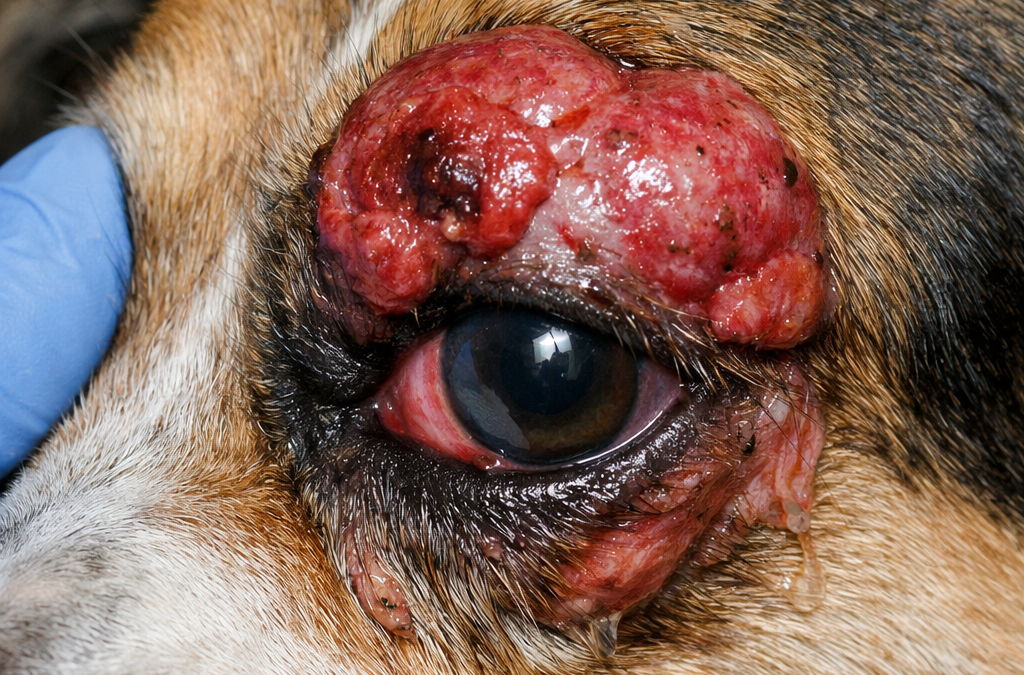
por TCMVET | Fev 8, 2026 | Câncer e tumores caninos
O que significa “célula fusiforme” em cães
“Célula fusiforme” geralmente descreve como as células tumorais parecem sob o microscópio—longas, afiladas e fibrosas—em vez de nomear um único tipo de câncer. Em cães, essa descrição muitas vezes se sobrepõe a sarcomas de tecidos moles (STS) e tumores relacionados do tipo sarcoma, que são conhecidos por sua invasividade local: eles podem se estender microscopicamente além do que você pode ver ou sentir. Esse padrão de crescimento é uma grande razão pela qual a recidiva local se torna uma preocupação chave.
Quão raro é um tumor de célula fusiforme perto do olho?
Depende se a massa é um crescimento superficial da pálpebra ou um tumor periocular/orbital mais profundo.
Muitos tumores de pálpebra canina são comuns e frequentemente benignos, o que é reconfortante na prática ocular do dia a dia. No entanto, um tumor maligno do tipo célula fusiforme/sarcoma que é de crescimento rápido ou profundo ao redor do olho é um cenário diferente. Doenças orbitais e retrobulbares (doenças na cavidade ocular ou atrás do globo) são menos comuns do que simples protuberâncias nas pálpebras e geralmente exigem um planejamento mais complexo.
Sintomas que os proprietários costumam notar
Um tumor “sobre o olho” pode parecer um nódulo firme ou inchaço perto da sobrancelha ou das pálpebras, mas doenças mais profundas podem se manifestar através de mudanças funcionais. Os cães podem fechar os olhos, lacrimejar excessivamente, desenvolver secreção persistente, esfregar o olho ou o rosto, ou parecer tímidos em relação à cabeça. Se a órbita estiver envolvida, sinais clássicos podem incluir exoftalmia (um olho saliente), protrusão da terceira pálpebra e dor ao redor do olho.
Dor e sofrimento: quão doloroso é?
A dor varia amplamente e é impulsionada pelo que o tumor está fazendo localmente.
Uma massa pode se tornar muito desconfortável se distorcer a posição da pálpebra ou causar irritação crônica da córnea com o piscar. A orientação da oftalmologia veterinária observa que massas nas pálpebras frequentemente aumentam ao longo do tempo e podem irritar a superfície ocular, afetando o conforto e a qualidade de vida. Doenças orbitais também podem ser dolorosas—especialmente quando inchaço, pressão ou inflamação estão presentes—e a dor é frequentemente mencionada entre os sinais clínicos em condições orbitais.
Por que o tratamento perto do olho é tão desafiador
Para tumores do tipo sarcoma, o objetivo geralmente é um forte controle local, porque “dedos” tumorais microscópicos podem se estender além do que parece anormal. No tronco ou membros, os cirurgiões frequentemente visam margens mais amplas para remover essas extensões invisíveis. Ao redor do olho, margens amplas podem ser difíceis de alcançar sem danificar estruturas críticas, razão pela qual os médicos podem parecer cautelosos em relação a garantias.
Opções de tratamento: o que é tipicamente considerado
A maioria dos planos de tratamento gira em torno do controle local e do conforto, frequentemente combinando múltiplas abordagens.
A cirurgia é comumente a pedra angular quando viável, tanto para remover a carga tumoral quanto para obter patologia definitiva. Para sarcomas de tecidos moles caninos, a completude da excisão influencia fortemente os resultados; revisões enfatizam que tumores excisados de forma incompleta apresentam maior risco de recidiva local. Em alguns casos, os cirurgiões podem recomendar procedimentos mais radicais para alcançar controle em locais difíceis (incluindo cirurgias envolvendo a órbita) porque certos sarcomas podem exigir abordagens radicais quando a anatomia limita a largura da margem.
A terapia de radiação é frequentemente discutida quando as margens estão próximas ou incompletas, ou quando a anatomia torna a excisão ampla impossível. É usada com a intenção de controlar células residuais microscópicas e reduzir a chance de regrowth, embora os resultados variem de acordo com o comportamento do tumor, planejamento de dose e as especificidades de cada caso.
Risco de recidiva: o que a pesquisa aponta repetidamente
Na literatura sobre STS caninos, dois fatores aparecem repetidamente: grau histológico e status da margem.
Uma revisão sobre STS caninos excisados de forma incompleta ou estreita relata taxas de recidiva publicadas aproximadamente na faixa de 17%–37% em estudos, ilustrando por que “margens limpas” são tão importantes. Outra visão geral amplamente citada observa que com excisão completa, a recidiva local em cães pode ser muito baixa, e margens incompletas aumentam substancialmente o risco de recidiva.
Perspectiva de sobrevivência e “linha do tempo de sobrevivência”: a maneira prática de pensar sobre o prognóstico
Porque “tumor de células fusiformes” pode representar múltiplos tipos de tumor, o tempo de sobrevivência não pode ser resumido de forma confiável com um único número. Uma maneira mais confiável de entender o prognóstico é ancorar as expectativas ao que mais fortemente prevê o comportamento:
Um tumor de grau mais baixo que pode ser completamente controlado localmente geralmente apresenta uma perspectiva melhor do que um tumor de grau mais alto ou um que não pode ser totalmente removido devido à localização. Em STS canino, o risco metastático é comumente descrito como dependente do grau, com tumores de grau mais alto apresentando uma chance significativamente maior de disseminação ao longo do curso da doença. Em tumores perioculares especificamente, “quão bem a doença local pode ser controlada” muitas vezes se torna o fator dominante que molda tanto a qualidade de vida quanto o resultado geral.
O que os proprietários podem fazer cedo que muitas vezes importa (sem se perder em detalhes)
Os pontos de foco mais úteis no início são confirmar a verdadeira extensão da doença e proteger o conforto.
Imagens avançadas, como TC ou RM, são frequentemente recomendadas em casos orbitais/perioculares porque exames de rotina nem sempre conseguem mostrar o que está acontecendo atrás do olho, e a imagem ajuda a guiar a cirurgia e o planejamento da radiação. O conforto também é central: tumores perioculares podem desencadear irritação e inflamação da córnea, e reduzir o atrito/trauma e abordar a irritação da superfície ocular pode fazer uma diferença significativa no bem-estar diário.
FAQ: respostas rápidas que os proprietários de animais de estimação procuram
Todo tumor próximo à pálpebra é maligno?
Não. Tumores de pálpebra são comuns em cães e muitos se comportam de maneira benigna, embora qualquer massa que cresça rapidamente, ulcerada, sangrando ou dolorosa precise de avaliação imediata.
Por que um veterinário recomendaria a remoção do olho?
Quando um tumor é profundamente invasivo ou as margens não podem ser alcançadas com segurança, uma cirurgia local mais agressiva pode ser recomendada para melhorar o controle local em uma região onde o espaço é limitado.
Por que a cirurgia e a radiação não podem garantir que não voltará?
Tumores do tipo sarcoma podem se estender microscopicamente, e ao redor do olho pode ser difícil remover tecido circundante suficiente. STS excisado incompletamente tem risco de recorrência documentado em múltiplos estudos.
O que prevê mais fortemente o prognóstico?
O grau de patologia e se o tumor foi removido com margens limpas são repetidamente destacados como principais fatores de risco de recorrência e disseminação em STS canino.
Como o Baituxiao pode ajudar como cuidado de suporte
Tumores de células fusiformes perioculares geralmente são gerenciados com controle local primeiro—mais frequentemente cirurgia, e às vezes radiação—porque esses tumores podem ser localmente invasivos e a região ocular limita margens amplas. Nesse contexto, muitos proprietários também consideram cuidados integrativos de suporte para ajudar a manter o conforto, o apetite e a qualidade de vida geral ao lado do plano de tratamento primário.
Baituxiao é uma fórmula botânica TCVM posicionada pelo fabricante para cães e gatos com “tumores e nódulos”, e geralmente é discutida como uma opção adjunta em vez de uma solução independente. Como fórmulas botânicas podem interagir com medicamentos usados em torno da cirurgia, controle da dor, inflamação ou cuidados oncológicos, é melhor usada como parte de um plano coordenado com a equipe veterinária.
por TCMVET | 14 de jan. de 2026 | Câncer e tumores caninos
Lumps na cauda em cães podem ser perturbadores para qualquer guardião de animais de estimação, especialmente quando surgem pensamentos preocupantes sobre tumores das glândulas anais. Compreender o que esses nódulos podem indicar—e como agir de maneira consciente e responsável—pode trazer tranquilidade enquanto apoia o bem-estar do seu animal de estimação. Este guia abrangente explora as possíveis causas de nódulos na cauda em cães, sinais a serem observados, maneiras como os veterinários avaliam tumores das glândulas anais, dicas de cuidados diários e como se manter proativo com o conforto e a qualidade de vida do seu cão.
—
Compreendendo os Nódulos na Cauda em Cães
Nódulos na cauda podem se desenvolver por várias razões, variando de crescimentos benignos a preocupações mais sérias. Enquanto alguns nódulos permanecem pequenos e inofensivos, outros podem exigir atenção veterinária para avaliar sua natureza.
Possíveis Causas de Nódulos na Cauda
– Cistos sebáceos: Pequenos sacos de crescimento lento contendo material oleoso.
– Lipomas: Tumores adiposos frequentemente encontrados em cães mais velhos, geralmente macios e móveis.
– Infecções de pele ou abscessos: Resultantes de lesões ou folículos bloqueados.
– Massas relacionadas às glândulas anais: Massas originadas de glândulas próximas ao ânus.
– Outros tumores ou nódulos: Podem se desenvolver a partir de vários tipos de tecido.
Nem todo nódulo é perigoso, mas acompanhar quaisquer mudanças ao longo do tempo, especialmente perto da base da cauda, é essencial.
—
Tumores das Glândulas Anais: O que os Proprietários de Animais de Estimação Devem Saber
Tumores das glândulas anais são crescimentos que se originam dos sacos anais localizados de cada lado do ânus. Esses tumores podem variar de benignos a malignos, e uma avaliação veterinária precoce é crítica para determinar sua natureza e o melhor curso de ação.
Por que as Glândulas Anais São Importantes
– Localização: Situadas sob a cauda, as glândulas podem desenvolver anomalias que aparecem como nódulos ou inchaço.
– Função: Elas liberam um cheiro usado para comunicação entre cães.
– Riscos: Inflamação, mudanças estruturais ou tumores podem causar desconforto, odor ou outras complicações.
Observações Comuns
– Dificuldade em sentar-se confortavelmente
– Deslocando-se ou lambendo a área anal
– Inchaço ou firmeza perto do ânus
– Tremor da cauda ou relutância em abanar
Sempre que novos sinais ou sinais persistentes aparecerem, agende um exame com um veterinário. A avaliação profissional previne a má interpretação dos sintomas e ajuda a identificar se testes adicionais são necessários.
—
Caroços na Cauda em Cães: Reconhecendo Sinais Precoce
Como os caroços na cauda que os cães experimentam podem surgir gradualmente, manter-se alerta ajuda a detectar problemas precocemente. Tente examinar a área da cauda do seu cão gentilmente durante as sessões de tosa, observando quaisquer mudanças no tamanho ou textura.
Sinais que Merecem Atenção
– Inchaço persistente: Especialmente se firme ou em crescimento.
– Alterações na pele: Vermelhidão, perda de pelo ou textura áspera.
– Desconforto: Reagindo quando a área é tocada.
– Mudanças comportamentais: Energia diminuída, apetite ruim ou esconder-se de forma incomum.
Esses sinais não apontam automaticamente para tumores das glândulas anais, mas justificam uma visita ao veterinário para clareza e tranquilidade.
—
Como os Veterinários Avaliam Caroços na Cauda
Profissionais veterinários usam vários testes para avaliar caroços e determinar os próximos passos. A abordagem exata depende da idade do seu cão, histórico médico e características do caroço.
Etapas Diagnósticas Típicas
1. Physical examination: Verificando tamanho, localização e consistência.
2. Aspirado por agulha fina ou biópsia: Coletando células ou tecido para análise.
3. Imagem: Ultrassom, raio-X ou tomografia computadorizada para avaliar estruturas internas.
4. Exames de sangue: Fornece insights sobre a saúde geral.
Discuta o processo abertamente com seu veterinário, pedindo explicações compreensíveis sobre o que cada teste pode revelar. Pais de pets que permanecem engajados e informados muitas vezes se sentem mais confiantes em apoiar seu cão durante a avaliação.
—
Apoio a Cães Durante o Cuidado de Tumores de Glândula Anal
Quando um veterinário identifica tumores de glândula anal, um plano cuidadoso é elaborado com base na situação única do cão. Como as instruções médicas pertencem a um ambiente clínico, os proprietários de pets podem se concentrar em fornecer um ambiente doméstico calmo e seguir de perto as recomendações profissionais.
Dicas Práticas para Apoio em Casa
– Mantenha um diário: Registre observações, incluindo apetite, nível de energia e qualidade das fezes.
– Monitorar a condição corporal: Mantenha um peso saudável para reduzir a pressão adicional.
– Proporcione exercícios leves: Caminhadas leves ou jogos mentalmente estimulantes mantêm seu cão engajado.
– Ofereça locais de descanso confortáveis: Camas macias ajudam a aliviar a pressão em áreas sensíveis.
– Mantenha-se atualizado sobre os exames: Consultas de acompanhamento permitem que os veterinários acompanhem o progresso e ajustem os planos de cuidado.
Ao se concentrar no conforto, na consistência e na orientação veterinária, os proprietários podem ajudar os cães a se sentirem seguros durante sua jornada de cuidado.
—
Considerações sobre Nutrição e Bem-Estar Natural
Embora alimentos e suplementos não possam diagnosticar ou curar condições graves, uma nutrição saudável apoia a vitalidade geral. Pergunte ao seu veterinário sobre dietas balanceadas adequadas à idade, raça e nível de atividade do seu cão.
Insights Gerais sobre Nutrição
– Proteínas e gorduras balanceadas: Apoiam a saúde muscular e a energia.
– Fontes de fibra: Incentivam a digestão e a eliminação regular.
– Ácidos graxos ômega: Pode ajudar a manter a saúde da pele e um pelo brilhante.
– Hidratação: Garanta acesso constante a água fresca.
Abordagens de bem-estar natural—como ambientes calmos, cuidados suaves e atividades de enriquecimento—também podem promover uma sensação de segurança. Sempre consulte seu veterinário antes de introduzir quaisquer mudanças dietéticas ou suplementos.
—
Práticas de Prevenção e Detecção Precoce
Embora nem todos os nódulos na cauda possam ser prevenidos, a observação rotineira e os cuidados veterinários preventivos fazem uma diferença significativa.
Hábitos Úteis
– Cuidados regulares: Ajuda você a identificar novos nódulos precocemente.
– Cronograma de banhos consistente: Mantém a pele limpa e permite que você verifique se há problemas.
– Visitas veterinárias de rotina: Exames de bem-estar detectam mudanças sutis.
– Treinamento e manuseio: Ensine seu cachorro a tolerar o manuseio da cauda e da parte traseira para que as inspeções sejam mais fáceis.
Estabelecer esses hábitos promove um relacionamento colaborativo com seu veterinário e mantém seu animal de estimação confortável.
—
Perguntas para fazer ao seu veterinário
O conhecimento capacita os donos de cães a tomarem decisões informadas. Considere levar uma lista de perguntas para as consultas.
Iniciadores de Discussão
– Que tipo de nódulo meu cachorro tem e quais testes o verificam?
– Existem ajustes no estilo de vida que poderiam manter meu cachorro confortável?
– Com que frequência devo monitorar o nódulo?
– Quais sinais indicam que devo agendar um acompanhamento urgente?
A comunicação ativa garante que você entenda cada passo no plano de cuidados do seu cachorro.
—
Apoio emocional para donos de animais de estimação
Descobrir um nódulo na cauda do seu cachorro pode ser emocionalmente desafiador. Reserve um tempo para processar as informações e procure apoio quando necessário.
Estratégias de enfrentamento
– Apoie-se em sua equipe veterinária: Eles podem esclarecer descobertas e próximos passos.
– Conecte-se com comunidades de apoio: Fóruns online ou grupos locais podem compartilhar experiências úteis.
– Pratique o autocuidado: Refeições balanceadas, descanso e tempo ao ar livre fortalecem a resiliência.
– Celebre momentos do dia a dia: Caminhadas suaves, tempo de carinho e brincadeiras fortalecem seu vínculo.
Manter-se centrado e esperançoso ajuda você a permanecer um pilar calmo de apoio para seu animal de estimação.
—
Mantendo-se Informado Sobre Tumores de Glândulas Anais
Informações confiáveis moldam decisões responsáveis. Concentre-se em recursos baseados em evidências, como especialistas veterinários certificados, artigos revisados por pares e organizações de saúde animal respeitáveis.
Avaliando Fontes de Informação
– Verifique as credenciais: Procure veterinários licenciados ou instituições reconhecidas.
– Cuidado com soluções rápidas: Evite alegações ou tratamentos não verificados.
– Pergunte ao seu veterinário: Eles podem recomendar materiais de leitura ou especialistas de confiança.
Ser seletivo sobre as informações mantém o bem-estar do seu cachorro nos trilhos e evita mal-entendidos.
—
Uma Mentalidade Holística para o Bem-Estar do Cachorro
O cuidado holístico significa considerar o conforto físico, o bem-estar emocional e um ambiente pacífico. Camas macias, rotinas consistentes, cuidados suaves e interações calmas contribuem para uma sensação geral de segurança.
Práticas Holísticas Simples
– Caminhadas conscientes: Passeios tranquilos permitem cheirar e explorar.
– Massagem e toque suave: Quando aprovado pelo seu veterinário, uma leve massagem pode ajudar a relaxar os músculos.
– Brinquedos de enriquecimento: Alimentadores de quebra-cabeça, jogos de cheirar devagar e brinquedos macios para mastigar mantêm as mentes ativas.
– Música e aromaterapia: Sons suaves ou aromas aprovados pelo veterinário podem criar um ambiente tranquilo.
Sempre observe as reações do seu cachorro e descontinue qualquer coisa que cause desconforto.
—
Conclusão: Apoiar o bem-estar natural com cuidado
Todo cachorro merece atenção compassiva, especialmente quando novos nódulos levantam questões. Ao permanecer observador, colaborar com profissionais veterinários e criar um ambiente doméstico acolhedor, você pode lidar com nódulos na cauda com confiança e cuidado. Lembre-se de abordar cada passo com paciência, manter uma comunicação aberta com a equipe de cuidados do seu animal de estimação e continuar explorando práticas de bem-estar natural suaves que nutrem o senso geral de equilíbrio do seu cachorro.
por TCMVET | 14 de jan. de 2026 | Câncer e tumores caninos
Ervas para cães idosos podem desempenhar um papel suave e de apoio nos anos dourados do seu cachorro, oferecendo conforto natural ao lado dos cuidados veterinários regulares. À medida que os cães envelhecem, suas necessidades mudam—mobilidade diminui, a digestão muda e o bem-estar geral requer mais atenção. Muitos pais de pets buscam opções holísticas como ervas e mudanças de estilo de vida como parte de um plano de cuidados equilibrado. Este guia explora como usar as ervas para cães idosos de forma ponderada, o que considerar e como melhorar o conforto do seu companheiro envelhecido por meio de estratégias práticas e cuidados conscientes.
—
Compreendendo o Envelhecimento em Cães Idosos
Os cães geralmente entram em seus anos seniores por volta dos sete anos, embora isso varie de acordo com a raça e o tamanho. À medida que o metabolismo desacelera e os órgãos amadurecem, os cães se tornam mais sensíveis ao estresse, dieta, níveis de atividade e mudanças ambientais. As mudanças relacionadas à idade podem incluir:
– Níveis de energia mais baixos
– Digestão sensível ou apetite reduzido
– Rigidez nas articulações ou relutância em se mover
– Mudanças comportamentais como vocalização aumentada, confusão ou inquietação
– Necessidade aumentada de calor, rotina e familiaridade
Compreender essas transições ajuda você a apoiar seu cachorro com paciência e compaixão, enquanto colabora com um veterinário e explora estratégias de conforto suaves à base de ervas.
—
O que são Ervas para Cães Idosos?
Ervas para cães idosos são botânicos que podem aliviar desafios comuns do envelhecimento de maneira segura e medida. As ervas podem ser secas, frescas ou em forma de fórmula (cápsulas, pós, chás ou tinturas). Elas surgiram de práticas tradicionais em todo o mundo—desde a Ayurveda até a herbalismo ocidental—onde plantas naturais eram usadas para apoiar o bem-estar.
Os princípios-chave incluem:
– Apoiar a vitalidade, não suprimir os sintomas
– Complementar o cuidado veterinário em vez de substituí-lo
– Ouvir as respostas do seu cachorro às ervas e ajustar conforme necessário
As ervas vêm com propriedades diversas, como calmantes, digestivas ou nutrição geral, que podem ser benéficas durante os anos seniores. Sempre consulte um veterinário, idealmente um experiente em cuidados herbais ou integrativos, antes de introduzir novos botânicos.
—
Ervas para Cães Seniores a Explorar para Conforto
Camomila e Sua Influência Calmante
O aroma suave da camomila frequentemente conforta cães ansiosos ou inquietos. Pode ajudar quando um cão sênior apresenta inquietação noturna, leve desconforto digestivo ou uma sensação geral de mal-estar. A camomila é comumente oferecida como uma infusão de chá que você pode adicionar à comida ou água, ou como uma erva seca misturada às refeições. Como a camomila é suave, muitos cães a toleram bem, mas é importante monitorar alergias.
Skullcap para Relaxamento
Skullcap é uma erva reverenciada por suas propriedades relaxantes sem sedação pesada. Pode ser útil para cães mais velhos que parecem tensos, reativos ou sensíveis a ruídos e mudanças. Em combinação com modificações no estilo de vida (rotinas consistentes, espaços tranquilos, horários de alimentação previsíveis), o skullcap pode apoiar o equilíbrio emocional.
Cardo Mariano para Suporte Suave ao Fígado
O fígado desempenha um papel central no metabolismo e na desintoxicação, e cães seniores frequentemente se beneficiam de um suporte suave ao fígado. O cardo mariano, rico em silimarina, é comumente utilizado por profissionais por suas qualidades antioxidantes e potenciais efeitos protetores. Muitos cuidadores de animais de estimação incorporam o cardo mariano em rotação ou cursos ocasionais, em vez de depender dele continuamente. Novamente, um veterinário deve orientar a duração e a adequação, especialmente se seu cão estiver tomando medicamentos.
Cúrcuma e Suas Qualidades Antioxidantes
A cúrcuma contém curcumina, um composto com propriedades antioxidantes e calmantes amplamente estudadas. Cães seniores podem apreciar refeições infundidas com cúrcuma para conforto geral, embora deva ser combinada com gorduras como óleo de coco ou óleo de peixe para melhorar a absorção. Como a cúrcuma pode interagir com alguns medicamentos ou condições digestivas, consulte seu veterinário antes de usá-la regularmente.
Espinheiro para Suporte Cardíaco e Circulatório
As bagas e folhas do espinheiro têm sido usadas há muito tempo para apoiar o bem-estar circulatório. Alguns veterinários integrativos introduzem espinheiro para cães seniores que apresentam sinais de envelhecimento dos sistemas cardiovasculares, embora uma supervisão cuidadosa seja essencial. Frequentemente faz parte de um protocolo mais amplo que inclui dieta, exercícios controlados e check-ups de rotina.
Spirulina e Alfafa para Aumentos Nutricionais
Spirulina e alfafa são suplementos herbais densos em nutrientes que podem fornecer suporte adicional à base de plantas para energia e resiliência imunológica. A spirulina é rica em clorofila e aminoácidos, enquanto a alfafa contém vitaminas, minerais e fibras de suporte. Adicionar essas em quantidades moderadas à dieta de um cão sênior pode ajudar a preencher lacunas nutricionais.
—
Considerações Chave ao Selecionar Ervas para Cães Seniores
1. Consultation: Um veterinário familiarizado com a medicina herbal pode recomendar ervas apropriadas, ajudar a evitar interações perigosas e monitorar o progresso.
2. Qualidade: Escolha ervas de fontes respeitáveis que ofereçam transparência na origem e testes de terceiros para contaminantes.
3. Forma: Decida entre pós, cápsulas, tinturas ou chás. Alguns cães preferem ervas misturadas com comida úmida; outros lidam melhor com cápsulas.
4. Alergias: Introduza uma erva de cada vez em pequenas quantidades, observando sinais de intolerância como coceira, vômito ou diarreia.
5. Consistency: As ervas geralmente agem gradualmente. O uso consistente e medido muitas vezes funciona melhor do que dosagens esporádicas.
—
Dicas de Conforto Ambiental para Cães Idosos
As ervas combinam melhor com estratégias práticas de conforto do dia a dia. Considere as seguintes maneiras de ajudar seu cão idoso a se sentir seguro, apoiado e contente:
– Camas aconchegantes: Camas ortopédicas, bordas elevadas ou almofadas aquecidas (desenhadas para pets) podem aliviar articulações rígidas e proporcionar calor.
– Superfícies antiderrapantes: Tapetes ou corredores minimizam escorregões em pisos de madeira, reduzindo o estresse nas articulações e aumentando a confiança.
– Água e comida acessíveis: Coloque tigelas em tapetes antiderrapantes e considere estações de alimentação ligeiramente elevadas.
– Cuidados de rotina: Escovação regular e massagem suave melhoram a circulação e oferecem tempo de vínculo.
– Refúgios tranquilos: Uma área de descanso designada longe do barulho da casa ajuda os cães a relaxar e se sentir seguros.
– Iluminação suave à noite: Luzes fracas ou luzes noturnas guiam cães idosos que têm visão reduzida ou ansiedade noturna.
—
Dieta e Suporte Digestivo
Importância da Nutrição Balanceada
Cães idosos frequentemente se beneficiam de dietas ricas em nutrientes e de fácil digestão. Embora existam fórmulas comerciais para idosos, consulte um veterinário ou nutricionista canino para garantir que a comida do seu cão atenda às necessidades individuais. Rotacionar proteínas, incorporar vegetais cozidos suavemente e incluir gorduras saudáveis pode manter o interesse nas refeições e apoiar um peso saudável.
Ervas que Apoiam a Digestão
– Gengibre: Conhecido por aliviar o desconforto estomacal, o gengibre pode ajudar cães que experimentam náuseas ocasionais. Use com moderação e procure orientação veterinária para cães em medicamentos anticoagulantes.
– Raiz de dente-de-leão: Às vezes usada para apoiar a digestão e a função hepática, a raiz de dente-de-leão pode ser adicionada às refeições em pequenas quantidades.
– Funcho: Pode confortar gases leves ou inchaço. Seu sabor semelhante ao alcaçuz é geralmente bem tolerado pelos cães.
Hidratação
Cães idosos devem sempre ter acesso a água fresca. Você pode aumentar a hidratação incorporando alimentos ricos em umidade, como caldo de osso, vegetais purês ou coberturas de ração com água.
—
Atividade e Mobilidade
Exercício Suave para Cães Idosos
Mesmo cães mais velhos se beneficiam do movimento, que mantém os músculos fortes e as articulações flexíveis. Prefira caminhadas pequenas e frequentes em vez de uma única longa caminhada. Monitore o ritmo do seu cão e permita tempo para cheirar—estímulo mental é tão importante quanto o físico.
Ervas Focadas na Mobilidade
Algumas ervas apoiam o conforto e a flexibilidade das articulações:
– Boswellia: Frequentemente usada em planos de bem-estar tradicionais para suporte das articulações devido aos seus compostos resinosos.
– Unha do diabo: Tipicamente recomendada por praticantes holísticos para cuidados das articulações; no entanto, deve ser evitada em cães com certas condições de saúde.
Discuta combinações ou uso a longo prazo com seu veterinário para garantir a segurança.
Terapias Complementares
Acupuntura, massagem, hidroterapia ou exercícios de fisioterapia podem aliviar a tensão e incentivar o movimento. Essas modalidades devem ser guiadas por profissionais credenciados experientes em trabalhar com cães idosos.
—
Bem-Estar Emocional e Comportamento
Reconhecendo Mudanças Emocionais
Cães idosos podem experimentar mudanças cognitivas ou ansiedade. Sinais incluem andar de um lado para o outro, vigília noturna, vocalizações ou aumento de apego. Paciência e reafirmação consistente são cruciais durante essas fases da vida.
Suporte Calmante à Base de Ervas
– Raiz de valeriana: Frequentemente usada para alívio ocasional do estresse. Introduza-a gradualmente, pois seu cheiro terroso pode ser forte.
– Flor de maracujá: Uma erva suave que pode diminuir a inquietação e apoiar o equilíbrio emocional.
Combinar isso com ajustes no estilo de vida (música suave, difusores de aromaterapia usando fragrâncias seguras para cães, rotinas previsíveis) pode promover relaxamento.
—
Criando um Kit de Ervas para Cães Idosos
Considere organizar seus produtos herbais e itens de suporte em um só lugar:
1. Rotule os recipientes com o nome da erva, propósito pretendido e quaisquer anotações.
2. Acompanhe o uso em um diário, anotando comportamentos, apetite e quaisquer mudanças.
3. Agende check-ins com seu veterinário para revisar o plano herbal e garantir que ainda se encaixa no perfil de saúde do seu cão.
4. Rotacione as ervas quando apropriado, dando intervalos para evitar dependência excessiva.
—
Trabalhando com profissionais veterinários
Veterinários treinados em medicina herbal, cuidados integrativos ou Medicina Veterinária Tradicional Chinesa (TCVM) podem elaborar protocolos personalizados. Eles avaliarão:
– Idade, raça e saúde geral
– Medicamentos ou suplementos atuais
– Ingestão nutricional e nível de atividade
– Indicadores comportamentais
Esta abordagem colaborativa garante que as ervas sejam um complemento aos exames veterinários regulares, exames de sangue, cuidados dentários e quaisquer diagnósticos necessários.
—
Ervas para cães idosos e segurança
A segurança deve permanecer como a principal prioridade:
– Conheça as contraindicações: Algumas ervas podem não ser apropriadas para cães com condições renais, hepáticas ou cardíacas.
– Evite óleos essenciais internamente: Muitos óleos, mesmo quando derivados de ervas, não são seguros para ingestão.
– Armazene as ervas corretamente: Mantenha-as longe da umidade, luz solar e animais de estimação curiosos.
– Observe seu cão de perto: Se você notar mudanças nas fezes, apetite, respiração ou comportamento, descontinue a erva e consulte seu veterinário.
—
Honrando a Rotina e a Estabilidade
Cães idosos prosperam na previsibilidade. Combine o suporte herbal com rotinas atentas:
– Horários consistentes de acordar, refeições e passeios
– Mínima interrupção nas áreas de dormir
– Introduções lentas quando visitantes chegarem
– Cheiros, brinquedos e cobertores familiares
Essas etapas reduzem o estresse e facilitam a adaptação do seu cachorro a mudanças sutis.
—
Bem-Estar Natural Além das Ervas
Além das ervas para cães idosos, considere estratégias naturais de bem-estar mais amplas:
– Petiscos nutritivos: Opte por mastigações macias ou petiscos levemente desidratados que sejam suaves para os dentes.
– Cuidados pessoais conscientes: Use toalhas quentes, escovas suaves e carícias calmantes.
– Tempo ao ar livre: A exposição à luz solar (durante o clima apropriado) ajuda a regular o sono e o humor.
– Estimulação mental: Alimentadores de quebra-cabeça, jogos de cheiro ou sessões curtas de treinamento mantêm as mentes ativas.
O bem-estar natural é sobre nutrir o ser inteiro do seu cachorro—corpo, mente e coração.
—
Celebrando Pequenos Momentos
Cada cachorro idoso tem necessidades e alegrias únicas. Celebre as pequenas vitórias: uma soneca confortável, um rabo abanando ou uma noite tranquila ao seu lado. O suporte herbal, combinado com paciência, compreensão e orientação veterinária, cria um ambiente acolhedor para os anos finais do seu cachorro.
—
Conclusão
As ervas para cães idosos, quando usadas de forma consciente, oferecem conforto suave como parte de um plano abrangente de bem-estar. Ao se associar ao seu veterinário, escolher botânicos de alta qualidade e manter rotinas consistentes, você pode ajudar seu cachorro a envelhecer com dignidade e facilidade. Continue observando as necessidades do seu companheiro, ajustando as práticas de cuidado e saboreando o tempo que vocês compartilham. Abordagens naturais, fundamentadas na compaixão e no conhecimento, podem trazer enriquecimento e harmonia à vida do seu cachorro idoso.
por TCMVET | 14 de jan. de 2026 | Câncer e tumores caninos
O suporte natural durante a quimioterapia se torna um tópico importante para os guardiões de cães quando seus pets estão passando por quimioterapia. As emoções podem estar à flor da pele, e é natural procurar maneiras suaves de manter seu companheiro confortável enquanto se mantém alinhado com as orientações veterinárias. Compreender o que “suporte natural” realmente significa—rotinas nutritivas, conforto emocional e ajustes de estilo de vida pensativos—ajuda você a fazer escolhas informadas que respeitam tanto a ciência quanto as necessidades únicas do seu cachorro.
Por que o Cuidado de Suporte é Importante Durante a Quimioterapia
A quimioterapia pode ser um grande desafio para qualquer cachorro, afetando tudo, desde os níveis de energia até o apetite. Enquanto os veterinários supervisionam o plano médico, os guardiões de pets desempenham um papel enorme em criar um ambiente calmo e nutritivo em casa. O cuidado de suporte não substitui medicamentos ou orientações profissionais; em vez disso, melhora o bem-estar geral do seu cachorro por meio de rotinas consistentes, engajamento mental e observação cuidadosa.
Noções Básicas de Suporte Natural Durante a Quimioterapia
Construir uma estrutura para o suporte natural durante a quimioterapia significa focar em três pilares: nutrição, gerenciamento de estresse e conforto diário. Cada pilar trabalha em conjunto para ajudar seu cachorro a se sentir seguro e cuidado durante o tratamento. Pequenas mudanças—como fornecer um lugar tranquilo para descansar ou oferecer quebra-cabeças de enriquecimento—podem fazer uma diferença notável.
Considerações sobre Nutrição e Hidratação
Uma dieta equilibrada fornece ao seu cachorro os blocos de construção para a força. Embora você deva sempre seguir as recomendações do seu veterinário, algumas ideias fundamentais podem ajudar a guiar suas escolhas:
– Refeições balanceadas: Procure alimentos que ofereçam proteínas magras, carboidratos complexos e gorduras benéficas para manter a energia estável.
– Ingredientes suaves: Opções de fácil digestão—como vegetais cozidos ou proteínas simples—podem ser úteis se o estômago do seu cachorro parecer sensível.
– Foco na hidratação: As trocas de água fresca devem ser frequentes. Alguns cães gostam de cubos de gelo com sabor ou caldos diluídos com baixo teor de sódio para variar.
– Porções pequenas e frequentes: Servir porções menores com mais frequência pode incentivar a alimentação quando o apetite oscila.
– Monitorar reações: Mantenha um diário alimentar simples para anotar quaisquer mudanças nas fezes, energia ou interesse em certos alimentos. Compartilhe observações com seu veterinário.
Conforto emocional e rotinas consistentes
Os cães frequentemente encontram segurança em horários previsíveis. Manter rituais familiares—caminhadas matinais, carinhos à noite ou sessões de escovação suaves—tranquiliza seu companheiro de que a vida ainda oferece conforto e estabilidade.
– Zonas silenciosas: Crie uma área de descanso aconchegante longe do barulho da casa, completa com cobertores e brinquedos favoritos.
– Enriquecimento sensorial: Ofereça música suave, espaços sem odores ou iluminação natural difusa para aliviar a superestimulação.
– Interação consciente: Preste atenção aos sinais do seu cachorro. Alguns dias eles podem desejar afeto; em outros dias, podem querer mais espaço pessoal.
Apoio suave para atividades e mobilidade
Movimentação leve mantém as articulações lubrificadas e os músculos engajados. Discuta os níveis de atividade apropriados com seu veterinário, depois adapte conforme necessário:
– Passeios curtos: Caminhadas breves em superfícies macias podem ser mais fáceis para as patas e articulações.
– Brinquedos de quebra-cabeça: Exercício mental, como brinquedos que dispensam petiscos, envolve a mente sem exigir esforço físico intenso.
– Roupa de cama confortável: Camas ortopédicas ou tapetes de suporte ajudam a acolchoar áreas sensíveis e incentivam um descanso adequado.
Colaborando com sua equipe veterinária
A comunicação aberta com seu oncologista veterinário ou clínico geral é central para o suporte natural à quimioterapia. Eles podem sugerir o momento para check-ins, sinalizar sinais de alerta e ajudar a interpretar mudanças comportamentais. Considere manter um registro de:
– Hábitos de alimentação
– Ingestão de água
– Preferências de brincar ou descansar
– Respostas a técnicas de relaxamento
– Quaisquer novos comportamentos que surgirem entre as consultas
Compartilhar essas observações permite que seu veterinário adapte recomendações especificamente à experiência do seu cão.
Pontos de Contato Holísticos Sem Reclamações Médicas
Alguns tutores exploram práticas de bem-estar suaves, como aromaterapia com óleos essenciais seguros para pets (sempre diluídos e aprovados por um veterinário), técnicas de massagem lenta ou tempo supervisionado ao sol. Essas abordagens focam no relaxamento em vez de tratamento. Lembre-se:
– A aprovação do veterinário é fundamental: Mesmo produtos naturais podem interagir com medicamentos.
– Menos é mais: Introduza um novo elemento de cada vez para que você possa observar como seu cão responde.
– Conforto em primeiro lugar: Se seu cão mostrar desinteresse ou desconforto, descontinue essa prática e retorne aos confortos familiares.
Dicas Práticas para Apoio Diário
Rotinas diárias podem se tornar mais fáceis de navegar com um conjunto de estratégias de referência:
1. Planeje a preparação das refeições com antecedência: Porcionar a comida pode reduzir o estresse em dias agitados.
2. Defina alertas de lembrete: Use alarmes no telefone para horários de medicação, verificações de água fresca ou sessões curtas de exercício.
3. Enriquecimento rotativo: Mantenha uma pequena seleção de brinquedos e rotacione-os semanalmente para manter o interesse.
4. Use ferramentas de grooming suaves: Escovas macias ou luvas de grooming podem ajudar a remover pelos soltos sem irritação.
5. Monitore o consumo de energia da casa: Peça aos membros da família para manter os níveis de ruído baixos e evitar mudanças súbitas na rotina.
Lendo os Sinais do Seu Cão
A linguagem corporal canina revela muito sobre os níveis de conforto. Como a quimioterapia pode aumentar a sensibilidade, fique atento a sinais:
– Postura relaxada: Indica contentamento.
– Bocejar ou lamber os lábios: Pode sinalizar leve estresse.
– Andar de um lado para o outro ou inquietação: Pode significar desconforto ou a necessidade de uma pausa tranquila.
– Busca de afeto: Muitos cães se apoiam mais em seus guardiões quando precisam de segurança.
Responda ajustando o ambiente—diminuindo as luzes, reduzindo o ruído ou oferecendo um carinho suave se seu cão gosta de toque.
Integrando Perspectivas de Bem-Estar Natural
O bem-estar natural enfatiza a harmonia entre as necessidades físicas e o equilíbrio emocional. Para cães em quimioterapia, isso pode significar:
– Pausas ao ar livre: Períodos curtos do lado de fora podem proporcionar novos cheiros e estimulação suave.
– Companhia atenta: Simplesmente sentar-se ao lado do seu cão, lendo ou falando suavemente, promove conexão sem exigir energia.
– Espaços de vida limpos: Lave regularmente a roupa de cama, tigelas e brinquedos com produtos de limpeza suaves e seguros para animais de estimação para manter a higiene.
– Reforço positivo: Celebre pequenas vitórias—terminar uma refeição, explorar o quintal ou interagir com um brinquedo.
Equilibrando otimismo com expectativas realistas
É natural esperar o melhor, mas manter os pés no chão ajuda você a responder de forma eficaz. Confie na experiência da equipe veterinária e seja gentil consigo mesmo ao longo do processo. Alguns dias podem parecer desafiadores; outros podem trazer surpresas emocionantes. Apoie-se na ajuda de familiares, amigos ou comunidades de cuidados com animais de estimação quando precisar de encorajamento.
Conclusão
Apoiar um cachorro durante a quimioterapia envolve paciência, observação e um foco constante no conforto. Ao integrar práticas de suporte natural à quimioterapia—nutrição equilibrada, ambientes calmos, atividades suaves e comunicação próxima com seu veterinário—você cria rotinas tranquilizadoras que honram as necessidades do seu cachorro. Cada escolha consciente contribui para uma abordagem amorosa e fundamentada ao bem-estar natural.
por TCMVET | 14 de jan. de 2026 | Câncer e tumores caninos
Os riscos de câncer em Cavalier, sinais precoces de tumor em Cavalier, cânceres comuns nesta raça são tópicos que muitos donos amorosos acabam pesquisando à medida que seus cães envelhecem. Os Cavalier King Charles Spaniels são valorizados por sua natureza gentil, olhos expressivos e amor pela companhia humana—mas como todas as raças, enfrentam certos desafios de saúde, incluindo tumores e câncer. Compreender a que seu Cavalier pode estar propenso, como identificar sinais de alerta precoces e como apoiá-los em seus anos seniores pode fazer uma diferença real na qualidade de vida.
—
A. Visão geral da raça
Os Cavalier King Charles Spaniels são cães de companhia pequenos, pesando normalmente entre 13 e 18 libras. Eles são afetuosos, orientados para as pessoas e frequentemente descritos como “cães de velcro” porque gostam de ficar perto de suas famílias. Seu temperamento é geralmente:
– Gentil e amigável
– Bom com crianças e outros animais de estimação
– Adaptável tanto à vida em apartamento quanto em casa, desde que tenham interação diária e exercício moderado
Sua expectativa de vida média é de cerca de 10 a 14 anos, embora isso possa variar com base na genética, ambiente e cuidados de saúde geral.
Os Cavaliers são conhecidos por problemas hereditários específicos, particularmente:
– Doenças cardíacas (especialmente doenças da válvula mitral)
– Problemas neurológicos como malformação tipo Chiari e syringomyelia
– Problemas ortopédicos como patelas luxantes
Embora não sejam universalmente considerados uma raça de “alto risco de câncer” como algumas raças gigantes, muitos Cavaliers realmente experimentam tumores e cânceres à medida que envelhecem. Alguns tipos são comumente vistos em cães de raças pequenas e também foram relatados com frequência em Cavaliers, especialmente tumores de pele e de tecidos moles, bem como certos cânceres relacionados ao sangue.
—
B. Compreendendo os riscos de câncer em Cavalier, sinais precoces de tumor em Cavalier, cânceres comuns nesta raça
Nem todo Cavalier desenvolverá câncer, mas estar ciente dos padrões observados na raça ajuda você a se manter proativo. Os seguintes tipos de tumores e cânceres são frequentemente relatados em Cavaliers e raças pequenas semelhantes:
1. Tumores de Mastócitos (TMCs)
Tumores de mastócitos são um dos cânceres de pele mais comuns em cães e são vistos relativamente frequentemente em Cavaliers. Eles geralmente aparecem como:
– Nódulos ou protuberâncias na pele que podem crescer, encolher ou mudar repentinamente
– Lesões que podem ser coceira, vermelhas ou inflamadas
Em raças pequenas, esses tumores podem ser notados primeiro como pequenas protuberâncias semelhantes a “picadas de inseto” que não desaparecem. Como os tumores de mastócitos podem variar de baixo grau (crescimento lento) a muito agressivos, a avaliação veterinária rápida de qualquer novo nódulo é essencial.
2. Lipomas e Tumores de Tecidos Moles
Tumores benignos de gordura (lipomas) são comuns em cães de meia-idade e mais velhos, incluindo Cavalieres. Estes geralmente se sentem:
– Macios, móveis e logo abaixo da pele
– Não dolorosos ao toque
No entanto, nem todo nódulo “com sensação de gordura” é benigno. Alguns sarcomas de tecidos moles podem imitar lipomas em sensação e aparência. Por essa razão, qualquer nódulo deve ser verificado em vez de assumir que é inofensivo, especialmente em um Cavalier idoso.
3. Linfoma (Linfossarcoma)
O linfoma é um câncer do sistema linfático (linfonodos e órgãos relacionados). Cavalieres, como muitas raças, podem ser afetados. Os proprietários podem notar primeiro:
– Linfonodos firmes e aumentados sob a mandíbula, na frente dos ombros ou atrás dos joelhos.
– Inchaço generalizado, letargia ou perda de peso
O linfoma é tratável, e o diagnóstico precoce oferece mais opções, tornando os exames corporais regulares e as visitas ao veterinário importantes, especialmente após a meia-idade.
4. Hemangiossarcoma (HSA)
Hemangiossarcoma é um câncer maligno das células dos vasos sanguíneos, afetando frequentemente o baço, o fígado ou o coração. É mais famoso em raças grandes, mas também pode ocorrer em cães menores, como os Cavalieres. Muitas vezes é “silencioso” até causar sangramento interno. Os sinais podem incluir:
– Fraqueza súbita ou colapso
– Gengivas pálidas
– Abdômen distendido
Como os sinais podem ser sutis até avançados, exames de bem-estar regulares e exames de sangue em idosos podem, às vezes, detectar problemas relacionados mais cedo.
5. Tumores cerebrais ou da medula espinhal
Cavalieres já têm uma predisposição racial a problemas neurológicos não relacionados ao câncer, então pode ser especialmente complicado identificar o que está acontecendo quando novos sinais neurológicos aparecem. Tumores no cérebro ou na medula espinhal podem causar:
– Novas convulsões
– Mudanças súbitas de comportamento
– Dificuldade para andar, girar ou inclinação da cabeça
Qualquer novo ou agravamento de sintoma neurológico em um Cavalier deve ser levado a sério e discutido com um veterinário, pois múltiplas condições (não apenas câncer) podem estar envolvidas.
Por que os Cavalieres podem estar em risco
Vários fatores influenciam o risco de câncer nesta raça:
– Tamanho e durabilidade: Raças menores geralmente vivem mais, então têm mais anos em que o câncer pode se desenvolver.
– Gargalos genéticos: Raças puras populares como os Cavaliers podem compartilhar genética que predispõe a certas doenças.
– Condição corporal: Como todos os cães, os Cavaliers que estão acima do peso ou obesos podem ter um risco maior para alguns tumores e ter mais dificuldade em lidar com doenças.
Estar ciente dessas tendências permite que os proprietários fiquem vigilantes sem ficarem alarmados.
—
C. Sinais de alerta precoce que os proprietários devem observar
Detectar um tumor precocemente pode dar ao seu cão mais opções e uma melhor chance de conforto. Fique atento a:
1. Mudanças na pele e subcutâneas
– Novos caroços ou protuberâncias
– Nódulos existentes que crescem, mudam de cor ou se tornam firmes
– Feridas que não cicatrizam
– Perda de pelo em uma área localizada
Realize um “check-up corporal suave uma vez por mês”:
1. Passe suas mãos lentamente por todo o corpo do seu Cavalier, incluindo axilas, virilha, peito, barriga e base da cauda.
2. Observe quaisquer novos nódulos ou mudanças no tamanho/textura dos existentes.
3. Mantenha um registro com datas e tamanho aproximado (por exemplo, “tamanho de uma ervilha”, “tamanho de uma uva”).
Procure atendimento veterinário se:
– Um nódulo é novo e persiste por mais de 2 a 4 semanas.
– Um nódulo cresce rapidamente, torna-se doloroso ou ulcera.
– Existem múltiplos nódulos aparecendo em um curto período.
2. Alterações Gerais na Saúde
– Perda de peso sem mudanças na dieta
– Diminuição do apetite ou comportamento alimentar seletivo
– Aumento da ingestão de líquidos ou da frequência urinária
Letargia, menos interesse em passeios ou brincadeiras
Esses sinais podem resultar de muitas condições, não apenas câncer, mas devem sempre levar a uma visita ao veterinário.
3. Mobilidade, Dor e Alterações Comportamentais
– Rigidez, mancar ou relutância em pular para os móveis
– Gritar ao ser levantado ou tocado em áreas específicas
– Evitar repentinamente escadas ou atividades favoritas
Como os Cavaliers são estoicos e também propensos a problemas articulares e neurológicos, qualquer novo ou agravamento de problema de mobilidade merece avaliação imediata.
4. Respiração, sangramento e outros sinais de alerta
– Tosse persistente
– Dificuldade para respirar ou respiração acelerada em repouso
– Sangramentos nasais ou hematomas inexplicáveis
– Barriga inchada, especialmente se súbita
Qualquer um desses sintomas deve ser tratado como urgente, justificando atendimento veterinário imediato ou avaliação de emergência.
—
D. Considerações sobre cuidados com idosos para cães da raça Cavalier King Charles Spaniel.
À medida que os Cavalier entram em seus anos sêniores (geralmente por volta dos 8 anos ou mais), o risco de tumores e outras doenças aumenta. Um cuidado sênior atencioso pode apoiar a saúde geral e ajudar a detectar problemas mais cedo.
1. Nutrição e Condição Corporal
Os Cavalier adoram comida e podem ganhar peso facilmente, o que estressa seu coração e articulações e pode complicar o manejo do câncer.
– Busque uma cintura visível e costelas facilmente sentidas (sem proeminência acentuada).
– Considere uma dieta sênior ou de controle de peso recomendada pelo veterinário, adequada ao estado de saúde do seu cão.
– Monitore o peso a cada 1–2 meses em casa ou na clínica.
Quaisquer mudanças na dieta devem ser discutidas com seu veterinário, especialmente se seu cão tiver doenças cardíacas ou outras condições crônicas.
2. Ajustes nos exercícios e atividades
Cavalier mais velhos ainda se beneficiam de movimento diário:
– Caminhadas curtas e frequentes são frequentemente melhores do que passeios longos e intensos.
– Brincadeiras suaves e enriquecimento mental (jogos de farejar, brinquedos de quebra-cabeça) ajudam a manter o bem-estar geral.
– Evite sobrecarga, especialmente em clima quente ou se seu cão tiver problemas cardíacos ou respiratórios.
3. Cuidados com as articulações e controle da dor
Com a idade, artrite e problemas na coluna podem se desenvolver:
– Providencie roupas de cama macias e pisos antiderrapantes sempre que possível.
– Use rampas ou degraus para reduzir pulos em e fora dos móveis.
– Discuta suplementos de suporte articular, medicamentos ou outras estratégias de manejo da dor com seu veterinário—nunca inicie ou mude medicamentos para dor sem orientação profissional.
4. Exames e Triagens Veterinárias
Para um Cavalier adulto saudável, exames anuais são geralmente recomendados. Para sêniores, muitos veterinários aconselham:
– Exames de bem-estar a cada 6 meses
– Exames de sangue e testes de urina regulares
– Verificações de pressão arterial e avaliações cardíacas (especialmente importantes nesta raça)
– Imagens periódicas (por exemplo, raios-X ou ultrassom) se indicado com base em sinais clínicos
Essas visitas permitem que seu veterinário detecte mudanças sutis precocemente, incluindo o desenvolvimento potencial de tumores.
—
E. Prevenção Geral de Tumores e Apoio ao Bem-Estar
Nenhuma estratégia pode prevenir completamente o câncer, mas apoiar a saúde geral do seu Cavalier pode reduzir alguns fatores de risco e melhorar a resiliência.
1. Mantenha um peso saudável
– Utilize porções medidas em vez de deixar o animal à vontade.
– Limite petiscos de alta caloria e compartilhe pequenas porções de opções saudáveis (como vegetais simples) se seu veterinário aprovar.
– Combine o controle de calorias com exercícios diários adaptados à condição do seu cachorro.
2. Dieta equilibrada e hidratação
– Ofereça uma dieta completa e balanceada formulada para a fase da vida e necessidades médicas do seu cachorro.
– Garantir o acesso constante à água potável.
– Se você estiver interessado em dietas caseiras ou especializadas, trabalhe com seu veterinário ou um nutricionista veterinário certificado para evitar lacunas nutricionais.
3. Atividade física e mental regular
– Caminhadas diárias, brincadeiras apropriadas e jogos de enriquecimento ajudam a manter músculos, articulações e o sistema imunológico em melhor forma.
– A estimulação mental reduz o estresse, o que pode indiretamente apoiar a saúde geral.
4. Minimizar os riscos ambientais sempre que possível.
– Evite a exposição ao fumo do tabaco.
– Use produtos de limpeza seguros para pets e evite permitir que seu cachorro ande em gramados que foram tratados com produtos químicos até que estejam completamente secos e seguros, conforme as instruções do produto.
– Proteja seu Cavalier do sol excessivo em áreas levemente pigmentadas para reduzir o risco de alguns tipos de câncer de pele.
5. Uso criterioso de suplementos e suporte integrativo
Alguns proprietários exploram:
– Ácidos graxos ômega-3 para suporte geral das articulações e da pele
– Dietas ou suplementos ricos em antioxidantes
– Produtos à base de ervas ou cogumelos anunciados para “suporte imunológico”
A evidência para esses produtos varia, e eles não substituem o cuidado médico. Sempre:
– Converse com seu veterinário antes de começar a usar qualquer suplemento.
– Informe seu oncologista veterinário se seu cachorro estiver recebendo tratamento para câncer, pois alguns suplementos podem interagir com medicamentos ou terapias.
—
F. Seção Opcional de Cuidados Integrativos: Abordagens Complementares para Cavaliers
Abordagens integrativas ou holísticas podem desempenhar um papel de apoio para Cavaliers vivendo com tumores ou câncer, quando usadas juntamente com o cuidado veterinário padrão.
Algumas famílias exploram:
– Acupuntura para promover conforto e mobilidade
– Massagem ou fisioterapia suave para relaxamento e suporte das articulações
– Formulações inspiradas na TCM ou à base de ervas destinadas a apoiar a vitalidade e a resiliência
Esses métodos não são curas e nunca devem substituir cirurgia, quimioterapia, radiação ou outros tratamentos recomendados. Se você estiver interessado nessas opções:
– Procure um veterinário treinado em medicina integrativa.
– Certifique-se de que todos os profissionais coordenem com seu veterinário principal ou oncologista veterinário.
– Evite qualquer produto ou terapia que afirme “curar” câncer ou substituir tratamento médico.
—
Conclusão
Cavaliers enfrentam muitos dos mesmos riscos de tumores e câncer que outros cães, com tumores de pele e de tecidos moles, linfoma e cânceres internos entre os problemas mais comuns vistos nesta raça. Aprender a reconhecer sinais de alerta precoces e ficar atento a mudanças sutis no comportamento, apetite ou mobilidade do seu cachorro pode levar a uma detecção mais precoce e melhores opções. Com cuidados seniores atenciosos, check-ups veterinários regulares e uma abordagem proativa e consciente da raça para o bem-estar, você pode ajudar seu Cavalier a desfrutar de tantos anos confortáveis e felizes com você quanto possível.
por TCMVET | 14 de jan. de 2026 | Câncer e tumores caninos
O crescimento de tumores em cães pode ser uma das descobertas mais angustiantes para qualquer pai de pet, e muitas vezes levanta muitas perguntas sobre o que isso significa para o bem-estar a longo prazo de seu companheiro. Embora nem todo nódulo seja perigoso, é natural querer clareza, insights úteis e orientações confiáveis sobre como responder. Este guia longo explora o que os proprietários de cães precisam saber sobre o desenvolvimento de tumores, os fatores que potencialmente influenciam a progressão do câncer e as etapas práticas que promovem cuidados de apoio ao longo da jornada de saúde.
—
Compreendendo o crescimento de tumores em cães
Reconhecendo a Importância dos Nódulos em Cães
Nódulos podem variar de massas adiposas benignas a tumores mais preocupantes. Quando um novo inchaço aparece, é um sinal para prestar atenção—sem assumir o pior. Fatores como textura, tamanho, localização e taxa de crescimento ajudam os veterinários a fazer uma avaliação mais precisa.
– Nódulos benignos pode crescer lentamente e permanecer localizado.
– Tumores malignos pode se espalhar para tecidos circundantes.
Embora um exame físico e testes diagnósticos de um veterinário sejam necessários para confirmar o que está acontecendo, monitorar o corpo de um cão regularmente garante que as mudanças sejam detectadas precocemente.
O Papel da Progressão do Câncer
A progressão do câncer refere-se à rapidez com que células anormais se replicam e se movem para outros tecidos ou órgãos. Como cada tumor se comporta de maneira única, essa progressão pode ser lenta em um cão e rápida em outro. Idade, tendências de raça, estado imunológico e estilo de vida geral desempenham todos um papel. Embora os proprietários de cães não possam controlar muitas variáveis biológicas, a conscientização e a rápida intervenção veterinária ajudam a moldar um caminho mais informado a seguir.
—
Por que Alguns Cães Desenvolvem Tumores
Considerações Genéticas e Ambientais
Certas raças, como Golden Retrievers e Boxers, têm predisposições mais altas para tumores específicos. A predisposição genética não garante câncer, mas justifica uma observação vigilante e cuidados veterinários de rotina. Fatores ambientais—como exposição prolongada ao sol ou contato próximo com toxinas—podem influenciar o desenvolvimento de tumores, portanto, minimizá-los é um passo preventivo significativo.
Dinâmicas Hormonais e do Sistema Imunológico
Hormônios podem influenciar o comportamento de certos tumores, especialmente aqueles ligados a órgãos reprodutivos. Esta é uma das razões pelas quais a castração ou esterilização pode ser recomendada sob orientação veterinária. O sistema imunológico desempenha um papel crítico em reconhecer células anormais. Embora uma resposta imunológica robusta não pare o desenvolvimento de tumores, apoiar a saúde imunológica por meio de um estilo de vida bem equilibrado pode trazer benefícios.
—
Destaque para “crescimento de tumores em cães” na Vida Diária
Observação Rotineira e Registro
A detecção precoce pode começar em casa. Muitos proprietários de pets passam levemente as mãos pelo corpo de seu cão na hora do banho, prestando atenção especial a áreas onde nódulos costumam surgir:
– Tórax e abdômen
– Membros e articulações
– Pescoço e cabeça
Registrar mudanças—como um aumento repentino de tamanho ou novos nódulos—facilita fornecer informações precisas ao seu veterinário.
Diagnóstico Veterinário
Quando um nódulo é descoberto, os profissionais veterinários frequentemente recomendam testes, como:
– Aspirações com agulha fina: as células são removidas e examinadas sob um microscópio.
– Biópsias: pequenas amostras de tecido são analisadas de forma mais extensa.
– Imagem: raios-X, ultrassons ou tomografias computadorizadas revelam a extensão de um tumor.
Essas abordagens ajudam a determinar o tipo de crescimento e orientam a tomada de decisões sobre os próximos passos, seja isso envolver monitoramento, manejo não cirúrgico ou outras intervenções.
—
Como o Estilo de Vida Influencia a Progressão do Câncer
Fatores Holísticos
Embora nenhuma mudança de estilo de vida impeça a formação de tumores, hábitos de apoio podem criar um terreno mais saudável dentro do corpo:
– Nutrição equilibrada: Foque em ingredientes de alta qualidade e garanta que a comida atenda às necessidades nutricionais do seu cachorro em cada fase da vida.
– Exercício regular: Mantenha níveis de atividade apropriados sem excessos, mantendo os músculos fortes e o peso sob controle.
– Redução do estresse: Os cães também sentem estresse. Proporcione rotinas calmantes, companhia constante e treinamento gentil para reduzir a ansiedade.
Controle de peso
Manter um peso saudável é essencial. A obesidade pode influenciar os níveis hormonais e os processos metabólicos, potencialmente afetando o comportamento do tumor. Colabore com seu veterinário para garantir que a dieta e o plano de exercícios do seu cachorro estejam alinhados com suas necessidades energéticas.
—
Dicas Práticas para Monitorar Nódulos em Cães
1. Mantenha um Diário de Nódulos: Anote a data em que foi descoberto, o tamanho aproximado e quaisquer mudanças ao longo do tempo.
2. Obtenha Orientação Profissional: Agende check-ups veterinários regulares e discuta quaisquer novas observações prontamente.
3. Adote um Manejo Gentil: Ao examinar uma área sensível, mantenha contato calmo e reconfortante para evitar desconforto.
4. Fique Atento a Sintomas Secundários: Mudanças no apetite, níveis de energia ou mobilidade podem sinalizar que uma avaliação médica é necessária.
—
Trabalhando com seu veterinário
A Comunicação Conta
Compartilhe o máximo de detalhes possível—quando o nódulo apareceu pela primeira vez, se ele mudou, se seu cachorro teve problemas semelhantes antes e quaisquer outras preocupações de saúde. Uma visão completa permite que seu veterinário adapte os planos de diagnóstico.
Explorando Opções
Os veterinários podem sugerir diferentes abordagens com base na situação, como monitorar pequenos nódulos benignos ou considerar a remoção cirúrgica. O importante é avaliar os benefícios potenciais, quaisquer riscos associados e o que é melhor para o conforto e a qualidade de vida do cachorro.
—
Considerando o Bem-Estar Natural
Medidas de Suporte
O bem-estar natural gira em torno de nutrir o corpo por meio de hábitos suaves e equilibrados, em vez de buscar soluções rápidas. Considere:
– Otimização da nutrição: Trabalhe com sua equipe veterinária para selecionar alimentos com ingredientes que apoiem.
– Hidratação: A ingestão adequada de água ajuda a manter a saúde geral.
– Estratégias de relaxamento: Massagem, aromaterapia (apenas aromas seguros para cães) ou momentos tranquilos de vínculo podem promover um comportamento calmo.
Colaboração com profissionais
Se você deseja explorar produtos de bem-estar natural, discuta-os com seu veterinário para garantir a compatibilidade com o plano de cuidados geral do seu cachorro. É essencial verificar a segurança de qualquer suplemento ou ferramenta holística antes de adicioná-lo à rotina do seu cachorro.
—
Apoio Emocional para Proprietários de Cães
Buscando Comunidade
Cuidar de um cachorro com um tumor pode parecer isolante. Conecte-se com grupos de apoio locais ou online para pais de pets enfrentando desafios semelhantes. Compartilhar experiências e dicas pode trazer conforto e insights práticos.
Capacitando-se com conhecimento
Confie em fontes respeitáveis e na orientação veterinária. Fique atento a conselhos bem-intencionados, mas não verificados, online. Decisões informadas são frequentemente as mais compassivas.
—
Olhando para o Futuro
Lidar com o crescimento de tumores em cães requer observação, paciência e relacionamentos fortes com profissionais veterinários. Ao monitorar mudanças, buscar avaliação médica oportuna e adotar práticas de estilo de vida que apoiem o bem-estar integral, os donos de pets criam um ambiente de cuidado e atenção. Mesmo quando os resultados permanecem incertos, uma abordagem constante e nutritiva pode tornar a vida cotidiana mais segura e confortável para nossos companheiros caninos.
Lembre-se de que a jornada de cada cachorro é única, e estar atento a pequenas mudanças pode fornecer insights significativos. O bem-estar natural—incluindo nutrição de alta qualidade, um ambiente doméstico calmo e atividade física regular—pode oferecer suporte suave no caminho à frente.
