
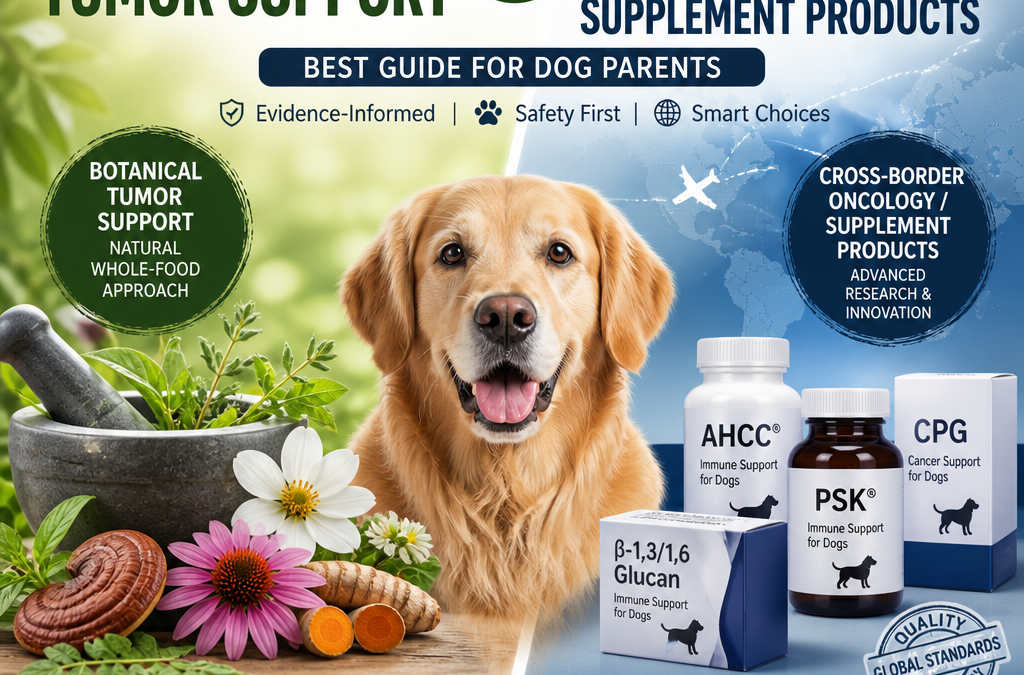
植物腫瘤支持與跨境腫瘤學/補充產品之間的比較對於探索額外支持的癌症犬主人來說是重要的。雖然補充劑可能有助於解決營養、炎症、食慾或一般健康,但它們不能與獸醫腫瘤學治療互換。最負責任的方法是了解每個選項能做什麼和不能做什麼,仔細評估產品質量,並僅作為獸醫指導的護理計劃的一部分使用任何補充劑。.
植物腫瘤支持與跨境腫瘤學/補充產品
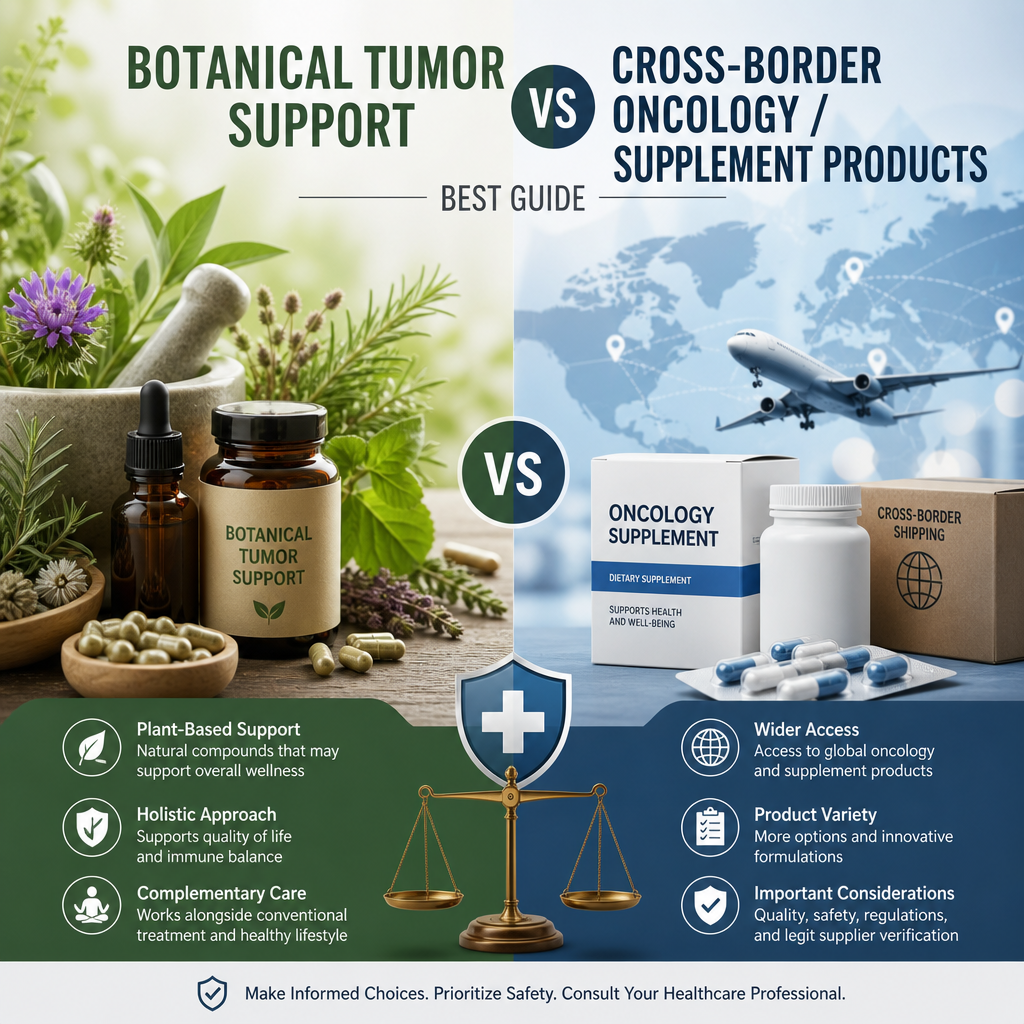
植物腫瘤支持通常指的是與傳統癌症護理一起使用的植物衍生化合物。這些可能包括藥用蘑菇、薑黃衍生的薑黃素、綠茶化合物、奶薊、乳香或其他草本成分。它們的提議角色可以包括抗氧化活性、免疫支持、消化支持和維持生活質量的幫助。.
在實際意義上,植物腫瘤支持通常是因為主人想要一些溫和、熟悉且與常規護理相容的東西。這種興趣是可以理解的,尤其是當狗狗面臨食慾變化、疲勞或治療副作用時。即便如此,每種植物產品都應該根據用於任何活躍健康產品的相同標準來評估。問題不在於補充劑聽起來是否自然;問題在於它是否適合特定的狗、特定的診斷和當前的腫瘤學計劃。.
跨境腫瘤學或補充產品是一個更廣泛的類別。它們可能包括處方藥、進口獸醫產品、配方、營養產品和從其他國家購買的非處方補充劑。“跨境”這個詞並不自動表示某個產品是優越或不安全的。這意味著必須對製造標準、標籤、儲存、法律地位和獸醫監督提出額外問題。.
換句話說,植物腫瘤支持與跨境腫瘤學/補充產品之間的比較並不是好產品與壞產品之間的競爭。這是不同產品類別之間的比較,這些類別在目的、質量和證據上可能差異很大。一位負責任的狗主人應該超越原產國,專注於安全性、配方和臨床適合性。.
主要區別在於植物支持主要由其成分和預期的支持角色定義,而跨境腫瘤學產品可能從基於證據的醫療治療到文檔有限的產品不等。比較它們需要的不僅僅是查看市場宣傳或成分列表。.
對於許多主人來說,核心問題不是產品是本地還是進口,而是它是否符合狗的診斷和治療計劃。這就是為什麼在任何狗癌症補充品比較中,獸醫審查很重要。.
植物腫瘤支持可能提供的內容
精心挑選的植物配方有時可以補充狗的癌症護理計劃。根據成分,可能的目標包括:
- 支持食慾和消化
- 幫助維持身體狀況
- 在恢復期間提供營養
- 支持正常的炎症途徑
- 提供具有抗氧化或免疫調節特性的化合物
- 促進一般舒適和健康
這些目標是支持性的而非治癒性的。這一區別很重要,因為許多主人在常規護理已經開始後或在試圖減少不適而不增加不必要的複雜性時,會尋找植物腫瘤支持。適當使用時,一些產品可能幫助狗感覺更好或更舒適地接受治療計劃。使用不當時,這些產品可能會造成混淆、副作用或相互作用。.
然而,證據在不同成分之間差異很大。在實驗室細胞、啮齒動物或人類中進行的研究不能自動應用於狗。劑量、吸收、代謝和毒性在不同物種之間可能有所不同。即使是傳統上用於人類的植物,在濃縮提取物形式下也可能不適合狗。.
因此,植物產品應根據其特定成分、數量、配方和預期用途進行評估,而不僅僅是根據“天然”、“草本”或“整體”的字眼。天然物質可能會產生副作用,並可能與化療、放療、手術、類固醇、止痛藥或肝臟代謝的藥物相互作用。.
當家庭尋找植物腫瘤支持時,他們通常試圖做一些積極和溫和的事情。最有用的產品是那些在紙上有意義、具有明確的理由並符合狗的實際需求的產品。在許多情況下,最佳結果來自將產品與非常具體的目標匹配,而不是試圖一次性做所有事情。.
如果主人想在選擇任何支持產品之前了解腫瘤診斷背後的生物學,回顧腫瘤行為、免疫失衡和治療反應在不同案例中的差異會有所幫助。一個更廣泛的資源如 狗癌症生物學有助於免疫失衡和腫瘤因素 可以提供有用的背景。.
了解跨境腫瘤學和補充產品
進口或跨境產品可以創造機會和風險。一些產品可能包含當地無法獲得的成分,而另一些產品可能在與狗的母國不同的監管系統下進行市場營銷。產品名稱、濃度、劑量說明和質量標準在不同市場之間可能無法清晰轉換。.
當討論植物腫瘤支持與跨境腫瘤學/補充產品時,最重要的實際差異之一是法規。一種植物產品在一個國家可能作為補充品銷售,並且監管較少,但在另一個國家可能需要更具體的標籤或批准。同樣,與腫瘤相關的產品在一個市場可能是標準的,而在另一個市場則因為說明、語言或劑量慣例的不同而難以評估。.
重要的關注事項包括:
- 不明確的成分數量: 標籤可能列出專有混合物,但未說明每種活性成分的數量。.
- 不同的質量控制: 生產、測試、污染篩查和批次一致性可能有所不同。.
- 儲存和運輸問題: 高溫、濕度、延遲或不當包裝可能降低產品穩定性。.
- 假冒或標籤錯誤的產品: 在線市場可能使得驗證原始製造商變得困難。.
- 法規差異: 在一個國家合法銷售的補充產品在其他地方可能被分類為不同的類別。.
- 限制的獸醫指導: 說明可能是為人類撰寫的,或基於不適用於狗的假設。.
產品的外國來源並不是有效性的證明,當地的可用性也不是質量差的證明。實際問題是該產品是否有可靠的文件,並且能安全地整合到狗的治療計劃中。.
對於已經接受治療的狗,跨境產品應仔細檢查成分重疊、隱藏的輔料和劑量不一致的情況。如果狗有敏感的胃、肝病、腎病或藥物不耐受的歷史,這一點尤其重要。即使是一個有幫助的產品,如果濃度與主人預期的不同,也可能成為問題。.
對於比較不同市場中支持選項的讀者,這篇文章也可以與地區指導配對,例如 Ocoxin Pets 替代品:西班牙 5 種強效支持犬隻的方式 在研究補充選擇和獸醫指導護理時。.
犬癌症補充劑比較:最重要的標準
有用的狗癌症補充品比較應專注於安全性、透明度、證據和與治療的相容性。在做出決定之前,考慮以下標準。.
成分透明度
選擇能夠識別每種活性成分並提供每份的數量的產品。避免模糊的混合物,這使得計算有意義的劑量變得不可能。標籤還應在相關時披露非活性成分、過敏原、防腐劑和香料。.
良好的標籤在主人權衡植物腫瘤支持與跨境腫瘤學/補充產品時尤其重要,因為標籤可能遵循不同的國家標準。清晰的標籤使得公平比較成分和與獸醫討論產品變得更容易。.
生產和測試
Look for products made in facilities that follow recognized quality standards. Independent testing for contaminants, heavy metals, pesticides, microbes, and accurate ingredient levels provides greater confidence. A certificate of analysis can be helpful, although it should come from a credible laboratory and correspond to the specific product batch.
If the product is imported, ask whether the same batch was tested before export, after arrival, or not at all. That detail matters because transport conditions can influence stability and shelf life. A supplement that is well made but poorly stored may not perform as expected.
獸醫兼容性
Your veterinarian should know about every supplement your dog receives. This is especially important before surgery or when the dog is receiving chemotherapy, radiation, targeted medication, anticoagulants, nonsteroidal anti-inflammatory drugs, anticonvulsants, or corticosteroids. Some supplements may affect bleeding, blood pressure, liver enzymes, immune activity, or drug absorption.
Veterinary compatibility should also be considered in relation to the dog’s age, breed, weight, and concurrent illnesses. Senior pets may process certain compounds more slowly, and small dogs can be more sensitive to dosing errors. A product that seems mild in theory may still be too concentrated for a frail patient.
Evidence and realistic claims
Be cautious of products claiming to cure cancer, replace chemotherapy, dissolve tumors, or guarantee survival. These statements are warning signs. A trustworthy product generally presents supportive goals rather than promises of a cure and distinguishes laboratory findings from clinical evidence.
The best way to evaluate these claims is to ask what type of evidence exists. Is there data from dogs, or only from laboratory models? Was the study small, uncontrolled, or based on a different species? Strong claims should be backed by stronger evidence, not just by testimonials or sales language.
Dog-specific formulation
Human products may contain ingredients that are unsuitable for dogs, including xylitol, excessive vitamin D, concentrated essential oils, or inappropriate mineral levels. A canine product should still be evaluated carefully, but it is often easier to assess when the formulation and directions are specifically designed for veterinary use.
Another point to remember in botanical tumor support vs Cross-border oncology / supplement products is that “for pets” does not automatically mean “safe for every pet.” The dog’s medical history should always guide the final decision.
將補充劑與癌症治療結合的潛在風險
The most serious mistake is assuming that a supplement is harmless because it is natural. Certain concentrated botanicals can affect liver enzymes and potentially change how medications are metabolized. Others may increase bleeding risk, alter blood sugar, cause gastrointestinal upset, or stimulate the immune system in ways that are undesirable for a particular treatment plan.
Antioxidant supplements also require thoughtful discussion. Antioxidants may support normal cells under some conditions, but their use during radiation or certain chemotherapy protocols may be controversial because treatment can partly rely on oxidative mechanisms. The right decision depends on the specific cancer, medication, timing, and overall health of the dog.
Dogs with liver disease, kidney disease, clotting disorders, diabetes, seizure disorders, or gastrointestinal problems may face additional risks. Puppies, senior dogs, and underweight patients may also respond differently to concentrated products.
These concerns do not mean botanical options have no place in care. They mean that a dog cancer supplement comparison should always include safety first, especially when a dog is already on prescription therapy. Even supportive ingredients should be handled like real medical tools, not like flavorless food additives.
A cautious owner should also avoid layering too many supplements at once. Multiple products can lead to overlapping ingredients, unintended high doses, or confusion when side effects occur. Simplicity often makes monitoring safer and more effective.
如何做出更安全的決定
Start by identifying the primary goal. Is the aim to support appetite, maintain weight, ease digestive problems, address a documented deficiency, or provide general nutritional support? A clear goal helps prevent the use of multiple overlapping products.
Next, gather complete product information, including photographs of the label, serving size, manufacturer, lot number, and suggested dose. Share this information with the veterinary team. Ask whether any ingredient conflicts with the dog’s diagnosis or current medications.
Introduce only one new product at a time, unless a veterinarian gives different instructions. This makes it easier to identify side effects. Monitor appetite, vomiting, diarrhea, energy, thirst, urination, skin changes, and any unusual behavior. Stop the product and contact the veterinarian if concerning symptoms appear.
Regular monitoring may include bloodwork, weight checks, liver and kidney assessments, and evaluation of tumor response. Supplements should never delay imaging, surgery, oncology consultations, pain management, or other recommended care.
It can also help to review primary-source product or ingredient information from recognized medical references. For example, the PubMed research database is a reliable place to verify whether a botanical ingredient has been studied in dogs or in related species.
Owners comparing botanical tumor support vs Cross-border oncology / supplement products may also want to ask practical questions before purchasing. What is the exact active ingredient? Is the dose expressed clearly? Has the product been used in dogs, or only discussed in human studies? Can the manufacturer explain the source and testing process? These questions help turn a marketing decision into a health decision.
If a product must be imported, confirm how it will be shipped, whether it requires refrigeration, and how long it remains stable after opening. Ask whether the package includes a lot number and expiration date. These details may seem minor, but they matter when a dog’s treatment depends on consistent quality.
生活質量的角色
Cancer care is not measured only by tumor size or survival time. Appetite, comfort, mobility, sleep, interaction, hydration, and enjoyment of daily activities are also important. A supplement may be worthwhile if it supports a specific quality-of-life objective and does not interfere with effective treatment.
Some dogs benefit most from symptom support rather than aggressive product use. For example, if appetite is poor, a product that helps with digestion or palatability may matter more than one that promises broad anti-tumor activity. If joint stiffness or discomfort is the main problem, then quality-of-life support may take priority over other claims.
The strongest plan usually combines evidence-based veterinary oncology with individualized nutrition, pain control, symptom management, and honest monitoring. Botanical products can have a place in that plan, but they should be selected with the same caution applied to any active medical substance.
Ultimately, botanical tumor support vs Cross-border oncology / supplement products is not a simple contest between “natural” and “medical” options. The safest choice depends on the dog’s diagnosis, treatment protocol, health status, product quality, and veterinary supervision. Transparent labeling, realistic expectations, and careful monitoring are the foundation of responsible supplement use.
For owners comparing options across markets, this discussion also fits into a broader decision-making process that includes local availability, cost, and follow-up care. A lower-priced product is not automatically better if the dosing is unclear or the source cannot be verified. Likewise, a premium imported product is not automatically worth the price unless it has a clear role in the care plan.
Every dog cancer supplement comparison should balance hope with evidence. Botanical support may be useful, and imported products may have a place, but neither should replace clinical judgment. A product earns trust when it is transparent, practical, and appropriate for the dog in front of you.
In practice, the best answer is rarely the most dramatic one. A carefully chosen botanical formula, used for the right reason, may help. A cross-border product may also be appropriate if it is well documented and professionally supervised. The key is to protect the dog, not the marketing claim. When owners keep that priority in mind, botanical tumor support vs Cross-border oncology / supplement products becomes a clearer and safer decision.