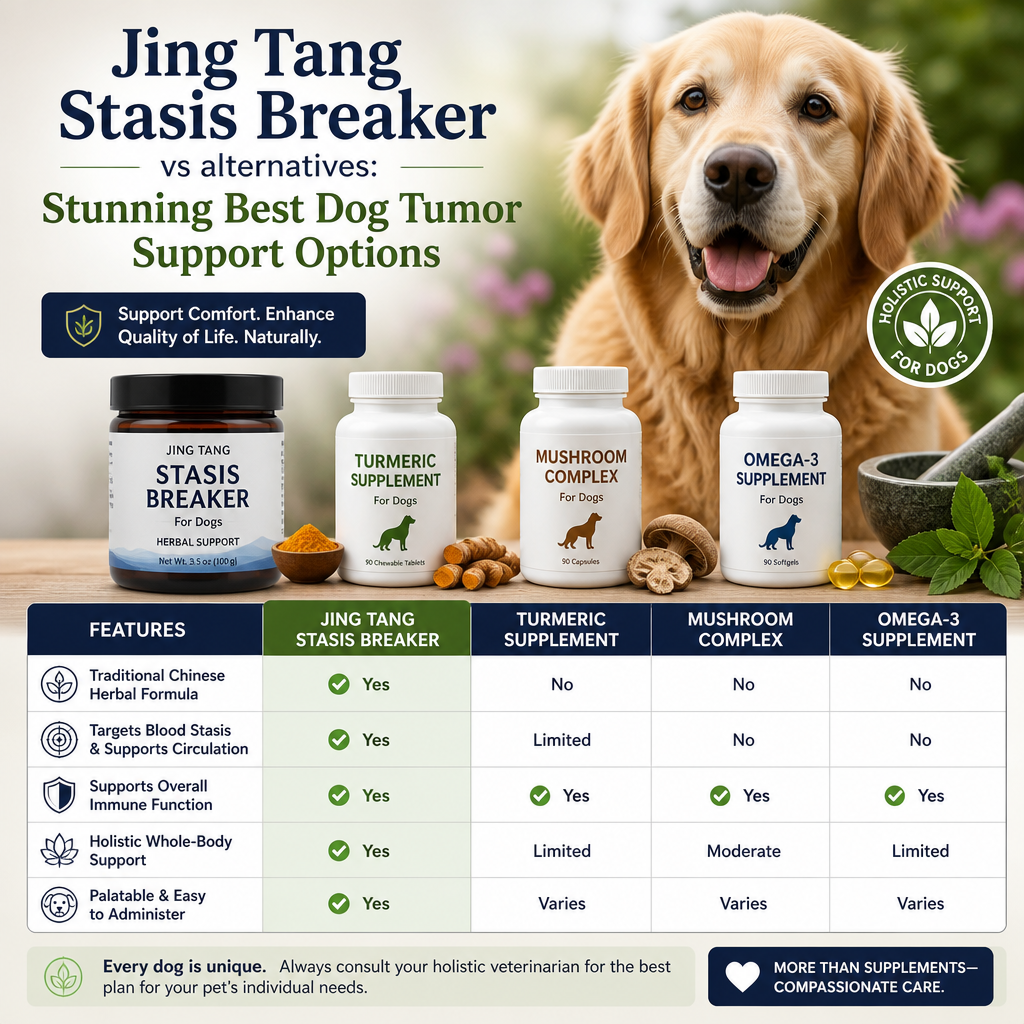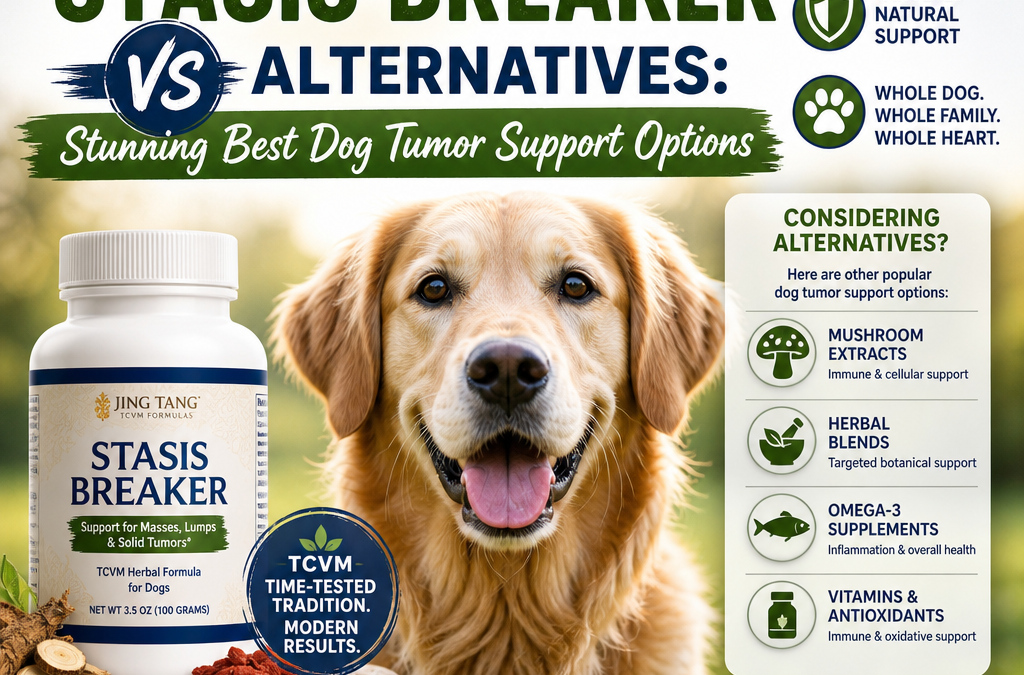
Jing Tang Stasis Breaker vs alternatives is an important comparison for dog owners exploring supportive care for a dog with a mass, lump, or diagnosed tumor. Jing Tang Stasis Breaker is a traditional Chinese veterinary medicine (TCVM) herbal formula commonly discussed for circulation and “blood stasis” patterns. However, it should not be viewed as a cure for cancer or as a substitute for veterinary diagnosis and treatment. The best dog tumor support options depend on the type of growth, the dog’s overall health, current medications, and the goals established with a veterinarian.
For readers comparing Jing Tang Stasis Breaker vs alternatives, it helps to think in terms of diagnosis first and support second. Some dogs need surgery or oncology care, while others benefit from comfort-focused measures, nutrition, or carefully selected herbal support. In every case, the safest plan is the one that fits the dog’s confirmed condition.
目錄
Understanding TCVM / mass-lump / solid-tumor support

In TCVM, a lump may be evaluated through concepts such as qi stagnation, blood stasis, phlegm accumulation, or heat. These traditional pattern descriptions do not directly correspond to modern cancer staging, but they may help a trained veterinary practitioner select supportive therapies. A solid mass can be benign, inflamed, cystic, or malignant, and its appearance alone cannot determine the diagnosis.
Modern veterinary medicine generally begins with a physical examination and sampling. Fine-needle aspiration may provide useful information, while a biopsy can offer a more definitive diagnosis. Imaging, blood work, and sometimes lymph-node evaluation may also be recommended. These steps matter because a fatty lipoma, mast cell tumor, soft-tissue sarcoma, abscess, and enlarged lymph node require very different approaches.
Supportive care can be valuable, but it should complement—not replace—appropriate testing and treatment. Surgery, chemotherapy, radiation therapy, targeted medications, pain management, nutritional support, and monitoring may all have a role depending on the case. For an overview of integrative veterinary care, the American Veterinary Medical Association’s guidance on complementary and alternative veterinary medicine 是一個有用的參考。.
In practice, dogs with a lump may need more than one kind of support. That is why Jing Tang Stasis Breaker vs alternatives should always be reviewed in the context of diagnosis, not just the size or appearance of the mass.
For example, a dog with a stable lipoma may only need monitoring, while a dog with a fast-growing tumor may require immediate treatment. That difference is one reason Jing Tang Stasis Breaker vs alternatives cannot be answered with a single product recommendation.
Jing Tang Stasis Breaker vs alternatives
Jing Tang Stasis Breaker is generally discussed as an herbal option for patterns involving stagnation and blood stasis. Practitioners may consider it when a dog has a firm mass, chronic swelling, bruising, or other signs that fit a particular TCVM pattern. The formula’s suitability depends on the individual dog rather than the presence of a tumor alone.
Potential advantages include its availability through veterinary herbal channels, its established place within some TCVM practices, and the possibility of integrating it into a broader individualized plan. Some owners also appreciate using a supportive approach alongside conventional care.
There are important limitations. Evidence for herbal formulas in canine cancer is often limited, and results from laboratory studies or traditional use cannot be assumed to apply to every dog. Herbal products may also vary in quality, concentration, and formulation. A dog may experience gastrointestinal upset, allergic reactions, sedation, or interactions with other medicines. Herbs that affect circulation or clotting deserve particular caution before surgery or when a dog is taking anticoagulant or antiplatelet drugs.
Alternatives may include a different TCVM formula, medicinal mushrooms, omega-3 fatty acids, prescription therapies, therapeutic diets, or comfort-focused care. Each option has a different evidence base and risk profile. The most appropriate comparison is not simply which product is “strongest,” but which option is safest and most relevant to the dog’s diagnosis.
When owners compare Jing Tang Stasis Breaker vs alternatives, the best choice usually depends on more than the supplement itself. The tumor type, whether the mass is stable or changing, and how the dog is feeling all matter. In some cases, a veterinarian may recommend supportive measures first while diagnostic testing is underway.
Families often ask whether a herbal formula should be used while they wait for pathology results. That decision is best made case by case, because Jing Tang Stasis Breaker vs alternatives is not only about preference; it is also about timing, safety, and the medications already in use.
Owners who are also comparing other support products may want to review similar veterinary herbal options, such as K9 免疫 / K9 免疫加替代品:丹麥最佳犬用腫瘤補充劑, to understand how formulas can differ by ingredients and intended use.
Common dog tumor support options
Veterinary oncology and conventional treatment
A veterinary oncologist can explain whether a mass is best managed with surgery, radiation, chemotherapy, immunotherapy, targeted medication, or observation. For some tumors, removing the mass early may be the most effective treatment. In other cases, surgery may be combined with additional therapy to reduce the risk of recurrence.
Conventional treatment is not automatically the opposite of supportive care. Pain control, anti-nausea medication, appetite support, wound care, and regular monitoring can significantly improve quality of life during treatment.
When a diagnosis is unclear, conventional testing is often the most important first step. That is especially true if the dog is losing weight, acting lethargic, or showing signs that the lump is affecting nearby tissue. In those moments, Jing Tang Stasis Breaker vs alternatives should come after medical assessment, not before it.
營養支持
Nutrition should be tailored to the dog’s condition, appetite, body weight, and treatment plan. A complete and balanced diet is usually more important than extreme dietary changes. Adequate protein and calories can help preserve muscle, while omega-3 fatty acids may support general inflammatory balance in some dogs.
Owners should be cautious with raw diets, megadose supplements, and unverified “cancer-fighting” foods. Dogs undergoing chemotherapy or recovering from surgery may have special food-safety needs. A veterinary nutritionist can help design a diet when appetite loss, weight loss, kidney disease, or digestive problems are present.
Nutrition may also matter when the dog is taking a formula alongside other medicines. For dogs with sensitive stomachs, even a helpful product can become difficult to tolerate. That is why practical feeding support often becomes part of the broader answer to Jing Tang Stasis Breaker vs alternatives.
Medicinal mushrooms and supplements
Mushroom extracts, antioxidants, hemp-derived products, turmeric, and other supplements are frequently marketed for canine tumor support. Some have preliminary research, but product quality and dosing can vary widely. Certain supplements may interfere with chemotherapy, anesthesia, liver metabolism, or blood clotting.
A supplement should be evaluated by its specific ingredients, concentration, manufacturing standards, and potential interactions—not by marketing claims alone. “Natural” does not mean risk-free.
Owners who are considering Jing Tang Stasis Breaker vs alternatives sometimes focus on supplements first, but a veterinarian can help match the product to the diagnosis. If the dog is already receiving medication, every added product should be checked for interactions.
For owners researching Jing Tang Stasis Breaker vs alternatives, an evidence-based supplement discussion is often the most useful next step after the diagnosis is confirmed. That conversation can prevent unsafe combinations and reduce delays in needed treatment.
Pain, mobility, and quality-of-life care
Acupuncture, rehabilitation, massage, gentle exercise, orthopedic support, and environmental adjustments may help dogs remain comfortable. These approaches are especially useful when a mass affects movement or when treatment causes fatigue.
Owners can track appetite, sleep, mobility, breathing, bathroom habits, pain signs, and interest in normal activities. A simple daily quality-of-life log can help identify gradual changes that might otherwise be missed.
In practical terms, Jing Tang Stasis Breaker vs alternatives may also come down to how much monitoring a dog needs. A dog with a fast-growing or painful mass often benefits from a more structured care plan than a dog with a small, stable lump under observation.
When discussing Jing Tang Stasis Breaker vs alternatives, it can help to define the goal clearly. Is the goal to support comfort, slow progression, reduce inflammation, or simply avoid interactions while standard treatment continues? Clear goals make the choice easier.
That same planning mindset applies to owners comparing different regional support articles and supplement approaches. The right option is usually the one that fits the confirmed diagnosis, the stage of disease, and the dog’s current treatment plan.
What a vet may recommend before starting a formula
Before starting Jing Tang Stasis Breaker or any alternative, provide the veterinarian with a complete list of medications, supplements, and medical conditions. Special caution is needed for dogs with liver or kidney disease, bleeding disorders, gastrointestinal ulcers, pregnancy, or upcoming surgery.
Seek prompt veterinary attention if a mass grows rapidly, becomes painful, ulcerates, bleeds, changes color, or interferes with eating, breathing, walking, urination, or defecation. Sudden weakness, pale gums, collapse, repeated vomiting, or severe abdominal swelling may indicate an emergency.
It can also help to ask whether the mass should be sampled first. A benign lipoma and a malignant mast cell tumor may look similar from the outside, yet the supportive care strategy can differ greatly. That is why the most useful conversation is usually about diagnosis first, then support.
Before deciding on Jing Tang Stasis Breaker vs alternatives, many veterinarians will also review recent lab work, current prescriptions, and any planned procedures. That extra step helps lower the risk of a preventable interaction or a delay in treatment.
If the dog is heading toward surgery or a biopsy, the veterinarian may pause herbal products temporarily. This is especially important when bleeding risk or anesthesia planning is involved. In those cases, the safest choice among Jing Tang Stasis Breaker vs alternatives may be no supplement at all until the procedure is complete.
How to compare supportive choices fairly
A fair comparison starts with the same questions for every option: What is it meant to do? What evidence supports it? What are the side effects? Could it interfere with standard treatment? Is the manufacturer reliable? Answers to those questions are often more helpful than broad claims about “immune support” or “anti-tumor” action.
It also helps to compare the product against the dog’s actual needs. A dog with a painful, ulcerated mass may need pain relief and wound care more than a general wellness supplement. A dog with confirmed cancer but good appetite and energy may need monitoring, nutrition, and a treatment plan rather than multiple overlapping products.
When Jing Tang Stasis Breaker vs alternatives is discussed in this way, the conversation becomes less about brand loyalty and more about practical care. That shift usually leads to safer decisions and fewer unnecessary products.
Some owners also like to compare how different support formulas are positioned across countries and practice styles. Even then, the same principle applies: matching the tool to the diagnosis matters more than the label on the bottle.
Making an informed decision
The most responsible approach to dog tumor support options combines diagnosis, realistic treatment goals, and ongoing monitoring. Jing Tang Stasis Breaker may be considered in selected cases under the supervision of a veterinarian trained in TCVM, but it should not be chosen solely because a lump is present. Alternatives may be more appropriate depending on the tumor type, the dog’s medications, and whether the goal is tumor control, recovery support, symptom relief, or comfort care.
Discussing TCVM and conventional options openly allows the care team to identify potential benefits, avoid harmful interactions, and create a plan centered on the dog’s quality of life. Supportive therapies are most useful when they are individualized, evidence-informed, and integrated with timely veterinary care.
For some families, the right decision is a combination plan that includes surgery or oncology care plus carefully selected supportive products. For others, the focus may be comfort, appetite, and mobility. Either way, Jing Tang Stasis Breaker vs alternatives should be evaluated with the same standard: safety, relevance, and the dog’s overall wellbeing.
In short, Jing Tang Stasis Breaker vs alternatives is not a simple product-versus-product choice. It is a clinical decision that should reflect the dog’s diagnosis, stage of disease, symptoms, and treatment goals. When used thoughtfully, supportive care can play a meaningful role, but it works best as part of a veterinarian-guided plan.
If you are comparing Jing Tang Stasis Breaker vs alternatives for a dog with a mass, the best next step is to confirm the diagnosis and discuss the safest support plan with your veterinary team.