
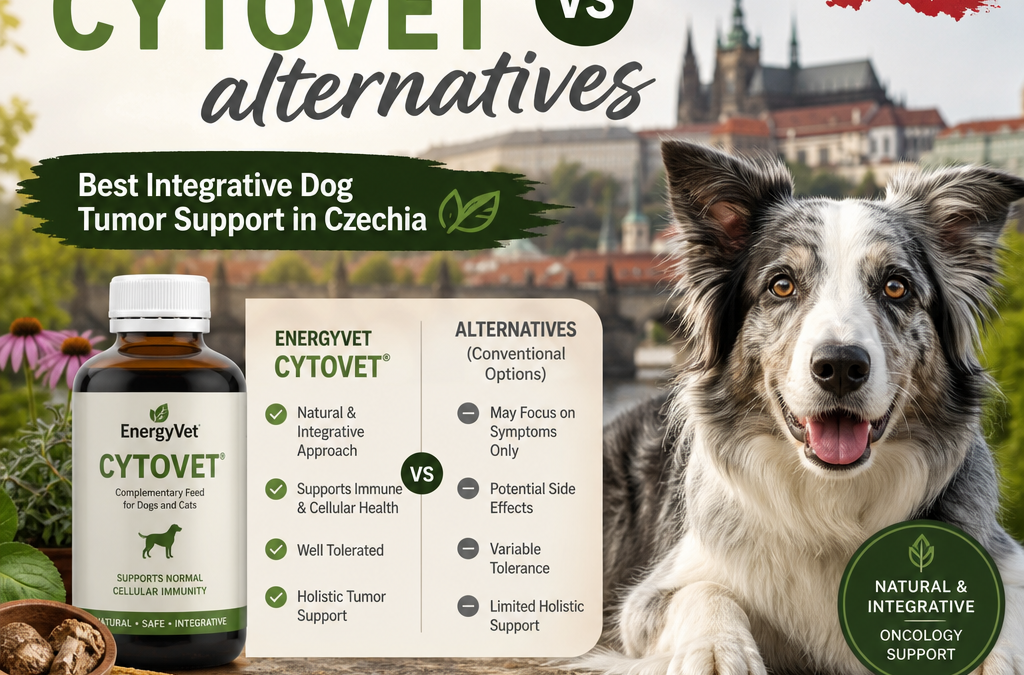
Energyvet Cytovet vs alternatives is an important comparison for Czech dog owners looking for supportive care after a tumor diagnosis. Products such as Cytovet may be considered alongside veterinary oncology, nutritional support, pain management, and other complementary approaches. However, no supplement should replace diagnosis, surgery, chemotherapy, radiation, or other evidence-based treatment recommended by a veterinarian. The most useful approach is usually an individualized plan that supports comfort, nutrition, mobility, and quality of life.
Indholdsfortegnelse
Understanding dog tumor support options
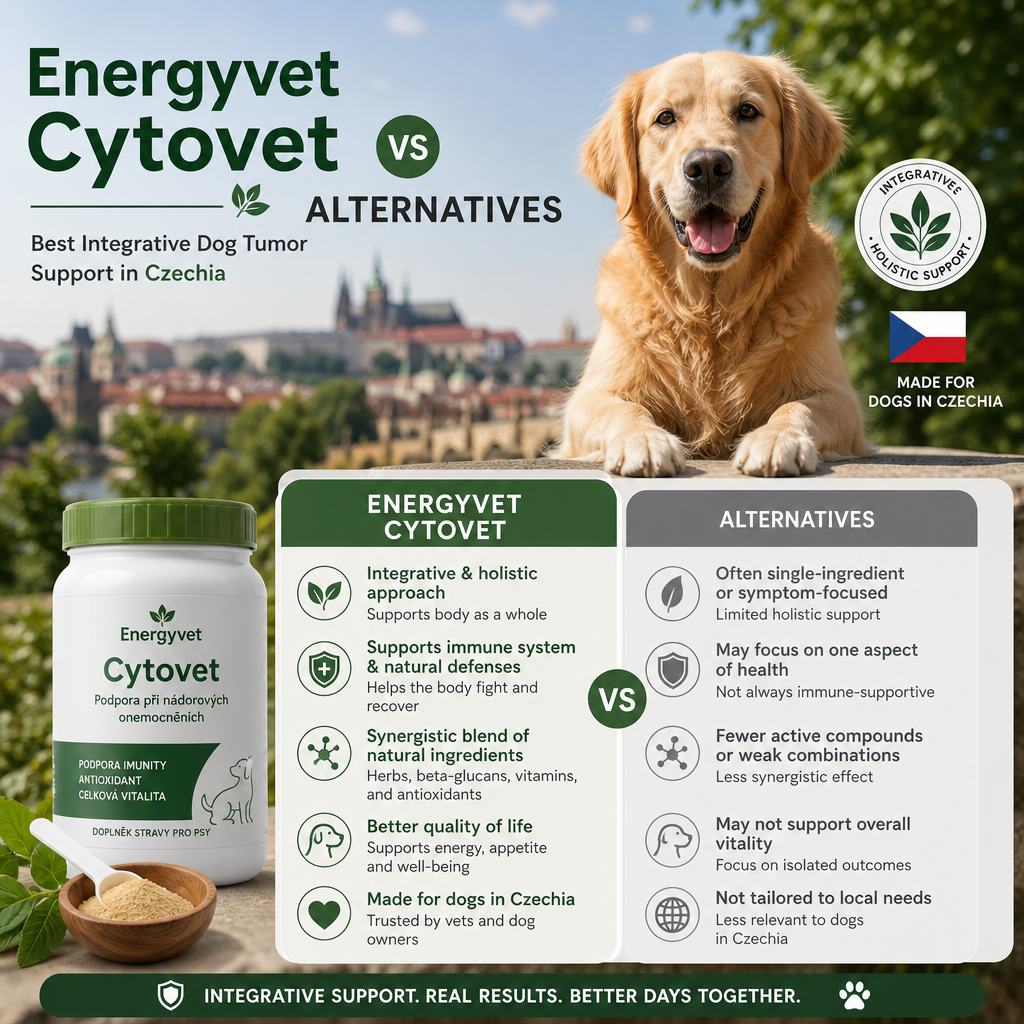
A tumor diagnosis does not automatically mean that every dog needs the same treatment. Tumor type, location, size, stage, growth rate, age, existing diseases, and the dog’s general condition all influence the medical plan. A veterinarian may recommend surgery, laboratory testing, imaging, biopsy, chemotherapy, radiation therapy, targeted medication, or careful monitoring.
Supportive care has a different purpose. It may help a dog tolerate treatment, maintain appetite, stay hydrated, manage discomfort, preserve muscle, and enjoy normal activities for as long as possible. These measures are sometimes described as natural/integrative oncology support because they combine conventional veterinary medicine with carefully selected complementary strategies.
Useful support may include:
- A complete and balanced diet adapted to the dog’s condition
- Treatment for nausea, pain, inflammation, or digestive upset
- Weight and muscle monitoring
- Gentle exercise appropriate to mobility and energy levels
- Dental care and infection prevention
- Stress reduction and a predictable daily routine
- Veterinary-approved supplements
- Regular reassessment and quality-of-life tracking
The goal is not to pursue the largest number of products. It is to select interventions that are safe, practical, and relevant to the individual dog. Energyvet Cytovet vs alternatives becomes a meaningful discussion only when the dog’s actual medical needs are clear.
For readers comparing structured supplement guidance, this related resource on dog tumor supplement options in Slovakia can provide a useful broader overview of integrative care ideas that also apply to nearby markets.
It is also worth remembering that supportive care is not limited to supplements. Hydration, anti-nausea medication, appetite support, and pain control can have a greater effect on daily wellbeing than any single product. That is why responsible cancer support always begins with the basics.
In practice, the most helpful plans are usually the simplest ones that address the dog’s biggest needs first. A dog that is eating poorly may benefit more from appetite support and a diet adjustment than from multiple added products. A dog that is painful may need medication changes before any supplement discussion. This is where Energyvet Cytovet vs alternatives should be viewed through the lens of daily function, not product labels alone.
Owners should also expect the plan to change over time. What helps during the first weeks after diagnosis may not be the same as what helps during recovery or palliative care. Regular reassessment gives the veterinary team a better chance to adjust the plan before small problems become major setbacks.
Energyvet Cytovet vs alternatives: what owners should know
Cytovet is marketed as a complementary product for dogs and other animals. It is commonly discussed by owners interested in mineral-based or holistic support during serious illness. Because product formulations and recommendations can change, owners should read the current label and consult a qualified veterinarian before use.
The key question is not whether Cytovet is “better” than every alternative. Instead, owners should ask whether it is appropriate for their dog’s diagnosis, current medication, organ function, and treatment plan. A supplement that is tolerated by one dog may be unsuitable for another, especially when kidney disease, liver disease, gastrointestinal problems, dehydration, or multiple medications are involved.
When comparing Energyvet Cytovet vs alternatives, consider:
- Formål: Is the product intended to support appetite, digestion, immunity, recovery, or general condition?
- Beviser: What reliable research exists for the specific ingredient and the specific canine condition?
- Sikkerhed: Can it affect the liver, kidneys, blood clotting, blood pressure, or medication absorption?
- Kvalitetskontrol: Is the manufacturer transparent about ingredients, dosage, testing, and batch consistency?
- Practicality: Can the dog receive it consistently without stress or digestive side effects?
- Veterinary coordination: Does the treating veterinarian know every supplement the dog receives?
Marketing terms such as “detox,” “anti-cancer,” or “immune boosting” can be vague. A responsible product discussion should distinguish between general nutritional support and a proven treatment that directly controls tumor growth.
For a general evidence-based overview of canine cancer care, the American College of Veterinary Surgeons guide to cancer in dogs er en nyttig uddannelsesmæssig reference.
Owners often find that the most helpful way to compare options is to ask three simple questions: What problem is this trying to solve? What is the risk if it does not help? What happens if it interacts with the rest of the treatment plan? Those questions keep Energyvet Cytovet vs alternatives grounded in real-world care instead of product hype.
Another useful question is whether the product has a clear role in the current stage of disease. A dog that is stable and eating well may only need basic support, while a dog losing weight may need a more structured plan. That distinction matters because Energyvet Cytovet vs alternatives is not really a brand contest; it is a decision about what best fits the clinical situation.
Some dogs also have sensitive digestion or chronic disease that makes new products difficult to introduce. In those cases, the safest choice is often the option that creates the fewest changes while still addressing a real need. A gradual, carefully monitored approach is usually better than introducing multiple new items at once.
Natural/integrative oncology support in Czechia
Natural/integrative oncology support in Czechia can be organized through cooperation between the primary veterinarian, a veterinary oncologist, and professionals experienced in nutrition or complementary care. Owners may find products through veterinary clinics, specialized pet pharmacies, online stores, or distributors. Availability and labeling can vary, so it is especially important to verify the product’s origin and instructions.
An integrative plan may include conventional treatment together with selected complementary measures. For example, a dog recovering from surgery may need pain control, wound monitoring, hydration, and a highly digestible diet. A dog undergoing chemotherapy may benefit from anti-nausea medication, appetite support, frequent nutritional checks, and adjustments based on blood results. A dog receiving palliative care may need a stronger focus on comfort, mobility, sleep, anxiety reduction, and family routines.
Complementary therapies should be evaluated individually. Acupuncture, rehabilitation, massage, omega-3 fatty acids, medicinal foods, probiotics, or herbal products may be useful in some cases, but “natural” does not automatically mean harmless. Some herbs and concentrated supplements can affect clotting or alter how prescription medicines are metabolized. Certain products may also be inappropriate before surgery or during chemotherapy.
In practical terms, the best natural/integrative oncology support is the one that improves daily function without creating new risks. That is why the conversation around Energyvet Cytovet vs alternatives should always include diagnosis, medication review, and the dog’s current physical status.
In Czechia, it also helps to think in phases. A newly diagnosed dog may need urgent diagnostics and appetite stabilization first. A dog in active treatment may need side-effect control and frequent monitoring. A dog in remission or long-term management may need maintenance nutrition and periodic reassessment. The support plan should evolve with the disease rather than stay fixed.
When families compare supportive strategies, they often assume that “more” is better. In reality, a smaller number of well-chosen tools is often easier to maintain and less likely to cause complications. That is one reason why Energyvet Cytovet vs alternatives should be discussed with the treating clinician rather than decided from product claims alone.
Communication is especially important if the dog is seeing more than one professional. The oncologist, primary care veterinarian, and nutrition adviser should all know what the dog is receiving. That coordination reduces the chance of duplicated ingredients, unsafe combinations, and missed warning signs.
Comparing common alternatives
Cytovet is only one possible option among many products discussed in integrative pet care. Alternatives may include nutritional supplements, mushroom-derived products, fish oil, probiotics, antioxidant formulas, herbal preparations, or veterinary therapeutic diets. Each category has different potential benefits and limitations.
Veterinære terapeutiske diæter often provide the most predictable nutritional foundation. They are formulated for digestibility, calorie density, kidney support, gastrointestinal disease, or other medical needs. The right diet can be more valuable than adding several untested products.
Omega-3 fedtsyrer are sometimes used to support skin, joints, and inflammatory balance. Dosage and product purity matter, and dogs with pancreatitis, bleeding risks, or certain digestive conditions may require special caution.
Probiotika og fordøjelsessupport may help selected dogs with diarrhea or appetite changes, particularly when gastrointestinal function has been disturbed. They should not delay investigation of persistent vomiting, diarrhea, weight loss, or blood in the stool.
Herbal and mushroom products are widely promoted in natural oncology care. Evidence varies substantially between ingredients and products. Veterinary supervision is important because concentrated extracts may interact with chemotherapy, steroids, anticoagulants, or anesthetic drugs.
General immune-support formulas are often marketed broadly, but immune stimulation is not always desirable or clearly beneficial. A dog’s immune response is complex, and a product should be chosen for a defined reason rather than a general promise.
Owners who want to compare options more broadly may also find it helpful to review the practical discussion in this article on Energyvet / Cytovet system alternative, especially when evaluating supplement categories rather than a single branded product.
When a family is deciding among supplements, the safest approach is to start with the most measurable needs first. Appetite, hydration, pain control, body weight, and energy level are easier to track than vague claims about “supporting the body.” This is also where Energyvet Cytovet vs alternatives becomes a useful framework: the best option is the one that addresses a real clinical problem.
A few other practical differences are worth noting. Some alternatives are designed for short-term use during recovery, while others are used for longer maintenance periods. Some products are simple and single-ingredient, which can make them easier to assess. Others combine many ingredients, which can make it harder to tell what is helping or causing side effects. Clarity usually matters more than complexity.
Cost is another factor that families should not ignore. A product that is affordable and sustainable may be more helpful than a more expensive formula that cannot be continued consistently. The best plan is the one the household can actually follow day after day.
It can also be useful to compare products by how easy they are to monitor. If a supplement is added, the family should be able to tell whether appetite, stool quality, energy, or comfort changes afterward. That makes it easier to decide whether the choice was worthwhile. With Energyvet Cytovet vs alternatives, clear observation is often more valuable than brand reputation.
Another sensible approach is to avoid changing too many parts of the routine at once. If food, medication, and supplements all change on the same day, it becomes difficult to know what caused any improvement or problem. A staged approach makes veterinary follow-up more informative and safer for the dog.
What makes one option more appropriate than another?
A product may be more appropriate if it has a clear indication, low interaction risk, and simple dosing. A product may be less appropriate if it is highly concentrated, poorly labeled, or difficult to administer. Dogs with tumor-related weight loss, kidney compromise, or intestinal sensitivity often need a more conservative plan.
Another factor is timing. Some products are used only after surgery, while others are paused before anesthesia or during periods of low blood counts. A veterinarian can help determine when a supplement is appropriate and when it should be avoided.
Consistency matters as well. If a dog refuses the product, spits it out, or develops loose stool, the theoretical benefit quickly becomes irrelevant. In many cases, a simpler routine that the dog accepts is better than a complicated protocol that causes stress.
When a product is being considered for a long period, it should be reviewed at regular intervals. That review should ask whether the dog still needs it, whether it is still tolerated, and whether it is still helping. In real care, Energyvet Cytovet vs alternatives should remain flexible rather than fixed.
How to create a safer support plan
Begin with an accurate diagnosis. A biopsy or cytology may be necessary to identify the tumor, while blood tests and imaging help determine the dog’s overall condition. Without this information, it is difficult to judge whether a supplement is appropriate or whether a worsening symptom reflects the tumor, treatment, infection, or another disease.
Next, create a complete medication and supplement list. Include prescription drugs, over-the-counter products, vitamins, herbal preparations, treats, and special foods. Bring this list to every veterinary appointment. This step helps the veterinary team identify interactions and avoid unnecessary duplication.
Monitor objective changes rather than relying only on impressions. Record appetite, body weight, drinking, bowel movements, vomiting, activity, sleep, breathing, pain signs, and interest in family interaction. A simple weekly record can reveal gradual deterioration that may otherwise be overlooked.
Finally, establish clear warning signs. Urgent veterinary attention may be needed for difficulty breathing, uncontrolled pain, repeated vomiting, severe weakness, collapse, inability to urinate, heavy bleeding, sudden neurological changes, or refusal of food and water. Supplements are not suitable substitutes for emergency care.
It can also help to schedule regular review points, especially during the first few weeks after a new product is started. If a dog seems more uncomfortable, less hungry, or more lethargic after beginning a supplement, the plan should be reassessed rather than continued automatically. In real-world care, Energyvet Cytovet vs alternatives should be judged by outcomes, not by assumptions.
When families live with a dog that has a tumor, they often benefit from a written plan. A short checklist can include medication times, food intake, daily walk tolerance, stool quality, and specific signs that should trigger a call to the clinic. This makes it easier to spot meaningful changes early and keeps everyone in the household consistent.
Good communication matters just as much as product selection. If more than one veterinarian is involved, make sure each professional knows the full picture. This is especially important when chemotherapy, pain medication, surgery, or anesthetic procedures are part of the case.
If the dog is receiving chemotherapy or scheduled for surgery, ask whether any supplement should be paused in advance. This question is often overlooked, yet it can prevent avoidable complications. A short discussion with the treating veterinarian can be more valuable than searching for reassurance online.
Support plans also work best when they are simple enough to repeat. Many families are already coping with emotional stress, appointments, and medication schedules. A clear routine reduces mistakes and makes the dog feel more secure.
Practical support also includes rest and routine. Dogs with cancer often do better when meals, walks, medication, and quiet time happen at predictable times. This consistency can reduce stress and make changes in appetite or energy easier to notice. A stable routine is a useful part of Energyvet Cytovet vs alternatives because it supports the whole care plan, not just one product.
It is also wise to keep expectations realistic. No supplement can guarantee tumor control, and no “natural” strategy should be expected to replace a treatment plan that has been properly recommended by a veterinarian. The goal is to support the dog as safely and comfortably as possible while preserving good communication with the clinic.
Making the decision with quality of life in mind
The best dog tumor support options are those that align with the dog’s medical needs and the family’s realistic ability to provide care. Some dogs benefit from an intensive treatment plan, while others are better served by comfort-focused or palliative care. Both approaches can be responsible when they are based on veterinary assessment and the dog’s welfare.
When considering Energyvet Cytovet vs alternatives, focus on evidence, safety, transparency, and coordination with treatment rather than product claims alone. Natural/integrative oncology support can complement veterinary medicine, but it should remain individualized and medically supervised. In Czechia, owners can often combine local veterinary care with specialist consultations, nutritional guidance, and carefully selected complementary products.
A thoughtful plan prioritizes comfort, nutrition, function, and meaningful time with the family. The most valuable “alternative” is rarely a single supplement; it is a coordinated strategy that responds to the dog’s diagnosis, changing symptoms, and quality of life. For many households, that strategy is the most practical expression of Energyvet Cytovet vs alternatives: not which product sounds strongest, but which support plan is safest and most useful for the individual dog.
As the disease changes, the plan may need to change too. A support method that made sense early on may become unnecessary later, or a new symptom may call for a different tool. That flexibility is one of the strengths of integrative care when it is guided by veterinary judgment.
In the end, the goal is not to chase every possible supplement. It is to give the dog the best chance at comfort and dignity while supporting the family with clear, practical decisions. That is the most responsible way to approach Energyvet Cytovet vs alternatives in everyday veterinary care.
For families in Czechia, the most reliable path is to combine veterinary guidance, careful observation, and a modest number of well-justified support tools. When Energyvet Cytovet vs alternatives is framed this way, the decision becomes less about branding and more about what genuinely helps the dog live more comfortably.