
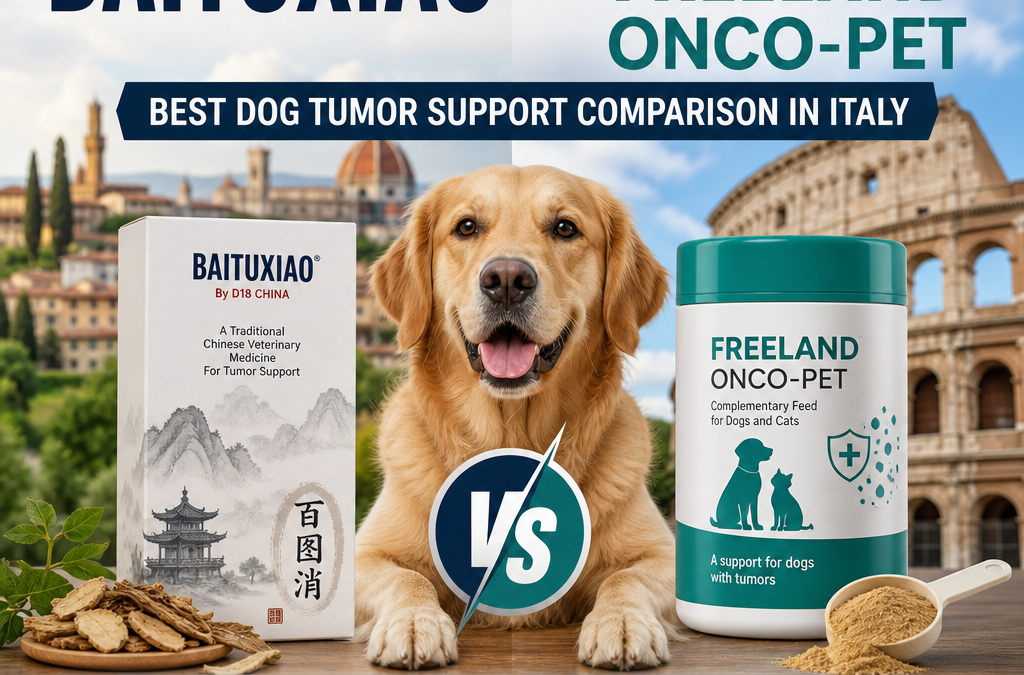
Baituxiao vs Freeland Onco-Pet is a comparison many Italian dog owners consider when looking for supportive care after a tumor diagnosis. Both products are positioned as complementary supplements rather than replacements for veterinary treatment, but their formulas, intended uses, availability, and suitability may differ. Understanding these differences can help owners have a more informed conversation with their veterinarian and choose a practical support strategy for their dog.
A tumor diagnosis is emotionally difficult, and online product claims can make the decision even more confusing. Supplements may be used to support nutrition, appetite, energy, immune function, or general wellbeing, but no supplement should be presented as a cure for cancer. The most appropriate option depends on the dog’s diagnosis, treatment plan, age, weight, medication, organ function, and overall condition.
Inhaltsverzeichnis
What Are Baituxiao and Freeland Onco-Pet?
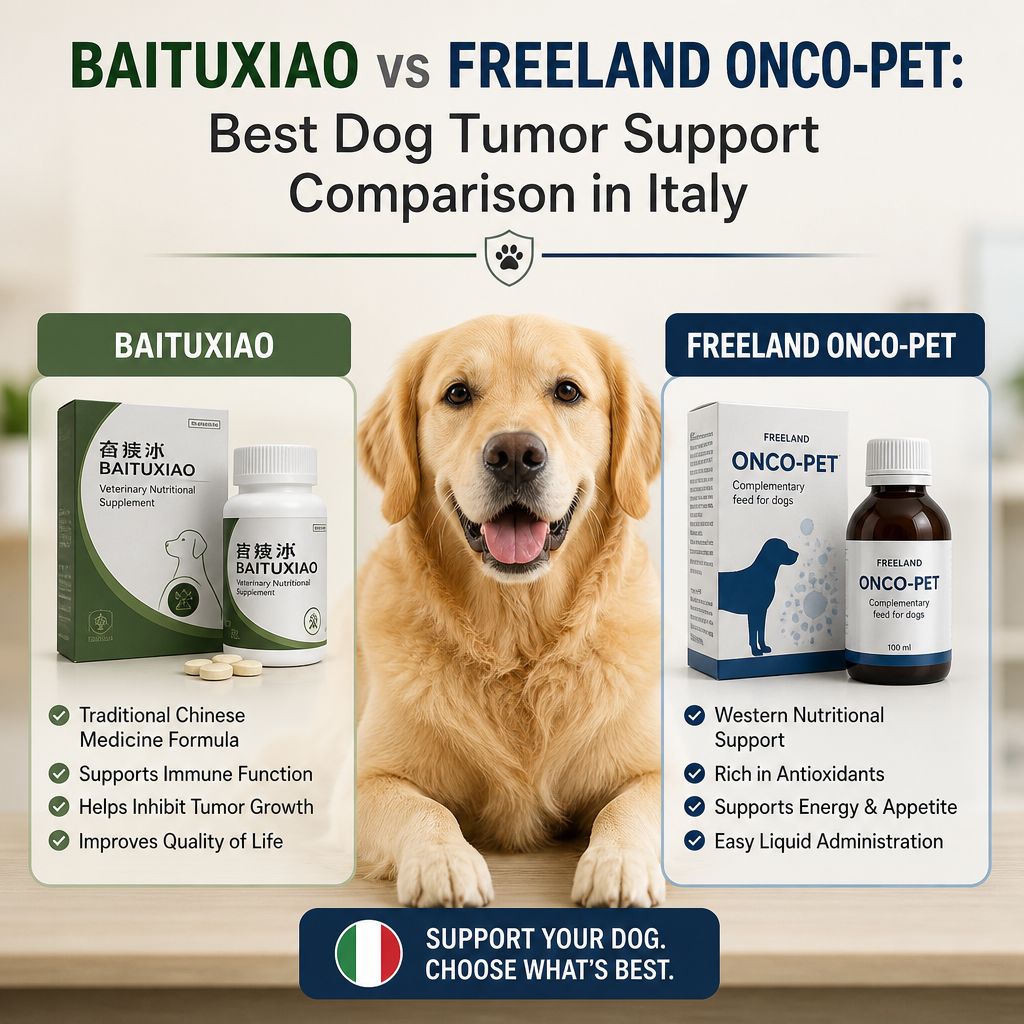
Baituxiao is commonly discussed as a traditional herbal or natural support product for dogs with masses or tumor-related health concerns. Its marketing often emphasizes ingredients associated with immune support, circulation, inflammation management, and general vitality. Because formulations can vary by seller, market, and product version, owners should carefully check the current ingredient list, dosage instructions, manufacturer information, and quality controls.
Freeland Onco-Pet is generally presented as a nutritional supplement designed for dogs and cats requiring additional support during serious illness, including cancer care. Depending on the specific formulation, it may focus on nutrients, antioxidants, vitamins, minerals, or other compounds intended to support general health. As with any supplement, the exact label matters more than broad promotional descriptions.
The key point in this Freeland Onco-Pet comparison is that neither product should automatically be considered “better” for every dog. The best choice is the one that fits the veterinary plan and can be used safely alongside prescribed treatment.
Italian pet owners often want a simple answer, but supportive care is rarely that straightforward. Baituxiao vs Freeland Onco-Pet becomes a more useful comparison when it is framed around the dog’s actual needs, not just a product promise. That means looking at the label, the supplier, the medical plan, and the dog’s day-to-day tolerance.
In practice, a supplement may be chosen to help maintain appetite, support energy, or make recovery more manageable. Baituxiao vs Freeland Onco-Pet should therefore be viewed as part of a broader supportive strategy that includes nutrition, monitoring, and veterinary follow-up. That wider context is essential if the goal is to make a safe and realistic decision.
Baituxiao vs Freeland Onco-Pet: Main Differences
The most important differences usually involve formulation, product positioning, evidence, and practical use.
Formula and ingredient profile
Baituxiao is generally associated with botanical ingredients and traditional herbal concepts. This may appeal to owners interested in plant-based or complementary approaches. However, natural ingredients can still produce side effects or interact with prescription medicines. “Natural” does not automatically mean risk-free.
Freeland Onco-Pet is more commonly viewed as a veterinary nutritional support product. Its formulation may be more directly structured around nutritional supplementation, although owners should verify the label for the product sold in Italy. Ingredients such as antioxidants, vitamins, minerals, amino acids, or other supportive nutrients may be included, but the relevance of each ingredient depends on the dog’s condition.
When reviewing Baituxiao vs Freeland Onco-Pet, ingredient transparency matters more than a product name. A clean, readable label makes it easier to compare dosages and possible interactions. If the formula changes by distributor or country, that variation should be treated as important, not minor.
Vorgesehene Rolle
Baituxiao may be chosen by owners seeking broad herbal support for dogs with lumps, reduced vitality, or chronic illness. Freeland Onco-Pet may be selected when the goal is nutritional support during oncology care, recovery, or periods of poor appetite and physical stress.
These descriptions are general and should not be treated as medical indications. A supplement’s intended role on a label does not prove that it can reduce tumor size, prevent metastasis, or replace surgery, chemotherapy, radiation therapy, immunotherapy, or other veterinary treatments.
That is why Baituxiao vs Freeland Onco-Pet should be discussed alongside the treatment plan rather than separately from it. If a dog is already dealing with nausea, weight loss, anemia, or reduced mobility, the most helpful product is often the one that can be used consistently without adding new problems.
Nachweise und Transparenz
When comparing products, look for transparent labeling, batch information, manufacturer contact details, quality testing, and clear dosage instructions. Evidence for individual ingredients is not the same as evidence for the complete product. A study involving one compound, a laboratory model, or a different species cannot automatically confirm that a finished supplement will improve outcomes in a dog.
Veterinarians may also consider whether the product has a consistent manufacturing process and whether its ingredients could interfere with treatment. This is especially important when a dog is receiving chemotherapy, corticosteroids, anti-inflammatory drugs, anticoagulants, anticonvulsants, or medications processed by the liver.
For readers who are comparing options in a broader context, this K9 Immunität Alternative: Beste Erschwingliche Hund Tumor Ergänzungen in Italien guide offers another useful reference point for supportive care choices.
Some owners also compare products by how clearly the company explains sourcing and manufacturing. In Baituxiao vs Freeland Onco-Pet, that transparency can be as important as the headline ingredient list. A product that publishes contact information, lot numbers, and usage directions usually deserves more trust than one that only relies on broad marketing language.
In Italy, the label should be checked carefully before purchase, especially if the product is imported or repackaged. Baituxiao vs Freeland Onco-Pet comparisons are easiest when the buyer has the full ingredient panel, the dosage per serving, and the manufacturer details in front of them.
If a dog has a sensitive stomach, the formulation can matter more than the branding. A gentle product that is easier to digest may be more practical than a stronger one that the dog refuses. That is another reason Baituxiao vs Freeland Onco-Pet should be viewed as a real-world choice, not just a theoretical one.
Dog tumor support comparison: Safety comes first
A responsible dog tumor support comparison should begin with safety rather than marketing. Before introducing either product, provide the veterinarian with the full label, ingredient amounts, administration instructions, and any available technical documentation.
Potential concerns include gastrointestinal upset, vomiting, diarrhea, allergic reactions, changes in appetite, sedation, bleeding risk, or effects on liver and kidney function. Herbal products may contain multiple active compounds, and some can influence drug metabolism or immune activity. Supplements containing concentrated antioxidants may also require careful timing or evaluation during certain cancer treatments.
Dogs with liver disease, kidney disease, diabetes, clotting disorders, seizure disorders, or a history of medication sensitivity may require additional caution. Puppies, elderly dogs, pregnant dogs, and animals with significant weight loss should not be given a new supplement without professional guidance.
It also helps to review general cancer-care guidance from a trusted medical source. The National Cancer Institute’s overview of complementary and alternative medicine is a practical reference for understanding how supportive products fit alongside standard treatment.
Before making a purchase, ask whether the dog is currently stable enough for a new supplement. A dog with vomiting, dehydration, or rapidly declining appetite may need immediate clinical attention rather than a new product. In that context, Baituxiao vs Freeland Onco-Pet becomes a secondary question until the dog is medically stable.
It is also wise to start with one new product at a time. That makes it easier to identify side effects and avoid confusion about what caused a change. If a dog reacts poorly, the veterinarian can more easily determine whether the issue came from the supplement, the disease process, or another medication. This cautious approach is especially useful when evaluating Baituxiao vs Freeland Onco-Pet for a dog already receiving complex care.
Track the first few days carefully and note any changes in stool, appetite, sleep, or comfort. Those observations can help your veterinarian decide whether Baituxiao vs Freeland Onco-Pet remains appropriate or should be stopped.
Choosing between the two in Italy
Availability and product authenticity are practical issues for Italian pet owners. Purchase supplements through reliable veterinary channels, established pharmacies, or reputable distributors. Avoid products with incomplete labels, unclear origins, exaggerated promises, or no batch and expiry information.
Check whether the product is legally marketed for animals in Italy and whether the packaging includes appropriate instructions in a language you can understand. Imported products may have different formulations, recommended dosages, or regulatory standards. The supplement should also be stored according to the label, since heat, moisture, and poor handling can affect quality.
Cost is another consideration, but the cheapest option is not necessarily the most economical. A product that causes digestive upset, is refused by the dog, or cannot be used with current medication may provide little practical value. Palatability, dosage frequency, serving size, and the owner’s ability to administer it consistently all matter.
In a real-world Baituxiao vs Freeland Onco-Pet decision, the most useful question is often not which product sounds more advanced, but which one is easier to verify, safer to use, and better aligned with your dog’s current care plan.
If you are choosing between them for a dog with poor appetite, ask which product is more likely to be accepted with food. If the dog already takes several medicines, ask which product is less likely to complicate the schedule. Practical use often determines success more than advertising claims, and that is true for Baituxiao vs Freeland Onco-Pet just as much as for any other supportive care option.
In some cases, owners may find that neither product is the best fit. That outcome is still useful because it prevents unnecessary trial and error. A veterinarian may recommend a different nutritional approach, a simpler support formula, or a more focused plan for pain relief, hydration, or appetite management. Baituxiao vs Freeland Onco-Pet is only one comparison within a much larger care picture.
When discussing the decision with a vet, it helps to bring the product label, a current medication list, and a short note about the dog’s recent appetite and energy. This makes the Baituxiao vs Freeland Onco-Pet discussion faster and more practical.
7 practical points to compare before choosing
1. Ingredient transparency
A clear label is more important than broad marketing language. Compare the full ingredient list, serving size, and concentration of each component.
2. Compatibility with treatment
Even a well-made supplement can be unsuitable if it conflicts with surgery timing, chemotherapy cycles, or prescription medication.
3. Palatability and dosing ease
If a dog refuses the product, the theoretical benefits do not matter. Flavor, smell, and serving frequency affect real-world success.
4. Quality control
Look for batch numbers, expiry dates, and manufacturer details. Reliable production standards reduce uncertainty.
5. Safety for underlying conditions
Dogs with kidney, liver, clotting, or immune concerns may need a simpler or more targeted support plan.
6. Veterinary guidance
The veterinarian should decide whether either supplement fits the dog’s diagnosis and stage of care.
7. Measurable goals
Choose a product only if there is a clear reason to use it, such as appetite support, energy support, or help maintaining body condition.
These seven points can simplify Baituxiao vs Freeland Onco-Pet even when the product pages are confusing. They create a checklist that focuses on the dog, not the packaging. If a supplement does not meet the basics of transparency, compatibility, and tolerance, then it is probably not the right option for long-term use.
Owners can also track the first two weeks after starting a supplement. Did appetite improve, stay the same, or decline? Was the stool normal? Did the dog become more active or more withdrawn? These observations help turn Baituxiao vs Freeland Onco-Pet from a marketing decision into a practical health decision.
If the dog is receiving treatment already, write down the date and time of each dose. That simple habit makes Baituxiao vs Freeland Onco-Pet easier to assess if appetite, stool quality, or energy changes later.
Supportive care habits that matter just as much as the product
Supplement choice is only one part of caring for a dog with cancer or a tumor-related condition. Regular feeding routines, hydration, comfortable rest areas, and calm daily handling often make a major difference. If the dog is stressed, nauseated, or struggling with pain, even a good supplement may not deliver noticeable benefits.
Keeping meals predictable and easy to digest can also help. Some dogs do better with smaller portions offered more often, while others need a highly palatable diet that encourages them to eat at all. The point is to support the whole patient, not just chase the product label. Baituxiao vs Freeland Onco-Pet should therefore sit inside a wider care plan that includes food intake, symptom monitoring, and veterinary review.
Communication is equally important. If several people in the household are giving medication, make sure everyone uses the same schedule and dosage instructions. Confusion about supplement timing can create accidental overdosing or missed doses. Clear records make Baituxiao vs Freeland Onco-Pet easier to evaluate and safer to manage.
Good hydration, gentle exercise when appropriate, and stress reduction are also part of practical support. These basics can improve comfort even when a supplement has only a modest effect. For many dogs, that overall routine matters more than any single product choice.
It is also worth remembering that supportive products may take time to show any effect. A realistic trial period, defined with the veterinarian, prevents premature conclusions and unnecessary switching. That approach keeps Baituxiao vs Freeland Onco-Pet in perspective and helps owners avoid chasing quick fixes.
Fragen, die mit dem Tierarzt besprochen werden sollten
Before making a decision, ask:
– What is the exact tumor diagnosis and treatment objective?
– Could this supplement interfere with chemotherapy, surgery, anesthesia, or other medicines?
– Are the dog’s liver and kidney values suitable for the proposed ingredients?
– Is the supplement appropriate for the dog’s current weight and appetite?
– How long should it be used before reassessment?
– Which changes would require stopping the product?
– What measurable signs will be monitored, such as appetite, body weight, stool quality, pain, or energy?
Keeping a simple daily record can help identify whether the dog is tolerating the supplement. Record the dose, appetite, water intake, vomiting, stool changes, energy, and any new symptoms. This information can be useful during follow-up appointments.
Many owners also find it helpful to compare supportive products with other Italy-focused options before deciding. If that is your situation, you may want to review the Ocoxin Pets Alternative 5 Mächtige Wege zur Unterstützung von Hunden in Spanien article as a related supplement comparison example.
A good veterinary conversation should also clarify expectations. Ask whether the goal is to help with appetite, support recovery, or simply maintain general wellbeing during treatment. If the goal is vague, the result is harder to measure. Clear goals make Baituxiao vs Freeland Onco-Pet easier to assess and reduce the chance of unnecessary expense.
Ask the vet whether the supplement should be given with meals or separated from medications. This timing question is often overlooked, yet it can matter when Baituxiao vs Freeland Onco-Pet is used alongside other therapies.
What a sensible decision often looks like
In many cases, the sensible choice is the product that is simplest to verify and easiest to tolerate. If one supplement has clearer labeling, stronger quality documentation, and fewer concerns about interactions, that may matter more than its marketing story. The same is true if one option is easier to give, better accepted by the dog, and more compatible with the veterinarian’s plan.
Sometimes owners expect one supplement to deliver dramatic changes, but supportive products usually work more subtly. They may help the dog eat a little better, maintain body condition, or feel somewhat more stable during treatment. That more modest goal is still meaningful, and it is more realistic than expecting a supplement to act like a cancer therapy. Baituxiao vs Freeland Onco-Pet should be assessed with those realistic expectations in mind.
Owners who want a broader market perspective may also compare similar support products sold in other European countries, since that can make ingredient patterns and label quality easier to understand. Even then, Baituxiao vs Freeland Onco-Pet remains a local decision because the available version, regulatory environment, and veterinary advice in Italy are what matter most.
The best decision is usually the one that reduces uncertainty rather than adding it. If a product cannot be verified, tolerated, or paired safely with treatment, it is not the right choice. That principle keeps Baituxiao vs Freeland Onco-Pet grounded in patient care rather than product hype.
Letzte Perspektive
Baituxiao vs Freeland Onco-Pet is not a simple contest between a “stronger” and a “weaker” product. Baituxiao may appeal to owners seeking herbal, broad-spectrum complementary support, while Freeland Onco-Pet may be considered when nutritional support is the priority. However, the decision should be based on the current formula, product quality, the dog’s individual health profile, and compatibility with veterinary oncology treatment.
The safest approach is to treat either supplement as an optional part of supportive care, not as a standalone cancer therapy. A veterinarian can help determine whether one product is appropriate, whether neither is advisable, or whether a more targeted plan involving nutrition, pain control, appetite support, and monitoring would better serve the dog’s needs.
If you are still weighing Baituxiao vs Freeland Onco-Pet, keep the discussion focused on safety, transparency, and the dog’s current medical needs. That approach gives Italian owners the best chance of making a calm, practical decision.
For most families, the final answer is not about choosing a brand name quickly. It is about choosing the option that can be used responsibly, monitored carefully, and fitted into the dog’s broader treatment plan. When Baituxiao vs Freeland Onco-Pet is handled that way, the decision becomes clearer and far less stressful.
In the end, the best result is not simply picking a supplement. It is supporting the dog in a way that respects the diagnosis, preserves quality of life, and keeps communication open with the veterinarian. That is the most reliable path for any owner comparing Baituxiao vs Freeland Onco-Pet in Italy.