
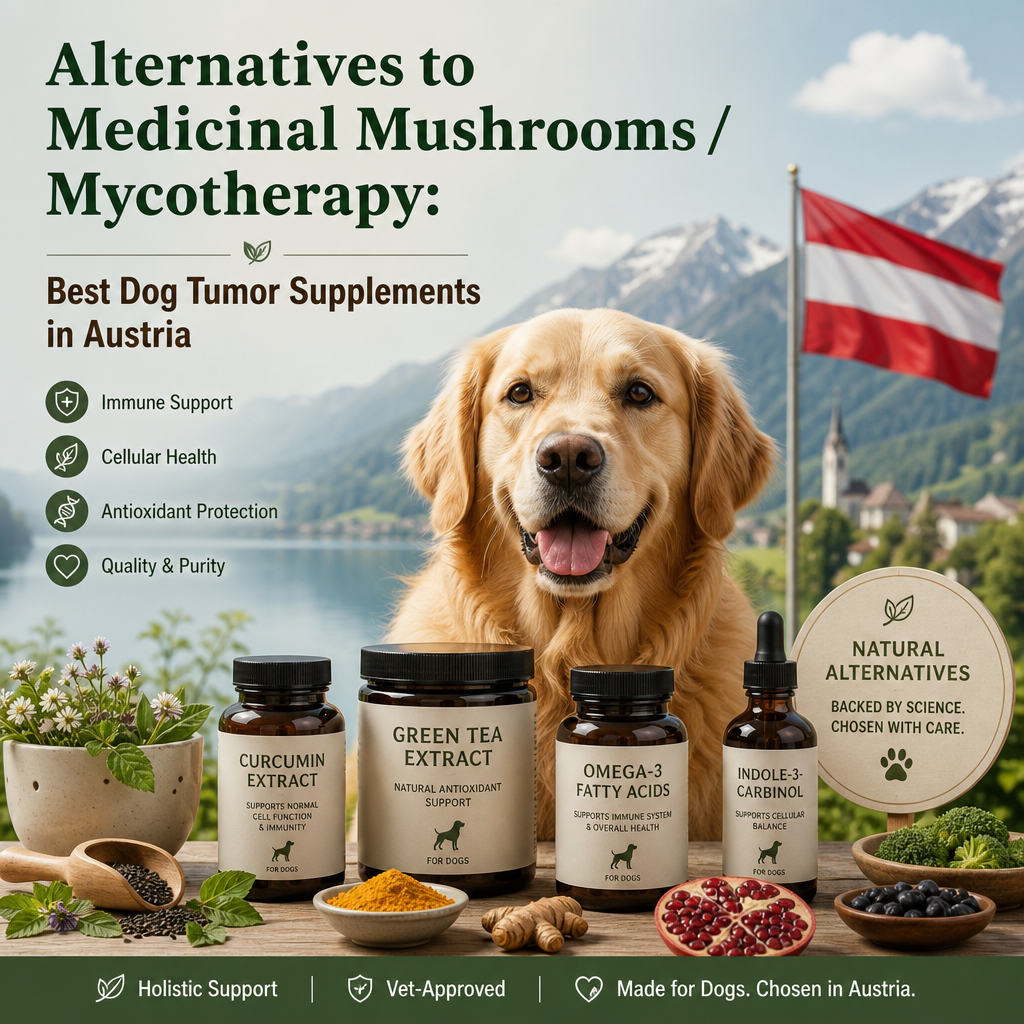
Alternatives to Medicinal mushrooms / mycotherapy are becoming increasingly relevant for dog owners in Austria who want supportive options during cancer care. While medicinal mushrooms such as turkey tail, reishi, and maitake are widely discussed, they are not the only supplements considered for dogs with tumors. Other nutritional and botanical ingredients may support general wellbeing, appetite, digestion, immune balance, and quality of life. However, supplements should complement—not replace—veterinary diagnosis and treatment.
If you are comparing alternatives to Medicinal mushrooms / mycotherapy, it helps to focus on safety, quality, and how each product fits into your dog’s full treatment plan. The best choice depends on the tumor type, current medications, appetite, digestion, and overall condition.
- Why consider dog tumor supplement alternatives?
- Dog tumor supplement alternatives available in Austria
- Ωμέγα-3 λιπαρά οξέα
- Antioxidant vitamins and minerals
- Curcumin and turmeric products
- CBD and hemp-derived products
- Probiotics and digestive support
- High-quality nutritional support
- How to evaluate supplements in Austria
- Creating a safe supportive-care plan
Why consider dog tumor supplement alternatives?
A tumor diagnosis can lead to many questions about nutrition, conventional therapy, and supportive care. Some dogs tolerate mushroom-based products well, while others may experience digestive sensitivity, interactions with medication, or difficulty taking powders and capsules. In addition, the quality and concentration of mushroom products can vary significantly.
Dog tumor supplement alternatives may be considered when a pet owner is looking for a broader supportive strategy. Common goals include maintaining body weight, supporting normal immune function, helping manage inflammation, protecting cells from oxidative stress, and preserving energy during treatment. The appropriate choice depends on the dog’s tumor type, age, health status, medications, and treatment plan.
A veterinarian should always review any supplement before it is introduced. This is particularly important when a dog is receiving chemotherapy, corticosteroids, anti-inflammatory drugs, anticoagulants, seizure medication, or undergoing surgery.
In practice, the question is not whether a supplement is “natural” or “synthetic,” but whether it fits safely into the dog’s overall care. Some products may be useful for short-term support, while others are better suited to long-term nutritional maintenance. The most effective plans are built around the individual dog, not around a general trend.
For many families, the appeal of alternatives to Medicinal mushrooms / mycotherapy is that they can be easier to dose, easier to combine with food, or better aligned with a dog’s specific symptoms. Even so, every product should be considered in context. A supplement that helps appetite may be more valuable than one marketed broadly for immune support if the dog is losing weight and eating poorly.
Dog tumor supplement alternatives available in Austria
Austria has access to a wide range of veterinary nutritional products through veterinary practices, pharmacies, specialist pet retailers, and online shops. Product availability may differ, and not every supplement marketed for humans is suitable for dogs. The label should clearly state the intended species, ingredients, dosage guidance, and manufacturer information.
For dogs with specific tumor types, supportive care may also be discussed alongside more targeted veterinary information, such as hemangiopericytoma in dogs and innovative management options. That kind of context can help owners understand why some supportive products are used and why others are avoided.
In Austrian pet care settings, a practical challenge is separating well-formulated veterinary products from general wellness products with vague claims. A product can be popular and still be unsuitable if it lacks species-specific dosing, contains unnecessary additives, or conflicts with the dog’s current treatment. Careful selection matters as much as the ingredient list.
It can also help to compare the product’s purpose with the dog’s actual needs. For example, a dog with nausea, low appetite, and muscle loss may benefit more from nutritional support than from a broad immune supplement. Another dog may need digestive support first, because poor absorption makes any oral supplement less effective.
Ωμέγα-3 λιπαρά οξέα
Fish oil containing EPA and DHA is one of the most commonly considered supportive supplements for dogs with serious illness. These essential fatty acids play a role in normal inflammatory regulation and may support skin, coat, cardiovascular function, and general nutritional status.
For dogs with tumors, omega-3 supplementation is sometimes included in a balanced supportive-care plan, especially when maintaining body condition is a concern. However, dosing matters. Excessive amounts can contribute to gastrointestinal upset, weight gain, or altered blood clotting. Dogs with pancreatitis, bleeding disorders, or upcoming surgery require special caution.
Choose a veterinary product that provides a clear amount of EPA and DHA rather than simply listing “fish oil.” Products should also be protected from oxidation and stored according to the manufacturer’s instructions.
Omega-3s are often discussed among alternatives to Medicinal mushrooms / mycotherapy because they can be integrated into food and are familiar to many pet owners. Still, the quality of the oil is important. A rancid or poorly stored product can do more harm than good, so freshness and packaging should be checked before purchase and during use.
Antioxidant vitamins and minerals
Vitamin E, selenium, and other antioxidant nutrients help support normal cellular protection. They may be relevant when a dog has a poor appetite or an unbalanced diet, but more is not necessarily better. High doses can be harmful and may interfere with certain treatment strategies.
Antioxidant supplementation should therefore be individualized. A complete commercial diet may already provide adequate levels, while a dog eating a restricted or home-prepared diet may require professional nutritional assessment. Never administer concentrated human multivitamins without veterinary advice, as ingredients such as iron, vitamin D, or xylitol can be dangerous to dogs.
For many owners looking at alternatives to Medicinal mushrooms / mycotherapy, antioxidant support seems simple, but it still needs careful oversight. In cancer care, the goal is always to support the dog without creating new risks.
Another important point is that antioxidant products are often sold as “one-size-fits-all” solutions. In reality, cancer care is rarely that simple. Some dogs may already be receiving a complete therapeutic diet or prescription food that meets micronutrient needs, which means extra supplementation may add expense without adding benefit.
If your veterinarian recommends antioxidants, it is usually because they fit a specific nutritional gap or a clearly defined goal. For example, they may help dogs that have been eating poorly for weeks, or dogs whose diets are temporarily limited during recovery. The safest approach is to treat these nutrients as part of a monitored plan rather than as standalone cancer support.
Curcumin and turmeric products
Curcumin, a compound found in turmeric, is often discussed as a botanical ingredient with antioxidant and inflammation-supporting properties. Some veterinary supplements combine curcumin with ingredients designed to improve absorption, because curcumin is poorly absorbed on its own.
Evidence in dogs remains limited, and products vary greatly in strength and formulation. Curcumin may affect blood clotting or interact with medication, so it should be used cautiously in dogs taking anti-inflammatory drugs, anticoagulants, or preparing for surgery. Turmeric used in ordinary food amounts is different from concentrated extracts.
Owners often ask whether this belongs among alternatives to Medicinal mushrooms / mycotherapy, and the answer depends on the case. Curcumin may be discussed as part of supportive care, but it should not be viewed as a stand-alone cancer strategy.
Some dogs tolerate curcumin well, while others develop stomach upset, soft stool, or reduced appetite. That is one reason veterinary supervision is helpful. If a dog is already dealing with nausea or a sensitive digestive tract, introducing a new botanical product too quickly may make feeding more difficult rather than easier.
Product form also matters. Capsules, liquids, and powders can behave differently in the stomach and may have different excipients. When evaluating alternatives to Medicinal mushrooms / mycotherapy, it is worth asking whether the formulation itself is suitable for your dog’s size, taste preferences, and medication schedule.
CBD and hemp-derived products
CBD products are increasingly available in Austria and elsewhere, often promoted for relaxation, discomfort, or appetite support. Scientific evidence in veterinary medicine is still developing, and product quality can be inconsistent. THC contamination is a serious concern because THC can be toxic to dogs.
Owners should select only products specifically tested for veterinary use, with transparent laboratory results and clear cannabinoid content. CBD may interact with liver-metabolized medications and can cause drowsiness, gastrointestinal signs, or changes in liver enzymes. It should never be treated as a tumor cure.
When people search for alternatives to Medicinal mushrooms / mycotherapy, CBD is frequently mentioned. That makes careful product selection even more important, because a popular supplement is not automatically a safe one.
Before using hemp-derived products, it is wise to confirm the legal status, product origin, and batch testing in Austria. A responsible brand should clearly disclose cannabinoid levels and provide reassurance that the product is free from harmful contaminants. If that information is missing, the product should be avoided.
CBD is also best viewed as a symptom-support tool, not as an anti-tumor therapy. If a dog is anxious, uncomfortable, or struggling with rest, a veterinarian may consider whether such a product fits the case. But when the aim is broader support, it should be part of a wider plan that includes pain control, nutrition, and regular reassessment.
Probiotics and digestive support
Dogs with cancer may experience appetite changes, loose stools, constipation, or digestive disruption related to medication and stress. Veterinary probiotics can help support normal intestinal balance in some situations. Prebiotic fibers, easily digestible diets, and adequate hydration may also be useful.
A probiotic should contain clearly identified strains and a guaranteed number of live organisms through the stated shelf life. Products intended for humans may not be appropriate for dogs, particularly when they contain sweeteners, flavorings, or excessive additives.
Digestive care is one of the most practical alternatives to Medicinal mushrooms / mycotherapy because it can directly improve comfort, food intake, and resilience during treatment.
Gut support is often underestimated because it does not sound as “advanced” as some of the more heavily marketed supplements. Yet when a dog is nauseous, gassy, or having inconsistent stool quality, digestive support can make daily life noticeably easier. Better digestion can also make it easier to maintain body weight and stay on schedule with medications.
For dogs that are weak or reluctant to eat, probiotics should be introduced carefully and monitored. A product that causes temporary bloating or stool changes may not be the right fit, even if it works well for another dog. This is another reason alternatives to Medicinal mushrooms / mycotherapy should be individualized rather than chosen by trend alone.
High-quality nutritional support
Sometimes the most valuable dog tumor supplement alternative is not a concentrated botanical product but a carefully managed diet. Adequate calories and protein help maintain body condition, muscle mass, and daily function. A dog that is losing weight may need a more energy-dense food, smaller frequent meals, or a veterinary therapeutic diet.
Dietary changes should be gradual unless a veterinarian recommends otherwise. Raw diets can pose infection risks, especially for dogs whose immune systems are compromised or households with vulnerable people. A veterinary nutritionist can help design a balanced home-prepared diet when commercial food is not suitable.
Nutrition is often overlooked when owners focus on alternatives to Medicinal mushrooms / mycotherapy, yet diet can have a stronger day-to-day impact than many supplements.
A dog that eats reliably is often better able to cope with treatment, healing, and normal daily activity. That is why appetite support, palatable food choices, and feeding routines are so important. In some cases, warming the food, offering smaller meals, or adjusting texture can improve intake without adding more supplements.
If a dog is receiving chemotherapy or other cancer therapy, nutritional changes should be planned with the veterinarian to avoid accidental conflicts with the treatment schedule. Good nutrition does not compete with medical care; it strengthens it. Among all alternatives to Medicinal mushrooms / mycotherapy, this may be the most universally useful and the least likely to create avoidable side effects.
Other supportive options to discuss with your veterinarian
Beyond the main categories above, some dogs may benefit from additional supportive ingredients or management strategies. These could include gentle appetite support, joint-friendly nutrition, targeted omega-rich foods, or specialized therapeutic diets. The right choice depends on the whole clinical picture, not on the tumor diagnosis alone.
For example, dogs that are stiff, tired, or losing muscle may need a plan that emphasizes mobility and calorie intake as much as any supplement. Dogs with oral tumors may need texture changes to make eating easier. Dogs with gastrointestinal signs may need a very different strategy from dogs that are still eating and moving normally.
That is why alternatives to Medicinal mushrooms / mycotherapy should be viewed as part of a toolkit. One dog may benefit most from digestive support, while another may need calorie-dense nutrition or a carefully selected fatty acid supplement. Matching the tool to the problem is the key to safe supportive care.
Owners should also remember that supportive products can overlap. A single supplement may contain curcumin, herbs, antioxidants, and oils all at once, which makes it harder to identify the source of any side effect. Simpler products are often easier to monitor and may be a better starting point.
How to evaluate supplements in Austria
When comparing alternatives to Medicinal mushrooms / mycotherapy, look for transparent labeling and responsible claims. A trustworthy product should identify the active ingredients, quantities per serving, recommended canine dosage, batch information, storage instructions, and manufacturer contact details.
Be cautious of products promising to dissolve tumors, replace chemotherapy, or guarantee a cure. These claims are not reliable and may delay effective treatment. Supplements marketed as “natural” are not automatically safe. Plants and concentrated extracts can produce side effects just like pharmaceutical substances.
It is also useful to ask whether the product has undergone independent quality testing for contaminants, heavy metals, pesticides, bacteria, and undeclared pharmaceuticals. Veterinary guidance is especially important when combining several products, because overlapping ingredients can lead to excessive dosing. For general veterinary background on cancer-support discussions, the American Veterinary Medical Association’s overview of cancer in dogs is a useful educational reference.
In Austria, the best products are usually the ones that behave like carefully made veterinary supplements rather than broad wellness merchandise. Clear labeling, traceability, and realistic claims are good signs. If a seller avoids questions about sourcing or testing, that is a warning sign.
It is also sensible to keep all products on one list, including the dose, timing, and reason for use. That simple record helps veterinarians spot interactions and unnecessary duplication. In many cases, a shorter, better-monitored supplement list is more effective than a long and confusing one.
Creating a safe supportive-care plan
A supportive plan should begin with the veterinary diagnosis and a clear understanding of the proposed treatment. Keep a complete list of every supplement, medication, treat, and diet product your dog receives. Introduce only one new supplement at a time, making it easier to identify side effects.
Monitor appetite, stool quality, energy, thirst, weight, and behavior. Stop the product and contact a veterinarian if the dog develops persistent vomiting, diarrhea, unusual bruising, severe lethargy, jaundice, breathing difficulty, or a sudden change in appetite.
For many families, the best approach combines appropriate medical treatment with nutritional support, pain management, regular checkups, and attention to quality of life. Alternatives to Medicinal mushrooms / mycotherapy can play a supportive role, but they should be selected carefully and used as part of an individualized veterinary plan rather than as a substitute for evidence-based cancer care.
If you are comparing alternatives to Medicinal mushrooms / mycotherapy in Austria, the safest path is to prioritize evidence, quality control, and your veterinarian’s guidance. In that way, each supplement has a clear purpose and supports your dog’s comfort rather than adding unnecessary complexity.
Choosing alternatives to Medicinal mushrooms / mycotherapy does not have to be confusing. With a thoughtful plan, your dog can receive supportive care that is practical, safe, and tailored to the tumor type, treatment stage, and daily needs.
Before starting any new product, ask whether it solves a real problem, fits the current treatment plan, and can be monitored over time. That simple check often makes the difference between a helpful addition and an unnecessary risk.
In short, the best alternatives to Medicinal mushrooms / mycotherapy are the ones that improve comfort, protect nutrition, and respect veterinary recommendations. When chosen carefully, they can contribute to steadier days and a better quality of life during cancer care.