από TCMVET | Φεβ 8, 2026 | Καρκίνος & Όγκοι Σκύλου
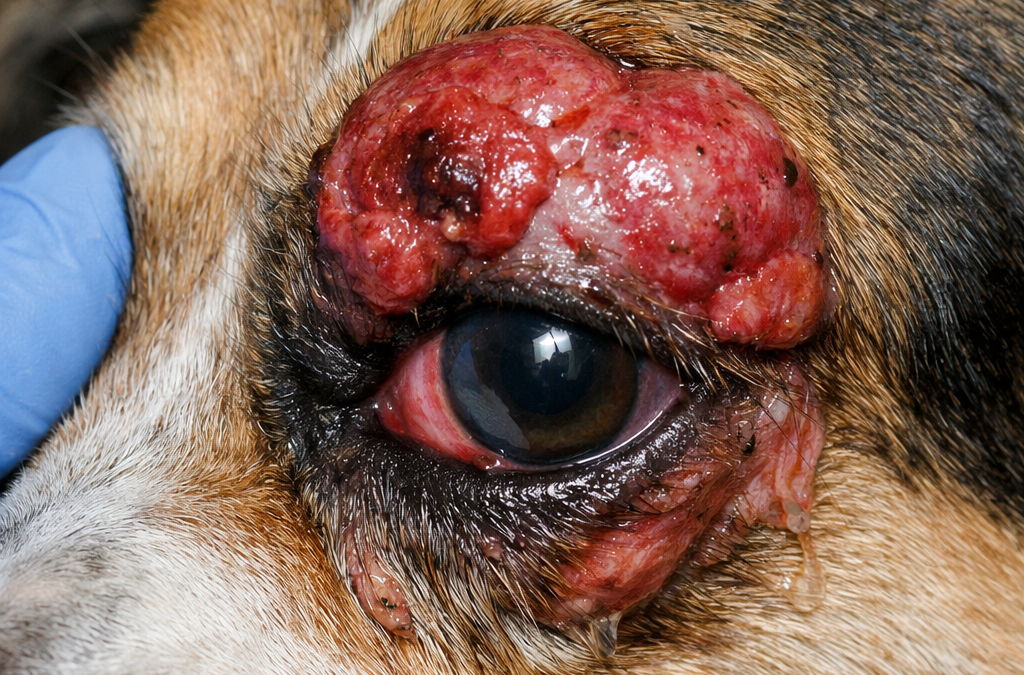
Τι σημαίνει “κύτταρο ατράκτου” στα σκυλιά
“Το ”κύτταρο ατράκτου” συνήθως περιγράφει πώς φαίνονται τα κύτταρα του όγκου κάτω από το μικροσκόπιο—μακρά, κο tapered και ινώδη—παρά να ονομάζει έναν μόνο τύπο καρκίνου. Στα σκυλιά, αυτή η περιγραφή συχνά επικαλύπτεται με τους μαλακούς ιστούς σαρκώματα (STS) και σχετικούς όγκους τύπου σαρκώματος, οι οποίοι είναι γνωστοί για την τοπική επιθετικότητα: μπορούν να επεκταθούν μικροσκοπικά πέρα από ό,τι μπορείτε να δείτε ή να αισθανθείτε. Αυτό το μοτίβο ανάπτυξης είναι ένας μεγάλος λόγος που η τοπική υποτροπή γίνεται βασική ανησυχία.
Πόσο σπάνιος είναι ένας όγκος κυττάρου ατράκτου κοντά στο μάτι;
Εξαρτάται από το αν η μάζα είναι μια επιφανειακή ανάπτυξη βλεφάρου ή ένας πιο βαθύς περιφθαλμικός/ορβιταλικός όγκος.
Πολλοί όγκοι βλεφάρου σε σκυλιά είναι κοινοί και συχνά καλοήθεις, γεγονός που είναι καθησυχαστικό στην καθημερινή οφθαλμική πρακτική. Ωστόσο, ένας κακοήθης όγκος τύπου κυττάρου ατράκτου/σαρκώματος που αναπτύσσεται γρήγορα ή είναι βαθύς γύρω από το μάτι είναι ένα διαφορετικό σενάριο. Η ορβιταλική και η οπισθοβολβική νόσος (νόσος στην υποδοχή του ματιού ή πίσω από τον βολβό) είναι λιγότερο κοινές από απλές προεξοχές βλεφάρου και συνήθως απαιτούν πιο σύνθετο σχεδιασμό.
Συμπτώματα που παρατηρούν συχνά οι ιδιοκτήτες
Ένας όγκος “πάνω από το μάτι” μπορεί να φαίνεται σαν μια σφιχτή μάζα ή πρήξιμο κοντά στο φρύδι ή τα βλέφαρα, αλλά η βαθύτερη νόσος μπορεί να εμφανιστεί μέσω αλλαγών στη λειτουργία. Τα σκυλιά μπορεί να στραβώνουν, να δακρύζουν υπερβολικά, να αναπτύσσουν επίμονη έκκριση, να τρίβουν το μάτι ή το πρόσωπο, ή να φαίνονται επιφυλακτικά με το κεφάλι. Αν η ορβίτα είναι εμπλεκόμενη, τα κλασικά σημάδια μπορεί να περιλαμβάνουν εξοφθαλμία (ένας προεξέχων οφθαλμός), πρόπτωση τρίτου βλεφάρου και πόνο γύρω από το μάτι.
Πόνος και ταλαιπωρία: πόσο πονάει;
Ο πόνος ποικίλλει ευρέως και καθορίζεται από το τι κάνει ο όγκος τοπικά.
Μια μάζα μπορεί να γίνει πολύ άβολη αν παραμορφώνει τη θέση του βλεφάρου ή προκαλεί χρόνια ερεθισμό του κερατοειδούς με το αναβοσβήσιμο. Οι οδηγίες της κτηνιατρικής οφθαλμολογίας σημειώνουν ότι οι μάζες βλεφάρου συχνά μεγαλώνουν με την πάροδο του χρόνου και μπορούν να ερεθίσουν την οφθαλμική επιφάνεια, επηρεάζοντας την άνεση και την ποιότητα ζωής. Η ορβιταλική νόσος μπορεί επίσης να είναι επώδυνη—ιδιαίτερα όταν υπάρχει πρήξιμο, πίεση ή φλεγμονή—και ο πόνος αναφέρεται συχνά μεταξύ των κλινικών σημείων σε ορβιταλικές καταστάσεις.
Γιατί η θεραπεία κοντά στο μάτι είναι τόσο δύσκολη
Για τους όγκους τύπου σαρκώματος, ο στόχος είναι συνήθως η ισχυρή τοπική έλεγχο, επειδή τα μικροσκοπικά “δάχτυλα” του όγκου μπορούν να επεκταθούν πέρα από ό,τι φαίνεται ανώμαλο. Στον κορμό ή τα άκρα, οι χειρουργοί συχνά στοχεύουν σε ευρύτερες περιθώρια για να αφαιρέσουν αυτές τις αόρατες επεκτάσεις. Γύρω από το μάτι, οι ευρείες περιθώρια μπορεί να είναι δύσκολο να επιτευχθούν χωρίς να βλάψουν κρίσιμες δομές, γι' αυτό οι γιατροί μπορεί να φαίνονται προσεκτικοί σχετικά με τις εγγυήσεις.
Επιλογές θεραπείας: τι θεωρείται συνήθως
Οι περισσότερες θεραπευτικές σχέσεις περιστρέφονται γύρω από τον τοπικό έλεγχο και την άνεση, συχνά συνδυάζοντας πολλές προσεγγίσεις.
Η χειρουργική επέμβαση είναι συνήθως η βάση όταν είναι εφικτή, τόσο για την αφαίρεση του φορτίου του όγκου όσο και για την απόκτηση οριστικής παθολογίας. Για τα καρκινώματα μαλακών ιστών σε σκυλιά, η πληρότητα της εκτομής επηρεάζει έντονα τα αποτελέσματα; οι ανασκοπήσεις τονίζουν ότι οι ανεπαρκώς εκτομμένοι όγκοι φέρουν υψηλότερο κίνδυνο τοπικής υποτροπής. Σε ορισμένες περιπτώσεις, οι χειρουργοί μπορεί να προτείνουν πιο ριζικές διαδικασίες για να επιτύχουν έλεγχο σε δύσκολες τοποθεσίες (συμπεριλαμβανομένων των χειρουργείων που περιλαμβάνουν την ορβίτα) επειδή ορισμένα σαρκώματα μπορεί να απαιτούν ριζικές προσεγγίσεις όταν η ανατομία περιορίζει το πλάτος των περιθωρίων.
Η ακτινοθεραπεία συχνά συζητείται όταν τα περιθώρια είναι κοντά ή ανεπαρκή, ή όταν η ανατομία καθιστά αδύνατη την ευρεία εκτομή. Χρησιμοποιείται με σκοπό τον έλεγχο των μικροσκοπικών υπολειμμάτων κυττάρων και τη μείωση της πιθανότητας αναγέννησης, αν και τα αποτελέσματα ποικίλλουν ανάλογα με τη συμπεριφορά του όγκου, τον προγραμματισμό δόσης και τις λεπτομέρειες κάθε περίπτωσης.
Κίνδυνος υποτροπής: σε τι δείχνει επανειλημμένα η έρευνα
Στη βιβλιογραφία των καρκινωμάτων μαλακών ιστών σε σκυλιά, δύο παράγοντες εμφανίζονται ξανά και ξανά: ιστολογικός βαθμός και κατάσταση περιθωρίου.
Μια ανασκόπηση για ανεπαρκώς ή στενά εκτομμένα καρκινώματα μαλακών ιστών σε σκυλιά αναφέρει δημοσιευμένα ποσοστά υποτροπής περίπου στην περιοχή 17%–37% σε διάφορες μελέτες, απεικονίζοντας γιατί τα “καθαρά περιθώρια” έχουν τόση σημασία. Μια άλλη ευρέως αναφερόμενη επισκόπηση σημειώνει ότι με πλήρη εκτομή, η τοπική υποτροπή σε σκυλιά μπορεί να είναι πολύ χαμηλή, και τα ανεπαρκή περιθώρια αυξάνουν σημαντικά τον κίνδυνο υποτροπής.
Προοπτική επιβίωσης και “χρονοδιάγραμμα επιβίωσης”: ο πρακτικός τρόπος να σκεφτόμαστε για την πρόγνωση
Επειδή ο “όγκος σπινθήρα” μπορεί να αντιπροσωπεύει πολλούς τύπους όγκων, ο χρόνος επιβίωσης δεν μπορεί να συνοψιστεί αξιόπιστα με έναν αριθμό. Ένας πιο αξιόπιστος τρόπος για να κατανοήσουμε την πρόγνωση είναι να συνδέσουμε τις προσδοκίες με αυτό που προβλέπει πιο ισχυρά τη συμπεριφορά:
Ένας όγκος χαμηλότερης κατηγορίας που μπορεί να ελεγχθεί πλήρως τοπικά γενικά έχει καλύτερη προοπτική από έναν όγκο υψηλότερης κατηγορίας ή έναν που δεν μπορεί να αφαιρεθεί πλήρως λόγω θέσης. Στους καρκίνους STS των σκύλων, ο κίνδυνος μετάστασης περιγράφεται συνήθως ως εξαρτώμενος από την κατηγορία, με τους όγκους υψηλότερης κατηγορίας να έχουν σημαντικά υψηλότερη πιθανότητα διάδοσης κατά τη διάρκεια της νόσου. Στους περιφθαλμικούς όγκους ειδικότερα, “πόσο καλά μπορεί να ελεγχθεί η τοπική νόσος” συχνά γίνεται ο κυρίαρχος παράγοντας που διαμορφώνει τόσο την ποιότητα ζωής όσο και το συνολικό αποτέλεσμα.
Τι μπορούν να κάνουν οι ιδιοκτήτες νωρίς που συχνά έχει σημασία (χωρίς να χαθούν σε λεπτομέρειες)
Οι πιο χρήσιμοι εστιασμένοι τομείς νωρίς είναι η επιβεβαίωση της πραγματικής έκτασης της νόσου και η προστασία της άνεσης.
Οι προηγμένες απεικονίσεις όπως η CT ή η MRI συνιστώνται συχνά σε περιπτώσεις οφθαλμικών/περιφθαλμικών όγκων επειδή οι ρουτίνες εξετάσεις δεν μπορούν πάντα να δείξουν τι συμβαίνει πίσω από το μάτι, και η απεικόνιση βοηθά στην καθοδήγηση της χειρουργικής και του σχεδιασμού ακτινοβολίας. Η άνεση είναι επίσης κεντρική: οι περιφθαλμικοί όγκοι μπορούν να προκαλέσουν ερεθισμό και φλεγμονή του κερατοειδούς, και η μείωση της τριβής/τραύματος και η αντιμετώπιση του ερεθισμού της επιφάνειας του ματιού μπορεί να κάνει μια σημαντική διαφορά στην καθημερινή ευημερία.
FAQ: γρήγορες απαντήσεις που αναζητούν οι ιδιοκτήτες κατοικίδιων
Είναι κάθε όγκος κοντά στο βλέφαρο κακοήθης;
Όχι. Οι όγκοι του βλέφαρου είναι συχνοί στους σκύλους και πολλοί συμπεριφέρονται με καλοήθη τρόπο, αν και οποιαδήποτε ταχεία ανάπτυξη, έλκος, αιμορραγία ή επώδυνη μάζα χρειάζεται άμεση αξιολόγηση.
Γιατί θα συνιστούσε ένας κτηνίατρος την αφαίρεση του ματιού;
Όταν ένας όγκος είναι βαθιά επεμβατικός ή δεν μπορούν να επιτευχθούν ασφαλή περιθώρια, μπορεί να συνιστάται πιο επιθετική τοπική χειρουργική για να βελτιωθεί ο τοπικός έλεγχος σε μια περιοχή όπου ο χώρος είναι περιορισμένος.
Γιατί δεν μπορεί η χειρουργική και η ακτινοβολία να εγγυηθούν ότι δεν θα επιστρέψει;
Οι όγκοι τύπου σαρκώματος μπορούν να επεκταθούν μικροσκοπικά, και γύρω από το μάτι μπορεί να είναι δύσκολο να αφαιρεθεί αρκετός περιβάλλων ιστός. Οι ανεπαρκώς εκτοπισμένοι STS έχουν τεκμηριωμένο κίνδυνο υποτροπής σε πολλές μελέτες.
Τι προβλέπει πιο ισχυρά την πρόγνωση;
Ο βαθμός παθολογίας και αν ο όγκος αφαιρέθηκε με καθαρά περιθώρια τονίζονται επανειλημμένα ως κύριοι παράγοντες κινδύνου υποτροπής και διάδοσης στους καρκίνους STS των σκύλων.
Πώς μπορεί να βοηθήσει το Baituxiao ως υποστηρικτική φροντίδα
Οι περιφθαλμικοί όγκοι σπινθήρα συνήθως διαχειρίζονται με τοπικό έλεγχο πρώτα—συνήθως με χειρουργική επέμβαση, και μερικές φορές με ακτινοβολία—επειδή αυτοί οι όγκοι μπορεί να είναι τοπικά επεμβατικοί και η περιοχή του ματιού περιορίζει τα ευρεία περιθώρια. Σε αυτή τη ρύθμιση, πολλοί ιδιοκτήτες εξετάζουν επίσης την ολοκληρωμένη υποστηρικτική φροντίδα για να βοηθήσουν στη διατήρηση της άνεσης, της όρεξης και της συνολικής ποιότητας ζωής παράλληλα με το κύριο σχέδιο θεραπείας.
Το Baituxiao είναι μια βοτανική φόρμουλα TCVM που έχει τοποθετηθεί από τον κατασκευαστή για σκύλους και γάτες με “όγκους και εξογκώματα,” και συνήθως συζητείται ως μια συμπληρωματική επιλογή παρά ως μια αυτόνομη λύση. Επειδή οι βοτανικές φόρμουλες μπορούν να αλληλεπιδρούν με φάρμακα που χρησιμοποιούνται γύρω από τη χειρουργική, τον έλεγχο του πόνου, τη φλεγμονή ή τη φροντίδα ογκολογίας, είναι καλύτερο να χρησιμοποιείται ως μέρος ενός συντονισμένου σχεδίου με την κτηνιατρική ομάδα.
από TCMVET | Ιαν 14, 2026 | Καρκίνος & Όγκοι Σκύλου
Οι μάζες στην ουρά των σκύλων μπορεί να είναι ανησυχητικές για οποιονδήποτε κηδεμόνα κατοικίδιου, ειδικά όταν προκύπτουν ανησυχητικές σκέψεις σχετικά με τους όγκους των αναλυτικών αδένων. Κατανοώντας τι μπορεί να υποδηλώνουν αυτές οι μάζες—και πώς να αναλάβετε συνειδητή, υπεύθυνη δράση—μπορεί να φέρει ανακούφιση ενώ υποστηρίζει την ευημερία του κατοικίδιου σας. Αυτός ο ολοκληρωμένος οδηγός εξερευνά τις πιθανές αιτίες των μαστών στην ουρά των σκύλων, τα σημάδια που πρέπει να παρακολουθείτε, τους τρόπους που οι κτηνίατροι αξιολογούν τους όγκους των αναλυτικών αδένων, τις καθημερινές συμβουλές φροντίδας και πώς να παραμείνετε προληπτικοί με την άνεση και την ποιότητα ζωής του σκύλου σας.
—
Κατανόηση των Μαστών στην Ουρά των Σκύλων
Οι μάζες στην ουρά μπορεί να αναπτυχθούν για διάφορους λόγους, που κυμαίνονται από καλοήθεις αναπτύξεις έως πιο σοβαρές ανησυχίες. Ενώ μερικές μάζες παραμένουν μικρές και ακίνδυνες, άλλες μπορεί να απαιτούν κτηνιατρική προσοχή για να αξιολογηθεί η φύση τους.
Πιθανές Αιτίες Μαστών στην Ουρά
– Σμηγματογόνες κύστεις: Μικρές, αργά αναπτυσσόμενες σακούλες που περιέχουν λιπαρό υλικό.
– Λιπώματα: Λιπώδεις όγκοι που συχνά βρίσκονται σε μεγαλύτερους σκύλους, συνήθως μαλακοί και κινητοί.
– Δερματικές λοιμώξεις ή αποστήματα: Αποτέλεσμα τραυματισμών ή φραγμένων θυλάκων.
– Μάζες σχετικές με τους αναλυτικούς αδένες: Μάζες που προέρχονται από αδένες κοντά στον πρωκτό.
– Άλλοι όγκοι ή οζίδια: Μπορεί να αναπτυχθούν από διάφορους τύπους ιστών.
Δεν είναι κάθε μάζα επικίνδυνη, αλλά είναι σημαντικό να παρακολουθείτε τυχόν αλλαγές με την πάροδο του χρόνου, ειδικά κοντά στη βάση της ουράς.
—
Όγκοι Αναλυτικών Αδένων: Τι Πρέπει να Γνωρίζουν οι Ιδιοκτήτες Κατοικίδιων
Οι όγκοι των αναλυτικών αδένων είναι αναπτύξεις που προέρχονται από τους αναλυτικούς σάκους που βρίσκονται από κάθε πλευρά του πρωκτού. Αυτοί οι όγκοι μπορεί να κυμαίνονται από καλοήθεις έως κακοήθεις, και η πρώιμη κτηνιατρική αξιολόγηση είναι κρίσιμη για να προσδιοριστεί η φύση τους και η καλύτερη πορεία δράσης.
Γιατί οι Αναλυτικοί Αδένες Έχουν Σημασία
– Τοποθεσία: Βρίσκονται κάτω από την ουρά, οι αδένες μπορούν να αναπτύξουν ανωμαλίες που εμφανίζονται ως μάζες ή πρήξιμο.
– Λειτουργία: Απελευθερώνουν μια μυρωδιά που χρησιμοποιείται για επικοινωνία μεταξύ των σκύλων.
– Κίνδυνοι: Φλεγμονή, δομικές αλλαγές ή όγκοι μπορεί να προκαλέσουν δυσφορία, οσμή ή άλλες επιπλοκές.
Κοινές Παρατηρήσεις
– Δυσκολία να καθίσει άνετα
– Σύρσιμο ή γλείψιμο της αναλυτικής περιοχής
– Πρήξιμο ή σφριγηλότητα κοντά στον πρωκτό
– Τρέμουλο της ουράς ή απ reluctance να κουνήσει
Όποτε εμφανίζονται νέα ή επίμονα σημάδια, προγραμματίστε μια εξέταση με έναν κτηνίατρο. Η επαγγελματική αξιολόγηση αποτρέπει την εσφαλμένη ερμηνεία των συμπτωμάτων και βοηθά στην αναγνώριση αν απαιτείται περαιτέρω εξέταση.
—
Ογκίδια Ουράς Σκύλοι: Αναγνωρίζοντας Σημάδια Νωρίς
Δεδομένου ότι τα ογκίδια ουράς που βιώνουν οι σκύλοι μπορεί να εμφανιστούν σταδιακά, η παραμονή σε εγρήγορση βοηθά στην έγκαιρη ανίχνευση προβλημάτων. Στοχεύστε να εξετάσετε την περιοχή της ουράς του σκύλου σας απαλά κατά τη διάρκεια των περιποιήσεων, παρατηρώντας τυχόν αλλαγές στο μέγεθος ή την υφή.
Σημάδια που Αξίζει να Σημειωθούν
– Επίμονη διόγκωση: Ιδιαίτερα αν είναι σφιχτά ή αυξάνονται.
– Αλλαγές στο δέρμα: Ερυθρότητα, απώλεια τριχών ή τραχιά υφή.
– Δυσφορία: Αντίδραση όταν αγγίζεται η περιοχή.
– Αλλαγές συμπεριφοράς: Μειωμένη ενέργεια, κακή όρεξη ή ασυνήθιστο κρύψιμο.
Αυτά τα σημάδια δεν υποδεικνύουν αυτόματα όγκους αδένων του πρωκτού, αλλά δικαιολογούν μια επίσκεψη στον κτηνίατρο για σαφήνεια και ηρεμία.
—
Πώς οι Κτηνίατροι Αξιολογούν τα Ογκίδια Ουράς
Οι κτηνιατρικοί επαγγελματίες χρησιμοποιούν διάφορες εξετάσεις για να αξιολογήσουν τα ογκίδια και να καθορίσουν τα επόμενα βήματα. Η ακριβής προσέγγιση εξαρτάται από την ηλικία του σκύλου σας, το ιατρικό ιστορικό και τα χαρακτηριστικά του ογκιδίου.
Τυπικά Διαγνωστικά Βήματα
1. Physical examination: Έλεγχος μεγέθους, θέσης και συνέπειας.
2. Βιοψία με λεπτή βελόνα: Συλλογή κυττάρων ή ιστού για ανάλυση.
3. Απεικόνιση: Υπερηχογράφημα, ακτινογραφία ή αξονική τομογραφία για την αξιολόγηση των εσωτερικών δομών.
4. Εξετάσεις αίματος: Παρέχει πληροφορίες για τη συνολική υγεία.
Συζητήστε τη διαδικασία ανοιχτά με τον κτηνίατρό σας, ζητώντας κατανοητές εξηγήσεις σχετικά με το τι μπορεί να αποκαλύψει κάθε εξέταση. Οι γονείς κατοικίδιων που παραμένουν εμπλεκόμενοι και ενημερωμένοι συχνά αισθάνονται πιο σίγουροι υποστηρίζοντας τον σκύλο τους κατά τη διάρκεια της αξιολόγησης.
—
Υποστηρίζοντας τους Σκύλους μέσω Φροντίδας για Όγκους Αδένων
Όταν ένας κτηνίατρος εντοπίζει όγκους αδένων, σχεδιάζεται ένα προσεκτικό σχέδιο με βάση την μοναδική κατάσταση του σκύλου. Δεδομένου ότι οι ιατρικές οδηγίες ανήκουν σε κλινικό περιβάλλον, οι ιδιοκτήτες κατοικίδιων μπορούν να επικεντρωθούν στην παροχή ενός ήρεμου οικιακού περιβάλλοντος και στην προσεκτική τήρηση των επαγγελματικών συστάσεων.
Πρακτικές Συμβουλές για Υποστήριξη στο Σπίτι
– Κρατήστε ένα ημερολόγιο: Καταγράψτε παρατηρήσεις, συμπεριλαμβανομένης της όρεξης, του επιπέδου ενέργειας και της ποιότητας των κοπράνων.
– Παρακολούθηση της κατάστασης του σώματος: Διατηρήστε ένα υγιές βάρος για να μειώσετε την επιπλέον πίεση.
– Κάντε ήπια άσκηση: Ελαφριές βόλτες ή πνευματικά διεγερτικά παιχνίδια κρατούν τον σκύλο σας απασχολημένο.
– Προσφέρετε άνετα σημεία ξεκούρασης: Μαλακά κρεβάτια βοηθούν στην ανακούφιση της πίεσης σε ευαίσθητες περιοχές.
– Μείνετε ενημερωμένοι σχετικά με τις εξετάσεις: Οι επισκέψεις παρακολούθησης επιτρέπουν στους κτηνιάτρους να παρακολουθούν την πρόοδο και να προσαρμόζουν τα σχέδια φροντίδας.
Εστιάζοντας στην άνεση, τη συνέπεια και την καθοδήγηση του κτηνιάτρου, οι ιδιοκτήτες μπορούν να βοηθήσουν τους σκύλους να αισθάνονται ασφαλείς κατά τη διάρκεια της πορείας φροντίδας τους.
—
Διατροφικές και Φυσικές Ζητήσεις Ευεξίας
Ενώ οι τροφές και τα συμπληρώματα δεν μπορούν να διαγνώσουν ή να θεραπεύσουν σοβαρές καταστάσεις, η υγιεινή διατροφή υποστηρίζει τη συνολική ζωτικότητα. Ρωτήστε τον κτηνίατρό σας για ισορροπημένες δίαιτες κατάλληλες για την ηλικία, τη φυλή και το επίπεδο δραστηριότητας του σκύλου σας.
Γενικές Πληροφορίες Διατροφής
– Ισορροπημένες πρωτεΐνες και λιπαρά: Υποστηρίζουν την υγεία των μυών και την ενέργεια.
– Πηγές φυτικών ινών: Ενθαρρύνουν την πέψη και την τακτική αποβολή.
– Ωμέγα λιπαρά οξέα: Μπορεί να βοηθήσει στη διατήρηση της υγείας του δέρματος και ενός γυαλιστερού τριχώματος.
– Ενυδάτωση: Διασφαλίστε σταθερή πρόσβαση σε φρέσκο νερό.
Φυσικές προσεγγίσεις ευεξίας—όπως ήρεμα περιβάλλοντα, ήπιος περιποίηση και δραστηριότητες εμπλουτισμού—μπορούν επίσης να προάγουν μια αίσθηση ασφάλειας. Πάντα να συμβουλεύεστε τον κτηνίατρό σας πριν εισάγετε οποιεσδήποτε νέες διατροφικές αλλαγές ή συμπληρώματα.
—
Πρακτικές Πρόληψης και Έγκαιρης Ανίχνευσης
Αν και δεν μπορούν να προληφθούν όλοι οι όγκοι στην ουρά, η τακτική παρατήρηση και η προληπτική κτηνιατρική φροντίδα κάνουν σημαντική διαφορά.
Χρήσιμες Συνήθειες
– Τακτική περιποίηση: Βοηθά να εντοπίζετε νέους όγκους νωρίς.
– Σταθερό πρόγραμμα μπάνιου: Διατηρεί το δέρμα καθαρό και σας επιτρέπει να ελέγχετε για προβλήματα.
– Τακτικές επισκέψεις στον κτηνίατρο: Οι εξετάσεις ευεξίας εντοπίζουν λεπτές αλλαγές.
– Εκπαίδευση και χειρισμός: Διδάξτε το σκύλο σας να ανέχεται τον χειρισμό της ουράς και του πίσω μέρους ώστε οι επιθεωρήσεις να είναι πιο εύκολες.
Η καθιέρωση αυτών των συνηθειών προάγει μια συνεργατική σχέση με τον κτηνίατρό σας και κρατά το κατοικίδιο σας άνετο.
—
Ερωτήσεις που πρέπει να κάνετε στον κτηνίατρό σας
Η γνώση ενδυναμώνει τους ιδιοκτήτες σκύλων να λαμβάνουν ενημερωμένες αποφάσεις. Σκεφτείτε να φέρετε μια λίστα με ερωτήσεις στις ραντεβού.
Θέματα Συζήτησης
– Τι είδους όγκο έχει ο σκύλος μου και ποιες εξετάσεις το επιβεβαιώνουν;
– Υπάρχουν προσαρμογές στον τρόπο ζωής που θα μπορούσαν να κρατήσουν τον σκύλο μου άνετο;
– Πόσο συχνά θα πρέπει να παρακολουθώ τον όγκο;
– Ποια σημάδια υποδεικνύουν ότι θα πρέπει να προγραμματίσω μια επείγουσα παρακολούθηση;
Η ενεργή επικοινωνία διασφαλίζει ότι κατανοείτε κάθε βήμα στο σχέδιο φροντίδας του σκύλου σας.
—
Συναισθηματική υποστήριξη για ιδιοκτήτες κατοικίδιων ζώων
Η ανακάλυψη ενός όγκου στην ουρά του σκύλου σας μπορεί να είναι συναισθηματικά δύσκολη. Πάρτε χρόνο για να επεξεργαστείτε τις πληροφορίες και ζητήστε υποστήριξη όταν χρειάζεται.
Στρατηγικές αντιμετώπισης
– Στηριχθείτε στην κτηνιατρική σας ομάδα: Μπορούν να διευκρινίσουν τα ευρήματα και τα επόμενα βήματα.
– Συνδεθείτε με υποστηρικτικές κοινότητες: Διαδικτυακά φόρουμ ή τοπικές ομάδες μπορούν να μοιραστούν χρήσιμες εμπειρίες.
– Εξασκηθείτε στην αυτοφροντίδα: Ισορροπημένα γεύματα, ξεκούραση και χρόνος έξω ενισχύουν την ανθεκτικότητα.
– Γιορτάστε τις καθημερινές στιγμές: Οι ήπιες βόλτες, ο χρόνος αγκαλιάς και το παιχνίδι ενισχύουν τον δεσμό σας.
Η παραμονή προσγειωμένης και ελπιδοφόρας σας βοηθά να παραμείνετε ένας ήρεμος πυλώνας υποστήριξης για το κατοικίδιο σας.
—
Μείνετε ενημερωμένοι σχετικά με τους όγκους των αναλυτικών αδένων
Οι αξιόπιστες πληροφορίες διαμορφώνουν υπεύθυνες αποφάσεις. Επικεντρωθείτε σε πόρους που βασίζονται σε αποδείξεις, όπως πιστοποιημένοι κτηνίατροι, άρθρα που έχουν αξιολογηθεί από ομότιμους και αξιόπιστους οργανισμούς υγείας ζώων.
Αξιολόγηση Πηγών Πληροφοριών
– Ελέγξτε τα διαπιστευτήρια: Αναζητήστε αδειοδοτημένους κτηνίατρους ή αναγνωρισμένα ιδρύματα.
– Προσέξτε τις γρήγορες λύσεις: Αποφύγετε μη επαληθευμένες αξιώσεις ή θεραπείες.
– Ρωτήστε τον κτηνίατρό σας: Μπορούν να προτείνουν αξιόπιστα αναγνωστικά υλικά ή ειδικούς.
Η επιλεκτικότητα σχετικά με τις πληροφορίες διατηρεί την ευημερία του σκύλου σας σε καλό δρόμο και αποφεύγει τις παρεξηγήσεις.
—
Μια Ολιστική Σκέψη για την Ευημερία του Σκύλου
Η ολιστική φροντίδα σημαίνει να λαμβάνετε υπόψη τη σωματική άνεση, την συναισθηματική ευημερία και ένα ήρεμο περιβάλλον. Το μαλακό κρεβάτι, οι σταθερές ρουτίνες, η ήπια περιποίηση και οι ήρεμες αλληλεπιδράσεις συμβάλλουν σε μια συνολική αίσθηση ασφάλειας.
Απλές Ολιστικές Πρακτικές
– Συνειδητές βόλτες: Ήσυχες βόλτες επιτρέπουν την οσμή και την εξερεύνηση.
– Μασάζ και απαλό άγγιγμα: Όταν εγκριθεί από τον κτηνίατρό σας, ελαφρύ μασάζ μπορεί να βοηθήσει στη χαλάρωση των μυών.
– Παιχνίδια εμπλουτισμού: Παζλ ταΐστρες, παιχνίδια αργής οσμής και μαλακά παιχνίδια μάσησης κρατούν το μυαλό ενεργό.
– Μουσική και αρωματοθεραπεία: Καταπραϋντικοί ήχοι ή αρώματα που έχουν εγκριθεί από τον κτηνίατρο μπορούν να δημιουργήσουν μια ήρεμη ατμόσφαιρα.
Πάντα παρακολουθείτε τις αντιδράσεις του σκύλου σας και διακόψτε οτιδήποτε προκαλεί δυσφορία.
—
Συμπέρασμα: Υποστηρίζοντας τη φυσική ευημερία με φροντίδα
Κάθε σκύλος αξίζει συμπονετική προσοχή, ειδικά όταν νέοι όγκοι εγείρουν ερωτήσεις. Με το να παραμένετε παρατηρητικοί, συνεργαζόμενοι με επαγγελματίες κτηνιάτρους και δημιουργώντας ένα άνετο περιβάλλον στο σπίτι, μπορείτε να πλοηγηθείτε στους όγκους της ουράς με αυτοπεποίθηση και φροντίδα. Θυμηθείτε να προσεγγίζετε κάθε βήμα με υπομονή, να διατηρείτε ανοιχτή επικοινωνία με την ομάδα φροντίδας του κατοικίδιού σας και να συνεχίζετε να εξερευνάτε ήπιες φυσικές πρακτικές ευεξίας που θρέφουν τη συνολική αίσθηση ισορροπίας του σκύλου σας.
από TCMVET | Ιαν 14, 2026 | Καρκίνος & Όγκοι Σκύλου
Τα βότανα για ηλικιωμένους σκύλους μπορούν να παίξουν έναν ήπιο, υποστηρικτικό ρόλο στα χρυσά χρόνια του σκύλου σας, προσφέροντας φυσική άνεση παράλληλα με τη τακτική κτηνιατρική φροντίδα. Καθώς οι σκύλοι γερνούν, οι ανάγκες τους αλλάζουν—η κινητικότητα επιβραδύνεται, η πέψη μεταβάλλεται και η συνολική ευημερία απαιτεί περισσότερη προσοχή. Πολλοί γονείς κατοικίδιων αναζητούν ολιστικές επιλογές όπως βότανα και αλλαγές στον τρόπο ζωής ως μέρος ενός ισορροπημένου σχεδίου φροντίδας. Αυτός ο οδηγός εξερευνά πώς να χρησιμοποιείτε προσεκτικά τα βότανα για ηλικιωμένους σκύλους, τι να λάβετε υπόψη και πώς να ενισχύσετε την άνεση του γηρασμένου συντρόφου σας μέσω πρακτικών στρατηγικών και συνειδητής φροντίδας.
—
Κατανόηση της Γήρανσης στους Ηλικιωμένους Σκύλους
Οι σκύλοι συνήθως εισέρχονται στα ηλικιωμένα χρόνια τους γύρω στην ηλικία των επτά, αν και αυτό ποικίλλει ανάλογα με τη φυλή και το μέγεθος. Καθώς ο μεταβολισμός επιβραδύνεται και τα όργανα ωριμάζουν, οι σκύλοι γίνονται πιο ευαίσθητοι στο άγχος, τη διατροφή, τα επίπεδα δραστηριότητας και τις περιβαλλοντικές αλλαγές. Οι αλλαγές που σχετίζονται με την ηλικία μπορεί να περιλαμβάνουν:
– Χαμηλά επίπεδα ενέργειας
– Ευαίσθητη πέψη ή μειωμένη όρεξη
– Σφιξίματα στις αρθρώσεις ή απροθυμία να κινηθούν
– Συμπεριφορικές αλλαγές όπως αυξημένη φωνητική έκφραση, σύγχυση ή ανησυχία
– Αυξημένη ανάγκη για ζεστασιά, ρουτίνα και οικειότητα
Η κατανόηση αυτών των μεταβάσεων σας βοηθά να υποστηρίξετε το σκύλο σας με υπομονή και συμπόνια, ενώ συνεργάζεστε με έναν κτηνίατρο και εξερευνάτε ήπιες στρατηγικές άνεσης με βάση τα βότανα.
—
Τι Είναι τα Βότανα για Ηλικιωμένους Σκύλους;
Τα βότανα για ηλικιωμένους σκύλους είναι φυτικά που μπορεί να διευκολύνουν τις κοινές προκλήσεις γήρανσης με ασφαλή, μετρημένο τρόπο. Τα βότανα μπορεί να είναι αποξηραμένα, φρέσκα ή σε μορφή φόρμουλας (κάψουλες, σκόνες, τσάγια ή βάμματα). Εμφανίστηκαν από παραδοσιακές πρακτικές παγκοσμίως—από την Αγιουρβέδα έως τη Δυτική βοτανολογία—όπου τα φυσικά φυτά χρησιμοποιούνταν για να υποστηρίξουν την ευεξία.
Οι βασικές αρχές περιλαμβάνουν:
– Υποστήριξη της ζωτικότητας, όχι καταστολή των συμπτωμάτων
– Συμπλήρωση της κτηνιατρικής φροντίδας αντί για αντικατάσταση της
– Ακρόαση των αντιδράσεων του σκύλου σας στα βότανα και προσαρμογή ανάλογα με τις ανάγκες
Τα βότανα διαθέτουν ποικιλία ιδιοτήτων, όπως η ηρεμία, η ανακούφιση της πέψης ή η γενική θρέψη, που μπορεί να είναι ευεργετικά κατά τα γηρατειά. Πάντα να συμβουλεύεστε έναν κτηνίατρο, ιδανικά έναν με εμπειρία στη βοτανοθεραπεία ή την ολοκληρωμένη φροντίδα, πριν εισάγετε νέα φυτά.
—
Βότανα για ηλικιωμένους σκύλους που να εξερευνήσετε για άνεση
Χαμομήλι και η ηρεμιστική του επιρροή
Η ήπια αρωματική του χαμομηλιού συχνά ανακουφίζει τους ανήσυχους ή ανήσυχους σκύλους. Μπορεί να βοηθήσει όταν ένας ηλικιωμένος σκύλος βιώνει νυχτερινή περιπλάνηση, ήπια πεπτική αναστάτωση ή γενική αίσθηση ανησυχίας. Το χαμομήλι προσφέρεται συνήθως ως έγχυμα τσαγιού που μπορείτε να προσθέσετε σε τροφή ή νερό, ή ως αποξηραμένο βότανο αναμειγμένο με γεύματα. Δεδομένου ότι το χαμομήλι είναι ήπιο, πολλοί σκύλοι το ανέχονται καλά, αλλά η παρακολούθηση για αλλεργίες παραμένει σημαντική.
Skullcap για χαλάρωση
Το Skullcap είναι ένα βότανο που εκτιμάται για τις χαλαρωτικές του ιδιότητες χωρίς βαριά καταστολή. Μπορεί να είναι χρήσιμο για μεγαλύτερους σκύλους που φαίνονται τεταμένοι, αντιδραστικοί ή ευαίσθητοι σε θόρυβο και αλλαγές. Σε συνδυασμό με τροποποιήσεις στον τρόπο ζωής (σταθερές ρουτίνες, ήσυχα μέρη, προβλέψιμοι χρόνοι σίτισης), το skullcap μπορεί να υποστηρίξει τη συναισθηματική ισορροπία.
Γαϊδουράγκαθο για ήπια υποστήριξη του ήπατος
Το ήπαρ παίζει κεντρικό ρόλο στον μεταβολισμό και την αποτοξίνωση, και οι ηλικιωμένοι σκύλοι συχνά ωφελούνται από ήπια υποστήριξη του ήπατος. Το γαϊδουράγκαθο, πλούσιο σε σιλυμαρίνη, χρησιμοποιείται συχνά από τους επαγγελματίες για τις αντιοξειδωτικές του ιδιότητες και τις πιθανές προστατευτικές επιδράσεις. Πολλοί φροντιστές κατοικίδιων ενσωματώνουν το γαϊδουράγκαθο σε περιστροφές ή περιστασιακά μαθήματα, αντί να βασίζονται σε αυτό συνεχώς. Και πάλι, ένας κτηνίατρος θα πρέπει να καθοδηγήσει τη διάρκεια και την καταλληλότητα, ειδικά αν ο σκύλος σας παίρνει φάρμακα.
Κουρκουμάς και οι αντιοξειδωτικές του ιδιότητες
Ο κουρκουμάς περιέχει κουρκουμίνη, μια ένωση με ευρέως μελετημένες αντιοξειδωτικές και καταπραϋντικές ιδιότητες. Οι ηλικιωμένοι σκύλοι μπορεί να εκτιμήσουν τα γεύματα με κουρκουμά για γενική άνεση, αν και θα πρέπει να συνδυάζεται με λιπαρά όπως το λάδι καρύδας ή το ιχθυέλαιο για να βελτιωθεί η απορρόφηση. Δεδομένου ότι ο κουρκουμάς μπορεί να αλληλεπιδράσει με ορισμένα φάρμακα ή πεπτικές καταστάσεις, ελέγξτε με τον κτηνίατρό σας πριν τον χρησιμοποιήσετε τακτικά.
Κράταιγος για υποστήριξη της καρδιάς και της κυκλοφορίας
Οι καρποί και τα φύλλα του κράταιγου χρησιμοποιούνται εδώ και πολύ καιρό για την υποστήριξη της κυκλοφορικής ευημερίας. Ορισμένοι ολοκληρωμένοι κτηνίατροι εισάγουν τον κράταιγο για ηλικιωμένους σκύλους που δείχνουν σημάδια γήρανσης του καρδιοαγγειακού συστήματος, αν και η προσεκτική εποπτεία είναι απαραίτητη. Συχνά αποτελεί μέρος ενός ευρύτερου πρωτοκόλλου που περιλαμβάνει διατροφή, ελεγχόμενη άσκηση και τακτικούς ελέγχους.
Σπιρουλίνα και Αλφάλφα για αύξηση θρεπτικών συστατικών
Η σπιρουλίνα και η αλφάλφα είναι θρεπτικά πυκνά βότανα που μπορεί να παρέχουν επιπλέον φυτική υποστήριξη για ενέργεια και ανθεκτικότητα του ανοσοποιητικού. Η σπιρουλίνα είναι πλούσια σε χλωροφύλλη και αμινοξέα, ενώ η αλφάλφα περιέχει βιταμίνες, μέταλλα και υποστηρικτικές ίνες. Η προσθήκη αυτών σε μέτριες ποσότητες στη διατροφή ενός ηλικιωμένου σκύλου μπορεί να βοηθήσει στην κάλυψη των θρεπτικών κενών.
—
Βασικές παρατηρήσεις κατά την επιλογή βοτάνων για ηλικιωμένους σκύλους
1. Consultation: Ένας κτηνίατρος που είναι εξοικειωμένος με τη βοτανοθεραπεία μπορεί να προτείνει κατάλληλα βότανα, να βοηθήσει στην αποφυγή επικίνδυνων αλληλεπιδράσεων και να παρακολουθήσει την πρόοδο.
2. Ποιότητα: Επιλέξτε βότανα από αξιόπιστες πηγές που προσφέρουν διαφανή προέλευση και δοκιμές από τρίτους για ρύπους.
3. Μορφή: Αποφασίστε μεταξύ σκόνης, καψουλών, βάμματος ή τσαγιού. Ορισμένα σκυλιά προτιμούν τα βότανα αναμειγμένα με υγρή τροφή; άλλα χειρίζονται καλύτερα τις καψούλες.
4. Αλλεργίες: Εισάγετε ένα βότανο τη φορά σε μικρές ποσότητες, παρακολουθώντας για σημάδια δυσανεξίας όπως φαγούρα, εμετό ή διάρροια.
5. Consistency: Τα βότανα συνήθως δρουν σταδιακά. Η συνεπής, μετρημένη χρήση συχνά λειτουργεί καλύτερα από την περιστασιακή δόση.
—
Συμβουλές για Άνεση στο Περιβάλλον για Ηλικιωμένα Σκυλιά
Τα βότανα συνδυάζονται καλύτερα με πρακτικές, καθημερινές στρατηγικές άνεσης. Σκεφτείτε τους παρακάτω τρόπους για να βοηθήσετε το ηλικιωμένο σκυλί σας να αισθάνεται ασφαλές, υποστηριγμένο και ευχαριστημένο:
– Άνετα κρεβάτια: Ορθοπεδικά κρεβάτια, ανυψωμένα άκρα ή θερμαινόμενες επιφάνειες (σχεδιασμένες για κατοικίδια) μπορούν να ανακουφίσουν τις σφιχτές αρθρώσεις και να παρέχουν ζεστασιά.
– Αντιολισθηρές επιφάνειες: Χαλιά ή διάδρομοι ελαχιστοποιούν την ολίσθηση σε ξύλινα δάπεδα, μειώνοντας την πίεση στις αρθρώσεις και ενισχύοντας την αυτοπεποίθηση.
– Προσιτό νερό και τροφή: Τοποθετήστε μπολ σε αντιολισθηρές επιφάνειες και σκεφτείτε ελαφρώς ανυψωμένους σταθμούς σίτισης.
– Τακτική περιποίηση: Τακτική βούρτσισμα και ήπιο μασάζ βελτιώνουν την κυκλοφορία και προσφέρουν χρόνο σύνδεσης.
– Ήσυχες καταφύγια: Μια καθορισμένη περιοχή ξεκούρασης μακριά από τους θορύβους του σπιτιού βοηθά τα σκυλιά να χαλαρώνουν και να αισθάνονται ασφαλή.
– Μαλακό φωτισμό τη νύχτα: Χαμηλά φώτα ή νυχτερινά φώτα καθοδηγούν τα ηλικιωμένα σκυλιά που έχουν μειωμένη όραση ή άγχος τη νύχτα.
—
Διατροφή και Υποστήριξη Πέψης
Σημασία της Ισορροπημένης Διατροφής
Τα ηλικιωμένα σκυλιά συχνά ωφελούνται από διατροφές πλούσιες σε θρεπτικά συστατικά και εύκολα εύπεπτες. Ενώ υπάρχουν εμπορικές φόρμουλες για ηλικιωμένα σκυλιά, συμβουλευτείτε έναν κτηνίατρο ή διατροφολόγο σκύλων για να διασφαλίσετε ότι η τροφή του σκύλου σας καλύπτει τις ατομικές ανάγκες. Η εναλλαγή πρωτεϊνών, η ενσωμάτωση μαγειρεμένων λαχανικών και η συμπερίληψη υγιών λιπαρών μπορούν να διατηρήσουν το ενδιαφέρον για τα γεύματα και να υποστηρίξουν ένα υγιές βάρος.
Βότανα που υποστηρίζουν την πέψη
– Τζίντζερ: Γνωστό για την ανακούφιση από την ενόχληση στο στομάχι, το τζίντζερ μπορεί να βοηθήσει τα σκυλιά που βιώνουν περιστασιακή ναυτία. Χρησιμοποιήστε το με μέτρο και ζητήστε συμβουλές από κτηνίατρο για σκυλιά που παίρνουν φάρμακα αραίωσης αίματος.
– Ρίζα πικραλίδας: Χρησιμοποιείται μερικές φορές για την υποστήριξη της πέψης και της λειτουργίας του ήπατος, η ρίζα πικραλίδας μπορεί να προστεθεί σε γεύματα σε μικρές ποσότητες.
– Μάραθος: Μπορεί να ανακουφίσει ήπια αέρια ή φούσκωμα. Η γεύση του, που μοιάζει με γλυκόριζα, συνήθως γίνεται καλά ανεκτή από τα σκυλιά.
Ενυδάτωση
Τα ηλικιωμένα σκυλιά θα πρέπει πάντα να έχουν πρόσβαση σε φρέσκο νερό. Μπορείτε να ενισχύσετε την ενυδάτωση ενσωματώνοντας τροφές πλούσιες σε υγρασία, όπως ζωμό οστών, πουρέ λαχανικών ή κροκέτες με νερό.
—
Δραστηριότητα και Κινητικότητα
Ήπια Άσκηση για Ηλικιωμένα Σκυλιά
Ακόμα και τα μεγαλύτερα σκυλιά επωφελούνται από την κίνηση, η οποία διατηρεί τους μύες δυνατούς και τις αρθρώσεις ευλύγιστες. Στοχεύστε σε μικρές, συχνές βόλτες αντί για μια μεγάλη διαδρομή. Παρακολουθήστε τον ρυθμό του σκύλου σας και επιτρέψτε χρόνο για μυρωδιές—η πνευματική διέγερση είναι εξίσου σημαντική με τη σωματική.
Βότανα που επικεντρώνονται στην κινητικότητα
Ορισμένα βότανα υποστηρίζουν την άνεση και την ευλυγισία των αρθρώσεων:
– Βοσβελία: Χρησιμοποιείται συχνά σε παραδοσιακά σχέδια ευεξίας για την υποστήριξη των αρθρώσεων λόγω των ρητινώδών ενώσεών της.
– Νύχι του διαβόλου: Συνήθως συνιστάται από ολιστικούς θεραπευτές για τη φροντίδα των αρθρώσεων; ωστόσο, θα πρέπει να αποφεύγεται σε σκυλιά με ορισμένες παθήσεις.
Συζητήστε τους συνδυασμούς ή τη μακροχρόνια χρήση με τον κτηνίατρό σας για να διασφαλίσετε την ασφάλεια.
Συμπληρωματικές Θεραπείες
Η βελονισμός, το μασάζ, η υδροθεραπεία ή οι ασκήσεις φυσικοθεραπείας μπορούν να ανακουφίσουν την ένταση και να ενθαρρύνουν την κίνηση. Αυτές οι μέθοδοι θα πρέπει να καθοδηγούνται από πιστοποιημένους επαγγελματίες με εμπειρία στη δουλειά με ηλικιωμένα σκυλιά.
—
Συναισθηματική Ευημερία και Συμπεριφορά
Αναγνωρίζοντας Συναισθηματικές Αλλαγές
Οι ηλικιωμένοι σκύλοι μπορεί να βιώσουν γνωστικές αλλαγές ή άγχος. Σημάδια περιλαμβάνουν το περπάτημα, την ξυπνητή νύχτα, την φωνητική έκφραση ή την αυξημένη προσκόλληση. Η υπομονή και η σταθερή διαβεβαίωση είναι κρίσιμες κατά τη διάρκεια αυτών των σταδίων της ζωής.
Υποστήριξη Ηρεμίας με Βότανα
– Ρίζα βαλεριάνας: Συχνά χρησιμοποιείται για περιστασιακή ανακούφιση από το άγχος. Εισάγετέ την σταδιακά, καθώς η γήινη μυρωδιά της μπορεί να είναι έντονη.
– Λουλούδι του πάθους: Ένα ήπιο βότανο που μπορεί να μειώσει την ανησυχία και να υποστηρίξει την συναισθηματική ισορροπία.
Ο συνδυασμός αυτών με προσαρμογές στον τρόπο ζωής (ήπια μουσική, διαχυτές αρωματοθεραπείας με ασφαλή αρώματα για σκύλους, προβλέψιμες ρουτίνες) μπορεί να προάγει την χαλάρωση.
—
Δημιουργώντας ένα Βοτανικό Εργαλείο για Ηλικιωμένους Σκύλους
Σκεφτείτε να οργανώσετε τα βότανα και τα υποστηρικτικά αντικείμενα σε ένα μέρος:
1. Ετικέτες δοχείων με το όνομα του βοτάνου, τον προορισμό του και οποιαδήποτε σημείωση.
2. Παρακολουθήστε τη χρήση σε ένα ημερολόγιο, σημειώνοντας συμπεριφορές, όρεξη και οποιεσδήποτε αλλαγές.
3. Προγραμματίστε check-in με τον κτηνίατρό σας για να αναθεωρήσετε το βοτανικό σχέδιο και να διασφαλίσετε ότι εξακολουθεί να ταιριάζει στο προφίλ υγείας του σκύλου σας.
4. Εναλλάξτε τα βότανα όταν είναι κατάλληλο, δίνοντας διαλείμματα για να αποφύγετε την υπερβολική εξάρτηση.
—
Συνεργασία με επαγγελματίες κτηνιάτρους
Οι κτηνίατροι που έχουν εκπαιδευτεί στη βοτανοθεραπεία, την ολοκληρωμένη φροντίδα ή την Παραδοσιακή Κινέζικη Κτηνιατρική (TCVM) μπορούν να σχεδιάσουν προσαρμοσμένα πρωτόκολλα. Θα αξιολογήσουν:
– Ηλικία, φυλή και συνολική υγεία
– Τρέχουσες φαρμακευτικές αγωγές ή συμπληρώματα
– Διατροφική πρόσληψη και επίπεδο δραστηριότητας
– Συμπεριφορικοί δείκτες
Αυτή η συνεργατική προσέγγιση διασφαλίζει ότι τα βότανα είναι συμπληρωματικά στους τακτικούς κτηνιατρικούς ελέγχους, τις εξετάσεις αίματος, τη φροντίδα των δοντιών και οποιαδήποτε απαραίτητη διάγνωση.
—
Βότανα για ηλικιωμένα σκυλιά και ασφάλεια
Η ασφάλεια πρέπει να παραμένει κορυφαία προτεραιότητα:
– Γνωρίστε τις αντενδείξεις: Ορισμένα βότανα μπορεί να μην είναι κατάλληλα για σκυλιά με προβλήματα στα νεφρά, το ήπαρ ή την καρδιά.
– Αποφύγετε τα αιθέρια έλαια εσωτερικά: Πολλά έλαια, ακόμη και όταν προέρχονται από βότανα, δεν είναι ασφαλή για κατάποση.
– Αποθηκεύστε τα βότανα σωστά: Κρατήστε τα μακριά από την υγρασία, το ηλιακό φως και τα περίεργα κατοικίδια.
– Παρακολουθήστε προσεκτικά το σκυλί σας: Εάν παρατηρήσετε αλλαγές στα κόπρανα, την όρεξη, την αναπνοή ή τη διάθεση, διακόψτε το βότανο και συμβουλευτείτε τον κτηνίατρό σας.
—
Τιμώντας τη Ρουτίνα και τη Σταθερότητα
Τα ηλικιωμένα σκυλιά ευημερούν στην προβλεψιμότητα. Συνδυάστε την υποστήριξη με βότανα με προσεκτικές ρουτίνες:
– Σταθερές ώρες ξυπνήματος, γευμάτων και βόλτας
– Ελάχιστη διαταραχή στις περιοχές ύπνου
– Αργές εισαγωγές όταν έρχονται επισκέπτες
– Γνωστά αρώματα, παιχνίδια και κουβέρτες
Αυτά τα βήματα μειώνουν το άγχος και διευκολύνουν το σκυλί σας να προσαρμοστεί σε λεπτές αλλαγές.
—
Φυσική Ευεξία Πέρα από τα Βότανα
Εκτός από τα βότανα για ηλικιωμένα σκυλιά, σκεφτείτε ευρύτερες στρατηγικές φυσικής ευεξίας:
– Θρεπτικές λιχουδιές: Επιλέξτε μαλακά μασώμενα ή ελαφρώς αφυδατωμένες λιχουδιές που είναι εύκολες για τα δόντια.
– Συνειδητή περιποίηση: Χρησιμοποιήστε ζεστές πετσέτες, απαλές βούρτσες και καταπραϋντικά αγγίγματα.
– Χρόνος έξω: Η έκθεση στον ήλιο (κατά τη διάρκεια κατάλληλου καιρού) βοηθά στη ρύθμιση του ύπνου και της διάθεσης.
– Ψυχική διέγερση: Τα παζλ τροφίμων, τα παιχνίδια με αρώματα ή οι σύντομες εκπαιδευτικές συνεδρίες κρατούν το μυαλό ενεργό.
Η φυσική ευεξία αφορά τη φροντίδα του συνολικού είναι του σκύλου σας—σώμα, μυαλό και καρδιά.
—
Γιορτάζοντας Μικρές Στιγμές
Κάθε ηλικιωμένο σκυλί έχει μοναδικές ανάγκες και χαρές. Γιορτάστε τις μικρές νίκες: έναν άνετο ύπνο, μια κουνιστή ουρά ή ένα ήρεμο βράδυ δίπλα σας. Η βοήθεια από βότανα, σε συνδυασμό με υπομονή, κατανόηση και καθοδήγηση από κτηνίατρο, δημιουργεί ένα nurturing περιβάλλον για τα τελευταία χρόνια του σκύλου σας.
—
συμπέρασμα
Τα βότανα για ηλικιωμένα σκυλιά, όταν χρησιμοποιούνται με σκέψη, προσφέρουν απαλή ανακούφιση ως μέρος ενός ολοκληρωμένου σχεδίου ευεξίας. Συνεργαζόμενοι με τον κτηνίατρό σας, επιλέγοντας υψηλής ποιότητας φυτά και διατηρώντας συνεπείς ρουτίνες, μπορείτε να βοηθήσετε το σκύλο σας να γερνά με αξιοπρέπεια και ευκολία. Συνεχίστε να παρατηρείτε τις ανάγκες του συντρόφου σας, προσαρμόζοντας τις πρακτικές φροντίδας και απολαμβάνοντας τον χρόνο που μοιράζεστε. Οι φυσικές προσεγγίσεις, που βασίζονται στην κατανόηση και τη γνώση, μπορούν να φέρουν πλούτο και αρμονία στη ζωή του ηλικιωμένου σκύλου σας.
από TCMVET | Ιαν 14, 2026 | Καρκίνος & Όγκοι Σκύλου
Η φυσική υποστήριξη κατά τη χημειοθεραπεία γίνεται ένα σημαντικό θέμα για τους κηδεμόνες σκύλων όταν τα κατοικίδιά τους διανύουν χημειοθεραπεία. Τα συναισθήματα μπορεί να είναι έντονα, και είναι φυσικό να αναζητάτε ήπιους τρόπους για να κρατήσετε τον σύντροφό σας άνετο ενώ παραμένετε ευθυγραμμισμένοι με τις συμβουλές του κτηνιάτρου. Η κατανόηση του τι σημαίνει πραγματικά η “φυσική υποστήριξη”—θρεπτικές ρουτίνες, συναισθηματική άνεση και προσεκτικές προσαρμογές στον τρόπο ζωής—σας βοηθά να κάνετε ενημερωμένες επιλογές που σέβονται τόσο την επιστήμη όσο και τις μοναδικές ανάγκες του σκύλου σας.
Γιατί η Υποστηρικτική Φροντίδα Έχει Σημασία Κατά τη Χημειοθεραπεία
Η χημειοθεραπεία μπορεί να είναι μια σημαντική διαδικασία για οποιοδήποτε σκύλο, επηρεάζοντας τα πάντα από τα επίπεδα ενέργειας μέχρι την όρεξη. Ενώ οι κτηνίατροι επιβλέπουν το ιατρικό σχέδιο, οι κηδεμόνες κατοικίδιων παίζουν μεγάλο ρόλο στη δημιουργία ενός ήρεμου, θρεπτικού περιβάλλοντος στο σπίτι. Η υποστηρικτική φροντίδα δεν αντικαθιστά τα φάρμακα ή την επαγγελματική καθοδήγηση; αντίθετα, ενισχύει τη συνολική ευημερία του σκύλου σας μέσω συνεπών ρουτινών, πνευματικής εμπλοκής και προσεκτικής παρατήρησης.
Βασικές Αρχές Φυσικής Υποστήριξης Κατά τη Χημειοθεραπεία
Η οικοδόμηση ενός πλαισίου για τη φυσική υποστήριξη κατά τη χημειοθεραπεία σημαίνει εστίαση σε τρεις πυλώνες: διατροφή, διαχείριση άγχους και καθημερινή άνεση. Κάθε πυλώνας συνεργάζεται για να βοηθήσει το σκύλο σας να αισθάνεται ασφαλής και φροντισμένος καθ' όλη τη διάρκεια της θεραπείας. Μικρές αλλαγές—όπως η παροχή ενός ήσυχου χώρου ανάπαυσης ή η προσφορά παζλ εμπλουτισμού—μπορούν να κάνουν μια αισθητή διαφορά.
Σκέψεις για Διατροφή και Υδάτωση
Μια καλά ισορροπημένη διατροφή δίνει στο σκύλο σας τα δομικά στοιχεία για δύναμη. Ενώ θα πρέπει πάντα να ακολουθείτε τις συστάσεις του κτηνιάτρου σας, μερικές θεμελιώδεις ιδέες μπορούν να σας βοηθήσουν να καθοδηγήσετε τις επιλογές σας:
– Ισορροπημένα γεύματα: Αναζητήστε τροφές που προσφέρουν άπαχες πρωτεΐνες, σύνθετους υδατάνθρακες και ευεργετικά λίπη για να διατηρήσετε σταθερή ενέργεια.
– Ήπια συστατικά: Εύκολα εύπεπτες επιλογές—όπως μαγειρεμένα λαχανικά ή απλές πρωτεΐνες—μπορούν να είναι χρήσιμες αν το στομάχι του σκύλου σας φαίνεται ευαίσθητο.
– Εστίαση στην ενυδάτωση: Οι αλλαγές φρέσκου νερού θα πρέπει να είναι συχνές. Ορισμένοι σκύλοι απολαμβάνουν παγάκια με γεύση ή αραιωμένα ζωμό χαμηλής περιεκτικότητας σε νάτριο για ποικιλία.
– Μικρές, συχνές μερίδες: Η σερβίρισμα μικρότερων μερίδων πιο συχνά μπορεί να ενθαρρύνει την κατανάλωση όταν η όρεξη κυμαίνεται.
– Παρακολούθηση αντιδράσεων: Κρατήστε ένα απλό ημερολόγιο τροφής για να σημειώσετε τυχόν αλλαγές στα κόπρανα, την ενέργεια ή το ενδιαφέρον για ορισμένα τρόφιμα. Μοιραστείτε τις παρατηρήσεις σας με τον κτηνίατρό σας.
Συναισθηματική άνεση και συνεπείς ρουτίνες
Οι σκύλοι συχνά αντλούν ασφάλεια από προβλέψιμα προγράμματα. Η διατήρηση οικείων τελετών—πρωινές βόλτες, βραδινές αγκαλιές ή ήπιες συνεδρίες περιποίησης—διασφαλίζει τον σύντροφό σας ότι η ζωή εξακολουθεί να προσφέρει άνεση και σταθερότητα.
– Ήσυχες ζώνες: Δημιουργήστε μια άνετη περιοχή ξεκούρασης μακριά από τους θορύβους του σπιτιού, πλήρη με κουβέρτες και αγαπημένα παιχνίδια.
– Αισθητική εμπλουτισμένη: Προσφέρετε απαλή μουσική, χώρους χωρίς οσμές ή διαχυμένο φυσικό φωτισμό για να μειώσετε την υπερδιέγερση.
– Συνειδητή αλληλεπίδραση: Δώστε προσοχή στα σήματα του σκύλου σας. Ορισμένες μέρες μπορεί να επιθυμούν αγάπη; άλλες μέρες μπορεί να θέλουν περισσότερο προσωπικό χώρο.
Ήπια Δραστηριότητα και Υποστήριξη Κινητικότητας
Η ελαφριά κίνηση διατηρεί τις αρθρώσεις λιπαρές και τους μύες ενεργούς. Συζητήστε τα κατάλληλα επίπεδα δραστηριότητας με τον κτηνίατρό σας, στη συνέχεια προσαρμόστε όπως χρειάζεται:
– Σύντομες βόλτες: Οι σύντομες βόλτες σε μαλακές επιφάνειες μπορεί να είναι πιο εύκολες για τα πόδια και τις αρθρώσεις.
– Παζλ παιχνίδια: Η πνευματική άσκηση, όπως τα παιχνίδια που διανέμουν λιχουδιές, ενεργοποιεί το μυαλό χωρίς να απαιτεί έντονη σωματική προσπάθεια.
– Άνετα κλινοσκεπάσματα: Ορθοπεδικά κρεβάτια ή υποστηρικτικά στρώματα βοηθούν στην απορρόφηση ευαίσθητων περιοχών και ενθαρρύνουν την κατάλληλη ξεκούραση.
Συνεργασία με την κτηνιατρική σας ομάδα
Η ανοιχτή επικοινωνία με τον κτηνιατρικό σας ογκολόγο ή γενικό ιατρό είναι κεντρική για την υποστήριξη της χημειοθεραπείας. Μπορούν να προτείνουν το χρονοδιάγραμμα για ελέγχους, να επισημάνουν προειδοποιητικά σημάδια και να σας βοηθήσουν να ερμηνεύσετε τις αλλαγές στη συμπεριφορά. Σκεφτείτε να κρατήσετε ένα ημερολόγιο:
– Συνήθειες κατά τη διάρκεια των γευμάτων
– Κατανάλωση νερού
– Προτιμήσεις παιχνιδιού ή ξεκούρασης
– Αντιδράσεις σε τεχνικές ηρεμίας
– Οποιεσδήποτε νέες συμπεριφορές προκύψουν μεταξύ των ραντεβού
Η κοινοποίηση αυτών των παρατηρήσεων επιτρέπει στον κτηνίατρό σας να προσαρμόσει τις συστάσεις ειδικά στην εμπειρία του σκύλου σας.
Ολιστικές Σημειώσεις Χωρίς Ιατρικές Δηλώσεις
Ορισμένοι κηδεμόνες εξερευνούν ήπιες πρακτικές ευεξίας όπως η αρωματοθεραπεία με ασφαλή για κατοικίδια αιθέρια έλαια (πάντα αραιωμένα και εγκεκριμένα από κτηνίατρο), αργές τεχνικές μασάζ ή επιβλεπόμενος χρόνος στον ήλιο. Αυτές οι προσεγγίσεις επικεντρώνονται στη χαλάρωση παρά στη θεραπεία. Θυμηθείτε:
– Η έγκριση του κτηνιάτρου είναι το κλειδί: Ακόμα και τα φυσικά προϊόντα μπορούν να αλληλεπιδράσουν με φάρμακα.
– Λιγότερο είναι περισσότερο: Εισάγετε ένα νέο στοιχείο τη φορά ώστε να μπορείτε να παρατηρήσετε πώς αντιδρά ο σκύλος σας.
– Άνεση πρώτα: Αν ο σκύλος σας δείξει αδιαφορία ή δυσφορία, σταματήστε αυτή την πρακτική και επιστρέψτε σε γνωστές ανέσεις.
Πρακτικές Συμβουλές για Καθημερινή Υποστήριξη
Οι καθημερινές ρουτίνες μπορούν να γίνουν πιο εύκολες με μια σειρά στρατηγικών:
1. Σχεδιάστε την προετοιμασία γευμάτων εκ των προτέρων: Η προ-μερίδα τροφής μπορεί να μειώσει το άγχος σε πολυάσχολες ημέρες.
2. Ορίστε ειδοποιήσεις υπενθύμισης: Χρησιμοποιήστε ξυπνητήρια τηλεφώνου για ώρες φαρμακευτικής αγωγής, ελέγχους φρέσκου νερού ή σύντομες ασκήσεις.
3. Περιστρέψτε την εμπλουτισμένη δραστηριότητα: Διατηρήστε μια μικρή επιλογή παιχνιδιών και περιστρέψτε τα εβδομαδιαία για να διατηρήσετε το ενδιαφέρον.
4. Χρησιμοποιήστε ήπια εργαλεία περιποίησης: Μαλακές βούρτσες ή γάντια περιποίησης μπορούν να βοηθήσουν στην αφαίρεση χαλαρού τριχώματος χωρίς ερεθισμό.
5. Παρακολουθήστε την ενέργεια του νοικοκυριού: Ζητήστε από τα μέλη της οικογένειας να διατηρούν τα επίπεδα θορύβου χαμηλά και να αποφεύγουν ξαφνικές αλλαγές στη ρουτίνα.
Διαβάζοντας τα Σήματα του Σκύλου σας
Η γλώσσα του σώματος των σκύλων αποκαλύπτει πολλά για τα επίπεδα άνεσης. Επειδή η χημειοθεραπεία μπορεί να αυξήσει την ευαισθησία, αναζητήστε ενδείξεις:
– Χαλαρή στάση: Υποδηλώνει ικανοποίηση.
– Χασμουρητό ή γλείψιμο των χειλιών: Μπορεί να υποδηλώνει ήπιο άγχος.
– Περπάτημα ή ανησυχία: Μπορεί να σημαίνει δυσφορία ή την ανάγκη για μια ήσυχη παύση.
– Αναζήτηση στοργής: Πολλοί σκύλοι στηρίζονται περισσότερο στους κηδεμόνες τους όταν χρειάζονται επιβεβαίωση.
Ανταποκριθείτε προσαρμόζοντας το περιβάλλον—χαμηλώστε τα φώτα, μειώστε τον θόρυβο ή προσφέρετε ένα ήπιο χάδι αν ο σκύλος σας απολαμβάνει την επαφή.
Ενσωμάτωση Φυσικών Προοπτικών Ευεξίας
Η φυσική ευεξία τονίζει την αρμονία μεταξύ φυσικών αναγκών και συναισθηματικής ισορροπίας. Για τους σκύλους που υποβάλλονται σε χημειοθεραπεία, αυτό μπορεί να σημαίνει:
– Φρέσκοι αερισμοί: Οι σύντομες περίοδοι έξω μπορούν να προσφέρουν νέες μυρωδιές και ήπια διέγερση.
– Συνειδητή συντροφικότητα: Απλά καθισμένοι δίπλα στον σκύλο σας, διαβάζοντας ή μιλώντας απαλά, ενισχύετε τη σύνδεση χωρίς να απαιτείτε ενέργεια.
– Καθαροί χώροι διαβίωσης: Πλένετε τακτικά τα κλινοσκεπάσματα, τα μπολ και τα παιχνίδια με ήπια, ασφαλή για τα κατοικίδια καθαριστικά για να διατηρείτε την υγιεινή.
– Θετική ενίσχυση: Γιορτάστε τις μικρές νίκες—ολοκληρώνοντας ένα γεύμα, εξερευνώντας την αυλή ή αλληλεπιδρώντας με ένα παιχνίδι.
Ισορροπώντας τον Οπτιμισμό με Ρεαλιστικές Προσδοκίες
Είναι φυσικό να ελπίζετε για το καλύτερο, αλλά η παραμονή προσγειωμένη βοηθά να ανταποκριθείτε αποτελεσματικά. Εμπιστευτείτε την εμπειρία της κτηνιατρικής σας ομάδας και να είστε καλοί με τον εαυτό σας καθ' όλη τη διάρκεια της διαδικασίας. Ορισμένες ημέρες μπορεί να φαίνονται προκλητικές; άλλες μπορεί να φέρουν συγκινητικές εκπλήξεις. Στηριχθείτε στην υποστήριξη της οικογένειας, των φίλων ή των κοινοτήτων φροντίδας κατοικίδιων όταν χρειάζεστε ενθάρρυνση.
συμπέρασμα
Η υποστήριξη ενός σκύλου μέσω χημειοθεραπείας περιλαμβάνει υπομονή, παρατήρηση και σταθερή εστίαση στην άνεση. Ενσωματώνοντας πρακτικές φυσικής υποστήριξης χημειοθεραπείας—ισορροπημένη διατροφή, ήρεμα περιβάλλοντα, ήπιες δραστηριότητες και στενή επικοινωνία με τον κτηνίατρό σας—δημιουργείτε καθησυχαστικές ρουτίνες που τιμούν τις ανάγκες του σκύλου σας. Κάθε συνειδητή επιλογή συμβάλλει σε μια αγαπητική, προσγειωμένη προσέγγιση στη φυσική ευημερία.
από TCMVET | Ιαν 14, 2026 | Καρκίνος & Όγκοι Σκύλου
Οι κίνδυνοι καρκίνου των Καβαλιέρ, τα πρώιμα σημάδια όγκων στους Καβαλιέρ, οι κοινές μορφές καρκίνου σε αυτή τη φυλή είναι θέματα που πολλοί αγαπημένοι ιδιοκτήτες τελικά αναζητούν καθώς οι σκύλοι τους μεγαλώνουν. Οι Καβαλιέρ Κινγκ Τσαρλς Σπάνιελ είναι αγαπητοί για τη γλυκιά τους φύση, τα εκφραστικά τους μάτια και την αγάπη τους για την ανθρώπινη παρέα—αλλά όπως όλες οι φυλές, αντιμετωπίζουν ορισμένες προκλήσεις υγείας, συμπεριλαμβανομένων των όγκων και του καρκίνου. Κατανοώντας σε τι μπορεί να είναι επιρρεπής ο Καβαλιέρ σας, πώς να εντοπίσετε τα πρώιμα προειδοποιητικά σημάδια και πώς να τους υποστηρίξετε στα γηρατειά τους μπορεί να κάνει πραγματική διαφορά στην ποιότητα ζωής.
—
Α. Επισκόπηση Φυλής
Οι Καβαλιέρ Κινγκ Τσαρλς Σπάνιελ είναι μικροί σκύλοι συντροφιάς, που συνήθως ζυγίζουν 13–18 λίβρες. Είναι στοργικοί, προσανατολισμένοι στους ανθρώπους και συχνά περιγράφονται ως “σκύλοι βέλκρο” επειδή τους αρέσει να μένουν κοντά στις οικογένειές τους. Ο χαρακτήρας τους είναι γενικά:
– Ήπιος και φιλικός
– Καλοί με παιδιά και άλλα κατοικίδια
– Προσαρμόσιμοι τόσο σε διαμερίσματα όσο και σε σπίτια, εφόσον έχουν καθημερινή αλληλεπίδραση και μέτρια άσκηση
Η μέση διάρκεια ζωής τους είναι περίπου 10–14 χρόνια, αν και αυτό μπορεί να διαφέρει ανάλογα με τη γενετική, το περιβάλλον και τη συνολική φροντίδα υγείας.
Οι Καβαλιέρ είναι γνωστοί για συγκεκριμένα κληρονομικά προβλήματα, ιδιαίτερα:
– Καρδιακές παθήσεις (ιδιαίτερα νόσος της μιτροειδούς βαλβίδας)
– Νευρολογικά προβλήματα όπως η παραμόρφωση τύπου Chiari και η συριγγομυλία
– Ορθοπεδικά προβλήματα όπως οι λυγισμένες επιγονατίδες
Ενώ δεν θεωρούνται καθολικά φυλή “υψηλού κινδύνου καρκίνου” όπως ορισμένες γιγάντιες φυλές, πολλοί Καβαλιέρ αντιμετωπίζουν όγκους και καρκίνους καθώς γερνούν. Ορισμένοι τύποι παρατηρούνται συχνά σε σκύλους μικρών φυλών και έχουν αναφερθεί συχνά στους Καβαλιέρ, ειδικά οι όγκοι του δέρματος και των μαλακών ιστών, καθώς και ορισμένοι καρκίνοι που σχετίζονται με το αίμα.
—
Β. Κατανόηση των κινδύνων καρκίνου των Καβαλιέρ, πρώιμα σημάδια όγκων στους Καβαλιέρ, κοινές μορφές καρκίνου σε αυτή τη φυλή
Όλοι οι Καβαλιέρ δεν θα αναπτύξουν καρκίνο, αλλά η επίγνωση των προτύπων που παρατηρούνται στη φυλή σας βοηθά να παραμείνετε προληπτικοί. Οι παρακάτω τύποι όγκων και καρκίνου αναφέρονται συχνά στους Καβαλιέρ και σε παρόμοιες μικρές φυλές:
1. Όγκοι Μαστοκυττάρων (MCTs)
Οι όγκοι μαστοκυττάρων είναι ένας από τους πιο κοινούς καρκίνους του δέρματος στους σκύλους και παρατηρούνται σχετικά συχνά στους Καβαλιέρ. Συνήθως εμφανίζονται ως:
– Δερματικές εξογκώσεις ή ογκίδια που μπορεί να μεγαλώνουν, να συρρικνώνονται ή να αλλάζουν ξαφνικά
– Βλάβες που μπορεί να είναι φαγούρες, κόκκινες ή φλεγμονώδεις
Σε μικρές φυλές, αυτοί οι όγκοι μπορεί να παρατηρηθούν αρχικά ως μικρές εξογκώσεις που μοιάζουν με “τσιμπήματα εντόμων” που δεν φεύγουν. Δεδομένου ότι οι όγκοι μαστοκυττάρων μπορεί να κυμαίνονται από χαμηλής ποιότητας (αργά αναπτυσσόμενοι) έως πολύ επιθετικοί, η άμεση κτηνιατρική αξιολόγηση οποιουδήποτε νέου ογκιδίου είναι απαραίτητη.
2. Λιπόματα και Όγκοι Μαλακών Ιστών
Οι καλοήθεις λιπώδεις όγκοι (λιπόματα) είναι συνηθισμένοι σε μεσαίας ηλικίας και ηλικιωμένους σκύλους, συμπεριλαμβανομένων των Καβαλιέρ. Αυτοί συνήθως αισθάνονται:
– Μαλακοί, κινητοί και ακριβώς κάτω από το δέρμα
– Χωρίς πόνο όταν αγγίζονται
Ωστόσο, όχι κάθε “λιπαρή” εξογκώση είναι καλοήθης. Ορισμένοι σαρκώματα μαλακών ιστών μπορεί να μιμούνται τα λιπόματα στην αίσθηση και την εμφάνιση. Για αυτόν τον λόγο, οποιοδήποτε ογκίδιο θα πρέπει να ελέγχεται αντί να θεωρείται ακίνδυνο, ιδιαίτερα σε έναν ηλικιωμένο Καβαλιέρ.
3. Λέμφωμα (Λεμφοσάρκωμα)
Το λέμφωμα είναι ένας καρκίνος του λεμφικού συστήματος (λεμφαδένες και σχετικοί οργανισμοί). Οι Καβαλιέρ, όπως πολλές φυλές, μπορεί να επηρεαστούν. Οι ιδιοκτήτες μπορεί να παρατηρήσουν πρώτα:
– Σφιχτοί, διευρυμένοι λεμφαδένες κάτω από τη γνάθο, μπροστά από τους ώμους ή πίσω από τα γόνατα
– Γενικευμένο πρήξιμο, ληθαργία ή απώλεια βάρους
Το λέμφωμα είναι θεραπεύσιμο, και η πρώιμη διάγνωση προσφέρει περισσότερες επιλογές, καθιστώντας σημαντικούς τους τακτικούς ελέγχους σώματος και τις επισκέψεις στον κτηνίατρο, ειδικά μετά την μέση ηλικία.
4. Αιμαγγειοσάρκωμα (ΑΥΣ)
Το αιμαγγειοσάρκωμα είναι ένας κακοήθης καρκίνος των κυττάρων των αιμοφόρων αγγείων, που επηρεάζει συχνά τον σπλήνα, το ήπαρ ή την καρδιά. Είναι πιο γνωστό σε μεγάλες φυλές, αλλά μπορεί επίσης να συμβεί σε μικρότερους σκύλους όπως οι Καβαλιέρ. Συχνά είναι “σιωπηλό” μέχρι να προκαλέσει εσωτερική αιμορραγία. Τα σημάδια μπορεί να περιλαμβάνουν:
– Ξαφνική αδυναμία ή κατάρρευση
– Ωχρά ούλα
– Φουσκωμένη κοιλιά
Δεδομένου ότι τα σημάδια μπορεί να είναι λεπτά μέχρι να προχωρήσουν, οι τακτικοί έλεγχοι ευεξίας και οι εξετάσεις αίματος σε ηλικιωμένους μπορεί μερικές φορές να εντοπίσουν σχετικά προβλήματα νωρίτερα.
5. Όγκοι εγκεφάλου ή νωτιαίου μυελού
Οι Καβαλιέρ έχουν ήδη μια φυλετική προδιάθεση για νευρολογικά προβλήματα που δεν σχετίζονται με τον καρκίνο, οπότε μπορεί να είναι ιδιαίτερα δύσκολο να καταλάβουμε τι συμβαίνει όταν εμφανίζονται νέα νευρολογικά σημάδια. Οι όγκοι στον εγκέφαλο ή τον νωτιαίο μυελό μπορεί να προκαλέσουν:
– Νέες κατασχέσεις
– Ξαφνικές αλλαγές στη συμπεριφορά
– Δυσκολία στο περπάτημα, κυκλική κίνηση ή κλίση κεφαλής
Οποιοδήποτε νέο ή επιδεινούμενο νευρολογικό σύμπτωμα σε έναν Καβαλιέρ θα πρέπει να λαμβάνεται σοβαρά υπόψη και να συζητείται με έναν κτηνίατρο, καθώς πολλές καταστάσεις (όχι μόνο καρκίνος) θα μπορούσαν να εμπλέκονται.
Γιατί οι Καβαλιέρ μπορεί να είναι σε κίνδυνο
Πολλοί παράγοντες επηρεάζουν τον κίνδυνο καρκίνου σε αυτή τη φυλή:
– Μέγεθος και διάρκεια ζωής: Οι μικρότερες φυλές συχνά ζουν περισσότερο, οπότε έχουν περισσότερα χρόνια στα οποία μπορεί να αναπτυχθεί καρκίνος.
– Γενετικά στενά σημεία: Δημοφιλή καθαρόαιμα όπως οι Καβαλιέροι μπορεί να μοιράζονται γενετική που προδιαθέτει σε ορισμένες ασθένειες.
– Κατάσταση σώματος: Όπως όλοι οι σκύλοι, οι Καβαλιέροι που είναι υπέρβαροι ή παχύσαρκοι μπορεί να διατρέχουν υψηλότερο κίνδυνο για ορισμένους όγκους και να έχουν πιο δύσκολη αντιμετώπιση της ασθένειας.
Η επίγνωση αυτών των τάσεων επιτρέπει στους ιδιοκτήτες να είναι σε επιφυλακή χωρίς να ανησυχούν.
—
Γ. Σημάδια Πρώιμης Προειδοποίησης που Πρέπει να Προσέξουν οι Ιδιοκτήτες
Η έγκαιρη ανίχνευση ενός όγκου μπορεί να δώσει στον σκύλο σας περισσότερες επιλογές και καλύτερη πιθανότητα άνεσης. Παρακολουθήστε για:
1. Δερματικές & Υποδόριες Αλλαγές
– Νέοι σβώλοι ή εξογκώματα
– Υπάρχοντα εξογκώματα που μεγαλώνουν, αλλάζουν χρώμα ή γίνονται σφιχτά
– Πληγές που δεν επουλώνονται
– Απώλεια τριχών σε μια τοπική περιοχή
Κάντε έναν ήπιο “έλεγχο σώματος μία φορά το μήνα”:
1. Περάστε τα χέρια σας αργά σε όλο το σώμα του Καβαλιέρου σας, συμπεριλαμβανομένων των μασχαλών, της βουβωνικής χώρας, του στήθους, της κοιλιάς και της βάσης της ουράς.
2. Σημειώστε τυχόν νέα εξογκώματα ή αλλαγές στο μέγεθος/υφή των υπαρχόντων.
3. Κρατήστε ένα ημερολόγιο με ημερομηνίες και περίπου μέγεθος (π.χ., “μεγέθους μπιζελιού,” “μεγέθους σταφυλιού”).
Ζητήστε κτηνιατρική βοήθεια εάν:
– Ένα εξόγκωμα είναι νέο και επιμένει περισσότερο από 2–4 εβδομάδες.
– Ένα εξόγκωμα μεγαλώνει γρήγορα, γίνεται επώδυνο ή έλκος.
– Υπάρχουν πολλαπλά εξογκώματα που εμφανίζονται σε σύντομο χρονικό διάστημα.
2. Γενικές Αλλαγές Υγείας
– Απώλεια βάρους χωρίς αλλαγές στη διατροφή
– Μειωμένη όρεξη ή να γίνεται επιλεκτικός με το φαγητό
– Αυξημένη κατανάλωση αλκοόλ ή ούρηση.
– Λήθαργος, λιγότερο ενδιαφέρον για βόλτες ή παιχνίδι
Αυτά τα σημάδια μπορεί να προέρχονται από πολλές καταστάσεις, όχι μόνο από καρκίνο, αλλά θα πρέπει πάντα να προκαλούν επίσκεψη στον κτηνίατρο.
3. Κινητικότητα, Πόνος και Συμπεριφορικές Αλλαγές
– Δυσκαμψία, κουτσαίνισμα ή απροθυμία να πηδήξει κανείς πάνω σε έπιπλα
– Κλάμα όταν σηκώνεται ή αγγίζεται σε συγκεκριμένες περιοχές
– Ξαφνική αποφυγή σκαλοπατιών ή αγαπημένων δραστηριοτήτων
Δεδομένου ότι οι Καβαλιέροι είναι στοϊκοί και επίσης επιρρεπείς σε προβλήματα αρθρώσεων και νευρολογικά ζητήματα, οποιοδήποτε νέο ή επιδεινούμενο πρόβλημα κινητικότητας αξίζει άμεση αξιολόγηση.
4. Αναπνοή, αιμορραγία και άλλες κόκκινες σημαίες
– Επίμονος βήχας
– Δυσκολία στην αναπνοή ή γρήγορη αναπνοή σε ηρεμία
– Ρινορραγίες ή ανεξήγητοι μώλωπες
– Πρησμένη κοιλιά, ειδικά αν είναι ξαφνική
Οποιοδήποτε από αυτά τα συμπτώματα θα πρέπει να αντιμετωπίζεται ως επείγον, απαιτώντας άμεση κτηνιατρική φροντίδα ή επείγουσα αξιολόγηση.
—
Δ. Ζητήματα Φροντίδας Ηλικιωμένων για τους Cavaliers
Καθώς οι Καβαλιέρος εισέρχονται στα γηρατειά τους (συνήθως γύρω στην ηλικία των 8 ετών και άνω), ο κίνδυνος για όγκους και άλλες ασθένειες αυξάνεται. Η προσεκτική φροντίδα των ηλικιωμένων μπορεί να υποστηρίξει τη συνολική υγεία και να βοηθήσει στην ανίχνευση προβλημάτων νωρίτερα.
1. Διατροφή και σωματική κατάσταση
Οι Καβαλιέρος αγαπούν το φαγητό και μπορούν να πάρουν βάρος εύκολα, γεγονός που επιβαρύνει την καρδιά και τις αρθρώσεις τους και μπορεί να περιπλέξει τη διαχείριση του καρκίνου.
– Στοχεύστε σε μια ορατή μέση και σε εύκολα ψηλαφητές πλευρές (χωρίς έντονη προεξοχή).
– Σκεφτείτε μια δίαιτα για ηλικιωμένα ή ελέγχου βάρους που προτείνεται από τον κτηνίατρο, κατάλληλη για την κατάσταση υγείας του σκύλου σας.
– Παρακολουθείτε το βάρος κάθε 1–2 μήνες στο σπίτι ή στην κλινική.
Οποιεσδήποτε διατροφικές αλλαγές θα πρέπει να συζητούνται με τον κτηνίατρό σας, ιδιαίτερα αν ο σκύλος σας έχει καρδιοπάθεια ή άλλες χρόνιες καταστάσεις.
2. Προσαρμογές άσκησης και δραστηριότητας
Οι μεγαλύτεροι Καβαλιέρος εξακολουθούν να ωφελούνται από καθημερινή κίνηση:
– Σύντομες, συχνές βόλτες είναι συχνά καλύτερες από μεγάλες, έντονες εξόδους.
– Ήπιο παιχνίδι και πνευματική ενίσχυση (παιχνίδια μυρωδιάς, παζλ) βοηθούν στη διατήρηση της συνολικής ευημερίας.
– Αποφύγετε την υπερβολική καταπόνηση, ειδικά σε ζεστό καιρό ή αν ο σκύλος σας έχει καρδιολογικά ή αναπνευστικά προβλήματα.
3. Φροντίδα αρθρώσεων και διαχείριση πόνου
Με την ηλικία, μπορεί να αναπτυχθούν αρθρίτιδα και προβλήματα σπονδυλικής στήλης:
– Παρέχετε μαλακά κλινοσκεπάσματα και αντιολισθητικό δάπεδο, όπου είναι δυνατόν.
– Χρησιμοποιήστε ράμπες ή σκαλοπάτια για να μειώσετε τα άλματα πάνω και κάτω από τα έπιπλα.
– Συζητήστε για συμπληρώματα υποστήριξης αρθρώσεων, φάρμακα ή άλλες στρατηγικές διαχείρισης πόνου με τον κτηνίατρό σας—ποτέ μην ξεκινάτε ή αλλάζετε φάρμακα για τον πόνο χωρίς επαγγελματική καθοδήγηση.
4. Κτηνιατρικοί έλεγχοι και προληπτικές εξετάσεις
Για έναν υγιή ενήλικο Καβαλιέρο, οι ετήσιες εξετάσεις συνήθως συνιστώνται. Για τους ηλικιωμένους, πολλοί κτηνίατροι προτείνουν:
– Εξετάσεις ευεξίας κάθε 6 μήνες
– Τακτικές εξετάσεις αίματος και ούρων
– Ελέγχους αρτηριακής πίεσης και αξιολογήσεις καρδιάς (ιδιαίτερα σημαντικές σε αυτή τη φυλή)
– Περιοδική απεικόνιση (π.χ. ακτινογραφίες ή υπερηχογράφημα) αν υποδεικνύεται με βάση κλινικά σημεία
Αυτές οι επισκέψεις επιτρέπουν στον κτηνίατρό σας να ανιχνεύσει νωρίς λεπτές αλλαγές, συμπεριλαμβανομένης της πιθανής ανάπτυξης όγκων.
—
Ε. Γενική Πρόληψη Όγκων & Υποστήριξη Ευεξίας
Καμία στρατηγική δεν μπορεί να αποτρέψει εντελώς τον καρκίνο, αλλά η υποστήριξη της συνολικής υγείας του Καβαλιέρου σας μπορεί να μειώσει ορισμένους παράγοντες κινδύνου και να βελτιώσει την ανθεκτικότητα.
1. Διατηρήστε ένα υγιές βάρος
– Χρησιμοποιήστε μετρημένα γεύματα αντί για ελεύθερα γεύματα.
– Περιορίστε τις υψηλές θερμίδες λιχουδιές και μοιραστείτε μικρές μερίδες υγιεινών επιλογών (όπως απλά λαχανικά) αν το εγκρίνει ο κτηνίατρός σας.
– Συνδυάστε τον έλεγχο θερμίδων με καθημερινή άσκηση προσαρμοσμένη στην κατάσταση του σκύλου σας.
2. Ισορροπημένη διατροφή και ενυδάτωση
– Ταΐστε μια πλήρη, ισορροπημένη διατροφή που έχει διαμορφωθεί για το στάδιο ζωής και τις ιατρικές ανάγκες του σκύλου σας.
– Εξασφαλίστε συνεχή πρόσβαση σε φρέσκο νερό.
– Αν σας ενδιαφέρουν οι σπιτικές ή εξειδικευμένες διατροφές, συνεργαστείτε με τον κτηνίατρό σας ή έναν πιστοποιημένο κτηνιατρικό διατροφολόγο για να αποφύγετε διατροφικά κενά.
3. Τακτική σωματική και πνευματική δραστηριότητα
– Οι καθημερινές βόλτες, το κατάλληλο παιχνίδι και τα παιχνίδια εμπλουτισμού βοηθούν στη διατήρηση των μυών, των αρθρώσεων και του ανοσοποιητικού συστήματος σε καλύτερη κατάσταση.
– Η πνευματική διέγερση μειώνει το άγχος, το οποίο μπορεί έμμεσα να υποστηρίξει τη συνολική υγεία.
4. Ελαχιστοποιήστε τους περιβαλλοντικούς κινδύνους όπου είναι δυνατόν
– Αποφύγετε την έκθεση στον καπνό του τσιγάρου.
– Χρησιμοποιήστε καθαριστικά προϊόντα ασφαλή για κατοικίδια και αποφύγετε να επιτρέψετε στον σκύλο σας να περπατήσει σε γκαζόν που μόλις έχει υποβληθεί σε χημική επεξεργασία μέχρι να στεγνώσει πλήρως και να είναι ασφαλές σύμφωνα με τις οδηγίες του προϊόντος.
– Προστατέψτε τον Καβαλιέ σας από την υπερβολική ηλιοφάνεια σε ελαφρώς χρωματισμένες περιοχές για να μειώσετε τον κίνδυνο ορισμένων καρκίνων του δέρματος.
5. Σκεπτική Χρήση Συμπληρωμάτων και Ολοκληρωμένη Υποστήριξη
Μερικοί ιδιοκτήτες διερευνούν:
– Ωμέγα-3 λιπαρά οξέα για γενική υποστήριξη των αρθρώσεων και του δέρματος
– Δίαιτες ή συμπληρώματα πλούσια σε αντιοξειδωτικά
– Φυτικά ή μανιταρένια προϊόντα που διαφημίζονται για “υποστήριξη του ανοσοποιητικού”
Η απόδειξη για αυτά τα προϊόντα διαφέρει και δεν είναι υποκατάστατο της ιατρικής φροντίδας. Πάντα:
– Συζητήστε οποιοδήποτε συμπλήρωμα με τον κτηνίατρό σας πριν ξεκινήσετε.
– Ενημερώστε τον κτηνιατρικό ογκολόγο σας αν ο σκύλος σας λαμβάνει θεραπεία για καρκίνο, καθώς ορισμένα συμπληρώματα μπορεί να αλληλεπιδρούν με φάρμακα ή θεραπείες.
—
F. Προαιρετική Ενότητα Ολιστικής Φροντίδας: Συμπληρωματικές Προσεγγίσεις για Καβαλιέ
Ολιστικές ή ολοκληρωμένες προσεγγίσεις μπορεί να διαδραματίσουν υποστηρικτικό ρόλο για τους Καβαλιέ που ζουν με όγκους ή καρκίνο, όταν χρησιμοποιούνται παράλληλα με την τυπική κτηνιατρική φροντίδα.
Ορισμένες οικογένειες εξερευνούν:
– Βελονισμός για την υποστήριξη της άνεσης και της κινητικότητας
– Μασάζ ή ήπια φυσιοθεραπεία για χαλάρωση και υποστήριξη των αρθρώσεων
– Φόρμουλες εμπνευσμένες από την παραδοσιακή κινεζική ιατρική ή φυτικά σκευάσματα που στοχεύουν στην υποστήριξη της ζωτικότητας και της ανθεκτικότητας
Αυτές οι μέθοδοι δεν είναι θεραπείες και δεν θα πρέπει ποτέ να αντικαθιστούν τη χειρουργική επέμβαση, τη χημειοθεραπεία, την ακτινοβολία ή άλλες συνιστώμενες θεραπείες. Αν σας ενδιαφέρουν αυτές οι επιλογές:
– Αναζητήστε έναν κτηνίατρο εκπαιδευμένο στην ολιστική ιατρική.
– Διασφαλίστε ότι όλοι οι επαγγελματίες συντονίζονται με τον κύριο κτηνίατρό σας ή τον κτηνιατρικό ογκολόγο.
– Αποφύγετε οποιοδήποτε προϊόν ή θεραπεία που ισχυρίζεται ότι “θεραπεύει” τον καρκίνο ή αντικαθιστά την ιατρική θεραπεία.
—
συμπέρασμα
Οι Καβαλιέρος αντιμετωπίζουν πολλούς από τους ίδιους κινδύνους όγκων και καρκίνου όπως και άλλα σκυλιά, με τους όγκους του δέρματος και των μαλακών ιστών, το λέμφωμα και τους εσωτερικούς καρκίνους να είναι μερικά από τα πιο κοινά προβλήματα που παρατηρούνται σε αυτή τη φυλή.
από TCMVET | Ιαν 14, 2026 | Καρκίνος & Όγκοι Σκύλου
Η ανάπτυξη όγκων σε σκύλους μπορεί να είναι μία από τις πιο ανησυχητικές ανακαλύψεις για κάθε γονέα κατοικίδιου, και συχνά εγείρει πολλές ερωτήσεις σχετικά με το τι σημαίνει για την μακροχρόνια ευημερία του συντρόφου τους. Ενώ δεν είναι κάθε όγκος επικίνδυνος, είναι φυσικό να θέλουμε σαφήνεια, χρήσιμες πληροφορίες και αξιόπιστες οδηγίες σχετικά με το πώς να αντιδράσουμε. Αυτός ο εκτενής οδηγός εξερευνά όσα πρέπει να γνωρίζουν οι ιδιοκτήτες σκύλων σχετικά με την ανάπτυξη όγκων, τους παράγοντες που ενδέχεται να επηρεάσουν την πρόοδο του καρκίνου και τα πρακτικά βήματα που προάγουν την υποστηρικτική φροντίδα καθ' όλη τη διάρκεια της υγειονομικής πορείας.
—
Κατανόηση της ανάπτυξης όγκων σε σκύλους
Αναγνωρίζοντας τη Σημασία των Όγκων σε Σκύλους
Οι όγκοι μπορεί να κυμαίνονται από καλοήθεις λιπώδεις μάζες έως πιο ανησυχητικούς όγκους. Όταν εμφανίζεται μια νέα εξογκώση, είναι ένα σήμα να δώσουμε προσοχή—χωρίς να υποθέσουμε το χειρότερο. Παράγοντες όπως η υφή, το μέγεθος, η τοποθεσία και ο ρυθμός ανάπτυξης βοηθούν τους κτηνιάτρους να κάνουν μια πιο ακριβή εκτίμηση.
– Καλοήθεις όγκοι μπορεί να αναπτυχθεί αργά και να παραμείνει τοπικά.
– Κακοήθεις όγκοι μπορεί να εξαπλωθεί στους γύρω ιστούς.
Ενώ μια φυσική εξέταση και διαγνωστικές εξετάσεις από έναν κτηνίατρο είναι απαραίτητες για να επιβεβαιωθεί τι συμβαίνει, η τακτική παρακολούθηση του σώματος ενός σκύλου διασφαλίζει ότι οι αλλαγές εντοπίζονται νωρίς.
Ο Ρόλος της Πρόοδου του Καρκίνου
Η πρόοδος του καρκίνου αναφέρεται στο πόσο γρήγορα αναπαράγονται τα ανώμαλα κύτταρα και μετακινούνται σε άλλους ιστούς ή όργανα. Επειδή κάθε όγκος συμπεριφέρεται μοναδικά, αυτή η πρόοδος μπορεί να είναι αργή σε έναν σκύλο και γρήγορη σε έναν άλλο. Η ηλικία, οι φυλετικές τάσεις, η κατάσταση του ανοσοποιητικού και ο συνολικός τρόπος ζωής παίζουν όλοι ρόλο. Αν και οι ιδιοκτήτες σκύλων δεν μπορούν να ελέγξουν πολλές βιολογικές μεταβλητές, η επίγνωση και η άμεση εμπλοκή του κτηνιάτρου βοηθούν να διαμορφωθεί μια πιο ενημερωμένη πορεία προς τα εμπρός.
—
Γιατί Ορισμένοι Σκύλοι Αναπτύσσουν Όγκους
Γενετικοί και Περιβαλλοντικοί Παράγοντες
Ορισμένες φυλές, όπως οι Golden Retrievers και οι Boxers, έχουν υψηλότερες προδιαθέσεις για συγκεκριμένους όγκους. Η γενετική προδιάθεση δεν εγγυάται καρκίνο, αλλά απαιτεί προσεκτική παρακολούθηση και τακτική φροντίδα από κτηνίατρο. Περιβαλλοντικοί παράγοντες—όπως η παρατεταμένη έκθεση στον ήλιο ή η στενή επαφή με τοξίνες—μπορεί να επηρεάσουν την ανάπτυξη όγκων, οπότε η ελαχιστοποίηση αυτών είναι ένα σημαντικό προληπτικό βήμα.
Δυναμική Ορμονών και Ανοσοποιητικού Συστήματος
Οι ορμόνες μπορούν να επηρεάσουν τη συμπεριφορά ορισμένων όγκων, ειδικά αυτών που σχετίζονται με τα αναπαραγωγικά όργανα. Αυτός είναι ένας λόγος που η στείρωση ή η ευνουχισμός μπορεί να συνιστάται υπό την καθοδήγηση κτηνιάτρου. Το ανοσοποιητικό σύστημα παίζει κρίσιμο ρόλο στην αναγνώριση ανώμαλων κυττάρων. Ενώ μια ισχυρή ανοσοποιητική αντίδραση δεν σταματά πάντα την ανάπτυξη όγκων, η υποστήριξη της ανοσοποιητικής υγείας μέσω ενός καλά ισορροπημένου τρόπου ζωής μπορεί να έχει οφέλη.
—
Φωτεινός Σημείο για την “ανάπτυξη όγκων σε σκύλους” στην Καθημερινή Ζωή
Τακτική Παρακολούθηση και Τήρηση Αρχείων
Η πρώιμη ανίχνευση μπορεί να ξεκινήσει στο σπίτι. Πολλοί ιδιοκτήτες κατοικίδιων ελαφρώς περνούν τα χέρια τους πάνω από το σώμα του σκύλου τους κατά την ώρα του grooming, δίνοντας ιδιαίτερη προσοχή σε περιοχές όπου συχνά εμφανίζονται όγκοι:
– Στήθος και κοιλιά
– Άκρα και αρθρώσεις
– Τον λαιμό και το κεφάλι
Η καταγραφή αλλαγών—όπως μια ξαφνική αύξηση στο μέγεθος ή νέοι όγκοι—διευκολύνει την παροχή ακριβών πληροφοριών στον κτηνίατρό σας.
Κτηνιατρική Διαγνωστική
Όταν ανακαλύπτεται ένας όγκος, οι επαγγελματίες κτηνίατροι συχνά προτείνουν εξετάσεις, όπως:
– Απορροφήσεις με λεπτή βελόνα: τα κύτταρα αφαιρούνται και εξετάζονται κάτω από μικροσκόπιο.
– Βιοψίες: μικρά δείγματα ιστού αναλύονται πιο εκτενώς.
– Απεικόνιση: οι ακτίνες Χ, οι υπέρηχοι ή οι αξονικές τομογραφίες αποκαλύπτουν την έκταση ενός όγκου.
Αυτές οι προσεγγίσεις βοηθούν στον προσδιορισμό του τύπου ανάπτυξης και καθοδηγούν τη λήψη αποφάσεων σχετικά με τα επόμενα βήματα, είτε αυτό περιλαμβάνει παρακολούθηση, μη χειρουργική διαχείριση ή άλλες παρεμβάσεις.
—
Πώς ο τρόπος ζωής επηρεάζει την πρόοδο του καρκίνου
Ολιστικοί παράγοντες
Αν και καμία αλλαγή στον τρόπο ζωής δεν σταματά την εμφάνιση όγκων, υποστηρικτικές συνήθειες μπορούν να δημιουργήσουν ένα πιο υγιές περιβάλλον μέσα στο σώμα:
– Ισορροπημένη διατροφή: Επικεντρωθείτε σε υλικά υψηλής ποιότητας και βεβαιωθείτε ότι η τροφή πληροί τις διατροφικές απαιτήσεις του σκύλου σας σε κάθε στάδιο της ζωής.
– Τακτική άσκηση: Διατηρήστε κατάλληλα επίπεδα δραστηριότητας χωρίς υπερβολική καταπόνηση, διατηρώντας τους μύες δυνατούς και το βάρος υπό έλεγχο.
– Μείωση του στρες: Οι σκύλοι αισθάνονται επίσης άγχος. Παρέχετε καταπραϋντικές ρουτίνες, σταθερή συντροφιά και ήπια εκπαίδευση για να μειώσετε το άγχος.
Διαχείριση βάρους
Η διατήρηση ενός υγιούς βάρους είναι απαραίτητη. Η παχυσαρκία μπορεί να επηρεάσει τα επίπεδα ορμονών και τις μεταβολικές διαδικασίες, ενδεχομένως επηρεάζοντας τη συμπεριφορά του όγκου. Συνεργαστείτε με τον κτηνίατρό σας για να διασφαλίσετε ότι η διατροφή και το πρόγραμμα άσκησης του σκύλου σας ευθυγραμμίζονται με τις ενεργειακές του ανάγκες.
—
Πρακτικές συμβουλές για την παρακολούθηση των όγκων των σκύλων
1. Κρατήστε ένα Ημερολόγιο Όγκων: Σημειώστε την ημερομηνία ανακάλυψης, το περίπου μέγεθος και τυχόν αλλαγές με την πάροδο του χρόνου.
2. Αποκτήστε Επαγγελματική Καθοδήγηση: Προγραμματίστε τακτικούς κτηνιατρικούς ελέγχους και συζητήστε οποιαδήποτε νέα παρατήρηση άμεσα.
3. Υιοθετήστε Ήπια Χειρισμό: Όταν εξετάζετε μια ευαίσθητη περιοχή, διατηρήστε ήρεστη, καθησυχαστική επαφή για να αποφύγετε την ενόχληση.
4. Παρακολουθήστε για Δευτερεύοντα Συμπτώματα: Αλλαγές στην όρεξη, τα επίπεδα ενέργειας ή την κινητικότητα μπορεί να υποδηλώνουν ότι απαιτείται ιατρική αξιολόγηση.
—
Συνεργασία με τον Κτηνίατρό σας
Η επικοινωνία μετράει
Μοιραστείτε όσες περισσότερες λεπτομέρειες μπορείτε—όταν εμφανίστηκε το εξόγκωμα για πρώτη φορά, αν έχει αλλάξει, αν ο σκύλος σας είχε παρόμοια προβλήματα στο παρελθόν και οποιαδήποτε άλλη ανησυχία για την υγεία. Μια πλήρης επισκόπηση επιτρέπει στον κτηνίατρό σας να προσαρμόσει τα διαγνωστικά σχέδια.
Εξερεύνηση Επιλογών
Οι κτηνίατροι μπορεί να προτείνουν διαφορετικές προσεγγίσεις ανάλογα με την κατάσταση, όπως η παρακολούθηση μικρών καλοήθων εξογκωμάτων ή η εξέταση χειρουργικής αφαίρεσης. Το κλειδί είναι να αξιολογηθούν τα πιθανά οφέλη, οι σχετικοί κίνδυνοι και το τι είναι καλύτερο για την άνεση και την ποιότητα ζωής του σκύλου.
—
Λαμβάνοντας υπόψη την Φυσική Ευεξία
Υποστηρικτικά Μέτρα
Η φυσική ευεξία περιστρέφεται γύρω από την καλλιέργεια του σώματος μέσω ήπιων, ισορροπημένων συνηθειών αντί να αναζητά γρήγορες λύσεις. Σκεφτείτε:
– Βελτιστοποίηση διατροφής: Συνεργαστείτε με την κτηνιατρική σας ομάδα για να επιλέξετε τροφές με υποστηρικτικά συστατικά.
– Ενυδάτωση: Η επαρκής πρόσληψη νερού βοηθά στη διατήρηση της συνολικής υγείας.
– Στρατηγικές χαλάρωσης: Το μασάζ, η αρωματοθεραπεία (μόνο ασφαλή αρώματα για σκύλους) ή ο ήσυχος χρόνος σύνδεσης μπορούν να προάγουν ήρεμη συμπεριφορά.
Συνεργασία με Επαγγελματίες
Εάν επιθυμείτε να εξερευνήσετε προϊόντα φυσικής ευεξίας, συζητήστε τα με τον κτηνίατρό σας για να διασφαλίσετε τη συμβατότητά τους με το συνολικό σχέδιο φροντίδας του σκύλου σας. Είναι απαραίτητο να επαληθεύσετε την ασφάλεια οποιουδήποτε συμπληρώματος ή ολιστικού εργαλείου πριν το προσθέσετε στη ρουτίνα του σκύλου σας.
—
Συναισθηματική Υποστήριξη για Ιδιοκτήτες Σκύλων
Αναζητώντας Κοινότητα
Η φροντίδα ενός σκύλου με όγκο μπορεί να φαίνεται απομονωτική. Συνδεθείτε με τοπικές ή διαδικτυακές ομάδες υποστήριξης για γονείς κατοικίδιων που αντιμετωπίζουν παρόμοιες προκλήσεις. Η ανταλλαγή εμπειριών και συμβουλών μπορεί να προσφέρει άνεση και πρακτική γνώση.
Ενδυναμώνοντας τον εαυτό σας με γνώση
Εμπιστευθείτε αξιόπιστες πηγές και κτηνιατρική καθοδήγηση. Μείνετε σε εγρήγορση για καλές προθέσεις αλλά μη επαληθευμένες συμβουλές στο διαδίκτυο. Οι ενημερωμένες αποφάσεις είναι συχνά οι πιο συμπονετικές αποφάσεις.
—
Κοιτάζοντας μπροστά
Η αντιμετώπιση της ανάπτυξης όγκου σε σκύλους απαιτεί παρατήρηση, υπομονή και ισχυρές σχέσεις με επαγγελματίες κτηνίατρους. Παρακολουθώντας τις αλλαγές, αναζητώντας έγκαιρη ιατρική αξιολόγηση και υιοθετώντας πρακτικές τρόπου ζωής που υποστηρίζουν την ευεξία του σώματος, οι ιδιοκτήτες κατοικίδιων δημιουργούν ένα περιβάλλον φροντίδας και προσοχής. Ακόμα και όταν τα αποτελέσματα παραμένουν αβέβαια, μια σταθερή, τρυφερή προσέγγιση μπορεί να κάνει την καθημερινή ζωή να φαίνεται πιο ασφαλής και άνετη για τους τετράποδους συντρόφους μας.
Θυμηθείτε ότι το ταξίδι κάθε σκύλου είναι μοναδικό, και η παρακολούθηση μικρών αλλαγών μπορεί να προσφέρει σημαντικές γνώσεις. Η φυσική ευεξία—συμπεριλαμβανομένης της υψηλής ποιότητας διατροφής, ενός ήρεμου οικιακού περιβάλλοντος και τακτικής σωματικής δραστηριότητας—μπορεί να προσφέρει ήπια υποστήριξη στον δρόμο μπροστά.
