
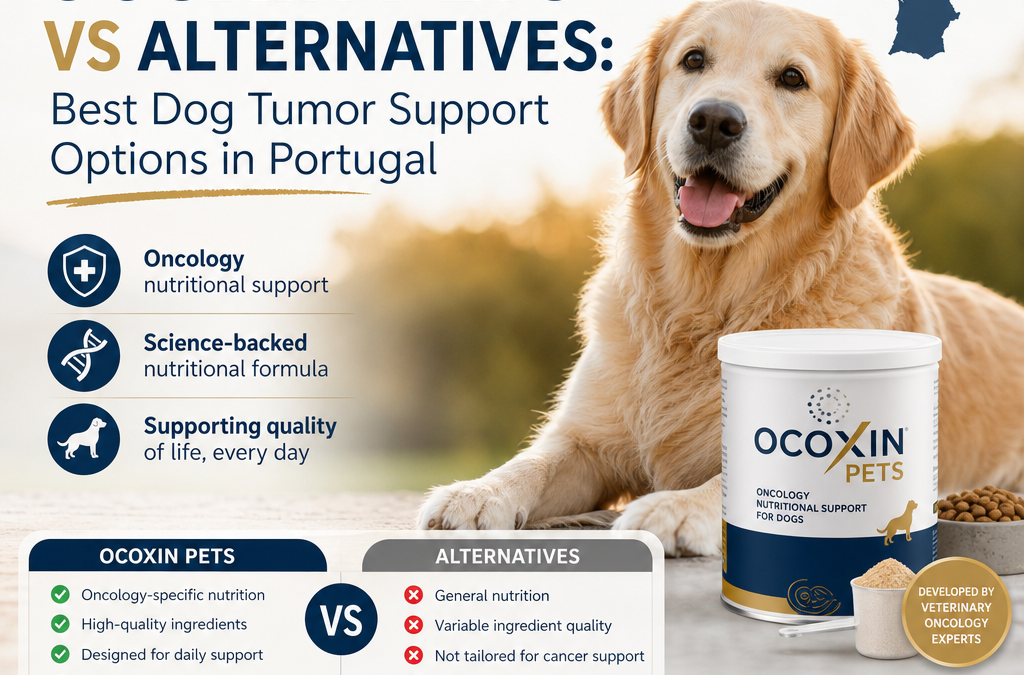
Ocoxin Pets vs Alternatives is an important comparison for Portuguese dog owners looking for supportive care during cancer treatment. Nutritional products cannot replace surgery, chemotherapy, radiation therapy, or veterinary monitoring, but they may help maintain appetite, body condition, hydration, and general wellbeing when used appropriately. Choosing the right option depends on the dog’s diagnosis, treatment plan, symptoms, diet, and overall health.
Πίνακας Περιεχομένων
Understanding oncology nutritional support
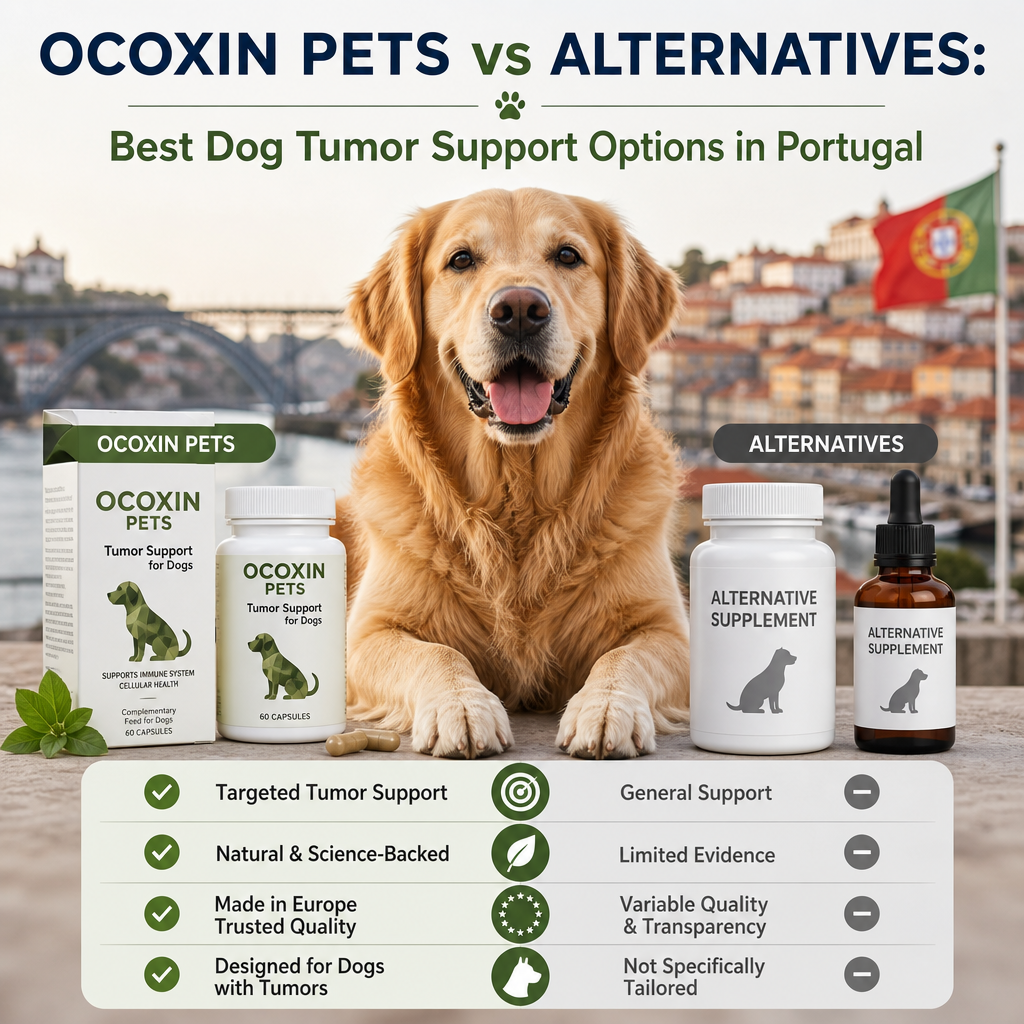
Ocoxin Pets vs Alternatives becomes easier to evaluate when owners first understand the role of oncology nutritional support. This type of support refers to dietary strategies and supplements used alongside veterinary cancer care. Dogs with tumors may experience reduced appetite, nausea, weight loss, inflammation, digestive problems, or increased nutritional demands. Some treatments can also make eating more difficult by causing fatigue, oral discomfort, or gastrointestinal side effects.
A suitable nutritional plan aims to provide adequate calories and highly digestible nutrients while avoiding unnecessary ingredients or excessive supplementation. In practice, this may involve a complete veterinary diet, an energy-dense food, appetite-support measures, omega-3 fatty acids, probiotics, or a specialist supplement such as Ocoxin Pets. Ocoxin Pets vs alternatives is therefore not just a product comparison; it is a comparison of different ways to support a dog during a complex medical period.
The most important principle is individualization. A product that is appropriate for one dog may be unsuitable for another, especially when kidney disease, liver disease, pancreatitis, diabetes, food allergies, or medication interactions are present. That is why Ocoxin Pets vs alternatives should always be discussed with the treating veterinarian rather than chosen only on the basis of marketing claims.
In many cases, owners are trying to solve more than one problem at once. A dog with cancer may need more calories, better stool quality, more enthusiasm for food, and a supplement that does not interfere with treatment. The best support plan is the one that addresses the most important issue first while remaining practical enough for daily use. When Ocoxin Pets vs alternatives is reviewed in this structured way, the decision becomes much clearer.
Τι είναι το Ocoxin Pets;
Ocoxin Pets is a veterinary nutritional supplement designed to provide supportive care for dogs and cats, including animals undergoing cancer treatment. Its formulation is generally associated with ingredients such as botanical extracts, antioxidants, vitamins, minerals, and other compounds intended to support nutritional status and immune function.
It is not an anticancer drug and should not be presented as a cure for tumors. Its potential role is supportive: helping provide selected nutrients during a period when the animal may have greater nutritional challenges. The product should be used according to veterinary advice, particularly because cancer patients often take several medications at the same time. In a practical sense, Ocoxin Pets vs alternatives is often about whether this type of multi-ingredient support is the most suitable choice for a particular dog.
When evaluating Ocoxin Pets, owners should consider the dog’s ability to tolerate the product, the ingredient list, the recommended dose, the form available, and whether it fits the dog’s existing diet. A supplement is most useful when it complements, rather than replaces, a balanced feeding plan. Ocoxin Pets vs alternatives should also include a review of palatability, because a product that is nutritionally promising but refused by the dog will not deliver meaningful benefits.
For owners comparing Ocoxin Pets vs alternatives, it can also help to review an evidence-based veterinary perspective on cancer nutrition. A useful starting point is the WSAVA nutrition guidelines, which explain why complete nutrition and careful monitoring matter during illness.
In Portugal, the choice may also depend on what is available through veterinary clinics, referral centers, or pharmacies. Some products are easy to obtain locally, while others may need to be ordered. That means Ocoxin Pets vs alternatives can include practical issues such as price, supply consistency, and whether the product is simple enough to continue for weeks or months if needed.
Ocoxin Pets vs Alternatives: what should owners compare?
When comparing Ocoxin Pets vs alternatives, price alone should not be the deciding factor. The most relevant questions concern purpose, evidence, safety, convenience, and suitability for the individual animal.
Ocoxin Pets vs Alternatives should also be judged by how well each option supports daily feeding habits. If the dog is eating poorly, the best product is often the one the dog will actually accept consistently. If the dog is stable on a complete diet, the right answer may be a modest addition rather than a major change. This is why a good Ocoxin Pets vs alternatives review starts with the dog’s current appetite, body condition, and treatment stage.
Another useful question is whether the product is meant to correct a specific problem or simply offer broad support. A broad supplement may be helpful when several small needs exist at the same time, while a focused product may be better when the issue is narrow, such as low calorie intake or digestive upset. In that sense, Ocoxin Pets vs alternatives is less about a single winner and more about matching the tool to the job.
1. Complete veterinary diets
A therapeutic or high-energy veterinary diet may be the most important nutritional intervention for a dog with cancer. These diets are formulated to provide balanced nutrition and may be easier to digest or more calorie-dense than standard foods. Some are designed for recovery, gastrointestinal sensitivity, or weight management.
The advantage of a complete diet is that it supplies a broad nutritional foundation. However, not every dog accepts a new food, and some patients may need gradual transitions or customized feeding plans. A diet should be selected with the veterinarian, especially if the tumor affects the digestive system or the dog has another medical condition.
In many cases, Ocoxin Pets vs alternatives comes down to whether the dog needs a full feeding plan or a focused supplement. If the food intake is already adequate, a targeted support product may be enough. If intake is poor, diet quality becomes the priority. A complete diet is often the foundation on which any supplement plan should rest, including Ocoxin Pets if it is being considered.
Owners sometimes assume a supplement can make up for poor food intake, but that is rarely the best approach. A dog with cancer usually benefits more from consistent calories and balanced nutrients than from multiple add-ons that do not solve the main feeding problem. For this reason, Ocoxin Pets vs alternatives should always be discussed alongside the dog’s base diet.
2. Energy-dense recovery foods
Recovery foods and calorie-dense veterinary formulas can be useful when a dog eats only small portions. They may provide more energy in a smaller volume, which can help dogs experiencing early satiety, weakness, or reduced appetite.
These products are generally focused on maintaining weight and muscle rather than providing a cancer-specific supplement. They may therefore be considered alongside, rather than as a direct replacement for, Ocoxin Pets.
Ocoxin Pets vs Alternatives is often easiest to understand in this category: recovery diets support the entire daily ration, while supplements are usually designed to complement that ration. Some dogs need both. If the dog is losing weight, a higher-calorie food may deliver more benefit than a supplement alone.
In practice, recovery foods can be especially useful after surgery or during periods of low appetite. The texture, smell, and energy density may make them easier to offer in smaller meals throughout the day. If a dog is still willing to eat but cannot manage normal portions, this may be a stronger choice than a supplement-heavy strategy. That practical distinction is central to Ocoxin Pets vs alternatives.
3. Omega-3 fatty acids
Fish oil products containing EPA and DHA are frequently discussed in veterinary nutrition. They may support skin health, help maintain a balanced inflammatory response, and contribute useful calories. Some veterinary diets already contain controlled amounts of omega-3 fatty acids.
Quality matters. Owners should choose products intended for animals, check the concentration of active fatty acids, and avoid giving excessive doses. Fish oil can cause digestive upset and may not be appropriate for every dog, particularly those with a history of pancreatitis or bleeding concerns.
When weighing Ocoxin Pets vs alternatives, fish oil may be a practical choice for dogs that need added calories and support from a familiar nutrient. It is still best discussed with the veterinarian, especially if surgery is planned. In some cases, omega-3 supplementation may be used with a complete diet rather than instead of one.
For some dogs, omega-3 fatty acids are a good example of a targeted support option that does one job well. For others, a broader supplement may be preferred. The real issue in Ocoxin Pets vs alternatives is not which product sounds more advanced, but which one fits the dog’s current clinical priorities.
4. Probiotics and digestive support
Cancer treatment, stress, diet changes, and medication can affect the digestive system. Veterinary probiotics may help support normal intestinal function in some dogs, although results vary between products and patients.
Probiotics are not a substitute for nutritional support when a dog is losing weight or refusing food. They are better viewed as a targeted option for dogs with digestive disturbances, especially when recommended by a veterinarian.
In the Ocoxin Pets vs alternatives discussion, probiotics make the most sense when digestive tolerance is the main concern. They do not replace calorie support, but they may improve comfort and help the rest of the feeding plan work better.
Some dogs with tumors experience soft stool, gas, intermittent diarrhea, or a sensitive stomach during treatment. In those cases, improving digestive stability can make every meal more effective. If food is better tolerated, then appetite and body condition may improve as a result. That is why digestive support is often part of a broader Ocoxin Pets vs alternatives review.
5. Homemade diets
Some owners consider preparing meals at home because their dog has become selective or refuses commercial food. Palatable homemade meals may encourage eating temporarily, but unbalanced recipes can create deficiencies or excesses in protein, calcium, vitamins, and minerals.
A long-term homemade diet should be formulated by a veterinary nutrition professional. Ingredients such as raw meat, concentrated herbal products, or large amounts of supplements can also create infection, toxicity, or medication-interaction risks.
For Ocoxin Pets vs alternatives, homemade food should be seen as a feeding strategy rather than a supplement strategy. If the recipe is not professionally balanced, it may solve appetite problems while creating a new nutrition problem. That is especially important for dogs with cancer, because weight loss and muscle loss can develop quickly if the diet is not well designed.
Homemade meals can still have a place in a carefully supervised plan. A veterinarian may suggest a temporary home-cooked approach for a dog with strong food aversion, but the recipe should be complete, consistent, and tailored to the patient. Ocoxin Pets vs alternatives should not be simplified into “natural” versus “commercial” because both can be appropriate or inappropriate depending on how they are used.
6. Appetite support and feeding routines
Beyond specific products, feeding routines themselves are an important form of support. Small, frequent meals, warming food slightly to increase aroma, hand-feeding, and offering meals in a calm environment can all help a dog eat more consistently. These approaches do not replace medical treatment, but they can make any nutritional option more effective.
In some cases, Ocoxin Pets vs alternatives is not really about one product against another but about how the dog is fed overall. A supplement may be useful only if the dog is still willing to eat enough of the rest of the diet. If appetite is collapsing, feeding strategy must be adjusted first.
Owners may also need to track whether the dog prefers wet food, dry food, warmed food, or repeated small servings across the day. These details matter because supportive nutrition is only helpful if the dog accepts it. For many patients, the best Ocoxin Pets vs alternatives decision is the one that improves actual daily intake, not simply the one with the most attractive label.
7. Prescription palliative support
For some dogs, the main goal is comfort rather than aggressive treatment. In that context, prescription palliative support may include anti-nausea medication, appetite stimulants, pain relief, and carefully chosen food or supplements. This can be more impactful than any single nutraceutical product.
When comparing Ocoxin Pets vs alternatives, owners should remember that supportive care includes more than nutrition alone. A dog that is nauseous or in pain may not eat well no matter how good the supplement is. Addressing symptoms first often makes the nutrition plan work better.
Palliative support may also change over time, depending on the dog’s response and quality of life. The veterinarian may adjust medications, feeding recommendations, and supplement use as the situation evolves. This dynamic approach is an essential part of making Ocoxin Pets vs alternatives a meaningful comparison.
Best dog tumor support options in Portugal
The best dog tumor support options in Portugal usually combine professional veterinary care with practical nutritional management. Portugal has general veterinary practices, referral hospitals, oncology services, diagnostic laboratories, and veterinary pharmacies that can help owners access treatment and supportive products.
A sensible care plan may include:
- Confirming the tumor diagnosis and stage.
- Asking whether surgery, chemotherapy, radiation, or palliative care is appropriate.
- Monitoring body weight, muscle condition, appetite, vomiting, stool quality, and hydration.
- Choosing a complete and palatable diet.
- Adding supplements only when their ingredients and dosage are appropriate.
- Reviewing all products with the treating veterinarian.
- Scheduling regular reassessments as the disease or treatment changes.
Availability may differ between Portuguese clinics, veterinary pharmacies, and online retailers. Owners should check storage conditions, expiry dates, authorized distribution, and product labeling. Imported supplements can vary in formulation between markets, so the exact packaging and ingredient list should be verified before use.
Because the Portuguese market may offer several support choices, Ocoxin Pets vs alternatives should also account for practical access. A product that is ideal in theory but hard to reorder regularly may be less useful than a slightly simpler option that can be maintained without interruption. Consistency matters in cancer support care.
If owners want more context on supplement availability in Europe, the related guide on Ocoxin Pets Εναλλακτική: 7 Καλύτερα Προσιτά Συμπληρώματα Όγκων Σκύλων στην Ιρλανδία shows how support options can differ by market while still following similar nutrition principles.
For Portuguese dog owners, the best choice may also depend on the clinic’s familiarity with a product. If the veterinary team has experience with a particular supplement or diet, they may be able to monitor it more effectively. That is another reason Ocoxin Pets vs alternatives should be considered in partnership with the clinician rather than in isolation.
Σκέψεις ασφαλείας πριν από τη χρήση συμπληρωμάτων
Natural ingredients are not automatically harmless. Botanical extracts, antioxidants, minerals, and concentrated oils may affect digestion, blood clotting, liver metabolism, or the activity of prescription medicines. Some supplements may also be unsuitable before surgery or during specific chemotherapy protocols.
Owners should tell the veterinarian about every product the dog receives, including human supplements, herbal preparations, treats, and homemade remedies. The veterinary team can decide whether a supplement should be started, paused, or avoided.
Immediate veterinary attention is needed if a dog develops persistent vomiting, severe diarrhea, collapse, breathing difficulty, marked lethargy, refusal of all food, or signs of dehydration. These symptoms should not be managed by simply adding another supplement.
Ocoxin Pets vs Alternatives should always be reviewed in the context of the current treatment plan. What is safe during a stable period may not be appropriate during intensive therapy, after surgery, or when blood test results change. In practical terms, a supplement choice must be reassessed if the dog’s medication list changes or if appetite suddenly declines.
Owners should also be careful with stacking multiple products that contain similar ingredients. Extra vitamins, minerals, or antioxidant blends may seem helpful, but they can create unnecessary overlap. When Ocoxin Pets vs alternatives is analyzed carefully, one of the most important goals is to avoid duplication and keep the plan as simple as possible.
If there is any uncertainty, the safest step is to pause non-essential supplements and ask the veterinarian for advice. Clear communication prevents accidental interactions and helps ensure that supportive care actually supports the main treatment plan.
Making a practical choice
The right decision is rarely about finding one universally superior product. Ocoxin Pets may be useful for some dogs as part of a broader nutritional plan, while another dog may benefit more from a complete recovery diet, omega-3 supplementation, digestive support, or carefully formulated home feeding.
Owners can make the comparison more meaningful by identifying the primary goal: maintaining weight, improving appetite, supporting digestion, correcting a documented deficiency, or helping the dog cope with treatment. Once that goal is clear, the veterinarian can assess whether Ocoxin Pets or an alternative is the safest and most relevant option.
Good nutritional support should be measurable and regularly reviewed. Tracking appetite, weight, activity, stool quality, and comfort helps determine whether the plan is helping. For dogs with tumors, consistent veterinary supervision and preserved quality of life remain more important than any individual supplement.
In practical terms, Ocoxin Pets vs alternatives is not a simple winner-or-loser debate. The best choice is the one that fits the dog’s diagnosis, is tolerated well, and supports the broader treatment plan without adding unnecessary risk. That may mean using Ocoxin Pets, choosing a different supplement, or focusing mainly on diet and symptom control.
For owners in Portugal, the most useful mindset is to think in terms of support layers. Food quality, caloric intake, digestive comfort, medication tolerance, and monitoring all work together. When those layers are addressed properly, Ocoxin Pets vs alternatives becomes a decision about refinement rather than rescue.
In the end, the most important outcome is not whether the label says Ocoxin Pets or another product. The real goal is helping the dog eat well, stay comfortable, and maintain the best possible quality of life during treatment. That is the standard every Ocoxin Pets vs alternatives comparison should meet.