
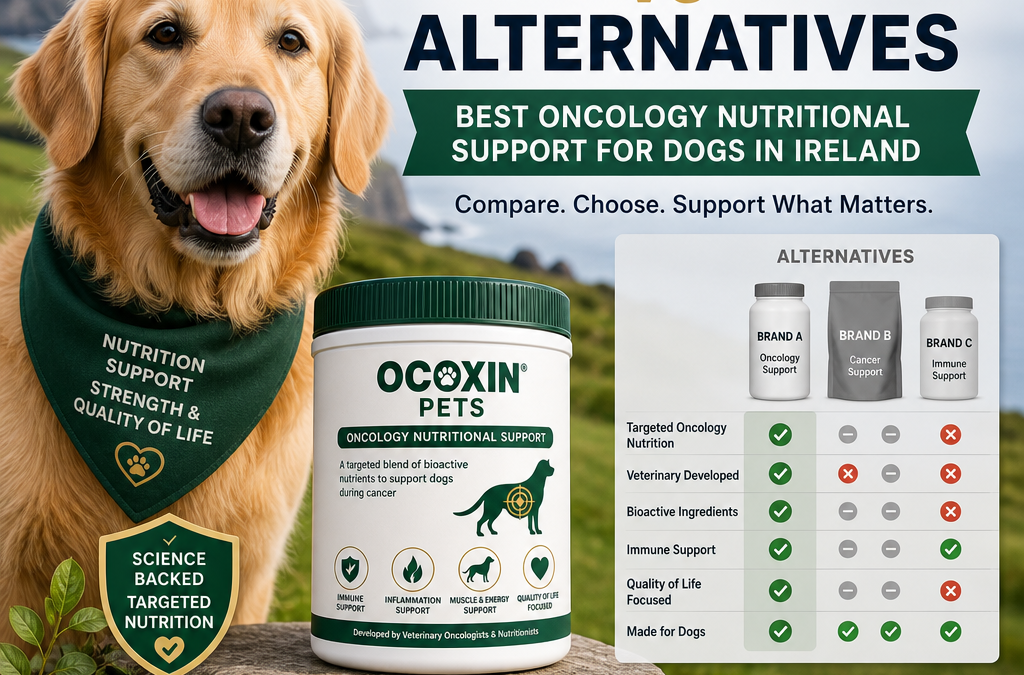
Ocoxin Pets vs alternatives is an important comparison for Irish dog owners looking for supportive care during cancer treatment. Nutritional products cannot replace veterinary diagnosis, surgery, chemotherapy, radiotherapy, or other prescribed treatment, but they may help maintain appetite, body condition, energy, and overall wellbeing when used appropriately. The best choice depends on the dog’s tumour type, treatment plan, age, weight, existing health conditions, and ability to tolerate supplements.
Why oncology nutritional support matters
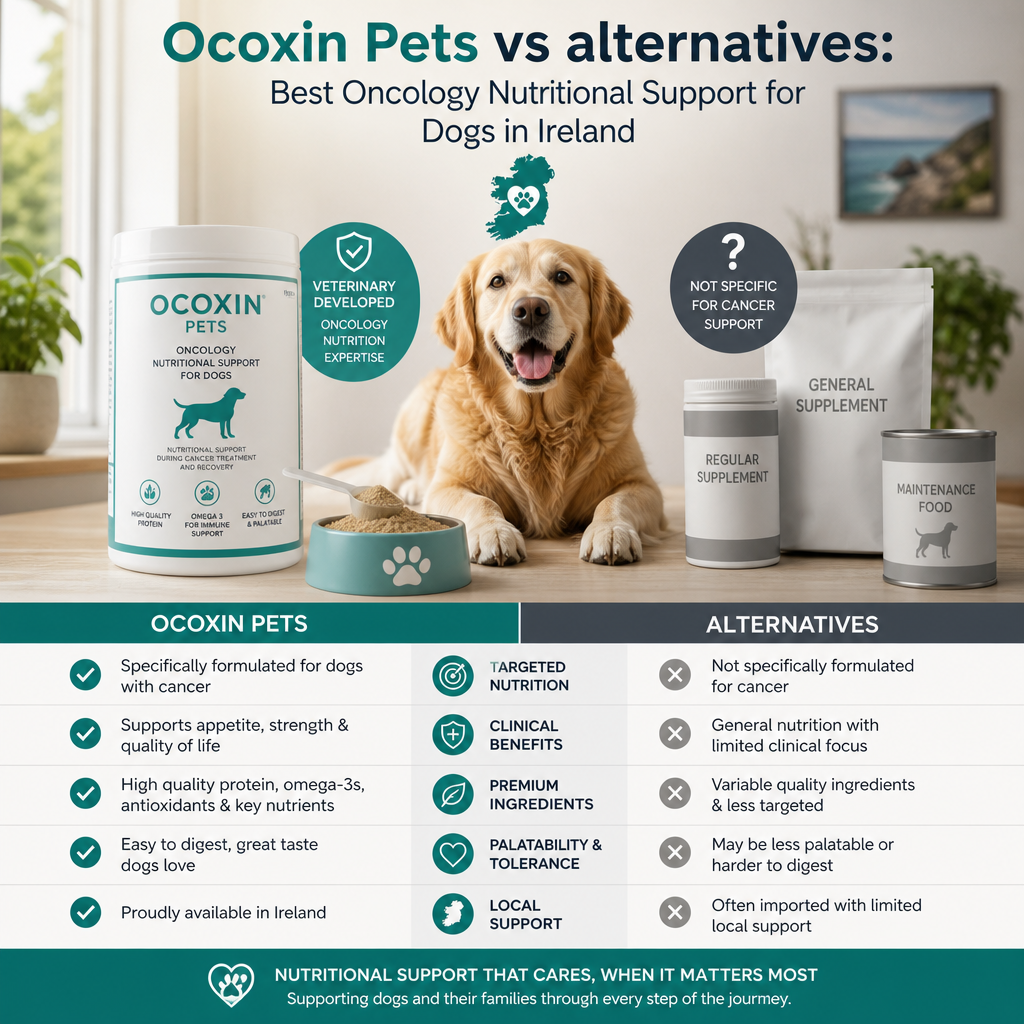
Cancer can affect a dog’s nutritional status in several ways. Tumours may increase the body’s energy demands, while pain, nausea, inflammation, stress, or treatment side effects can reduce appetite. Some dogs lose muscle even when they continue eating, and others struggle to maintain weight during chemotherapy or recovery from surgery. In these situations, Ocoxin Pets vs alternatives becomes more than a product comparison; it becomes a discussion about comfort, intake, and long-term resilience.
Good nutrition supports normal body functions, including immune activity, tissue repair, digestion, and muscle maintenance. However, the aim is not simply to provide the highest number of calories. A suitable plan should consider digestibility, protein quality, essential fatty acids, hydration, palatability, and any dietary restrictions caused by kidney, liver, gastrointestinal, or pancreatic disease. That is why Ocoxin Pets vs alternatives should always be reviewed in context, rather than as a quick purchase decision.
Veterinary oversight is particularly important because supplements may interact with medicines or may be unsuitable for particular conditions. A product marketed for immune support, for example, is not automatically appropriate for every dog receiving cancer treatment. Even when Ocoxin Pets vs alternatives sounds straightforward, the best choice can change as the dog’s condition changes.
For many owners, the first step is understanding that oncology nutritional support works best when it fits the dog’s current condition rather than a one-size-fits-all idea of “cancer food.”
Τι είναι το Ocoxin Pets;
Ocoxin Pets is a veterinary nutritional supplement designed to provide supportive nutrition for dogs and other companion animals. Its formulation commonly includes a combination of vitamins, minerals, amino acids, antioxidants, and plant-derived ingredients. It is generally used as an adjunct to conventional veterinary care rather than as a cancer treatment. When owners compare Ocoxin Pets vs alternatives, this role matters because the product is meant to support care, not replace it.
The potential appeal of a multi-ingredient product is convenience. Owners may prefer one formulation instead of combining several separate supplements. It may also be useful for dogs whose appetite, energy, or general condition has declined during illness. As with any nutritional product, acceptance varies between dogs, and some may dislike the taste or texture.
The evidence for individual ingredients and complete supplement formulas should be considered carefully. Laboratory findings or studies in people do not necessarily prove that a product will improve survival or treatment response in dogs. Owners should therefore judge Ocoxin Pets by practical goals, such as maintaining food intake and body condition, rather than expecting it to eliminate a tumour. That realistic approach also helps keep Ocoxin Pets vs alternatives focused on what can actually be measured at home and in the clinic.
In practical terms, a supplement may be judged by whether the dog eats more reliably, loses less weight, or seems more comfortable during treatment. Those outcomes are often more relevant than marketing claims. That is why Ocoxin Pets vs alternatives should be evaluated by your vet in the context of the dog’s full treatment plan, not as a standalone solution.
Dog tumor support options beyond one supplement
There are several dog tumor support options, and the most effective approach is often a combination of veterinary nutrition, symptom control, and appropriate cancer treatment. When comparing Ocoxin Pets vs alternatives, it helps to think in categories rather than brand names alone.
Θεραπευτικές κτηνιατρικές δίαιτες
Veterinary oncology diets are formulated to provide concentrated nutrition in a palatable and digestible form. Some have increased protein or fat levels, controlled carbohydrate content, or added omega-3 fatty acids. A therapeutic diet may be especially helpful when a dog is losing weight, has a poor appetite, or needs a diet adapted to another medical condition.
Not every cancer patient needs the same nutritional profile. A dog with pancreatitis, kidney disease, diabetes, or gastrointestinal problems may require a different approach from a dog with an otherwise healthy digestive system. In practice, the best dog tumor support options are usually the ones that the patient can comfortably eat every day. If the food is refused, even the most carefully selected plan will fail.
Ωμέγα-3 λιπαρά οξέα
Fish oil provides EPA and DHA, two omega-3 fatty acids that may support normal inflammatory regulation and help maintain skin, coat, and general health. They are among the more commonly discussed supplements in veterinary oncology, but dosage and product quality matter. Excessive amounts can cause digestive upset or affect blood clotting, and some products may become rancid if poorly stored.
A veterinarian should calculate an appropriate dose based on the dog’s body weight and medical history. Human fish-oil capsules may not be suitable because they can contain additional ingredients or provide an unsuitable concentration. In some cases, fish oil may be a useful alternative or companion to Ocoxin Pets vs alternatives, but the decision should be based on the whole diet and the dog’s tolerance.
Appetite and nausea support
Sometimes the most important nutritional intervention is not a supplement but effective control of nausea, pain, constipation, or anxiety. Dogs that feel sick are unlikely to benefit from an elaborate dietary plan if they cannot keep food down or have no desire to eat.
Veterinarians may prescribe anti-nausea medicines, appetite stimulants, pain relief, or other treatments. Small, frequent meals, gently warmed food, and highly palatable veterinary diets can also help. Sudden food changes should generally be avoided unless advised by a professional. This is often where Ocoxin Pets vs alternatives becomes less about formulation and more about whether the dog is well enough to benefit from any supplement at all.
High-quality complete diets
A balanced commercial diet can be entirely appropriate for many dogs with cancer. Owners do not always need to prepare a complicated homemade recipe or purchase multiple supplements. A complete food that the dog enjoys and can digest may be more valuable than a premium product that is refused.
Homemade diets should be formulated by a veterinary nutritionist, particularly when they are intended for long-term feeding. Unbalanced recipes can lead to deficiencies in calcium, essential fatty acids, vitamins, or trace minerals. If you are weighing Ocoxin Pets vs alternatives, a complete diet is often the foundation and any supplement is only an addition to that base.
If you are comparing broader support choices, this guide to supplements for dogs with cancer is a helpful starting point for discussing options with your veterinary team.
Other supportive options to discuss with your vet
Depending on the dog’s condition, your vet may also discuss hydration support, probiotics, gastrointestinal protectants, or carefully chosen calorie boosters. These are not automatic solutions, but they can be useful when a dog is struggling with side effects or has another disease alongside cancer. In a broader treatment plan, Ocoxin Pets vs alternatives may be only one small part of supportive care.
Some dogs benefit most from reducing the causes of poor intake rather than adding more products. Others do better with a simple combination of food, medication, and one carefully selected supplement. The key is matching the plan to the dog, not forcing the dog to fit the plan.
Comparing Ocoxin Pets with alternative approaches
When comparing Ocoxin Pets with alternatives, consider the product’s purpose, ingredients, evidence, palatability, cost, and compatibility with current treatment. A multi-ingredient supplement may be convenient, but it can make it harder to identify which ingredient is helping or causing a reaction. A single-ingredient product may be easier to assess but may not address the dog’s broader nutritional needs.
Cost is also relevant for Irish pet owners. Prices can vary between veterinary clinics, specialist retailers, and online suppliers, while delivery conditions and storage requirements may differ. Buying from a reputable source helps reduce the risk of counterfeit, expired, or incorrectly stored products. In a market with many choices, Ocoxin Pets vs alternatives should be judged on reliability as well as price.
The most useful question is not which product is universally best, but which option fits the dog’s clinical needs. A dog eating normally and maintaining weight may need little more than a complete diet and regular monitoring. A dog losing muscle or suffering treatment-related nausea may need a more detailed plan involving prescription medicines, calorie-dense food, and targeted supplementation.
For owners who want to understand how cancer can spread and affect the body over time, our internal guide to metastasis in dogs explains tumour growth and progression in clearer terms.
There are also cases where a supportive product is chosen mainly because the dog tolerates it well. If the supplement is easy to give, does not trigger vomiting, and fits into the daily routine, it may be more useful than a theoretically stronger option that is repeatedly refused. That practical reality is one reason Ocoxin Pets vs alternatives cannot be assessed on ingredients alone.
Practical factors to compare before choosing a supplement
Before starting or changing oncology nutritional support, compare the following:
- Ingredient profile: Look at vitamins, minerals, amino acids, antioxidants, and any added plant extracts.
- Σκοπός: Decide whether the goal is appetite support, calorie support, immune support, or general recovery.
- Εύπεπτο: Choose products that are gentle on the stomach when the dog is already vulnerable.
- Παχυτικότητα: A good product is not useful if the dog refuses it.
- Ευκολία χρήσης: Some owners prefer a single daily supplement; others do better with a simpler diet-based plan.
- Cost over time: Long-term support can become expensive, so sustainable use matters.
- Συμβατότητα με τη θεραπεία: Make sure the product fits the dog’s current medicines and feeding plan.
These factors are especially important when Ocoxin Pets vs alternatives are being considered for a dog already undergoing veterinary treatment. In many households, the most realistic plan is the one that can be followed consistently without upsetting the dog’s stomach or the owner’s routine.
Another useful comparison point is how easy it is to adjust the plan over time. Cancer care often changes, and a product that works early in treatment may not be the best choice later. A flexible approach allows the veterinary team to change the diet, dose, or supplement mix as needed.
When Ocoxin Pets may fit into a care plan
Ocoxin Pets may suit dogs that need a supportive supplement alongside a complete diet and normal veterinary treatment. It may be considered when owners want a multi-ingredient formula and the dog tolerates it well. It may also appeal when a vet wants a simple adjunct that can be added without major changes to feeding.
Still, Ocoxin Pets vs alternatives should be decided using the dog’s response rather than assumptions. If appetite improves, stool quality remains stable, and weight is maintained, the plan may be working. If the dog becomes nauseated, refuses food, or shows continued loss of muscle, the approach may need to change.
The goal is always to support quality of life. A supplement should make daily care easier, not more stressful. If there is no clear benefit, switching to another option or simplifying the regimen may be the better path.
Safety considerations for Irish dog owners
Before starting oncology nutritional support, tell the veterinary team about every supplement, treat, herbal product, and non-prescription medicine the dog receives. Some antioxidants or herbal ingredients may affect drug metabolism, blood clotting, blood pressure, or the intended effect of treatment. “Natural” does not necessarily mean risk-free.
Monitor appetite, body weight, stool quality, vomiting, drinking, urination, activity, and signs of pain. A weekly weight check can reveal gradual decline before it becomes obvious. Contact the veterinary practice promptly if the dog refuses food for an extended period, vomits repeatedly, develops severe diarrhoea, becomes unusually weak, or shows breathing difficulties.
For general reference on cancer in companion animals, the AVMA overview of cancer in pets offers a reputable explanation of warning signs and veterinary care considerations.
If your dog has a history of pancreatitis, intestinal disease, or poor fat tolerance, mention this before choosing any new product. These issues can change what counts as a safe option. In those cases, Ocoxin Pets vs alternatives may need to be narrowed down much more carefully.
How to talk to your vet about the best option
It helps to bring a simple list to the appointment: current food, all supplements, medication names, appetite changes, stool changes, vomiting episodes, and any weight loss you have noticed. This makes it easier for the vet to decide whether Ocoxin Pets vs alternatives should be part of the plan or whether another supportive approach makes more sense.
Χρήσιμες ερωτήσεις περιλαμβάνουν:
- Is my dog’s current diet meeting calorie and protein needs?
- Would a supplement help, or should we focus on nausea or pain control first?
- Is there any reason this product would not suit my dog’s health history?
- How soon should I expect to see an improvement if the plan is working?
- What signs would mean we should stop or change the supplement?
These questions keep the decision practical and reduce the chance of trying several products without a clear goal. They also help ensure Ocoxin Pets vs alternatives is discussed in the same language as the rest of your dog’s treatment plan.
Making a practical decision
A sensible plan starts with a veterinary assessment and clear goals. These may include maintaining weight, preserving muscle, improving appetite, supporting recovery after surgery, or reducing digestive upset. Once the goal is defined, the veterinarian can decide whether Ocoxin Pets, omega-3 supplementation, a therapeutic diet, appetite medication, or another option is most appropriate.
In many cases, the best oncology nutritional support is not a single product. It is a personalised programme that combines a complete and palatable diet, adequate hydration, symptom management, regular monitoring, and evidence-informed supplementation where appropriate. Ocoxin Pets may have a role for some dogs, but it should be viewed as part of supportive care—not a substitute for professional cancer treatment or ongoing veterinary guidance.
If you need a final point of comparison, remember that the best result usually comes from matching the product to the dog’s current needs rather than chasing the most complex formula. That approach keeps Ocoxin Pets vs alternatives grounded in practical, veterinary-led care. For many families, that is the most reliable way to choose among Ocoxin Pets vs alternatives while keeping the dog comfortable and supported.
When you look at Ocoxin Pets vs alternatives in this way, the decision becomes clearer: choose the option that the dog can tolerate, that fits the diagnosis, and that supports day-to-day quality of life. With veterinary guidance, even a simple plan can make a meaningful difference.