
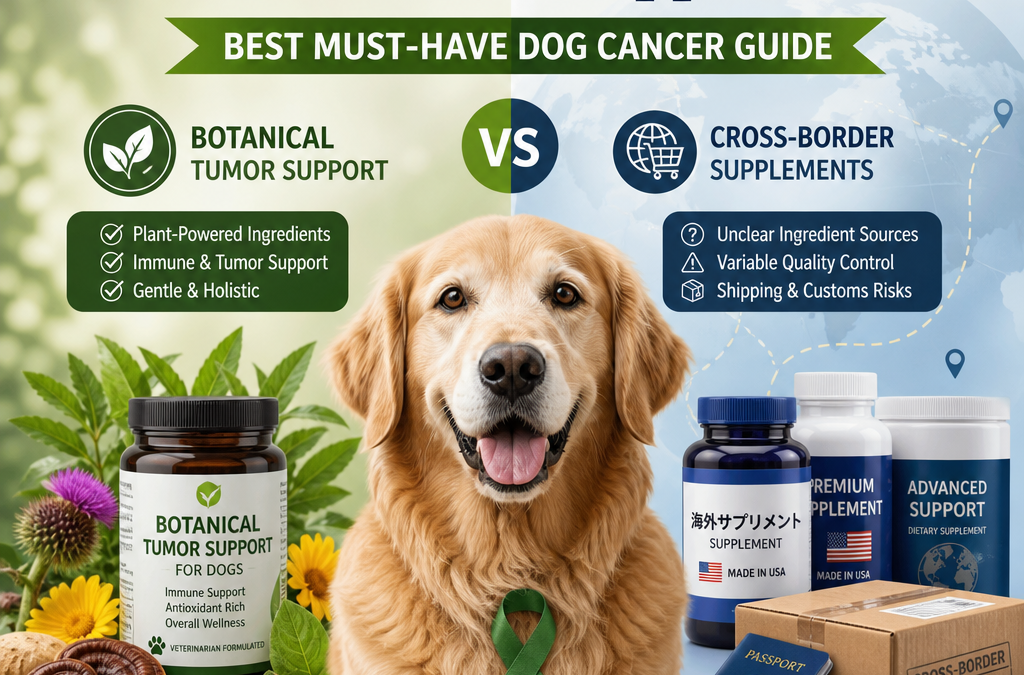
Botanical Tumor Support vs Cross-border Supplements is an important comparison for dog owners seeking additional support after a canine cancer diagnosis. Supplements may help address nutrition, inflammation, appetite, or general wellness, but they are not substitutes for veterinary diagnosis and treatment. The safest decisions come from understanding what each product category can realistically provide, how quality is verified, and whether the product fits the dog’s specific condition and treatment plan.
- Comprendiendo la comparación de suplementos para el cáncer en perros
- What botanical tumor support may include
- Evaluating cross-border supplements
- Safety matters more than product origin
- Questions to discuss with the veterinarian
- Monitoring the dog after supplementation
- Tomando una decisión responsable
- Lista de verificación práctica antes de comprar
- How to evaluate labels and claims
- Supportive care goals for dogs with cancer
Comprendiendo la comparación de suplementos para el cáncer en perros
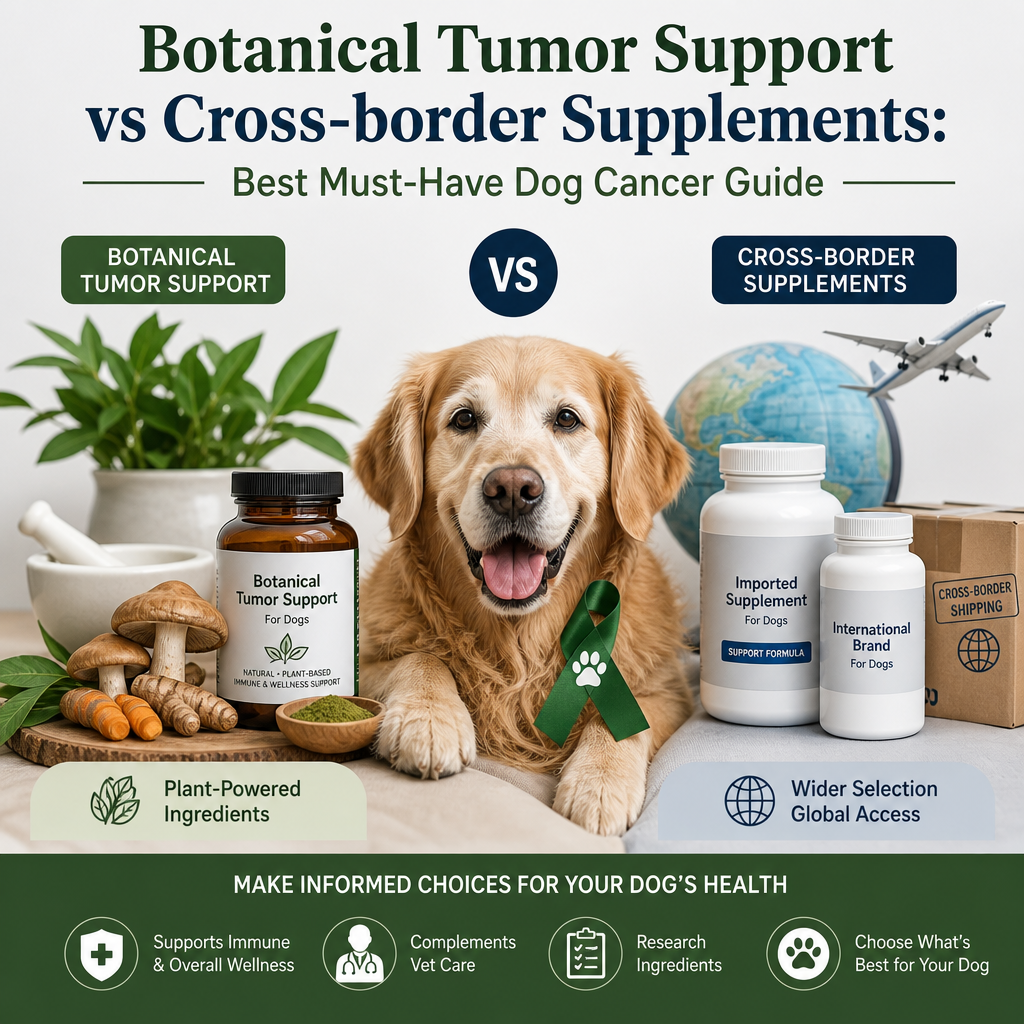
A dog cancer supplement comparison should begin with purpose rather than marketing claims. Some products are designed to provide broad nutritional support, while others focus on botanical ingredients traditionally associated with immune balance, antioxidant activity, or digestive health. Cross-border supplements may include products purchased from another country, imported through online marketplaces, or formulated under regulatory systems that differ from those in the owner’s home country.
These categories are not automatically superior or inferior to one another. Their value depends on the ingredients, manufacturing standards, dosage accuracy, veterinary oversight, and the individual dog’s health status. A supplement that is reasonable for a dog receiving palliative care may not be appropriate for a dog undergoing surgery, chemotherapy, radiation, or targeted treatment.
Cancer is also not one disease. Lymphoma, mast cell tumors, osteosarcoma, hemangiosarcoma, and other cancers have different biological behaviors and treatment requirements. Therefore, a product should never be selected solely because it is promoted as a general “cancer cure” or “tumor eliminator.”
When owners compare options, the goal is not to find a miracle product. The real goal is to identify a product that supports comfort, nutrition, and daily function without creating new risks. In practice, botanical tumor support vs Cross-border supplements becomes a question of evidence, quality, and fit.
It also helps to separate emotional pressure from medical reality. Online ads, influencer posts, and anecdotal stories can make a supplement look indispensable, but every dog responds differently. A practical decision starts with diagnosis, treatment goals, lab results, and the veterinarian’s view of what the dog can safely tolerate right now.
For example, a dog with a sensitive stomach may need a very simple formula, while a dog with poor appetite may benefit more from nutrition support than from a long list of botanical ingredients. That is why the same product can be useful for one patient and unhelpful for another.
What botanical tumor support may include
Botanical tumor support generally refers to formulas containing plant-derived ingredients. Common examples may include medicinal mushrooms, turmeric-derived compounds, milk thistle, green tea extracts, boswellia, or other herbs. Depending on the formulation, these ingredients may be marketed for antioxidant support, inflammatory balance, liver health, immune function, or appetite and digestion.
The potential advantage of a well-formulated botanical product is that its ingredient purpose can often be clearly defined. A veterinarian may be able to review the formula and determine whether it could complement the dog’s care plan. Products from reputable manufacturers may also provide standardized extracts, certificates of analysis, batch information, and testing for contaminants.
However, “natural” does not mean risk-free. Botanicals can affect blood clotting, blood pressure, liver enzymes, sedation, or gastrointestinal function. Some may interfere with the metabolism of prescription medications. Others may be unsuitable before surgery or during specific chemotherapy protocols. Concentrated extracts can also be much stronger than the whole plant forms used in traditional diets.
Owners researching botanical tumor support vs Cross-border supplements should also remember that a product’s origin does not tell the whole story. A carefully made botanical formula can be safer than a poorly labeled imported product, and a cross-border product can be safer than a local one if it has stronger documentation and better quality control.
For background on ingredient safety and regulatory oversight in animal supplements, the U.S. Food and Drug Administration provides a helpful overview of pet food and supplement labeling standards at the FDA pet food and supplement guidance page.
When reviewing a botanical formula, pay close attention to whether the ingredients are standardized. Standardization matters because “turmeric,” for example, can mean very different levels of active compounds depending on the extract, while mushroom products may vary widely in beta-glucan content and processing method. The label should make it easier, not harder, to understand what the dog is actually receiving.
It is also worth asking whether the formula is intended for short-term support or long-term use. Some botanical ingredients may be better suited to a limited trial, followed by monitoring and reassessment. A supplement that sounds appealing in theory may still be a poor fit if the dog’s stool quality declines or if the product causes vomiting, lethargy, or medication interactions.
Evaluating cross-border supplements
Cross-border supplements can provide access to products, ingredients, or formulations that are not widely available locally. Some overseas manufacturers maintain excellent quality-control systems and publish detailed information about testing and production. In certain cases, international products may offer useful specialized formulas or clearly stated ingredient standards.
The challenge is that regulatory requirements vary significantly between countries. A product labeled as a supplement in one region may be subject to different manufacturing, claims, testing, and labeling rules elsewhere. Translation issues can make dosage instructions unclear, while online listings may omit expiration dates, lot numbers, storage conditions, or complete ingredient disclosures.
Importation also creates practical risks. Heat, humidity, and extended shipping can damage sensitive ingredients. Customs delays may expose products to unsuitable conditions. Counterfeit or gray-market products can appear identical to legitimate products but contain incorrect concentrations or undisclosed substances.
Before purchasing a cross-border supplement, owners should verify the manufacturer’s physical location, contact details, lot-specific testing, expiration date, recommended canine dosage, and ingredient quantities. It is also wise to avoid products that promise guaranteed tumor shrinkage, claim to replace chemotherapy, or rely mainly on testimonials.
In a careful comparison, botanical tumor support vs Cross-border supplements should be judged by traceability and transparency. If a company cannot explain where the product was made, how it was tested, or what each dose contains, the label should be treated with caution.
Practical signs of a more trustworthy product
- Clear ingredient amounts per serving
- Batch or lot number printed on the package
- Recent expiration date and storage instructions
- Independent testing or a certificate of analysis
- Species-specific dosing guidance for dogs
- Simple contact information for the manufacturer
These details do not guarantee effectiveness, but they do help owners make a more informed choice. In many cases, the safest option is the one with the clearest documentation.
When a cross-border product appears attractive because it is cheaper or easier to order online, pause and check whether the savings come with hidden risks. A lower upfront price can be offset by poor quality control, uncertain storage conditions, or a lack of support if something goes wrong. In sensitive cases, predictability is often more valuable than convenience.
Safety matters more than product origin
The most meaningful difference in a dog cancer supplement comparison is not whether a product is domestic, botanical, or imported. It is whether the product is transparent, tested, and medically appropriate. A trustworthy label should identify every active and inactive ingredient, provide amounts per serving, and explain storage and dosing instructions.
Quality indicators may include independent laboratory testing, current certificates of analysis, contamination screening, and good manufacturing practices. Testing should ideally address heavy metals, pesticides, microbes, solvents, and adulterated pharmaceutical substances. Owners should be cautious when a company refuses to provide documentation or uses vague phrases such as “proprietary cancer blend” without listing quantities.
Veterinary review is especially important when a dog has reduced liver or kidney function, a bleeding disorder, diabetes, seizures, digestive disease, or a history of medication sensitivity. Puppies, elderly dogs, and dogs with poor appetite may also require more careful dosing.
Botanical Tumor Support vs Cross-border Supplements can both become risky if the product is too concentrated, poorly labeled, or combined with several other remedies at once. More ingredients do not always mean more benefit.
Owners should also remember that a supplement can affect the practical side of care even when it does not cause a dramatic side effect. For example, a product that slightly reduces appetite may be a problem for a dog already struggling to maintain body weight. Likewise, a formula that causes mild diarrhea can still matter if the dog is frail, dehydrated, or recovering from treatment.
Safety is therefore not just about avoiding emergencies. It is also about protecting daily comfort, preserving nutrition, and reducing the chance that a supportive product becomes one more burden on an already stressed patient.
Why ingredient interactions matter
Some botanical ingredients may affect clotting or liver metabolism, while others can change how a drug is absorbed or broken down. That means a supplement can look harmless on a shelf and still create complications once it is given alongside prescription therapy. This is one reason veterinarians often ask for the full label before approving a new product.
Interactions are not limited to cancer drugs. Pain relievers, anti-nausea medications, antibiotics, steroids, and even anesthesia protocols can all be affected by supplements in different ways. A careful review of the dog’s full medication list is essential before adding anything new.
If a supplement contains several plant extracts, the interaction review becomes more complicated. In that case, it may be useful to introduce the product only when the treatment schedule is stable and the dog’s baseline condition is well documented. That makes it easier to spot whether any change is truly related to the supplement.
Questions to discuss with the veterinarian
Before adding any supplement, owners should provide the veterinarian with the complete product label and answer several practical questions:
– What is the intended purpose of the supplement?
– Could any ingredient interact with chemotherapy, steroids, pain medication, antibiotics, or anesthesia?
– Is the dosage appropriate for the dog’s weight and organ function?
– Should the product be stopped before surgery or a treatment session?
– What side effects should be monitored?
– Are there better-supported nutritional options?
– How will success or intolerance be evaluated?
Keeping a written supplement record can prevent accidental duplication. Some products contain overlapping ingredients, such as turmeric, vitamin E, omega-3 fatty acids, or medicinal mushrooms. Combining several formulas may increase the risk of excessive dosing without providing additional benefit.
When owners bring a product label to the appointment, the discussion is usually more productive. That is especially true when the topic is botanical tumor support vs Cross-border supplements, because the veterinarian can compare ingredient quality, dose, and timing against the dog’s current treatments.
It can also help to prepare a short list of priorities before the visit. For example, is the main goal better appetite, calmer digestion, more energy, or improved comfort? Clear goals allow the veterinarian to assess whether a supplement is likely to be useful or whether the focus should stay on diet adjustment, anti-nausea therapy, pain control, or a different supportive strategy.
Owners who are unsure how a supplement fits into a broader care plan should ask for simple language, not just technical terms. A good discussion should leave the family with a clear yes, no, or “not right now,” along with the reason behind the recommendation.
Monitoring the dog after supplementation
A supplement should be introduced only when the dog’s veterinary team understands the plan. Starting one product at a time makes it easier to identify benefits or adverse reactions. Owners should monitor appetite, stool quality, vomiting, energy, thirst, urination, skin changes, bruising, and behavior.
Any sudden deterioration, persistent vomiting or diarrhea, refusal to eat, unusual bleeding, breathing difficulty, collapse, or severe lethargy requires prompt veterinary attention. A supplement should be discontinued only according to veterinary guidance when stopping suddenly could affect treatment, but most nonessential products can be reassessed if adverse effects appear.
It is also important to define realistic goals. Improved appetite, stable weight, better stool quality, or improved comfort may be meaningful outcomes. A supplement should not be judged solely by whether a visible tumor changes, and no product should delay proven cancer treatment.
For many dogs, the most meaningful sign that a product is helping is subtle: more consistent eating, less digestive upset, or steadier energy. Those day-to-day improvements matter more than dramatic promises, especially when the discussion centers on botanical tumor support vs Cross-border supplements.
A simple monitoring log can be very useful. Write down the product name, dose, time given, food taken with it, and any changes observed over the next several days. This record makes follow-up visits more productive and helps the veterinary team decide whether to continue, adjust, or stop the product.
If the dog is already receiving multiple therapies, tracking becomes even more important. Owners may otherwise mistake a natural fluctuation in appetite or comfort for a supplement effect. Documentation helps separate coincidence from true response.
Tomando una decisión responsable
For many families, the best approach is to prioritize veterinary treatment, adequate calories and protein, hydration, pain control, and quality of life before considering supplemental products. Botanical tumor support may be reasonable when the formula is transparent and compatible with medical care. Cross-border supplements may also be considered when the manufacturer demonstrates reliable testing and the product can be legally and safely obtained. If you are comparing product options in other European markets, you may also find it useful to review Ocoxin Pets Alternativa: 7 Mejores Suplementos Asequibles para Tumores en Perros en el Reino Unido for a broader look at formulation and support style.
Ultimately, botanical tumor support vs Cross-border supplements is less about choosing a winning category and more about evaluating evidence, safety, transparency, and individual suitability. A careful dog cancer supplement comparison helps owners move beyond bold claims and focus on what can genuinely support their dog without creating additional risks.
When in doubt, ask the veterinarian to review the label before the first dose. That simple step can prevent avoidable problems and keep the plan aligned with the dog’s treatment goals. In the end, botanical tumor support vs Cross-border supplements should be assessed by how well the product fits the dog, not by how loudly it is marketed.
Responsible choices usually come from patience. It is better to spend a little extra time confirming the origin, formulation, and purpose of a product than to rush into a purchase because a page promises fast results. A careful, evidence-aware approach protects the dog and gives owners more confidence in the plan.
Lista de verificación práctica antes de comprar
Before ordering any supplement, pause and review the basics. This step can prevent wasted money and reduce the chance of avoidable side effects.
- Confirm the dog’s diagnosis and treatment stage.
- Ask whether the product is meant for support, comfort, or nutrition.
- Check the full ingredient list and serving size.
- Look for batch numbers, testing details, and expiration dates.
- Review storage instructions and shipping conditions.
- Verify that the dosage is written clearly for dogs.
- Share the label with the veterinarian before the first use.
This checklist is especially useful when comparing botanical tumor support vs Cross-border supplements because the marketing language may sound similar even when the quality signals are very different. The label should answer the practical questions without forcing the owner to guess.
How to evaluate labels and claims
Supplement labels can be persuasive, but not all persuasive labels are reliable. A responsible label usually identifies the active ingredients, the amount per dose, and the intended use in clear language. It should not depend on vague claims about “detox,” “immune boosting,” or “natural cancer reversal” without supporting detail.
Beware of terms that sound scientific but do not tell you much about the actual product. Words like “advanced,” “extra strength,” or “professional grade” can be marketing language rather than quality proof. Likewise, before-and-after photos and emotional testimonials may not reflect how the product works in real veterinary practice.
When evaluating botanical tumor support vs Cross-border supplements, ask whether the claims match the evidence available on the label or from the manufacturer. If the product seems to promise more than any supplement realistically can, the safest answer is often to walk away.
It is also smart to check whether the label matches the website description exactly. Differences in ingredient amounts, serving recommendations, or product names can indicate poor quality control. Consistency across packaging and online information is a good sign; confusion is not.
Supportive care goals for dogs with cancer
Supportive care should aim to improve the dog’s day-to-day experience. That may include preserving appetite, easing digestion, maintaining body weight, reducing discomfort, and helping the dog stay engaged with family life. Supplements can play a role, but only when they are part of a broader plan.
In many cases, the most helpful improvements are modest and practical. A dog that eats a little more consistently, tolerates medication better, or rests more comfortably may be doing better even if the tumor itself has not changed. Those outcomes matter because they affect the dog’s overall well-being.
That is why the discussion around botanical tumor support vs Cross-border supplements should remain grounded in real-life care goals. The best product is the one that supports the dog safely, fits the treatment plan, and can be monitored over time.
If a product cannot do those things, it is not the right choice, no matter how appealing it looks online. Clear labeling, veterinary review, and realistic expectations remain the foundation of good decision-making for dogs with cancer.
In summary, botanical tumor support vs Cross-border supplements is a question of quality, compatibility, and trust. The right choice should support the dog’s comfort and treatment plan while avoiding unnecessary risk.