
Palliative care dog cancer means prioritizing well-being, relieving pain, and preserving quality of life when the disease cannot be cured or aggressive treatment is no longer the best option. This care does not equate to “doing nothing”: it involves an active, individualized, and reviewable veterinary plan aimed at allowing the animal to rest, eat, move, and interact with as little suffering as possible.
Tabla de contenidos
- What are palliative care for a dog with cancer
- Dog cancer comfort: how to improve their daily well-being
- Control del dolor y de los síntomas
- Nutrition and hydration during the palliative stage
- Supplements for palliative cancer dogs: which may be useful
- How to measure quality of life
- When to review the plan and ask for help
- Practical summary for day-to-day
What are palliative care for a dog with cancer
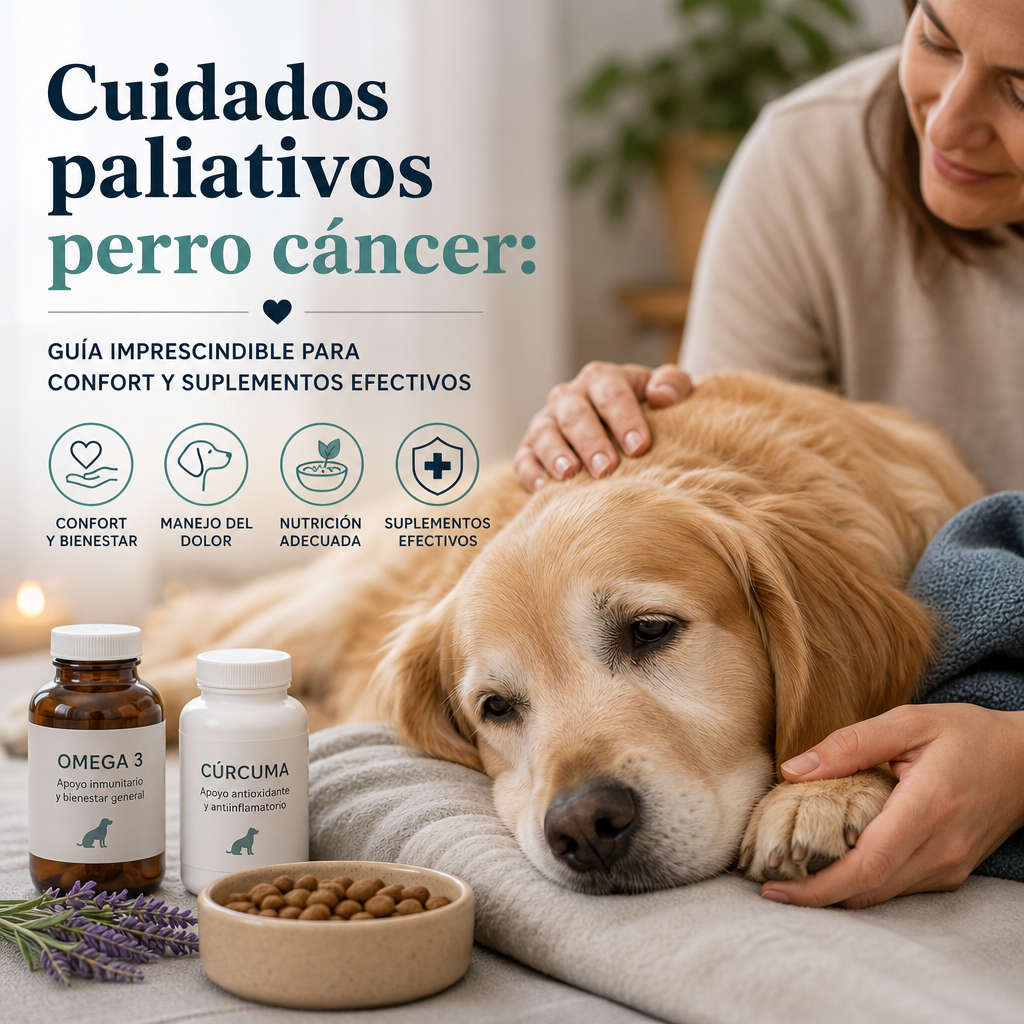
Palliative care includes medical, nutritional, emotional, and environmental measures to control symptoms associated with cancer. They can begin during chemotherapy, radiation therapy, or surgery, and can also be the main strategy when the goal is no longer to eliminate the tumor, but to accompany the dog safely.
The plan should be designed together with a veterinarian, preferably with experience in oncology and pain management. Each patient is different: a dog with a bone tumor does not require the same as another with lymphoma, an abdominal mass, or an advanced disease with weight loss.
In practice, palliative care for dog cancer is not limited to medication. It also includes decisions about routines, rest, handling, hygiene, appetite, and quality of life. When all these elements are integrated, the dog tends to be calmer, and the family understands better what to expect at each stage.
Among the main objectives are:
- Control pain and inflammation.
- Reduce nausea, vomiting, and diarrhea.
- Maintain hydration and appetite.
- Facilitate rest and mobility.
- Decrease anxiety and stress.
- Adapt the home environment.
- Accompany the family in decision-making.
In many homes, understanding palliative care for dog cancer helps make calmer decisions and identify any significant changes earlier. This understanding also avoids unrealistic expectations and allows focusing on achievable goals, such as eating better, sleeping with less pain, or walking more securely.
As the process progresses, it is advisable to think in terms of daily well-being and not just diagnoses. A dog can continue to enjoy petting, short walks, or moments of calm even if there is no longer a viable curative treatment. In fact, that is one of the reasons why palliative medicine is so valuable: it transforms care into active, compassionate, and very concrete accompaniment.
Dog cancer comfort: how to improve their daily well-being
Dog cancer comfort does not depend on a single measure, but on the sum of small adjustments. The home should become a calm, warm, and accessible space. A cushioned bed, raised off the ground and located away from drafts, can help reduce stiffness and promote rest. If the animal is weak, it is advisable to place several water and food bowls in nearby locations.
Slippery surfaces can increase pain and fear of walking. Non-slip rugs, gentle ramps, and barriers to prevent stairs help prevent falls. Walks should be short, frequent, and adapted to their energy. It is not necessary to maintain the same exercise routine as before the diagnosis: the goal is to stimulate them without exhausting them.
Soft lighting and predictable spaces also help. In dogs sensitive to noise, it is advisable to reduce intense stimuli such as large gatherings, loud music, or sudden changes in routine. Stress consumes energy and can worsen appetite, sleep, and pain tolerance.
Affectionate contact also has value. Speaking to them calmly, brushing them if they enjoy it, and respecting their moments of isolation can reduce stress. Some dogs seek more company, while others prefer to rest without interruptions. Observing their preferences is an essential part of care.
La frase cuidados paliativos perro cáncer también encaja aquí porque el confort cotidiano es una meta central de esta etapa y no un detalle secundario. Cuando el perro se siente más seguro en casa, suele mostrar menos inquietud y una mejor disposición para comer, descansar o aceptar la medicación.
Un detalle útil es dividir el día en microobjetivos. Por ejemplo: levantarse sin dolor excesivo, beber algo de agua, dar un paseo corto y descansar en un lugar cómodo. Esta manera de organizar el día hace más fácil detectar mejoras o retrocesos y evita exigirle más de lo que puede dar en su estado actual.
Si el perro presenta dolor al subir al sofá o al girar sobre sí mismo, una ayuda práctica es colocar una rampa o habilitar una zona baja y estable para que no tenga que saltar. Estas adaptaciones son sencillas, pero en conjunto forman parte real del perro cáncer confort y pueden marcar una diferencia notable en su autonomía.
Control del dolor y de los síntomas
El dolor oncológico puede manifestarse mediante jadeo en reposo, temblores, postura encorvada, dificultad para levantarse, irritabilidad, gemidos, falta de apetito o cambios en el sueño. Los perros no siempre lloran, por lo que cualquier modificación persistente en su comportamiento merece una consulta veterinaria.
The professional can combine analgesics, anti-inflammatories, neuropathic pain medications, and other therapies depending on the type of tumor and the condition of organs such as the liver and kidneys. Human drugs should never be administered on one's own. Some, like ibuprofen, naproxen, or acetaminophen, can cause severe poisoning.
It is also important to treat associated symptoms. Nausea and constipation significantly reduce well-being; respiratory difficulty requires quick attention; and dehydration can worsen weakness. If the dog cannot breathe normally, has uncontrollable pain, repeated vomiting, heavy bleeding, collapse, or very pale gums, a veterinary emergency service should be contacted.
In some cases, symptom control includes checking the mouth, skin, and hygiene of the environment. A dog with less appetite may develop bad breath, food residue, or irritation from lying down for longer periods. Keeping the area clean, dry, and comfortable helps avoid additional discomfort and improves the overall quality of care.
Pain can also change over time. What works well today may fall short in a few weeks if the disease progresses. Therefore, one of the keys to palliative care for cancer dogs is frequent reevaluation. It is not just about “giving a medicine,” but about checking if it is really helping the animal to move, sleep, and relax better.
To expand general recommendations on nutritional support and responsible supplement management, you can consult this guide on suplementos para perros con cáncer.
When pain is well controlled, many families notice that the dog seeks contact again, rests more deeply, and shows interest in food. These changes, although modest, are often valuable signs of well-being.
Nutrition and hydration during the palliative stage
Feeding should be adapted to the patient's tolerance and needs. In some cases, an energy-dense and highly digestible diet is recommended; in others, a specific formulation for kidney, liver, or gastrointestinal disease. There is no universal anti-cancer diet, and extreme restrictions can cause muscle loss.
Offering small amounts several times a day is usually more tolerable than one large serving. The food can be slightly warmed to enhance its aroma, as long as the veterinarian considers it appropriate. It is not advisable to force the dog to eat, as this can increase aversion and stress.
When there is little appetite, it is preferable to prioritize what the dog accepts well rather than insisting on overly sophisticated options. In this context, consistency weighs more than perfection. A simple, well-tolerated food given regularly is usually better than an ideal plan that the dog rejects.
Hydration should be monitored through constant access to fresh water and observation of signs such as dry gums, lethargy, or very concentrated urine. In certain patients, the veterinarian may recommend subcutaneous fluid therapy at home, explaining the procedure and frequency.
In addition to water, simple strategies can sometimes be used to improve water intake: changing the container, offering water in another part of the house, or adjusting the temperature to make it more appealing. In dogs with nausea, breaking up food and water can prevent additional rejection.
Food, texture, and temperature can make a big difference in palliative care for cancer dogs, especially when appetite changes from one day to the next. It may also be helpful to record which foods are better accepted, what times they eat with more enthusiasm, and what symptoms appear afterward. This information greatly facilitates the veterinary review.
If there are vomiting, diarrhea, or constipation, the diet should be reevaluated. Not all digestive discomforts are due to the tumor itself; sometimes they are related to medications, stress, or changes in routine. An early adjustment can prevent more significant weight loss and improve the dog's mood.
Supplements for palliative cancer dogs: which may be useful
Suplementos para perros con cáncer paliativo es una búsqueda frecuente entre las familias, pero estos productos no sustituyen los analgésicos, la nutrición clínica ni el seguimiento veterinario. Además, un suplemento puede ser adecuado para un perro y perjudicial para otro, especialmente si existe enfermedad renal, hepática o tratamiento farmacológico simultáneo.
Los ácidos grasos omega-3, sobre todo EPA y DHA procedentes de aceite de pescado de calidad veterinaria, pueden ayudar a modular la inflamación y apoyar el mantenimiento de la masa corporal en determinados casos. La dosis debe calcularse según el peso, la dieta y el estado de salud.
Los antioxidantes, vitaminas, minerales, hongos medicinales y productos de cáñamo se utilizan a veces como complemento, pero la evidencia científica es variable y la calidad comercial también. Algunos productos pueden interferir con la coagulación, alterar el metabolismo de medicamentos o contener ingredientes no declarados. Por ello, es fundamental entregar al veterinario la etiqueta completa y no combinar varios suplementos sin supervisión.
Los productos “naturales” no son automáticamente seguros. Evita aceites esenciales, extractos concentrados y remedios caseros potencialmente tóxicos. La prioridad debe ser seleccionar complementos con composición clara, controles de calidad y una indicación concreta.
Si necesitas comparar opciones con más criterio, esta lectura sobre best supplements for dogs with cancer puede ayudarte a entender qué revisar antes de comprar.
Among the most common mistakes is thinking that “more supplements” means “more support.” In reality, during a delicate stage, excess products complicate the routine, increase the risk of interactions, and can worsen food rejection. The most prudent approach is to choose few supplements, with a clear objective and professional follow-up.
También conviene recordar que los suplementos perro cáncer paliativo tienen sentido solo si encajan con el contexto clínico. Por ejemplo, un perro con digestión sensible puede no tolerar determinados aceites, y otro con problemas de coagulación puede requerir especial cautela. La personalización importa tanto como el producto en sí.
Si el veterinario aprueba un suplemento, introduce uno cada vez y observa durante varios días si mejora la tolerancia, el apetito o la movilidad. De este modo, resulta más fácil saber qué funciona y qué no. Esta forma de proceder es especialmente útil en hogares donde ya hay varias medicinas pautadas.
Al buscar suplementos perro cáncer paliativo, muchas familias se guían por comentarios de internet o por promesas muy optimistas. Sin embargo, la decisión más segura es la que combina evidencia, prudencia y contexto clínico real. No todo lo que suena natural es apropiado para un paciente oncológico.
How to measure quality of life
Llevar un registro diario ayuda a tomar decisiones con mayor objetividad. Puedes anotar el apetito, la ingesta de agua, el dolor, la movilidad, el descanso, la respiración, la interacción familiar y la capacidad para realizar sus necesidades. También es útil registrar los días buenos y malos.
A good quality of life usually includes moments of interest, the ability to rest, reasonably controlled pain, and a certain willingness to eat, drink, or socialize. When the bad days clearly outnumber the good ones, or when suffering cannot be alleviated, it is necessary to talk to the veterinarian about the available options, including humane euthanasia.
A simple scale can help you objectify the situation: appetite, hydration, hygiene, mobility, pain, mood, and interaction. If several of these areas worsen at the same time, the plan may need immediate adjustments. There is no need to use complex tools to notice trends; constant observation already provides a lot of information.
Deciding does not mean abandoning. In the palliative stage, accompanying with care, controlling symptoms, and preventing suffering are profound ways to care. With a personalized veterinary plan, an adapted environment, and constant observation, it is possible to offer the dog with cancer safety, dignity, and the greatest comfort possible during the time it has left.
If the process raises doubts for you, remember that palliative care for dogs with cancer seeks precisely to sustain well-being with practical, humane decisions guided by the veterinarian. The goal is not to prolong discomfort, but to protect each good day that it can still enjoy.
When to review the plan and ask for help
El plan paliativo no debe quedarse fijo. Si el perro come menos, duerme peor, se muestra más inquieto, pierde movilidad o parece evitar el contacto, conviene revisar la estrategia cuanto antes. A veces basta con ajustar el analgésico, modificar la dieta o cambiar la pauta de hidratación; en otras ocasiones, se necesitan pruebas complementarias para descartar dolor mal controlado, infección, anemia u otra complicación.
También puede ser útil revisar el plan cuando hay cambios en la estación, en la rutina familiar o en la capacidad del cuidador para administrar medicación. La constancia es importante, pero la flexibilidad lo es todavía más. Un pequeño ajuste a tiempo puede mejorar mucho el confort diario y evitar una crisis posterior.
En caso de dudas sobre un suplemento, una medicación nueva o un síntoma repentino, lo más prudente es contactar con el equipo veterinario antes de improvisar. La seguridad del paciente siempre debe ser la prioridad.
Si notas respiración agitada en reposo, desorientación, pérdida súbita de fuerza, sangrado, fiebre o dolor que no mejora con la pauta indicada, no esperes a la siguiente visita programada. Los cuidados paliativos perro cáncer funcionan mejor cuando el equipo puede intervenir temprano y corregir el rumbo antes de que el malestar se intensifique.
Además, es recomendable revisar el plan cuando el perro deja de disfrutar de actividades que antes le gustaban. Un paseo corto, una siesta cómoda o una caricia tranquila pueden ser indicadores muy útiles. Si esas pequeñas fuentes de bienestar desaparecen, conviene hablar con el veterinario sin demora.
Practical summary for day-to-day
Los cuidados paliativos son más efectivos cuando combinan tres pilares: control del dolor, apoyo nutricional y adaptación del entorno. A partir de ahí, cada perro necesita un plan individual, revisado con frecuencia y centrado en su confort real. Los suplementos pueden ser útiles en algunos casos, pero solo como apoyo y nunca como sustituto del tratamiento principal.
Si observas con atención, registras cambios y mantienes una comunicación fluida con el veterinario, podrás tomar decisiones más tranquilas y ofrecer una mejor calidad de vida. En definitiva, los cuidados paliativos perro cáncer no buscan prolongar el sufrimiento, sino acompañar con dignidad, aliviar lo que sea posible y proteger el bienestar del animal hasta el final.
Para recordar lo esencial, quédate con esta idea: confort, nutrición, control del dolor y revisiones periódicas. Esa combinación es la base de unos cuidados paliativos perro cáncer realmente útiles para el perro y para su familia.
It also helps to maintain realistic expectations and celebrate small advances. A better rest, an accepted meal, or a brief walk without pain are important achievements. In practice, these signals show that the plan is working and that the dog continues to receive respectful and positive support.
Finally, don't forget that asking for help in time is also part of care. Palliative care for dogs with cancer requires observation, compassion, and continuous communication with the veterinarian to maintain well-being with the greatest possible safety.