

Los mejores suplementos para perros con cáncer deben elegirse cuidadosamente, junto con el tratamiento veterinario en lugar de como un reemplazo del mismo. Un diagnóstico de cáncer puede ser abrumador, pero una atención nutricional y de apoyo adecuada puede ayudar a algunos perros a mantener el apetito, la condición muscular, la energía y la calidad de vida. El enfoque correcto depende del tipo de cáncer, el plan de tratamiento, los problemas de salud existentes y los medicamentos que su perro está recibiendo.
Tabla de Contenidos
- ¿Pueden los suplementos ayudar a los perros con cáncer?
- Los mejores suplementos para perros con cáncer
- Qué buscar en un suplemento seguro
- Elegir suplementos para el cáncer en perros que los propietarios del Reino Unido puedan confiar
- La nutrición es la base del apoyo al cáncer canino
- Precauciones de seguridad y cuándo contactar al veterinario
¿Pueden los suplementos ayudar a los perros con cáncer?
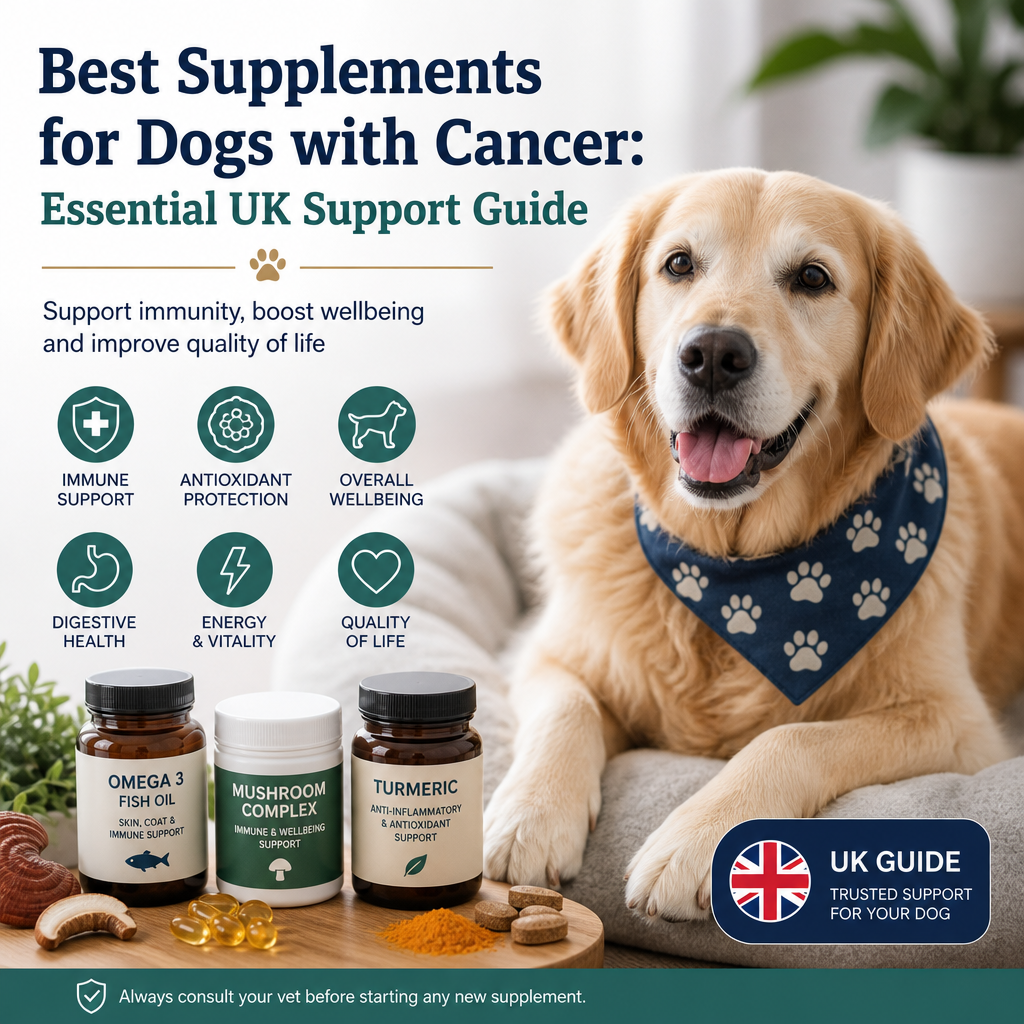
Los suplementos pueden proporcionar apoyo nutricional, pero no pueden curar el cáncer. Sus beneficios potenciales incluyen ayudar a manejar la inflamación, apoyar la función inmune normal, mantener la piel y el pelaje saludables, y mejorar la ingesta nutricional general. Sin embargo, la evidencia varía considerablemente entre productos, y un suplemento que es adecuado para un perro puede no serlo para otro.
El tratamiento del cáncer puede incluir cirugía, quimioterapia, radioterapia, inmunoterapia o cuidados paliativos. Cada opción puede afectar la digestión, el apetito, la función hepática, la función renal y los requisitos de medicación. Por esta razón, cada suplemento debe discutirse con su veterinario antes de ser introducido.
Las bases más importantes siguen siendo una dieta completa y equilibrada, una hidratación adecuada, un control del dolor efectivo y un monitoreo regular. Los suplementos son más útiles cuando abordan una necesidad específica identificada por un profesional veterinario. En otras palabras, los mejores suplementos para perros con cáncer son aquellos que se adaptan al perro individual en lugar de una lista de verificación genérica.
También ayuda pensar en los suplementos como parte de un plan de atención más amplio. Un perro que come bien, mantiene su peso y sobrelleva el tratamiento puede necesitar solo un apoyo modesto, mientras que un perro con náuseas, poco apetito o pérdida muscular puede beneficiarse de una ayuda nutricional más específica. Por eso, los mejores suplementos para perros con cáncer siempre deben elegirse teniendo en cuenta el panorama general.
Los propietarios en el Reino Unido a menudo buscan soluciones rápidas, pero el cuidado del cáncer rara vez se trata de un solo producto. Las decisiones más útiles suelen surgir de la combinación de la orientación veterinaria, ajustes en la dieta y una observación cuidadosa en casa. Cuando eso sucede, los mejores suplementos para perros con cáncer pueden desempeñar un papel de apoyo sin abrumar el plan de tratamiento.
Los mejores suplementos para perros con cáncer
Cuando los propietarios preguntan sobre los mejores suplementos para perros con cáncer, los productos más útiles suelen ser aquellos que apoyan una necesidad clara en lugar de intentar hacer todo a la vez. Los mejores suplementos para perros con cáncer deben coincidir con el diagnóstico del perro, el apetito, el plan de tratamiento y los análisis de sangre actuales siempre que sea posible.
También es importante mantener las expectativas realistas. Los suplementos pueden ayudar con la comodidad, la nutrición y el bienestar diario, pero no reemplazan los efectos de la cirugía, la quimioterapia u otro tratamiento prescrito. Usados correctamente, los mejores suplementos para perros con cáncer pueden ayudar a su perro a sobrellevar mejor las exigencias de la enfermedad y el tratamiento.
Ácidos grasos omega-3
Los ácidos grasos omega-3, particularmente EPA y DHA de aceite de pescado de origen sostenible, están entre los suplementos más comúnmente considerados para perros con cáncer. Pueden ayudar a apoyar una respuesta inflamatoria saludable y pueden contribuir a la salud de la piel, el pelaje, las articulaciones y la salud general.
Algunos planes de nutrición veterinaria utilizan ácidos grasos omega-3 para apoyar a los perros que experimentan pérdida de peso o apetito reducido. También pueden ser útiles para mantener la comodidad en perros con inflamación crónica. La calidad y la dosis son importantes, ya que cantidades excesivas pueden causar diarrea, proporcionar demasiadas calorías o afectar la coagulación sanguínea.
Elija un producto de calidad veterinaria con cantidades de EPA y DHA claramente indicadas en lugar de confiar solo en la cantidad total de aceite de pescado. Su veterinario debe determinar la dosis adecuada, especialmente si su perro tiene pancreatitis, un trastorno hemorrágico o está tomando medicamentos anticoagulantes. Si está comparando los mejores suplementos para perros con cáncer, los productos omega-3 a menudo están cerca de la parte superior de la lista porque están bien estudiados y son fáciles de adaptar.
Algunos propietarios se preocupan de que agregar aceite altere un estómago sensible. Eso puede suceder, particularmente si la dosis se aumenta demasiado rápido. Una introducción cautelosa y un plan de dosificación claro son más útiles que simplemente comprar un producto fuerte y esperar lo mejor. Con la orientación adecuada, los mejores suplementos para perros con cáncer pueden incluir apoyo omega-3 sin crear problemas digestivos.
Antioxidantes
Los antioxidantes como las vitaminas E y C, el selenio y ciertos compuestos vegetales ayudan a proteger las células del estrés oxidativo. A veces se incluyen en los planes de apoyo para el cáncer canino, aunque la evidencia sobre su impacto en los resultados del cáncer es mixta.
La suplementación con antioxidantes en dosis altas requiere una precaución particular durante la quimioterapia o la radioterapia. Algunos tratamientos contra el cáncer funcionan en parte creando estrés oxidativo dentro de las células anormales, por lo que grandes cantidades de antioxidantes podrían interferir teóricamente con el tratamiento. Esto no significa que los antioxidantes deban evitarse siempre, pero la dosificación y el momento deben ser guiados por el equipo de oncología veterinaria.
Una dieta comercial equilibrada puede ya proporcionar niveles adecuados de varios antioxidantes. Agregar múltiples productos puede crear superposiciones innecesarias o una ingesta excesiva. Para muchos perros, los mejores suplementos para perros con cáncer son aquellos que llenan un vacío claramente identificado en lugar de agregar más de un nutriente que la dieta ya proporciona.
Si su veterinario recomienda el apoyo antioxidante, pregunte si debe usarse de forma continua o solo en ciertas etapas del cuidado. Esa pregunta es importante porque los mejores suplementos para perros con cáncer no siempre son los mismos durante la recuperación de la cirugía, el tratamiento activo y el apoyo paliativo.
Probióticos y apoyo digestivo
Los probióticos pueden ayudar a apoyar el microbioma intestinal, particularmente cuando un perro experimenta diarrea, malestar digestivo relacionado con el estrés o cambios en el apetito. Algunos perros que reciben tratamiento para el cáncer desarrollan efectos secundarios gastrointestinales, aunque los probióticos no son apropiados en cada situación.
Un probiótico veterinario debe contener cepas claramente identificadas e instrucciones de almacenamiento. Los productos destinados a humanos pueden contener ingredientes o dosis inadecuadas. Los perros con sistemas inmunológicos gravemente comprometidos pueden requerir precaución adicional, y los probióticos no deben administrarse sin la aprobación veterinaria si el perro está críticamente enfermo o tiene una afección intestinal grave.
Las enzimas digestivas, los suplementos de fibra y los prebióticos también pueden ser recomendados en casos específicos, pero deben seleccionarse de acuerdo con el problema subyacente en lugar de añadirse de forma rutinaria. Los mejores suplementos para perros con cáncer a menudo funcionan mejor cuando están dirigidos a un síntoma como heces sueltas, mala digestión o tolerancia alimentaria reducida.
Los dueños a menudo notan que la salud intestinal y el apetito están vinculados. Cuando la digestión está alterada, un perro puede evitar la comida, y cuando el apetito disminuye, el intestino puede volverse más sensible. Esa es una razón por la cual el apoyo digestivo cuidadoso puede ser tan valioso en un plan de cuidado más amplio.
Hongos medicinales
Los compuestos derivados de hongos, incluidos los productos elaborados con cola de pavo, reishi o maitake, se comercializan como suplementos para el cáncer canino que los dueños del Reino Unido pueden considerar. La investigación sobre los hongos medicinales está en curso, y algunos hallazgos iniciales son prometedores, pero estos productos no son curas probadas.
La calidad de los suplementos de hongos varía ampliamente. La concentración, el método de extracción, las pruebas de contaminación y la transparencia de los ingredientes son importantes. Algunos hongos pueden interactuar con la quimioterapia, esteroides, medicamentos inmunomoduladores o fármacos que afectan la coagulación sanguínea. Por lo tanto, la supervisión veterinaria es esencial.
Para los dueños que desean aprender más sobre la planificación nutricional junto con los suplementos, consulte nuestra guía sobre dieta y suplementos para perros con cáncer.
Es sensato ver los productos de hongos como parte de una conversación, no como un atajo. Los mejores suplementos para perros con cáncer deben estar respaldados por evidencia cuando sea posible, y nunca deben crear confusión sobre cuál es el tratamiento principal. Si un producto afirma ser una cura, eso es una señal de advertencia en lugar de un beneficio.
Suplementos para articulaciones y movilidad
Los perros con cáncer pueden volverse menos activos debido al dolor, debilidad, cirugía o artritis relacionada con la edad. La glucosamina, el condroitín y los productos de mejillón de labios verdes se utilizan a menudo para apoyar la comodidad y movilidad de las articulaciones. Estos suplementos no tratan el cáncer, pero pueden ayudar a algunos perros a mantenerse cómodos y participar en actividades normales.
Los productos de mejillón con labios verdes pueden contener ácidos grasos omega-3, por lo que la ingesta total debe ser considerada al combinarlos con aceite de pescado. Los perros con sensibilidades a los mariscos también pueden necesitar una alternativa.
El apoyo a la movilidad puede hacer una verdadera diferencia en la calidad de vida. Un perro que puede levantarse más fácilmente, caminar al jardín más cómodamente o acomodarse mejor después de la actividad puede sobrellevar mejor en general. Por esa razón, algunos de los mejores suplementos para perros con cáncer no son “suplementos para el cáncer” en el sentido estricto, sino productos enfocados en el confort que ayudan a preservar las rutinas normales.
Las pequeñas mejoras importan. Una mejor movilidad puede apoyar el apetito, reducir la frustración y ayudar a un perro a mantenerse involucrado con la familia. Cuando se combina con control del dolor y ejercicio sensato, el apoyo articular puede ser una parte práctica del cuidado.
Suplementos nutricionales densos en calorías
Algunos perros necesitan calorías adicionales porque el cáncer o el tratamiento están dificultando el mantenimiento del peso. En estos casos, los suplementos nutricionales altamente palatables o las dietas de recuperación pueden ser más útiles que una larga lista de cápsulas separadas. Estos productos pueden ayudar a apoyar la ingesta de energía cuando las comidas normales ya no son suficientes.
Aún deben ser elegidos cuidadosamente. Un producto que es útil para un perro puede ser demasiado rico para otro, especialmente si hay vómitos, pancreatitis o enfermedad intestinal presente. Si el perro ya está comiendo una dieta veterinaria para el cáncer, su veterinario puede recomendar si las calorías adicionales deben provenir de esa dieta o de un suplemento separado.
Para muchos perros, un plan de alimentación práctico es el verdadero secreto detrás de los mejores suplementos para perros con cáncer. El apoyo al apetito, la palatabilidad, la consistencia y el momento a menudo importan tanto como el suplemento en sí.
Qué buscar en un suplemento seguro
Al comparar los mejores suplementos para perros con cáncer, busque etiquetado transparente, pruebas por lotes e información clara sobre los ingredientes activos. Los productos formulados por veterinarios son generalmente preferibles porque están diseñados con la seguridad y dosificación canina en mente. Evite suplementos que prometan reducir tumores, reemplazar la quimioterapia o proporcionar resultados garantizados.
En el Reino Unido, los suplementos no están regulados de la misma manera que los medicamentos con licencia. Por lo tanto, las afirmaciones de marketing pueden sonar más fuertes que la evidencia disponible. Los fabricantes reputables deben estar dispuestos a proporcionar certificados de análisis, estándares de fabricación y orientación para su uso junto con el tratamiento prescrito.
No use suplementos humanos sin consejo profesional. El xilitol, ciertos edulcorantes, hierbas concentradas, exceso de vitamina D y hierro pueden ser peligrosos para los perros. Los productos combinados también pueden contener ingredientes que no son adecuados para perros con enfermedades hepáticas, renales o gastrointestinales.
Para obtener consejos generales de seguridad sobre suplementos y medicamentos, el sitio web del gobierno del Reino Unido es un buen punto de partida para la salud pública y la orientación al consumidor.
También es sensato estar atento a la lista completa de ingredientes, no solo a la etiqueta frontal. Algunos productos contienen saborizantes, rellenos o botánicos que pueden no ser obvios a primera vista. Los mejores suplementos para perros con cáncer deben ser lo suficientemente simples como para que puedas entender qué hace cada ingrediente y por qué está incluido.
Si un producto parece ofrecer todo en una cápsula, pausa y verifica si eso es realmente una fortaleza. Las mezclas de múltiples ingredientes pueden ser más difíciles de evaluar en cuanto a seguridad, y pueden dificultar la identificación de la causa si tu perro desarrolla vómitos o heces sueltas. A menudo, los mejores suplementos para perros con cáncer son aquellos con la etiqueta más corta y clara.
Puede ayudar hacer tres preguntas prácticas: ¿Qué se supone que debe hacer este suplemento? ¿Hay evidencia de que es seguro para mi perro? ¿Podría interferir con el tratamiento o la medicación? Si las respuestas no son claras, el producto puede no ser adecuado.
Elegir suplementos para el cáncer en perros que los propietarios del Reino Unido puedan confiar
Al buscar suplementos para el cáncer en perros, los propietarios del Reino Unido pueden confiar en que ayuda centrarse en productos que son fáciles de verificar en lugar de aquellos con las afirmaciones más audaces. Pregunta a tu equipo veterinario si el ingrediente tiene un propósito claro, si el producto tiene pruebas de control de calidad y si se ajusta al plan de tratamiento de tu perro.
Los oncólogos veterinarios pueden recomendar suplementos en diferentes etapas del cuidado. Por ejemplo, un perro que recibe quimioterapia puede necesitar un enfoque diferente al de un perro en cuidados paliativos a largo plazo. Los mejores suplementos para perros con cáncer no siempre son los mismos a lo largo del tratamiento, por lo que el plan puede cambiar con el tiempo.
Antes de comenzar algo nuevo, verifica las interacciones con los medicamentos prescritos, especialmente esteroides, medicamentos contra las náuseas, analgésicos o tratamientos anticoagulantes. Un suplemento que parece inofensivo aún puede afectar la absorción, la coagulación o la digestión. Esta es una razón por la cual los suplementos para el cáncer en perros que los propietarios del Reino Unido encuentran en línea nunca deben iniciarse sin el consejo del veterinario que conoce la historia médica.
También puede ser útil llevar un registro simple de suplementos. Anota el nombre del producto, la fecha de inicio, la dosis y cualquier cambio que notes en el apetito, las heces, la energía o el confort. Ese registro puede ayudar a tu veterinario a decidir si el suplemento está ayudando o si debe ser detenido.
Otro paso sensato es revisar el presupuesto general. El cuidado del cáncer puede volverse costoso, y es fácil gastar dinero en productos que añaden complejidad sin aportar un beneficio real. Menos suplementos, pero mejor elegidos, suelen ser preferibles a un armario abarrotado. En muchos casos, los mejores suplementos para perros con cáncer se seleccionan porque son prácticos, asequibles y fáciles de monitorear.
Preguntas para hacerle a tu veterinario antes de comprar
- ¿Qué problema se supone que debe abordar este suplemento?
- ¿Se ajusta a los medicamentos actuales de mi perro?
- ¿Podría afectar la quimioterapia, la radioterapia o la recuperación de la cirugía?
- ¿Qué dosis debo usar y por cuánto tiempo?
- ¿Qué signos debo observar si no le conviene a mi perro?
Estas preguntas son útiles porque mantienen el enfoque en la seguridad y la función en lugar de promesas. Los mejores suplementos para perros con cáncer suelen ganarse su lugar a través de un propósito claro y un plan sensato para el monitoreo.
La nutrición es la base del apoyo al cáncer canino
Mantener el peso corporal y la masa muscular a menudo es más importante que añadir numerosos suplementos. El cáncer puede alterar el metabolismo y puede causar pérdida de apetito, náuseas, cambios en el gusto y pérdida de masa muscular. Un veterinario o nutricionista veterinario puede recomendar una dieta completa con calorías, proteínas y grasas adecuadas para el perro individual.
Algunos perros se benefician de comidas más pequeñas y frecuentes, alimentos ligeramente calentados o dietas veterinarias altamente palatables. Nunca fuerces a un perro a comer sin orientación profesional, especialmente si hay vómitos, dificultad para tragar o riesgo de aspiración.
Lleva un registro simple de la ingesta de alimentos, el consumo de agua, el peso, las deposiciones, los vómitos, la energía y los cambios en el comportamiento. Esta información ayuda al equipo veterinario a identificar efectos secundarios y ajustar el tratamiento de manera oportuna.
Estos pasos prácticos pueden hacer que los mejores suplementos para perros con cáncer sean más efectivos porque se utilizan en el contexto de una nutrición consistente y equilibrada.
La hidratación también es importante. Los perros que beben menos pueden volverse más débiles, menos interesados en la comida y más propensos al estreñimiento o las náuseas. Agua fresca, comidas ricas en humedad y consejos veterinarios sobre el soporte de hidratación pueden ser útiles. A veces, un ajuste muy simple marca la mayor diferencia.
Antes de comenzar algo nuevo, verifique las interacciones con los medicamentos prescritos, ….
También puede ser útil llevar un registro simple de suplementos. Anote el nombre del producto…
Otro paso sensato es revisar el presupuesto general. El cuidado del cáncer puede volverse ex….
Los propietarios a veces esperan que un suplemento pueda restaurar la energía por sí solo, pero la fatiga a menudo tiene varias causas. La anemia, la deshidratación, el dolor, el mal sueño y los efectos de la medicación pueden desempeñar un papel. Un plan práctico generalmente combina dieta, revisión de medicamentos y apoyo nutricional específico en lugar de depender de un solo producto.
Si tu perro de repente se niega a comer durante más de un día, parece tener dolor o se ve mucho más débil de lo habitual, eso debe ser reportado de inmediato. Esperar a ver si un suplemento funciona puede retrasar la atención que realmente se necesita. Los mejores suplementos para perros con cáncer son útiles solo cuando la situación médica subyacente también se maneja cuidadosamente.
Esto es especialmente importante en perros que ya están recibiendo tratamiento. Un cambio en el apetito o en los hábitos intestinales puede ser un efecto secundario normal, pero también puede señalar un problema más serio. Una buena comunicación con el equipo veterinario facilita la decisión de continuar, ajustar o detener un suplemento.
Formas prácticas de introducir un suplemento
Introduce solo un nuevo suplemento a la vez, utilizando la dosis recomendada. Monitorea si hay vómitos, diarrea, picazón, letargo, moretones, cambios en el apetito o empeoramiento del dolor. Detén el producto y contacta a tu veterinario si ocurre una reacción preocupante.
Una introducción lenta suele ser más segura que comenzar todo de una vez. Ese enfoque facilita saber si un suplemento está ayudando y reduce la posibilidad de efectos secundarios confusos. Si estás tratando de identificar los mejores suplementos para perros con cáncer, los cambios cuidadosos y paso a paso son mucho más útiles que introducir varios productos juntos.
También puede ayudar dar suplementos a la misma hora cada día, a menos que tu veterinario indique lo contrario. Un horario regular apoya la consistencia y facilita recordar lo que se ha administrado. Si tu perro se muestra reacio a tomar un producto, no sigas forzándolo sin consultar primero con el veterinario.
Algunos suplementos son más fáciles de administrar con comida, mientras que otros son mejores con el estómago vacío. Ese detalle puede afectar la tolerancia, así que sigue las instrucciones del producto y los consejos de tu veterinario de cerca. Pequeños ajustes prácticos a menudo hacen que un suplemento sea más exitoso en la vida diaria.
Precauciones de seguridad y cuándo contactar al veterinario
Busque asesoramiento veterinario urgente si su perro tiene vómitos repetidos, diarrea severa, dificultad para respirar, colapso, sangrado incontrolado, debilidad marcada o se niega a comer y beber. Los suplementos nunca deben retrasar la evaluación de nuevos síntomas o el empeoramiento de los síntomas.
También es sensato contactar a su veterinario si su perro desarrolla un sarpullido, hinchazón, inquietud, signos de dolor abdominal o moretones inusuales después de comenzar un nuevo producto. Incluso cuando una reacción es leve, puede significar que el suplemento no es adecuado para ese perro.
Si su perro está programado para cirugía, quimioterapia o un nuevo medicamento, pregunte si se deben pausar los suplementos antes. El tiempo es importante, especialmente para productos que podrían influir en la coagulación, la digestión o la forma en que el cuerpo maneja los medicamentos.
El apoyo más efectivo para el cáncer canino combina tratamiento basado en evidencia, buena nutrición, manejo del dolor, tranquilidad emocional y monitoreo cuidadoso. Con la orientación de su equipo veterinario, los suplementos seleccionados pueden tener un papel de apoyo útil mientras se mantiene la comodidad y calidad de vida de su perro en el centro de cada decisión.
Si está comparando los mejores suplementos para perros con cáncer, comience con el consejo de su veterinario, luego revise la calidad del producto, la etapa del tratamiento y las necesidades específicas de su perro. Ese enfoque ofrece el camino más seguro hacia un cuidado práctico y de apoyo.
En muchos hogares, el plan más exitoso también es el más simple: una dieta equilibrada, uno o dos suplementos cuidadosamente elegidos, observación cercana y chequeos veterinarios regulares. Esa es generalmente la forma más confiable de utilizar los mejores suplementos para perros con cáncer sin agregar complejidad innecesaria.