
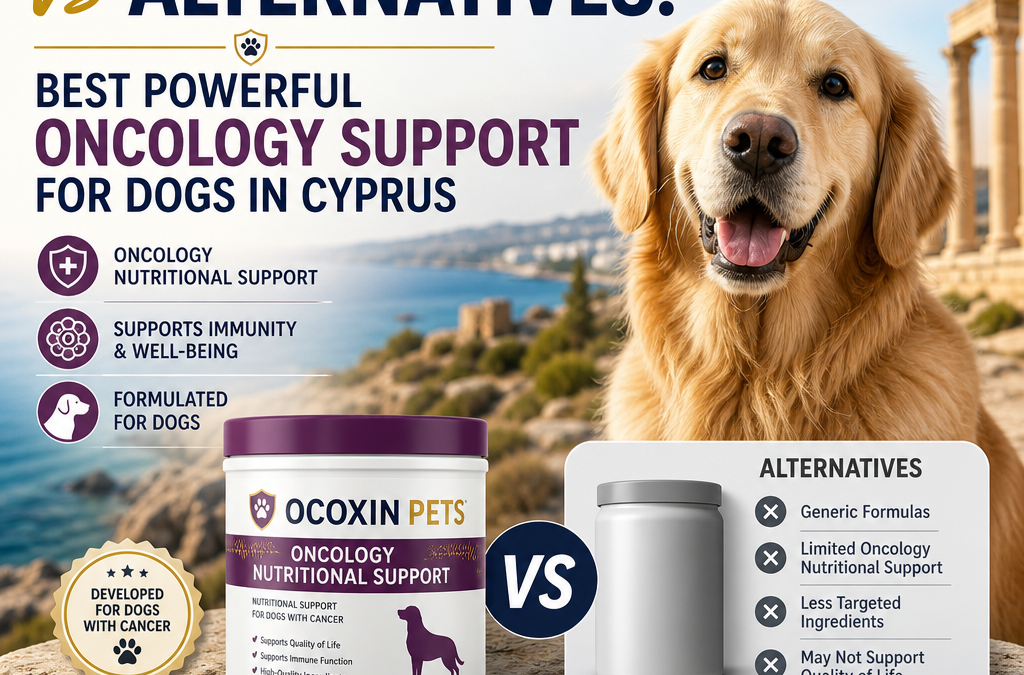
Ocoxin Pets vs alternatives is an important comparison for dog owners in Cyprus looking for supportive care during cancer treatment. A diagnosis of cancer can be overwhelming, but nutritional support may help maintain appetite, body condition, energy, and overall wellbeing alongside veterinary care. The right choice depends on the dog’s diagnosis, treatment plan, age, existing health conditions, and ability to tolerate supplements.
For many families, the goal is not to find a single miracle product but to build a practical support plan. Ocoxin Pets vs alternatives should be considered in the context of nutrition, symptom control, and veterinary monitoring, especially when a dog is losing weight or eating less than usual.
Tabla de Contenidos
- Understanding oncology nutritional support for dogs
- Ocoxin Pets vs alternatives: what is Ocoxin Pets?
- Dog tumor support options beyond supplements
- Comparing Ocoxin Pets with common alternatives
- Practical ways to support appetite and weight
- What to consider in Cyprus
- Safety comes before marketing claims
Understanding oncology nutritional support for dogs
Oncology nutritional support refers to dietary strategies and complementary products designed to help dogs cope with the physical demands of cancer and its treatment. Cancer can affect metabolism, appetite, digestion, immune function, and muscle mass. Chemotherapy, radiation therapy, surgery, and some medications may further contribute to nausea, fatigue, weight loss, or reduced food intake.
Nutritional support is not a cure for cancer and should never replace surgery, chemotherapy, radiation, or other treatments recommended by a veterinary oncologist. Its role is usually supportive: helping the dog consume adequate calories and nutrients, maintain hydration, preserve muscle, and enjoy a better quality of life.
A complete assessment should include the type and stage of cancer, current body weight, body-condition score, recent changes in appetite, gastrointestinal symptoms, and any laboratory abnormalities. Dogs with kidney, liver, or pancreatic disease may require specially adjusted diets, making professional guidance especially important.
When owners search for Ocoxin Pets vs alternatives, they are often trying to solve a real-world feeding problem. A dog that refuses meals, loses weight, or struggles with nausea may need a combination of diet changes, medication adjustments, and carefully chosen support products.
In many cases, the first step is to separate what is medically necessary from what is simply marketed as helpful. A thoughtful plan for Ocoxin Pets vs alternatives should focus on whether the product supports eating, comfort, and stable weight over time. That practical approach is usually more useful than relying on branding alone.
It also helps to track the dog’s daily routine. Appetite changes, stool quality, water intake, and energy level can reveal whether a support product is actually making a difference. This is one reason many veterinarians prefer a structured trial period when they recommend an oncology supplement or a diet change.
For context on cancer spread and how it can influence supportive care decisions, the article on metastasis in dogs explains cancer spread and tumor growth in clearer terms.
Ocoxin Pets vs alternatives: what is Ocoxin Pets?
Ocoxin Pets is a veterinary nutritional supplement used as part of supportive care for dogs and cats. It is generally associated with ingredients intended to provide antioxidant, nutritional, and immune-supportive benefits. Depending on the formulation and local availability, products in this category may include plant-based compounds, vitamins, minerals, amino acids, or other nutrients.
The purpose of using a product such as Ocoxin Pets is typically to complement a balanced diet and veterinary treatment plan. Some owners consider it when their dog experiences reduced appetite, low energy, weight loss, or general weakness during illness. However, the suitability of any supplement depends on the individual animal and the exact ingredients in the product.
Before use, owners should check the product label, recommended dose, storage requirements, and possible contraindications. It is also important to tell the veterinarian about every supplement the dog receives. Some ingredients may interact with prescribed medicines or may not be appropriate before surgery, during chemotherapy, or in dogs with specific organ problems.
For a broader overview of nutrition choices during treatment, this article on los mejores suplementos para perros con cáncer offers helpful support tips that can be discussed with your vet.
In practice, Ocoxin Pets vs alternatives often comes down to how a product fits the dog’s current needs. A supplement that is useful for one patient may be unnecessary for another, especially if the dog is already receiving a therapeutic diet and symptom management.
Some owners also want to know whether Ocoxin Pets can be used long term. The answer depends on the dog’s response, the treatment plan, and the veterinarian’s opinion. If the goal is only short-term support during a poor-appetite phase, then the decision may be quite different from a case where the dog needs ongoing nutritional help throughout cancer care.
Another useful question is whether the supplement changes how easy it is for the dog to eat. Flavor, smell, texture, and the method of administration all matter. Even a well-formulated product may be a poor fit if the dog rejects it or becomes stressed when it is given.
Dog tumor support options beyond supplements
There are several dog tumor support options, and the most effective approach is usually a coordinated plan rather than reliance on one product. Nutritional management is one part of that plan.
A highly digestible, complete, and palatable diet can be valuable when appetite is poor. Some dogs prefer wet food, warmed meals, or smaller portions offered more frequently. In certain cases, veterinary therapeutic diets may be recommended because they provide controlled levels of calories, protein, fat, or specific nutrients.
Adequate protein is often important for maintaining muscle, although the ideal amount depends on the dog’s kidney and liver function. Calorie-dense foods may help dogs that cannot eat large meals. Extra treats, homemade diets, or sudden food changes should be discussed with a veterinarian because they can cause digestive upset or create nutritional imbalances.
Hydration also matters. Fresh water should always be available, and dogs with vomiting, diarrhea, or poor fluid intake may require veterinary treatment. Pain management, anti-nausea medication, appetite support, dental care, and gentle exercise can have a major effect on comfort and daily function.
These dog tumor support options may be more effective together than separately. In many cases, a dog does best when nutrition, medication, and monitoring are coordinated rather than handled as isolated tasks.
Other support measures may include helping the dog rest in a quiet area, reducing stress around meals, and keeping a daily log of food intake. These simple steps can be surprisingly useful because they show whether the dog is truly improving or only having occasional better days.
When the dog has recurring nausea or bowel changes, the overall plan may need revision. In that situation, dog tumor support options should be reassessed with the veterinary team instead of adding more products without a clear purpose. Sometimes the best improvement comes from changing timing, dose, or the base diet rather than switching supplements repeatedly.
For a more detailed discussion of complementary care choices, the article on Ocoxin Pets alternativo provides another helpful perspective on dog tumor supplements.
Comparing Ocoxin Pets with common alternatives
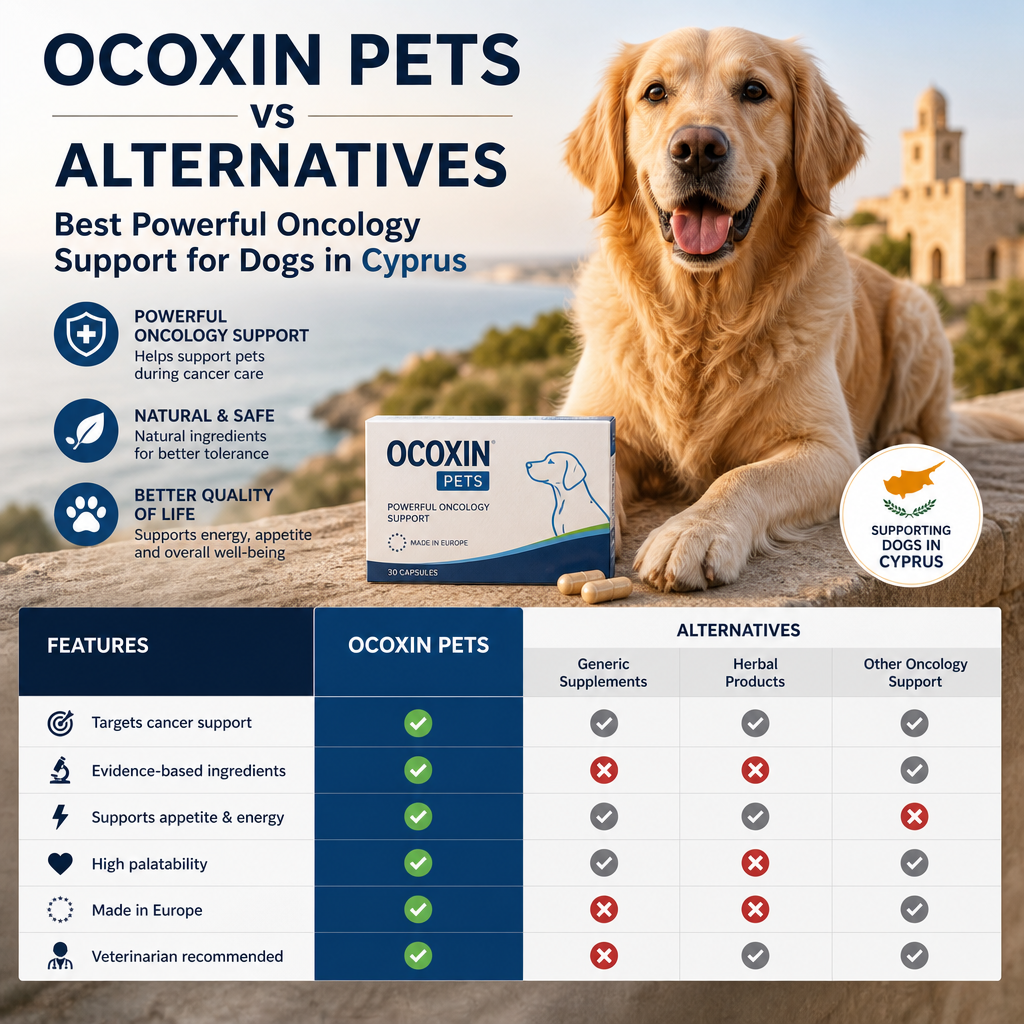
When evaluating Ocoxin Pets vs alternatives, owners should compare more than brand names. Important factors include evidence, ingredient transparency, safety, quality control, palatability, cost, and compatibility with the dog’s treatment plan.
Veterinary multivitamins may be suitable when a dog has a confirmed deficiency, but unnecessary supplementation can be unhelpful or harmful. Omega-3 fatty acids are sometimes considered for their role in supporting skin, coat, and inflammatory balance, although the appropriate source and dose should be determined carefully. Probiotics may assist some dogs with digestive disturbances, but they are not appropriate for every patient and should not be viewed as cancer treatment.
Specialized veterinary diets can offer more predictable nutrition than a collection of supplements. They may be especially useful when the dog has weight loss, gastrointestinal disease, kidney disease, or difficulty eating. On the other hand, a diet is only helpful if the dog accepts it and eats enough of it.
Homemade diets are another alternative, but they should be formulated by a veterinary nutritionist. Recipes found online may be deficient in essential nutrients or inappropriate for a dog receiving cancer treatment. Human supplements should generally be avoided because their ingredients, concentrations, and additives may be unsafe for animals.
For example, the level of support needed by a dog with a tumor can vary widely. One patient may benefit most from a highly digestible diet, while another may need only short-term appetite support and careful monitoring. That is why Ocoxin Pets vs alternatives is not a simple yes-or-no decision.
Owners should also consider whether the supplement supports day-to-day quality of life. If a product is hard to administer, poorly tolerated, or too expensive for long-term use, it may not be the best fit even if the label looks promising.
A practical comparison also includes how quickly a product can be obtained and whether consistent supply is realistic. In cancer care, continuity matters. If a supplement is helpful but unavailable for weeks at a time, the dog may lose momentum and owners may end up changing plans more often than necessary.
Another useful angle is to ask what problem each option is meant to solve. Some products aim to support appetite, some focus on digestion, and others are designed to complement a therapeutic diet. Comparing Ocoxin Pets vs alternatives works best when each option is matched to the dog’s actual needs rather than to broad claims on the packaging.
Practical ways to support appetite and weight
Loss of appetite is one of the most common reasons families start comparing Ocoxin Pets vs alternatives. When food intake drops, the first step is usually to identify what is driving the problem. Nausea, pain, constipation, oral discomfort, anxiety, and treatment side effects can all reduce eating.
Helpful strategies may include feeding smaller meals more often, warming food to improve aroma, offering a variety of textures, and choosing highly palatable veterinary diets. Some dogs respond better to hand feeding or quiet feeding environments. If the dog is missing meals because of nausea, veterinary anti-nausea medication may be more effective than changing supplements.
Weight loss can happen quickly in dogs with cancer, so regular monitoring is important. Owners can weigh the dog weekly at home, note body shape changes, and report trends to the veterinary team. Even small losses may matter if the dog already has a low body-condition score.
In some cases, the most appropriate support is not another supplement but a formal nutrition consult. That approach can be especially helpful when the dog has several conditions at once, such as cancer plus kidney disease or pancreatitis.
Appetite support should also be realistic. The goal is not to force a dog to eat a perfect amount every day, but to keep food intake steady enough to protect muscle and energy. Small improvements matter when they are sustained.
If a dog seems interested in food but then walks away, watch for clues such as drooling, lip licking, gulping, or restlessness. These can suggest nausea or pain. In those cases, the most effective response may be medical management rather than another nutritional product.
What to consider in Cyprus
Pet owners in Cyprus may face differences in product availability, importation, pricing, and access to veterinary oncology services. A supplement that is easily obtained in another country may not be consistently stocked locally, and storage conditions can be important in a warm climate. Products should be purchased from reputable veterinary clinics, pharmacies, or authorized suppliers whenever possible.
Veterinarians in Cyprus can also help coordinate care with diagnostic laboratories, referral hospitals, surgeons, and oncology specialists. Keeping a written record of the dog’s medications, supplements, appetite, weight, bowel movements, and treatment dates can make consultations more productive.
Cost is another practical consideration. A lower-priced supplement is not necessarily better value if the dog refuses it or if there is little reason to use it. Owners should ask whether a product has a specific purpose, how long it should be tried, what improvement would be expected, and when it should be stopped.
For Cyprus families comparing choices, local access may determine which option is realistic. Ocoxin Pets vs alternatives should be judged by suitability, tolerability, and veterinary oversight rather than by brand popularity alone.
It can also help to plan ahead for supply interruptions. When a product must be imported or ordered in advance, owners should discuss the timing with the clinic so there is no gap in support during treatment cycles. This is especially important for dogs whose appetite is already fragile.
When pets are treated over several months, owners should review whether the original plan is still doing its job. In some situations, a supplement that made sense early on may no longer be needed. In others, the dog’s condition may change and a different option may become more appropriate.
Safety comes before marketing claims
Cancer-related supplements are often promoted with strong language, but marketing claims should not replace scientific and veterinary assessment. Terms such as “immune boosting,” “detoxifying,” or “anti-tumor” can be misleading when they are not supported by reliable clinical evidence.
To better understand trustworthy veterinary information, the Federation of Veterinarians of Europe provides professional resources on animal health and veterinary standards.
Seek veterinary advice promptly if the dog develops persistent vomiting, severe diarrhea, refusal to eat, rapid weight loss, difficulty breathing, collapse, uncontrolled pain, or marked lethargy. Supplements can also cause side effects, particularly when several products are combined.
The best oncology nutritional support is individualized, monitored, and integrated with medical treatment. Ocoxin Pets may be considered by some veterinarians as one supportive option, but it is not automatically the best choice for every dog. Comparing the product with therapeutic diets, targeted nutrients, digestive support, and carefully managed home care allows owners to make a safer decision based on the dog’s real needs rather than on general promises.
In short, Ocoxin Pets vs alternatives should be viewed as part of a broader care plan. With the right veterinary guidance, owners can choose support that is practical, safe, and appropriate for the dog’s stage of illness, appetite, and quality-of-life goals.
Before deciding on any long-term plan, ask what outcome you want to improve most: appetite, comfort, body weight, or digestive stability. Clear goals make it easier to see whether Ocoxin Pets vs alternatives is genuinely helping or simply adding complexity. That kind of evaluation keeps the focus on the dog rather than on the label.
For many dogs, the most valuable result is a steadier routine with fewer bad days. Supportive care should make daily life easier, not more stressful. If a product or diet does not help the dog eat, feel comfortable, and maintain strength, it is reasonable to revisit the plan with the veterinarian and consider another approach.
In practice, Ocoxin Pets vs alternatives works best as a guided comparison, not a shopping shortcut. Ask your veterinarian how each option fits the dog’s diagnosis, current appetite, and treatment stage, and then review the response after a fair trial period.
When support is matched to the dog’s real needs, even small changes can matter. Better appetite, steadier weight, and calmer digestion can improve day-to-day comfort and make cancer care easier for the whole household.