
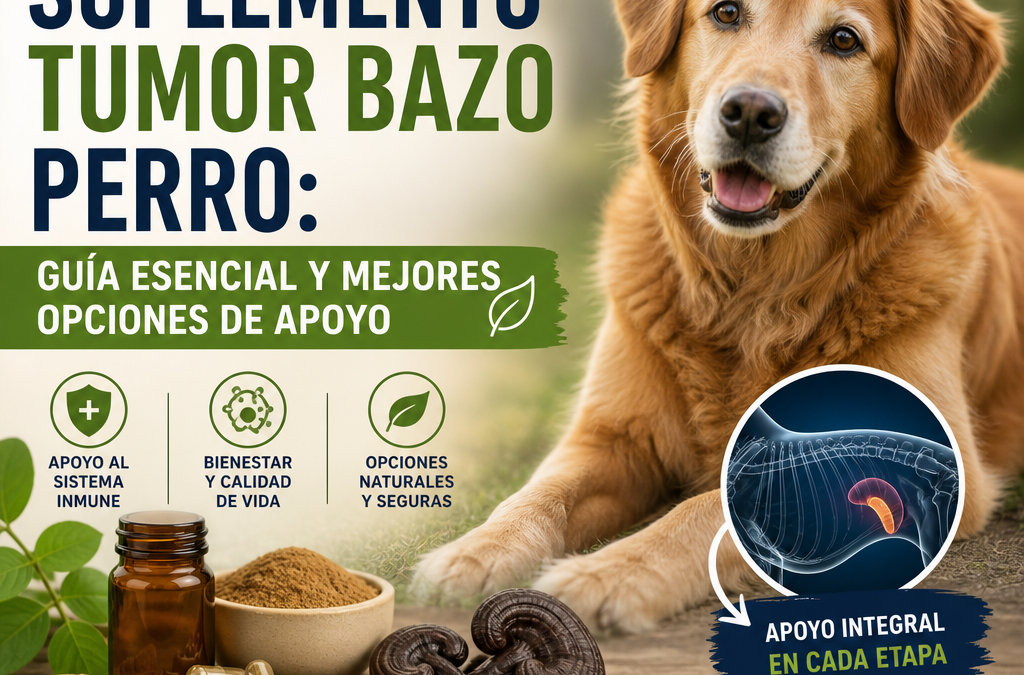
Tumor spleen dog supplement: finding appropriate support can be an important concern when a dog receives a diagnosis of splenic mass or tumor. The spleen is involved in functions related to blood and the immune system, so any alteration requires careful veterinary evaluation. Supplements can complement the indicated treatment, but they do not replace surgery, chemotherapy, clinical checks, or decisions made by a specialist.
Tabla de Contenidos
- What does a tumor in the dog's spleen mean?
- Spleen tumor dog support: priorities before choosing supplements
- Dog cancer supplements: what goals can they have?
- Ingredients that require special caution
- Daily feeding and care
- How to evaluate a support option
- Frequently asked questions about splenic tumor and nutritional support
What does a tumor in the dog's spleen mean?
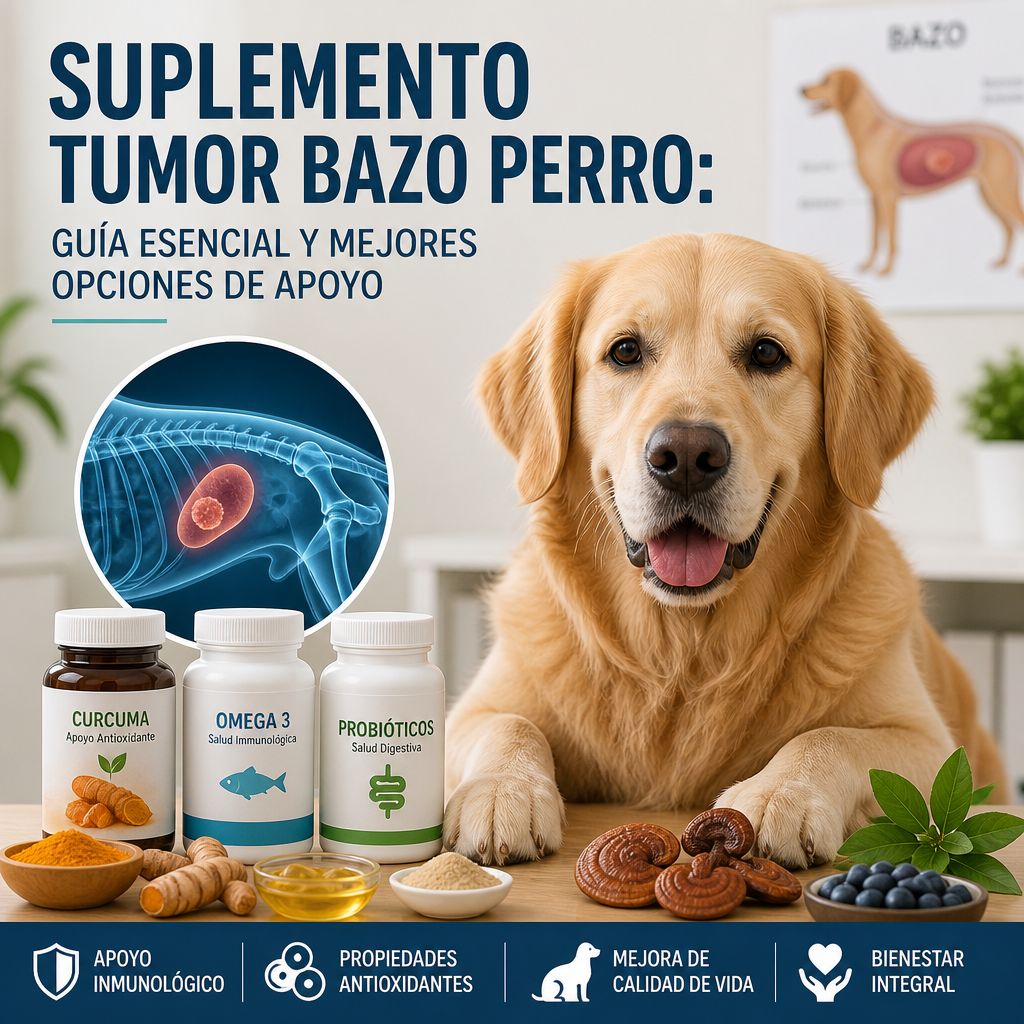
The spleen is an organ located near the stomach that helps filter blood, store blood cells, and collaborate with the body's defenses. In dogs, nodules, hematomas, benign lesions, or malignant tumors can appear. Some masses do not produce obvious signs and are discovered during an ultrasound; others may cause weakness, a distended abdomen, pale gums, loss of appetite, or episodes of collapse.
Among splenic neoplasms is hemangiosarcoma, an aggressive cancer that can bleed internally. However, not every mass in the spleen is cancerous. Ultrasound and tests provide useful information, although the definitive diagnosis usually requires studying the tissue obtained through surgery or biopsy.
At this stage, understanding the diagnosis well helps decide whether it makes sense to talk about nutritional support, pain management, or a possible spleen tumor dog supplement. The priority is always to know what type of lesion exists and whether there is an immediate risk to the animal's life.
It is also worth remembering that the prognosis can vary greatly depending on the type of mass, the dog's age, the presence of metastasis, and the general condition. Therefore, two patients with a similar finding may require totally different decisions. A complete assessment avoids delays and allows for clearer choices about the next step.
When the diagnosis is not completely defined, the veterinarian may recommend additional tests to refine the information. This stage is important because not all spleen tumors behave the same way, and the approach changes if the lesion is stable, if it bleeds, or if it is associated with other findings in the abdomen or thorax.
Spleen tumor dog support: priorities before choosing supplements
When there is a tumor in the spleen, the first priority is to determine if there is a risk of bleeding, anemia, metastasis, or general deterioration. The veterinarian may recommend blood tests, coagulation tests, chest X-rays, abdominal ultrasound, and, in some cases, a consultation with veterinary oncology.
La cirugía para retirar el bazo, llamada esplenectomía, puede ser necesaria cuando existe riesgo de ruptura o cuando la masa es operable. Después de la intervención, algunos perros requieren vigilancia estrecha por posibles alteraciones de la coagulación, infecciones o cambios en el recuento sanguíneo. Por eso, ningún suplemento debe administrarse antes o después de la cirugía sin autorización profesional.
También es importante reconocer signos de emergencia: encías muy pálidas, respiración acelerada, abdomen que aumenta de tamaño, debilidad repentina, desmayo, vómitos persistentes o incapacidad para mantenerse en pie. Estos síntomas pueden indicar sangrado interno y requieren atención veterinaria inmediata.
The suplemento tumor bazo perro adecuado no es el que promete más, sino el que encaja con el estado clínico real del animal. Si hay anemia severa, coagulopatía o dolor abdominal, la prioridad ya no es buscar un complemento, sino estabilizar al paciente y seguir el plan del veterinario.
En algunos casos, el perro puede necesitar fluidoterapia, analgesia o incluso hospitalización antes de cualquier decisión sobre nutrición adicional. Ese orden de prioridades protege al animal y reduce el riesgo de complicaciones. Por eso, el apoyo más útil suele comenzar con una revisión del estado general, no con una compra apresurada.
Dog cancer supplements: what goals can they have?
Cancer dog supplements are used, in some cases, to support nutrition, preserve muscle mass, improve digestive tolerance, or complement certain deficits. Their goal is not to destroy the tumor by themselves. The utility depends on the type of cancer, the state of the liver and kidneys, the treatment received, and the usual diet.
Among the options that a veterinarian may consider are:
- Omega-3 fatty acids, especially EPA and DHA, derived from quality fish oil. They can contribute to maintaining a balanced inflammatory response and body condition, although they should be used with caution if there are coagulation problems.
- Antioxidants, such as specific vitamins, only when indicated and in controlled doses. An excess can be harmful and, during certain oncological treatments, interfere with therapeutic goals.
- Probiotics, which can help intestinal function in dogs with diarrhea or digestive disturbances, provided the product is veterinary and a serious illness is ruled out.
- High-calorie nutritional supplements, useful in animals with poor appetite or weight loss. They should be adjusted to energy needs and not replace a complete diet.
- Vitamins or minerals, only when a blood test shows a deficiency or when the veterinarian identifies a specific need.
Commercial products vary greatly in purity, concentration, and manufacturing controls. It is advisable to choose formulas designed for dogs, with clear labeling and reliable sourcing. A good spleen tumor supplement for dogs should also have a specific clinical rationale and a defined duration of use, not just an attractive label.
Before starting any supplement, it is advisable to check if the dog is receiving homemade food, therapeutic commercial diet, or assisted nutritional support. This information completely changes the choice of product and dosage. If there is already a feeding plan, any addition should fit within that plan to avoid duplications or excesses.
It is also useful to distinguish between real nutritional support and marketing messages. A product may sound promising, but if it does not clarify dosage, composition, and purpose, its practical value is limited. Clinical judgment remains more important than label promises.
How to talk to your veterinarian about a spleen tumor supplement for dogs
A useful conversation with the veterinarian can focus on three questions: what specific problem is to be improved, what risks exist with the current treatment, and how will it be known if the supplement is helping. This approach avoids impulse buying of products and facilitates safe decisions.
If the goal is to maintain appetite, the professional may consider a nutritional strategy before a commercial product. If the concern is inflammation or muscle mass loss, they may suggest adjustments in diet or omega-3s. If there is bleeding, any option with a possible effect on coagulation should be reviewed with special care.
In some cases, the veterinarian may recommend tests before introducing a new tumor supplement for the dog, such as a complete blood count, biochemical profile, or coagulation tests. These tests help personalize support and reduce avoidable risks.
For many families, the best way to approach it is to bring a list of all the products the dog is already taking, including functional snacks, oils, vitamins, and “natural” formulas. This makes it easier to detect possible overlaps and avoid repeating ingredients unnecessarily.
If the case is being followed by veterinary oncology, it is advisable to ask for specific guidance on what can and cannot be used during each phase. The same supplement may be more reasonable during recovery than during an active protocol, and that difference matters a lot.
Ingredients that require special caution
Natural remedies are not automatically safe. Some plant extracts can affect the liver, modify coagulation, or interact with medications. This is especially relevant in a dog with a splenic tumor, as there may be a risk of bleeding or hematological alterations.
Turmeric, garlic, ginkgo, ginseng, certain medicinal mushrooms, and high doses of vitamin E are examples of ingredients that should be reviewed with a professional. Safety depends on the amount, concentration, the health of the animal, and the medications administered. Additionally, human medications, analgesics, multivitamins, or products for other species should never be offered without veterinary indication.
If the dog is receiving chemotherapy, corticosteroids, anti-inflammatories, anticoagulants, or pain medications, it is essential to inform the oncologist of all supplements used, even those that seem harmless.
It is also advisable to be wary of products that promise quick healing effects or claim to be “100% safe.” In cancer patients, safety depends on the clinical context, not on an advertising claim. When in doubt, reviewing the technical sheet and composition with the veterinarian is usually the most prudent option.
For more information on choosing support products for oncology patients, it may be helpful to review this guide on best supplements for dogs with cancer, since it provides practical criteria for assessing safety and utility.
As an external educational reference on canine hemangiosarcoma, information from VCA on hemangiosarcoma in dogs can also be consulted, which clearly summarizes why this type of tumor requires careful clinical attention.
Signs that a supplement is not suitable
A supplement is not suitable if it causes vomiting, diarrhea, food rejection, itching, lethargy, or changes in behavior. It should also be discontinued and consulted if black stools, paler gums, increased weakness, or worsening appetite appear. In a dog with splenic disease, any sudden change deserves attention.
Another reason to stop it is the appearance of multiple products at once. Mixing several supplements makes it difficult to know which one helps and which one harms. Additionally, it increases the risk of interactions and duplicating ingredients such as vitamins, omega-3, or herbal extracts.
A tumor supplement for splenic dogs only makes sense when it improves a specific goal and is well tolerated. If it does not provide a measurable advantage, it is better to simplify the plan. Fewer products, but better chosen, usually facilitate monitoring and safety.
In practice, many families observe that the dog tolerates a simple plan better than a routine loaded with capsules, powders, and oils. When there is splenic mass, digestive tolerance and overall stability weigh more than the amount of added products.
Daily feeding and care
Nutrition is an essential part of overall support. Many dogs with cancer maintain a good quality of life when they receive a complete, digestible diet tailored to their needs. The appropriate amount of proteins, fats, and calories should be established according to weight, age, activity, renal and liver function, and the presence of vomiting or diarrhea.
It is preferable to offer small portions several times a day if there is inappetence. It may also help to maintain regular schedules, reduce stress, and provide fresh water. It is not advisable to force feed, abruptly change diets, or follow extreme recommendations based on completely eliminating a nutrient without supervision.
Weight and muscle mass control allows for detecting changes before they become evident. Noting appetite, energy, bowel movements, vomiting, and any episodes of weakness helps the veterinarian adjust treatment.
If the dog is recovering after splenectomy, daily care may include rest, wound observation, monitoring gum color, and tracking activity level. In that context, adding a tumor supplement for the spleen dog without reviewing its compatibility with recovery is not a good idea.
When food loses interest, it may be helpful to lightly warm the ration, divide it into more servings, or look for highly palatable diets recommended by the veterinarian. The goal is to sustain energy and body mass without irritating the digestive system.
A short, calm, and well-supervised walk may be sufficient for some dogs, while others need more rest. The key is to adapt the environment so that the animal conserves energy without losing mobility or spirit. Every small adjustment helps make treatment more bearable.
If there is pain or discomfort, the veterinarian may recommend specific measures to maintain well-being. This comfort control is as important as diet because a more comfortable dog tends to eat better and recover more steadily.
Relationship between supplementation and oncological treatment
Supplementation is not evaluated in isolation. In a dog with splenic tumor, the plan usually depends on whether there will be surgery, chemotherapy, analgesia, or only palliative care. Each of these options changes the safety margin of the supplements.
For example, a product with high fat content may not be suitable if there is pancreatitis or persistent vomiting. An antioxidant without control may be inappropriate during certain protocols. And a seemingly benign plant extract may alter drug metabolism or add effects on coagulation.
Therefore, the real value of a tumor spleen dog supplement is better understood within the complete plan. It is not about adding “something natural,” but about thoughtfully supporting a patient who may be vulnerable, in pain, or recovering.
Communication between family and veterinary team is especially important when the dog is receiving multiple treatments at once. An updated list of medications, supplements, and dietary changes allows for safer decision-making and adjustments to the plan if side effects arise.
If the specialist believes that a supplement does not provide clear benefits, accepting that recommendation is also part of good care. Sometimes the best decision is to remove the unnecessary and focus on what truly helps maintain quality of life.
How to evaluate a support option
Before purchasing a tumor spleen dog supplement, it is advisable to review five aspects: the confirmed or presumptive diagnosis, current medications, bleeding risk, liver and kidney function, and the specific goal of the product. A well-chosen supplement should have a clear clinical rationale, a defined dosage, and a plan to evaluate whether it truly provides benefits.
The best strategy usually combines veterinary treatment, proper nutrition, regular check-ups, and careful observation at home. Supplements can be part of that plan when used wisely, but they should not delay surgery, replace oncological therapy, or create false expectations. In a spleen tumor, the safety and quality of life of the dog must guide every decision.
If the case changes, the strategy must also change. A stable dog can tolerate some nutritional support, while another with bleeding or anemia needs completely different attention. The key is to frequently reassess and maintain dialogue with the veterinary team.
Additionally, it is advisable to set a review date to assess whether the product is being useful. If there is no improvement in appetite, energy, weight, or digestive tolerance, the veterinarian may suggest discontinuing it or replacing it with another more appropriate measure. This avoids accumulating supplements that do not add value.
In summary, a spleen tumor supplement for dogs can be useful as part of a responsible plan, but only when chosen wisely, well monitored, and adapted to the animal's clinical moment. The priority remains the same: to protect their health and well-being with safe decisions.
Frequently asked questions about splenic tumor and nutritional support
Can a supplement cure a tumor in the spleen?
No. Supplements do not replace diagnosis, surgery, or veterinary oncology. Their role is supportive, never curative.
Is it safe to buy natural products without a prescription?
Not always. Natural does not mean harmless, and some ingredients can affect coagulation or interact with medications. Professional supervision is essential.
What should I watch for at home?
Sudden weakness, pale gums, collapse, distended abdomen, persistent vomiting, lack of appetite, and rapid breathing require immediate attention.
To choose more wisely, remember that the best approach is not to accumulate products, but to select just one when there is a real need. This principle is especially important if you are considering a dog spleen tumor supplement to accompany treatment or recovery.
Before making any decision, return to the most important point: the diagnosis and the overall condition of the dog. If the veterinary team confirms that nutritional support is appropriate, a well-chosen dog spleen tumor supplement can be part of a more complete and calm care. If it is not indicated, it is safest to wait and focus on the main therapy.