
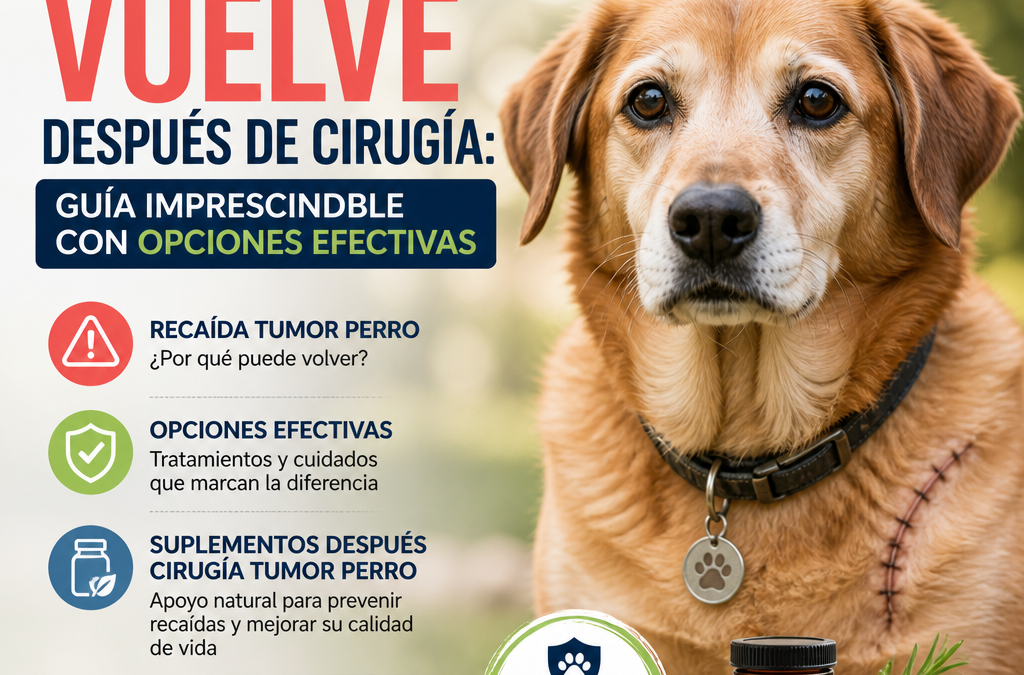
If the tumor dog returns after surgery, it can be a distressing situation for any family. Although surgical removal is often one of the main treatment options, some tumors may reappear in the same area or develop in another part of the body. Understanding why it happens, what signs to watch for, and what alternatives exist allows for quicker action and informed decisions alongside the veterinarian.
In many cases, the goal is not just to “remove the lump,” but to understand the behavior of the tumor, assess whether any microscopic residue remains, and decide if a broader approach is needed. When the tumor dog returns after surgery, every detail of the histopathological report, the location, and the overall condition of the patient helps to define the next step more precisely.
Why can a tumor reappear in a dog?
The reappearance of a mass does not always mean that the surgery was incorrect. Some tumors have an aggressive biological behavior and can infiltrate nearby tissues or release microscopic cells before being detected. These cells can remain inactive for a time and multiply again months or even years later.
Among the factors that can influence a relapse are:
- Type and grade of malignancy of the tumor.
- Size of the original mass.
- Location and depth.
- Status of the surgical margins.
- Presence of metastasis at the time of surgery.
- Growth rate.
- Individual response of the dog to treatment.
Histopathological analysis is essential. This study allows identifying what kind of tumor was removed, its degree of aggressiveness, and whether the surgical margins were free of tumor cells. Without this information, it becomes more difficult to estimate the risk of recurrence and choose the appropriate follow-up.
When the tumor dog returns after surgery, the time elapsed since the operation also provides clues. A mass that reappears soon may suggest insufficient local control, while a late relapse may be related to residual cells that were hidden or to slow growth that was not detected in previous check-ups.
Tumor relapse dog: signs that require attention
The tumor relapse dog can manifest in different ways. Sometimes it appears as a visible or palpable lump at the scar, but other times the signs are less evident. Therefore, periodic check-ups are important even when the dog seems to be doing well.
Some warning signs include:
- Appearance of a new mass near the scar.
- Rapid growth of a lump.
- Redness, heat, pain, or discharge in the operated area.
- Weight loss without an apparent cause.
- Lack of appetite or persistent fatigue.
- Coughing, difficulty breathing, or exercise intolerance.
- Vomiting, diarrhea, or prolonged changes in bowel movements.
- Lameness or pain that does not improve.
- Abdominal swelling or changes in urination.
Not all of these signs indicate cancer. Inflammation, a seroma, an infection, or a reaction to the suture can also cause changes after surgery. However, any new alteration should be evaluated by a professional, especially if it progresses rapidly.
In practice, it is advisable to observe not only the size of the lump but also its texture, mobility, local temperature, and rate of change. If the tumor relapse dog is accompanied by lethargy, pain, or loss of appetite, it is preferable to request a review as soon as possible to avoid delaying important decisions.
How a possible recurrence is confirmed
When there is suspicion that the tumor has returned, the veterinarian may perform a physical examination and request additional tests. The choice depends on the type of cancer, location, and the general condition of the animal.
The most common tests are:
- Fine-needle aspiration cytology: allows for the study of cells obtained through a fine needle. It is minimally invasive, although it does not always provide a definitive diagnosis.
- Biopsy: involves analyzing a tissue sample and usually provides more comprehensive information.
- Blood and urine tests: help assess overall health and the function of important organs.
- Chest X-rays: can be used to look for lung involvement.
- Abdominal ultrasound: allows for the examination of internal organs and lymph nodes.
- Tomografía computarizada o resonancia magnética: ofrecen imágenes más detalladas, especialmente útiles antes de una nueva cirugía.
La evaluación de los ganglios regionales también puede ser necesaria, ya que algunos tumores se diseminan a través del sistema linfático. El veterinario puede recomendar un plan de estadificación para conocer la extensión real de la enfermedad.
Si quieres ampliar la orientación sobre cuidados integrativos, revisa este recurso sobre oncología veterinaria holística, que explica cómo se complementan distintas estrategias de apoyo en pacientes oncológicos.
Para entender mejor cómo se investigan y clasifican los tumores en animales de compañía, la Manual Veterinario Merck ofrece información veterinaria de referencia útil para profundizar en este proceso.
Treatment options when the tumor returns
El tratamiento depende de la clase de tumor, su localización, el tiempo transcurrido desde la primera intervención y la presencia o ausencia de metástasis. No existe una solución única para todos los perros.
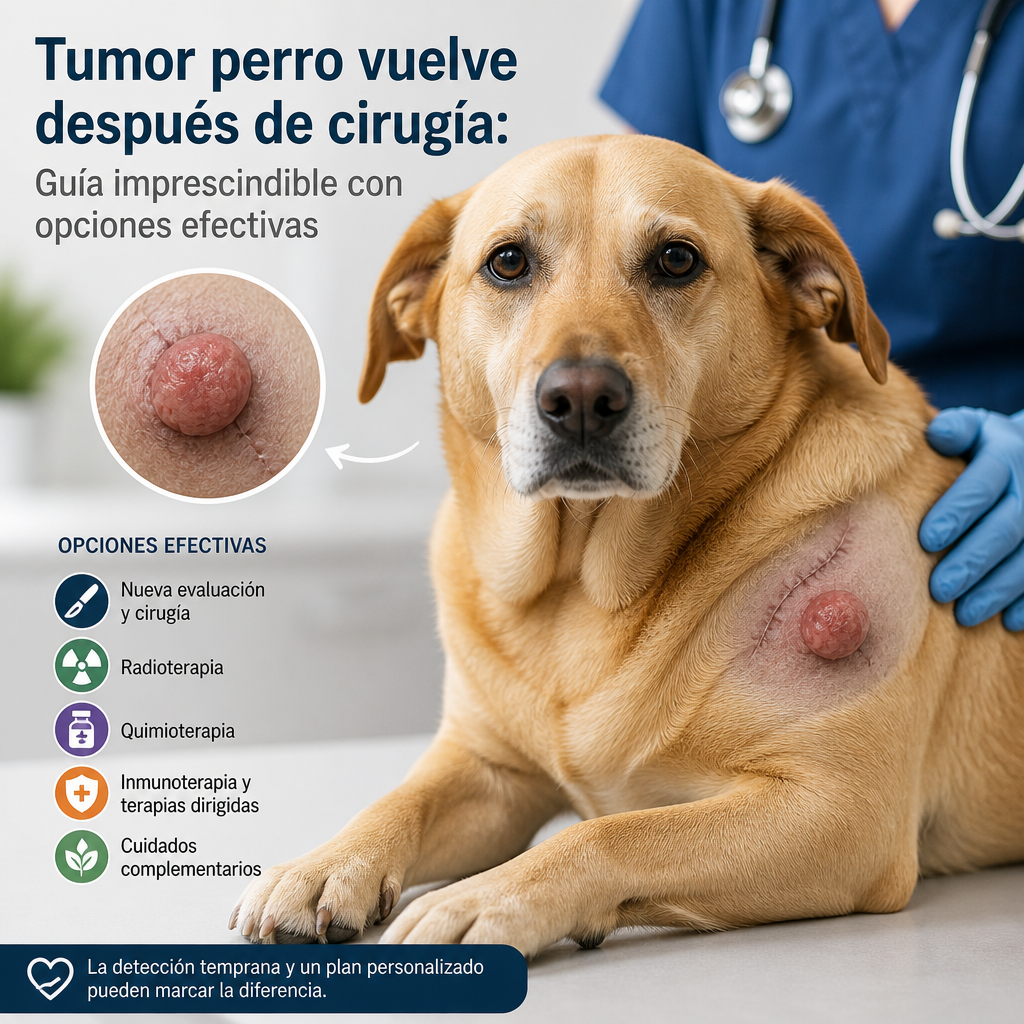
Tumor perro vuelve después de cirugía: nueva cirugía
Si la masa está localizada y puede retirarse con márgenes adecuados, una segunda operación puede ser una alternativa. En ciertos casos se necesita eliminar una cantidad mayor de tejido que en la primera intervención. El objetivo es reducir la posibilidad de que queden células tumorales microscópicas.
Antes de operar, conviene valorar cuidadosamente los riesgos anestésicos, la recuperación esperada y la calidad de vida posterior.
When the tumor dog returns after surgery, this option may offer a new opportunity if the injury remains operable and the animal's overall condition allows it.
In slow-growing tumors, a new surgery may provide reasonable local control. In more invasive tumors, it may be necessary to combine it with other treatments to increase the chances of control and reduce the risk of it tumor relapse dog recurring.
Chemotherapy
Chemotherapy may be recommended when there is a high risk of spread, when the tumor cannot be completely removed, or when there are metastases. Protocols vary according to the diagnosis. Many dogs tolerate the treatment better than families imagine, although side effects such as loss of appetite, vomiting, diarrhea, or temporary decrease in defenses may occur.
In some cases, the veterinarian proposes chemotherapy as support after surgery to reduce the possibility of recurrence and better control the disease.
It may also be used when the tumor dog returns after surgery cannot be removed immediately or systemic disease is suspected. The goal then shifts from curing to controlling, maintaining the best possible quality of life during treatment.
Radiotherapy
Radiotherapy may be used to control localized tumors, treat incomplete margins, or reduce the size of a mass that causes pain. In some cases, it is combined with surgery or chemotherapy.
If the tumor dog returns after surgery In a difficult-to-dry area, radiotherapy can help improve local control and relieve symptoms.
This approach is especially useful when the mass is near delicate structures, such as eyes, nose, mouth, or spine, where a new surgery could be too aggressive. It can also be part of a multimodal plan in which each treatment serves a distinct function.
Palliative care
When it is not possible to cure the disease, the focus is on maintaining well-being. Pain control, nutritional support, management of nausea, and adaptation of physical activity can significantly improve the dog's day-to-day life.
Palliative care can also be valuable when the family seeks more comfortable care focused on quality of life, especially if the tumor dog returns after surgery and are no longer considered aggressive treatments.
This type of support does not mean “doing nothing.” On the contrary, it involves actively working to keep the animal comfortable, with less pain, more appetite, and less stress. In many patients, a well-adjusted palliative plan allows for more time enjoying family routines and a calmer daily life.
What to discuss with the veterinarian after the diagnosis
When a recurrence occurs, the conversation with the veterinarian should be clear and practical. It is not enough to know that the lump has returned; it is important to understand the prognosis and the real possibilities of each strategy.
It is advisable to ask:
- If the recurrence is in the same area or if it could be another distinct lesion.
- What is the likelihood that the disease is local or systemic.
- If the mass is operable and what margin would be ideal to remove it.
- What expected benefits each treatment has against its side effects.
- If the pain can be better controlled with medication or changes in the plan.
- What additional tests would help make a decision.
- How it will be known if the treatment is working.
These questions help avoid hasty decisions. When the tumor dog returns after surgery, having a written plan and a simple explanation of the therapeutic goal reduces uncertainty and helps the whole family move in the same direction.
The importance of the histopathological report and margins
The histopathological report is one of the most valuable tools after oncological surgery. It indicates the exact name of the tumor, its cell type, its grade, and, in many cases, whether the removed edges were clean or compromised.
Surgical margins are especially important because they show whether the tumor was removed with a zone of healthy tissue around it. When the margins are narrow or incomplete, the risk of relapse increases. This does not necessarily mean that the surgery was useless, but it may require closer follow-up or additional treatment.
If this document is not available, requesting a copy may be the first step to understanding why the tumor dog returns after surgery And what options remain on the table. In some cases, a review of the material by a specialized veterinary pathologist changes the interpretation of the case or clarifies doubts about the prognosis.
Supplements after dog tumor surgery: what you should know
Los supplements after dog tumor surgery They can be part of nutritional support, but they do not replace surgery, chemotherapy, radiotherapy, or veterinary check-ups. Additionally, some products may interfere with medications, alter coagulation, or affect liver and kidney function.
Before administering any supplement, it is important to consult the veterinarian. Depending on the animal's needs, they may evaluate nutrients such as omega-3 fatty acids, specific vitamins, or supplements aimed at promoting appetite and recovery. The usefulness will depend on the type of diet, blood tests, body condition, and oncological treatment.
It is also essential to avoid products of dubious origin or formulas that promise to “cure” cancer. Medicinal plants and natural supplements are not automatically safe. Some may be toxic to dogs or modify the action of drugs.
A complete and balanced diet is often more important than adding many products. If the dog has lost weight, has a poor appetite, or has difficulty eating, the veterinarian may recommend a therapeutic diet, increase caloric density, or use assisted feeding strategies.
To better understand the official criteria on cancer in companion animals, the guide from the American Veterinary Medical Association on cancer in pets can also be consulted, a useful and reliable resource for families seeking basic information.
En contextos de convalecencia, los supplements after dog tumor surgery deben revisarse uno por uno. Un producto aparentemente inofensivo puede no ser apropiado si el animal recibe antiinflamatorios, quimioterapia o medicación para el hígado. Por eso, la supervisión profesional sigue siendo esencial.
Cuándo pedir una segunda opinión veterinaria
Si el diagnóstico no está claro, si la masa reaparece muy pronto o si el plan propuesto no responde a las dudas de la familia, pedir una segunda opinión puede ser una buena decisión. En oncología veterinaria, una revisión adicional puede ayudar a confirmar el tipo de tumor, interpretar mejor los márgenes quirúrgicos y valorar opciones más precisas.
También puede ser útil cuando el tumor dog returns after surgery pero el perro parece estable y la familia necesita comparar alternativas entre cirugía, radioterapia, quimioterapia o cuidados paliativos. Una segunda opinión no sustituye al veterinario habitual, pero sí puede aportar tranquilidad y más información para decidir.
Si hay dudas sobre la rapidez de crecimiento, la localización o la posibilidad real de controlar la enfermedad, consultar a un oncólogo veterinario puede ser especialmente valioso. En muchos casos, una valoración especializada permite afinar el diagnóstico y evitar tratamientos poco útiles o demasiado agresivos.
Cómo preparar una consulta oncológica
Before the visit, it is advisable to gather all available reports: previous surgery, histopathology, lab tests, images, and a list of medications or supplements. Bringing photos of the lump, noting size changes, and recording recent symptoms can greatly facilitate the evaluation.
During the consultation, it is helpful to ask:
- What type of tumor it was exactly.
- Whether the margins were clean or compromised.
- What the likelihood of recurrence or metastasis is.
- What benefits and risks each treatment has.
- How this will affect pain, mobility, and quality of life.
- What signs require immediate return.
The more information the family has, the easier it will be to decide if the tumor dog returns after surgery and what steps to take with realism and calm.
It is also useful to prepare a brief list of current medications, known allergies, changes in appetite, and recent episodes of cough, vomiting, or fatigue. This information helps differentiate a simple postoperative discomfort from a genuine tumor relapse dog.
Follow-up and care at home
After treatment, it is advisable to establish a schedule for follow-ups. The frequency will depend on the diagnosis, but it may include examinations every few weeks or months, lab tests, and imaging studies.
At home, the family can:
- Gently examine the scar and the rest of the body.
- Record the size of any lump.
- Monitor appetite, weight, and energy.
- Note vomiting, diarrhea, cough, or changes in behavior.
- Administer medications exactly as instructed.
- Prevent the dog from licking or traumatizing the surgical area.
- Maintain moderate activity during recovery.
- Seek veterinary attention quickly if there are signs of severe pain, bleeding, fever, or difficulty breathing.
Early detection does not always prevent a relapse, but it can expand the available options and improve disease management. Constant communication with the veterinary team, based on histopathological diagnosis and regular check-ups, is the best tool to care for the dog safely and preserve its quality of life.
If the tumor dog returns after surgery, home monitoring becomes even more important. Detecting small changes in time can allow for intervention before the lesion grows too large or affects vital functions. Organized monitoring, along with scheduled veterinary check-ups, often makes the difference between an early response and a decision made too hastily.
Prognosis, decisions, and quality of life
The prognosis varies greatly depending on the type of tumor, the rate of growth, the extent of the disease, and the response to treatment. There are tumors with a high likelihood of local control and others where relapse is more likely even with proper management.
That’s why, when the tumor dog returns after surgery, the main question is not always whether there is a treatment, but which treatment provides the best balance between disease control and the dog's well-being. In some patients, an aggressive intervention may make sense; in others, a less invasive and more comfort-focused plan will be the most reasonable option.
Evaluating quality of life honestly helps the family make more humane decisions. Eating with appetite, walking without intense pain, sleeping well, and continuing to enjoy contact with people are often as important signals as any laboratory result.
Final summary
In summary, when the tumor dog returns after surgery, the most important thing is not to assume that there are no options. A quick assessment, well-chosen tests, and an individualized plan can make a real difference in prognosis and patient well-being. With follow-up, treatment adjustments, and ongoing veterinary support, the family can make calmer and more realistic decisions in the face of the tumor dog returns after surgery.
If acted upon in an orderly manner, reviewing complete clinical information and prioritizing quality of life, even a difficult situation can be managed with greater clarity. A well-confirmed diagnosis, an open conversation with the veterinarian, and attentive follow-up provide the strongest foundation for accompanying the dog with safety and dignity.