
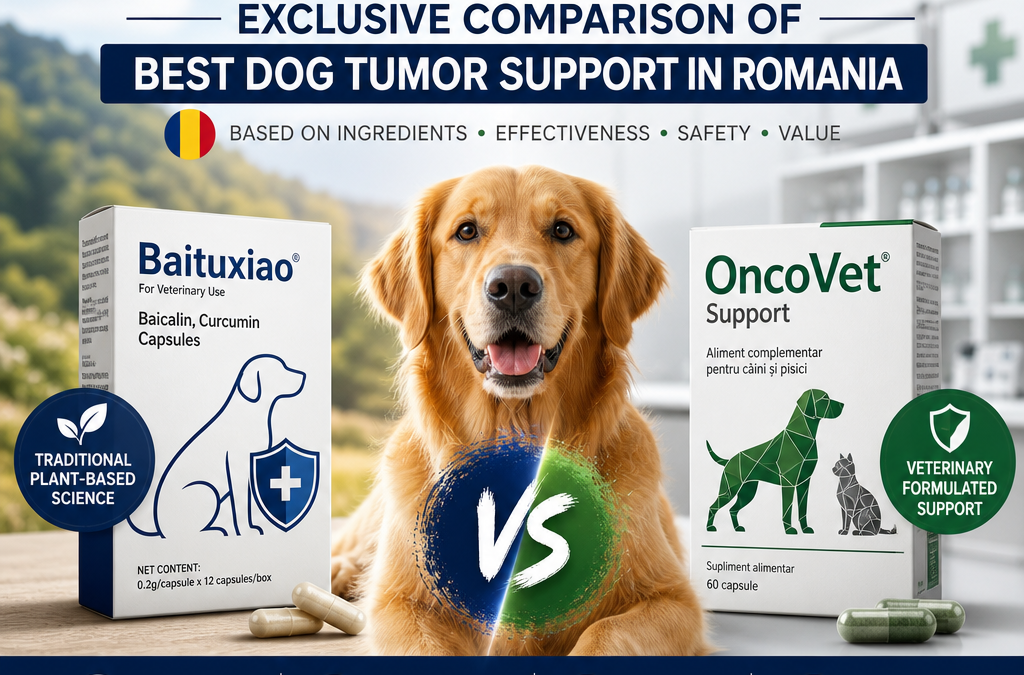
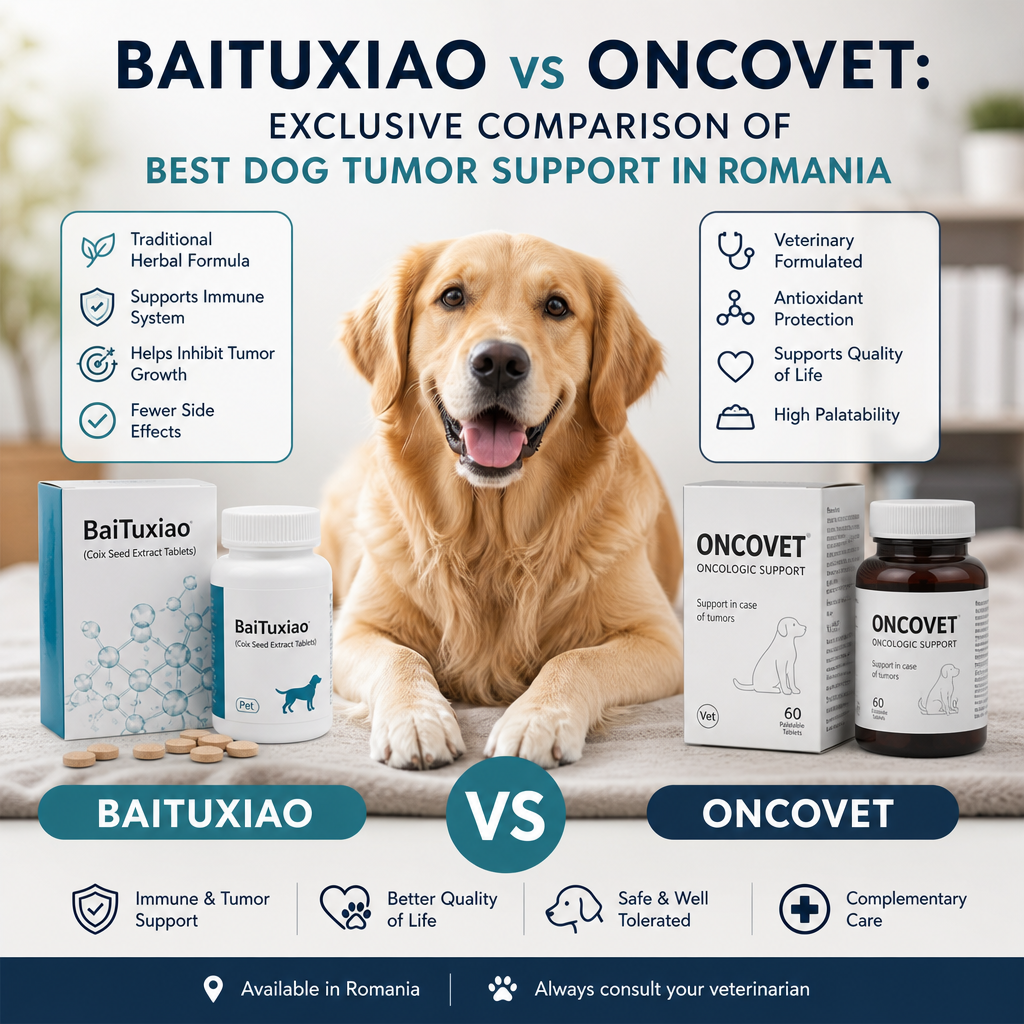
Baituxiao vs OncoVet on vertailu, jota monet koiranomistajat Romaniassa harkitsevat sen jälkeen, kun eläinlääkäri tunnistaa kasvaimen tai muun vakavan terveysongelman. Molempia tuotteita markkinoidaan ravitsemuksellisena tukena, mutta niitä ei tulisi pitää diagnoosin, leikkauksen, kemoterapian, sädehoidon tai eläinlääketieteellisen onkologian suunnitelman korvikkeina. Oikea valinta riippuu koiran tilasta, nykyisestä hoidosta, lääkitysaikataulusta, ravitsemuksellisista tarpeista ja jokaisen tuotteen taustalla olevan todisteen laadusta.
- Miksi koiran kasvaintuki vaatii huolellista lähestymistapaa
- Baituxiao vs OncoVet: mitä nämä tuotteet on tarkoitettu tekemään?
- Ainesosien läpinäkyvyys ja koostumus
- Todisteet vs markkinointi
- Turvallisuus ja mahdolliset vuorovaikutukset
- Saatavuus ja osto Romaniassa
- Mikä vaihtoehto saattaa olla sopivampi?
- Elämänlaadun tukeminen hoidon ohella
Miksi koiran kasvaintuki vaatii huolellista lähestymistapaa
Kasvain ei ole yksi sairaus. Se voi olla hyvänlaatuinen tai pahanlaatuinen, paikallinen tai etäpesäkkeinen, hitaasti kasvava tai aggressiivinen. Eri syövät voivat reagoida hoitoon hyvin eri tavoin, ja jotkut lisäravinteet voivat olla sopimattomia koirille, joilla on maksasairaus, munuaisongelmia, ruoansulatusherkkyyttä tai hyytymishäiriöitä.
Ennen minkään tuotteen käyttöönottoa omistajien tulisi hankkia selkeä diagnoosi aina kun mahdollista. Tämä voi sisältää fyysisen tutkimuksen, verikokeet, solunäytteet, biopsian, ultraäänitutkimuksen, röntgenkuvat tai muita kuvantamismenetelmiä. Eläinlääkäri voi myös arvioida, tarvitseeko koira kiireellistä hoitoa, kuten massan poistamista, kivunhallintaa, infektion hallintaa tai verenvuodon hoitoa.
Ravintotuotteet voivat tukea yleistä hyvinvointia, ruokahalua, ruoansulatusta tai toipumista, mutta ne eivät itsenäisesti poista syöpää. Väitteitä siitä, että lisäravinne voi parantaa kasvaimia, tulisi käsitellä varovaisesti, erityisesti kun niitä ei tue julkaistu eläinlääketieteellinen tutkimus. Omistajille, jotka haluavat oppia lisää täydentävistä vaihtoehdoista, tukemalla koiraasi kasvaimista luonnollisesti Jinyinhua on yksi esimerkki liittyvästä artikkelista, joka selittää, miten tukevia ainesosia käsitellään eläinlääketieteellisessä hoidossa.
Baituxiao vs OncoVet -vertailussa ensimmäinen kysymys tulisi aina olla, sopiiko tuote koiran lääketieteelliseen tilanteeseen. Toinen kysymys tulisi olla, voidaanko tuotetta käyttää turvallisesti nykyisen hoidon ohella. Kolmas kysymys tulisi olla, onko tuotteella tarpeeksi asiakirjoja oikeuttamaan sen kustannukset ja käyttö.
Romanian koiranomistajat haluavat usein yksinkertaisen vastauksen, mutta koirasyövän hoito on harvoin yksinkertaista. Yksi koira saattaa tarvita vain ruokahalun tukea ja huolellista seurantaa, kun taas toinen saattaa tarvita leikkausta, kemoterapiaa ja tiivistä laboratoriovalvontaa. Tässä kontekstissa Baituxiao vs OncoVet tulisi nähdä tukevana hoitopäätöksenä, ei oikaisuna oikean diagnoosin ympärillä. Lisäravinne voi olla hyödyllinen vain, jos se sopii sairauden vaiheeseen, koiran sietokykyyn ja eläinlääkärin hoitosuunnitelmaan.
On myös syytä muistaa, että ei jokainen kyhmy ole syöpää, ja ei jokainen syöpä käyttäydy samalla tavalla. Jotkut kasvaimet kasvavat hitaasti ja pysyvät paikallaan kuukausia, kun taas toiset leviävät nopeasti ja vaativat välitöntä hoitoa. Siksi tuote, joka kuulostaa lupaavalta verkossa, saattaa silti olla huono valinta tietylle koiralle. Ennen kuin vertaavat etikettejä tai hintoja, omistajien tulisi ensin kysyä, mikä ongelma he yrittävät ratkaista ja tarvitseeko koira todella tällaista tukea.
Baituxiao vs OncoVet: mitä nämä tuotteet on tarkoitettu tekemään?
Baituxiao esitetään yleisesti perinteisenä tai täydentävänä kaavana, joka on tarkoitettu tukemaan koiria, joilla on kasvaimia, tulehdusta, verenkiertoa ja yleistä elinvoimaa. Tuotteen koostumukset ja saatavuus voivat vaihdella myyjän ja markkinoiden mukaan, joten omistajien tulisi tarkistaa tarkka ainesosaluettelo, valmistajatiedot, erätiedot ja annosteluohjeet ennen ostamista.
OncoVet on tyypillisesti asemoitu eläinlääkinnälliseksi ravintolisäksi, joka on suunniteltu tukemaan syöpään liittyvää hoitoa saavia koiria. Riippuen tietystä tuotteesta ja jakelumaasta, se voi sisältää ravintoaineita, antioksidantteja, kasviuutteita, vitamiineja, mineraaleja tai muita ainesosia, jotka on valittu immuunijärjestelmän, aineenvaihdunnan tai toipumisen tueksi.
Tärkein seikka tässä OncoVet vertailussa on se, että pelkät tuotteen nimet eivät määritä tehokkuutta. Kaava, pitoisuus, valmistusstandardit, turvallisuusasiakirjat ja ammatillinen ohjaus ovat paljon tärkeämpiä kuin markkinointikieli.
Siksi monet eläinlääkärit suosittelevat aktiivisten ainesosien tarkastelua rivi riviltä sen sijaan, että valittaisiin tuote brändin perusteella. Käytännössä Baituxiao vs OncoVet muuttuu kaavalaadun kysymykseksi, ei vain tuotteen suosion.
Toinen käytännön ero on tarkoitettu käyttötapa. Jotkut ravintolisät on mainostettu laajalle hyvinvoinnin tueksi, kun taas toiset on markkinoitu kapeammin koirille, jotka jo saavat eläinlääkinnällistä syöpähoitoa. Omistajien tulisi kysyä, onko tuote tarkoitettu koiralle, jolla on diagnosoitu kyhmy, koiralle, joka toipuu leikkauksesta, tai koiralle, joka on aktiivisessa kemoterapiassa. Tämä konteksti muuttaa riskin ja hyödyn laskentaa ja auttaa määrittämään, onko Baituxiao vs OncoVet järkevää lainkaan.
On myös hyödyllistä verrata, miten kukin brändi kommunikoi tarkoituksensa. Jos tuotteen selitys on epämääräinen, tukeutuu tunnepitoiseen kieleen tai välttää tarkkoja ainesosmääriä, niin omistajalla on vähemmän tietoa käytettävissään. Selkeämpi, paremmin dokumentoitu tuote ei välttämättä takaa parempia tuloksia, mutta se helpottaa tietoon perustuvaa päätöksentekoa. Syöpätuessa tällainen selkeys on tärkeää.
Laajempaa katsaus täydentäviin ainesosiin, joita käytetään tukevassa hoidossa, omistajat vertaavat joskus kaavoja, joissa on sieniä. Jos arvioit useampaa kuin yhtä tukevää ravintolisää, voi olla hyödyllistä lukea asiaan liittyvä artikkeli, kuten Kalkkunanhäntäsieni: Luonnollinen lisäravinne koirien rintasyövän hoidon tukemiseen ennen kuin päätät, mikä lähestymistapa keskustellaan eläinlääkärisi kanssa.
Ainesosien läpinäkyvyys ja koostumus
Kun vertaillaan koirien kasvaintukituotteita, ainesosien läpinäkyvyys tulisi olla ensisijainen huomio. Luotettavan etiketin tulisi selkeästi ilmoittaa:
- Jokainen aktiivinen ja inaktiivinen ainesosa
- Kunkin ainesosan määrä annosta kohden
- Suositeltu annoskoko kehon painon mukaan
- Valmistus- tai laatuvalvontatiedot
- Säilytysohjeet ja viimeinen käyttöpäivämäärä
- Erä- tai tuotteen tunnistus
- Varotoimet ja tunnetut vasta-aiheet
Epämääräiset “omistusoikeusseokset” tekevät vaikeaksi määrittää, saako koira merkittävän määrän ainesosaa. Ne myös vaikeuttavat eläinlääkärin arvioida mahdollisia vuorovaikutuksia.
Omistajien tulisi kiinnittää erityistä huomiota tiivistettyihin yrttiuuteisiin, lääkinnällisiin sieniin, korkeisiin vitamiinitasoihin, kalaliemiin ja ainesosiin, jotka voivat vaikuttaa veren hyytymiseen tai maksaentsyymeihin. Luonnollinen ei automaattisesti tarkoita vaaratonta. Tuote voi olla biologisesti aktiivinen ja voi häiritä määrättyjä lääkkeitä.
Huolellisessa Baituxiao vs OncoVet -arviossa etikettien selkeys on yhtä tärkeää kuin mainostettu tarkoitus. Jos yhdellä tuotteella on selkeämpi eräinformaatio, annosteluohjeet ja varoituslausunnot, tämä läpinäkyvyys voi olla hyödyllistä jopa ennen kuin etuja koskevia väitteitä harkitaan. Vertailun vuoksi lukijat voivat myös pitää hyödyllisenä tutkia, miten toinen eläinlääkinnällinen sienituote käsitellään tässä artikkelissa. kalkkunan häntä -sienen roolista rintasyöpähoidon tukemisessa koirilla.
Koostumus vaikuttaa myös päivittäiseen käyttöön. Tuote, joka vaatii useita kapseleita annosta kohden, voi olla vaikea pieni koira sietää, kun taas tiivistetty neste voi olla helpompi antaa, mutta vaikeampi mitata tarkasti. Maku, kapselin koko ja tarve antaa lisäravinne ruoan kanssa ovat kaikki käytännön yksityiskohtia, jotka ovat tärkeitä, kun koiralla on jo huono ruokahalu. Nämä yksityiskohdat voivat vaikuttaa siihen, voidaanko tuotetta käyttää riittävän johdonmukaisesti.
Mahdollisuuksien mukaan omistajien tulisi pitää kirjallista kirjaa tarkasta tuotteen nimestä, eränumerosta, päivittäisestä määrästä ja aloituspäivästä. Jos koiralla on myöhemmin sivuvaikutus, tämä kirja auttaa eläinlääkäriä tunnistamaan syyn nopeammin. Tämä on erityisen tärkeää, kun Baituxiao vs OncoVet otetaan huomioon yhdessä määrättyjen kipulääkkeiden, antibioottien tai kemoterapialääkkeiden kanssa. Mitä monimutkaisempi hoitosuunnitelma on, sitä tärkeämpää on tietää tarkalleen, mitä koira ottaa.
Jotkut omistajat kysyvät myös, tulisiko lisäravinne antaa ennen aterioita, aterioiden jälkeen vai jakaa pienempiin annoksiin. Vastaus riippuu ainesosaprofiilista ja koiran vatsan herkkyydestä. Tämä on toinen syy, miksi ainesosien läpinäkyvyys on niin tärkeää. Vastuunalainen etiketti ja eläinlääkärin ohjeet yhdessä vähentävät arvailua, mikä on erityisen hyödyllistä koirille, joilla on herkkä ruoansulatus tai oksentamishistoria.
Todisteet vs markkinointi
Vastuunalainen koiran kasvaintukituotteiden vertailu on erottava laboratorio- ja ihmistutkimusten, terveiden eläinten tutkimusten ja kontrolloitujen kliinisten tutkimusten välillä syöpää sairastavilla koirilla. Nämä eivät ole ekvivalentteja.
Ainesosa voi osoittaa antioksidanttista tai tulehdusta estävää aktiivisuutta laboratoriotilanteessa, mutta silti puuttua todisteista, että se parantaa eloonjäämistä, vähentää kasvaimen kokoa tai parantaa elämänlaatua koirapotilailla. Samoin todistukset voivat kuvata yksittäisiä kokemuksia, mutta eivät voi todistaa, että lisäravinne aiheutti parannusta.
Eläinlääketieteelliset onkologiset päätökset perustuvat yleensä diagnoosiin liittyvään näyttöön, mukaan lukien kasvaimen tyyppi ja aste, sairauden vaihe ja odotettu vaste vakiintuneille hoidoille. Lisäravinteita voidaan joskus käyttää apuna, mutta niiden ei tulisi viivästyttää suositeltua hoitoa tai korvata seurantatutkimuksia.
Kun luet tuotesivuja tai myynti-ilmoituksia, on hyödyllistä kysyä, ovatko väitteet tarkkoja vai epämääräisiä. Ilmaukset kuten “tukee hyvinvointia” tai “edistää tasapainoa” ovat yleisiä ja voivat olla totta yleisellä tasolla, mutta ne eivät vastaa todelliseen kysymykseen: mikä näyttö osoittaa merkittävää hyötyä syöpäkoirille? Tämä kysymys on keskeinen kaikissa Baituxiao vs OncoVet -päätöksissä.
Jos haluat laajemman yleiskatsauksen onkologiseen tukeen käytettävistä lisäravinteista, arvostetut koulutuslähteet, kuten Texas A&M College of Veterinary Medicine -yliopiston syöpäopas koirille voivat auttaa omistajia ymmärtämään, miten eläinlääkärit ajattelevat hoidosta ja tukevasta hoidosta. Tällaiset ulkoiset viittaukset ovat hyödyllisiä, koska ne keskittyvät koulutukseen eikä markkinointiin.
Markkinointikieli voi myös luoda epärealistisia odotuksia. Jotkut omistajat tulkitsevat “tuetuksi” todisteeksi siitä, että tuote voi hidastaa kasvaimen kasvua tai korvata vakihoidon, mutta se ei ole sanan merkitys. Tukevat hoidot voivat auttaa koiraa voimaan paremmin tai ylläpitämään ruokahalua, mutta ne ovat silti erillisiä syöpähoidosta. Missä tahansa Baituxiao vs OncoVet -keskustelussa tämä ero tulisi pitää selkeänä.
On myös ero “perinteisen” kaavan ja kliinisesti todistetun kaavan välillä. Perinteinen käyttö voi olla mielenkiintoista ja joskus arvokasta, mutta se ei automaattisesti tarkoita nykyaikaista eläinlääketieteellistä tehokkuutta. Kun myyjä käyttää historiaa tai alkuperätarinaa pääsyynä ostamiseen, omistajien tulisi kysyä tarkempia tietoja: Mitä tarkalleen ottaen tuotteessa on? Kuinka paljon kutakin ainesosaa on läsnä? Onko kaavaa testattu turvallisuuden osalta? Voiko myyjä selittää, miten sitä tulisi käyttää muiden lääkkeiden kanssa?
Koska syöpäkoirat ovat usein lääketieteellisesti monimutkaisia, näyttöä tulisi arvioida huolellisesti. Tuote, joka vaikuttaa harmittomalta, voi silti olla huono valinta, jos se vaikuttaa ruokahaluun, maksan toimintaan tai hyytymiseen. Toisaalta, tuote, jolla on suhteellisen yksinkertainen kaava, voi olla helpompi seurata ja sopivampi, kun tavoitteena on lempeä tuki eikä aggressiivinen interventio. Huolellinen arviointi on se, mikä tekee Baituxiao vs OncoVet -vertailusta hyödyllisen alun perin.
Turvallisuus ja mahdolliset vuorovaikutukset
Turvallisuus on yksi tärkeimmistä eroista, joita on tutkittava Baituxiao vs OncoVet -päätöksessä. Kemoterapiaa, kortikosteroideja, ei-steroidisia tulehduskipulääkkeitä, antibiootteja tai verenohennuslääkkeitä saavat koirat voivat olla alttiimpia yhteisvaikutuksille.
Mahdollisia huolenaiheita ovat:
- Oksentelu, ripuli tai vähentynyt ruokahalu
- Muutokset maksan tai munuaisten veriarvoissa
- Lisääntynyt verenvuotoriski
- Suun kautta otettavien lääkkeiden imeytymisen muutokset
- Liiallinen rauhoittaminen tai stimulaatio
- Allergiset reaktiot
- Ennakoimattomat vaikutukset kemoterapian aikana
Diabeetista, pankreatiitista, kroonisesta munuaissairaudesta, maksasairaudesta tai kohtaushäiriöistä kärsivien koirien kohdalla saatetaan tarvita lisävarovaisuutta. Tiineitä tai imettäviä koiria ei tulisi antaa tuntemattomia lisäravinteita ilman eläinlääkärin neuvoa.
On hyödyllistä antaa eläinlääkärille valokuva etiketistä, täydellinen ainesosaluettelo ja tarkoitettu päivittäinen määrä. Tämä mahdollistaa kliinikon arvioida tuotetta yhdessä koiran nykyisen hoitosuunnitelman kanssa.
Turvallisuus riippuu myös siitä, kuinka monta tuotetta käytetään kerralla. Koira, joka jo ottaa reseptilääkkeitä, probioottista tukea, omega-3-rasvahappoja tai muuta lisäravinnetta, saattaa olla suuremmassa riskissä päällekkäisyydelle. Tässä tilanteessa Baituxiao vs OncoVet -päätös tulisi tehdä täydellisen lääkityslistan kanssa.
Omistajien tulisi myös tarkkailla hienovaraisia muutoksia uuden tuotteen aloittamisen jälkeen. Jopa lievä ruoansulatushäiriö voi muuttua suuremmaksi ongelmaksi koiralle, joka jo laihtuu tai kamppailee pahoinvoinnin kanssa. Pieni ruokahalun väheneminen ei ehkä vaikuta kiireelliseltä aluksi, mutta syöpähoidossa se voi vaikuttaa energiaan, kehon kuntoon ja toipumiseen. Jos koira muuttuu hiljaisemmaksi, kieltäytyy aterioista tai saa pehmeää ulostetta lisäravinteen aloittamisen jälkeen, eläinlääkärille tulisi ilmoittaa viipymättä.
Toinen turvallisuuskysymys on annoksen lisääminen. Jotkut omistajat olettavat, että suuremman lisäravinteen antaminen tuottaa voimakkaamman vaikutuksen, mutta se ei ole turvallinen lähestymistapa. Monimutkaisilla kaavoilla enemmän ei ole parempi. Oikea määrä on se, jonka valmistaja ja eläinlääkäri pitävät sopivana koiran koon ja kunnon mukaan. Tämä pätee yhtä lailla Baituxiao vs OncoVet -tuotteisiin kuin mihin tahansa muuhun tukituotteeseen.
Lopuksi omistajien tulisi välttää useiden “immuunituen” tai “kasvaimen vastaisen” tuotteen yhdistämistä, ellei eläinlääkäri ole erityisesti tarkastanut niitä. Ainesosien päällekkäisyys voi olla helppo ohittaa, erityisesti kun etiketeissä käytetään erilaisia nimiä samankaltaisille yhdisteille. Huolellinen tarkastus estää vahingossa tapahtuvan yliannostuksen ja auttaa suojaamaan koiria, jotka jo kamppailevat väsymyksen, kivun tai vähentyneen elinreservin kanssa.
Saatavuus ja osto Romaniassa
Romanian omistajille saatavuus ja aitous ovat käytännön huolenaiheita. Epävirallisilta verkkosivustoilta, sosiaalisen median sivuilta tai kansainvälisiltä markkinoilta ostetuilla tuotteilla voi olla epäselviä säilytysolosuhteita, kyseenalaisia viimeisiä käyttöpäiviä tai puutteellista romanialaista merkintää. Tuontisäännöt ja toimitusolosuhteet voivat myös vaikuttaa tuotteen laatuun.
Valitse tuotteet, joita toimittaa arvostettu eläinlääkäriklinikka, vakiintunut apteekki tai selkeästi tunnistettava jakelija. Tarkista, sisältääkö pakkaus valmistajan tiedot, annosteluohjeet, turvallisuushälytykset ja jäljitettävät erätiedot. Vältä tuotteita, jotka tekevät takuulääkinnällisiä väitteitä tai painostavat omistajia luopumaan perinteisestä eläinlääkärinhoidosta.
Hinta tulisi myös arvioida huolellisesti. Halvempi tuote voi sisältää alhaisempia pitoisuuksia, vaatia suurempia päivittäisiä määriä tai puuttua laadun dokumentaatiosta. Toisaalta korkeampi hinta ei todista parempaa tehoa.
Kun ostat mitä tahansa tuotetta Baituxiao vs OncoVet -kategoriassa, omistajien tulisi varmistaa, että myyjä voi selittää tuotteen alkuperän ja miten sitä tulisi säilyttää kuljetuksen aikana. Tämä on tärkeää, koska lämpö, kosteus ja huono käsittely voivat vaikuttaa lisäravinteen vakauteen. Romanian ostajille paikallinen pääsy ja jäljitettävä jakelu ovat usein tärkeämpiä kuin näyttävä mainonta.
Se voi myös auttaa kysymään, voidaanko tuote palauttaa tai vaihtaa, jos se saapuu vaurioituneena, vanhentuneena tai ilman asiakirjoja. Luotettavat myyjät tarjoavat tyypillisesti suoria vastauksia. Jos ainoa vastaus on mainospuhetta, se on varoitusmerkki. Ostajien tulisi odottaa jäljitettävyyttä, erityisesti ostaessaan jotain, joka on tarkoitettu lääketieteellisesti haavoittuville koirille.
Toinen hyödyllinen askel on verrata tuotetietoja eläinlääkärin suositukseen ennen tilauksen tekemistä. Jotkut tuotteet näyttävät samankaltaisilta, mutta eroavat pitoisuudeltaan, muodoltaan tai tarkoitetulta käytöltään. Yksinkertainen virhe voi johtaa väärään annosteluaikatauluun tai tarpeettomaan kulutukseen. Siksi Baituxiao vs OncoVet tulisi käsitellä kliinisenä valintana yhtä paljon kuin ostovalintana.
Romanian omistajien on myös ehkä otettava huomioon kieli pääsy. Jos etiketti, annosteluohjeet tai varoituslausunnot ovat vaikeasti ymmärrettäviä, virheiden riski kasvaa. Tuote, jossa on selkeät asiakirjat kielellä, jota perhe voi lukea, on helpompi käyttää turvallisesti. Tämä käytännön kysymys saattaa vaikuttaa pieneltä, mutta syövän tukemisessa sillä voi olla merkittävä vaikutus.
Mikä vaihtoehto saattaa olla sopivampi?
Baituxiao vs OncoVet -keskustelussa ei ole universaalia voittajaa. OncoVet saattaa olla sopivampi, kun eläinlääkäri suosii selkeästi dokumentoitua eläinlääkinnällistä lisäravinnetta, joka sopii vakiintuneeseen onkologiayksikköön. Baituxiao saattaa houkutella omistajia, jotka etsivät täydentävää kaavaa perinteisillä ainesosilla, mutta sen soveltuvuus riippuu voimakkaasti tarkasta koostumuksesta ja koiran terveydentilasta.
Valinnan tulisi perustua vahvistettuihin ainesosiin, turvallisuuteen, ammatilliseen valvontaan ja koiran yksilöllisiin tarpeisiin—ei pelkästään verkkoarvosteluihin tai mainosväitteisiin. Joissakin tapauksissa kumpikaan tuote ei välttämättä ole sopiva. Koiran, joka kokee kipua, painonlaskua, hengitysvaikeuksia, toistuvaa oksentelua, heikkoutta, verenvuotoa tai nopeaa kasvaimen kasvua, on saatava välitöntä eläinlääkärin huomiota sen sijaan, että kokeillaan lisäravinteita.
Jos omistajat harkitsevat jo Baituxiao vs OncoVet, heidän tulisi myös kysyä, voidaanko tuotetta seurata. Järkevä suunnitelma sisältää selkeän aloituspäivämäärän, tavoitekeston ja seurantapisteen, jossa arvioidaan ruokahalua, energiaa, ulosteen laatua, mukavuutta ja mahdollisia sivuvaikutuksia. Tämä helpottaa päätöksentekoa siitä, auttaako tuki todella.
Joillekin perheille toinen lähestymistapa saattaa olla sopivampi kuin kumpikaan tuote. Eläinlääkärin ohjaus voi ohjata heitä kohti erilaista tukikaavaa, kuten sieniä sisältävää lisäravinnetta tai tarkemmin kohdennettua koostumusta, joka on suunniteltu tiettyä syöpätyyppiä varten. Itse asiassa keskustelumme Salvia miltiorrhiza (Danshen) hyödyistä koirien tukemisessa, joilla on mediastinaalisia kasvaimia tarjoaa hyödyllisen esimerkin siitä, kuinka yhtä ainesosaa voidaan arvioida tarkemmin.
On myös järkevää valita ei mitään lisäravinteita, jos koira on vakaa, syö hyvin ja saa jo asianmukaista hoitoa. Joskus paras valinta on pitää suunnitelma yksinkertaisena ja välttää uusien muuttujien lisäämistä. Tässä tilanteessa koiran tarkkaileminen läheltä ja ruokahalun sekä mukavuuden säilyttäminen voi olla arvokkaampaa kuin toisen tuotteen esittely. Baituxiao vs OncoVet muuttuu vähemmän merkitykselliseksi, kun koiran nykyinen hoito-ohjelma täyttää perheen tavoitteet.
Omistajien tulisi myös harkita päätöksentekoon liittyvää emotionaalista puolta. On luonnollista haluta tehdä jotain aktiivista, kun koiralle diagnosoidaan syöpä. Kuitenkin “jotain tekeminen” ei saisi korvata harkittua päätöksentekoa. Hyvin informoitu keskustelu eläinlääkärin kanssa voi estää pettymyksiä, turhaa rahankäyttöä ja vältettävissä olevia sivuvaikutuksia. Tämä on erityisen totta verrattaessa kahta tuotetta, jotka saattavat kuulostaa samankaltaisilta, mutta eivät välttämättä ole vaihdettavissa.
Elämänlaadun tukeminen hoidon ohella
Arvokkain tuki syöpää sairastavalle koiralle sisältää usein kivun hallintaa, riittävästi kaloreita ja proteiinia, nesteytystä, pahoinvoinnin hallintaa, lempeää liikuntaa tarvittaessa, mukavaa petiä ja säännöllistä seurantaa. Omistajat voivat kirjata ruokahalua, vedenkulutusta, liikkuvuutta, unta, hengitystä, ulosteen laatua ja epämukavuuden merkkejä. Tämä tieto auttaa eläinlääkäriä arvioimaan, auttaako hoitosuunnitelma.
On myös hyödyllistä pitää odotukset realistisina. Jopa hyvin valittu lisäravinne on yleensä vain yksi osa hoitoa. Harkittu Baituxiao vs OncoVet -valinta tulisi siksi arvioida sen mukaan, sopiiko se laajempaan suunnitelmaan mukavuuden, seurannan ja eläinlääkärin jälkiseurannan osalta.
Lopulta harkittu OncoVet -vertailu tulisi keskittyä turvallisuuteen, läpinäkyvyyteen ja realistisiin odotuksiin. Lisäravinteilla voi olla rooli tukevassa hoidossa, mutta perusta pysyy tarkassa diagnoosissa, näyttöön perustuvassa eläinlääketieteellisessä hoidossa, säännöllisessä arvioinnissa ja huomioimisessa koiran mukavuudesta ja elämänlaadusta. Tässä kontekstissa Baituxiao vs OncoVet -päätös muuttuu vähemmän markkinoinnin ja enemmän siitä, mikä todella tukee koiran päivittäistä hyvinvointia.
Tukevat hoidot voivat myös muuttua ajan myötä. Tuote, joka vaikuttaa sopivalta diagnoosivaiheessa, ei ehkä ole paras valinta leikkauksen jälkeen, kemoterapian aikana tai kun koiran ruokahalu heikkenee. Omistajien tulisi tarkistaa suunnitelma eläinlääkärin kanssa, jos syöpä etenee tai hoitosuunnitelma muuttuu. Joustavuus on tärkeää, ja se on yksi syy, miksi huolellinen Baituxiao vs OncoVet -arviointi tulisi toistaa sen sijaan, että sitä käsiteltäisiin kertaluonteisena ostopäätöksenä.
Hyvä elämänlaadun hoito on myös pieniä, johdonmukaisia toimia. Aterioiden tarjoaminen koiran mieluisina aikoina, veden helppo saatavuus, stressin vähentäminen ja rauhallisen rutiinin ylläpitäminen voivat kaikki auttaa. Nämä perusasiat eivät ehkä kuulosta yhtä jännittäviltä kuin lisäravinne, mutta ne tekevät usein suuremman eron päivittäisessä mukavuudessa. Kun ne yhdistetään ammatilliseen ohjaukseen, ne luovat vahvemman perustan mille tahansa myöhemmin lisättävälle tukeville tuotteille.
Lyhyesti sanottuna, hyödyllisin vastaus ei ole pelkästään se, mikä brändi on parempi. Se on, mikä suunnitelma on turvallisempi, selkeämpi ja todennäköisemmin auttaa yksittäistä koiraa tuntemaan ja toimimaan paremmin. Tämä on standardi, jota omistajien tulisi käyttää punnitessaan Baituxiao vs OncoVet Romaniassa.