
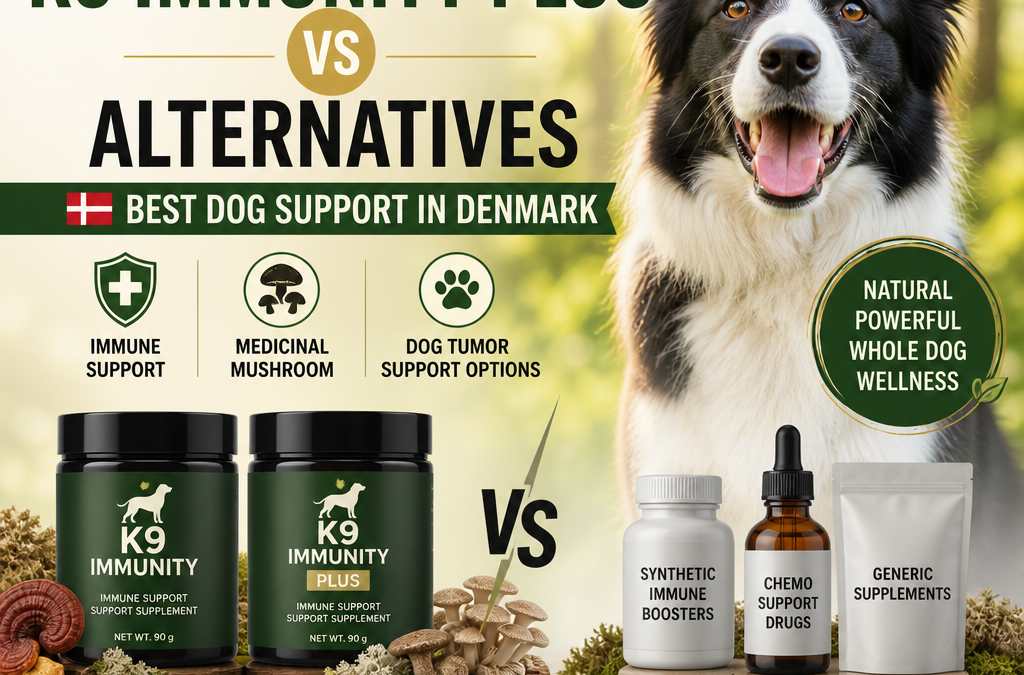
K9 Immunity / K9 Immunity Plus vs alternatives is an important comparison for Danish dog owners looking for responsible immune and tumor support. These products are often discussed in connection with medicinal mushrooms, antioxidants, and general wellness, but supplements should never replace veterinary diagnosis or treatment. The right choice depends on your dog’s condition, current medication, age, diet, and the quality of the evidence behind each ingredient.
Sisällysluettelo
Understanding immune support for dogs
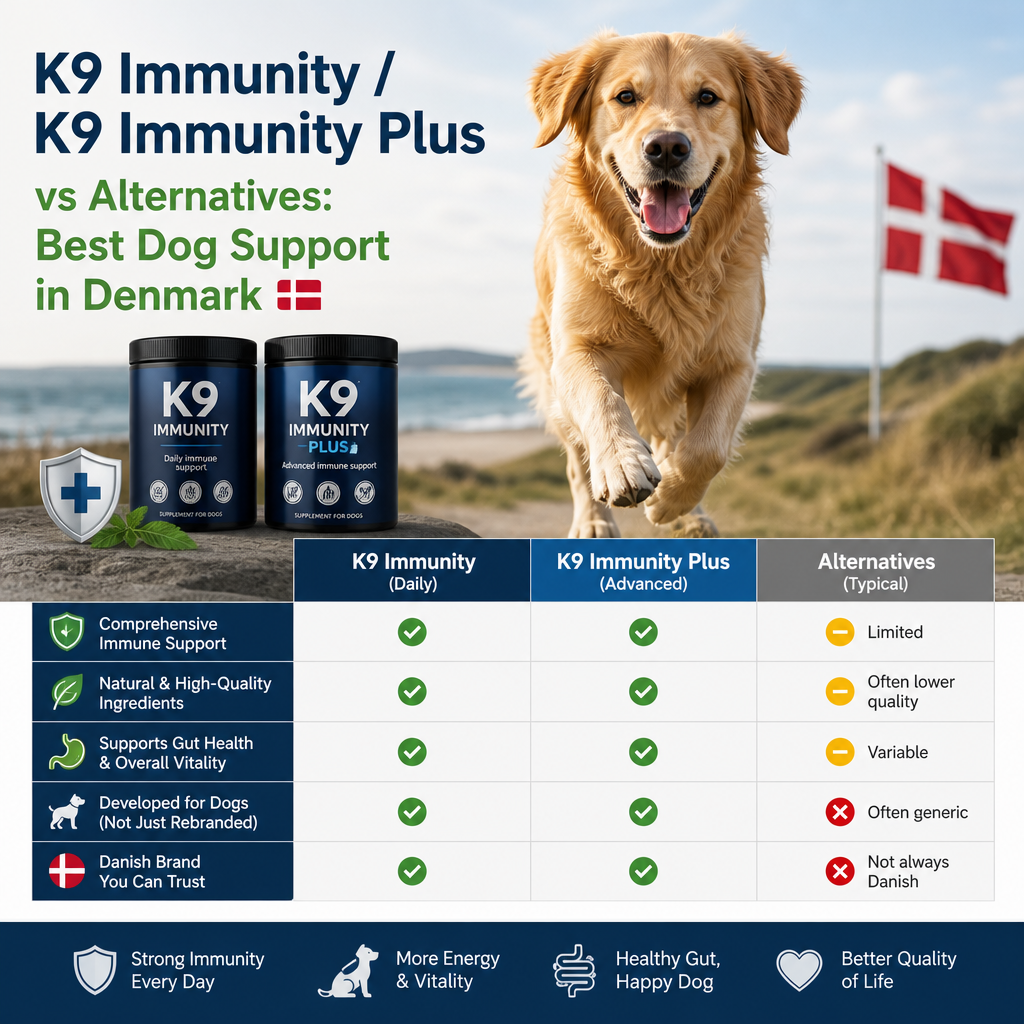
A dog’s immune system is a complex network involving the skin, gut, blood, lymphatic system, and organs. Good immune function depends on balanced nutrition, appropriate exercise, sufficient sleep, manageable stress, and timely veterinary care. No supplement can “boost” immunity in a simple or guaranteed way. Instead, some products may help support normal immune function by providing nutrients or compounds involved in antioxidant activity and cellular communication.
K9 Immunity / K9 Immunity Plus vs alternatives is best judged against this broader picture of support, not just by marketing claims. Immune support can be especially relevant when a dog is recovering from illness, living with chronic inflammation, experiencing poor appetite, or undergoing treatment for a serious disease. However, these situations also require professional evaluation. Changes such as unexplained weight loss, persistent coughing, enlarged lymph nodes, unusual lumps, vomiting, or fatigue should be investigated by a veterinarian before supplementation begins.
For owners who want a practical starting point, the safest approach is to prioritize diagnosis first, then build support around the treatment plan. That is especially true when comparing K9 Immunity / K9 Immunity Plus vs alternatives, because the right option may depend more on the dog’s medical history than on the supplement label.
In daily practice, immune support is most useful when it fits into a larger care routine. That means tracking weight, appetite, stool quality, medication timing, and energy levels, then adjusting the plan as needed with your veterinary team.
K9 Immunity and K9 Immunity Plus: What are they?
K9 Immunity and K9 Immunity Plus are marketed as canine supplements featuring medicinal mushroom extracts and other supportive ingredients. Formulations may vary depending on the product version and market, so owners should carefully check the current label, serving instructions, batch information, and manufacturer details.
Medicinal mushrooms commonly associated with canine supplements include turkey tail, reishi, shiitake, maitake, and cordyceps. These mushrooms contain compounds such as beta-glucans, which are studied for their role in supporting normal immune responses. Some formulas may also include vitamins, minerals, digestive ingredients, or botanical extracts.
The “Plus” version may contain a broader combination of ingredients or higher concentrations than the standard product, but a larger ingredient list does not automatically mean better results. In the K9 Immunity / K9 Immunity Plus vs alternatives discussion, the most useful comparison is based on extract quality, standardization, safety testing, transparency, and suitability for the individual dog.
If your veterinarian is already discussing supportive care, it helps to compare the formula against the dog’s current needs rather than against marketing claims. A product can look impressive on paper and still be a poor fit for a sensitive dog, especially one with digestive issues, medication changes, or reduced appetite.
For this reason, many owners begin by asking whether a dog needs a broad support formula or a more focused supplement. That question often matters more than brand familiarity, especially when treatment decisions are already in motion.
Medicinal mushroom and immune support
Medicinal mushroom supplements have attracted interest because laboratory and veterinary research has explored their antioxidant, immunomodulatory, and anti-inflammatory properties. Turkey tail, in particular, has received attention in research involving canine cancer support. Some studies have examined mushroom-derived compounds alongside conventional treatment, but research findings should not be interpreted as proof that an over-the-counter supplement can cure cancer.
A reliable external reference for owners who want to understand the evidence base is the PubMed Central tutkimuskirjasto, where veterinary and biomedical studies can be searched by ingredient or disease area.
The quality of a mushroom supplement is crucial. A product made from unidentified mushroom powder may differ substantially from one using clearly named, concentrated extracts. Owners should look for information about:
- The exact mushroom species used
- Sisältääkö tuote hedelmäkappaleen, myceliumin vai molemmat
- The amount of active beta-glucans
- Extraction methods
- Independent testing for heavy metals, pesticides, and contamination
- Batch consistency and expiry dates
- Clear dosing instructions for dogs
Some dogs tolerate mushroom products well, while others may develop digestive upset, loose stools, reduced appetite, or allergic reactions. Dogs with autoimmune disease, liver or kidney problems, bleeding disorders, or those receiving immunosuppressive medication may require extra caution. This is another reason K9 Immunity / K9 Immunity Plus vs alternatives should be reviewed with the dog’s veterinarian before use.
When mushroom supplements are part of a broader care plan, the goal is usually support, not replacement. That distinction matters because the evidence for medicinal mushroom products is strongest when they are used thoughtfully and monitored over time, especially in dogs already dealing with illness.
Owners should also remember that “natural” does not automatically mean gentle. Natural products can still cause side effects, interact with medication, or create confusion when multiple supplements are started at once.
How to compare product quality
When reading labels, a careful comparison starts with the basics. Two mushroom supplements may appear similar, yet their ingredient sources, processing methods, and testing standards can be very different. That is why K9 Immunity / K9 Immunity Plus vs alternatives should include a close look at the manufacturer’s transparency.
Look for practical details such as the actual amount of each ingredient, the serving size by body weight, and whether the company explains why specific mushrooms were chosen. The best labels avoid vague “proprietary blend” wording when possible, because dog owners and veterinarians need clear information to judge suitability.
It also helps to compare how the product was made. Fruiting body extracts are often discussed differently from whole mushroom powders or mycelium-based formulas. While no single production method is automatically best for every dog, the label should make it easy to tell what is actually in the package.
Another helpful sign is batch testing. Products with published certificates of analysis or clearly stated quality controls can be easier to trust, especially for dogs with cancer or chronic disease. If a company cannot explain sourcing, purity, or storage conditions, that is a reason to be cautious.
In short, quality comparison is not only about the ingredient list. It is also about honesty, consistency, and how safely the supplement fits into the dog’s overall care plan.
K9 Immunity / K9 Immunity Plus vs alternatives
When comparing K9 Immunity / K9 Immunity Plus vs alternatives, it is helpful to focus on purpose rather than branding. A supplement for general wellness is not necessarily appropriate for a dog with cancer, and a product designed for tumor support may not be necessary for a healthy dog.
Potential alternatives include single-ingredient turkey tail extracts, veterinary-formulated antioxidant products, omega-3 supplements, digestive support formulas, and complete therapeutic diets. Single-ingredient products can make it easier to identify how a dog responds and avoid unnecessary ingredients. On the other hand, combination products may be more convenient and may provide a wider range of nutrients.
Omega-3 fatty acids from fish oil are often considered for dogs with inflammatory conditions, joint problems, or certain chronic diseases. However, dosage matters, and fish oil can interact with some medications or cause gastrointestinal problems. Probiotics may support digestive health, which is closely connected to immune function, but strains and product quality vary considerably.
A veterinary diet may be more valuable than a supplement when a dog has a diagnosed condition. Nutritional needs can change during cancer treatment, kidney disease, liver disease, or recovery from surgery. Supplements should complement a complete diet rather than displace essential calories and nutrients. For owners comparing K9 Immunity / K9 Immunity Plus vs alternatives, this often becomes the deciding factor: the best product is the one that fits the treatment plan, not the one with the longest ingredient list.
Another useful way to compare options is by checking how much information the company shares. Clear sourcing, batch testing, dosage guidance, and realistic expectations are all signs of a better-formulated product, especially when the supplement will be used for an older dog or a dog already on medication.
Some owners prefer to start with the simplest option first and only add more ingredients if there is a clear reason. That approach can make it easier to spot side effects and gives the veterinary team a cleaner picture of what is helping.
Dog tumor support options
Dog tumor support options should always begin with a confirmed diagnosis and a treatment plan from a veterinarian, ideally involving a veterinary oncologist when cancer is suspected or confirmed. Depending on the tumor type and stage, treatment may include surgery, chemotherapy, radiation therapy, targeted medication, pain management, nutritional support, or palliative care.
Supportive supplements may be considered alongside treatment, but they must be reviewed for possible interactions. Some antioxidants and herbal ingredients can potentially affect drug metabolism, bleeding risk, immune activity, or the effectiveness of radiation and chemotherapy. “Natural” does not mean risk-free.
For many dogs, the most important forms of tumor support are practical and measurable: maintaining appetite, managing nausea and pain, preventing dehydration, preserving muscle mass, monitoring weight, and keeping stress low. Gentle exercise, a comfortable sleeping area, and regular monitoring can also make a meaningful difference in quality of life.
Owners should be cautious of products promising to shrink tumors, eliminate cancer, or replace conventional treatment. Strong claims without transparent clinical evidence are a warning sign. A trustworthy supplement company should provide complete ingredient information, realistic guidance, and clear safety information.
In real-world care, the best support plan is often simple: confirm the diagnosis, coordinate treatment, and use only those supplements that fit the dog’s needs. That is the most responsible context for comparing K9 Immunity / K9 Immunity Plus vs alternatives.
Support also changes over time. A product that makes sense during recovery from surgery may not be the same product that best fits a dog receiving chemotherapy months later, so reassessment is part of good care.
Choosing supplements in Denmark
Danish dog owners should purchase supplements through reputable veterinary clinics, established retailers, or manufacturers with clear European labeling and quality controls. Check whether the product is suitable for dogs, whether the dosage is based on body weight, and whether customer service can provide certificates of analysis or testing information.
It is also wise to keep a complete list of everything the dog receives, including prescription medicine, flea and tick products, vitamins, treats, and herbal supplements. Share this list with the veterinarian before starting K9 Immunity, K9 Immunity Plus, or any alternative.
Introduce only one new product at a time and monitor appetite, stool quality, energy, itching, vomiting, and other changes. Stop the product and seek veterinary advice if a serious reaction occurs.
If the supplement is being considered for ongoing support during a cancer workup, ask the clinic whether blood tests, imaging, or medication timing could be affected. That conversation is especially useful when choosing between K9 Immunity / K9 Immunity Plus vs alternatives because product overlap and ingredient interactions can matter more than brand name.
It can also help to keep a short checklist: what is the goal, what ingredients are included, what evidence supports them, and what risks apply to this dog specifically? That simple framework often makes the choice clearer.
When owners in Denmark compare brands, they often want something practical, affordable, and easy to obtain again if the dog tolerates it well. Continuity matters because switching products too often can make it hard to know what is truly helping.
Vastuullisen päätöksen tekeminen
There is no universally best immune supplement for every dog. K9 Immunity / K9 Immunity Plus may appeal to owners seeking a medicinal mushroom-based product, while alternatives may offer simpler formulas, targeted nutrients, or veterinary supervision. The best decision is based on the dog’s diagnosis, treatment plan, nutritional needs, and risk profile—not on marketing claims alone.
Medicinal mushrooms may have a role in supportive care, but they should be viewed as one possible addition to a broader health strategy. Veterinary guidance, evidence-based treatment, appropriate nutrition, and careful quality-of-life monitoring remain the foundation of responsible dog care in Denmark.
For readers still comparing K9 Immunity / K9 Immunity Plus vs alternatives, the most practical approach is to match the product to the goal: general immune support, digestive support, or tumor-adjacent supportive care. When in doubt, choose the option with clearer labeling, safer dosing, and the strongest veterinary oversight.
Used carefully, supportive products can be part of a thoughtful care plan. But the safest results usually come from combining the right supplement, the right timing, and close veterinary supervision rather than relying on a single product to do everything.
If your dog already has a diagnosis, the most useful question is not which supplement sounds strongest, but which option best supports the current treatment plan without adding unnecessary risk. That is the practical heart of K9 Immunity / K9 Immunity Plus vs alternatives.