
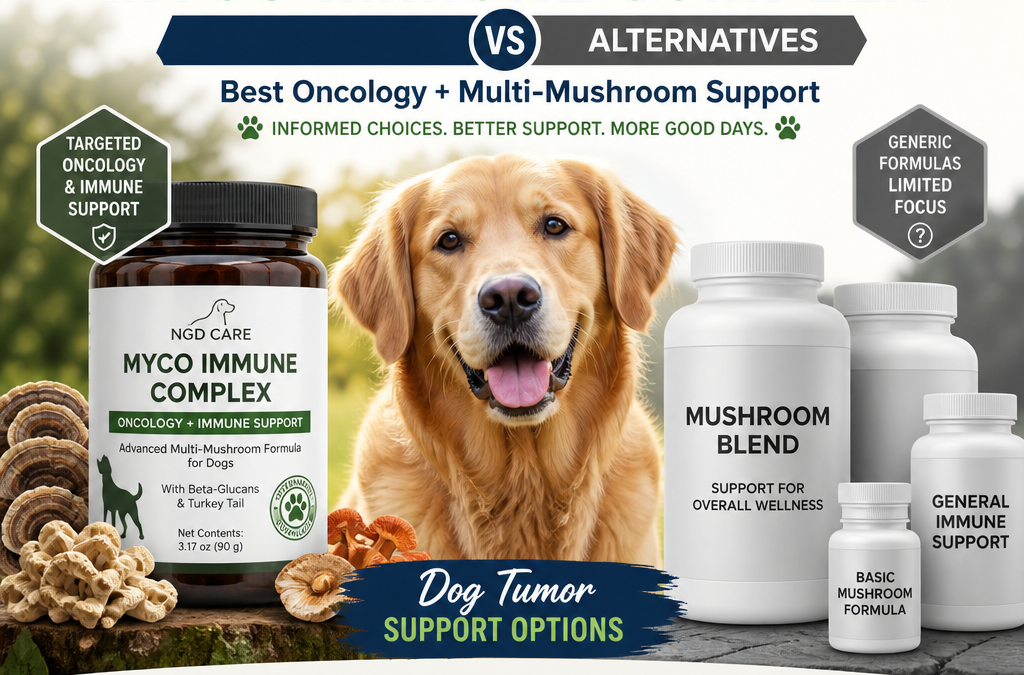
NGD Care Myco Immune Complex vs Alternatives is an important comparison for pet owners exploring complementary support for a dog with a tumor or another serious health condition. Products in this category commonly combine medicinal mushrooms, antioxidants, herbs, and nutritional compounds intended to support immune function and overall wellness. However, supplements are not substitutes for veterinary diagnosis or cancer treatment. The safest approach is to view them as possible additions to a carefully supervised care plan.
When families first search for NGD Care Myco Immune Complex vs alternatives, the goal is usually not to replace oncology care. Instead, they want to understand whether a mushroom-based formula may fit alongside surgery, chemotherapy, radiation, pain management, or palliative care. That is a sensible question, because the best product for one dog may not be the best product for another. Diagnosis, medication use, appetite, digestion, and treatment timing all matter.
Sisällysluettelo
Understanding oncology and multi-mushroom support
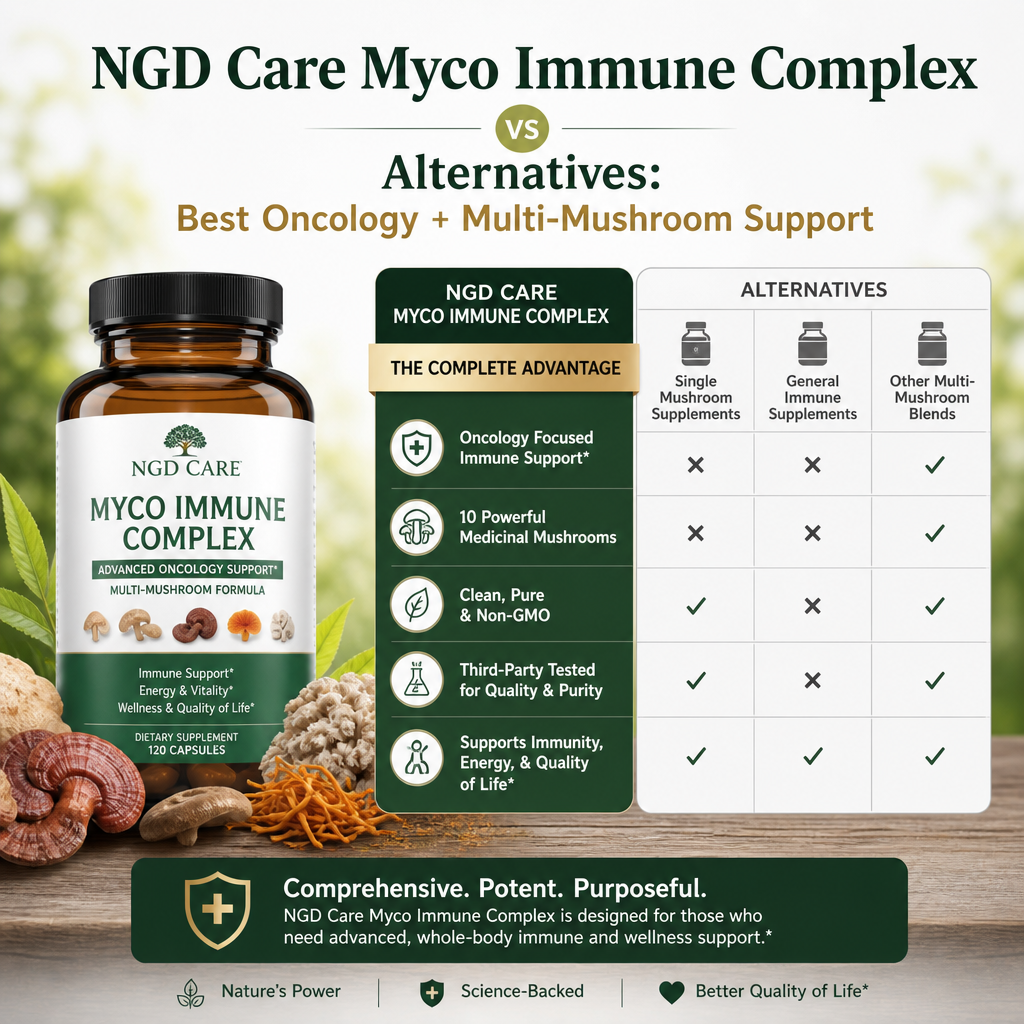
Oncology + multi-mushroom support generally refers to formulas that include several mushroom species rather than relying on a single extract. Common ingredients may include turkey tail, reishi, maitake, shiitake, cordyceps, or agaricus blazei. These mushrooms contain compounds such as beta-glucans and triterpenes, which are being studied for their effects on immune signaling and inflammatory pathways.
The goal of a multi-mushroom formula is usually broad nutritional and immune support. Pet owners may consider these products when a dog is undergoing conventional cancer care, recovering from surgery, or experiencing reduced appetite and energy. The intended role is supportive rather than curative. A mushroom supplement should never be promoted as a replacement for surgery, chemotherapy, radiation, pain management, or other therapies recommended by a veterinary oncologist.
In many cases, families begin researching NGD Care Myco Immune Complex vs alternatives after a diagnosis creates urgency and uncertainty. That is understandable, but the first priority should still be a confirmed diagnosis and a treatment plan based on the tumor type. If a dog has a lump, a biopsy or aspirate may be needed before any supplement decision can be made responsibly.
Supportive products are often discussed when owners are already trying to make sense of tumor staging, surgical options, or follow-up care. A thoughtful comparison can help clarify what a supplement may do, what it cannot do, and where veterinary monitoring remains essential. That perspective is especially useful for dogs with changing symptoms, fragile digestion, or more advanced disease.
How these products are usually positioned
Most multi-mushroom supplements are marketed as daily wellness support. Some focus on immune balance, while others emphasize antioxidant activity or vitality. In practice, the experience can vary widely based on the quality of the extract, the dosage, and the dog’s overall health. The more complex the formula, the more important it is to review each ingredient carefully.
For example, a product may be attractive because it combines many mushrooms in one powder or capsule. Yet a simple product with clear dosing can sometimes be easier to use consistently. If a dog has a sensitive stomach, fewer ingredients may also make it easier to identify what helps and what causes intolerance.
Owners who are comparing NGD Care Myco Immune Complex vs alternatives often find that “more ingredients” does not always mean “better support.” The ideal formula is the one that matches the dog’s condition, the veterinarian’s plan, and the family’s ability to administer it reliably. Consistency matters just as much as complexity.
What makes NGD Care Myco Immune Complex different?
When comparing NGD Care Myco Immune Complex vs alternatives, the first consideration is the formula’s ingredient profile. A product may contain multiple mushroom extracts along with supportive ingredients selected for antioxidant, digestive, or immune-related purposes. The number of ingredients alone does not determine quality. Their forms, concentrations, sourcing, and manufacturing standards are equally important.
Some formulas use fruiting-body extracts, while others contain mycelium or a combination of both. Fruiting-body extracts are made from the visible mushroom structure and may be standardized for particular compounds. Mycelium-based products can also be useful, but their nutritional profile may differ depending on how they are grown and processed. Checking the supplement label for clear ingredient quantities is more helpful than relying on a long list of mushrooms.
Product quality also depends on testing. Look for information about identity testing, microbial screening, heavy-metal testing, and batch consistency. A reputable manufacturer should be able to explain its quality-control process and provide clear directions for animal use. For general background on medicinal mushroom research, the National Cancer Institute’s mushrooms and cancer overview on hyödyllinen koulutuksellinen viite.
When evaluating any dog supplement, it is also helpful to keep the broader clinical picture in mind. A dog with a tumor may have pain, appetite changes, gastrointestinal upset, or mobility issues that require direct veterinary care. In that setting, even a well-made supplement should be treated as one small part of the overall plan rather than the main strategy.
In practical terms, NGD Care Myco Immune Complex vs alternatives often comes down to transparency. Some products provide a clear label with species names, extract ratios, and serving guidance. Others use broad marketing language without enough detail for owners or veterinarians to evaluate properly. Clear information is especially valuable when a dog is already receiving prescription treatment.
For owners who want to compare options more carefully, it can also help to look at related supportive care topics such as parhaat lisäravinteet syöpää sairastaville koirille. That kind of broader review can make it easier to understand which ingredients are common, which are optional, and which may be more relevant for a specific dog’s needs.
Key formulation questions to ask
- Are the mushroom ingredients listed by species and amount?
- Are extracts derived from fruiting bodies, mycelium, or both?
- Is the product tested for contaminants and label accuracy?
- Are serving directions clear for dogs of different sizes?
- Does the formula fit the dog’s diagnosis and current medications?
What to look for on a label
A careful label review can reveal whether a product is truly suitable for a dog in cancer care. Look for the actual mushroom species, the form of each extract, and any added ingredients such as flavorings, oils, or fillers. Some additives are harmless, but others may be unnecessary for a sensitive dog. A simpler formula may be easier to tolerate and easier to track.
If the packaging only uses a proprietary blend without individual amounts, it can be difficult to know how much of each component the dog is receiving. That may not be a deal-breaker, but it does reduce transparency. For owners comparing NGD Care Myco Immune Complex vs alternatives, that level of detail can be a deciding factor.
Dog tumor support options beyond mushroom blends
Dog tumor support options extend well beyond supplements. A complete plan may include diagnostic imaging, biopsy results, surgery, chemotherapy, radiation, prescription medications, nutritional adjustments, and palliative care. The right combination depends on the tumor type, location, stage, and the dog’s age and general condition.
Nutrition is often a central part of supportive care. Dogs with cancer may lose weight, experience nausea, or become selective about food. A veterinarian or veterinary nutritionist can help create a diet that supplies adequate calories and protein while accounting for kidney, liver, gastrointestinal, or metabolic concerns. Hydration, dental health, mobility, and pain control also have a major effect on quality of life.
Some owners compare mushroom supplements with fish oil, probiotics, antioxidant formulas, or single-mushroom products. These choices are not interchangeable. Fish oil, for example, is generally considered for omega-3 fatty acids, while probiotics may be used to support digestive health. A single mushroom product may offer a more focused ingredient profile, whereas a blend provides broader exposure but may make it harder to identify which ingredient is helping or causing a reaction.
For families wanting practical comparisons, it can help to think in categories instead of brand names alone. Some products are designed mainly for immune support, while others are intended as general wellness aids. If the dog is already receiving treatment, the vet may recommend avoiding anything that could complicate surgery, clotting, or drug metabolism. In some cases, the safest choice is to postpone supplementation until after a critical treatment window has passed.
Owners in the Netherlands may also be comparing locally available mushroom formulas with imported options or with broader oncology support plans. That makes clear labeling and veterinary compatibility even more important. The best choice is not always the most popular or expensive one. It is the one that fits the dog’s current care stage.
Supportive care may also include
- anti-nausea medication
- pain relief and mobility support
- prescription appetite stimulants
- specialized nutritional plans
- monitoring for weight loss and dehydration
- regular rechecks with the veterinary team
Owners dealing with more advanced disease may also want to read about related conditions such as metastasis in dogs, because spread to other organs can change both prognosis and supportive care needs. When a tumor behaves aggressively, the goal of care often shifts from trying to do everything to choosing the most helpful and least disruptive measures.
Supportive care also becomes more important when a dog’s appetite drops or when treatment schedules leave the pet tired and uncomfortable. In those cases, the value of any supplement depends on whether it adds stability without creating new problems. If a formula is hard to administer or upsets the stomach, it may not be worth continuing even if the marketing sounds appealing.
Comparing benefits, limitations, and risks
The potential benefit of a multi-mushroom supplement is convenience. One product may provide several mushroom extracts in a single serving, which can simplify administration. It may also offer a broader range of naturally occurring compounds than a single-ingredient product.
The limitations are equally important. Evidence from laboratory studies, human research, and veterinary research cannot automatically be applied to every dog or every tumor. A supplement may support general immune health without shrinking a tumor or extending survival. Claims should therefore be evaluated carefully, especially when they promise dramatic results.
Potential side effects can include vomiting, diarrhea, reduced appetite, itching, or other signs of intolerance. Supplements may also interact with medications or influence immune activity, blood clotting, blood sugar, or liver metabolism. Dogs scheduled for surgery or receiving chemotherapy may require especially careful review of all supplements.
This is one reason the comparison of NGD Care Myco Immune Complex vs alternatives should not focus only on ingredients. The most responsible option is the one that is both understandable and compatible with the dog’s current medical needs. A product with fewer uncertain components may be preferable to one that sounds impressive but offers limited transparency.
Another useful way to evaluate NGD Care Myco Immune Complex vs alternatives is to ask how easy the product is to monitor in real life. If a dog develops softer stools, less interest in food, or subtle skin changes, can the owner tell whether the supplement is contributing? A formula that is easy to assess may be safer than one with many overlapping ingredients.
For dogs with tumors near the eye, the decision may feel even more delicate because comfort and function can change quickly. In those situations, a related article on eye tumor dogs can help owners understand why supportive choices should be coordinated with veterinary monitoring and not made in isolation.
Possible reasons a simpler formula may be safer
- fewer opportunities for ingredient interactions
- easier tracking of side effects
- clearer evaluation of whether the supplement helps
- simpler administration for picky eaters
- less confusion when treatment plans change
It is also worth remembering that supportive care is not a substitute for follow-up testing. Even if a supplement seems well tolerated, the underlying tumor can still change. Regular examinations, repeat imaging when recommended, and honest conversations about comfort remain essential.
Questions to discuss with a veterinarian
Before starting NGD Care Myco Immune Complex or a similar product, provide the veterinarian with the complete label, including serving size and inactive ingredients. Ask whether the formula is appropriate for the dog’s diagnosis, current medications, and treatment schedule.
Important questions include:
- Could any ingredient affect anesthesia, bleeding, blood sugar, or liver function?
- Should the supplement be stopped before surgery or during a specific treatment?
- Is the product appropriate for a dog with kidney or liver disease?
- What signs would indicate an adverse reaction?
- How should progress and quality of life be monitored?
Introducing only one new product at a time can make it easier to identify side effects. Start only according to professional guidance, observe appetite and digestion, and keep a record of energy, weight, stool quality, and other meaningful changes.
If the dog is already under oncology care, it is also wise to coordinate decisions with the primary veterinarian or oncologist before adding any supplement. That is especially important when the patient is receiving chemotherapy, has low platelets, or is preparing for a procedure. A thoughtful review can prevent avoidable setbacks and keep the focus on the dog’s comfort.
For dogs with complex disease, the discussion may need to include more than just supplement safety. The vet may also want to review pain control, nutrition, bloodwork trends, and whether the dog is still enjoying normal routines. If the answer to that last question is changing, the care plan may need to change as well.
Practical monitoring checklist
- energy level
- appetite and water intake
- oksentelu tai ripuli
- painonmuutokset
- mobility and pain signals
- overall comfort and interaction
Choosing the most responsible option
The best comparison is not simply NGD Care Myco Immune Complex vs alternatives based on price or the number of mushrooms listed. Consider transparency, testing, dosing clarity, veterinary compatibility, and the dog’s individual needs. A simple, well-documented formula may be preferable to an overly complex blend with undisclosed amounts.
Most importantly, supportive products should fit into a broader oncology plan. Regular veterinary evaluations can determine whether treatment is working and whether the dog is comfortable. Supplements may have a place in that plan, but they should complement evidence-based care rather than delay it.
For families considering oncology + multi-mushroom support, informed decision-making offers the best balance between hope and safety. A carefully selected product, professional supervision, and close attention to quality of life can help ensure that supportive care remains practical, compassionate, and appropriate for the dog.
In short, NGD Care Myco Immune Complex vs alternatives should be judged by more than marketing claims. The most useful choice is the one that fits the dog’s diagnosis, supports the veterinary plan, and can be used safely over time. If you are comparing products for a dog with a tumor, bring the label to your veterinary team and ask how it may fit into the larger treatment strategy. That is the most reliable way to decide whether NGD Care Myco Immune Complex vs alternatives is a meaningful distinction for your dog.
For many owners, the right answer will depend on how well the supplement matches the veterinary plan rather than whether it looks impressive on paper. In that sense, NGD Care Myco Immune Complex vs alternatives is less about hype and more about fit, clarity, and careful use.
When comparing supportive products, some owners also look at broader oncology guidance such as anaalirauhassyövästä koirilla to better understand how tumor type can affect treatment choices and supportive care priorities. That context can make supplement decisions more grounded and less reactive.
NGD Care Myco Immune Complex vs Alternatives deserves a practical, veterinary-first review. If the formula is transparent, well tolerated, and compatible with the dog’s treatment plan, it may serve as one part of supportive care. If it adds uncertainty, overlap, or digestive upset, a different option may be the safer choice. The goal is not to use every possible supplement, but to use the right one at the right time.