
Ocoxin Pets is a nutritional supplement designed to support dogs that may need additional nutritional care during serious illness, including tumors. For owners in Spain, understanding what this product can and cannot do is essential before adding it to a dog’s treatment plan. A supplement may help support appetite, hydration, energy, and general wellbeing, but it should never replace veterinary diagnosis, surgery, chemotherapy, radiotherapy, pain management, or other prescribed care.
If you are comparing supportive options, you may also find our guide to supportive supplement choices for dogs in Spain useful when discussing your dog’s care plan with a veterinarian.
Sisällysluettelo
Mikä on Ocoxin Pets?
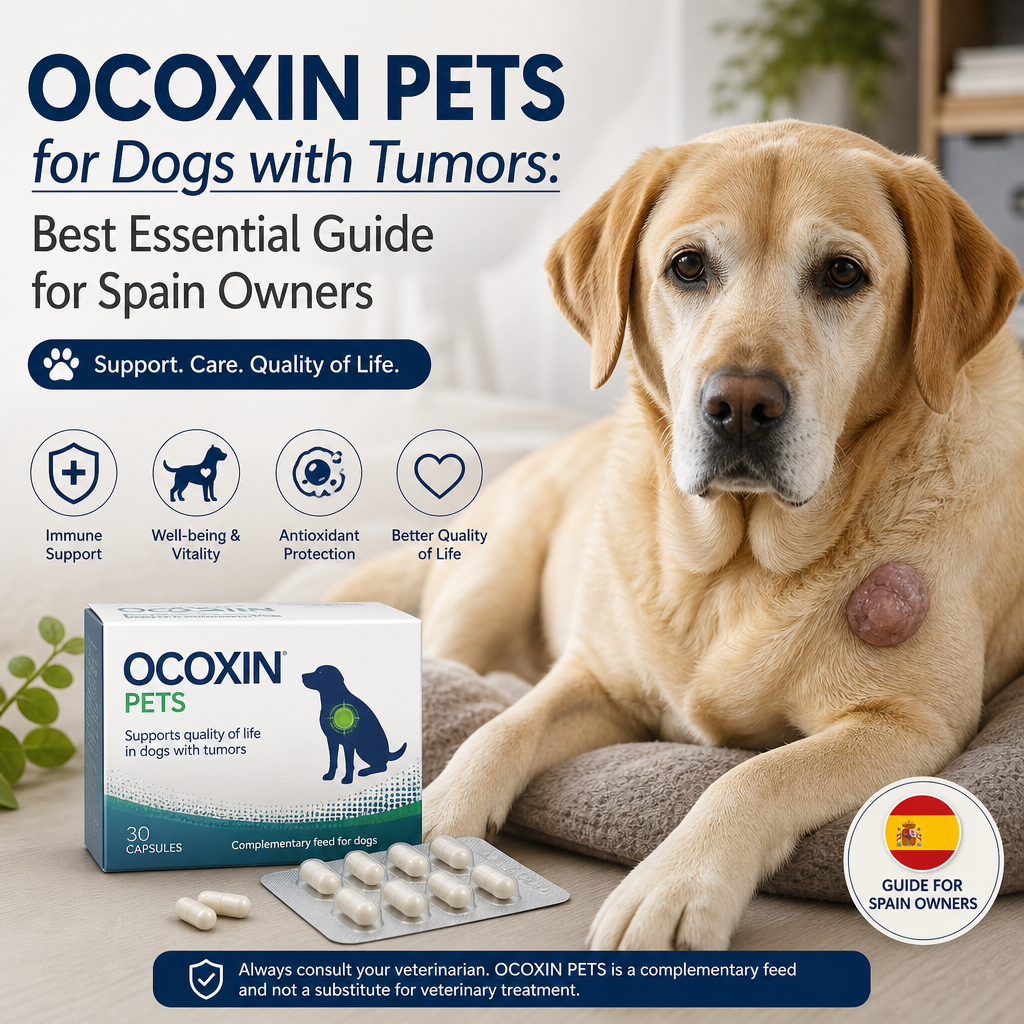
Ocoxin Pets is generally presented as a complementary nutritional product for companion animals. Its formulation is intended to provide supportive nutrients and compounds that may help dogs cope with the physical demands of illness. Products in this category are often used when a dog has reduced appetite, weight loss, weakness, or increased nutritional needs.
The exact ingredients, dosage, and presentation can vary by market, so Spanish owners should check the current product label and official information supplied by the manufacturer or distributor. It is also important to distinguish between a veterinary supplement and a registered veterinary medicine. Supplements are not expected to treat or eliminate tumors in the same way as medicines or cancer therapies.
A dog with cancer may experience changes in metabolism, appetite, digestion, immune function, and energy levels. Nutritional support can be useful as part of a broader care plan, particularly when eating becomes difficult or when maintaining body condition is a challenge. For reference on cancer-related nutrition principles, the VCA Hospitals guide to cancer in dogs explains why appetite, weight, and comfort matter so much during treatment.
Ocoxin Pets dog cancer support: what owners should expect
The term Ocoxin Pets dog cancer support refers to the product’s possible role as an adjunct to veterinary care. Its purpose is supportive rather than curative. Depending on the dog’s condition, a veterinarian may consider nutritional supplementation to help maintain normal body functions and improve comfort during treatment.
Potential goals may include:
- Supporting food intake in dogs with a poor appetite
- Helping maintain body weight and muscle condition
- Providing additional nutrients during periods of illness or recovery
- Supporting hydration when used according to professional guidance
- Complementing a balanced diet and an individualized treatment plan
- Helping owners monitor general wellbeing more systematically
The benefits of any supplement can differ substantially between dogs. A product that appears helpful for one animal may be unsuitable for another, especially if the dog has kidney disease, liver problems, diabetes, gastrointestinal sensitivity, or is taking several medications.
Cancer care should therefore be based on the individual diagnosis. Tumor type, stage, location, laboratory results, age, and quality-of-life concerns all influence the most appropriate approach.
Ocoxin Pets review: evidence, limitations, and realistic claims
When reading an Ocoxin Pets review, owners should look beyond testimonials and focus on the quality of the available information. Personal experiences can be useful for understanding how a product is administered or tolerated, but they do not prove that a supplement treats cancer. Dogs may improve because of surgery, medication, dietary changes, reduced pain, or natural variation in the disease—not necessarily because of one product.
A balanced review should consider several questions:
- Is the product intended as a supplement or a veterinary medicine?
- Are the ingredients and quantities clearly listed?
- Is there reliable information about use in dogs?
- Has the product been evaluated for safety and quality?
- Could it interact with chemotherapy, steroids, anti-inflammatory drugs, or other treatments?
- Does the dog’s veterinarian agree that it is appropriate?
- Is the product being promoted with claims that sound stronger than the available evidence?
Owners should be cautious with statements suggesting that a supplement can shrink tumors, cure cancer, or replace conventional treatment. Such claims can delay effective care and may put a vulnerable animal at greater risk.
Safety considerations for dogs with tumors
Before giving Ocoxin Pets, provide the veterinarian with a complete list of everything the dog is receiving. This includes prescription medicines, painkillers, deworming products, vitamins, herbal preparations, and special diets. Even ingredients considered “natural” can affect digestion, blood clotting, liver enzymes, or the action of medicines.
Watch for possible adverse reactions such as vomiting, diarrhea, constipation, itching, swelling, marked lethargy, refusal to eat, or changes in drinking and urination. If severe or persistent symptoms appear, stop administering the product until a veterinarian has provided advice. Emergency signs—including difficulty breathing, collapse, uncontrolled bleeding, repeated vomiting, or severe pain—require immediate veterinary attention.
Dosage should be based on the product’s official instructions and the dog’s individual needs. Never assume that a human product, a different formulation, or a larger dose is safe for a dog. Keep the container, batch information, and ingredient list available in case the veterinary team needs to investigate a reaction.
Choosing Ocoxin Pets in Spain
For owners searching for Ocoxin Pets Spain, purchasing through a reputable veterinary clinic, established animal-health supplier, or authorized distributor is preferable. Check that the packaging is sealed, the expiry date is valid, and the label includes clear instructions. Spanish consumers should also verify whether the product is legally marketed for animals in Spain and whether the seller provides traceable product information.
A veterinarian in Spain can help clarify whether the supplement is suitable alongside the dog’s current treatment. Veterinary practices may also recommend alternatives, such as a therapeutic recovery diet, high-calorie food, appetite support, anti-nausea medication, or a carefully formulated homemade diet supervised by a veterinary nutrition professional.
Price is another practical consideration. Long-term cancer care can be expensive, and a supplement should offer a reasonable benefit relative to its cost. Spending money on supportive products should not reduce access to essential diagnostics, analgesia, follow-up appointments, or prescribed treatment.
Nutrition and quality of life remain central
A supplement is only one part of supportive care. Dogs with tumors often benefit from small, frequent meals, an appealing food texture, quiet feeding areas, and careful monitoring of weight. The diet should be complete and balanced unless a veterinarian has recommended a specific therapeutic plan. Sudden dietary changes can worsen gastrointestinal symptoms.
Owners can keep a daily record of appetite, water intake, vomiting, stool quality, mobility, pain signs, sleep, interaction, and enjoyment of normal activities. This information helps the veterinary team assess whether the dog is stable and whether treatment should be adjusted.
Quality of life is the main goal of cancer support. Ocoxin Pets may be considered as a complementary nutritional option for some dogs, but its role should remain realistic and medically supervised. Used responsibly, it may form part of a broader plan focused on comfort, nutrition, and wellbeing. It should never be regarded as a standalone cure or a substitute for professional veterinary care.