
K9 Immunity is a dog health supplement often discussed by owners looking for additional support during a cancer diagnosis or other serious illness. This K9 Immunity review examines what the product is intended to do, how its ingredients may fit into a broader care plan, what Norwegian dog owners should consider before ordering, and why veterinary guidance remains essential. It is not a replacement for diagnosis, surgery, chemotherapy, radiation, or other treatments prescribed by a qualified veterinarian.
Table des matières
- What is K9 Immunity?
- K9 Immunity dog cancer support: what does it mean?
- Ingredients and possible benefits
- K9 Immunity review: evaluating the evidence
- Safety considerations for dogs
- K9 Immunity Norway: buying and practical considerations
- Comment utiliser les suppléments de manière responsable
- Perspective finale
What is K9 Immunity?
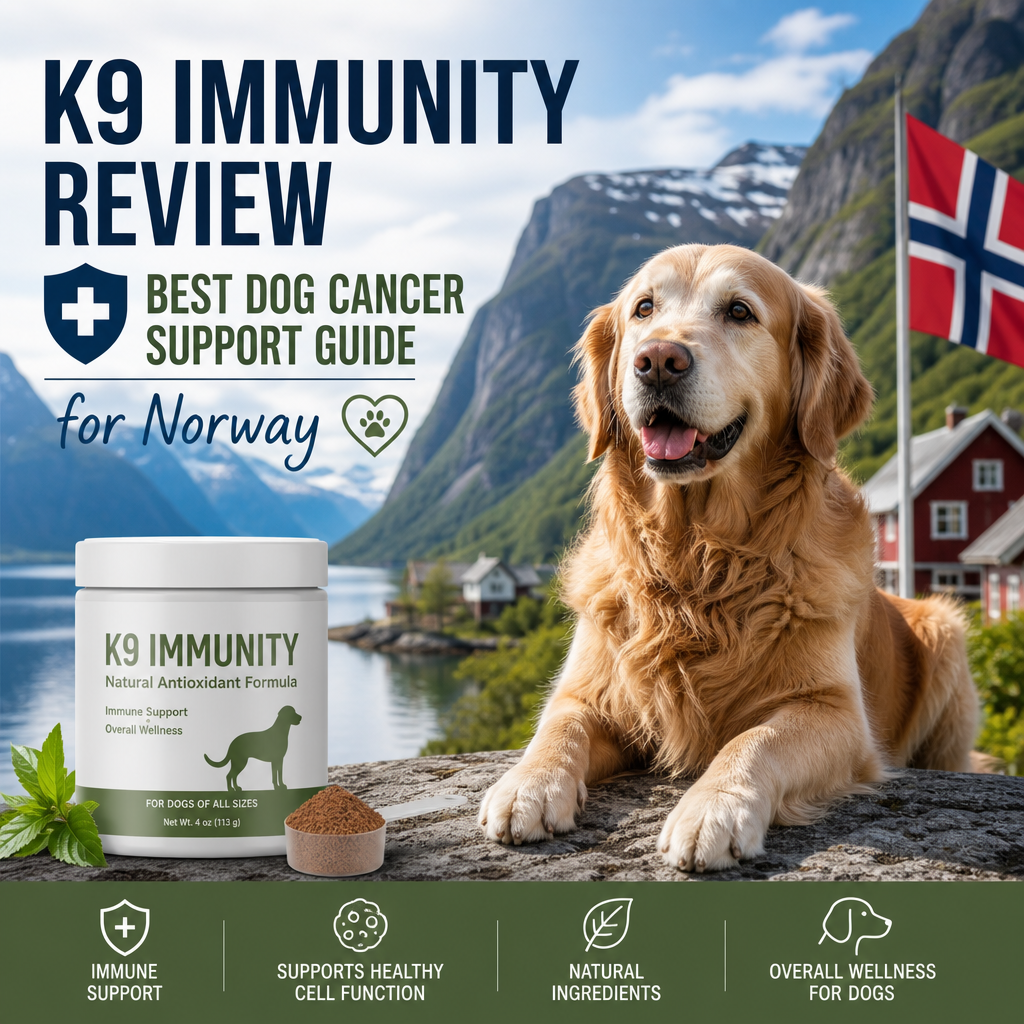
K9 Immunity is generally presented as a nutritional supplement designed to support a dog’s immune system and overall resilience. Products in this category commonly combine medicinal mushrooms, plant extracts, antioxidants, vitamins, minerals, or other compounds selected for their potential effects on immune function and cellular health.
The purpose of such a supplement is usually supportive rather than curative. A dog may need help maintaining appetite, energy, digestion, and body condition during a demanding treatment period. However, the exact formula, dosage, manufacturing standards, and scientific evidence can vary considerably between products. Owners should therefore examine the current ingredient label and follow professional advice rather than relying on general claims found online.
For many owners, the appeal of K9 Immunity comes from wanting to do something practical and proactive while the dog is already receiving veterinary care. That instinct is understandable, especially when a pet is going through a serious illness and the family wants to preserve comfort and routine. A thoughtful K9 Immunity review should, however, focus on what the supplement can realistically contribute: supportive nutrition, not a cure.
If you want a broader overview of affordable supportive options, you can also compare related products such as K9 Immunity Alternative : Meilleurs suppléments abordables pour les tumeurs chez les chiens en France.
In everyday use, owners often ask whether a product like K9 Immunity should be started immediately after diagnosis or only later in the care plan. There is no one-size-fits-all answer. The right timing depends on the diagnosis, the dog’s appetite, the current treatment stage, and whether the veterinarian believes the ingredient profile is appropriate. That is why K9 Immunity Norway buyers should avoid making a fast online purchase before confirming compatibility with the dog’s clinical situation.
K9 Immunity dog cancer support: what does it mean?
The phrase “K9 Immunity dog cancer support” refers to the use of nutritional products alongside conventional veterinary care. Cancer affects dogs differently depending on the tumour type, location, stage, age, and general health. A supplement that is appropriate for one dog may be unsuitable for another, particularly if the dog has liver or kidney disease or is receiving several medications.
Supportive care can involve several goals:
- Helping maintain a healthy body condition
- Soutenir la fonction immunitaire normale
- Encouraging adequate food and water intake
- Managing treatment-related digestive changes
- Preserving mobility and quality of life
- Monitoring energy, discomfort, and daily behaviour
A supplement may contribute to a balanced routine, but it should not be described as a proven cure unless strong clinical evidence supports that claim. Owners should be particularly cautious of statements promising to shrink tumours, replace chemotherapy, or guarantee a specific outcome.
For general veterinary guidance on cancer in dogs, the American Veterinary Medical Association provides a helpful overview of common treatment approaches and considerations: AVMA guidance on cancer in dogs.
In practical terms, supportive care is often less about dramatic claims and more about small but meaningful improvements. If a dog can keep eating, maintain hydration, move around more comfortably, and remain engaged with family life, those changes can matter. That is the context in which many owners evaluate K9 Immunity dog cancer support. The goal is to help the dog feel steadier while the veterinary team manages the underlying disease.
It is also worth remembering that cancer care is rarely limited to a single product or a single intervention. Most dogs do best when the care plan includes nutrition, pain relief, regular monitoring, and prompt follow-up when symptoms change. In that setting, a supplement may be an optional addition rather than the centrepiece of treatment.
Ingredients and possible benefits
Many immune-support products for dogs include mushroom-derived ingredients such as turkey tail, reishi, maitake, or shiitake. These mushrooms contain compounds that have attracted scientific interest, including beta-glucans. Preliminary research suggests that some mushroom compounds may influence immune activity, but evidence from laboratory studies or small clinical investigations does not automatically prove that a finished supplement improves survival in every dog.
Other formulas may contain antioxidants, omega fatty acids, herbal extracts, or nutrients associated with general wellness. These ingredients can have different effects and may interact with medicines. For example, some herbs can influence blood clotting, blood pressure, liver enzymes, or the metabolism of prescription drugs. This is especially important before surgery or when a dog is receiving chemotherapy, corticosteroids, anti-inflammatory medicines, or anticoagulants.
The quality of an ingredient also matters. Look for clear quantities, batch information, expiration dates, storage instructions, and transparent manufacturing details. A label that lists a proprietary blend without individual amounts makes it harder for an owner or veterinarian to assess the product.
Even when the ingredient list looks promising, the final product matters more than the marketing language. The source of the raw material, how it was processed, and whether it was stored correctly can all influence quality. For dog owners comparing products in K9 Immunity Norway searches, this is especially important because imported supplements can vary in packaging, labeling, and quality documentation.
What to check on the label
- Exact ingredient amounts instead of vague proprietary blends
- Recommended dosing based on the dog’s weight
- Storage and expiry information
- Any allergen warnings
- Third-party testing or quality-control notes
These details do not guarantee effectiveness, but they do make it easier to evaluate whether a product is suitable for a specific dog.
When owners read a K9 Immunity review, they often want a simple answer about whether the product “works.” The better question is whether the formula is sensible, transparent, and compatible with the dog’s current treatment plan. A supplement with modest but well-documented ingredients may be more useful than one with bold promises and little quality information.
It is also helpful to compare how the product presents its ingredient list with what a veterinarian can verify. If the label is vague, the dosage is unclear, or the claims seem exaggerated, those are warning signs. A careful owner does not need to become a scientist, but they should be able to explain to their vet what the supplement contains and why they are considering it.
For owners who want to browse related supportive products, the magasin page can be a convenient place to compare options, but final decisions should still be made with veterinary input.
K9 Immunity review: evaluating the evidence
A responsible K9 Immunity review should separate customer experiences from clinical proof. Positive testimonials may describe improvements in appetite, activity, coat condition, or general wellbeing, but these reports cannot establish that a supplement treated cancer. Dogs can also improve because of veterinary treatment, changes in diet, pain control, reduced stress, or natural variation in the illness.
When assessing evidence, consider the following questions:
- Has the finished product been tested in controlled studies involving dogs?
- Were the studies conducted by independent researchers?
- Is the ingredient quantity clearly disclosed?
- Are safety data available for long-term use?
- Does the manufacturer explain quality-control and laboratory-testing procedures?
- Are claims supported by veterinary or peer-reviewed sources?
The strongest evidence usually comes from well-designed clinical research on the exact product, not merely studies on one isolated ingredient. Lack of strong evidence does not necessarily mean a product is useless, but it does mean expectations should remain realistic.
If a manufacturer refers to published science, it is worth reading the original study rather than only the marketing summary. Many promising ingredients show interesting biological activity in early research, yet that does not always translate into a predictable benefit for a dog at home. A thoughtful K9 Immunity review should therefore distinguish between laboratory interest and real-world veterinary usefulness.
Owners may also benefit from asking whether the product has been used in dogs with similar health issues. Evidence from one condition may not apply cleanly to another. A formula that seems promising for immune support in general may not be the best choice for a dog with advanced disease, a poor appetite, or a complex medication schedule.
Another useful question is whether the company explains limitations honestly. Trustworthy brands usually avoid claiming that a supplement can replace standard treatment. They may discuss the role of nutrition, quality control, and supportive care without pretending to have a miracle solution. That kind of restraint is often a good sign.
Safety considerations for dogs
Natural does not always mean risk-free. Possible adverse effects from supplements may include vomiting, diarrhoea, reduced appetite, allergic reactions, or changes in blood-test results. A dog with a sensitive stomach may react even to a product that is well tolerated by other animals.
Before introducing K9 Immunity or any similar supplement, discuss the following with a veterinarian:
- The dog’s cancer type and current treatment
- Existing liver, kidney, digestive, or immune conditions
- All medicines and supplements being used
- Upcoming surgery or diagnostic procedures
- The appropriate dose for the dog’s weight and age
- Signs that require immediate discontinuation
Introduce only one new product at a time when possible. This makes it easier to identify the cause of an adverse reaction. Keep a simple record of appetite, stool quality, energy, weight, and other changes. Regular veterinary examinations and blood tests remain important, particularly during cancer treatment.
It is also sensible to store supplements safely, away from moisture and heat, and to discard anything past the expiry date. If the dog becomes weaker, stops eating, or develops new symptoms, do not wait to see whether a supplement alone will help.
For many households, the hardest part is deciding when a side effect is serious enough to stop the supplement. As a general rule, sudden vomiting, marked lethargy, a significant drop in appetite, black stools, swelling, or unusual bruising should be treated as reasons to contact a vet promptly. A supplement that appears harmless at first can still be inappropriate if it coincides with treatment changes or worsening disease.
Safety also includes medication timing. Some owners assume that because a product is marketed as natural it can be given alongside anything else without concern. That is not always true. If a dog is on chemotherapy, steroids, pain medication, or blood-thinning therapy, the veterinarian should review the supplement before use.
K9 Immunity Norway: buying and practical considerations
For owners searching for K9 Immunity Norway, availability, delivery, currency, and import rules should be checked before purchase. Products ordered from abroad may involve shipping charges, taxes, customs processing, or longer delivery times. Confirm whether the seller ships directly to Norway and whether the package includes an ingredient list in a language you understand.
Norwegian buyers should also check:
- Whether the seller is an authorised distributor
- La date d'expiration du produit et les exigences de stockage
- Return and refund conditions
- Shipping timelines and tracking
- The total cost after delivery and possible fees
- Whether the product is intended for animals and labelled accordingly
Avoid purchasing from pages that make extreme medical promises or provide no verifiable company information. Counterfeit or poorly stored supplements may have different contents from the advertised product. A local veterinary clinic may also be able to recommend products with clearer regulatory documentation or easier access to professional support.
For dog owners who prefer a convenient way to browse related products, the magasin page may be a useful starting point, but any purchase should still be checked against your veterinarian’s advice.
Import issues matter not just for cost but also for consistency. If a dog tolerates one batch well, the owner will want the same product to remain available in the future. That can be harder when an item is frequently out of stock or arrives with different packaging. Before relying on a supplement long term, make sure it can be obtained reliably and stored properly.
Owners should also pay attention to customer service and product support. Can the seller answer questions about ingredients, lot numbers, and shelf life? Do they provide clear contact details? If not, it may be better to choose a source that offers more transparency, even if the upfront price is slightly higher.
In Norway, where families may compare overseas and local options, a practical buying decision often depends on more than the label. The best choice is usually the one that combines clear information, stable supply, and veterinary approval. That approach is especially sensible when the dog is already under stress from illness and treatment.
Comment utiliser les suppléments de manière responsable
A supplement should fit into a complete care plan that includes a suitable diet, hydration, prescribed treatment, pain management, rest, and regular monitoring. Do not alter chemotherapy schedules or stop medication because of claims made in advertising or online reviews.
The most useful measure of success is often the dog’s quality of life. Observe whether the dog is eating, sleeping comfortably, moving willingly, interacting with family, and enjoying normal activities. Report meaningful changes to the veterinary team rather than assuming they are caused by the supplement.
Practical routine matters too. Give the supplement consistently if your vet approves it, and note whether it is better tolerated with food or on a different schedule. Small adjustments can sometimes improve appetite and reduce stomach upset, but any change should be discussed with the veterinary team when the dog is under active treatment.
If the dog is receiving multiple interventions, it may help to create a simple daily schedule. Many families find it easier to keep track of medications, meals, and supplements when everything is written down. That can reduce missed doses and also make it easier to identify patterns if the dog feels unwell. This is one reason responsible K9 Immunity use should be guided by a veterinarian rather than trial and error alone.
Another practical issue is measuring improvement. Owners often hope for a visible transformation, but supportive supplements usually work, if at all, in subtle ways. A dog may show steadier appetite, improved interest in meals, more consistent energy, or fewer digestive ups and downs. Those changes can still be meaningful even if the disease itself is not “fixed.”
Used this way, K9 Immunity is best thought of as one piece of a larger plan. It may complement other supportive measures, but it should not create false confidence or distract from follow-up care. If anything changes unexpectedly, the vet should be the first point of contact.
Questions to ask your vet
- Is this supplement compatible with the current treatment plan?
- Should the dose be adjusted because of weight loss or poor appetite?
- Could it affect blood tests, surgery, or medication timing?
- Quels effets secondaires devrais-je surveiller à la maison ?
- How soon should we reassess whether it is helping?
Perspective finale
K9 Immunity may appeal to owners seeking additional nutritional support for a dog with cancer, but it should be approached with careful research and realistic expectations. A balanced K9 Immunity review must consider ingredients, evidence, safety, product quality, and possible interactions with treatment. For dog owners in Norway, reliable sourcing and veterinary communication are equally important. Used responsibly, a supplement may form one small part of supportive care, while professional diagnosis and an individualised veterinary treatment plan remain the foundation of cancer management.
In short, the best decision is the one that supports the dog’s comfort, safety, and overall wellbeing while staying aligned with the veterinarian’s recommendations. If you are considering K9 Immunity, keep the focus on the dog’s day-to-day needs, clear communication with the clinic, and products that are transparent about what they contain and how they should be used.
Choosing K9 Immunity should never replace a veterinary plan, but it can be considered as a measured addition when your clinician agrees it is appropriate. For many families, the most helpful outcome is not a cure claim but steadier support, clearer monitoring, and a better day-to-day routine for the dog.