
Mast Cell Tumour Supplements for Dogs may provide supportive nutrition during cancer care, but they should never replace veterinary diagnosis, surgery, chemotherapy, radiation, or prescribed medication. Mast cell tumours can behave very differently from one dog to another, so the safest approach is to use supplements only as part of an individualized treatment plan. A veterinarian or veterinary oncologist can help identify useful options, avoid harmful interactions, and monitor whether a product is truly helping.
Table des matières
- Understanding mast cell tumours in dogs
- Choosing mast cell tumour supplements for dogs safely
- Acides gras oméga-3 et soutien nutritionnel
- Antioxidants, medicinal mushrooms, and herbal products
- Digestive and immune support
- Supplements around surgery and cancer treatment
- A practical approach to mast cell tumour dog support
Understanding mast cell tumours in dogs
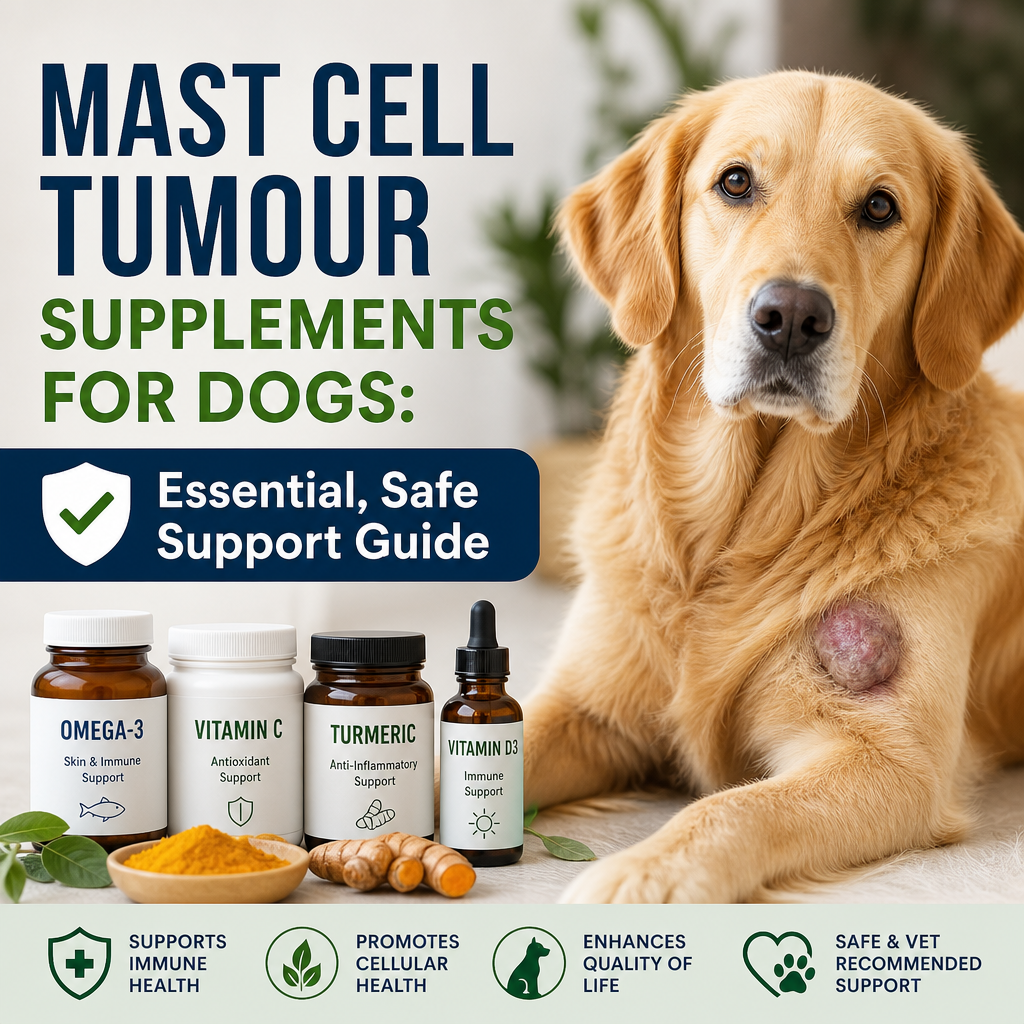
Mast cells are immune cells involved in inflammation and allergic responses. When these cells become cancerous, they form mast cell tumours, most commonly in the skin but sometimes in deeper tissues or internal organs. Some tumours remain relatively localized, while others invade surrounding tissue or spread to lymph nodes, the spleen, liver, or bone marrow.
Mast cell tumours can release substances such as histamine and heparin. This may cause swelling, redness, itching, stomach irritation, vomiting, diarrhoea, or, in severe cases, gastrointestinal ulceration and bleeding. Because of these effects, supportive care often focuses not only on the tumour itself but also on digestion, appetite, inflammation, comfort, and overall resilience.
Tumour grade, stage, location, size, surgical margins, and the dog’s general health all influence treatment. Supplements cannot reliably shrink a tumour or determine its behaviour. Their role is more limited: supporting normal body functions and helping a dog tolerate appropriate medical care.
In many cases, owners start researching Mast Cell Tumour Supplements for Dogs soon after diagnosis because they want to do something proactive. That instinct is understandable, and it can be helpful when it leads to careful, veterinarian-guided decisions rather than rushed product choices.
Choosing mast cell tumour supplements for dogs safely
The word “natural” does not automatically mean safe. Mast cell tumour supplements for dogs can affect blood clotting, liver enzymes, blood pressure, immune activity, and the absorption or effectiveness of medication. Some may also worsen stomach irritation, which is especially important for dogs whose mast cells are releasing large amounts of histamine.
Before introducing any product, provide the veterinarian with a complete list of medications, supplements, treats, and prescription diets. This list should include product names, ingredients, concentrations, and serving sizes. Choose products manufactured for dogs by reputable companies that provide batch testing or independent quality verification. Human supplements may contain unsafe ingredients, excessive doses, sweeteners such as xylitol, or combinations designed for human metabolism rather than canine physiology.
It is usually best to introduce one product at a time. This makes it easier to identify side effects and determine whether the supplement has a meaningful benefit. Stop the product and contact the veterinary team if the dog develops repeated vomiting, diarrhoea, unusual bruising, worsening lethargy, facial swelling, breathing difficulty, or a sudden change in appetite.
For more background on oncology support options, see les meilleurs suppléments pour chiens atteints de cancer.
In everyday care, many owners ask which mast cell tumour supplements for dogs are worth discussing first. The answer depends on the dog’s current medication list, eating habits, and whether the main concern is inflammation, digestion, or recovery after treatment.
When a dog is already taking prescribed medicine, even a simple product can matter. That is why mast cell tumour supplements for dogs should always be reviewed alongside the full treatment plan rather than chosen in isolation.
It also helps to think in terms of goals. Some supplements are meant to support calorie intake, others aim to reduce irritation in the gut, and a few are chosen for potential anti-inflammatory effects. Clear goals make mast cell tumour supplements for dogs easier to evaluate and reduce the chance of adding products that do not fit the dog’s needs.
Acides gras oméga-3 et soutien nutritionnel
Fish-derived omega-3 fatty acids, particularly EPA and DHA, are among the more commonly discussed options for dogs with cancer. They may support normal inflammatory balance and help maintain skin, coat, and general nutritional health. Omega-3s are not a cure for mast cell tumours, but they may be useful in selected dogs as part of a broader dietary plan.
Dosage matters. High amounts can cause loose stools, contribute excess calories, or potentially affect platelet function. Caution is especially important before surgery or when a dog receives medication that influences clotting. A veterinarian should determine the appropriate amount based on body weight, diet, health status, and treatment schedule.
A veterinary nutritionist can also assess whether the dog is receiving enough calories and protein. Maintaining body condition is often more important than adding multiple supplements. A complete, balanced diet that the dog willingly eats is generally the foundation of nutritional support.
If the dog is losing weight or eating less, mast cell tumour supplements for dogs should never be used as a shortcut for nutrition. Instead, the care team may need to adjust the diet, manage nausea, or address pain and stomach irritation first.
Some dogs tolerate fish oil well, while others develop soft stool or fishy burps. When that happens, the issue may be the dose, the product quality, or the dog’s current digestive sensitivity. Monitoring tolerance is part of using mast cell tumour supplements for dogs responsibly, especially during active cancer treatment.
Antioxidants, medicinal mushrooms, and herbal products
Antioxidants are frequently marketed for cancer support, but more is not always better. Some antioxidants may be appropriate in certain circumstances, while high-dose products could theoretically interfere with treatments that rely partly on oxidative damage. The evidence for many cancer supplements in dogs remains limited, and results from laboratory studies do not automatically apply to living animals.
Medicinal mushrooms, turmeric, green tea extracts, milk thistle, and other herbal ingredients are also commonly promoted as dog mast cell tumour supplements. Their quality and concentration can vary substantially. Some herbs may affect liver enzymes or medication metabolism; others may increase bleeding risk or cause gastrointestinal upset. Turmeric products, for example, are not interchangeable, and concentrated extracts may have different effects from small amounts used in food.
These products should be considered only after the oncology team reviews the full ingredient list. Avoid proprietary blends that do not disclose exact amounts. A product with many ingredients may sound comprehensive but can make interactions and side effects difficult to identify.
If you are comparing herbal support options, you may also find this guide useful: Herbes pour la vitalité des chiens : conseils utiles de soutien naturel.
Some families search for mast cell tumour supplements for dogs because they want something gentle and reassuring. That goal is understandable, but even plant-based products can be powerful enough to interfere with treatment or worsen digestive signs.
For that reason, the best mast cell tumour supplements for dogs are usually the simplest ones, chosen for a clear purpose and monitored closely for benefit or side effects.
It is also worth remembering that supplement quality can vary from batch to batch. Choosing products with transparent labels and veterinary-quality manufacturing standards gives mast cell tumour supplements for dogs a better chance of being both safe and consistent.
Digestive and immune support
Because mast cell tumours may contribute to stomach irritation, digestive support can be important. However, probiotics, digestive enzymes, fibre products, and acid-reducing strategies should be selected according to the dog’s symptoms and diagnosis. A probiotic may help some dogs with stool consistency, while another dog may need a medical evaluation for ulcers, pancreatitis, infection, or treatment-related side effects.
Veterinarians may prescribe antihistamines or stomach-protective medication when appropriate. These are not supplements, but they can be a central part of mast cell tumour dog support, particularly when histamine-related symptoms are present. Never substitute an over-the-counter human product without veterinary guidance, since some formulations contain dangerous additives or unsuitable combinations.
Immune “boosters” deserve special caution. A strong immune response is not always beneficial in cancer, and unregulated products may stimulate inflammation or interfere with treatment. The goal should be balanced, evidence-informed support rather than indiscriminate immune stimulation.
In practical terms, mast cell tumour supplements for dogs should be matched to the symptom pattern. A dog with soft stool may need a different approach from one with nausea, itching, or a poor appetite.
Digestive support is often most effective when it is paired with stable routines. Feeding the same diet consistently, offering small meals if advised, and watching for subtle changes in stool or appetite can help the veterinary team decide whether mast cell tumour supplements for dogs are actually helping or whether another part of the treatment plan needs attention.
Supplements around surgery and cancer treatment
Many supplements should be stopped before surgery because they may affect clotting, blood pressure, sedation, or anaesthesia. The veterinary team should know about every product well in advance of an operation. Do not assume that a supplement is harmless simply because it has been used for months.
During chemotherapy or radiation, the oncology team may recommend continuing, adjusting, or avoiding specific products. Treatment plans vary, and timing can matter. A supplement that is reasonable during recovery may not be appropriate immediately before chemotherapy, radiation, or another procedure.
Keep a written record of the dog’s medications, supplements, doses, and symptoms. This can help the veterinary team identify patterns, adjust treatment, and avoid accidental duplication of ingredients.
When planning procedures, it is smart to review mast cell tumour supplements for dogs at the same time as prescription drugs. That simple step can reduce the risk of bleeding issues, stomach upset, or unwanted drug interactions.
If the dog is recovering from surgery, the first priorities are usually pain control, wound healing, appetite, and comfort. Supplements may still have a place, but mast cell tumour supplements for dogs should be held or restarted only when the surgeon or oncologist feels the timing is appropriate.
For families seeking broader guidance during active treatment, the article on chemo natural support can provide additional context about supportive care that works alongside conventional oncology. That kind of planning is especially useful when mast cell tumour supplements for dogs are being considered during a changing treatment schedule.
A practical approach to mast cell tumour dog support
Effective support usually begins with the basics:
- Follow the tumour treatment plan and attend recommended staging or monitoring appointments.
- Provide a complete, balanced diet that maintains a healthy body condition.
- Track appetite, weight, stool quality, vomiting, itching, swelling, energy, and pain.
- Ask about prescription antihistamines or stomach protection when relevant.
- Introduce only one supplement at a time and use veterinarian-approved doses.
- Avoid products with vague labels, unverified claims, or undisclosed ingredients.
- Reassess supplements regularly rather than continuing them automatically.
Contact a veterinarian promptly if the dog has repeated vomiting, black or bloody stools, pale gums, collapse, severe weakness, sudden swelling, difficulty breathing, or rapidly worsening skin changes. These signs may indicate a serious mast cell reaction, gastrointestinal bleeding, tumour progression, or another urgent condition.
The most valuable mast cell tumour supplements for dogs are not necessarily the ones with the longest ingredient lists. Safe, useful support depends on the individual dog, the tumour’s behaviour, current treatment, and careful professional supervision. Supplements may complement cancer care, but informed veterinary management remains the essential foundation.
For official guidance on canine cancer information, the American College of Veterinary Surgeons offers a helpful overview of mast cell tumours in dogs.
Used thoughtfully, mast cell tumour supplements for dogs can be one part of a careful comfort plan, but they work best when the oncology team leads the overall strategy.
Before adding anything new, review mast cell tumour supplements for dogs with your veterinarian so the product choice, dose, and timing fit the dog’s treatment stage.
If the goal is long-term quality of life, mast cell tumour supplements for dogs should support eating, digestion, and recovery without distracting from proven medical care.
With clear monitoring and professional guidance, mast cell tumour supplements for dogs can be used more safely and with more realistic expectations.
In the end, good cancer support is less about buying many products and more about making thoughtful choices. When mast cell tumour supplements for dogs are selected carefully, they may fit into a plan that protects comfort, preserves nutrition, and respects the dog’s medical needs.
Owners who stay observant and communicate regularly with the veterinary team are usually best positioned to notice whether mast cell tumour supplements for dogs are useful, unnecessary, or causing problems. That ongoing review is what makes supportive care safer over time.
Even when a supplement appears promising, it should still be viewed as one tool among many. Rest, pain management, diet, follow-up exams, and timely adjustments to treatment all matter just as much as mast cell tumour supplements for dogs.
When in doubt, choose the simplest option that addresses a real problem and ask the oncologist how it fits into the broader plan. That approach keeps mast cell tumour supplements for dogs grounded in practicality, safety, and the dog’s quality of life.