
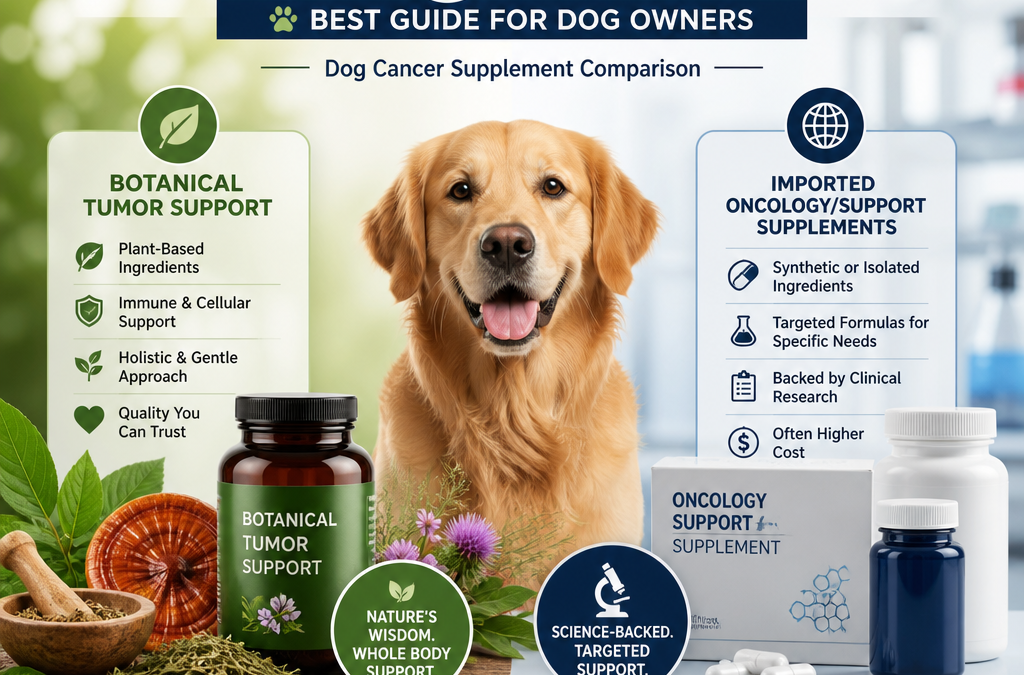
Botanical tumor support vs Imported oncology/support supplements is an important comparison for dog owners exploring complementary care during a cancer diagnosis. Although supplements may help support nutrition, comfort, or general well-being, they are not substitutes for veterinary oncology, surgery, chemotherapy, radiation, or other evidence-based treatments. The safest choice depends on the dog’s diagnosis, current medications, organ health, treatment goals, and the quality of the product itself.
- Comprendere il confronto degli integratori per il cancro nei cani
- Botanical tumor support: potential benefits and limitations
- Imported oncology and support supplements
- Key factors in choosing between supplement types
- Possible interactions with cancer treatment
- A practical decision-making approach
- What good supportive care looks like
- Prospettiva finale
Comprendere il confronto degli integratori per il cancro nei cani
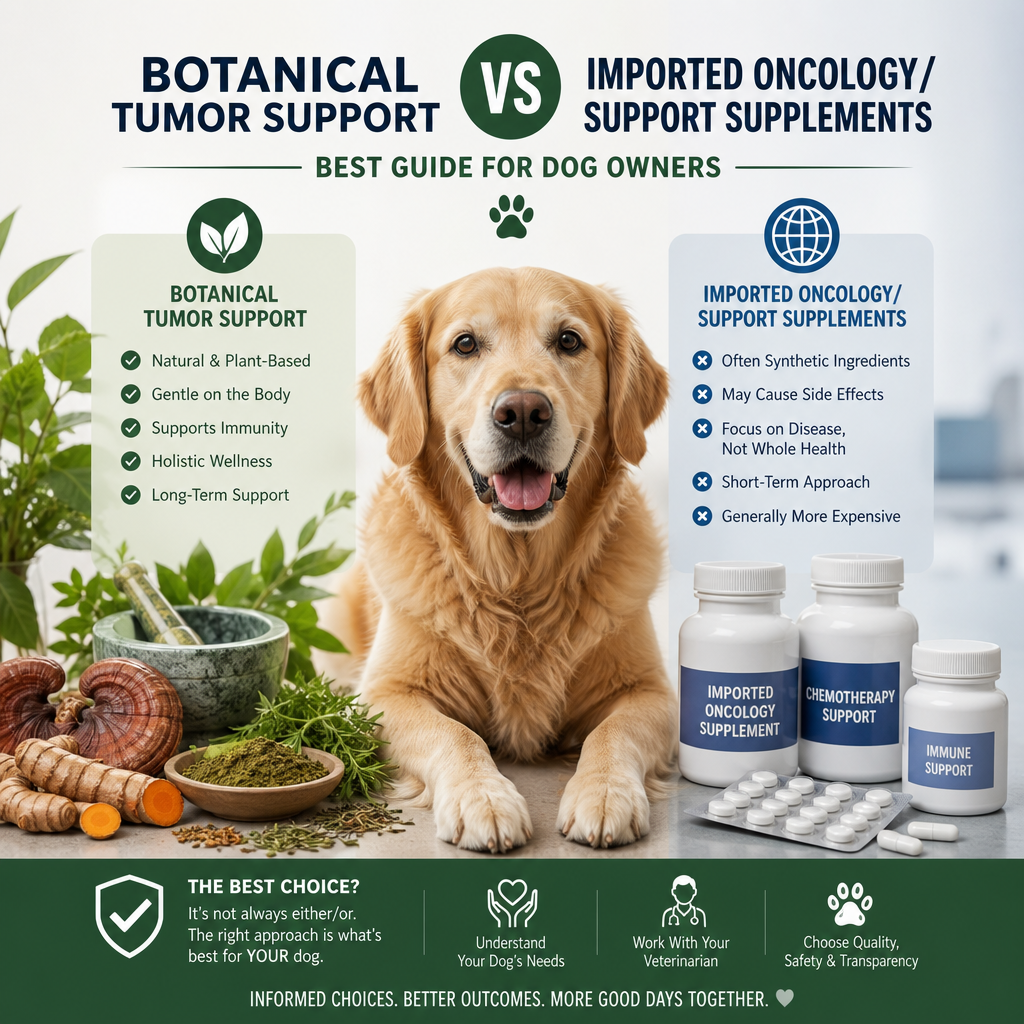
A dog cancer supplement comparison should begin with realistic expectations. Most supplements are designed to support a specific area of health rather than eliminate a tumor. Products may aim to support appetite, digestion, immune function, antioxidant balance, mobility, or recovery during treatment. However, marketing language can make supportive products sound like cancer cures, which may lead owners to delay appropriate veterinary care.
“Botanical tumor support” generally refers to formulas containing plant-derived ingredients such as medicinal mushrooms, turmeric compounds, green tea extracts, milk thistle, or other herbs. Imported oncology or support supplements may contain similar ingredients, but they can also include specialized compounds, vitamins, minerals, enzymes, or blends developed and manufactured in another country. The label’s origin alone does not determine whether a product is effective or safe.
For dog owners in Malta, the decision often comes down to transparency, veterinary guidance, and whether the supplement fits the dog’s treatment plan. When evaluating botanical tumor support vs Imported oncology/support supplements, it helps to focus on what the product actually does, not just how it is advertised. That same mindset is useful when comparing products for appetite support, liver support, joint comfort, or immune modulation, because the best choice is the one that matches the dog’s needs and treatment goals.
It is also helpful to remember that cancer care is not only about the tumor itself. Dogs may lose weight, feel nauseous, sleep more, or become less active during treatment, and these changes can influence which supplement category seems most appealing. In some cases, a simple supportive formula is enough to help with comfort and nutrition. In other cases, a more carefully selected imported product may offer clearer dosing, better labeling, or stronger manufacturing controls. The point is not to choose based on trends, but to choose based on the dog’s situation.
Good decision-making starts with a complete picture of the dog’s age, cancer type, stage, current medications, laboratory results, and concurrent health problems. A dog with liver changes, for example, may need a very different support approach from a dog with a tumor but otherwise normal bloodwork. For that reason, botanical tumor support vs Imported oncology/support supplements should be viewed as part of a broader veterinary plan rather than a stand-alone solution.
Botanical tumor support: potential benefits and limitations
Botanical formulas appeal to many owners because they are associated with traditional medicine and naturally occurring compounds. Some botanical ingredients have been investigated in laboratory, animal, or limited clinical research for antioxidant, anti-inflammatory, or immune-modulating activity. For example, certain mushroom extracts are studied for compounds that may influence immune signaling, while milk thistle is commonly used in products intended to support liver function.
However, laboratory findings do not automatically translate into meaningful tumor control in dogs. A compound may affect cancer cells in a test tube but have limited absorption, inconsistent dosing, or different effects inside a living animal. The available evidence may also vary substantially by cancer type, product formulation, and dose.
Another challenge is standardization. Two products may list the same herb but contain different concentrations of active compounds. Extraction methods, growing conditions, storage, and processing can all influence potency. A high-quality botanical supplement should identify the source, standardized constituents when applicable, recommended dosing, lot information, expiration date, and independent testing.
Natural does not mean risk-free. Botanicals can cause digestive upset, allergic reactions, sedation, changes in blood pressure, or effects on the liver and kidneys. Some may influence blood clotting or alter how prescription medications are metabolized. These concerns are especially important before surgery or when a dog is receiving chemotherapy, steroids, pain medication, anticoagulants, or other treatments.
Owners comparing botanical tumor support vs Imported oncology/support supplements should also remember that a traditional ingredient can still be poorly formulated. A well-known herb in a weak or contaminated product may be less useful than a carefully manufactured imported formula with stronger quality control. In practical terms, the best botanical product is usually the one that is transparent, conservatively dosed, and easy for the veterinary team to review.
There are situations where botanical support can be a reasonable part of care, especially when the goal is to support digestion, appetite, or general resilience rather than to treat the cancer directly. Even then, the supplement should be treated like any other active product. Owners should not assume that “gentle” or “plant-based” automatically means safe in every patient, particularly in dogs with chronic illness or dogs taking multiple medications.
One common problem is overestimating what botanical products can accomplish. A supportive herb or mushroom extract may help a dog feel better, but it will not replace surgery for a removable mass, chemotherapy for a systemic disease, or pain control for a painful tumor. If a product is advertised as a cure, the claim should be viewed with caution. A realistic evaluation of botanical tumor support vs Imported oncology/support supplements always begins with what the product can and cannot reasonably do.
Imported oncology and support supplements
Imported oncology or support supplements may offer sophisticated formulations and concentrated ingredients. Some are produced by companies with extensive research programs, veterinary distribution networks, or manufacturing standards that exceed basic supplement requirements. Certain products may also provide detailed technical information, certificates of analysis, and veterinary dosing guidance.
At the same time, imported products can be difficult to evaluate when labeling is incomplete or written according to regulations that differ from those in the owner’s country. Ingredient names, serving sizes, quality standards, and claims may not be directly comparable. A product sold online may also be exposed to heat, humidity, or prolonged shipping, potentially affecting stability.
Owners should be cautious with products that make strong claims such as “shrinks tumors,” “replaces chemotherapy,” or “works for every type of cancer.” These statements are warning signs, particularly when they are supported mainly by testimonials rather than controlled veterinary research. A reputable supplement company should clearly explain intended use, limitations, contraindications, and manufacturing controls.
For additional background on canine cancer warning signs, this guide from VCA Hospitals on cancer in dogs is a useful starting point for owners who want to understand symptoms and treatment considerations before choosing supportive products.
Imported formulas can sometimes be more consistent than locally sourced alternatives because they may come from companies that specialize in veterinary supplements and invest in quality assurance. Still, imported does not automatically mean superior. If the product is difficult to verify, lacks clear batch information, or uses vague proprietary blends, then its origin offers little advantage. The better question is whether the supplement can be traced, explained, and safely used alongside the dog’s current care.
Another practical issue is access. Some imported supplements are expensive, hard to reorder, or unavailable in a timely way if the dog does well on them. That matters because consistency is important in supportive care. If the owner cannot reliably obtain the same formula, a veterinary team may prefer a more stable and locally accessible option, provided it meets quality standards. In this sense, the choice between botanical tumor support vs Imported oncology/support supplements should include cost, availability, and continuity of care, not just the label or the marketing story.
Key factors in choosing between supplement types
The most useful way to approach botanical tumor support vs Imported oncology/support supplements is to compare evidence and quality rather than country of origin. Consider the following factors:
Trasparenza degli ingredienti
The label should list every active and inactive ingredient, amounts per serving, and the form used. Proprietary blends that hide individual quantities make it difficult to assess dosing or identify possible interactions.
Manufacturing quality
Look for good manufacturing practice standards, batch or lot numbers, expiration dates, and independent testing for contamination. Testing should address heavy metals, pesticides, microbes, and, where relevant, potency and adulteration.
Veterinary compatibility
The product should be reviewed by the veterinarian managing the dog’s cancer. A veterinary oncologist or integrative veterinary professional can assess whether the supplement fits the dog’s treatment plan.
Evidence and intended purpose
Ask what the product is actually intended to support. A supplement for appetite, joint comfort, or liver support should not be presented as a direct antitumor therapy. Evidence is more useful when it relates to the exact ingredient, dose, formulation, and condition being treated.
Dose and patient-specific risks
A dose appropriate for one dog may be unsuitable for another. Small dogs, senior dogs, dogs with liver or kidney disease, and dogs taking multiple medications require particular caution. Children and dogs may also be exposed accidentally if products are stored carelessly, especially when formulas contain concentrated extracts or sweeteners that are unsafe for pets.
When you compare products, it can help to think in terms of four questions: Is the ingredient list clear? Is the quality verified? Does the product have a plausible purpose for this dog? And can it be used safely with the current treatment plan? If the answer to any of these questions is uncertain, the product deserves a more cautious review. That cautious approach is especially important for botanical tumor support vs Imported oncology/support supplements because both categories can be marketed with persuasive language that hides real limitations.
Owners sometimes assume that a larger ingredient list means a stronger product. In practice, more ingredients can mean more uncertainty, more opportunities for interactions, and less clarity about which component is helping. A carefully selected single-ingredient formula may be easier to monitor than a complex blend, especially when a dog is already receiving prescription treatment.
It is also wise to ask whether the product has a reasonable shelf life and how it should be stored in warm or humid conditions. In Malta, storage conditions matter more than many owners realize. Heat and moisture can affect powder stability, capsule integrity, and liquid formulations. Even a well-made product can underperform if it is not stored correctly, which is another reason the product’s practical handling matters as much as its origin.
Possible interactions with cancer treatment
Supplements can affect cancer care in several ways. Antioxidant-heavy products may theoretically interfere with treatments that rely partly on oxidative damage, although the clinical importance depends on the specific drug and dose. Herbs that affect liver enzymes may change medication levels in the bloodstream. Ingredients that influence clotting can increase surgical or bleeding risks. Minerals and fiber may also affect absorption of certain medications.
For these reasons, owners should provide the veterinary team with the complete product label, not just the brand name. It is often wise to stop nonessential supplements before a planned procedure, but the timing should be determined by the veterinarian. Never discontinue prescribed cancer medication in favor of a supplement without professional guidance.
When discussing botanical tumor support vs Imported oncology/support supplements, it is also useful to ask whether the product has any published interaction data. Even limited evidence can help a veterinarian decide if the supplement should be avoided, delayed, or monitored more closely during treatment.
Potential interactions are not limited to prescription chemotherapy. Supplements can also interact with anesthetics, anti-nausea drugs, pain medications, anticonvulsants, steroids, and thyroid medication. Some products may seem harmless because they are sold as wellness formulas, yet their active compounds can still alter metabolism or organ function. That is why a label review is never optional when cancer treatment is underway.
Dog owners should also pay attention to symptoms that could signal a problem after starting a new product. Vomiting, diarrhea, sudden lethargy, bruising, unusual thirst, poor appetite, or yellowing of the gums are all reasons to contact the veterinarian promptly. If any of these signs appear soon after a new supplement is introduced, the product may need to be stopped until the team can assess the situation.
A practical decision-making approach
Start by identifying the dog’s diagnosis, stage, treatment plan, and current symptoms. Next, define a specific supportive goal, such as maintaining calorie intake, easing gastrointestinal upset, supporting mobility, or addressing a documented nutritional deficiency. Avoid adding several products at once because doing so makes it difficult to determine which one caused a benefit or side effect.
Introduce only one new supplement at a time, use the recommended dose, and monitor appetite, stool quality, energy, drinking, urination, skin changes, and any signs of pain or bleeding. Report vomiting, diarrhea, weakness, jaundice, unusual bruising, or sudden behavioral changes promptly.
A balanced diet, adequate hydration, pain control, prescribed treatment, emotional comfort, and regular veterinary monitoring usually have a greater effect on quality of life than an unverified supplement. In many cases, the best product is not the one with the longest ingredient list but the one with transparent labeling, reliable testing, a clear purpose, and veterinary oversight.
Dog owners often ask whether imported products are automatically better than botanical formulas. In reality, botanical tumor support vs Imported oncology/support supplements should be weighed by safety, consistency, and fit for the individual dog rather than by assumptions about what sounds more advanced or more natural. A product that matches the dog’s symptoms and works with the treatment plan is usually more valuable than one that simply appears modern or traditional.
If the dog is already on a carefully managed cancer protocol, a supplement should be added only when it has a clear reason to be there. For example, a dog with reduced appetite may benefit from nutritional support, while a dog with a sensitive stomach may need a gentler formula or no supplement at all. The goal is to make life easier for the dog, not to create another variable to monitor.
Keeping a simple log can be very helpful. Note the product name, dose, start date, and any changes in appetite, stool quality, energy, or comfort. This record gives the veterinarian a clearer picture of whether the product is helping. It also reduces guesswork when several supportive measures are being considered. In complex cases, that level of organization can make botanical tumor support vs Imported oncology/support supplements much easier to compare in a meaningful way.
Helpful questions to ask before buying
Before choosing a product, ask the seller or veterinary team the following questions:
- What is the exact intended use of this supplement?
- Are all ingredients and amounts listed clearly on the label?
- Has the product been tested for contaminants and potency?
- Is there any evidence in dogs, not only in cell or laboratory studies?
- Could this product interact with my dog’s prescriptions or upcoming procedure?
- How should the supplement be stored in Malta’s climate to preserve stability?
These questions can quickly separate serious products from vague marketing. They also make it easier to compare botanical tumor support vs Imported oncology/support supplements without relying on packaging claims alone.
If you are still undecided after asking these questions, a good next step is to ask the veterinarian whether the goal is symptom support, nutritional support, or possible anti-inflammatory support. A product that fits one of those goals clearly may be worth a trial, while a product with no clear purpose usually is not. That kind of filtering keeps the plan focused and reduces the chance of unnecessary supplements.
Owners can also ask whether a product has any official batch testing, a recognizable manufacturer, or a published contact point for product safety questions. Companies that stand behind their formula are usually willing to provide more than marketing language. This can be particularly helpful if you are comparing a locally available botanical formula with an imported product that seems more polished on paper but is harder to verify in practice.
What good supportive care looks like
Supportive care works best when it is practical and measurable. That means setting a realistic goal, such as improved appetite, steadier weight, less nausea, or better energy, and then tracking whether the supplement actually helps. If there is no clear benefit after a reasonable trial, the product may not be worth continuing.
Supportive care also means keeping the whole dog in view. Senior dogs with cancer may need joint support, digestive support, and appetite support at the same time, but the best plan is still one that is simple enough to monitor. If you are already reading about senior dog cancer care, it may help to review broader guidance such as senior dog cancer risks and aging dog health alongside supplement choices.
Because owners sometimes search for botanical tumor support vs Imported oncology/support supplements when they are overwhelmed by choices, the safest answer is usually the same: choose the product with the clearest evidence, the cleanest label, and the strongest veterinary oversight.
Good supportive care also respects the limits of supplements. Even a well-chosen product cannot correct every issue in a cancer patient. A dog may still need pain medication, anti-nausea treatment, dietary changes, or a modified exercise routine. When supplements are used as one small part of a complete plan, they are more likely to be helpful. When they are treated as a replacement for diagnosis or treatment, the risk to the dog increases.
In many households, the simplest supportive plan is also the best one. One supplement, one purpose, one monitoring process, and one supervising veterinarian often produces better results than a long list of products with overlapping claims. This is especially true when owners are trying to decide between botanical tumor support vs Imported oncology/support supplements and need a clear, manageable path forward.
Prospettiva finale
Botanical tumor support vs Imported oncology/support supplements should be evaluated through the same essential standards: safety, evidence, quality, transparency, and compatibility with veterinary treatment. Plant-based ingredients can be useful in selected situations, and imported formulas may offer valuable research or manufacturing expertise, but neither category is automatically superior.
The most responsible dog cancer supplement comparison focuses on the individual patient rather than promotional claims. Supplements may play a supportive role when carefully selected, but cancer care should remain centered on an accurate diagnosis, an individualized treatment plan, and ongoing communication with the veterinary team.
For dog owners in Malta, that approach is especially important because the best choice may differ based on availability, shipping conditions, and local veterinary recommendations. With the right guidance, botanical tumor support vs Imported oncology/support supplements can be compared in a way that supports your dog’s health without replacing proven treatment.
To summarize the decision simply: choose products that are transparent, clinically reasonable, and easy to monitor. Avoid products that promise cure-level results or hide key details behind a polished label. When in doubt, ask the veterinary team to review the formula before starting it. That small step can prevent unnecessary risk and make supportive care more effective over time.