
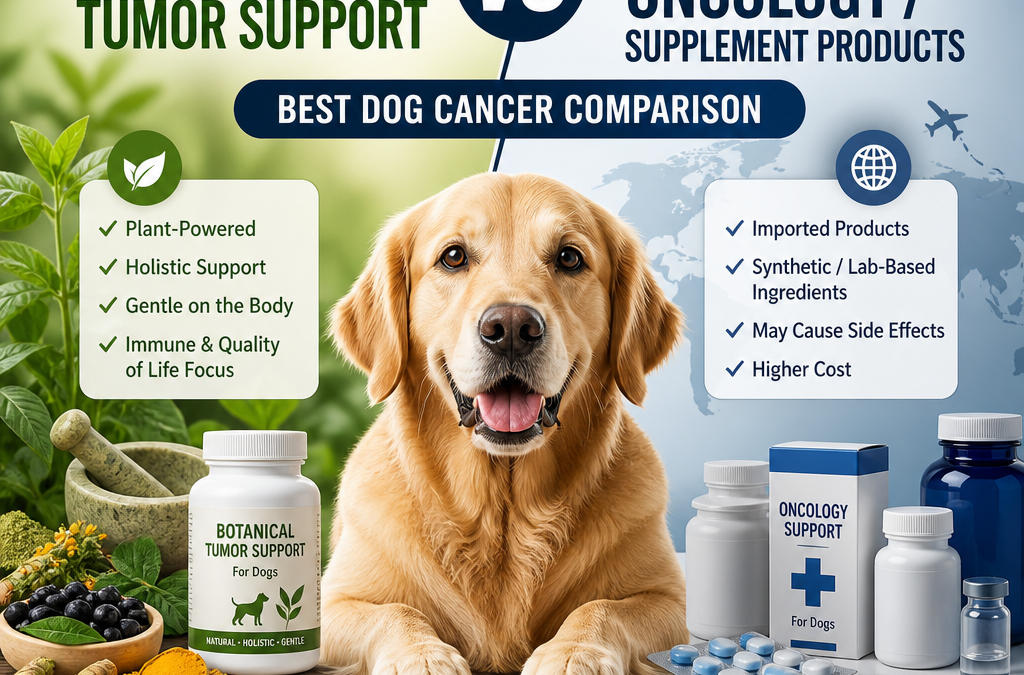
Botanical tumor support vs Imported oncology / supplement products is an important comparison for dog owners seeking supportive care during a cancer diagnosis. The decision is not simply about choosing between “natural” and “medical” products. It involves evaluating evidence, manufacturing standards, veterinary supervision, ingredient transparency, potential drug interactions, and the individual dog’s needs. A carefully selected supplement may support general wellness, but it should never replace a veterinarian’s cancer treatment plan.
Indice dei Contenuti
- Comprendere il confronto degli integratori per il cancro nei cani
- Botanical tumor support vs Imported oncology / supplement products: key differences
- Evaluating evidence behind supplement claims
- Safety and interaction concerns
- The importance of product quality
- Choosing support based on the individual dog
- Working with the veterinary oncology team
- Making a responsible decision
Comprendere il confronto degli integratori per il cancro nei cani
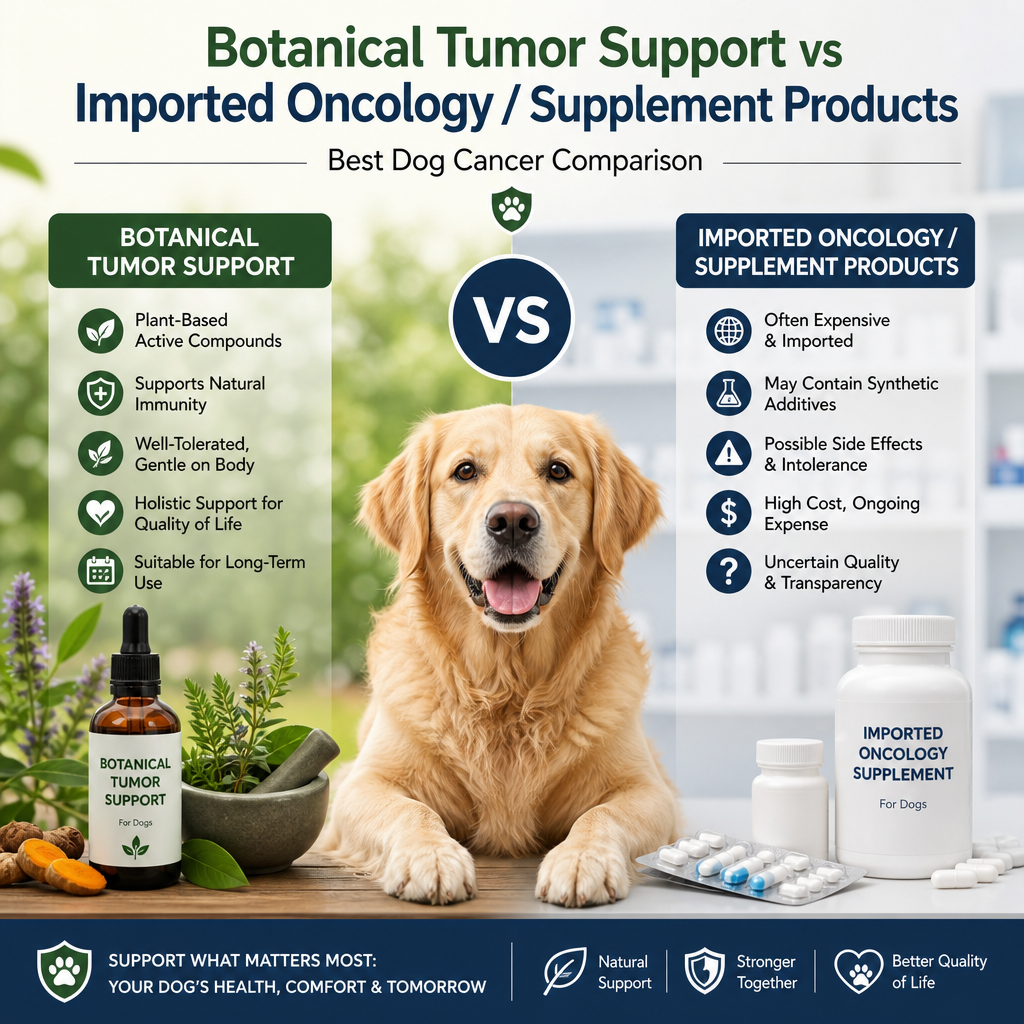
A dog cancer supplement comparison should begin with a clear distinction between treatment and support. Conventional oncology may include surgery, chemotherapy, radiation therapy, immunotherapy, targeted medications, or palliative care. Supplements, whether botanical or imported oncology products, are generally intended to complement these approaches rather than cure cancer independently.
Botanical products commonly contain plant-derived ingredients such as medicinal mushrooms, turmeric compounds, milk thistle, green tea extracts, or other herbs. Imported oncology or supplement products may include specialized formulas marketed for immune support, cellular health, antioxidant activity, or cancer-related nutrition. Some are produced according to rigorous standards, while others may have limited documentation available to consumers or veterinarians.
The product category alone does not determine quality. A domestically made botanical formula can be poorly regulated, while an imported product can be carefully manufactured and supported by credible testing. The most useful comparison focuses on verifiable characteristics rather than broad marketing claims.
For many owners, the hardest part is separating supportive care from hype. That is why botanical tumor support vs Imported oncology / supplement products should be reviewed through the lens of safety, evidence, and compatibility with the dog’s plan of care. If a product cannot explain what it contains, how it is made, and why it may help, the label is not enough to justify its use.
It also helps to think in terms of goals. Are you trying to support appetite, reduce digestive upset, maintain energy, or add an ingredient with a reasonable research background? A clear goal makes the comparison more practical and reduces the chance of buying a product simply because it sounds advanced or exotic.
Botanical tumor support vs Imported oncology / supplement products: key differences
Botanical tumor support products often emphasize recognizable plant ingredients and holistic wellness. Their potential benefits may include supporting appetite, digestion, antioxidant defenses, or normal inflammatory balance. However, botanical does not automatically mean harmless. Herbs can affect liver enzymes, blood clotting, blood pressure, immune activity, and the metabolism of prescription drugs.
Imported oncology or supplement products may offer concentrated formulations or ingredients unavailable in local products. Some may be developed with veterinary or human oncology research in mind. Others may rely heavily on testimonials, vague claims, or references to laboratory studies that do not demonstrate effectiveness in dogs.
One major difference is the availability of documentation. Responsible manufacturers should be able to provide:
– A complete ingredient list with exact amounts
– Batch or lot identification
– Certificate of analysis documentation
– Information about contaminant and microbial testing
– Manufacturing and quality-control standards
– Clear feeding or dosing instructions
– Contact information for technical questions
Products that do not disclose these details deserve additional caution, regardless of where they are made.
Another difference is how claims are framed. A strong label uses precise language and avoids promising outcomes that no supplement can guarantee. A weak label may use emotional terms, before-and-after stories, or “secret” formulas to imply superiority without offering verifiable proof. The more dramatic the claim, the more important it becomes to ask for actual documentation.
Imported formulas can be appealing because they may seem specialized or more advanced. Yet a product developed abroad is not automatically better than a botanical formula prepared locally. The real issue is whether the product has quality control, transparent sourcing, and a rationale that a veterinarian can review.
For owners comparing options in a broader evidence-based context, this comprehensive guide to diet and supplements for dogs with cancer can help frame what supportive care should and should not do.
Evaluating evidence behind supplement claims
Cancer-related supplement marketing frequently uses terms such as “supports tumor health,” “strengthens immunity,” or “promotes cellular defense.” These phrases may sound persuasive but do not necessarily prove that a product improves survival, shrinks tumors, or enhances quality of life.
Evidence should be evaluated in levels. Laboratory studies may show that an ingredient affects cancer cells in a test tube, but that does not establish that the same effect occurs in a living dog. Animal studies can provide useful information, yet species differences, dosage, and disease type still matter. Clinical studies in dogs are more relevant, particularly when they measure meaningful outcomes such as appetite, pain, treatment tolerance, progression-free time, or overall quality of life.
A veterinarian may also help distinguish between evidence for an individual ingredient and evidence for the finished product. A supplement can contain promising ingredients but still lack research on its specific combination, concentration, absorption, or safety profile.
It is also worth remembering that “natural” and “effective” are not the same thing. Many botanical ingredients have a long history of traditional use, but history alone does not replace modern testing. At the same time, a product imported with medical-looking packaging may still be built on weak claims. The smartest approach is to ask what proof exists, how the evidence applies to dogs, and whether the claimed benefit matters for your dog’s current condition.
When you want a deeper look at research-informed supportive care, VCA’s overview of cancer in dogs is a useful educational starting point for understanding how oncology care is typically approached.
Evidence also matters because cancer support is often a long process. Dog owners may try one product, hope for rapid improvement, and then switch too quickly when results are subtle. A better strategy is to define a realistic trial period with the veterinary team and decide in advance which changes would count as meaningful. Appetite, stool quality, comfort, activity, and tolerance of treatment are often more practical markers than dramatic claims on a box.
Safety and interaction concerns
The most important part of any dog cancer supplement comparison is safety. Dogs with cancer may already have reduced appetite, altered liver or kidney function, anemia, dehydration, or gastrointestinal sensitivity. Adding multiple supplements at once can make side effects difficult to identify.
Potential concerns include vomiting, diarrhea, reduced appetite, sedation, changes in blood pressure, abnormal bleeding, or liver enzyme elevations. Some botanical ingredients may interfere with chemotherapy metabolism or alter the effects of anticoagulants, anti-inflammatory drugs, steroids, seizure medications, or pain medicines. High-dose antioxidants may also be inappropriate during certain radiation or chemotherapy protocols, depending on the treatment goals and veterinary guidance.
Imported products introduce additional considerations. Label translations may be incomplete, ingredient names may differ between countries, and dosage instructions may not account for canine body weight or breed differences. There can also be uncertainty about storage conditions during shipping, expiration dates, and whether the product reaching the buyer matches the original formulation.
Because of these risks, botanical tumor support vs Imported oncology / supplement products should never be chosen based on marketing alone. The safer choice is the one that fits the dog’s diagnosis, current medications, and monitoring plan.
Owners should also be cautious when combining supplements with prescription medicines already used in oncology care. A product that seems mild can still change how a drug is absorbed or broken down. Even a small change may matter in a dog that is already medically fragile. Bringing every product to the oncology appointment helps the veterinarian screen for interactions before they become a problem.
At home, watch for subtle changes after starting any new supplement. Some issues are obvious, such as vomiting or loose stool, but others are easier to miss. Reduced enthusiasm for food, extra tiredness, restlessness, or new bruising can all be clues that a product is not well tolerated. Early detection makes it easier to adjust the plan while keeping the dog comfortable.
The importance of product quality
Quality control is particularly important because supplements may not undergo the same premarket review required for prescription medications. Look for companies that use independent laboratory testing and follow recognized manufacturing practices. Independent testing should ideally verify identity, potency, purity, and the absence of contaminants such as heavy metals, pesticides, harmful bacteria, or undeclared medications.
Be cautious with products that promise to cure cancer, replace chemotherapy, or work for every tumor type. Strong guarantees are usually a warning sign. A trustworthy manufacturer should acknowledge limitations, provide realistic usage information, and encourage consultation with a veterinarian.
Packaging also matters. A professional label should state the product’s intended species, serving size, storage instructions, lot number, expiration date, and full ingredient quantities. Proprietary blends that list only a total blend weight make it difficult to determine whether each ingredient is present at a meaningful or safe level.
Quality should also include consistency from batch to batch. A supplement may look impressive once, but if the next bottle is different in smell, color, or effect, the dog may receive an inconsistent dose. That can be especially concerning in cancer support, where predictability is important. If the company cannot explain how it controls batch consistency, the product deserves more scrutiny.
Another practical quality point is customer and veterinary support. Good companies usually provide technical staff, accessible contact information, and clear answers about sourcing. That matters when owners need to verify whether an herb is standardized, how the product should be stored, or whether a certain medication may be a concern. A transparent company makes it easier for the veterinary team to do its job.
Owners who are exploring vetted product education may also find the guide to cancer-fighting supplements for dogs through Traditional Chinese Veterinary Medicine helpful when comparing formulas and ingredient philosophies.
Choosing support based on the individual dog
Cancer is not one disease. A dog with lymphoma may have very different nutritional and medication needs from a dog with osteosarcoma, mast cell cancer, or a brain tumor. Age, weight, breed, organ function, current treatment, and quality-of-life goals all influence whether a supplement is appropriate.
Some dogs may benefit more from nutritional support than from a complex botanical blend. A complete, highly digestible diet, adequate calories, hydration, and effective control of nausea or pain can have a greater practical impact than an unproven product. In other cases, a veterinarian may recommend a specific ingredient for a defined purpose, such as liver support or appetite management.
Introduce only one new product at a time, unless a veterinary professional provides a different plan. Record the product name, dose, start date, appetite, stool quality, energy level, and any changes in medication. This makes it easier to recognize benefits or adverse effects and gives the veterinary team useful information.
In some cases, owners also compare region-specific support options. For example, articles such as i migliori integratori per cani con cancro can help clarify how supportive products are evaluated in practical veterinary settings.
Practical support should match the dog, not the trend. A senior dog with kidney changes may need a different approach from a younger dog in active chemotherapy. A large breed dog with bone pain may prioritize mobility and inflammation control, while a smaller dog with digestive upset may need a gentler nutritional approach. These differences are why one product cannot be judged as universally best.
Palatability matters as well. Even a well-designed supplement is of limited value if the dog refuses it. Capsules, powders, chews, and liquids all have pros and cons. Some dogs tolerate flavoring well; others need medication hidden in food. The ideal option is the one the dog can actually take consistently without stress.
Working with the veterinary oncology team
Veterinary oncologists and integrative veterinarians can help evaluate supplements within the context of the entire treatment plan. Bring the actual packaging or a clear photograph of the label to every appointment. Include products purchased online or from another country, even if they seem harmless or are described as purely natural.
The goal is not to dismiss botanical support or imported products automatically. Instead, the goal is to choose interventions that are transparent, reasonably supported, compatible with medical treatment, and appropriate for the dog’s condition. In many cases, the best plan combines evidence-based cancer therapy with carefully selected nutritional and supportive measures.
For owners who want to compare product support with a wider clinical perspective, nutritional supplements and cancer support for cats and dogs offers additional context on supportive care choices.
A helpful conversation with the veterinary team usually includes several questions: What is the intended purpose of the supplement? Is there evidence for this ingredient or product in dogs? Could it interfere with current medications? What side effects should we monitor? How long should we try it before deciding whether it helps? These questions turn a vague purchase into a coordinated decision.
It can also help to keep a simple supplement log. Write down the name, dose, brand, source, and any observed changes in appetite, weight, stool, or comfort. This gives the veterinarian objective information and reduces guesswork, especially when more than one support strategy is being used.
Making a responsible decision
When comparing botanical tumor support with imported oncology or supplement products, prioritize transparency over bold claims and suitability over novelty. Ask whether the product has reliable testing, whether its ingredients and amounts are fully disclosed, whether canine safety information exists, and whether it may interact with current medications.
A thoughtful dog cancer supplement comparison recognizes that supplements can have a role in supportive care, but they are not interchangeable with oncology treatment. The safest approach is to use them as part of a coordinated plan focused on tumor control, comfort, nutrition, and quality of life. With veterinary oversight and careful product evaluation, owners can make more informed decisions while avoiding unnecessary risks.
If you are deciding between options now, keep the focus on the dog’s medical needs first. Botanical tumor support vs Imported oncology / supplement products may look different on the shelf, but the most important question is whether the product is safe, documented, and truly helpful for your dog.
In the end, a good choice is usually the one that balances science, safety, and practicality. That may mean choosing a simple ingredient with reasonable support rather than a complicated blend with dramatic marketing. It may also mean declining a product that is popular but poorly documented. The best decision is rarely the flashiest one; it is the one that fits the dog’s condition and supports long-term well-being.
If the current treatment plan already includes chemotherapy, surgery, or radiation, supportive products should be reviewed with extra care. If the goal is palliative comfort, the priorities may shift toward appetite, digestion, and quality of life. In both cases, the same principle applies: informed, cautious, and individualized care is the most responsible path forward.