
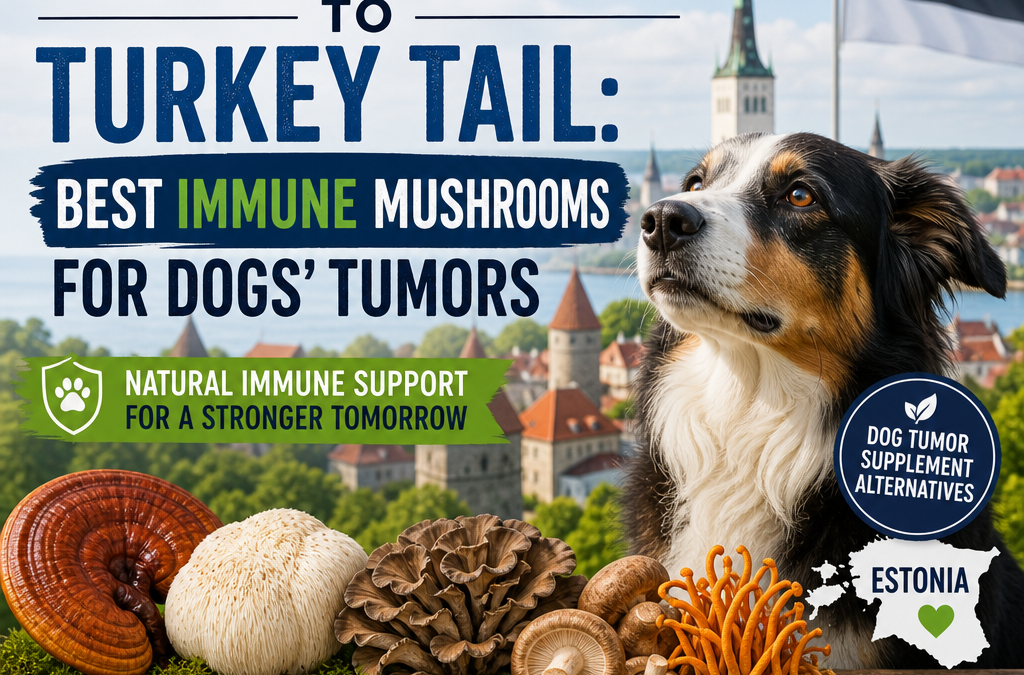
Alternatives to Turkey Tail / immune / mushrooms can be useful for Estonian dog owners exploring supportive mushroom supplements during a tumor-care plan. Turkey Tail is widely discussed because of its beta-glucans and immune-support research, but it is not the only mushroom option. Other medicinal mushrooms may provide complementary nutritional compounds, especially when selected carefully and used alongside veterinary treatment rather than instead of it.
A dog diagnosed with a tumor needs an individualized plan. The tumor type, stage, location, current medication, liver and kidney function, and general health all influence whether a supplement is appropriate. Mushroom products can vary significantly in quality, concentration, and purity, so choosing a safe product is more important than simply selecting the most popular ingredient.
目次
Why consider alternatives to Turkey Tail / immune / mushrooms?
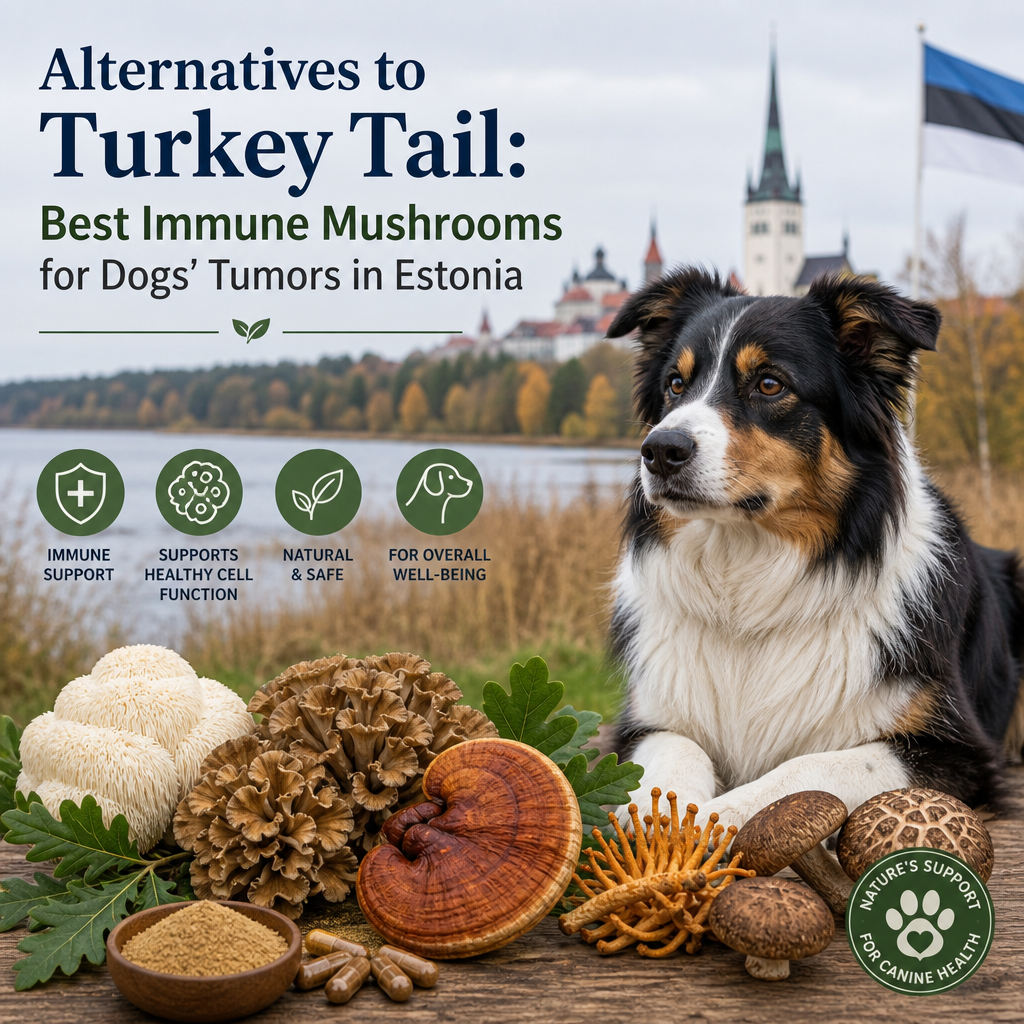
Alternatives to Turkey Tail / immune / mushrooms can matter when a dog needs a different formula, a more transparent label, or a product that is easier to source in Estonia. Turkey Tail, also known as トラメテス・バーシカラー, contains polysaccharides, including beta-glucans, that have attracted scientific interest for their potential effects on immune activity. However, some dogs may not tolerate it well, a particular product may be unavailable, or a veterinarian may recommend a different mushroom based on the dog’s condition.
There are also practical reasons to compare products. Some supplements contain poorly identified mushroom powders, while others use concentrated extracts with clearly stated levels of beta-glucans. A dog may also be taking chemotherapy drugs, corticosteroids, anti-inflammatory medicine, or other treatments that require careful supplement review.
The goal should not be to “boost” the immune system indiscriminately. Immune activity is complex, and supplements should support overall health without interfering with cancer treatment or worsening inflammation, digestion, or organ stress.
For readers who want to compare a different supplement style, this Pyravet immunity support option for dogs may help as another reference point when discussing choices with a veterinarian.
In practice, many owners begin by comparing alternatives to Turkey Tail / immune / mushrooms with a simple question: which product is most likely to fit my dog’s diagnosis, appetite, medications, and digestion? That practical filter is often more useful than chasing the strongest-sounding label.
It also helps to remember that mushroom supplements are not all designed for the same job. Some are marketed for broad wellness, some for immune support, and others as adjuncts in tumor-care plans. Reading the label carefully and asking how the product is meant to be used can prevent confusion later.
Reishi as a calming immune mushroom
レイシ、または ガノデルマ・ルシダム, is one of the most recognized mushroom ingredients in veterinary supplements. It contains polysaccharides and triterpenes, compounds studied for their possible immunomodulating and antioxidant properties. “Immunomodulating” is an important distinction: the aim is to help regulate immune responses rather than force them continuously upward.
Reishi is sometimes considered when a dog needs broader support for resilience, stress, or general wellbeing. However, it may not be suitable for every patient. Possible concerns include digestive upset, changes in blood clotting, or interactions with medications that affect the immune system or coagulation. Dogs scheduled for surgery may need to stop certain supplements in advance, but the timing must come from the veterinarian.
When owners search for alternatives to Turkey Tail / immune / mushrooms, Reishi is often near the top of the list because it is widely available and frequently included in combination formulas. That said, popularity does not replace product quality or veterinary guidance.
Some owners prefer Reishi because it is often presented as a calmer, more balancing mushroom rather than a highly stimulating one. That language can be helpful, but it should still be grounded in the dog’s actual needs. A senior dog with reduced appetite, for example, may need a different approach from a young dog already coping with multiple medications.
In a well-made formula, Reishi should have a clearly identified species name, extraction method, and dosage guidance. If a label hides the amount inside a vague proprietary blend, it becomes difficult to judge whether the product is likely to be useful or simply expensive.
Maitake and beta-glucan support
Maitake, or グリフォラ・フロンドーサ, is another potential dog tumor supplement alternative. It contains beta-glucans and other polysaccharides that have been investigated for immune-related activity. Maitake is often included in combination formulas designed to provide a wider range of mushroom compounds.
The quality of the extract matters. Products should identify the mushroom species, the part used, extraction method, and amount of active compounds when possible. A label that only lists “mushroom blend” without individual quantities makes it difficult to evaluate the dose or compare products.
Maitake should be introduced cautiously, particularly in dogs with sensitive digestion. Loose stools, vomiting, reduced appetite, or unusual lethargy are reasons to stop and contact a veterinarian.
For some owners, comparing alternatives to Turkey Tail / immune / mushrooms becomes easier once they see how different extract styles work. A transparent, single-mushroom formula can sometimes be simpler than a broad blend.
Maitake is also useful to consider when the priority is consistency. A supplement that is clearly standardized and easy to dose may be safer than one that changes from batch to batch or mixes many ingredients without clear support for each one.
When looking at alternatives to Turkey Tail / immune / mushrooms, it can help to ask whether the product has real testing behind it. Batch testing for heavy metals and contaminants is especially relevant for mushroom-based supplements because fungi can absorb substances from their growing environment.
Shiitake for nutritional and immune support
Shiitake, or シイタケ, is well known as an edible mushroom and contains compounds such as lentinan. In supplement form, it may be used as part of a broader immune-support formula. Its familiar food status does not automatically make every concentrated extract safe for dogs, however.
Fresh or cooked culinary mushrooms are not equivalent to medicinal extracts. Wild mushrooms can be toxic, misidentified, contaminated, or difficult for dogs to digest. Dogs should never be given unknown mushrooms gathered from forests, parks, or gardens in Estonia. A veterinary product made from authenticated ingredients is a safer option than homemade preparations.
Shiitake can be useful in discussions about alternatives to Turkey Tail / immune / mushrooms because it is often well tolerated when sourced correctly, yet it still deserves the same careful review as any other supplement.
Shiitake may also be included in formulas intended to provide nutritional support during periods of lower appetite or recovery. That does not make it a replacement for a proper diet, but it can be a helpful addition when the dog’s overall care plan already includes veterinary guidance, pain control, and regular monitoring.
As with every mushroom product, the details matter more than the marketing. The same ingredient can be presented as a plain powder, a hot-water extract, or a mixed formula. Those differences affect how much of the mushroom’s beneficial compounds are actually present.
Agaricus blazei and other combination formulas
Agaricus blazei, sometimes called the almond mushroom, is used in some complementary health products because of its polysaccharide content. Other formulas may include cordyceps, chaga, or combinations of several mushroom species. Evidence for these ingredients in dogs with tumors is limited, and much of the available research comes from laboratory, human, or general animal studies rather than controlled canine cancer trials.
Combination formulas can be convenient, but they also make it harder to identify which ingredient causes a reaction. For a dog taking several medicines, a single-ingredient product may be easier to evaluate. Cordyceps and chaga also require extra caution because they may affect immune pathways, blood sugar, blood clotting, or kidney and liver considerations depending on the product and the dog’s health.
If you are comparing alternatives to Turkey Tail / immune / mushrooms for a dog with a more complex medical history, keep in mind that “more ingredients” is not always better. Simplicity can improve safety and make follow-up easier.
Another reason to be careful with combination formulas is dose transparency. If a product lists six mushrooms in one capsule but does not say how much of each is included, you cannot reliably compare it with another product or tell which component might be helping. That is one of the most common problems owners run into when searching for alternatives to Turkey Tail / immune / mushrooms online.
A better formula usually has a clear purpose. Some are built for broad immune support, while others are designed as general wellness supplements. Understanding that distinction can help you avoid paying for a blend that sounds impressive but does not fit the dog’s real needs.
What to look for in Estonia
When comparing immune mushrooms in Estonia, look for a product supplied by a reputable manufacturer with transparent testing. Useful label details include:
- The exact mushroom species and Latin name
- Whether the product is a fruiting-body extract, mycelium product, or whole mushroom powder
- The extraction method
- Beta-glucan or polysaccharide content
- Batch testing for heavy metals, pesticides, microbes, and contaminants
- Clear serving instructions for dogs
- Storage instructions and an expiration date
Avoid products making guaranteed claims such as “cures tumors,” “replaces chemotherapy,” or “works for every cancer.” Such promises are not reliable and may encourage dangerous delays in proven treatment. Products sold through Estonian veterinary clinics, established pet-health retailers, or manufacturers that provide certificates of analysis may be easier to assess than anonymous online listings.
For a reliable reference on veterinary nutrition and supplement safety, the VCA Animal Hospitalsのペット健康ライブラリ offers practical, veterinarian-reviewed guidance that can help you evaluate claims more carefully.
Because mushroom supplements vary so much, the safest purchasing habit is to compare labels side by side. If two products are both marketed as alternatives to Turkey Tail / immune / mushrooms, the better one is usually the one that identifies its mushroom source clearly and proves it has been tested for contaminants.
Another helpful habit is to choose products that explain their intended use in plain language. A trustworthy label should help you understand whether the product is meant for immune support, digestive support, antioxidant support, or general wellness rather than expecting you to guess from the packaging.
Safe use with conventional tumor treatment
Mushroom supplements should be discussed with the veterinarian treating the dog’s tumor. Bring the complete product label, including all ingredients and concentrations. The veterinarian may recommend avoiding a supplement before surgery, during certain chemotherapy protocols, or when blood tests show liver, kidney, or clotting abnormalities.
Begin only one new supplement at a time, using the lowest label-recommended amount unless the veterinarian provides different instructions. Monitor appetite, stools, vomiting, thirst, energy, skin changes, and any unusual bleeding. Keep a written record of the product, dose, start date, and observed effects. This makes it easier to identify benefits or side effects and provides useful information during follow-up appointments.
Most importantly, supplements cannot replace diagnosis, staging, surgery, chemotherapy, radiation, pain control, or nutritional support when those treatments are indicated. Their role is complementary and should fit into a coordinated care plan.
In practice, the safest use of alternatives to Turkey Tail / immune / mushrooms is often gradual and well documented. That approach gives both the owner and veterinarian a clearer picture of how the dog responds over time.
If a dog already has a complicated treatment schedule, introduce supplements only when the vet agrees the timing makes sense. That extra step can prevent confusion if a new symptom appears and the care team needs to identify the cause.
It is also wise to keep supplements stored consistently and away from moisture or heat. Even a well-made product can lose quality if it is handled poorly, especially in homes where multiple pet supplements are kept together.
A balanced approach to dog tumor supplement alternatives
Alternatives to Turkey Tail / immune / mushrooms include reishi, maitake, shiitake, Agaricus blazei, and selected combination products, but no mushroom is universally best for every dog. The most appropriate choice depends on the animal’s diagnosis, treatment plan, medical history, and tolerance. In Estonia, careful product sourcing and professional guidance are especially valuable because supplement quality can differ widely between sellers.
A thoughtful approach combines evidence-based cancer care with practical monitoring. Choose transparent products, avoid unsupported promises, introduce supplements cautiously, and maintain regular veterinary checkups. Used responsibly, medicinal mushrooms may offer supportive nutritional and immune-related benefits, but the foundation of a dog’s care should always remain accurate diagnosis, appropriate treatment, comfort, and quality of life.
For readers comparing alternatives to Turkey Tail / immune / mushrooms across different regions, the key lesson is consistent: the best product is the one that fits the dog’s health needs, the current treatment plan, and the level of transparency you can verify.
When in doubt, ask your veterinarian to compare the label, the intended use, and the possible interactions before starting any new supplement. That way, alternatives to Turkey Tail / immune / mushrooms can be considered thoughtfully, with the dog’s safety and long-term care always first.
As a final reminder, the most helpful decision is usually not the most dramatic one. The right supplement is the one that is understandable, tested, and appropriate for the dog’s condition. That is especially true when evaluating alternatives to Turkey Tail / immune / mushrooms for a dog with a tumor in Estonia.
With a careful plan, the owner, veterinarian, and supplement choice can work together in a way that supports the dog’s comfort and overall care rather than adding uncertainty. If you keep the focus on safety, clarity, and veterinary oversight, alternatives to Turkey Tail / immune / mushrooms can be part of a sensible supportive strategy.