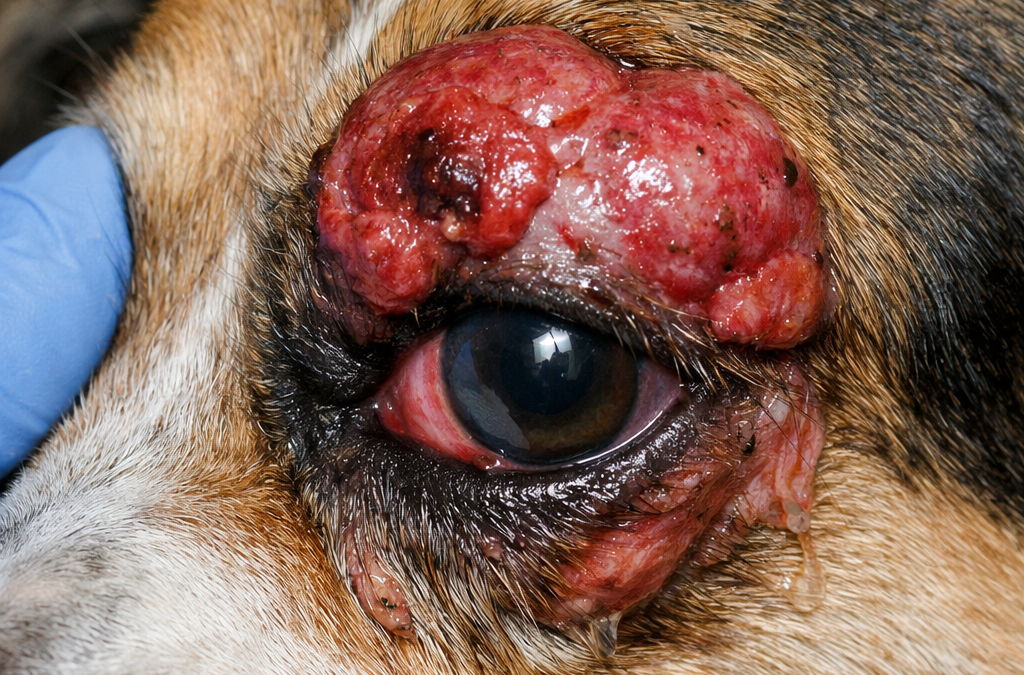
utworzone przez TCMVET | lut 8, 2026 | Rak i guzy u psów
Co oznacza “komórka wrzecionowata” u psów
“Komórka wrzecionowata” zazwyczaj opisuje, jak wyglądają komórki nowotworowe pod mikroskopem—długie, zwężające się i włókniste—zamiast nazywać jeden typ nowotworu. U psów ten opis często pokrywa się z mięsakami tkanek miękkich (STS) i pokrewnymi nowotworami typu mięsak, które są znane z lokalnej inwazyjności: mogą rozprzestrzeniać się mikroskopowo poza to, co można zobaczyć lub poczuć. Ten wzór wzrostu jest jednym z głównych powodów, dla których lokalne nawroty stają się kluczowym problemem.
Jak rzadki jest nowotwór komórki wrzecionowatej w pobliżu oka?
To zależy od tego, czy masa jest powierzchownym wzrostem powieki, czy głębszym nowotworem okołogałkowym/orbitalnym.
Wiele nowotworów powiek u psów jest powszechnych i często łagodnych, co jest uspokajające w codziennej praktyce okulistycznej. Jednak złośliwy nowotwór typu komórki wrzecionowatej/mięsaka, który szybko rośnie lub jest głęboko w okolicy oka, to inny scenariusz. Choroby orbitalne i retrobularne (choroby w oczodole lub za gałką oczną) są mniej powszechne niż proste guzki powiekowe i zazwyczaj wymagają bardziej złożonego planowania.
Objawy, które właściciele często zauważają
Nowotwór “nad okiem” może wyglądać jak twardy guzek lub obrzęk w pobliżu brwi lub powiek, ale głębsza choroba może objawiać się poprzez zmiany funkcjonalne. Psy mogą mrużyć oczy, nadmiernie łzawić, rozwijać uporczywy wyciek, pocierać oko lub twarz, lub wydawać się niechętne do ruchu głowy. Jeśli dotyczy to oczodołu, klasyczne objawy mogą obejmować wytrzeszcz (wybulone oko), wystawienie trzeciej powieki i ból wokół oka.
Ból i cierpienie: jak bardzo to boli?
Ból różni się znacznie i jest determinowany tym, co nowotwór robi lokalnie.
Masa może stać się bardzo niewygodna, jeśli zniekształca położenie powieki lub powoduje przewlekłe podrażnienie rogówki podczas mrugania. Wskazówki okulisty weterynaryjnego zauważają, że masy powiekowe często powiększają się z czasem i mogą podrażniać powierzchnię oka, wpływając na komfort i jakość życia. Choroby orbitalne mogą również być bolesne—szczególnie gdy obecny jest obrzęk, ciśnienie lub stan zapalny—i ból często jest wymieniany wśród objawów klinicznych w warunkach orbitalnych.
Dlaczego leczenie w pobliżu oka jest tak trudne
W przypadku nowotworów typu mięsak celem jest zazwyczaj silna kontrola lokalna, ponieważ mikroskopowe “palce” nowotworu mogą rozprzestrzeniać się poza to, co wygląda na nienormalne. Na tułowiu lub kończynach chirurdzy często dążą do szerszych marginesów, aby usunąć te niewidoczne rozszerzenia. W okolicy oka szerokie marginesy mogą być trudne do osiągnięcia bez uszkodzenia krytycznych struktur, dlatego lekarze mogą brzmieć ostrożnie w kwestii gwarancji.
Opcje leczenia: co zazwyczaj się rozważa
Większość planów leczenia koncentruje się na kontroli lokalnej i komforcie, często łącząc różne podejścia.
Chirurgia jest zazwyczaj kamieniem węgielnym, gdy jest to możliwe, zarówno w celu usunięcia obciążenia nowotworowego, jak i uzyskania definitywnej patologii. W przypadku mięsaków tkanek miękkich u psów, kompletność wycięcia silnie wpływa na wyniki; przeglądy podkreślają, że niekompletnie wycięte nowotwory niosą ze sobą wyższe ryzyko nawrotu lokalnego. W niektórych przypadkach chirurdzy mogą zalecać bardziej radykalne procedury, aby osiągnąć kontrolę w trudnych lokalizacjach (w tym operacje dotyczące oczodołu), ponieważ niektóre mięsak mogą wymagać radykalnych podejść, gdy anatomia ogranicza szerokość marginesu.
Radioterapia jest często omawiana, gdy marginesy są bliskie lub niekompletne, lub gdy anatomia uniemożliwia szerokie wycięcie. Jest stosowana w celu kontrolowania mikroskopowych komórek resztkowych i obniżenia szans na odrost, chociaż wyniki różnią się w zależności od zachowania nowotworu, planowania dawki i specyfiki każdego przypadku.
Ryzyko nawrotu: na co badania wielokrotnie wskazują
W literaturze dotyczącej STS u psów pojawiają się dwa czynniki, które pojawiają się nieustannie: stopień histologiczny i status marginesu.
Przegląd dotyczący niekompletnie lub wąsko wyciętych STS u psów podaje opublikowane wskaźniki nawrotów w przybliżonym zakresie 17%–37% w różnych badaniach, ilustrując, dlaczego “czyste marginesy” mają tak duże znaczenie. Inny szeroko cytowany przegląd zauważa, że przy całkowitym wycięciu lokalne nawroty u psów mogą być bardzo niskie, a niekompletne marginesy znacznie zwiększają ryzyko nawrotu.
Prognoza przeżycia i “harmonogram przeżycia”: praktyczny sposób myślenia o rokowaniu
Ponieważ “guz wrzecionowatokomórkowy” może reprezentować wiele typów guzów, czas przeżycia nie może być wiarygodnie podsumowany jedną liczbą. Bardziej niezawodnym sposobem zrozumienia rokowania jest zakotwiczenie oczekiwań w tym, co najsilniej przewiduje zachowanie:
Guz o niższym stopniu złośliwości, który można całkowicie kontrolować lokalnie, zazwyczaj ma lepsze rokowanie niż guz o wyższym stopniu złośliwości lub taki, który nie może być całkowicie usunięty z powodu lokalizacji. W przypadku psów z STS ryzyko przerzutów jest często opisywane jako zależne od stopnia, przy czym guzy o wyższym stopniu złośliwości mają znacząco wyższe szanse na rozprzestrzenienie się w trakcie choroby. W przypadku guzów okołookularnych “jak dobrze można kontrolować lokalną chorobę” często staje się dominującym czynnikiem kształtującym zarówno jakość życia, jak i ogólny wynik.
Co właściciele mogą zrobić wcześnie, co często ma znaczenie (bez zagłębiania się w szczegóły)
Najbardziej użyteczne punkty skupienia na początku to potwierdzenie rzeczywistego zakresu choroby i ochrona komfortu.
Zaawansowane obrazowanie, takie jak CT lub MRI, jest często zalecane w przypadkach oczodołowych/okołookularnych, ponieważ rutynowe badania nie zawsze mogą pokazać, co dzieje się za okiem, a obrazowanie pomaga w planowaniu operacji i radioterapii. Komfort jest również kluczowy: guzy okołookularne mogą wywoływać podrażnienie i stan zapalny rogówki, a zmniejszenie pocierania/urazów oraz zajęcie się podrażnieniem powierzchni oka może znacząco wpłynąć na codzienne samopoczucie.
FAQ: szybkie odpowiedzi, których szukają właściciele zwierząt
Czy każdy guz w pobliżu powieki jest złośliwy?
Nie. Guzy powiekowe są powszechne u psów i wiele z nich zachowuje się w sposób łagodny, chociaż każdy szybko rosnący, owrzodziały, krwawiący lub bolesny guz wymaga szybkiej oceny.
Dlaczego weterynarz zaleca usunięcie oka?
Gdy guz jest głęboko inwazyjny lub nie można bezpiecznie uzyskać marginesów, może być zalecana bardziej agresywna operacja lokalna, aby poprawić kontrolę lokalną w obszarze, gdzie przestrzeń jest ograniczona.
Dlaczego operacja i radioterapia nie mogą zagwarantować, że nie wróci?
Guzy typu mięsak mogą rozprzestrzeniać się mikroskopowo, a wokół oka może być trudno usunąć wystarczającą ilość otaczającej tkanki. Niekompletnie wycięty STS ma udokumentowane ryzyko nawrotu w wielu badaniach.
Co najsilniej przewiduje rokowanie?
Stopień patologii i to, czy guz został usunięty z czystymi marginesami, są wielokrotnie podkreślane jako główne czynniki ryzyka nawrotu i rozprzestrzenienia w przypadku psów z STS.
Jak Baituxiao może pomóc jako wsparcie w leczeniu
Okołookularne guzy wrzecionowatokomórkowe są zazwyczaj zarządzane najpierw przez kontrolę lokalną — najczęściej chirurgię, a czasami radioterapię — ponieważ te guzy mogą być lokalnie inwazyjne, a obszar oka ogranicza szerokie marginesy. W tym kontekście wielu właścicieli rozważa również integracyjną opiekę wspierającą, aby pomóc w utrzymaniu komfortu, apetytu i ogólnej jakości życia obok głównego planu leczenia.
Baituxiao to botaniczna formuła TCVM, która jest pozycjonowana przez producenta dla psów i kotów z “guzami i guzkami”, i zazwyczaj omawia się ją jako opcję wspomagającą, a nie jako samodzielne rozwiązanie. Ponieważ formuły botaniczne mogą wchodzić w interakcje z lekami stosowanymi w okolicy operacji, kontroli bólu, stanu zapalnego lub opieki onkologicznej, najlepiej stosować je jako część skoordynowanego planu z zespołem weterynaryjnym.
utworzone przez TCMVET | sty 14, 2026 | Rak i guzy u psów
Guzy ogonowe u psów mogą być niepokojące dla każdego opiekuna zwierząt, szczególnie gdy pojawiają się niepokojące myśli o nowotworach gruczołów analnych. Zrozumienie, co te guzki mogą oznaczać — i jak podjąć świadome, odpowiedzialne działania — może przynieść pocieszenie, wspierając dobrostan twojego pupila. Ten kompleksowy przewodnik bada potencjalne przyczyny guzów ogonowych u psów, objawy, na które należy zwrócić uwagę, sposoby, w jakie weterynarze oceniają nowotwory gruczołów analnych, codzienne porady dotyczące pielęgnacji oraz jak pozostać proaktywnym w zapewnieniu komfortu i jakości życia twojego psa.
—
Zrozumienie guzów ogonowych u psów
Guzy ogonowe mogą rozwijać się z kilku powodów, od łagodnych wzrostów po poważniejsze problemy. Podczas gdy niektóre guzki pozostają małe i nieszkodliwe, inne mogą wymagać uwagi weterynaryjnej w celu oceny ich charakteru.
Możliwe przyczyny guzów ogonowych
– Torbiele sebaceous: Małe, wolno rosnące woreczki zawierające oleistą substancję.
– Tłuszczaki: Guzy tłuszczowe często występujące u starszych psów, zazwyczaj miękkie i ruchome.
– Infekcje skórne lub ropnie: Powstające w wyniku urazów lub zablokowanych mieszków włosowych.
– Masowe zmiany związane z gruczołami analnymi: Masowe zmiany pochodzące z gruczołów w pobliżu odbytu.
– Inne guzy lub guzki: Mogą rozwijać się z różnych typów tkanek.
Nie każdy guzek jest niebezpieczny, ale śledzenie wszelkich zmian w czasie, szczególnie w pobliżu podstawy ogona, jest istotne.
—
Nowotwory gruczołów analnych: Co powinni wiedzieć właściciele zwierząt
Nowotwory gruczołów analnych to wzrosty, które pochodzą z worków analnych znajdujących się po obu stronach odbytu. Te nowotwory mogą być łagodne lub złośliwe, a wczesna ocena weterynaryjna jest kluczowa, aby określić ich charakter i najlepszy sposób postępowania.
Dlaczego gruczoły analne są ważne
– Lokalizacja: Znajdujące się pod ogonem gruczoły mogą rozwijać nieprawidłowości, które objawiają się jako guzki lub obrzęki.
– Funkcja: Wydzielają zapach używany do komunikacji między psami.
– Ryzyko: Zapalenie, zmiany strukturalne lub guzy mogą powodować dyskomfort, nieprzyjemny zapach lub inne komplikacje.
Częste obserwacje
– Trudności w wygodnym siedzeniu
– Przesuwanie się lub lizanie okolicy odbytu
– Obrzęk lub twardość w pobliżu odbytu
– Drżenie ogona lub niechęć do machania
Kiedy pojawiają się nowe lub utrzymujące się objawy, umów się na badanie u weterynarza. Profesjonalna ocena zapobiega błędnej interpretacji objawów i pomaga ustalić, czy dalsze badania są konieczne.
—
Guzki ogonowe u psów: Wczesne rozpoznawanie objawów
Ponieważ guzki ogonowe, które występują u psów, mogą pojawiać się stopniowo, czujność pomaga wychwycić problemy na wczesnym etapie. Staraj się delikatnie badać obszar ogona swojego psa podczas sesji pielęgnacyjnych, obserwując wszelkie zmiany w rozmiarze lub teksturze.
Objawy warte zauważenia
– Utrzymujący się obrzęk: Szczególnie jeśli jest twardy lub rośnie.
– Zmiany skórne: Czerwienienie, wypadanie włosów lub szorstka tekstura.
– Dyskomfort: Reakcja na dotyk w tym obszarze.
– Zmiany behawioralne: Zmniejszona energia, słaby apetyt lub nietypowe chowanie się.
Te objawy nie wskazują automatycznie na guzy gruczołów analnych, ale zasługują na wizytę u weterynarza dla jasności i spokoju ducha.
—
Jak weterynarze oceniają guzki ogonowe
Weterynaryjni profesjonaliści stosują różne testy, aby ocenić guzki i określić następne kroki. Dokładne podejście zależy od wieku psa, historii medycznej i cech guzka.
Typowe kroki diagnostyczne
1. Physical examination: Sprawdzanie rozmiaru, lokalizacji i spójności.
2. Aspiracja cienkoigłowa lub biopsja: Zbieranie komórek lub tkanki do analizy.
3. Obrazowanie: USG, rentgen lub tomografia komputerowa w celu oceny struktur wewnętrznych.
4. Badania krwi: Dostarcza informacji na temat ogólnego stanu zdrowia.
Omów proces otwarcie z weterynarzem, prosząc o zrozumiałe wyjaśnienia dotyczące tego, co każdy test może ujawnić. Właściciele zwierząt, którzy pozostają zaangażowani i poinformowani, często czują się pewniej wspierając swojego psa podczas oceny.
—
Wspieranie psów w opiece nad guzami gruczołów analnych
Gdy weterynarz zidentyfikuje guzy gruczołów analnych, opracowywany jest przemyślany plan oparty na unikalnej sytuacji psa. Ponieważ instrukcje medyczne należą do klinicznego otoczenia, właściciele zwierząt mogą skupić się na zapewnieniu spokojnego środowiska domowego i ściśle przestrzegać profesjonalnych zaleceń.
Praktyczne wskazówki dotyczące wsparcia w domu
– Prowadź dziennik: Zapisuj obserwacje, w tym apetyt, poziom energii i jakość stolca.
– Monitoruj kondycję ciała: Utrzymuj zdrową wagę, aby zmniejszyć dodatkowe obciążenie.
– Zapewnij łagodne ćwiczenia: Lekkie spacery lub gry stymulujące umysłowo utrzymują psa zaangażowanego.
– Oferuj wygodne miejsca do odpoczynku: Miękkie posłanie pomaga złagodzić nacisk na wrażliwe obszary.
– Bądź na bieżąco z kontrolami: Wizyty kontrolne pozwalają weterynarzom śledzić postępy i dostosowywać plany opieki.
Skupiając się na komforcie, spójności i wskazówkach weterynaryjnych, właściciele mogą pomóc psom czuć się bezpiecznie podczas ich drogi opieki.
—
Zagadnienia dotyczące odżywiania i naturalnego dobrego samopoczucia
Chociaż jedzenie i suplementy nie mogą diagnozować ani leczyć poważnych schorzeń, zdrowa dieta wspiera ogólną witalność. Zapytaj swojego weterynarza o zrównoważone diety dostosowane do wieku, rasy i poziomu aktywności twojego psa.
Ogólne informacje o żywieniu
– Zrównoważone białko i tłuszcze: Wspieraj zdrowie mięśni i energię.
– Źródła błonnika: Zachęcaj do trawienia i regularnego wydalania.
– Kwasy tłuszczowe omega: Może pomóc w utrzymaniu zdrowia skóry i błyszczącej sierści.
– Uwodnienie: Zapewnij stały dostęp do świeżej wody.
Naturalne podejścia do zdrowia - takie jak spokojne środowiska, delikatne pielęgnowanie i działania wzbogacające - mogą również promować poczucie bezpieczeństwa. Zawsze skonsultuj się z weterynarzem przed wprowadzeniem jakichkolwiek nowych zmian w diecie lub suplementach.
—
Praktyki zapobiegawcze i wczesnego wykrywania
Chociaż nie wszystkie guzki na ogonie można zapobiec, rutynowa obserwacja i zapobiegawcza opieka weterynaryjna mają znaczący wpływ.
Pomocne nawyki
– Regularna pielęgnacja: Pomaga wczesnym wykrywaniu nowych guzków.
– Spójny harmonogram kąpieli: Utrzymuje skórę w czystości i pozwala na sprawdzenie problemów.
– Rutynowe wizyty u weterynarza: Badania zdrowotne wychwytują subtelne zmiany.
– Szkolenie i obsługa: Naucz swojego psa tolerować dotykanie ogona i tylnych kończyn, aby inspekcje były łatwiejsze.
Ustanowienie tych nawyków sprzyja współpracy z weterynarzem i zapewnia komfort twojemu zwierzakowi.
—
Pytania, które należy zadać lekarzowi weterynarii
Wiedza umożliwia właścicielom psów podejmowanie świadomych decyzji. Rozważ zabranie listy pytań na wizyty.
Tematy do dyskusji
– Jaki rodzaj guzka ma mój pies i jakie testy to potwierdzają?
– Czy są jakieś zmiany w stylu życia, które mogą sprawić, że mój pies będzie czuł się komfortowo?
– Jak często powinienem monitorować guza?
– Jakie oznaki wskazują, że powinienem umówić się na pilną wizytę kontrolną?
Aktywna komunikacja zapewnia, że rozumiesz każdy krok w planie opieki nad swoim psem.
—
Wsparcie emocjonalne dla właścicieli zwierząt domowych
Odkrycie guza na ogonie psa może być emocjonalnie trudne. Poświęć czas na przetworzenie informacji i skontaktuj się z kimś, gdy potrzebujesz wsparcia.
Strategie radzenia sobie
– Polegaj na swoim zespole weterynaryjnym: Mogą wyjaśnić wyniki i następne kroki.
– Połącz się z wspierającymi społecznościami: Fora internetowe lub lokalne grupy mogą dzielić się pomocnymi doświadczeniami.
– Praktykuj samoopiekę: Zrównoważone posiłki, odpoczynek i czas na świeżym powietrzu wzmacniają odporność.
– Świętuj codzienne chwile: Łagodne spacery, czas na przytulanie i zabawa wzmacniają waszą więź.
Zachowanie spokoju i nadziei pomaga ci pozostać spokojnym filarem wsparcia dla twojego pupila.
—
Pozostawanie poinformowanym o guzach gruczołów analnych
Wiarygodne informacje kształtują odpowiedzialne decyzje. Skup się na zasobach opartych na dowodach, takich jak weterynarze z certyfikatem, artykuły recenzowane przez ekspertów i renomowane organizacje zajmujące się zdrowiem zwierząt.
Ocena źródeł informacji
– Sprawdź kwalifikacje: Szukaj licencjonowanych weterynarzy lub uznawanych instytucji.
– Uważaj na szybkie rozwiązania: Unikaj niezweryfikowanych twierdzeń lub terapii.
– Zapytaj swojego weterynarza: Mogą polecić zaufane materiały do czytania lub specjalistów.
Selektywność w informacjach utrzymuje zdrowie twojego psa na właściwej drodze i unika nieporozumień.
—
Holistyczne podejście do zdrowia psa
Holistyczna opieka oznacza uwzględnienie komfortu fizycznego, dobrostanu emocjonalnego i spokojnego środowiska. Miękkie posłanie, stałe rutyny, delikatne pielęgnowanie i spokojne interakcje przyczyniają się do ogólnego poczucia bezpieczeństwa.
Proste holistyczne praktyki
– Świadome spacery: Ciche spacery pozwalają na wąchanie i eksplorację.
– Masaż i delikatny dotyk: Po zatwierdzeniu przez weterynarza, lekki masaż może pomóc w rozluźnieniu mięśni.
– Zabawki wzbogacające: Zabawki z zagadkami, powolne gry wąchające i miękkie zabawki do żucia utrzymują umysły aktywne.
– Muzyka i aromaterapia: Uspokajające dźwięki lub zapachy zatwierdzone przez weterynarza mogą stworzyć spokojną atmosferę.
Zawsze obserwuj reakcje swojego psa i zaprzestań wszystkiego, co powoduje dyskomfort.
—
Podsumowanie: Wspieranie naturalnego dobrostanu poprzez opiekę
Każdy pies zasługuje na współczującą uwagę, szczególnie gdy nowe guzki budzą pytania. Będąc czujnym, współpracując z profesjonalistami weterynarii i tworząc komfortowe środowisko domowe, możesz z pewnością i troską poradzić sobie z guzami ogonowymi. Pamiętaj, aby podchodzić do każdego kroku z cierpliwością, utrzymywać otwartą komunikację z zespołem opieki nad swoim pupilem i kontynuować odkrywanie delikatnych naturalnych praktyk zdrowotnych, które pielęgnują ogólne poczucie równowagi twojego psa.
utworzone przez TCMVET | sty 14, 2026 | Rak i guzy u psów
Zioła dla starszych psów mogą odgrywać delikatną, wspierającą rolę w złotych latach twojego psa, oferując naturalny komfort obok regularnej opieki weterynaryjnej. W miarę starzenia się psów, ich potrzeby się zmieniają - mobilność spowalnia, trawienie się zmienia, a ogólny dobrostan wymaga większej uwagi. Wielu właścicieli zwierząt szuka holistycznych opcji, takich jak zioła i zmiany stylu życia, jako część zrównoważonego planu opieki. Ten przewodnik bada, jak przemyślanie używać ziół dla starszych psów, na co zwrócić uwagę i jak poprawić komfort twojego starzejącego się towarzysza poprzez praktyczne strategie i świadomą opiekę.
—
Zrozumienie starzenia się u starszych psów
Psy zazwyczaj wchodzą w swoje starsze lata około siódmego roku życia, chociaż to różni się w zależności od rasy i wielkości. W miarę spowolnienia metabolizmu i dojrzewania organów, psy stają się bardziej wrażliwe na stres, dietę, poziomy aktywności i zmiany środowiskowe. Zmiany związane z wiekiem mogą obejmować:
– Niższy poziom energii
– Wrażliwe trawienie lub zmniejszony apetyt
– Sztywność stawów lub niechęć do ruchu
– Zmiany behawioralne, takie jak zwiększona wokalizacja, dezorientacja lub niepokój
– Zwiększona potrzeba ciepła, rutyny i znajomości
Zrozumienie tych przejść pomaga wspierać twojego psa z cierpliwością i współczuciem, współpracując z weterynarzem i eksplorując łagodne, ziołowe strategie komfortu.
—
Czym są zioła dla starszych psów?
Zioła dla starszych psów to rośliny, które mogą łagodzić powszechne wyzwania związane z wiekiem w bezpieczny, umiarkowany sposób. Zioła mogą być suszone, świeże lub w formie preparatów (kapsułki, proszki, herbaty lub nalewki). Pochodzą z tradycyjnych praktyk na całym świecie – od ajurwedy po zachodnią ziołolecznictwo – gdzie naturalne rośliny były używane do wspierania zdrowia.
Kluczowe zasady obejmują:
– Wspieranie witalności, a nie tłumienie objawów
– Uzupełnianie opieki weterynaryjnej, a nie zastępowanie jej
– Słuchanie reakcji twojego psa na zioła i dostosowywanie w razie potrzeby
Zioła mają różnorodne właściwości, takie jak uspokajające, łagodzące trawienie lub ogólne odżywienie, które mogą być korzystne w starszym wieku. Zawsze konsultuj się z weterynarzem, najlepiej takim, który ma doświadczenie w ziołolecznictwie lub opiece integracyjnej, przed wprowadzeniem nowych roślin.
—
Zioła dla starszych psów do odkrycia dla komfortu
Rumianek i jego uspokajający wpływ
Delikatny aromat rumianku często uspokaja niespokojne lub niespokojne psy. Może pomóc, gdy starszy pies doświadcza nocnego krążenia, łagodnych problemów trawiennych lub ogólnego poczucia niepokoju. Rumianek jest powszechnie oferowany jako napar herbaciany, który można dodać do jedzenia lub wody, lub jako suszone zioło mieszane z posiłkami. Ponieważ rumianek jest łagodny, wiele psów dobrze go toleruje, ale monitorowanie alergii pozostaje ważne.
Skullcap dla relaksu
Skullcap to zioło cenione za swoje właściwości relaksacyjne bez silnego uspokojenia. Może być pomocne dla starszych psów, które wydają się napięte, reaktywne lub wrażliwe na hałas i zmiany. W połączeniu z modyfikacjami stylu życia (spójne rutyny, ciche miejsca, przewidywalne godziny karmienia), skullcap może wspierać równowagę emocjonalną.
Ostropest dla łagodnego wsparcia wątroby
Wątroba odgrywa centralną rolę w metabolizmie i detoksykacji, a starsze psy często korzystają z łagodnego wsparcia wątroby. Ostropest, bogaty w sylimarynę, jest powszechnie stosowany przez praktyków ze względu na swoje właściwości przeciwutleniające i potencjalne działanie ochronne. Wielu opiekunów zwierząt wprowadza ostropest w rotacji lub okazjonalnych kursach, zamiast polegać na nim ciągle. Ponownie, weterynarz powinien kierować czasem trwania i odpowiedniością, szczególnie jeśli twój pies przyjmuje leki.
Kurkuma i jej właściwości przeciwutleniające
Kurkuma zawiera kurkumin, związek o szeroko badanych właściwościach przeciwutleniających i łagodzących. Starsze psy mogą docenić posiłki z dodatkiem kurkumy dla ogólnego komfortu, chociaż powinny być one łączone z tłuszczami, takimi jak olej kokosowy lub olej rybny, aby poprawić wchłanianie. Ponieważ kurkuma może wchodzić w interakcje z niektórymi lekami lub stanami trawiennymi, skonsultuj się z weterynarzem przed regularnym jej stosowaniem.
Głóg dla wsparcia serca i układu krążenia
Owoce i liście głogu od dawna są stosowane w celu wspierania dobrostanu układu krążenia. Niektórzy integracyjni weterynarze wprowadzają głóg dla starszych psów, które wykazują oznaki starzejącego się układu sercowo-naczyniowego, chociaż niezbędne jest staranne nadzorowanie. Często jest częścią szerszego protokołu, który obejmuje dietę, kontrolowane ćwiczenia i rutynowe badania.
Spirulina i lucerna dla zwiększenia wartości odżywczych
Spirulina i lucerna to bogate w składniki odżywcze suplementy ziołowe, które mogą zapewnić dodatkowe wsparcie roślinne dla energii i odporności. Spirulina jest bogata w chlorofil i aminokwasy, podczas gdy lucerna zawiera witaminy, minerały i wspierające błonnik. Dodanie ich w umiarkowanych ilościach do diety starszego psa może pomóc w wypełnieniu luk żywieniowych.
—
Kluczowe kwestie przy wyborze ziół dla starszych psów
1. Consultation: Weterynarz zaznajomiony z medycyną ziołową może zalecić odpowiednie zioła, pomóc uniknąć niebezpiecznych interakcji i monitorować postępy.
2. Jakość: Wybieraj zioła z wiarygodnych źródeł, które oferują przejrzyste źródła i testy przeprowadzane przez strony trzecie w celu wykrycia zanieczyszczeń.
3. Formularz: Zdecyduj między proszkami, kapsułkami, nalewkami lub herbatami. Niektóre psy wolą zioła wymieszane z mokrą karmą; inne lepiej tolerują kapsułki.
4. Alergie: Wprowadzaj jedno zioło na raz w małych ilościach, obserwując oznaki nietolerancji, takie jak swędzenie, wymioty lub biegunka.
5. Consistency: Zioła zazwyczaj działają stopniowo. Stałe, mierzone stosowanie często działa lepiej niż sporadyczne dawkowanie.
—
Wskazówki dotyczące komfortu środowiskowego dla starszych psów
Zioła najlepiej łączą się z praktycznymi, codziennymi strategiami komfortu. Rozważ następujące sposoby, aby pomóc swojemu starszemu psu czuć się bezpiecznie, wspieranym i zadowolonym:
– Przytulne posłanie: Łóżka ortopedyczne, podniesione krawędzie lub podgrzewane podkładki (zapewniające komfort dla zwierząt) mogą łagodzić sztywne stawy i zapewniać ciepło.
– Powierzchnie antypoślizgowe: Maty lub bieżniki minimalizują poślizgi na drewnianych podłogach, zmniejszając stres na stawach i zwiększając pewność siebie.
– Dostępna woda i jedzenie: Umieść miski na matach antypoślizgowych i rozważ lekko podniesione stacje karmienia.
– Rutynowa pielęgnacja: Regularne szczotkowanie i delikatny masaż poprawiają krążenie i oferują czas na budowanie więzi.
– Ciche miejsca: Wyznaczone miejsce do odpoczynku z dala od hałasu domowego pomaga psom się zrelaksować i czuć się bezpiecznie.
– Miękkie oświetlenie w nocy: Przyciemnione światła lub lampki nocne prowadzą starsze psy, które mają ograniczoną wizję lub lęk nocny.
—
Wsparcie diety i trawienia
Znaczenie zrównoważonego odżywiania
Starsze psy często korzystają z bogatych w składniki odżywcze, łatwostrawnych diet. Chociaż istnieją komercyjne formuły dla starszych psów, skonsultuj się z weterynarzem lub specjalistą ds. żywienia psów, aby upewnić się, że jedzenie twojego psa spełnia indywidualne potrzeby. Rotacja białek, wprowadzenie delikatnie gotowanych warzyw i dodanie zdrowych tłuszczów może utrzymać zainteresowanie posiłkami i wspierać zdrową wagę.
Zioła wspierające trawienie
– Imbir: Znany z łagodzenia dyskomfortu żołądkowego, imbir może pomóc psom, które doświadczają okazjonalnej nudności. Używaj oszczędnie i skonsultuj się z weterynarzem w przypadku psów przyjmujących leki przeciwzakrzepowe.
– Korzeń mniszka: Czasami używany do wspierania trawienia i funkcji wątroby, korzeń mniszka można dodać do posiłków w małych ilościach.
– Koper włoski: Może łagodzić łagodne gazy lub wzdęcia. Jego smak przypominający lukrecję jest zazwyczaj dobrze tolerowany przez psy.
Nawodnienie
Starsze psy powinny zawsze mieć dostęp do świeżej wody. Możesz zwiększyć nawodnienie, wprowadzając pokarmy bogate w wilgoć, takie jak bulion kostny, puree warzywne lub karmę w wodzie.
—
Aktywność i mobilność
Łagodny wysiłek dla starszych psów
Nawet starsze psy korzystają z ruchu, który utrzymuje mięśnie silne, a stawy elastyczne. Dąż do małych, częstych spacerów zamiast jednego długiego marszu. Monitoruj tempo swojego psa i pozwól na czas na wąchanie — stymulacja umysłowa jest tak samo ważna jak fizyczna.
Zioła skoncentrowane na mobilności
Niektóre zioła wspierają komfort stawów i elastyczność:
– Boswellia: Często stosowana w tradycyjnych planach zdrowotnych dla wsparcia stawów z powodu swoich żywicznych związków.
– Szatanowy pazur: Zazwyczaj zalecane przez holistycznych praktyków do pielęgnacji stawów; jednak należy unikać ich u psów z określonymi schorzeniami.
Omów kombinacje lub długoterminowe stosowanie z weterynarzem, aby zapewnić bezpieczeństwo.
Terapie uzupełniające
Akupunktura, masaż, hydroterapia lub ćwiczenia fizjoterapeutyczne mogą złagodzić napięcie i zachęcić do ruchu. Te metody powinny być prowadzone przez wykwalifikowanych specjalistów doświadczonych w pracy ze starszymi psami.
—
Dobrostan emocjonalny i zachowanie
Rozpoznawanie zmian emocjonalnych
Starsze psy mogą doświadczać zmian poznawczych lub lęku. Objawy to chodzenie w kółko, budzenie się w nocy, wydawanie dźwięków lub zwiększona przywiązanie. Cierpliwość i konsekwentne zapewnienie są kluczowe w tych etapach życia.
Wsparcie uspokajające na bazie ziół
– Korzeń waleriany: Często stosowany w celu doraźnego łagodzenia stresu. Wprowadzaj go stopniowo, ponieważ jego ziemisty zapach może być intensywny.
– Passiflora: Łagodne zioło, które może zmniejszyć niepokój i wspierać równowagę emocjonalną.
Łączenie ich z dostosowaniami stylu życia (łagodna muzyka, dyfuzory aromaterapeutyczne używające zapachów bezpiecznych dla psów, przewidywalne rutyny) może sprzyjać relaksacji.
—
Tworzenie zestawu ziół dla starszych psów
Rozważ zorganizowanie swoich produktów ziołowych i wspierających w jednym miejscu:
1. Oznacz pojemniki nazwą zioła, zamierzonym celem i wszelkimi notatkami.
2. Śledź użycie w dzienniku, notując zachowania, apetyt i wszelkie zmiany.
3. Zaplanuj kontrole z weterynarzem, aby omówić plan ziołowy i upewnić się, że nadal pasuje do profilu zdrowotnego twojego psa.
4. Rotacja ziół gdy to odpowiednie, dając przerwy, aby uniknąć nadmiernego polegania.
—
Współpraca z lekarzami weterynarii
Weterynarze przeszkoleni w medycynie ziołowej, opiece integracyjnej lub Tradycyjnej Chińskiej Medycynie Weterynaryjnej (TCVM) mogą zaprojektować dostosowane protokoły. Oceną:
– Wiek, rasa i ogólny stan zdrowia
– Obecne leki lub suplementy
– Spożycie pokarmu i poziom aktywności
– Wskaźniki behawioralne
To współprace podejście zapewnia, że zioła są uzupełnieniem regularnych wizyt u weterynarza, badań krwi, opieki dentystycznej i wszelkich potrzebnych diagnostyk.
—
Zioła dla starszych psów i bezpieczeństwo
Bezpieczeństwo musi pozostać najwyższym priorytetem:
– Znajomość przeciwwskazań: Niektóre zioła mogą nie być odpowiednie dla psów z chorobami nerek, wątroby lub serca.
– Unikaj olejków eterycznych wewnętrznie: Wiele olejków, nawet gdy pochodzą z ziół, nie jest bezpiecznych do spożycia.
– Przechowuj zioła prawidłowo: Trzymaj je z dala od wilgoci, światła słonecznego i ciekawskich zwierząt.
– Obserwuj swojego psa uważnie: Jeśli zauważysz zmiany w stolcu, apetycie, oddychaniu lub zachowaniu, zaprzestań stosowania zioła i skonsultuj się z weterynarzem.
—
Szacunek dla rutyny i stabilności
Starsze psy rozwijają się w przewidywalności. Połącz wsparcie ziołowe z uważnymi rutynami:
– Spójne czasy budzenia, posiłków i spacerów
– Minimalne zakłócenia w strefach snu
– Powolne wprowadzanie, gdy odwiedzają goście
– Znane zapachy, zabawki i kocyki
Te kroki redukują stres i ułatwiają twojemu psu adaptację do subtelnych zmian.
—
Naturalne zdrowie poza ziołami
Oprócz ziół dla starszych psów, rozważ szersze strategie naturalnego zdrowia:
– Odżywcze przysmaki: Wybierz miękkie żucie lub delikatnie suszone przysmaki, które są łagodne dla zębów.
– Uważna pielęgnacja: Używaj ciepłych ręczników, delikatnych szczotek i uspokajających głasków.
– Czas na świeżym powietrzu: Ekspozycja na światło słoneczne (w odpowiednich warunkach pogodowych) pomaga regulować sen i nastrój.
– Stymulacja umysłowa: Karmniki z zagadkami, gry zapachowe lub krótkie sesje treningowe utrzymują umysły aktywne.
Naturalne zdrowie polega na pielęgnowaniu całego bytu twojego psa — ciała, umysłu i serca.
—
Świętowanie małych chwil
Każdy starszy pies ma unikalne potrzeby i radości. Świętuj małe zwycięstwa: wygodna drzemka, merdający ogon lub spokojny wieczór u twojego boku. Wsparcie ziołowe, w połączeniu z cierpliwością, zrozumieniem i wskazówkami weterynaryjnymi, tworzy opiekuńcze środowisko dla późniejszych lat twojego psa.
—
Wnioski
Zioła dla starszych psów, gdy są stosowane z rozwagą, oferują łagodny komfort jako część kompleksowego planu zdrowotnego. Współpracując z weterynarzem, wybierając wysokiej jakości rośliny oraz utrzymując spójne rutyny, możesz pomóc swojemu psu starzeć się z godnością i łatwością. Kontynuuj obserwowanie potrzeb swojego towarzysza, dostosowywanie praktyk opiekuńczych i cieszenie się czasem, który dzielicie. Naturalne podejścia, oparte na współczuciu i wiedzy, mogą przynieść wzbogacenie i harmonię w życiu twojego starszego psa.
utworzone przez TCMVET | sty 14, 2026 | Rak i guzy u psów
Naturalne wsparcie w chemioterapii staje się ważnym tematem dla opiekunów psów, gdy ich pupile przechodzą chemioterapię. Emocje mogą być intensywne, a naturalne jest szukanie łagodnych sposobów, aby utrzymać komfort swojego towarzysza, pozostając jednocześnie zgodnym z zaleceniami weterynaryjnymi. Zrozumienie, co naprawdę oznacza “naturalne wsparcie” — odżywcze rutyny, emocjonalny komfort i przemyślane dostosowania stylu życia — pomaga podejmować świadome decyzje, które szanują zarówno naukę, jak i unikalne potrzeby twojego psa.
Dlaczego opieka wspierająca ma znaczenie podczas chemioterapii
Chemioterapia może być znaczącym przedsięwzięciem dla każdego psa, wpływając na wszystko, od poziomu energii po apetyt. Podczas gdy weterynarze nadzorują plan medyczny, opiekunowie zwierząt odgrywają ogromną rolę w tworzeniu spokojnego, odżywczego środowiska w domu. Opieka wspierająca nie zastępuje leków ani profesjonalnych wskazówek; zamiast tego wzmacnia ogólne samopoczucie twojego psa poprzez spójne rutyny, zaangażowanie umysłowe i staranną obserwację.
Podstawy naturalnego wsparcia w chemioterapii
Budowanie ram dla naturalnego wsparcia chemioterapii oznacza skupienie się na trzech filarach: odżywianiu, zarządzaniu stresem i codziennym komforcie. Każdy filar współpracuje, aby pomóc Twojemu psu czuć się bezpiecznie i zadbanym przez cały czas leczenia. Małe zmiany—takie jak zapewnienie cichego miejsca do odpoczynku lub oferowanie zagadek wzbogacających—mogą przynieść zauważalną różnicę.
Rozważania dotyczące odżywiania i nawodnienia
Zrównoważona dieta dostarcza Twojemu psu budulca do siły. Chociaż zawsze powinieneś stosować się do zaleceń weterynarza, kilka podstawowych pomysłów może pomóc w kierowaniu Twoimi wyborami:
– Zrównoważone posiłki: Szukaj pokarmów, które oferują chude białka, złożone węglowodany i korzystne tłuszcze, aby utrzymać stałą energię.
– Łagodne składniki: Łatwostrawne opcje—takie jak gotowane warzywa lub proste białka—mogą być pomocne, jeśli żołądek Twojego psa wydaje się wrażliwy.
– Skupienie na nawodnieniu: Zmiany świeżej wody powinny być częste. Niektóre psy lubią smakowe kostki lodu lub rozcieńczone buliony o niskiej zawartości sodu dla urozmaicenia.
– Małe, częste porcje: Podawanie mniejszych porcji częściej może zachęcać do jedzenia, gdy apetyt się waha.
– Monitoruj reakcje: Prowadź prosty dziennik żywieniowy, aby zanotować wszelkie zmiany w stolcu, energii lub zainteresowaniu niektórymi pokarmami. Podziel się obserwacjami z weterynarzem.
Emocjonalny komfort i spójne rutyny
Psy często czerpią bezpieczeństwo z przewidywalnych harmonogramów. Utrzymywanie znanych rytuałów—porannych spacerów, wieczornych przytuleń lub delikatnych sesji pielęgnacyjnych—uspokaja Twojego towarzysza, że życie wciąż niesie komfort i stabilność.
– Ciche strefy: Stwórz przytulny obszar do odpoczynku z dala od hałasu domowego, wyposażony w koce i ulubione zabawki.
– Wzbogacenie sensoryczne: Oferuj łagodną muzykę, przestrzenie bez zapachów lub rozproszone naturalne światło, aby złagodzić nadmierne pobudzenie.
– Świadoma interakcja: Zwracaj uwagę na sygnały swojego psa. Niektóre dni mogą pragnąć czułości; inne dni mogą chcieć więcej przestrzeni osobistej.
Łagodna aktywność i wsparcie mobilności
Lekki ruch utrzymuje stawy nawilżone i mięśnie zaangażowane. Omów odpowiedni poziom aktywności z weterynarzem, a następnie dostosuj w razie potrzeby:
– Krótkie spacery: Krótkie spacery po miękkich powierzchniach mogą być łatwiejsze dla łap i stawów.
– Zabawki logiczne: Ćwiczenia umysłowe, takie jak zabawki wydające smakołyki, angażują umysł bez wymagania intensywnego wysiłku fizycznego.
– Wygodna pościel: Łóżka ortopedyczne lub wspierające maty pomagają amortyzować wrażliwe miejsca i zachęcają do odpowiedniego odpoczynku.
Współpraca z zespołem weterynaryjnym
Otwartą komunikacja z weterynaryjnym onkologiem lub lekarzem ogólnym jest kluczowa dla naturalnego wsparcia chemioterapii. Mogą zasugerować terminy wizyt kontrolnych, wskazać oznaki ostrzegawcze i pomóc w interpretacji zmian w zachowaniu. Rozważ prowadzenie dziennika:
– Nawyków żywieniowych
– Spożycie wody
– Preferencji zabawy lub odpoczynku
– Reakcji na techniki uspokajające
– Wszelkich nowych zachowań, które pojawią się między wizytami
Dzieląc się tymi obserwacjami, umożliwiasz weterynarzowi dostosowanie zaleceń specjalnie do doświadczeń twojego psa.
Holistyczne punkty kontaktowe bez roszczeń medycznych
Niektórzy opiekunowie eksplorują łagodne praktyki wellness, takie jak aromaterapia z olejkami eterycznymi bezpiecznymi dla zwierząt (zawsze rozcieńczonymi i zatwierdzonymi przez weterynarza), powolne techniki masażu lub nadzorowany czas na słońcu. Te podejścia koncentrują się na relaksacji, a nie na leczeniu. Pamiętaj:
– Zatwierdzenie weterynarza jest kluczowe: Nawet naturalne produkty mogą wchodzić w interakcje z lekami.
– Mniej znaczy więcej: Wprowadzaj jeden nowy element na raz, aby móc obserwować, jak twój pies reaguje.
– Komfort przede wszystkim: Jeśli twój pies wykazuje brak zainteresowania lub dyskomfort, zaprzestań tej praktyki i wróć do znanych komfortów.
Praktyczne wskazówki dotyczące codziennego wsparcia
Codzienne rutyny mogą stać się łatwiejsze do nawigacji dzięki zestawowi sprawdzonych strategii:
1. Zaplanuj przygotowanie posiłków z wyprzedzeniem: Wstępne porcjowanie jedzenia może zmniejszyć stres w zabiegane dni.
2. Ustaw przypomnienia: Użyj alarmów w telefonie na czas zażywania leków, sprawdzania świeżej wody lub krótkich sesji ćwiczeń.
3. Obrót wzbogacenia: Zachowaj mały wybór zabawek i rotuj je co tydzień, aby utrzymać zainteresowanie.
4. Używaj delikatnych narzędzi do pielęgnacji: Miękkie szczotki lub rękawice do pielęgnacji mogą pomóc usunąć luźne futro bez podrażnień.
5. Monitoruj energię w domu: Poproś członków rodziny, aby utrzymywali niski poziom hałasu i unikali nagłych zmian w rutynie.
Odczytywanie sygnałów twojego psa
Mowa ciała psa ujawnia wiele na temat poziomu komfortu. Ponieważ chemioterapia może zwiększać wrażliwość, zwracaj uwagę na sygnały:
– Zrelaksowana postawa: Wskazuje na zadowolenie.
– Ziewanie lub lizanie warg: Może sygnalizować łagodny stres.
– Chodzenie w kółko lub niepokój: Może oznaczać dyskomfort lub potrzebę cichej przerwy.
– Poszukiwanie uczucia: Wiele psów opiera się bardziej na swoich opiekunach, gdy potrzebują pocieszenia.
Reaguj, dostosowując otoczenie—przyciemnij światła, zmniejsz hałas lub zaoferuj delikatne głaskanie, jeśli twój pies lubi dotyk.
Integracja naturalnych perspektyw zdrowotnych
Naturalne zdrowie podkreśla harmonię między potrzebami fizycznymi a równowagą emocjonalną. Dla psów na chemioterapii może to oznaczać:
– Przerwy na świeżym powietrzu: Krótkie okresy na zewnątrz mogą dostarczyć nowych zapachów i delikatnej stymulacji.
– Uważne towarzyszenie: Po prostu siedzenie obok swojego psa, czytanie lub ciche rozmowy, sprzyja więzi bez wymagania energii.
– Czyste przestrzenie życiowe: Regularnie myj pościel, miski i zabawki łagodnymi, bezpiecznymi dla zwierząt środkami czyszczącymi, aby utrzymać higienę.
– Wzmocnienie pozytywne: Świętuj małe zwycięstwa—skończenie posiłku, eksploracja podwórka lub zabawa z zabawką.
Równoważenie optymizmu z realistycznymi oczekiwaniami
Naturalne jest, aby mieć nadzieję na najlepsze, ale pozostanie przy ziemi pomaga skutecznie reagować. Zaufaj wiedzy swojego zespołu weterynaryjnego i bądź dla siebie łagodny przez cały proces. Niektóre dni mogą być trudne; inne mogą przynieść wzruszające niespodzianki. Polegaj na wsparciu rodziny, przyjaciół lub społeczności opieki nad zwierzętami, gdy potrzebujesz zachęty.
Wnioski
Wspieranie psa podczas chemioterapii wymaga cierpliwości, obserwacji i stałego skupienia na komforcie. Integrując naturalne praktyki wsparcia chemioterapii—zrównoważoną dietę, spokojne otoczenia, delikatne aktywności i bliską komunikację z weterynarzem—tworzysz uspokajające rutyny, które szanują potrzeby twojego psa. Każdy świadomy wybór przyczynia się do kochającego, ugruntowanego podejścia do naturalnego zdrowia.
utworzone przez TCMVET | sty 14, 2026 | Rak i guzy u psów
Ryzyko nowotworów u Cavalierów, wczesne oznaki guzów u Cavalierów, powszechne nowotwory w tej rasie to tematy, które wielu kochających właścicieli ostatecznie poszukuje, gdy ich psy stają się starsze. Cavalier King Charles Spaniels są cenione za swoją łagodną naturę, ekspresyjne oczy i miłość do towarzystwa ludzi—ale jak wszystkie rasy, stają w obliczu pewnych wyzwań zdrowotnych, w tym guzów i nowotworów. Zrozumienie, na co twój Cavalier może być podatny, jak dostrzegać wczesne oznaki ostrzegawcze i jak wspierać je w ich starszych latach, może naprawdę wpłynąć na jakość życia.
—
A. Przegląd rasy
Cavalier King Charles Spaniels to małe psy towarzyszące, zazwyczaj ważące od 13 do 18 funtów. Są uczuciowe, zorientowane na ludzi i często opisywane jako “psy rzepowe”, ponieważ lubią być blisko swoich rodzin. Ich temperament jest zazwyczaj:
– Łagodny i przyjazny
– Dobry z dziećmi i innymi zwierzętami
– Adaptowalny zarówno do życia w mieszkaniu, jak i w domu, pod warunkiem, że codziennie mają interakcję i umiarkowane ćwiczenia
Ich średnia długość życia wynosi około 10–14 lat, chociaż może się to różnić w zależności od genetyki, środowiska i ogólnej opieki zdrowotnej.
Cavalierzy są znani z określonych problemów dziedzicznych, szczególnie:
– Choroby serca (szczególnie choroby zastawki mitralnej)
– Problemy neurologiczne, takie jak malformacja Chiari i syringomyelia
– Problemy ortopedyczne, takie jak luksujące rzepki
Chociaż nie są powszechnie uważane za rasę o “wysokim ryzyku nowotworowym” jak niektóre rasy olbrzymie, wiele Cavalierów doświadcza guzów i nowotworów w miarę starzenia się. Niektóre typy są często spotykane u psów małych ras i były również często zgłaszane u Cavalierów, szczególnie guzy skóry i tkanek miękkich, a także niektóre nowotwory związane z krwią.
—
B. Zrozumienie ryzyk nowotworowych Cavalierów, wczesne objawy guzów u Cavalierów, powszechne nowotwory w tej rasie
Nie każdy Cavalier rozwinie nowotwór, ale świadomość wzorców obserwowanych w rasie pomaga być proaktywnym. Następujące typy guzów i nowotworów są często zgłaszane u Cavalierów i podobnych małych ras:
1. Guzy komórek tucznych (MCT)
Guzy komórek tucznych są jednym z najczęstszych nowotworów skóry u psów i są stosunkowo często spotykane u Cavalierów. Zwykle pojawiają się jako:
– Guzy lub wypukłości na skórze, które mogą rosnąć, kurczyć się lub zmieniać się nagle
– Zmiany, które mogą być swędzące, czerwone lub zapalne
U małych ras te guzy mogą być najpierw zauważane jako drobne wypukłości przypominające “ukąszenia owadów”, które nie znikają. Ponieważ guzy komórek tucznych mogą mieć różny stopień złośliwości (wolno rosnące do bardzo agresywnych), szybka ocena weterynaryjna każdego nowego guzka jest niezbędna.
2. Lipomy i guzy tkanek miękkich
Łagodne guzy tłuszczowe (lipomy) są powszechne u psów w średnim wieku i starszych, w tym Cavalierów. Zwykle czują się:
– Miękkie, ruchome i tuż pod skórą
– Niebolesne przy dotyku
Jednak nie każdy “tłusty” guzek jest łagodny. Niektóre mięsak tkanek miękkich mogą naśladować lipomy pod względem odczucia i wyglądu. Z tego powodu każdy guzek powinien być sprawdzony, a nie zakładany jako nieszkodliwy, szczególnie u starszego Cavaliera.
3. Chłoniak (mięsak chłoniakowy)
Chłoniak to nowotwór układu limfatycznego (węzły chłonne i pokrewne narządy). Cavalierzy, podobnie jak wiele ras, mogą być dotknięci. Właściciele mogą najpierw zauważyć:
– Twarde, powiększone węzły chłonne pod żuchwą, z przodu ramion lub za kolanami
– Uogólnione obrzęki, letarg lub utratę wagi
Chłoniak jest uleczalny, a wczesna diagnoza oferuje więcej opcji, co czyni regularne kontrole ciała i wizyty u weterynarza ważnymi, szczególnie po osiągnięciu średniego wieku.
4. Hemangiosarcoma (HSA)
Hemangiosarcoma to złośliwy nowotwór komórek naczyń krwionośnych, często wpływający na śledzionę, wątrobę lub serce. Jest bardziej znany w dużych rasach, ale może również występować u mniejszych psów, takich jak Cavalierzy. Często jest “cichy”, aż spowoduje krwawienie wewnętrzne. Objawy mogą obejmować:
– Nagłe osłabienie lub załamanie
– Blade dziąsła
– Wzdęty brzuch
Ponieważ objawy mogą być subtelne aż do zaawansowanego etapu, regularne badania zdrowotne i badania krwi u seniorów mogą czasami wykryć związane problemy wcześniej.
5. Guzy mózgu lub rdzenia kręgowego
Cavalierzy mają już predyspozycje rasowe do problemów neurologicznych niezwiązanych z rakiem, więc szczególnie trudno jest stwierdzić, co się dzieje, gdy pojawiają się nowe objawy neurologiczne. Guzy w mózgu lub rdzeniu kręgowym mogą powodować:
– Nowe napady padaczkowe
– Nagłe zmiany w zachowaniu
– Trudności w chodzeniu, krążenie lub przechylanie głowy
Każdy nowy lub pogarszający się objaw neurologiczny u Cavaliera powinien być traktowany poważnie i omówiony z weterynarzem, ponieważ może być zaangażowanych wiele schorzeń (nie tylko rak).
Dlaczego Cavalierzy mogą być narażeni na ryzyko
Kilka czynników wpływa na ryzyko raka w tej rasie:
– Rozmiar i żywotność: Mniejsze rasy często żyją dłużej, więc mają więcej lat, w których może rozwinąć się rak.
– Wąskie gardła genetyczne: Popularne rasy czystorasowe, takie jak Cavalierzy, mogą dzielić geny, które predysponują do pewnych chorób.
– Stan ciała: Jak wszystkie psy, Cavalierzy, którzy są otyli lub mają nadwagę, mogą być bardziej narażeni na niektóre guzy i mają trudności z radzeniem sobie z chorobą.
Świadomość tych tendencji pozwala właścicielom być czujnymi bez paniki.
—
C. Wczesne sygnały ostrzegawcze, na które powinni zwracać uwagę właściciele
Wczesne wykrycie guza może dać twojemu psu więcej opcji i lepszą szansę na komfort. Zwróć uwagę na:
1. Zmiany skórne i podskórne
– Nowe grudki lub guzki
– Istniejące guzki, które rosną, zmieniają kolor lub stają się twarde
– Rany, które się nie goją
– Utrata włosów w określonym obszarze
Wykonaj delikatne “miesięczne badanie ciała”:
1. Powoli przesuń ręce wzdłuż całego ciała swojego Cavaliera, w tym pach, pachwin, klatki piersiowej, brzucha i podstawy ogona.
2. Zauważ wszelkie nowe guzki lub zmiany w rozmiarze/teksturze istniejących.
3. Prowadź dziennik z datami i przybliżonym rozmiarem (np. “wielkości grochu”, “wielkości winogrona”).
Należy zwrócić się o pomoc do lekarza weterynarii, jeżeli:
– Guzek jest nowy i utrzymuje się dłużej niż 2–4 tygodnie.
– Guzek rośnie szybko, staje się bolesny lub owrzodza.
– W krótkim czasie pojawia się wiele guzków.
2. Ogólne zmiany w zdrowiu
– Utrata wagi bez zmian w diecie
– Zmniejszony apetyt lub stawanie się wybrednym w jedzeniu
– Zwiększone spożycie alkoholu lub oddawanie moczu
– Letarg, mniejsze zainteresowanie spacerami lub zabawą
Te objawy mogą wynikać z wielu schorzeń, nie tylko nowotworów, ale zawsze powinny skłonić do wizyty u weterynarza.
3. Mobilność, ból i zmiany behawioralne
– Sztywność, kulawizna lub niechęć do skakania na meble
– Krzyk, gdy jest podnoszony lub dotykany w określonych miejscach
– Nagle unikanie schodów lub ulubionych aktywności
Ponieważ Cavalierzy są stoiccy i podatni na problemy ze stawami i neurologiczne, każdy nowy lub pogarszający się problem z mobilnością zasługuje na szybką ocenę.
4. Oddychanie, krwawienie i inne sygnały ostrzegawcze
– Uporczywy kaszel
– Trudności w oddychaniu lub przyspieszony oddech w spoczynku
– Krwawienia z nosa lub niewyjaśnione siniaki
– Spuchnięty brzuch, szczególnie jeśli nagły
Każdy z tych objawów powinien być traktowany jako pilny, wymagający natychmiastowej opieki weterynaryjnej lub oceny w nagłych wypadkach.
—
D. Rozważania dotyczące opieki nad seniorami w przypadku Cavaliers
Gdy Cavalierzy wchodzą w swoje starsze lata (często około 8 roku życia i starsze), ich ryzyko nowotworów i innych chorób wzrasta. Przemyślana opieka nad seniorami może wspierać ogólne zdrowie i pomóc w wcześnym wykrywaniu problemów.
1. Odżywianie i kondycja ciała
Cavalierzy uwielbiają jedzenie i łatwo mogą przybierać na wadze, co obciąża ich serce i stawy oraz może skomplikować zarządzanie nowotworami.
– Dąż do widocznej talii i łatwo wyczuwalnych żeber (bez ostrej wypukłości).
– Rozważ dietę dla seniorów lub kontrolującą wagę zalecaną przez weterynarza, dostosowaną do stanu zdrowia twojego psa.
– Monitoruj wagę co 1–2 miesiące w domu lub w klinice.
Wszelkie zmiany w diecie powinny być omawiane z weterynarzem, szczególnie jeśli twój pies ma choroby serca lub inne przewlekłe schorzenia.
2. Dostosowanie ćwiczeń i aktywności
Starsze Cavalierzy nadal korzystają z codziennego ruchu:
– Krótkie, częste spacery są często lepsze niż długie, intensywne wyjścia.
– Łagodne zabawy i wzbogacenie umysłowe (gry wąchowe, zabawki logiczne) pomagają utrzymać ogólne samopoczucie.
– Unikaj nadmiernego wysiłku, szczególnie w upalne dni lub jeśli twój pies ma problemy z sercem lub układem oddechowym.
3. Opieka nad stawami i leczenie bólu
Z wiekiem mogą wystąpić problemy z artretyzmem i kręgosłupem:
– W miarę możliwości zapewnij miękką pościel i antypoślizgową podłogę.
– Używaj ramp lub schodków, aby zredukować skakanie na i z mebli.
– Omów suplementy wspierające stawy, leki lub inne strategie zarządzania bólem ze swoim weterynarzem – nigdy nie zaczynaj ani nie zmieniaj leków przeciwbólowych bez profesjonalnych wskazówek.
4. Badania kontrolne i przesiewowe u weterynarza
Dla zdrowego dorosłego Cavaliera zazwyczaj zaleca się coroczne badania kontrolne. Dla seniorów wielu weterynarzy doradza:
– Badania kontrolne co 6 miesięcy
– Regularne badania krwi i testy moczu
– Kontrole ciśnienia krwi i oceny serca (szczególnie ważne w tej rasie)
– Okresowe obrazowanie (np. zdjęcia rentgenowskie lub ultradźwięki), jeśli wskazane na podstawie objawów klinicznych
Te wizyty pozwalają twojemu weterynarzowi wcześnie wykryć subtelne zmiany, w tym potencjalny rozwój nowotworów.
—
E. Ogólna profilaktyka nowotworów i wsparcie dobrego samopoczucia
Żadna strategia nie może całkowicie zapobiec nowotworom, ale wspieranie ogólnego zdrowia twojego Cavaliera może zmniejszyć niektóre czynniki ryzyka i poprawić odporność.
1. Utrzymuj zdrową wagę
– Stosuj odmierzone posiłki zamiast podawać je w dużych ilościach.
– Ogranicz wysokokaloryczne smakołyki i dziel się małymi porcjami zdrowych opcji (jak zwykłe warzywa), jeśli twój weterynarz to zatwierdzi.
– Połącz kontrolę kalorii z codziennym ćwiczeniem dostosowanym do stanu twojego psa.
2. Zrównoważona dieta i nawodnienie
– Karm kompletną, zrównoważoną dietą dostosowaną do etapu życia i potrzeb medycznych twojego psa.
– Zapewnij stały dostęp do świeżej wody.
– Jeśli interesują cię domowe lub specjalistyczne diety, współpracuj ze swoim weterynarzem lub certyfikowanym specjalistą ds. żywienia weterynaryjnego, aby uniknąć luk żywieniowych.
3. Regularna aktywność fizyczna i umysłowa
– Codzienne spacery, odpowiednie zabawy i gry wzbogacające pomagają utrzymać mięśnie, stawy i układ odpornościowy w lepszej kondycji.
– Stymulacja umysłowa redukuje stres, co może pośrednio wspierać ogólne zdrowie.
4. Minimalizuj ryzyko dla środowiska, gdzie to możliwe
– Unikaj narażenia na dym tytoniowy.
– Używaj bezpiecznych dla zwierząt produktów czyszczących i unikaj pozwalania swojemu psu na chodzenie po trawnikach, które zostały właśnie potraktowane chemikaliami, aż do całkowitego wyschnięcia i bezpieczeństwa zgodnie z instrukcjami produktu.
– Chroń swojego Cavaliera przed nadmiernym słońcem na lekko pigmentowanych obszarach, aby zmniejszyć ryzyko niektórych nowotworów skóry.
5. Rozważne stosowanie suplementów i wsparcie integracyjne
Niektórzy właściciele badają:
– Kwasy tłuszczowe omega-3 dla ogólnego wsparcia stawów i skóry
– Diety lub suplementy bogate w przeciwutleniacze
– Produkty na bazie ziół lub grzybów reklamowane jako “wsparcie odporności”
Dowody na te produkty są różne i nie są one substytutem opieki medycznej. Zawsze:
– Przed rozpoczęciem stosowania jakiegokolwiek suplementu skonsultuj się z lekarzem weterynarii.
– Poinformuj swojego weterynaryjnego onkologa, jeśli twój pies otrzymuje leczenie nowotworowe, ponieważ niektóre suplementy mogą wchodzić w interakcje z lekami lub terapiami.
—
F. Opcjonalna sekcja opieki integracyjnej: Uzupełniające podejścia dla Cavalierów
Podejścia integracyjne lub holistyczne mogą odgrywać wspierającą rolę dla Cavalierów żyjących z guzami lub rakiem, gdy są stosowane obok standardowej opieki weterynaryjnej.
Niektóre rodziny badają:
– Akupunktura wspomagająca komfort i mobilność
– Masaż lub delikatna fizjoterapia dla relaksu i wsparcia stawów
– Formulacje inspirowane TCM lub ziołowe mające na celu wspieranie witalności i odporności
Te metody nie są lekarstwami i nigdy nie powinny zastępować operacji, chemioterapii, radioterapii ani innych zalecanych terapii. Jeśli jesteś zainteresowany tymi opcjami:
– Skonsultuj się z weterynarzem przeszkolonym w medycynie integracyjnej.
– Upewnij się, że wszyscy praktycy współpracują z twoim głównym weterynarzem lub weterynaryjnym onkologiem.
– Unikaj jakiegokolwiek produktu lub terapii, która twierdzi, że “leczy” raka lub zastępuje leczenie medyczne.
—
Wnioski
Cavalierzy stają w obliczu wielu tych samych ryzyk nowotworowych i guzowych co inne psy, z guzami skóry i tkanek miękkich, chłoniakiem i nowotworami wewnętrznymi wśród bardziej powszechnych problemów występujących w tej rasie. Nauka rozpoznawania wczesnych oznak ostrzegawczych i zwracanie uwagi na subtelne zmiany w zachowaniu, apetycie lub mobilności twojego psa może prowadzić do wcześniejszego wykrycia i lepszych opcji. Dzięki przemyślanej opiece nad seniorami, regularnym kontrolom weterynaryjnym i proaktywnemu, świadomemu podejściu do zdrowia, możesz pomóc swojemu Cavalierowi cieszyć się jak największą liczbą komfortowych, szczęśliwych lat z tobą.
utworzone przez TCMVET | sty 14, 2026 | Rak i guzy u psów
Wzrost guza u psów może być jednym z najbardziej niepokojących odkryć dla każdego właściciela zwierzęcia, a często rodzi wiele pytań dotyczących długoterminowego dobrostanu ich towarzysza. Chociaż nie każdy guzek jest niebezpieczny, naturalne jest pragnienie jasności, pomocnych wskazówek i wiarygodnych informacji na temat tego, jak zareagować. Ten przewodnik w formie długiego tekstu bada, co właściciele psów powinni wiedzieć o rozwoju guzów, czynnikach, które mogą wpływać na postęp nowotworu oraz praktycznych krokach, które wspierają opiekę w trakcie zdrowotnej podróży.
—
Zrozumienie wzrostu guza u psów
Rozpoznawanie znaczenia guzków u psów
Guzki mogą mieć charakter od łagodnych mas tłuszczowych po bardziej niepokojące guzy. Kiedy pojawia się nowy guzek, to sygnał, aby zwrócić uwagę—bez zakładania najgorszego. Czynniki takie jak tekstura, rozmiar, lokalizacja i tempo wzrostu pomagają weterynarzom w dokładniejszej ocenie.
– Łagodne guzki mogą rosnąć powoli i pozostawać zlokalizowane.
– Guzy złośliwe mogą rozprzestrzeniać się na otaczające tkanki.
Chociaż fizyczne badanie i testy diagnostyczne u weterynarza są niezbędne do potwierdzenia, co się dzieje, regularne monitorowanie ciała psa zapewnia wczesne wychwytywanie zmian.
Rola postępu nowotworu
Postęp nowotworu odnosi się do tego, jak szybko nieprawidłowe komórki się replikują i przenoszą do innych tkanek lub narządów. Ponieważ każdy guz zachowuje się unikalnie, ten postęp może być powolny u jednego psa i szybki u innego. Wiek, tendencje rasowe, status immunologiczny i ogólny styl życia odgrywają rolę. Chociaż właściciele psów nie mogą kontrolować wielu biologicznych zmiennych, świadomość i szybka interwencja weterynaryjna pomagają kształtować bardziej świadomą drogę naprzód.
—
Dlaczego niektóre psy rozwijają guzy
Rozważania genetyczne i środowiskowe
Niektóre rasy, takie jak Golden Retrievery i Boksery, mają wyższe predyspozycje do konkretnych guzów. Predyspozycja genetyczna nie gwarantuje nowotworu, ale wymaga czujnej obserwacji i rutynowej opieki weterynaryjnej. Czynniki środowiskowe—takie jak długotrwałe wystawienie na słońce lub bliski kontakt z toksynami—mogą wpływać na rozwój guzów, dlatego minimalizowanie ich jest istotnym krokiem zapobiegawczym.
Dynamika hormonalna i układu odpornościowego
Hormony mogą wpływać na zachowanie niektórych guzów, szczególnie tych związanych z narządami rozrodczymi. To jeden z powodów, dla których zaleca się sterylizację lub kastrację pod kierunkiem weterynarza. Układ odpornościowy odgrywa kluczową rolę w rozpoznawaniu nieprawidłowych komórek. Chociaż silna odpowiedź immunologiczna nie zawsze zatrzymuje rozwój guzów, wspieranie zdrowia immunologicznego poprzez dobrze zrównoważony styl życia może przynieść korzyści.
—
Reflektor na “wzrost guza u psów” w codziennym życiu
Rutynowa obserwacja i prowadzenie rejestru
Wczesne wykrywanie może rozpocząć się w domu. Wielu właścicieli zwierząt lekko przesuwa ręce po ciele swojego psa w czasie pielęgnacji, zwracając szczególną uwagę na obszary, w których często pojawiają się guzki:
– Klatka piersiowa i brzuch
– Kończyny i stawy
– Szyja i głowa
Rejestrowanie zmian—takich jak nagły wzrost rozmiaru lub nowe guzki—ułatwia dostarczenie dokładnych informacji weterynarzowi.
Diagnostyka weterynaryjna
Gdy guz zostanie odkryty, specjaliści weterynarii często zalecają badania, takie jak:
– Aspiracje cienkoigłowe: komórki są usuwane i badane pod mikroskopem.
– Biopsje: małe próbki tkankowe są analizowane bardziej szczegółowo.
– Obrazowanie: zdjęcia rentgenowskie, ultradźwięki lub tomografia komputerowa ujawniają rozmiar guza.
Te podejścia pomagają w określeniu rodzaju wzrostu i kierują podejmowaniem decyzji dotyczących następnych kroków, czy to monitorowania, zarządzania nienarzucającego się, czy innych interwencji.
—
Jak styl życia wpływa na postęp nowotworu
Czynniki holistyczne
Chociaż żadna zmiana stylu życia nie zatrzymuje całkowicie powstawania guzów, wspierające nawyki mogą stworzyć zdrowsze środowisko wewnątrz ciała:
– Zbilansowane odżywianie: Skup się na wysokiej jakości składnikach i upewnij się, że jedzenie spełnia wymagania żywieniowe twojego psa na każdym etapie życia.
– Regularne ćwiczenia: Utrzymuj odpowiedni poziom aktywności bez nadmiernego wysiłku, utrzymując mięśnie w dobrej kondycji i kontrolując wagę.
– Redukcja stresu: Psy również odczuwają stres. Zapewnij uspokajające rutyny, stałe towarzystwo i łagodne szkolenie, aby zmniejszyć lęk.
Zarządzanie wagą
Utrzymanie zdrowej wagi jest kluczowe. Otyłość może wpływać na poziom hormonów i procesy metaboliczne, co potencjalnie wpływa na zachowanie guza. Współpracuj z weterynarzem, aby upewnić się, że dieta i plan ćwiczeń twojego psa odpowiadają jego potrzebom energetycznym.
—
Praktyczne wskazówki dotyczące monitorowania guzów u psów
1. Prowadź dziennik guzów: Zapisz datę odkrycia, przybliżony rozmiar i wszelkie zmiany w czasie.
2. Uzyskaj profesjonalne wskazówki: Umawiaj regularne wizyty u weterynarza i niezwłocznie omawiaj wszelkie nowe obserwacje.
3. Przyjmij delikatne podejście: Podczas badania wrażliwego obszaru utrzymuj spokojny, uspokajający kontakt, aby uniknąć dyskomfortu.
4. Obserwuj objawy wtórne: Zmiany w apetycie, poziomie energii lub mobilności mogą sygnalizować, że potrzebna jest ocena medyczna.
—
Współpraca z weterynarzem
Komunikacja ma znaczenie
Podziel się jak największą ilością szczegółów — kiedy guzek się pojawił, czy się zmienił, czy twój pies miał podobne problemy wcześniej oraz wszelkimi innymi obawami zdrowotnymi. Pełny przegląd umożliwia weterynarzowi dostosowanie planów diagnostycznych.
Badanie opcji
Weterynarze mogą sugerować różne podejścia w zależności od sytuacji, takie jak monitorowanie małych łagodnych guzków lub rozważenie ich chirurgicznego usunięcia. Kluczowe jest ocenienie potencjalnych korzyści, wszelkich związanych ryzyk oraz tego, co jest najlepsze dla komfortu i jakości życia psa.
—
Uwzględnienie naturalnego zdrowia
Środki wspierające
Naturalne zdrowie koncentruje się na pielęgnowaniu ciała poprzez łagodne, zrównoważone nawyki, a nie na szukaniu szybkich rozwiązań. Rozważ:
– Optymalizacja żywienia: Współpracuj z zespołem weterynaryjnym, aby wybrać pokarmy z wspierającymi składnikami.
– Nawodnienie: Odpowiednie spożycie wody pomaga utrzymać ogólne zdrowie.
– Strategie relaksacyjne: Masaż, aromaterapia (tylko zapachy bezpieczne dla psów) lub cichy czas nawiązywania więzi mogą promować spokojne zachowanie.
Współpraca z profesjonalistami
Jeśli chcesz zbadać produkty naturalnego zdrowia, omów je ze swoim weterynarzem, aby zapewnić ich zgodność z ogólnym planem opieki nad psem. Ważne jest, aby zweryfikować bezpieczeństwo każdego suplementu lub narzędzia holistycznego przed dodaniem go do rutyny twojego psa.
—
Wsparcie emocjonalne dla właścicieli psów
Szukanie społeczności
Opieka nad psem z guzem może być izolująca. Połącz się z lokalnymi lub internetowymi grupami wsparcia dla właścicieli zwierząt, którzy stają przed podobnymi wyzwaniami. Dzielenie się doświadczeniami i wskazówkami może przynieść pocieszenie i praktyczne spostrzeżenia.
Wzmacnianie siebie wiedzą
Polegaj na wiarygodnych źródłach i wskazówkach weterynaryjnych. Bądź czujny na dobrze intencjonalne, ale niezweryfikowane porady w Internecie. Świadome decyzje są często najbardziej współczującymi decyzjami.
—
Patrząc w przyszłość
Radzenie sobie z wzrostem guza u psów wymaga obserwacji, cierpliwości i silnych relacji z profesjonalistami weterynaryjnymi.
Monitorując zmiany, szukając terminowej oceny medycznej i przyjmując praktyki życiowe wspierające ogólne zdrowie, właściciele zwierząt tworzą środowisko opieki i uwagi.
