
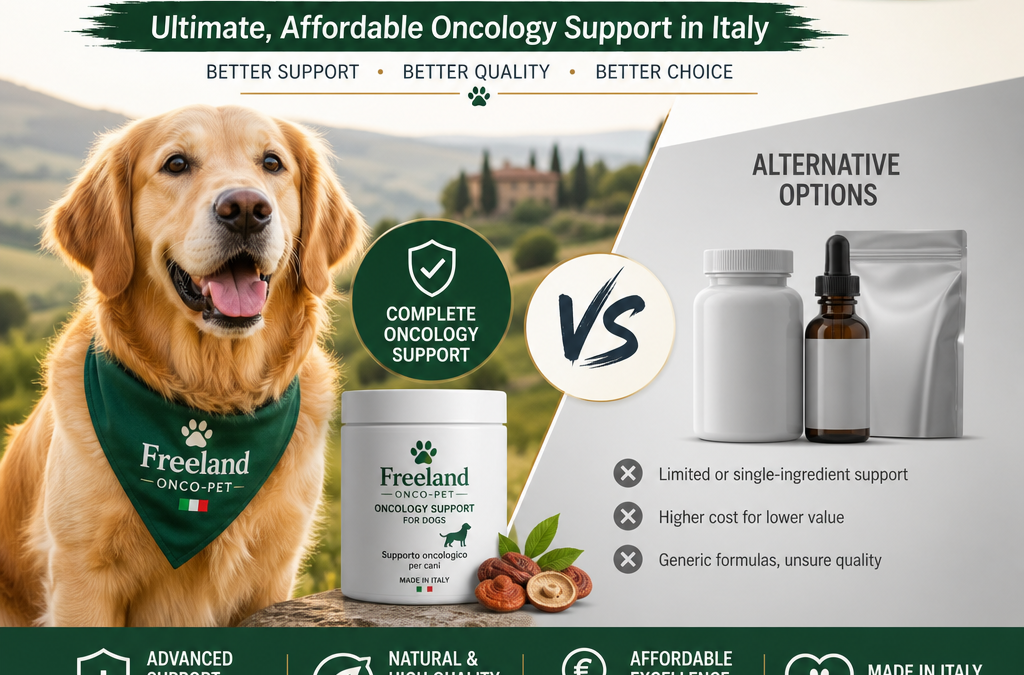
Freeland Onco-Pet vs alternatives is an important comparison for Italian pet owners looking for practical, affordable oncology support. When a dog or cat receives a tumor diagnosis, families often need more than a single product or treatment recommendation. They need clear information about veterinary care, nutritional support, quality-of-life monitoring, and the realistic options available within their budget.
A diagnosis of cancer is never simple, but informed decisions can make the care journey more manageable. Freeland Onco-Pet is generally considered a supportive product rather than a replacement for surgery, chemotherapy, radiotherapy, or other treatments prescribed by a veterinary oncologist. Understanding how it compares with alternative dog tumor support options can help owners discuss choices responsibly with their veterinary team.
What oncology support means for pets
Oncology support includes the measures used alongside primary cancer treatment to help maintain a pet’s strength, comfort, appetite, and overall well-being. Depending on the diagnosis, this may involve nutritional products, pain management, anti-nausea medication, appetite support, hydration, rehabilitation, and regular monitoring.
Supportive care is especially valuable because cancer and its treatment can affect several aspects of health. Some pets lose weight, experience digestive discomfort, become less active, or show changes in appetite. Others tolerate treatment well but need help maintaining muscle mass and energy. The appropriate plan depends on the tumor type, stage, treatment protocol, age, and existing medical conditions.
For this reason, no supplement should be viewed as a universal cancer cure. A supportive product may have a role in a broader care plan, but it should be selected with veterinary guidance. In many cases, the right plan is less about a single product and more about combining nutrition, symptom control, and medical oversight.
That broader approach is also why many owners compare Freeland Onco-Pet vs alternatives before making a purchase. A product may fit one pet’s situation well and be a poor fit for another, depending on appetite, treatment stage, and concurrent medications.
In day-to-day practice, oncology support can also include simple routines that reduce stress. Predictable feeding times, clean water access, and a calm resting space can make a noticeable difference for dogs and cats receiving cancer care. These details may seem small, but they often influence whether a pet maintains intake and stays comfortable enough to continue treatment.
When owners think about Freeland Onco-Pet vs alternatives, it helps to remember that supportive care is meant to work with the treatment plan, not replace it. A supplement may be useful if it helps preserve condition or appetite, but the most important gains usually come from coordinated veterinary care, good nutrition, and careful symptom management.
Freeland Onco-Pet vs alternatives: what to compare
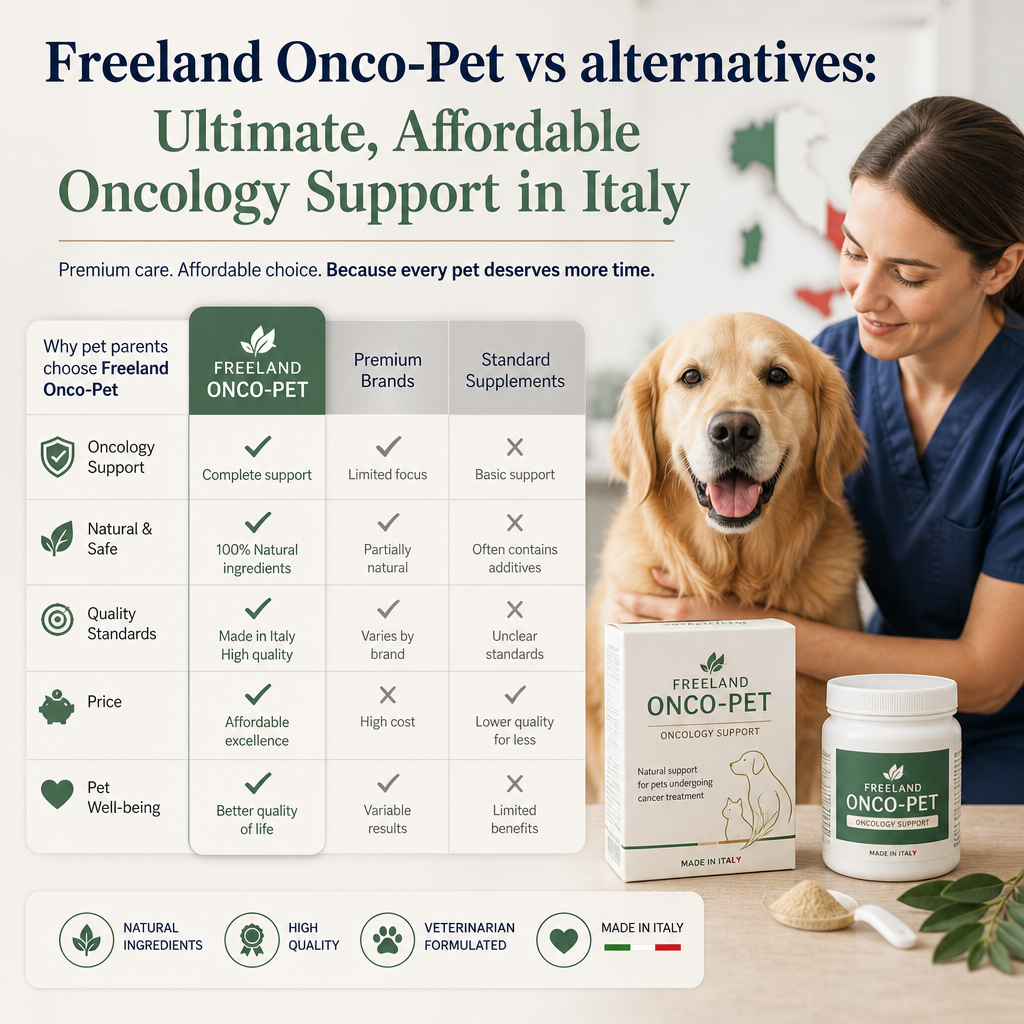
When reviewing Freeland Onco-Pet vs alternatives, pet owners should look beyond marketing claims and compare practical factors. These include ingredients, intended purpose, administration, safety, cost, availability in Italy, and compatibility with prescribed treatment.
Freeland Onco-Pet may appeal to owners seeking a product specifically positioned for pets receiving cancer-related care. A product designed with oncology support in mind may offer a convenient combination of nutrients or compounds intended to support general condition. However, the value of any formula depends on the individual animal’s needs and on the quality of evidence behind its ingredients.
Alternative products may include general veterinary nutritional supplements, high-calorie recovery diets, omega-3 products, gastrointestinal support formulas, or individually prescribed medications. These alternatives are not necessarily interchangeable. A calorie-dense diet, for example, serves a different purpose from a supplement intended to provide antioxidant or metabolic support.
The most useful comparison asks whether the product addresses a documented need. If a dog is losing weight, nutritional density and palatability may be the priority. If nausea is preventing eating, veterinary antiemetic treatment may be more important than a supplement. If pain is limiting movement, appropriate analgesia should take precedence.
When families compare Freeland Onco-Pet vs alternatives, they should also ask how easily the product fits into the daily routine. Some pets accept liquids more readily, while others do better with capsules, powders, or food-toppers. Convenience matters because a supportive formula only helps if it can be given consistently.
As a practical benchmark, owners can compare the product with broader guidance on nutrition and cancer care, such as the wytyczne Amerykańskiego Stowarzyszenia Medycyny Weterynaryjnej dotyczące nowotworów u zwierząt domowych, before deciding what to discuss with their veterinarian.
It can also help to compare dosing flexibility. Some supportive products are easier to adjust for a small dog, a large dog, or a cat with a poor appetite. Others may be more limited in format. If a pet is already finicky or fatigued, a product that integrates smoothly into food or medication schedules may be more realistic than one that requires extra handling.
Owners should also compare labeling clarity and transparency. If a formula lists its purpose, dosage guidance, and intended use clearly, it is easier to determine whether it belongs in a care plan. That matters when evaluating Freeland Onco-Pet vs alternatives because vague claims can make comparison difficult and may lead to unnecessary spending.
Dog tumor support options in Italy
Italian pet owners can typically discuss several dog tumor support options with their veterinarian. The first is a complete and balanced diet selected according to the dog’s condition. Some animals benefit from therapeutic veterinary diets, while others do better with a familiar food that they are willing to eat consistently. Maintaining adequate nutrition is often more important than forcing a theoretically ideal diet that the pet refuses.
Veterinary medication is another essential option. Pain relief, anti-nausea drugs, appetite stimulants, corticosteroids, and treatments for inflammation may be used when clinically appropriate. These medicines should never be started, stopped, or combined without professional advice, particularly because some supplements can interact with drugs or affect anesthesia and chemotherapy protocols.
Additional dog tumor support options may include hydration therapy, dental care, gentle exercise, physiotherapy, and environmental adjustments. Soft bedding, easy access to food and water, non-slip flooring, and a calm routine can improve comfort significantly. Regular weight checks and observations of appetite, mobility, breathing, and behavior also help the veterinary team identify changes early.
In some cases, referral to a veterinary oncology center is worthwhile. Specialist consultation can clarify treatment goals, expected outcomes, and the difference between disease-directed therapy and palliative care.
Because every case is different, the best dog tumor support options are often the ones that solve a specific problem rather than the ones with the broadest claims. In practice, that may mean combining diet, medication, and routine monitoring instead of relying on a single supplement alone.
For many families, Freeland Onco-Pet vs alternatives becomes a question of sequencing as much as product selection. The right order is often: stabilize symptoms first, maintain nutrition second, and then decide whether a supplemental product adds meaningful value.
Practical dog tumor support options in Italy may also depend on where a family lives and how easily specialist care can be reached. In larger cities, referral centers may be more accessible, while rural owners may rely more heavily on local veterinarians for ongoing monitoring. That makes simplicity and consistency especially important when deciding whether Freeland Onco-Pet vs alternatives is the better fit.
Another useful consideration is the pet’s stage of treatment. A dog starting chemotherapy may need a different type of support than a dog in long-term follow-up or palliative care. Some dogs need appetite support for only a short period, while others may need ongoing nutritional help. Matching the product to the stage of care can improve usefulness and reduce waste.
Common supportive priorities during oncology care
- Utrzymanie apetytu i masy ciała
- Reducing nausea or digestive upset
- Supporting hydration and energy
- Managing pain and inflammation
- Improving comfort during daily routines
- Monitoring changes in behavior or mobility
These priorities help families decide which dog tumor support options are most urgent. In many situations, the best first step is not buying more products, but identifying the single biggest issue the pet is facing and solving that first.
Affordability and access
Cost is a real concern for many families. The most affordable oncology support is not always the least expensive product at the point of purchase. A supplement that the pet refuses, provides little measurable benefit, or duplicates another product may ultimately cost more than a targeted plan.
Owners should calculate the full monthly cost, including dosage, shipping, veterinary consultations, laboratory monitoring, and other medications. Availability through Italian veterinary clinics, pharmacies, or reputable distributors may also influence convenience and price. Products purchased from uncertain online sources can create risks involving storage, authenticity, labeling, and unsuitable ingredients.
A transparent conversation with the veterinarian can help establish priorities. In many cases, the budget should first cover pain control, essential diagnostics, prescribed cancer treatment, and adequate food. Supportive supplements may then be considered according to remaining needs and expected benefit.
For families balancing expenses, it can help to compare the monthly total rather than the sticker price alone. A lower-cost product may not be the most economical choice if it must be replaced often or if it does not match the pet’s actual needs.
That same logic applies when assessing Freeland Onco-Pet vs alternatives in Italy. If one option is easier to administer, better tolerated, and more compatible with the current care plan, it may deliver more practical value even if the upfront price is higher.
It is also wise to factor in indirect costs such as missed work, transport to specialist appointments, and the time required to administer a product daily. A supplement that looks inexpensive may become inconvenient if it complicates an already demanding treatment schedule. For some households, the most affordable option is the one that fits the routine with the least friction.
Owners comparing Freeland Onco-Pet vs alternatives should ask whether the expected benefit justifies the ongoing expense. If a product does not improve eating, comfort, or stability in a noticeable way, it may not be a good long-term investment. Care plans are most effective when each item has a clear purpose.
Rozważania dotyczące bezpieczeństwa przed użyciem suplementów
“Natural” does not automatically mean safe for a dog or cat with cancer. Some ingredients can affect blood clotting, liver metabolism, kidney function, or the action of chemotherapy drugs. Others may be unsuitable for pets with diabetes, pancreatitis, heart disease, or gastrointestinal problems.
Before using Freeland Onco-Pet or an alternative, provide the veterinarian with a complete list of all medications, supplements, and foods the pet receives. Follow the stated dosage and monitor for vomiting, diarrhea, reduced appetite, unusual tiredness, skin reactions, or other changes. A new product should not delay veterinary attention when symptoms worsen.
It is also important to use realistic language. Supportive products may help maintain general condition or address specific nutritional needs, but they should not be promoted as guaranteed tumor treatments. Evidence can vary considerably between ingredients, formulations, and species. That is why Freeland Onco-Pet vs alternatives should always be judged in context, not by claims alone.
If a pet is already receiving chemotherapy or other prescription treatment, the vet should review every added supplement. This is especially important when multiple products are introduced at once, because it can become difficult to identify which one is helping or causing side effects.
Owners who are unsure should pause and ask a clinician to review the whole care plan rather than adding another product immediately. Safety, compatibility, and tolerance matter more than speed when dealing with a vulnerable patient.
It also helps to watch for changes in thirst, urination, stool quality, and energy after any new product is introduced. These signs may reveal whether a supportive product is being tolerated well. If anything worsens, the veterinarian may need to adjust the plan quickly. That cautious approach is especially important in cancer care, where pets can deteriorate faster than expected.
One practical way to reduce risk is to introduce support one change at a time. If diet, medication, and supplement are all altered at once, it becomes hard to determine what caused improvement or discomfort. In contrast, a gradual approach makes Freeland Onco-Pet vs alternatives easier to evaluate and helps the veterinary team make better decisions.
Questions to ask before starting a product
- What problem is this product meant to address?
- Does it fit with the current treatment plan?
- Could it interact with medicine or anesthesia?
- How should I monitor for side effects?
- When should we stop or reassess it?
Choosing the most suitable support plan
The best approach to Freeland Onco-Pet vs alternatives is individualized rather than purely brand-based. Start by identifying the pet’s main challenge: weight loss, poor appetite, digestive upset, fatigue, pain, dehydration, or treatment-related side effects. Then ask which intervention has the strongest rationale for that problem.
A written monitoring plan can be useful. Record body weight, food intake, water consumption, activity, bowel movements, vomiting, and signs of discomfort. This information helps determine whether a supportive product is making a meaningful difference.
It is also wise to reassess regularly. A product that seems helpful during one stage of treatment may become unnecessary later, while a new symptom may require a different strategy. Ongoing communication with the veterinary team keeps the care plan practical and responsive.
For many owners, the goal is not to find a single miracle solution but to build a realistic routine that supports comfort, nutrition, and dignity. That may involve Freeland Onco-Pet, a therapeutic diet, pain relief, or another option entirely, depending on the diagnosis.
Ultimately, oncology support should be coordinated with a veterinarian who understands the pet’s diagnosis and treatment. Freeland Onco-Pet may be one possible component of care, but it should be assessed alongside therapeutic diets, prescribed medicines, specialist advice, and comfort-focused measures. For families in Italy, comparing these options carefully can support better decisions, control unnecessary expenses, and keep the pet’s quality of life at the center of every stage of care.
Before choosing between Freeland Onco-Pet vs alternatives, remember that the best choice is the one that fits the pet’s medical needs and can be used consistently without causing avoidable stress. In that sense, the safest and most useful support plan is usually the most practical one.
When the diagnosis is serious, small improvements matter. Better eating, steadier energy, less nausea, and a calmer daily routine can all make treatment easier for the pet and the family. That is why Freeland Onco-Pet vs alternatives should be viewed as part of a broader care conversation rather than a simple product search.
In the end, the most useful decision is often the one that aligns medical advice, budget, and daily feasibility. If a product supports those three goals, it may earn a place in the plan. If not, another option may be more appropriate for the pet’s current needs.
Practical summary for Italian pet owners
For readers comparing Freeland Onco-Pet vs alternatives, the key takeaway is to focus on the pet’s actual needs first. A dog with low appetite may need nutritional support, while another with pain may need medication and rest. A cat with digestive upset may require a different approach entirely. The right answer is not always the product with the most visible branding.
Think about safety, ease of use, and whether the support fits the prescribed treatment plan. Speak with the veterinarian before adding anything new, and reassess the plan when symptoms or treatment stages change. With that approach, Freeland Onco-Pet vs alternatives becomes a structured decision instead of an emotional guess.