

Supplements for Senior Dogs With Cancer can sometimes provide useful nutritional and supportive benefits, but they should never replace veterinary care. Older dogs with cancer often face several challenges at once, including reduced appetite, muscle loss, inflammation, digestive changes, pain, and the side effects of treatment. A carefully chosen supplement may help support comfort and quality of life, especially when it is used alongside a treatment plan developed by a veterinarian or veterinary oncologist.
Every dog is different, and cancer types vary widely. A product that may be appropriate for one dog could be ineffective or unsafe for another, particularly if the dog has kidney disease, liver disease, diabetes, heart problems, or is taking prescription medications. The goal should not be to “cure” cancer with supplements, but to provide thoughtful nutritional and symptom support. In practical terms, supplements for senior dogs with cancer work best when they are chosen for a clear purpose, monitored carefully, and adjusted as your dog’s condition changes.
Before starting any new product, it helps to think about the dog’s daily needs. Is the biggest concern appetite? Weight loss? Stiffness? Nausea? Poor stool quality? Once the main issue is identified, the veterinary team can help decide whether supplements for senior dogs with cancer are appropriate and, if so, which ones fit the treatment plan.
- Why Senior Dog Cancer Support Requires a Personalized Plan
- Omega-3 Fatty Acids for Inflammation and Appetite Support
- Antioxidants: Benefits and Important Cautions
- Digestive Support and Probiotics
- Suplementy stawowe i mobilności
- Protein and Calorie Support
- Supplements That Require Extra Care
- How to Introduce Old Dog Cancer Supplements Safely
- Building a Realistic Daily Support Plan
Why Senior Dog Cancer Support Requires a Personalized Plan
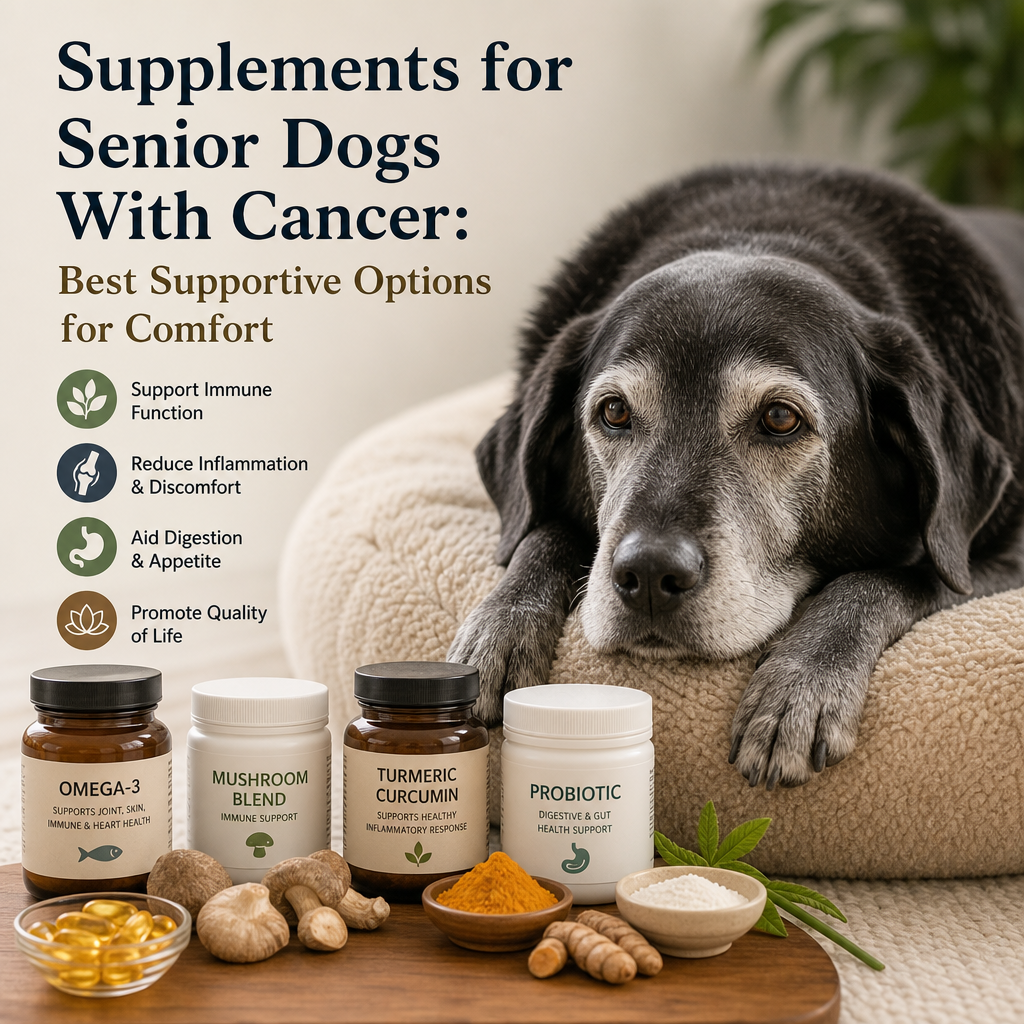
Senior dogs generally have less physiological reserve than younger animals. Their digestion, immune function, muscle mass, and ability to process medications may already be affected by aging. Cancer can intensify these concerns, leading to weight loss, weakness, nausea, dehydration, or a decline in mobility. Because of that, supplements for senior dogs with cancer should always be selected with the whole patient in mind, not just the diagnosis.
Before adding any supplement, your veterinarian should review your dog’s diagnosis, current medications, bloodwork, appetite, weight, and treatment goals. Some supplements affect blood clotting, blood pressure, liver enzymes, or immune activity. Others may interact with chemotherapy, radiation, steroids, anti-inflammatory drugs, or pain medication. This is especially important when a dog is already receiving multiple therapies or has another chronic illness.
A useful senior dog cancer support plan usually focuses on three priorities:
- Utrzymanie apetytu i masy ciała
- Supporting mobility, digestion, and daily comfort
- Avoiding unnecessary products that may cause side effects or interfere with treatment
For many families, the first question is not which product is “best,” but which option is most likely to help without adding risk. That is why supplements for senior dogs with cancer are best treated as part of a larger care strategy that includes diet, medication review, symptom tracking, and regular follow-up.
For readers looking for related breed-specific guidance, see common cancers in this breed: essential Cavalier cancer risks for another example of how risk and care planning can vary by dog.
Omega-3 Fatty Acids for Inflammation and Appetite Support
Fish oil is among the most commonly considered old dog cancer supplements. It provides EPA and DHA, omega-3 fatty acids that may help regulate inflammation and support skin, coat, joint, and cardiovascular health. Omega-3s may also be useful for dogs experiencing muscle loss or reduced appetite, although they are not a cancer treatment. In some dogs, they can be a practical part of supplements for senior dogs with cancer because they address more than one concern at a time.
Choose a veterinary-formulated fish oil that clearly lists the amount of EPA and DHA rather than only stating the total amount of “fish oil.” Quality matters because poorly manufactured products can become rancid or contain contaminants. Possible side effects include diarrhea, vomiting, fishy odor, or excessive calories. If a dog already struggles with a sensitive stomach, start cautiously and watch closely for stool changes.
Fish oil may not be appropriate for every dog. Dogs with pancreatitis, bleeding disorders, certain gastrointestinal conditions, or scheduled surgery may require special caution. Your veterinarian can determine whether omega-3 supplementation fits your dog’s overall plan and calculate an appropriate dose. This is one reason supplements for senior dogs with cancer should never be chosen by label marketing alone.
When used correctly, omega-3 support can be part of a broader strategy for senior dog cancer support, especially when appetite and weight maintenance are concerns. Some dogs tolerate it well with food, while others may need a lower starting dose or a different formulation. The most helpful approach is often the simplest one that the dog can reliably digest and absorb.
Antioxidants: Benefits and Important Cautions
Antioxidants such as vitamins C and E, selenium, and certain plant compounds help protect cells from oxidative damage. However, cancer treatment complicates the issue. Some chemotherapy and radiation therapies may partly rely on oxidative stress to damage cancer cells. High-dose antioxidant supplementation could theoretically interfere with certain treatments, depending on the therapy and the individual patient.
This does not mean all antioxidants are dangerous. It means they should not be given in high doses without veterinary guidance. A complete, balanced diet may already provide many essential antioxidants, and adding multiple products can unintentionally create excessive intake. In other words, supplements for senior dogs with cancer should complement treatment, not compete with it.
Avoid human multivitamins unless specifically prescribed. Human products may contain ingredients that are toxic to dogs, including excessive vitamin D, iron, xylitol, or other additives. Even when a supplement seems harmless, the dose may be far too high for a dog, especially a senior patient with cancer who is already medically fragile.
Because the right choice depends on treatment timing and lab results, antioxidants are best discussed as part of senior dog cancer support rather than added on your own. If your veterinarian recommends an antioxidant, ask how it fits with chemotherapy, radiation, or palliative care. The safest use of supplements for senior dogs with cancer is always the one that is coordinated with the broader medical plan.
Digestive Support and Probiotics
Cancer, medication, stress, and changes in diet can all affect a senior dog’s digestive system. Veterinary probiotics may help support a healthy intestinal microbiome in some dogs, particularly those experiencing loose stool or digestive disruption after antibiotics. Prebiotic fibers may also support beneficial gut bacteria.
Not every dog responds well to probiotics, and some products are poorly regulated or contain fewer live organisms than their labels claim. Select a product designed for dogs and stored according to its instructions. Introduce it gradually and stop it if your dog develops worsening gas, vomiting, or diarrhea. Digestive support can be especially valuable when appetite is poor, because a dog that feels nauseated or bloated may refuse food even when hungry.
Dogs receiving intensive chemotherapy or those with severely compromised immune systems may require special caution with live bacterial products. Always ask the veterinary team before using probiotics during cancer treatment. For some dogs, a fiber adjustment or a prescription diet may be more appropriate than a supplement.
Digestive support may not sound dramatic, but it often makes a meaningful difference in comfort, especially for dogs already coping with reduced appetite. In this way, supplements for senior dogs with cancer can sometimes help with day-to-day quality of life more than with the disease itself.
Suplementy stawowe i mobilności
Many senior dogs with cancer also have arthritis or age-related mobility problems. Glucosamine, chondroitin, green-lipped mussel, and undenatured type II collagen are commonly used to support joint function. These products may help some dogs move more comfortably, although results vary and they do not work as quickly as prescription pain relief. If mobility is a major concern, these products are only one part of the picture.
A mobility supplement is most useful when combined with other comfort measures, such as soft bedding, non-slip flooring, ramps, controlled exercise, weight management, and appropriate pain medication. If a dog suddenly becomes reluctant to walk, cries when moving, or cannot rise easily, do not assume the problem is ordinary arthritis. These signs may indicate pain related to cancer or another urgent condition.
Mobility support is one of the most common reasons owners consider supplements for senior dogs with cancer. Still, it is important to remember that a supplement cannot replace pain control or diagnostics. If the dog’s comfort is declining, the veterinary team may need to reassess the disease itself, not just the joints.
For a useful comparison of breed-related tumor awareness and early symptom tracking, you may also find Ryzyko nowotworów u australijskich psów bydła: istotne wczesne oznaki guzów helpful when learning how early detection can change care decisions.
Protein and Calorie Support
For many dogs with cancer, maintaining body condition is more important than adding a long list of supplements. Muscle wasting and weight loss can reduce strength and resilience. A veterinarian or veterinary nutritionist may recommend a calorie-dense food, a higher-protein diet, appetite support, or nutritional additions suited to the dog’s diagnosis. In many households, the most practical supplements for senior dogs with cancer are the ones that help the dog eat enough overall food.
There is no universal “cancer diet.” Some dogs benefit from a carefully formulated diet with adequate protein and calories, while others need dietary adjustments because of kidney disease, pancreatitis, diabetes, or gastrointestinal problems. Homemade diets should be formulated by a veterinary nutrition professional to prevent deficiencies. A diet that seems healthy on paper can still be unbalanced if it is not designed for the dog’s medical needs.
Appetite stimulants and anti-nausea medications prescribed by a veterinarian can be more effective and predictable than relying on supplements alone. Feeding small, frequent meals and warming food slightly may also improve interest in eating. This is often where senior dog cancer support becomes most effective: not through one “super supplement,” but through consistent, practical feeding strategies.
Some owners ask whether protein powders, meal toppers, or nutritional pastes count as supplements. They can, but they should still be evaluated with the same caution as other supplements for senior dogs with cancer. If they add too many calories, upset the stomach, or conflict with the prescribed diet, they may do more harm than good.
Supplements That Require Extra Care
Several popular natural products can create problems when used without guidance. Turmeric and curcumin may affect blood clotting or interact with medications. Herbal products such as milk thistle, medicinal mushrooms, or cannabidiol products vary greatly in quality and may influence liver enzymes or drug metabolism. Garlic, onion, and some concentrated essential oils can be toxic to dogs.
“Natural” does not automatically mean safe. Products marketed as cancer cures, tumor dissolvers, or immune boosters deserve particular skepticism. Be cautious of claims that promise to replace chemotherapy, surgery, radiation, or palliative care. Reliable products should provide clear ingredient lists, dosage information, lot numbers, and independent quality testing when available.
When families are overwhelmed, it is easy to try several new products at once. That can make it impossible to know what is actually helping. With supplements for senior dogs with cancer, more is not necessarily better. Fewer products, chosen with a purpose, are usually easier to monitor and safer to use.
For a broader look at how tumor warning signs can present in different dogs, read Ryzyko raka u setera irlandzkiego: istotne wczesne objawy nowotworu, które należy znać and similar breed-focused resources.
Choosing the Right Supplements for Senior Dogs With Cancer
When selecting supplements for senior dogs with cancer, start with the problem you are trying to solve. If appetite is falling, the first priority may be calories, nausea control, and a palatable diet. If stiffness is the main issue, joint support and pain management may matter more than adding new vitamins. If inflammation or poor coat condition is present, omega-3 fatty acids may be worth discussing with the veterinary team.
It also helps to remember that one supplement rarely does everything. Many owners look for a single product that can improve energy, digestion, pain, and immunity at once, but real-world care is usually more specific. The safest approach is to choose the smallest number of products that address a clear need. That keeps the plan easier to follow and reduces the chance of interactions.
Monitoring matters just as much as selection. If a supplement does not improve your dog’s comfort, appetite, stool quality, or mobility within a reasonable time, it may not be worth continuing. A thoughtful reassessment can prevent unnecessary expense and reduce the chance of side effects. Good senior dog cancer support is flexible and responsive.
Veterinarians may also consider blood tests, body weight trends, and your observations at home before recommending changes. A dog that seems stable one week may need a different approach the next, especially if treatment is ongoing. That is why supplements for senior dogs with cancer should be reviewed regularly rather than treated as permanent, set-and-forget additions.
How to Introduce Old Dog Cancer Supplements Safely
Introduce only one new product at a time. This makes it easier to identify whether the supplement is helping or causing a problem. Keep a simple record of the product, dose, start date, appetite, stool quality, energy, pain signs, and weight. Even a short notebook or phone note can be helpful when discussing progress with the veterinary team.
Choose supplements from reputable companies that provide clear labeling and quality control. Look for dog-specific formulas whenever possible, and be wary of vague claims or proprietary blends that hide the actual dose of key ingredients. When the product is intended for a cancer patient, transparency matters even more.
Contact the veterinary team if your dog develops vomiting, persistent diarrhea, unusual bruising, severe lethargy, yellowing of the gums or eyes, worsening appetite, or changes in urination. Bring every supplement container or a photograph of its label to appointments. Accurate information helps the veterinarian identify potential interactions. If your dog is already taking prescription medications, ask whether the supplement should be given with food, separated by time, or avoided entirely.
Most importantly, measure success by comfort and daily function. A supplement is worthwhile only if its potential benefit outweighs its cost, inconvenience, and risks. For a senior dog with cancer, gentle nutrition, effective pain control, emotional reassurance, and close veterinary monitoring often provide more meaningful support than a complicated supplement routine.
Reliable guidance from trusted sources can also help you make better decisions. For general pet health and wellness education, the American Kennel Club offers practical information at American Kennel Club pet health resources.
Building a Realistic Daily Support Plan
The most successful care plans are usually simple enough to follow every day. Morning routines may include medication, a small meal, and one carefully chosen supplement. Midday may focus on a short walk, a bathroom break, and water intake. Evening may include another meal, rest, and comfort monitoring. When the schedule is consistent, it becomes easier to notice whether supplements for senior dogs with cancer are actually making a difference.
A realistic plan should also account for your dog’s preferences. Some senior dogs are picky eaters and may refuse foods with strong odors or unfamiliar textures. Others need a soft food because of dental disease or mouth pain. The “best” supportive option is often the one your dog will reliably accept. Even an excellent supplement is not useful if the dog will not eat it.
If the disease progresses, your goals may shift from long-term support to short-term comfort. In that case, supplements for senior dogs with cancer may be reduced or simplified so the dog receives only what truly helps. A lighter routine can make caregiving less stressful while still preserving dignity and comfort.
Ultimately, the best results come from a thoughtful, individualized plan. When supplements for senior dogs with cancer are chosen carefully, they may support appetite, digestion, mobility, and overall comfort without replacing the care your veterinarian recommends. The most effective supportive care is rarely flashy; it is steady, realistic, and tailored to the dog in front of you.