
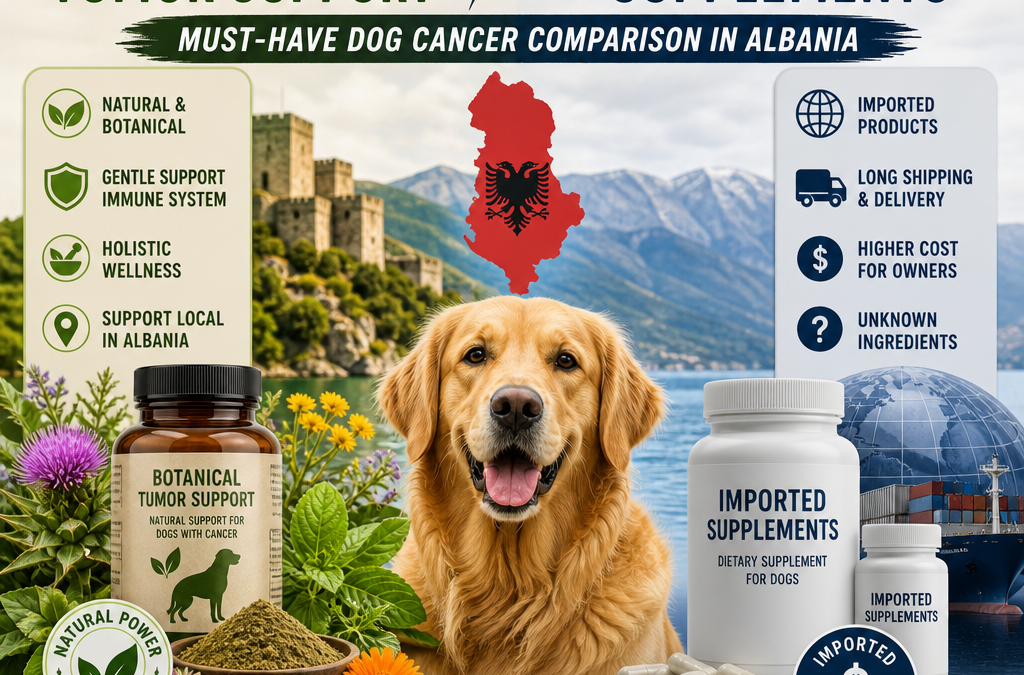
Botanical Tumor Support vs Imported Supplements is an important comparison for Albanian dog owners who are looking for complementary care during a cancer diagnosis. While supplements cannot replace veterinary treatment, carefully selected products may support nutrition, appetite, digestion, energy, and general wellbeing. The challenge is determining which options are trustworthy, appropriate for the individual dog, and compatible with chemotherapy, surgery, radiation, or prescribed medication.
A dog with cancer needs a personalized plan rather than a product chosen only because it has attractive packaging or a long list of ingredients. In Albania, owners may encounter locally available botanical formulas, imported supplements from European or international brands, and products sold online with limited information. Understanding the differences can help families make safer, more informed decisions together with their veterinarian.
Índice
- Compreendendo a comparação de suplementos para câncer em cães
- Ingredients and formulation
- Quality control and product transparency
- Safety for dogs receiving cancer treatment
- Local botanical products versus imported options
- Evaluating evidence and realistic expectations
- Making a safer decision in Albania
Compreendendo a comparação de suplementos para câncer em cães
A dog cancer supplement comparison should begin with a realistic goal. Supplements are generally used as supportive products, not as cures. Cancer treatment depends on the tumor type, stage, location, the dog’s age, and overall health. A veterinarian may recommend surgery, chemotherapy, radiation, pain control, dietary adjustments, or monitoring. Supplements may be considered alongside these approaches when they offer a clear nutritional or supportive purpose.
Botanical products commonly contain plant extracts, mushrooms, herbs, antioxidants, or combinations of these ingredients. Imported supplements may include similar botanical ingredients, as well as omega-3 fatty acids, vitamins, minerals, probiotics, amino acids, or specialized nutritional compounds. The country of origin does not automatically determine quality. A locally produced product can be carefully formulated and well tested, while an imported product may still have poor labeling or insufficient quality control.
Before choosing either category, it helps to ask one practical question: what problem is the product meant to solve? A focused formula may help with appetite, digestive comfort, or maintaining weight. A broad, poorly defined blend is harder to evaluate and may add unnecessary risk. That is why Botanical Tumor Support vs Imported Supplements should be judged by purpose, not by marketing language.
It is also helpful to think about timing. A supplement that seems reasonable at diagnosis may not fit after surgery or during a chemotherapy protocol. The most useful products are usually those that align with a specific clinical need and can be monitored over time. This is especially important when owners are comparing Botanical Tumor Support vs Imported Supplements for a dog whose appetite, energy, or digestive comfort changes from week to week.
Ingredients and formulation
The first major consideration is the ingredient list. A reliable product should clearly state every active ingredient, its amount per serving, the recommended serving size, and any inactive ingredients. Vague descriptions such as “proprietary immune blend” make it difficult to determine what the dog is receiving.
Botanical tumor support products may contain ingredients such as medicinal mushrooms, turmeric-derived compounds, green tea extracts, milk thistle, or other plant substances. Each ingredient has different evidence, possible benefits, and safety concerns. For example, some extracts may affect blood clotting, liver enzymes, blood pressure, or drug metabolism. Natural does not mean risk-free.
Imported supplements may offer standardized extracts, which means the amount of a specific active compound is controlled from batch to batch. However, standardization can vary between manufacturers, and a higher concentration is not necessarily better for every dog. A veterinarian should review the formula, especially when the dog is taking anti-inflammatory drugs, steroids, chemotherapy agents, anticoagulants, or seizure medication.
Owners in Albania should also compare the serving instructions carefully. Some products are designed for small dogs, while others are calculated for body weight or for a specific medical goal. A product that looks similar on the shelf can differ greatly in strength. In the context of Botanical Tumor Support vs Imported Supplements, the formula matters more than the label style.
Another practical point is ingredient overlap. Dogs with cancer are sometimes already receiving prescription medications, therapeutic diets, or multiple supportive products. If a botanical formula and an imported formula both contain the same herbs, antioxidants, or vitamins, the combined dose may become excessive. That is why a label-by-label review is essential before mixing any products.
How to read the label more carefully
- Look for the exact amount of each ingredient, not only a blend name.
- Check whether the directions are based on weight, age, or condition.
- Note any warning statements for pregnancy, liver disease, or medication use.
- Identify whether the product is intended for dogs or for general use.
- Compare the daily cost based on the full dose, not the bottle price alone.
When the label is incomplete, it becomes difficult to judge whether the product is truly supportive or simply well marketed. This is one reason owners researching Botanical Tumor Support vs Imported Supplements should slow down and read every detail before buying.
Quality control and product transparency
Quality control is one of the most important differences to examine when comparing supplements. Products should ideally be manufactured in facilities that follow recognized quality practices and should be tested for contamination, inaccurate ingredient levels, heavy metals, pesticides, bacteria, and other hazards.
Imported products sometimes provide certificates of analysis, third-party testing information, batch numbers, expiration dates, and contact details for the manufacturer. These features can improve traceability, but they should still be verified. A product sold through an online marketplace may not be stored correctly or may not come from an authorized distributor.
Botanical products available in Albania should meet the same basic expectations. The label should be written clearly, provide dosage guidance for dogs, and identify the responsible manufacturer or importer. Avoid products that make dramatic promises, such as eliminating tumors, replacing chemotherapy, or guaranteeing a cure. Such claims are warning signs rather than evidence of effectiveness.
When in doubt, ask for written documentation. A trustworthy company should be able to explain where the raw ingredients come from, how the product is tested, and how storage is handled before sale. For readers researching Botanical Tumor Support vs Imported Supplements, transparency is often the easiest way to separate responsible products from risky ones.
For general veterinary guidance on safe supplement use, the American Veterinary Medical Association’s overview of nutritional supplements for dogs é uma referência útil.
Good transparency also means that the company does not hide behind vague health claims. If a seller cannot explain how the ingredients are sourced, how the product is stored, or whether the batch was tested, that uncertainty should weigh heavily in the decision. In a serious illness, small gaps in quality control matter more than attractive branding or popularity.
Questions that reveal product quality
- Is there a batch number and expiration date on the package?
- Does the seller provide a way to contact the manufacturer?
- Are storage instructions realistic for local conditions?
- Is there any proof of third-party testing or contamination screening?
- Does the product clearly state whether it is for dogs only?
Safety for dogs receiving cancer treatment
Cancer treatment can place stress on the liver, kidneys, digestive system, and immune system. Adding several supplements at once makes it difficult to identify side effects or interactions. Vomiting, diarrhea, appetite changes, unusual tiredness, bruising, or changes in thirst and urination should be reported to a veterinarian.
Some supplements may interfere with treatment by changing how medicines are absorbed or processed. Antioxidant-heavy formulas, for example, may require special consideration during certain cancer therapies. Herbal ingredients can also alter liver enzyme activity, potentially affecting medication levels in the bloodstream. Supplements that influence clotting may be inappropriate before surgery or alongside particular drugs.
For this reason, owners should provide the veterinarian with the complete product label, not only the brand name. The veterinarian may recommend stopping a supplement before surgery, adjusting the dose, or avoiding it altogether. The safest plan is usually to introduce only one new product at a time and monitor the dog carefully.
This caution applies whether the product is a local herbal blend or a well-known imported capsule. In practice, Botanical Tumor Support vs Imported Supplements is less about origin and more about how the product fits the dog’s treatment plan.
If a dog is already nauseated, losing weight, or struggling to maintain energy, the safest supportive choice may be the simplest one. A product with fewer ingredients is often easier to evaluate than a complex blend containing several botanicals, vitamins, and extracts. That does not mean simple formulas are always better, but they are usually easier to monitor for side effects and benefits.
Owners should also be cautious about using human supplements without veterinary approval. Human products may contain ingredients that are unsafe for dogs, including sweeteners, flavorings, or doses that are too high for canine needs. Even when the ingredient itself seems harmless, the concentration may be inappropriate.
Red flags during active treatment
- Starting several new products at the same time
- Using supplements with unclear or hidden ingredient amounts
- Ignoring vomiting, diarrhea, or loss of appetite after starting a product
- Assuming a natural product cannot interact with medication
- Continuing a supplement without telling the oncology team
Local botanical products versus imported options
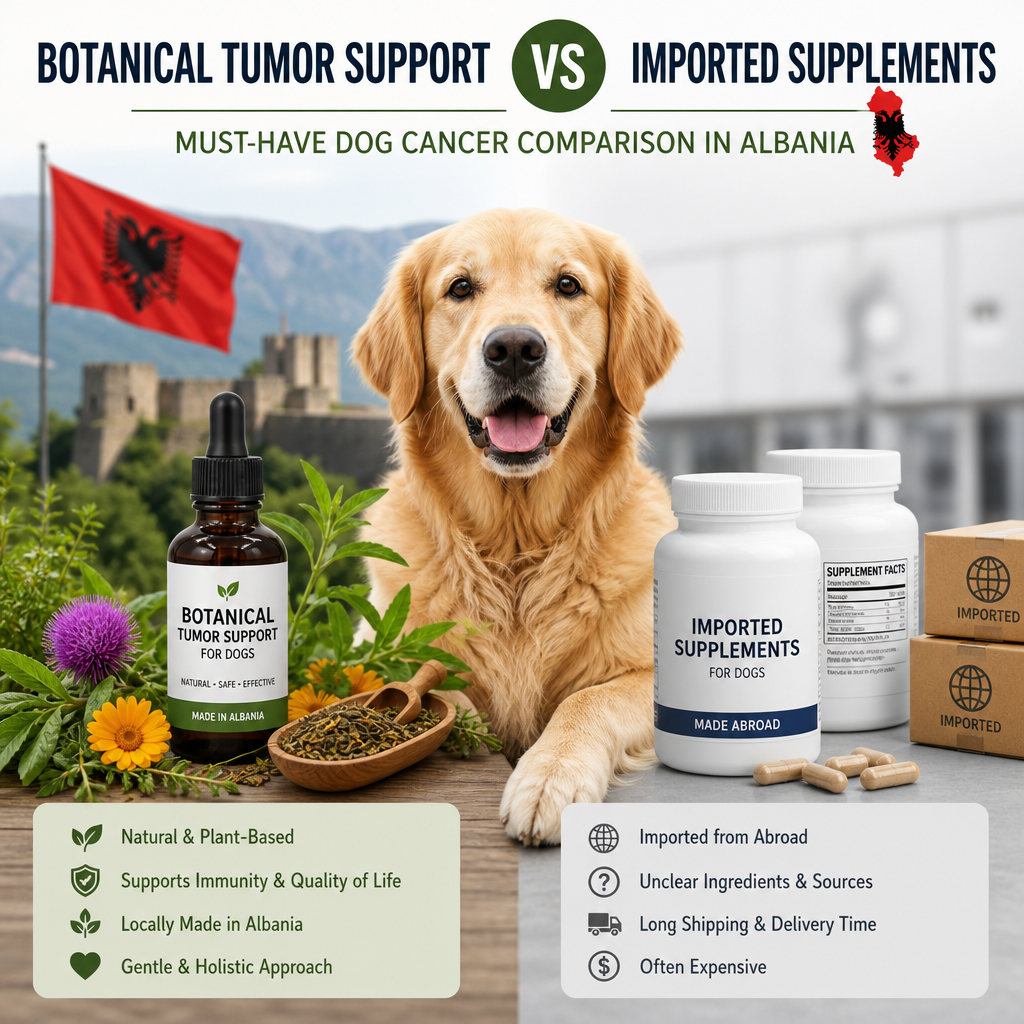
Local botanical products may offer advantages such as easier availability, lower shipping costs, and better familiarity with regional purchasing conditions. Some Albanian products may use ingredients sourced from nearby plants or suppliers and may be designed for the needs of local pet owners. However, quality can differ considerably, so buyers should look for transparent labeling, proper storage, veterinary guidance, and evidence of responsible manufacturing.
Imported supplements may provide more extensive documentation, established brand histories, or specialized formulations for appetite, joint comfort, digestion, or nutritional support. They may also be more expensive and harder to replace if supply problems affect availability. Importation can create additional concerns about storage temperatures, customs handling, counterfeit products, and expiration dates.
The best choice is not necessarily the most expensive or the most internationally recognized product. It is the one with a clear purpose, suitable ingredients, dependable quality, and a dosage that can be safely matched to the dog’s weight and medical condition.
One practical way to compare Botanical Tumor Support vs Imported Supplements is to make a simple checklist: source, ingredient clarity, testing, dosage, storage, and veterinary compatibility. If a product fails on several of these points, it is usually not worth the risk.
Owners may find that a locally available product is enough for a short-term need, while an imported supplement offers better documentation for a more complex care plan. Either option can be reasonable if the evidence, labeling, and veterinary guidance are strong. The most important question is not where the bottle was made, but whether it truly supports the dog safely.
A simple comparison framework
- Define the goal: appetite, digestion, weight support, or another specific need.
- Compare ingredients and look for overlap with current medications.
- Check whether the product has testing or quality documentation.
- Consider storage, shipping, and replacement access in Albania.
- Review the plan with the veterinarian before giving the first dose.
Evaluating evidence and realistic expectations
Scientific evidence for cancer-support supplements in dogs varies widely. Some ingredients have research related to inflammation, nutritional support, immune activity, or quality of life, but laboratory findings do not always translate into longer survival or tumor control in clinical patients. Owners should distinguish between evidence from cell studies, animal research, small clinical trials, and strong veterinary consensus.
A useful supplement should have a measurable objective. For example, it might help maintain calorie intake, support digestion, provide omega-3 fatty acids, or address a documented nutritional deficiency. A product marketed with broad claims about “detoxifying” the body or destroying cancer cells should be approached cautiously.
Quality of life is often the most meaningful measure. Appetite, comfort, mobility, sleep, interaction with family, and enjoyment of normal activities can be tracked in a simple diary. This information helps the veterinarian decide whether a supplement appears useful or whether it should be discontinued.
It is also reasonable to review whether the product fits the stage of care. During active treatment, priorities may change from week to week. A formula that seemed helpful at diagnosis may no longer be appropriate after surgery or during chemotherapy. This is why a thoughtful Botanical Tumor Support vs Imported Supplements review should be repeated over time, not done only once.
In addition, evidence should be interpreted with humility. A supplement may offer comfort or nutritional support without being a cancer treatment. That distinction matters. Owners are often looking for hope, and that is understandable, but hope is strongest when it is matched with honest expectations and good veterinary oversight.
Perguntas a fazer antes de comprar
- What is the exact goal of the product?
- Are the ingredients and amounts fully listed?
- Has the product been tested for contamination and accuracy?
- Could it interact with the dog’s current medication?
- Is the dosage appropriate for the dog’s weight and condition?
- Can the seller provide batch and storage information?
Making a safer decision in Albania
Before purchasing a supplement, record the dog’s diagnosis, current medications, allergies, recent blood test results, and treatment schedule. Compare labels rather than advertisements, and calculate the total daily amount of each active ingredient. Avoid combining multiple products with overlapping herbs, vitamins, or minerals.
Purchase from a reputable veterinary clinic, licensed pharmacy, established pet supplier, or authorized distributor whenever possible. Check the seal, batch number, expiration date, storage instructions, and language on the label. Do not use human supplements unless a veterinarian specifically approves them, because some may contain ingredients that are dangerous to dogs, including xylitol or excessive doses of certain vitamins.
The most responsible approach to Botanical Tumor Support vs Imported Supplements is to focus on evidence, transparency, safety, and individual needs. A supplement may have a role in supportive care, but it should fit into a broader veterinary plan. Careful product evaluation and open communication with the veterinary team can help Albanian dog owners avoid misleading claims while making choices that protect comfort, nutrition, and wellbeing during cancer treatment.
If your dog is already showing warning signs such as weight loss, appetite decline, vomiting, or unusual lumps, it may also help to review dog cancer symptoms and early tumor signs alongside the supplement discussion so you can respond quickly and work with your veterinarian on the next steps.
In the end, the safest decision is usually the one that is simplest to explain: the product has a clear purpose, a transparent label, a realistic dose, and a veterinarian who knows it is being used. That approach keeps the focus where it belongs—on the dog’s comfort, safety, and treatment plan.
Ao comparar Botanical Tumor Support vs Imported Supplements, consistency matters just as much as ingredients. A good product should be easy to source, easy to monitor, and easy to stop if it does not help or if side effects appear. That practical mindset gives families a better chance of finding supportive care that genuinely fits their dog’s needs.