
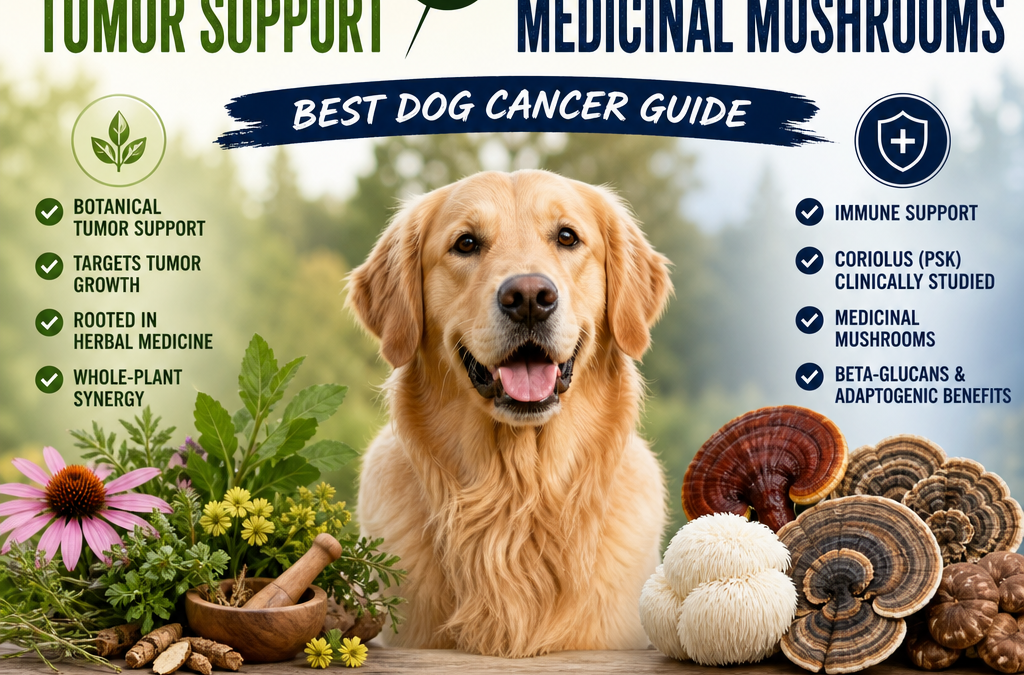
Botanical tumor support vs Immune / Coriolus / medicinal mushrooms is an important comparison for dog owners exploring supportive care during a cancer diagnosis. Supplements may help promote general wellness, appetite, digestion, or immune function, but they are not replacements for veterinary diagnosis and treatment. A thoughtful dog cancer supplement comparison should consider the dog’s cancer type, current medications, organ health, treatment plan, and overall goals of care.
Índice
Understanding the Main Categories
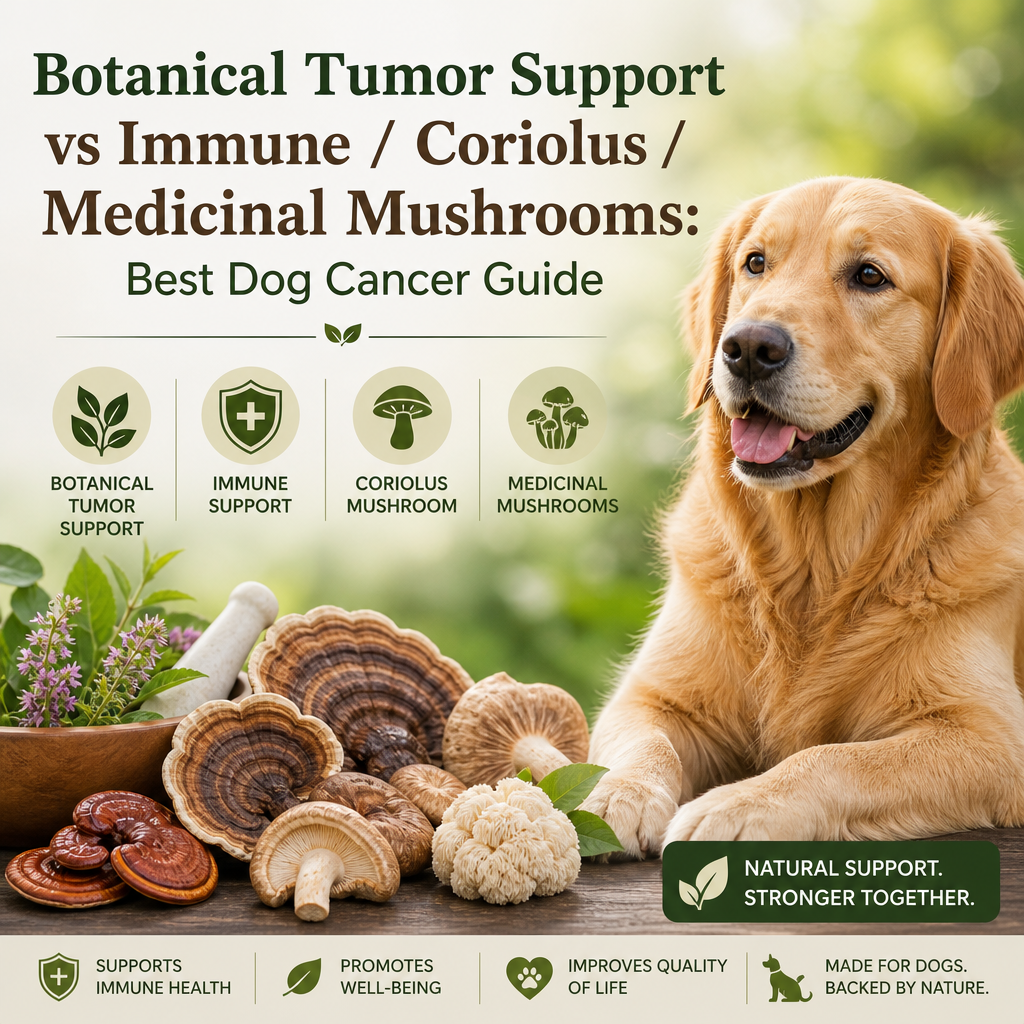
The phrase “botanical tumor support” generally refers to plant-derived ingredients selected for their antioxidant, anti-inflammatory, immune-modulating, or cellular-support properties. These formulas may contain herbs such as turmeric, milk thistle, green tea compounds, ginger, or other botanical extracts. The exact ingredients and concentrations vary widely, so products with similar marketing claims can have very different safety profiles.
Immune supplements are a broader category. They may include vitamins, minerals, beta-glucans, medicinal mushrooms, probiotics, or herbal ingredients intended to support normal immune activity. Immune support does not necessarily mean stimulating the immune system aggressively. In a dog undergoing chemotherapy, excessive or poorly timed immune stimulation may not be appropriate, which is why product selection should be guided by a veterinarian.
Coriolus is another name commonly associated with turkey tail mushroom, scientifically known as Trametes versicolor. It contains compounds such as polysaccharide peptides and beta-glucans that have attracted research interest. Coriolus products are often marketed for immune support and as part of an integrative cancer-care plan.
Medicinal mushrooms may include turkey tail, reishi, maitake, shiitake, cordyceps, and other fungi. Each mushroom has a different chemical profile and may affect immune signaling, inflammation, blood clotting, or liver metabolism differently. “Medicinal mushrooms” should therefore not be treated as one uniform supplement category.
If you are comparing formulations, a reliable starting point is another veterinary-focused resource such as Suplementos para Câncer em Cães: 7 Dicas Essenciais, Acessíveis e Positivas de Compra para Proprietários de Animais de Estimação no Reino Unido.
Botanical tumor support vs Immune / Coriolus / medicinal mushrooms
The key difference is usually the intended emphasis. Botanical tumor-support formulas are often designed around plant compounds that may support inflammatory balance, antioxidant defenses, normal detoxification pathways, or overall cellular health. Immune, Coriolus, and medicinal mushroom products focus more heavily on immune-related pathways, particularly innate immune activity and natural defense mechanisms.
This distinction is useful, but it should not be interpreted as proof that one category is superior. A botanical formula may still influence immune function, while a mushroom product may have antioxidant or anti-inflammatory effects. Many products combine both plant and fungal ingredients, making the label and dosage more important than the category name.
Coriolus is often considered separately because turkey tail has received more attention in veterinary and human integrative oncology than many other mushrooms. However, research findings from one species, extract, or dosage cannot automatically be applied to every turkey tail product. Extraction method, beta-glucan content, purity, storage, and manufacturing quality may substantially affect the final supplement.
That is why botanical tumor support vs Immune / Coriolus / medicinal mushrooms should be evaluated through the lens of the individual dog, not a single headline claim. The same product category may be reasonable in one case and inappropriate in another.
In Greece and elsewhere, owners often want a clear side-by-side decision. The safest approach is to compare the formula, the dog’s diagnosis, and the veterinarian’s plan rather than rely on category names alone.
What a Dog Cancer Supplement Comparison Should Examine
A meaningful dog cancer supplement comparison should begin with ingredient transparency. Look for products that list the scientific names of herbs or mushrooms, the amount per serving, extraction details when relevant, and independent quality testing. Proprietary blends that hide ingredient quantities make it difficult for a veterinarian to assess safety or calculate the total daily exposure.
The next consideration is the dog’s treatment plan. Some botanical compounds and mushrooms may influence liver enzymes responsible for metabolizing medications. Others may affect platelet function or blood clotting. These effects could matter when a dog is receiving chemotherapy, corticosteroids, nonsteroidal anti-inflammatory drugs, targeted medications, or surgery.
Organ function also matters. Dogs with liver disease, kidney disease, gastrointestinal inflammation, or a history of pancreatitis may tolerate certain supplements poorly. A product that is reasonable for a healthy senior dog may be unsuitable for a dog with reduced liver clearance or a sensitive digestive system.
Product quality is equally important. Supplements should ideally be manufactured under recognized quality standards and tested for contaminants such as heavy metals, pesticides, bacteria, mold, and inaccurate ingredient concentrations. Mushroom products require particular attention because misidentified species or poor-quality raw materials can undermine both safety and effectiveness.
For a useful evidence-based overview of turkey tail and immune research, the U.S. National Center for Complementary and Integrative Health provides a helpful reference on complementary approaches at NCCIH’s official integrative health resources.
It also helps to ask a practical question: what problem is the supplement meant to solve? If the goal is appetite support, a botanical blend may be more relevant. If the goal is immune support during an integrative cancer plan, a mushroom extract may fit better. The answer depends on the dog, not the trend.
Potenciais Benefícios e Limitações
Supportive supplements may help address practical concerns that arise during cancer care. Depending on the ingredients, they may support appetite, stool quality, normal inflammatory balance, antioxidant defenses, or general vitality. Some dogs appear to tolerate treatment better when nutrition, hydration, nausea control, and digestive health are managed comprehensively.
However, supplements should not be described as cures. Evidence in canine cancer remains limited for many products, and studies in people or laboratory models do not guarantee the same results in dogs. Cancer is also not one disease. A supplement that appears promising for one tumor type may have little relevance to another.
Antioxidants illustrate the complexity. Oxidative stress can contribute to cellular damage, but some cancer treatments may partly rely on oxidative mechanisms. Whether a particular antioxidant should be used during treatment depends on the drug, dose, timing, and veterinary assessment. More is not always better.
When people compare botanical tumor support vs Immune / Coriolus / medicinal mushrooms, they often assume the mushroom side is always the gentler option. In reality, both categories can be helpful, neutral, or problematic depending on the formula and the dog’s medical history.
There is also a quality-of-evidence issue. A product may contain a respected ingredient, but that does not guarantee the finished supplement has the right dose or the right extraction. The best-looking label can still be disappointing if the manufacturing is poor.
How to Use These Products Responsibly
Before adding botanical tumor support, Coriolus, or another medicinal mushroom product, provide the full label to the veterinary oncologist or primary veterinarian. Include all other supplements, treats, medications, and dietary additions. This allows the care team to identify duplicate ingredients and possible interactions.
Introduce only one new product at a time, using the recommended dose unless the veterinarian gives different instructions. Monitor for vomiting, diarrhea, reduced appetite, itching, lethargy, unusual bruising, or changes in thirst and urination. Stop the product and contact the veterinary team if concerning symptoms appear.
Keep a simple record of the product, dose, start date, treatment schedule, appetite, stool quality, and energy level. This makes it easier to determine whether the supplement is helping, causing side effects, or having no noticeable effect.
Practical caution matters because botanical tumor support vs Immune / Coriolus / medicinal mushrooms can overlap with medications in ways that are easy to miss. Clear documentation helps your veterinarian review the full support plan safely.
When in doubt, ask whether the supplement could affect surgery, chemotherapy timing, liver enzymes, or bleeding risk. Those are often the most important safety questions in an oncology setting.
Choosing the Most Appropriate Approach
The best choice is rarely determined by the label claim alone. For some dogs, the priority may be maintaining appetite and body weight. For others, the focus may be gastrointestinal support, recovery after surgery, or maintaining comfort during chemotherapy. A mushroom-based immune product may be considered in one situation, while a carefully selected botanical formula or no supplement at all may be more appropriate in another.
Ultimately, botanical tumor support vs Immune / Coriolus / medicinal mushrooms is not a simple contest between competing categories. The most responsible approach combines evidence, product quality, veterinary oversight, and the individual dog’s needs. Supplements can sometimes complement conventional cancer care, but nutrition, pain control, infection prevention, appropriate treatment, and quality of life should remain the foundation of the plan.
If you are still deciding between options, revisit the label, check the source of the extract, and confirm the plan with your veterinarian. In many cases, the safest answer is not choosing one side of botanical tumor support vs Immune / Coriolus / medicinal mushrooms blindly, but selecting the product that fits the dog’s diagnosis, medications, and overall care goals.
For owners who want a practical rule of thumb, choose the product with the clearest ingredient disclosure, the best quality controls, and the most appropriate fit for the dog’s medical situation. That simple filter can prevent many avoidable mistakes.