
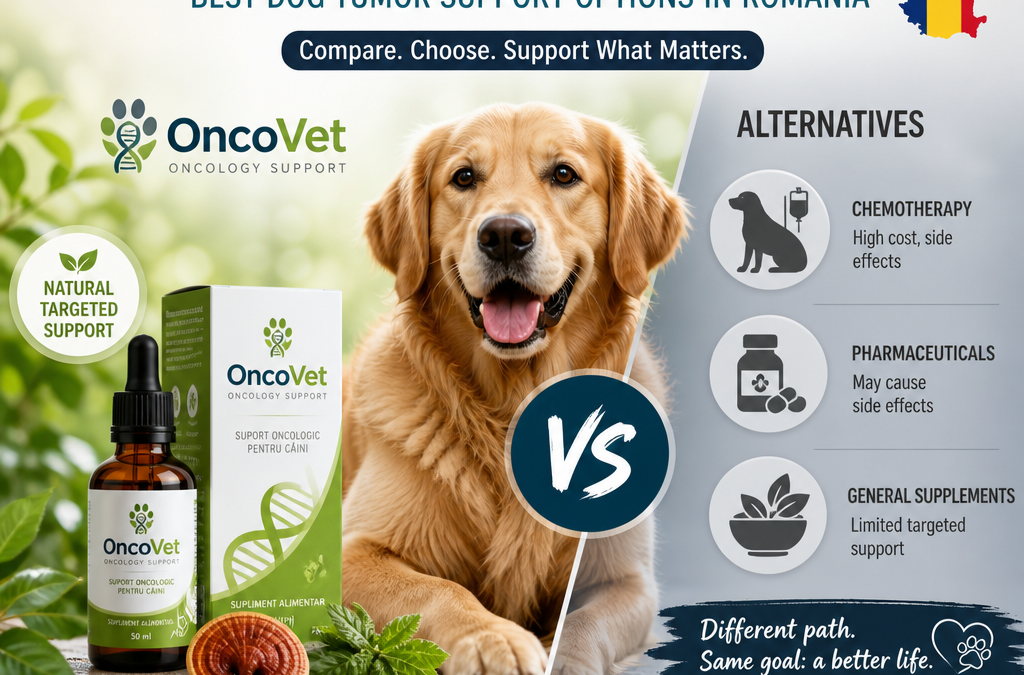
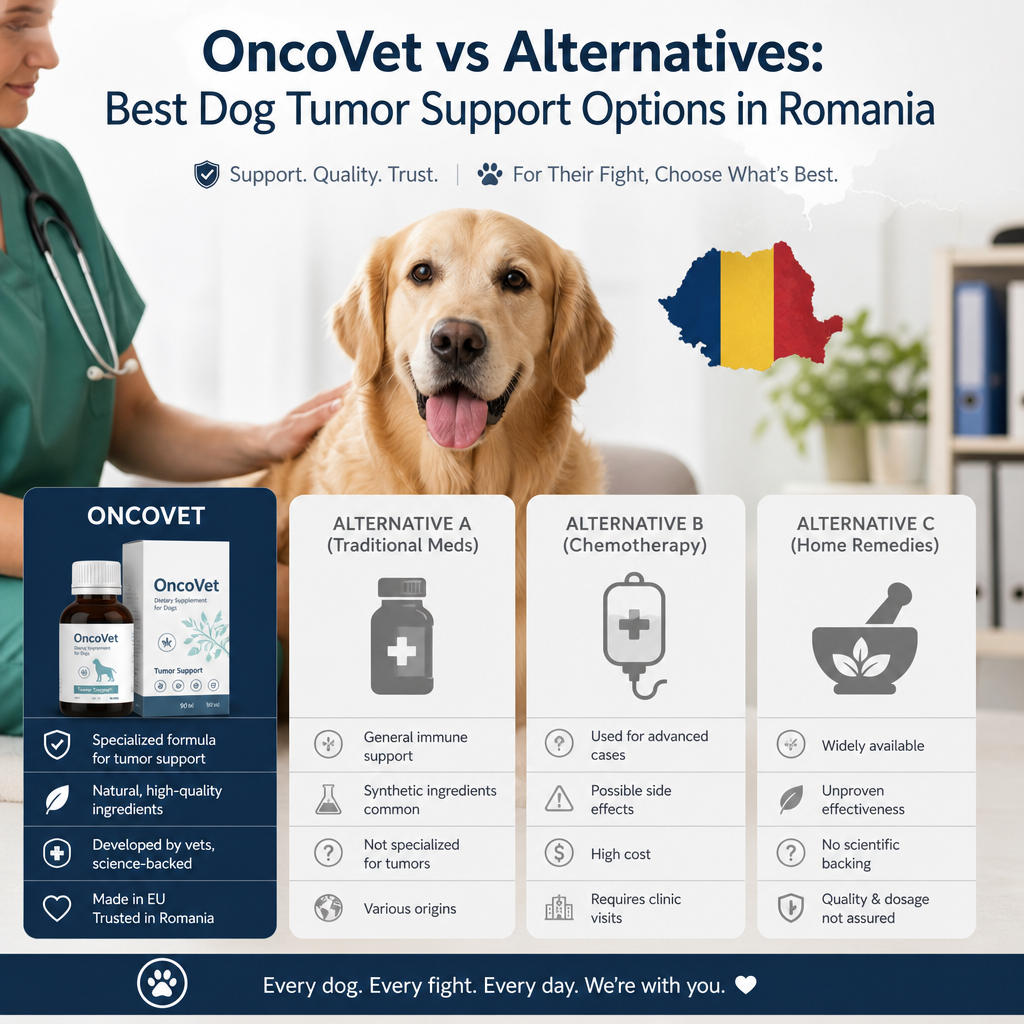
OncoVet vs Alternatives is an important comparison for Romanian dog owners whose pets have been diagnosed with a tumor or are undergoing cancer treatment. Choosing appropriate oncology support involves more than comparing product names. The right option should complement veterinary care, fit the dog’s diagnosis and treatment plan, and support comfort, nutrition, digestion, and overall quality of life without creating unnecessary risks.
Understanding oncology support for dogs
Canine cancer treatment may include surgery, chemotherapy, radiation therapy, targeted medication, pain management, or a combination of approaches. Oncology support does not replace these treatments. Instead, it may help address practical challenges that commonly arise during illness, such as reduced appetite, weight loss, digestive upset, fatigue, stress, or recovery after surgery.
The most suitable support depends on several factors:
- The type, location, and stage of the tumor
- The dog’s age, size, and general health
- Böbrek ve karaciğer fonksiyonu
- Current medications and chemotherapy protocols
- Appetite, body condition, and hydration
- The veterinarian’s treatment goals
Because every cancer case is different, a supplement that is appropriate for one dog may be unsuitable for another. Veterinary supervision is especially important when a dog is receiving chemotherapy, corticosteroids, anti-inflammatory medication, or other prescription treatments.
In many cases, dog tumor support options are most useful when they solve a specific problem rather than trying to do everything at once. A focused product may help digestion, while another may support calorie intake or recovery. The most effective choice is often the one that matches the dog’s current needs.
OncoVet vs Alternatives becomes easier to judge when owners first define the exact problem they are trying to solve. A dog that is losing weight needs different support from a dog that is nauseated, painful, or recovering after surgery.
What owners should compare
When reviewing OncoVet vs alternatives, owners should look beyond marketing claims and compare the practical characteristics of each option. Important considerations include the intended purpose, ingredient transparency, dosage guidance, evidence, safety profile, and compatibility with conventional treatment.
Some products are designed as broad nutritional supplements, while others focus on digestive support, antioxidants, immune function, or recovery after illness. A product marketed for “immune support” may not provide enough calories or protein for a dog losing weight. Similarly, a calorie-dense recovery formula may help nutrition but should not be presented as a treatment for cancer itself.
A careful comparison should include:
Ingredient quality and transparency
The label should clearly identify active ingredients, quantities, serving recommendations, and administration instructions. Avoid products that rely on vague “proprietary blends” without explaining how much of each ingredient is included.
Evidence and realistic claims
Support products should be evaluated according to the strength of available evidence. Some ingredients have research in dogs, while others are supported mainly by laboratory or human studies. Claims that a supplement can cure tumors, replace chemotherapy, or guarantee remission should be treated with caution.
Safety and interactions
Certain herbs, antioxidants, and concentrated extracts can affect blood clotting, liver enzymes, blood pressure, or medication metabolism. This is particularly relevant before surgery and during chemotherapy. A veterinarian should review the complete list of supplements the dog receives.
Uygulama kolaylığı
A product that is difficult to give may not be useful in practice. Dogs with nausea or mouth pain may reject tablets, powders, or strong flavors. Palatable liquids, soft chews, or easily mixed powders may be more practical, depending on the dog’s needs.
When owners compare OncoVet vs alternatives, they should also ask how the product fits the daily routine. If a supplement cannot be given consistently, even a good formula may not deliver meaningful support.
If owners want to read more about mushroom-based support options, they can also review supporting your dog with tumors naturally with Jinyinhua as part of a broader discussion about oncology support choices.
Dog tumor support options in Romania
Dog tumor support options in Romania generally fall into several categories. Availability may vary between veterinary clinics, pharmacies, pet shops, and online retailers, so owners should check product authenticity, storage conditions, and expiration dates.
Veterinary nutritional support
Nutritional support is often one of the most important parts of cancer care. Dogs with tumors may lose appetite, muscle mass, or body weight. Veterinary diets and recovery foods can provide concentrated calories, digestible protein, and balanced nutrients in a relatively small volume.
A veterinarian may recommend a therapeutic diet, a recovery formula, or adjustments to the dog’s normal food. Sudden dietary changes should be avoided unless medically necessary, as they may worsen digestive symptoms.
In the OncoVet vs alternatives discussion, therapeutic nutrition often stands out because it addresses a real medical need without relying on vague wellness claims. For many dogs, eating enough is the first step toward better comfort and resilience.
Sindirim ve iştah desteği
Nausea, diarrhea, constipation, and reduced appetite can interfere with treatment and recovery. Veterinary anti-nausea medication, appetite stimulants, probiotics, or easily digestible foods may be recommended. These approaches should be selected according to the cause of the problem rather than used indiscriminately.
If a dog has nausea, even the best supplement will not help unless the nausea is controlled. In this situation, OncoVet vs alternatives should be weighed against prescription options and dietary changes that may work faster and more reliably.
Omega-3 yağ asitleri
Fish oil and other sources of omega-3 fatty acids are sometimes included in supportive care plans. They may help maintain skin, coat, and general nutritional health, but product quality and dosage matter. Excessive amounts can cause gastrointestinal upset or influence clotting, so veterinary guidance is advisable, particularly around surgery.
Antioxidant and herbal products
Some owners consider mushroom extracts, turmeric, milk thistle, or other botanical ingredients. These products may have interesting biological properties, but evidence varies significantly, and “natural” does not automatically mean safe. Herbal products can interact with medication or place additional strain on the liver and kidneys.
Because of that, OncoVet vs alternatives should not be judged only by whether a product sounds natural. The more useful question is whether it helps the dog’s current condition without creating new problems.
Comfort and mobility support
Pain control and mobility assistance are central to quality of life. Prescription analgesics, joint support, orthopedic bedding, ramps, and appropriate exercise may be more valuable than a general supplement. A dog that is comfortable, hydrated, and able to rest may cope better with treatment and daily life.
Comfort support also matters for dogs that seem stable on paper but struggle in daily life. In practical terms, OncoVet vs alternatives is not just a product comparison; it is a decision about which approach helps the dog feel and function better.
For owners comparing other regional alternatives, the article on alternatives to medicinal mushrooms and mycotherapy can help frame these choices in a practical way.
Comparing OncoVet with veterinary alternatives
OncoVet may be considered by owners looking for a dedicated canine oncology support product. Its suitability should be judged according to the dog’s specific diagnosis, current treatment, and nutritional status rather than its name or category alone.
A veterinary alternative may be preferable when the dog has a clearly defined problem that requires targeted management. For example, a therapeutic recovery diet may be more appropriate for severe weight loss, while prescription anti-nausea medication may be more effective for chemotherapy-related vomiting. In other situations, a carefully selected nutritional supplement may be used alongside treatment to help maintain intake and body condition.
The key difference is often between general support and individualized medical care. General support products can have a role, but they should not delay diagnostic testing, surgery, oncology consultation, or medication for pain and nausea.
For a broader example of a targeted tumor-support ingredient, readers may also find the PubMed Central research library useful when looking for peer-reviewed veterinary and biomedical studies on supportive care ingredients.
In practical terms, the best dog tumor support options are usually those that fit into a treatment plan rather than competing with it. If a product helps a dog eat, recover, or tolerate therapy more comfortably, it may have real value. If it adds complexity without a clear benefit, it is probably not the best choice.
When evaluating OncoVet vs alternatives, think about the dog’s current priorities. Is the biggest issue appetite, nausea, weight loss, inflammation, stress, or recovery after surgery? A good product should address the main problem first.
Another helpful way to approach OncoVet vs alternatives is to separate short-term needs from long-term support. A dog in the middle of chemotherapy may need different help than a dog in post-operative recovery or palliative care.
When a supplement may be enough
Some dogs only need mild support, such as improved nutrition, better hydration, or a palatable product that encourages eating. In those cases, a supplement can be useful as part of an otherwise stable care plan.
When prescription care is more appropriate
If a dog is vomiting, in pain, losing weight rapidly, or refusing food, the first step is usually medical treatment. OncoVet vs alternatives should never replace symptom control when the dog’s condition is clearly worsening.
When combination care makes sense
Many dogs do best with a combination of prescription medication, supportive nutrition, and careful home monitoring. This layered approach often provides more benefit than relying on a single product.
Owners sometimes search OncoVet vs alternatives expecting one “best” answer, but the most responsible choice often changes over time as the dog’s condition changes. Support should evolve with the treatment plan.
7 best dog tumor support options to discuss in Romania
The list below is not a ranking of cures. It is a practical way to compare the most common support categories that Romanian dog owners may discuss with their veterinarian. The best option depends on the dog’s diagnosis, symptoms, and treatment stage.
1. Therapeutic recovery diets
Recovery diets are often among the most practical dog tumor support options because they are calorie-dense, easy to feed, and designed for convalescence. They may help dogs that are eating less than usual or losing weight during treatment.
2. Prescription anti-nausea support
When nausea is the main problem, medication prescribed by a veterinarian can make a significant difference. This is often more effective than trying to stimulate appetite with supplements alone.
3. Appetite support strategies
Appetite stimulants, warming food, hand feeding, and palatable diets can help some dogs eat enough to maintain body condition. These strategies should be used with veterinary advice, especially if the dog is already weak or dehydrated.
4. Omega-3 supplementation
Appropriate omega-3 support may fit into a broader nutrition plan, especially when the goal is to support general health and maintain condition. Careful dosing matters.
5. Digestive support products
Probiotics, fiber adjustments, and easy-to-digest foods may be useful when the dog has loose stools, constipation, or digestive upset. These are often more helpful when chosen to match a specific symptom.
6. Carefully selected herbal or mushroom-based support
Some owners explore herbal or mushroom-based products as part of complementary care. These options should be reviewed with the veterinarian for potential interactions and safety concerns.
7. Comfort and mobility aids
Orthopedic bedding, ramps, temperature control, leash-assisted walking, and pain management can dramatically improve daily comfort. For many dogs, these practical supports matter as much as any supplement.
Compared with many broad marketing claims, these 7 best dog tumor support options give owners a clearer framework for discussion. They also make OncoVet vs alternatives easier to evaluate because each option serves a specific purpose.
Questions to discuss with a veterinarian
Before starting any oncology support product, ask the veterinarian:
- Is this product appropriate for my dog’s tumor type and treatment?
- Could any ingredient interact with chemotherapy or prescription medication?
- Should it be stopped before surgery or anesthesia?
- What dose is suitable for my dog’s weight and health status?
- Yardımcı olup olmadığını nasıl bileceğiz?
- Which side effects should prompt immediate contact?
- Would a therapeutic diet or prescription treatment address the problem more effectively?
Veterinary oncology services and general veterinary clinics in Romania may also provide referrals for specialist consultation, imaging, pathology review, surgery, and palliative care. Keeping copies of laboratory results, biopsy reports, medication lists, and supplement labels can make these consultations more efficient.
Owners who are exploring canine tumor support products may also want to review the role of mushroom supplements in breast tumor care, including the article on Turkey Tail Mushroom as a natural supplement for supporting breast tumor treatment in dogs.
It can also help to ask whether the product should be used only for a short period or as part of a longer plan. OncoVet vs alternatives often comes down to whether the product has a clear place in the overall timeline of care.
How to monitor whether support is working
A good support plan should be measurable. Owners can track appetite, stool quality, water intake, vomiting, activity level, comfort, body weight, and willingness to move or interact. Small improvements may be meaningful, especially in a dog with cancer.
If a product does not improve any measurable sign after a reasonable trial, it may not be worth continuing. If side effects appear, it should be discussed with the veterinarian right away.
Daily notes can be especially helpful during chemotherapy or recovery. They make it easier to determine whether OncoVet vs alternatives is actually helping or simply adding another item to the routine.
Making the safest choice
The best dog tumor support options are those that serve a clear purpose, have understandable ingredients, and fit into a veterinarian-approved care plan. Owners should monitor appetite, water intake, body weight, stool quality, activity, breathing, pain, and general behavior. Changes should be reported promptly, especially during chemotherapy or after surgery.
Ultimately, the goal of oncology support is not to promise a cure through supplementation. It is to help the dog remain as comfortable, nourished, and active as possible while receiving appropriate medical care. Comparing OncoVet vs alternatives can be useful, but the final decision should be based on clinical need, evidence, safety, and the individual dog’s quality of life.
If your veterinarian recommends a specific supplement strategy, ask how it fits alongside standard care, and whether there is a better evidence-based option for your dog’s current stage of treatment. That approach keeps the focus on safety while still allowing thoughtful supportive care.
For some dogs, the right answer will be a nutritional formula. For others, it may be a targeted digestive aid, a prescription medication, or a carefully selected herbal product. The strongest choice is the one that supports the whole patient, not just the diagnosis.
When in doubt, return to the same practical question: does this support help the dog eat, rest, recover, or tolerate treatment more comfortably? If the answer is yes, it may belong in the plan. If not, OncoVet vs alternatives probably points toward a better option.