Before choosing a product, ask the seller or veterinary team the following questions:
What is the exact intended use of this supplement?
Are all ingredients and amounts listed clearly on the label?
Has the product been tested for contaminants and potency?
Is there any evidence in dogs, not only in cell or laboratory studies?
Could this product interact with my dog’s prescriptions or upcoming procedure?
How should the supplement be stored in Malta’s climate to preserve stability?
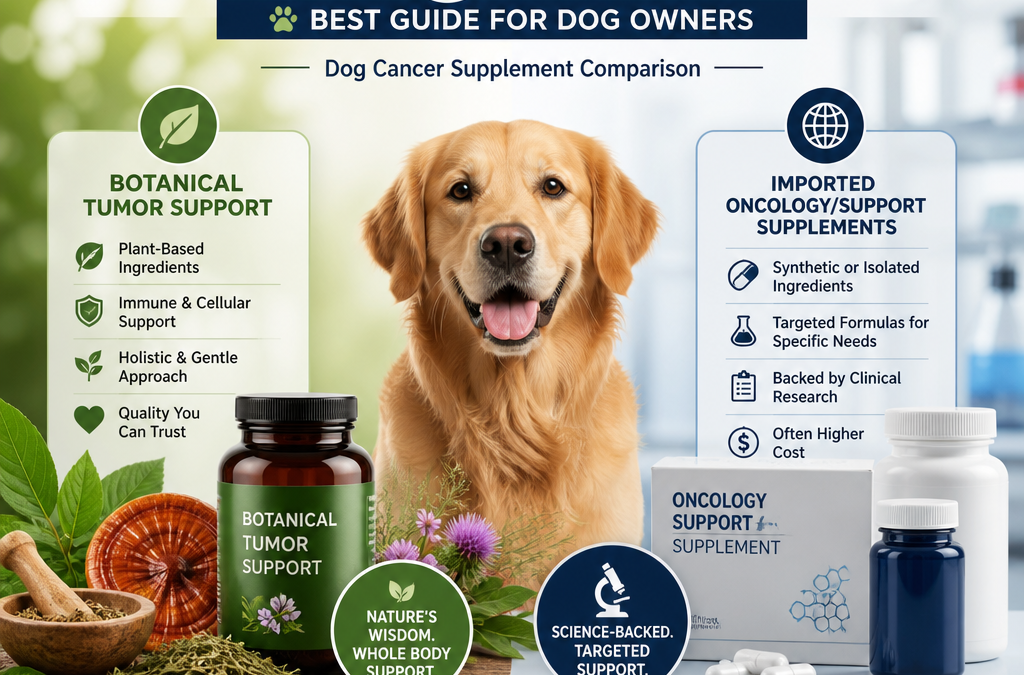
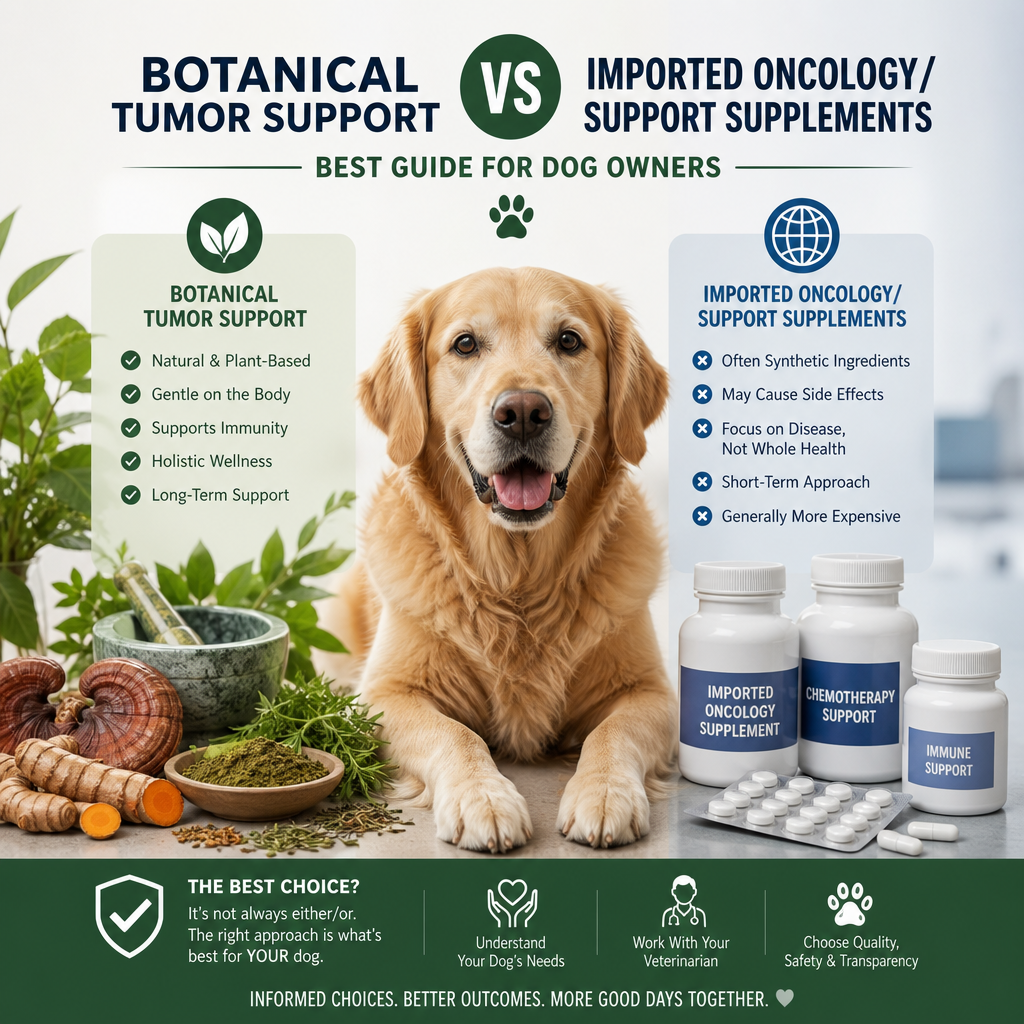
These questions can quickly separate serious products from vague marketing. They also make it easier to compare botanical tumor support vs Imported oncology/support supplements without relying on packaging claims alone.
If you are still undecided after asking these questions, a good next step is to ask the veterinarian whether the goal is symptom support, nutritional support, or possible anti-inflammatory support. A product that fits one of those goals clearly may be worth a trial, while a product with no clear purpose usually is not. That kind of filtering keeps the plan focused and reduces the chance of unnecessary supplements.
Owners can also ask whether a product has any official batch testing, a recognizable manufacturer, or a published contact point for product safety questions. Companies that stand behind their formula are usually willing to provide more than marketing language. This can be particularly helpful if you are comparing a locally available botanical formula with an imported product that seems more polished on paper but is harder to verify in practice.
良好的支持護理應該是什麼樣子
Supportive care works best when it is practical and measurable. That means setting a realistic goal, such as improved appetite, steadier weight, less nausea, or better energy, and then tracking whether the supplement actually helps. If there is no clear benefit after a reasonable trial, the product may not be worth continuing.
Supportive care also means keeping the whole dog in view. Senior dogs with cancer may need joint support, digestive support, and appetite support at the same time, but the best plan is still one that is simple enough to monitor. If you are already reading about senior dog cancer care, it may help to review broader guidance such as senior dog cancer risks and aging dog health alongside supplement choices.
Because owners sometimes search for botanical tumor support vs Imported oncology/support supplements when they are overwhelmed by choices, the safest answer is usually the same: choose the product with the clearest evidence, the cleanest label, and the strongest veterinary oversight.
Good supportive care also respects the limits of supplements. Even a well-chosen product cannot correct every issue in a cancer patient. A dog may still need pain medication, anti-nausea treatment, dietary changes, or a modified exercise routine. When supplements are used as one small part of a complete plan, they are more likely to be helpful. When they are treated as a replacement for diagnosis or treatment, the risk to the dog increases.
In many households, the simplest supportive plan is also the best one. One supplement, one purpose, one monitoring process, and one supervising veterinarian often produces better results than a long list of products with overlapping claims. This is especially true when owners are trying to decide between botanical tumor support vs Imported oncology/support supplements and need a clear, manageable path forward.
最終觀點
Botanical tumor support vs Imported oncology/support supplements should be evaluated through the same essential standards: safety, evidence, quality, transparency, and compatibility with veterinary treatment. Plant-based ingredients can be useful in selected situations, and imported formulas may offer valuable research or manufacturing expertise, but neither category is automatically superior.
The most responsible dog cancer supplement comparison focuses on the individual patient rather than promotional claims. Supplements may play a supportive role when carefully selected, but cancer care should remain centered on an accurate diagnosis, an individualized treatment plan, and ongoing communication with the veterinary team.
For dog owners in Malta, that approach is especially important because the best choice may differ based on availability, shipping conditions, and local veterinary recommendations. With the right guidance, botanical tumor support vs Imported oncology/support supplements can be compared in a way that supports your dog’s health without replacing proven treatment.
To summarize the decision simply: choose products that are transparent, clinically reasonable, and easy to monitor. Avoid products that promise cure-level results or hide key details behind a polished label. When in doubt, ask the veterinary team to review the formula before starting it. That small step can prevent unnecessary risk and make supportive care more effective over time.
Look for products made in facilities that follow recognized quality standards. Independent testing for contaminants, heavy metals, pesticides, microbes, and accurate ingredient levels provides greater confidence. A certificate of analysis can be helpful, although it should come from a credible laboratory and correspond to the specific product batch.
If the product is imported, ask whether the same batch was tested before export, after arrival, or not at all. That detail matters because transport conditions can influence stability and shelf life. A supplement that is well made but poorly stored may not perform as expected.
獸醫兼容性
Your veterinarian should know about every supplement your dog receives. This is especially important before surgery or when the dog is receiving chemotherapy, radiation, targeted medication, anticoagulants, nonsteroidal anti-inflammatory drugs, anticonvulsants, or corticosteroids. Some supplements may affect bleeding, blood pressure, liver enzymes, immune activity, or drug absorption.
Veterinary compatibility should also be considered in relation to the dog’s age, breed, weight, and concurrent illnesses. Senior pets may process certain compounds more slowly, and small dogs can be more sensitive to dosing errors. A product that seems mild in theory may still be too concentrated for a frail patient.
Evidence and realistic claims
Be cautious of products claiming to cure cancer, replace chemotherapy, dissolve tumors, or guarantee survival. These statements are warning signs. A trustworthy product generally presents supportive goals rather than promises of a cure and distinguishes laboratory findings from clinical evidence.
The best way to evaluate these claims is to ask what type of evidence exists. Is there data from dogs, or only from laboratory models? Was the study small, uncontrolled, or based on a different species? Strong claims should be backed by stronger evidence, not just by testimonials or sales language.
Dog-specific formulation
Human products may contain ingredients that are unsuitable for dogs, including xylitol, excessive vitamin D, concentrated essential oils, or inappropriate mineral levels. A canine product should still be evaluated carefully, but it is often easier to assess when the formulation and directions are specifically designed for veterinary use.
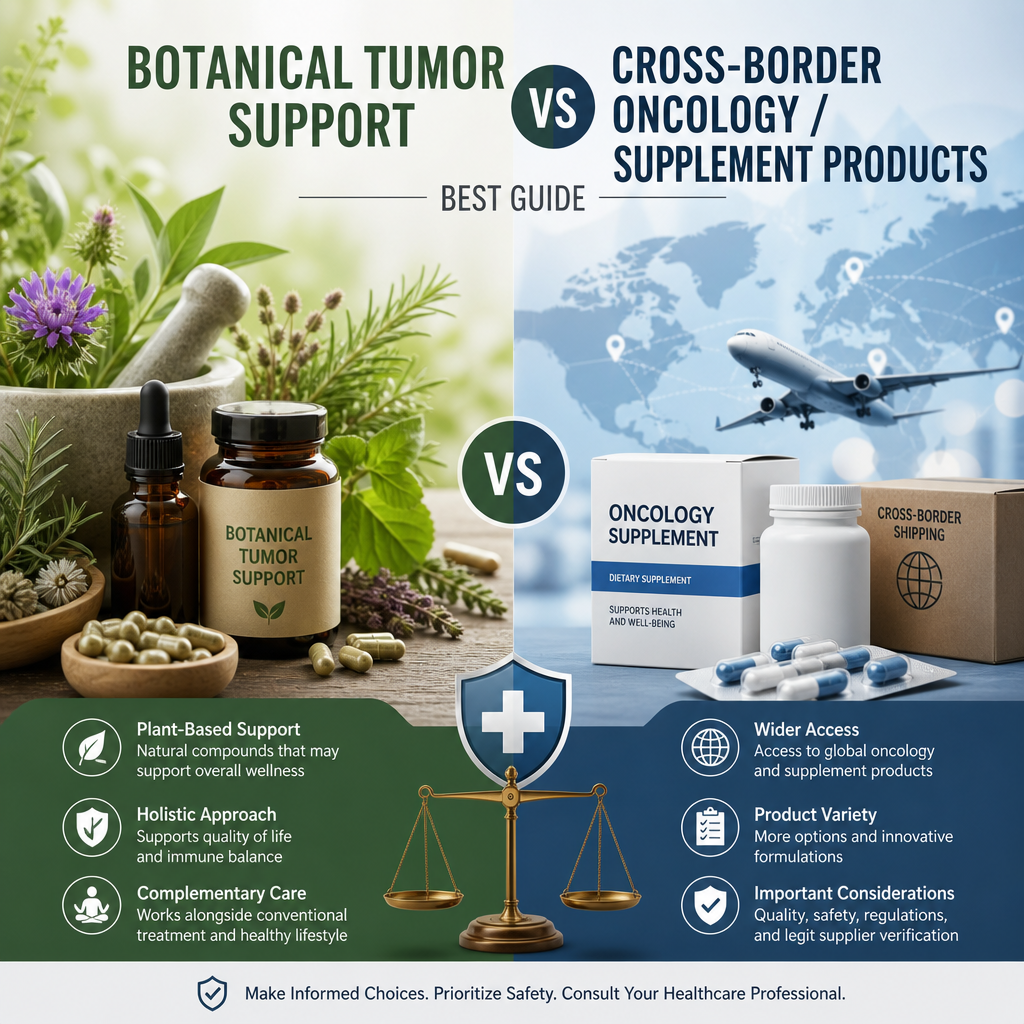
Another point to remember in botanical tumor support vs Cross-border oncology / supplement products is that “for pets” does not automatically mean “safe for every pet.” The dog’s medical history should always guide the final decision.
將補充劑與癌症治療結合的潛在風險
The most serious mistake is assuming that a supplement is harmless because it is natural. Certain concentrated botanicals can affect liver enzymes and potentially change how medications are metabolized. Others may increase bleeding risk, alter blood sugar, cause gastrointestinal upset, or stimulate the immune system in ways that are undesirable for a particular treatment plan.
Antioxidant supplements also require thoughtful discussion. Antioxidants may support normal cells under some conditions, but their use during radiation or certain chemotherapy protocols may be controversial because treatment can partly rely on oxidative mechanisms. The right decision depends on the specific cancer, medication, timing, and overall health of the dog.
Dogs with liver disease, kidney disease, clotting disorders, diabetes, seizure disorders, or gastrointestinal problems may face additional risks. Puppies, senior dogs, and underweight patients may also respond differently to concentrated products.
These concerns do not mean botanical options have no place in care. They mean that a dog cancer supplement comparison should always include safety first, especially when a dog is already on prescription therapy. Even supportive ingredients should be handled like real medical tools, not like flavorless food additives.
A cautious owner should also avoid layering too many supplements at once. Multiple products can lead to overlapping ingredients, unintended high doses, or confusion when side effects occur. Simplicity often makes monitoring safer and more effective.
如何做出更安全的決定
Start by identifying the primary goal. Is the aim to support appetite, maintain weight, ease digestive problems, address a documented deficiency, or provide general nutritional support? A clear goal helps prevent the use of multiple overlapping products.
Next, gather complete product information, including photographs of the label, serving size, manufacturer, lot number, and suggested dose. Share this information with the veterinary team. Ask whether any ingredient conflicts with the dog’s diagnosis or current medications.
Introduce only one new product at a time, unless a veterinarian gives different instructions. This makes it easier to identify side effects. Monitor appetite, vomiting, diarrhea, energy, thirst, urination, skin changes, and any unusual behavior. Stop the product and contact the veterinarian if concerning symptoms appear.
Regular monitoring may include bloodwork, weight checks, liver and kidney assessments, and evaluation of tumor response. Supplements should never delay imaging, surgery, oncology consultations, pain management, or other recommended care.
It can also help to review primary-source product or ingredient information from recognized medical references. For example, the PubMed research database is a reliable place to verify whether a botanical ingredient has been studied in dogs or in related species.
Owners comparing botanical tumor support vs Cross-border oncology / supplement products may also want to ask practical questions before purchasing. What is the exact active ingredient? Is the dose expressed clearly? Has the product been used in dogs, or only discussed in human studies? Can the manufacturer explain the source and testing process? These questions help turn a marketing decision into a health decision.
If a product must be imported, confirm how it will be shipped, whether it requires refrigeration, and how long it remains stable after opening. Ask whether the package includes a lot number and expiration date. These details may seem minor, but they matter when a dog’s treatment depends on consistent quality.
生活質量的角色
Cancer care is not measured only by tumor size or survival time. Appetite, comfort, mobility, sleep, interaction, hydration, and enjoyment of daily activities are also important. A supplement may be worthwhile if it supports a specific quality-of-life objective and does not interfere with effective treatment.
Some dogs benefit most from symptom support rather than aggressive product use. For example, if appetite is poor, a product that helps with digestion or palatability may matter more than one that promises broad anti-tumor activity. If joint stiffness or discomfort is the main problem, then quality-of-life support may take priority over other claims.
The strongest plan usually combines evidence-based veterinary oncology with individualized nutrition, pain control, symptom management, and honest monitoring. Botanical products can have a place in that plan, but they should be selected with the same caution applied to any active medical substance.
Ultimately, botanical tumor support vs Cross-border oncology / supplement products is not a simple contest between “natural” and “medical” options. The safest choice depends on the dog’s diagnosis, treatment protocol, health status, product quality, and veterinary supervision. Transparent labeling, realistic expectations, and careful monitoring are the foundation of responsible supplement use.
For owners comparing options across markets, this discussion also fits into a broader decision-making process that includes local availability, cost, and follow-up care. A lower-priced product is not automatically better if the dosing is unclear or the source cannot be verified. Likewise, a premium imported product is not automatically worth the price unless it has a clear role in the care plan.
Every dog cancer supplement comparison should balance hope with evidence. Botanical support may be useful, and imported products may have a place, but neither should replace clinical judgment. A product earns trust when it is transparent, practical, and appropriate for the dog in front of you.
In practice, the best answer is rarely the most dramatic one. A carefully chosen botanical formula, used for the right reason, may help. A cross-border product may also be appropriate if it is well documented and professionally supervised. The key is to protect the dog, not the marketing claim. When owners keep that priority in mind, botanical tumor support vs Cross-border oncology / supplement products becomes a clearer and safer decision.
– 補充劑的預期用途是什麼?
– 任何成分是否可能與化療、類固醇、止痛藥、抗生素或麻醉相互作用?
– 劑量是否適合狗狗的體重和器官功能?
– 在手術或治療前是否應停止使用該產品?
– What side effects should be monitored?
– Are there better-supported nutritional options?
– How will success or intolerance be evaluated?
Keeping a written supplement record can prevent accidental duplication. Some products contain overlapping ingredients, such as turmeric, vitamin E, omega-3 fatty acids, or medicinal mushrooms. Combining several formulas may increase the risk of excessive dosing without providing additional benefit.
When owners bring a product label to the appointment, the discussion is usually more productive. That is especially true when the topic is botanical tumor support vs Cross-border supplements, because the veterinarian can compare ingredient quality, dose, and timing against the dog’s current treatments.
It can also help to prepare a short list of priorities before the visit. For example, is the main goal better appetite, calmer digestion, more energy, or improved comfort? Clear goals allow the veterinarian to assess whether a supplement is likely to be useful or whether the focus should stay on diet adjustment, anti-nausea therapy, pain control, or a different supportive strategy.
Owners who are unsure how a supplement fits into a broader care plan should ask for simple language, not just technical terms. A good discussion should leave the family with a clear yes, no, or “not right now,” along with the reason behind the recommendation.
補充後監測狗的狀況
A supplement should be introduced only when the dog’s veterinary team understands the plan. Starting one product at a time makes it easier to identify benefits or adverse reactions. Owners should monitor appetite, stool quality, vomiting, energy, thirst, urination, skin changes, bruising, and behavior.
Any sudden deterioration, persistent vomiting or diarrhea, refusal to eat, unusual bleeding, breathing difficulty, collapse, or severe lethargy requires prompt veterinary attention. A supplement should be discontinued only according to veterinary guidance when stopping suddenly could affect treatment, but most nonessential products can be reassessed if adverse effects appear.
It is also important to define realistic goals. Improved appetite, stable weight, better stool quality, or improved comfort may be meaningful outcomes. A supplement should not be judged solely by whether a visible tumor changes, and no product should delay proven cancer treatment.
For many dogs, the most meaningful sign that a product is helping is subtle: more consistent eating, less digestive upset, or steadier energy. Those day-to-day improvements matter more than dramatic promises, especially when the discussion centers on botanical tumor support vs Cross-border supplements.
A simple monitoring log can be very useful. Write down the product name, dose, time given, food taken with it, and any changes observed over the next several days. This record makes follow-up visits more productive and helps the veterinary team decide whether to continue, adjust, or stop the product.
If the dog is already receiving multiple therapies, tracking becomes even more important. Owners may otherwise mistake a natural fluctuation in appetite or comfort for a supplement effect. Documentation helps separate coincidence from true response.
做出負責任的選擇
For many families, the best approach is to prioritize veterinary treatment, adequate calories and protein, hydration, pain control, and quality of life before considering supplemental products. Botanical tumor support may be reasonable when the formula is transparent and compatible with medical care. Cross-border supplements may also be considered when the manufacturer demonstrates reliable testing and the product can be legally and safely obtained. If you are comparing product options in other European markets, you may also find it useful to review Ocoxin Pets 替代品:英國 7 款最佳平價狗狗腫瘤補充劑 for a broader look at formulation and support style.
Ultimately, botanical tumor support vs Cross-border supplements is less about choosing a winning category and more about evaluating evidence, safety, transparency, and individual suitability. A careful dog cancer supplement comparison helps owners move beyond bold claims and focus on what can genuinely support their dog without creating additional risks.
When in doubt, ask the veterinarian to review the label before the first dose. That simple step can prevent avoidable problems and keep the plan aligned with the dog’s treatment goals. In the end, botanical tumor support vs Cross-border supplements should be assessed by how well the product fits the dog, not by how loudly it is marketed.
Responsible choices usually come from patience. It is better to spend a little extra time confirming the origin, formulation, and purpose of a product than to rush into a purchase because a page promises fast results. A careful, evidence-aware approach protects the dog and gives owners more confidence in the plan.
購買前的實用檢查清單
Before ordering any supplement, pause and review the basics. This step can prevent wasted money and reduce the chance of avoidable side effects.
Confirm the dog’s diagnosis and treatment stage.
Ask whether the product is meant for support, comfort, or nutrition.
Check the full ingredient list and serving size.
Look for batch numbers, testing details, and expiration dates.
Review storage instructions and shipping conditions.
Verify that the dosage is written clearly for dogs.
Share the label with the veterinarian before the first use.
This checklist is especially useful when comparing botanical tumor support vs Cross-border supplements because the marketing language may sound similar even when the quality signals are very different. The label should answer the practical questions without forcing the owner to guess.
如何評估標籤和聲明
Supplement labels can be persuasive, but not all persuasive labels are reliable. A responsible label usually identifies the active ingredients, the amount per dose, and the intended use in clear language. It should not depend on vague claims about “detox,” “immune boosting,” or “natural cancer reversal” without supporting detail.
Beware of terms that sound scientific but do not tell you much about the actual product. Words like “advanced,” “extra strength,” or “professional grade” can be marketing language rather than quality proof. Likewise, before-and-after photos and emotional testimonials may not reflect how the product works in real veterinary practice.
When evaluating botanical tumor support vs Cross-border supplements, ask whether the claims match the evidence available on the label or from the manufacturer. If the product seems to promise more than any supplement realistically can, the safest answer is often to walk away.
It is also smart to check whether the label matches the website description exactly. Differences in ingredient amounts, serving recommendations, or product names can indicate poor quality control. Consistency across packaging and online information is a good sign; confusion is not.
癌症狗的支持性護理目標
Supportive care should aim to improve the dog’s day-to-day experience. That may include preserving appetite, easing digestion, maintaining body weight, reducing discomfort, and helping the dog stay engaged with family life. Supplements can play a role, but only when they are part of a broader plan.
In many cases, the most helpful improvements are modest and practical. A dog that eats a little more consistently, tolerates medication better, or rests more comfortably may be doing better even if the tumor itself has not changed. Those outcomes matter because they affect the dog’s overall well-being.
That is why the discussion around botanical tumor support vs Cross-border supplements should remain grounded in real-life care goals. The best product is the one that supports the dog safely, fits the treatment plan, and can be monitored over time.
If a product cannot do those things, it is not the right choice, no matter how appealing it looks online. Clear labeling, veterinary review, and realistic expectations remain the foundation of good decision-making for dogs with cancer.
In summary, botanical tumor support vs Cross-border supplements is a question of quality, compatibility, and trust. The right choice should support the dog’s comfort and treatment plan while avoiding unnecessary risk.