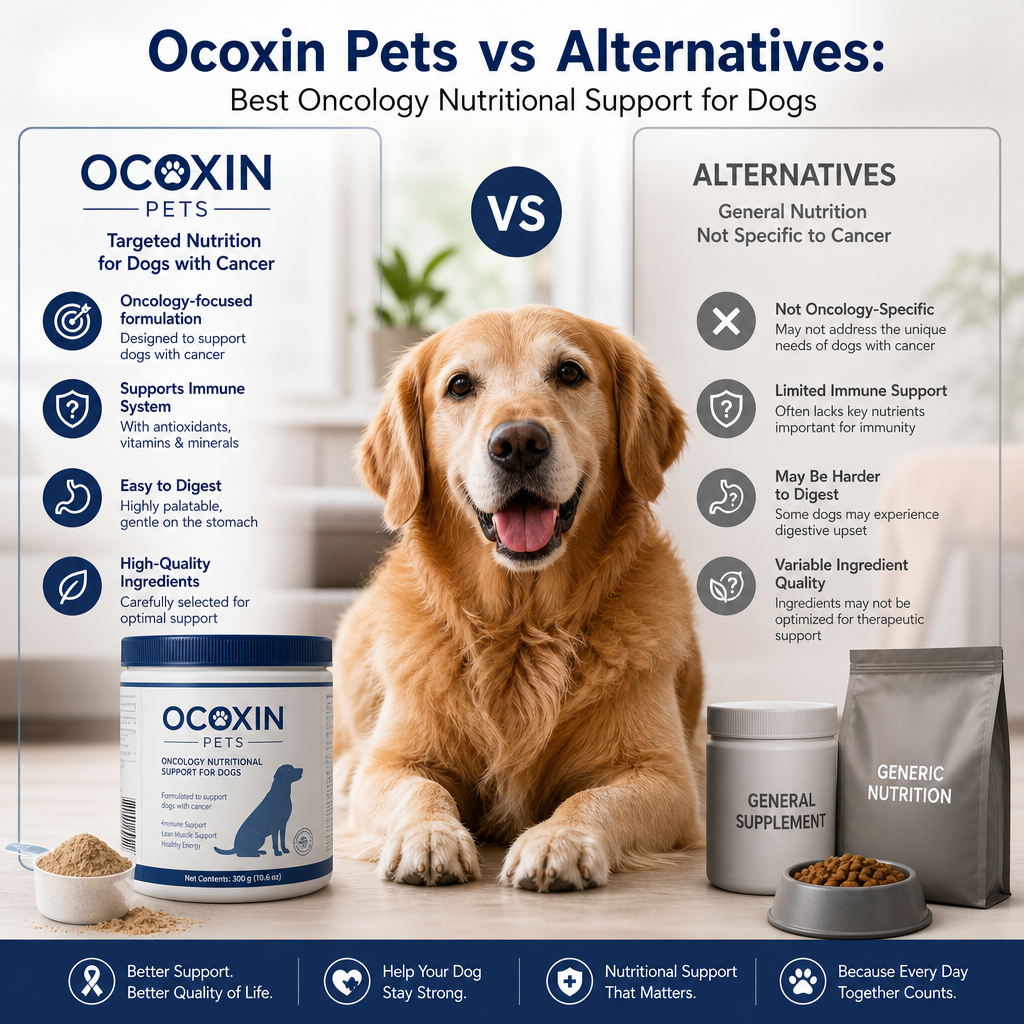
Ocoxin Pets vs Alternatives is an important comparison for dog owners seeking supportive nutrition during cancer care. A diagnosis of cancer can raise difficult questions about appetite, weight, energy, treatment tolerance, and overall quality of life. Nutritional products cannot replace surgery, chemotherapy, radiation, or veterinary supervision, but they may help support a dog’s condition as part of a broader treatment plan.
The best choice depends on the dog’s diagnosis, treatment schedule, current diet, bloodwork, appetite, digestive health, and individual response. Understanding the differences between products can help owners discuss practical options with a veterinarian or veterinary oncologist.
Oncology nutritional support refers to dietary strategies, supplements, and therapeutic foods intended to help dogs maintain strength and body condition during cancer treatment. Cancer and its therapies may affect metabolism, appetite, digestion, hydration, and muscle mass. Some dogs lose weight rapidly, while others experience nausea, diarrhea, constipation, or changes in food preferences.
A nutritional support plan may include:
A complete and balanced therapeutic diet
Calorie-dense food for dogs with reduced appetite
High-quality protein to help preserve lean muscle
Omega-3 fatty acids, when appropriate
Antioxidant management tailored to the treatment plan
Digestive support, such as carefully selected fiber or probiotics
Appetite and nausea medications prescribed by a veterinarian
Hydration support when drinking or eating is reduced
Nutritional products should be viewed as complementary tools. They are not designed to destroy tumors, cure cancer, or independently improve survival. Their primary purpose is to help maintain nutritional status and quality of life.
In practice, oncology nutritional support works best when it is individualized. A dog with a mast cell tumor, lymphoma, osteosarcoma, or a metastatic mass may have very different nutritional needs. Some patients need more calories and palatability, while others need better digestive tolerance or support for medication-related side effects. That is why Ocoxin Pets vs alternatives should always be considered in the context of the dog’s full medical picture.
Owners should also remember that cancer itself can change how a dog processes nutrients. Muscle loss may begin before obvious weight loss is noticed, and a dog may still appear “well fed” while body condition is declining. That makes routine rechecks, weight monitoring, and body condition scoring especially valuable during treatment.
How Ocoxin Pets May Fit Into a Support Plan
Ocoxin Pets is marketed as a nutritional supplement for dogs and cats requiring additional support during serious illness, including cancer care. Its formulation typically includes a combination of nutritional and plant-derived ingredients. Depending on the specific product and regional formulation, ingredients may include compounds such as beta-glucans, vitamins, minerals, amino acids, and botanical extracts.
The potential appeal of Ocoxin Pets is its multi-ingredient approach. Rather than focusing on only calories, fatty acids, or digestive health, it is intended to provide broader nutritional support. Some owners and veterinary professionals consider this type of supplement when a dog is undergoing intensive treatment or needs additional support beyond a standard diet.
However, product suitability should be assessed carefully. Ingredient lists and concentrations matter, and formulations can change. Dogs may also react differently to botanical ingredients or concentrated supplements. A veterinarian should review the product before use, especially if the dog is receiving chemotherapy, corticosteroids, nonsteroidal anti-inflammatory drugs, anticoagulants, or other medications.
For readers comparing options, the American College of Veterinary Internal Medicine provides a helpful overview of evidence-based veterinary care through its oncology resources: ACVIM veterinary oncology resources.
When Ocoxin Pets is discussed in the clinic, the conversation usually centers on three questions: does the product fit the dog’s current needs, is it safe with the present treatment plan, and can it be given consistently without upsetting appetite or digestion? Those questions are often more useful than focusing only on marketing claims. If the answer is yes, then Ocoxin Pets vs alternatives may become a practical discussion about convenience, ingredients, and tolerability.
It is also helpful to understand what a supplement can and cannot do. A supplement may support energy, appetite, or nutrient intake, but it does not remove the need for diagnostic monitoring. Bloodwork, imaging, and follow-up exams remain important because changes in tumor behavior, inflammation, or organ function can alter nutritional needs quickly.
Ocoxin Pets vs Alternatives: Key Comparison Factors
When evaluating Ocoxin Pets vs alternatives, it helps to compare products according to their purpose rather than treating every supplement as interchangeable.
In practice, Ocoxin Pets vs alternatives should be reviewed based on the dog’s current needs, the treatment plan, and how easy the product is to use every day. Some dogs need more calories, while others need a product that is easier to tolerate during nausea or digestive upset.
The phrase Ocoxin Pets vs alternatives is useful because it forces a more specific comparison. Not every option is trying to do the same job. One product may support digestion, another may increase calorie intake, and another may combine multiple ingredients in a broader formula. Understanding that difference can prevent wasted money and reduce the risk of choosing a supplement that sounds impressive but does little for the individual dog.
1. Nutritional completeness
Some products are complete therapeutic diets, while others are supplements designed to be added to normal food. A complete diet supplies essential nutrients in appropriate proportions. A supplement may provide selected ingredients but cannot meet all dietary requirements.
If a dog is eating poorly, a veterinary therapeutic diet or calorie-dense complete food may be more important than a broad supplement. Conversely, a dog already eating adequately may only need targeted support.
2. Calorie and protein content
Weight loss and muscle loss are common concerns in canine cancer patients. A supplement with appealing ingredients may not provide enough calories or protein to address these problems. Owners should check whether a product meaningfully contributes to daily energy needs.
Protein requirements vary according to kidney function, liver health, tumor type, treatment, and the dog’s overall condition. There is no single cancer diet suitable for every patient. Restricting protein without veterinary guidance may worsen muscle loss.
3. Ingredient transparency
Clear labeling is essential. Owners should look for exact ingredient names, quantities, feeding instructions, expiration dates, and quality-control information. Products that use vague proprietary blends can be difficult to evaluate, particularly when a dog is taking multiple medications.
A supplement should also be sourced from a reputable manufacturer with appropriate testing and manufacturing standards. “Natural” does not automatically mean safe, effective, or free from drug interactions.
4. Evidence and realistic expectations
Research on veterinary cancer supplements is often limited compared with research on standard cancer treatments. Some ingredients have laboratory or preliminary evidence, but laboratory findings do not necessarily prove that a product improves outcomes in dogs.
The most realistic goals of oncology nutritional support are maintaining appetite, body weight, hydration, comfort, and activity. Claims that a supplement can shrink tumors or replace conventional therapy should be treated with caution.
When owners compare Ocoxin Pets vs alternatives, it is usually most helpful to ask a simple question: does this option improve eating, comfort, or nutrition in a measurable way? That question often reveals whether a supplement is truly useful for the individual dog.
Another useful question is whether the product can be integrated into normal routines. If a dog dislikes the taste, resists administration, or becomes nauseated after dosing, even a well-formulated product may fail in real-world use. Ease of administration matters because supportive care only works if the dog actually receives it. That is one reason why many veterinarians compare Ocoxin Pets vs alternatives in terms of compliance, not just ingredients.
Common Dog Tumor Support Options
There are several categories of dog tumor support options, and each addresses different needs.
These dog tumor support options may be combined in some cases, but they should be matched carefully to the dog’s medical status. A plan that works well for one patient may be inappropriate for another, especially during chemotherapy or when digestive issues are present.
Looking at dog tumor support options side by side can make the decision much easier for owners. Some options are designed for overall nutrition, others for symptom control, and others for specific clinical goals such as maintaining lean body mass or supporting digestion. The best choice often combines several simple strategies rather than relying on one product to do everything.
Therapeutic veterinary diets
Veterinary diets may be useful when a dog has poor appetite, gastrointestinal problems, food intolerance, kidney disease, or another condition affecting nutritional requirements. Some are formulated to be highly digestible or energy dense. Others are designed for specific medical conditions.
The best diet is the one the dog will eat consistently while still meeting medical needs. Sudden dietary changes can cause digestive upset, so transitions should generally be gradual unless a veterinarian recommends otherwise.
Therapeutic diets are often overlooked because owners focus on supplements first. In reality, a diet that the dog accepts well can provide a stronger foundation than a supplement added to food the dog refuses. That is why Ocoxin Pets vs alternatives should include a look at the full feeding plan, not just a single bottle or sachet.
Omega-3 fatty acids
Fish oil provides EPA and DHA, which may support normal inflammatory regulation and help maintain skin, coat, and general health. Omega-3 products vary considerably in purity and concentration. Excessive doses can cause gastrointestinal upset or affect platelet function, so dosing should be determined by a professional.
For some dogs, omega-3 support may be most useful when body condition is stable and the goal is long-term maintenance. For others, it can be part of a broader plan to support comfort and general health during treatment. The most important point is that omega-3 products should be selected carefully, because quality and concentration vary widely.
Probiotics and digestive support
Dogs receiving chemotherapy or antibiotics may develop changes in bowel habits. A veterinary probiotic or carefully selected fiber source may help some patients, although it is not appropriate for every dog. Severe diarrhea, vomiting, blood in the stool, or dehydration requires prompt veterinary attention rather than relying on supplements.
Digestive support is especially important when appetite is inconsistent. If a dog feels nauseous or has loose stools, the owner may mistakenly think the cancer itself is the main issue, when the true problem could be a medication effect, a food intolerance, or gut irritation. Addressing these issues can make any cancer support plan more effective.
Appetite and nausea management
Prescription medications can be among the most effective forms of nutritional support. Anti-nausea treatment, appetite stimulation, pain control, and treatment of constipation may allow a dog to eat more successfully. Addressing the underlying problem is often more helpful than adding another supplement.
This is a major reason oncology care should be individualized. If a dog is not eating, the right response may be medication, feeding adjustments, pain relief, or a change in food texture and temperature. Supplements can still be helpful, but they should not distract from more urgent supportive care.
Homemade diets formulated by a veterinary nutritionist
Some owners prefer home-prepared food because it may be more appealing to the dog. However, improvised recipes can be deficient in essential nutrients or inappropriate for a dog’s medical condition. A board-certified veterinary nutritionist can create a balanced recipe that accounts for diagnosis, treatment, allergies, and calorie needs.
Home-prepared feeding can be especially valuable for dogs with declining appetite, because it allows for texture, flavor, and moisture adjustments. Warmed food, smaller meals, and added broth or water may improve acceptance. Even so, the recipe must remain nutritionally complete. That balance can be hard to achieve without expert input.
Other supportive approaches may also be discussed with the veterinary team, including additional calorie boosters, altered meal timing, and symptom-directed medications. When used together, these measures can often improve daily intake more reliably than any single product. That is why owners comparing Ocoxin Pets vs alternatives should avoid thinking in terms of “best in all cases” and instead focus on “best for this dog right now.”
Safety Considerations During Cancer Treatment
Supplements can interact with medications or affect treatment tolerance. Certain botanical ingredients may influence liver enzymes, blood clotting, immune activity, or the metabolism of chemotherapy drugs. High doses of antioxidants may also be unsuitable in particular treatment plans, depending on the therapy and veterinary guidance.
Before starting Ocoxin Pets or any alternative, provide the veterinary team with:
The complete product label
The planned daily dose
All current medications
Other supplements and treats
Recent bloodwork, if available
Information about appetite, stool quality, vomiting, and weight changes
Stop and seek veterinary advice if the dog develops worsening vomiting, diarrhea, facial swelling, breathing difficulty, marked lethargy, or refusal to eat.
Safety also includes monitoring the dog’s response after any new product is introduced. Owners should watch for changes in stool quality, appetite, energy, scratching, swelling, or reluctance to take the supplement. If a product seems to upset the stomach, it may be better to stop it and reassess rather than trying to push through adverse effects.
In oncology care, timing matters. Some supplements may be acceptable during one stage of treatment but not another. A product that seems useful before chemotherapy could become less appropriate during periods of low appetite or low platelets. The veterinary team can help determine whether a change in treatment phase also means a change in nutritional support.
It can also be helpful to track every new product in a simple notebook or phone note. Record the date started, dose, feeding time, and any side effects. If several changes happen at once, it becomes difficult to identify what helped and what caused problems. Keeping clear notes makes Ocoxin Pets vs alternatives a more objective discussion at the next recheck.
Choosing the Most Appropriate Option
The most suitable oncology nutritional support is determined by the dog’s needs, not by marketing claims or the number of ingredients in a product. A dog losing weight may need calorie and protein support first. A dog with gastrointestinal symptoms may need digestibility and nausea control. A dog eating well may benefit from a simpler, targeted supplement—or may not need supplementation at all.
Owners should monitor body weight, muscle condition, appetite, water intake, stool quality, energy, and comfort. Keeping a daily record can help the veterinarian identify trends and adjust the plan quickly.
Ocoxin Pets may be a reasonable option for some dogs when used under veterinary supervision, but it is not automatically superior to therapeutic diets, omega-3 products, digestive support, prescription medications, or a carefully formulated home-prepared diet. Comparing purpose, evidence, safety, nutritional value, and compatibility with cancer treatment provides a more reliable path toward supporting a dog’s health and quality of life.
Ultimately, Ocoxin Pets vs alternatives should be decided with the same goal in mind: preserving comfort, maintaining nutrition, and supporting the dog through treatment in the safest way possible. That approach usually leads to better conversations, better expectations, and a more practical care plan.
For many families, the decision becomes easier when they separate “supportive” from “curative.” Supportive nutrition can improve day-to-day functioning, but it should not be expected to treat cancer on its own. Once that distinction is clear, Ocoxin Pets vs alternatives becomes a structured, patient-specific choice rather than a general product debate.
In summary, the best plan is the one that helps the dog eat, maintain weight, tolerate treatment, and stay comfortable with minimal risk. That may be Ocoxin Pets for one patient, but a therapeutic diet, probiotic, omega-3 supplement, or prescription appetite support may be better for another. Careful monitoring and regular veterinary guidance remain the foundation of every good decision.
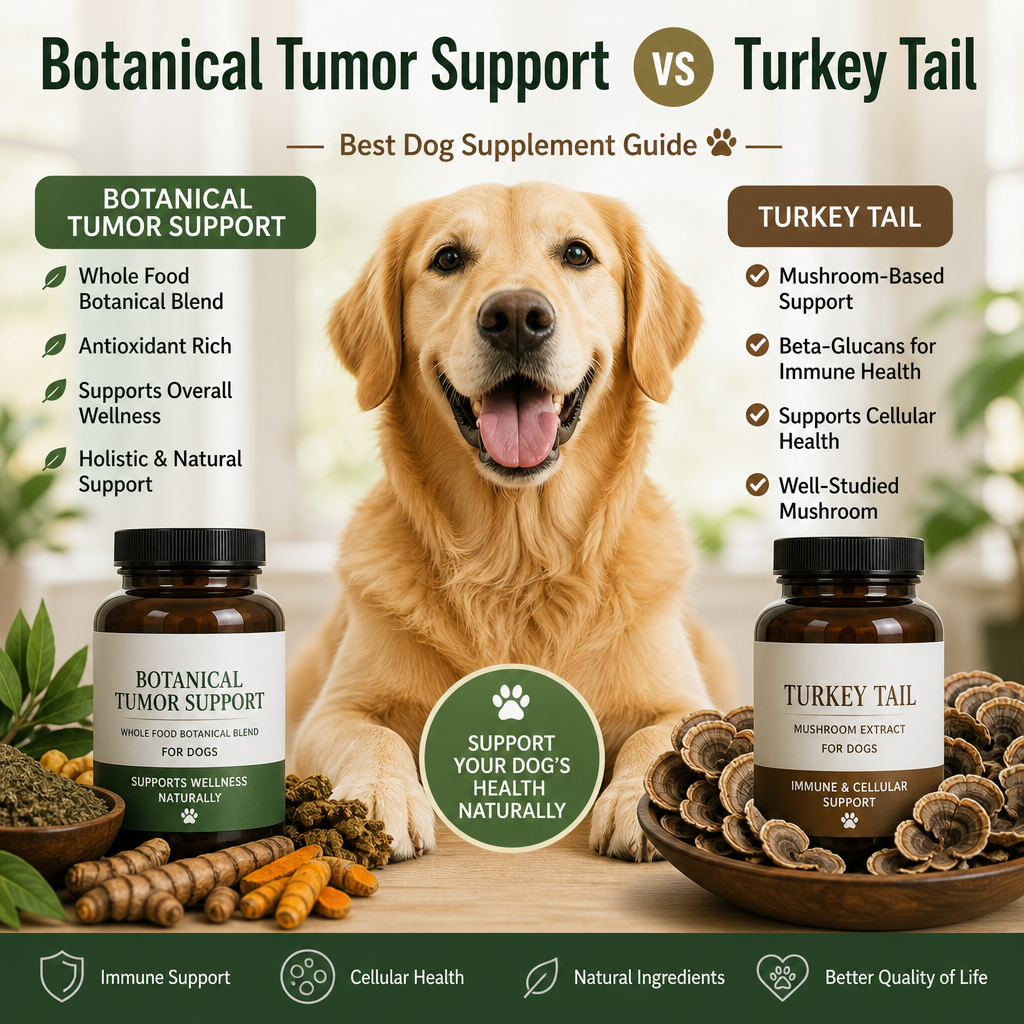
Botanical tumor support vs Turkey Tail / medicinal mushrooms is a useful comparison for dog owners exploring complementary options during cancer care. Both approaches may provide supportive compounds, but they are not interchangeable, and neither should replace veterinary diagnosis, surgery, chemotherapy, radiation, or other recommended treatment. The best choice depends on the dog’s cancer type, current medications, overall health, and nutritional needs.
Understanding the dog cancer supplement comparison
Dietary supplements for dogs with cancer are generally used to support immune function, antioxidant defenses, appetite, digestion, or general vitality. They do not have the same level of evidence as conventional cancer treatments, and product quality can vary significantly.
A dog cancer supplement comparison should begin with several practical questions:
What is the dog’s diagnosis and cancer stage?
Is the supplement being used alongside treatment or instead of treatment?
Could it affect blood clotting, liver enzymes, or immune activity?
Has the veterinarian reviewed the full ingredient list?
Is the product manufactured with testing for contaminants and accurate dosing?
These questions matter because “natural” does not automatically mean safe. Botanical extracts and medicinal mushrooms can contain concentrated compounds that interact with prescription medications or become inappropriate for dogs with liver, kidney, gastrointestinal, or autoimmune conditions.
It is also helpful to remember that supportive care works best when it fits the whole treatment plan. For many families, a supplement is only one part of cancer care, alongside pain management, nutrition, and follow-up exams. If you need a broader reference point for supplement options, see Best Supplements for Dogs with Cancer: 7 Essential UK Support Tips.
When comparing botanical tumor support vs Turkey Tail / medicinal mushrooms, the goal is not to find a miracle fix. The goal is to choose a product that is reasonably safe, compatible with treatment, and realistic about what it can do for the dog. That mindset helps families make calmer, better-informed decisions.
What is botanical tumor support?
Botanical tumor support typically refers to a formula containing several plant-derived ingredients selected for complementary actions. Depending on the product, the blend may include herbs traditionally associated with antioxidant protection, inflammation balance, circulation, digestion, or immune support.
Common botanical ingredients can include turmeric or curcumin, milk thistle, green tea extracts, medicinal herbs, adaptogenic plants, or other concentrated compounds. However, formulas differ widely. Two products labeled “tumor support” may have completely different ingredients, extraction methods, and intended uses.
The potential advantages of a botanical blend include:
Multiple ingredients aimed at several areas of support
Nutritional and antioxidant compounds in one product
Possible digestive, liver, or inflammatory support, depending on the formula
Flexibility to tailor ingredients to a dog’s individual needs
The main limitation is complexity. A multi-ingredient product can make it harder to identify which component is helping or causing a side effect. Some botanicals may also affect drug metabolism or blood clotting. For example, concentrated turmeric, garlic-derived compounds, ginkgo, or certain herbal extracts may require caution before surgery or when a dog takes anticoagulant medication.
That is why botanical tumor support is best considered a targeted supportive tool rather than a general wellness product. A veterinarian can help determine whether the formula matches the dog’s diagnosis, current treatment, and tolerance level.
In practical terms, botanical formulas may be most useful when a dog needs more than one kind of support at the same time. A carefully chosen blend can potentially assist appetite, liver support, inflammation balance, and general resilience. Still, the more ingredients a product contains, the more important it becomes to review every component carefully and avoid assuming that “more” automatically means “better.”
For owners comparing supportive products across Europe, the same careful review applies whether the goal is broad botanical support or a mushroom-focused option. Botanical tumor support vs Turkey Tail / medicinal mushrooms should always be judged by ingredient quality, dose clarity, and how well the product fits the dog’s current care plan.
What is Turkey Tail?
Turkey Tail, scientifically known as Trametes versicolor, is a medicinal mushroom recognized for its distinctive fan-shaped, banded appearance. It contains polysaccharides and other compounds that have attracted scientific interest, particularly beta-glucans and protein-bound polysaccharides such as PSK and PSP.
In veterinary settings, Turkey Tail is often discussed as an immune-support supplement for dogs with cancer. Some early research has explored mushroom-derived compounds in canine cancer care, including studies involving dogs with naturally occurring cancers. These findings are encouraging but do not prove that every Turkey Tail product will produce the same outcome.
Naturally occurring beta-glucans and polysaccharides
Research interest in immune response and cancer support
Availability in powders, capsules, and veterinary formulas
Turkey Tail products still require careful evaluation. Mushroom identity, growing conditions, extraction method, concentration, and purity can all affect the final product. A basic mushroom powder may not be equivalent to a standardized extract containing measured levels of active compounds. Products should ideally provide clear information about species verification, beta-glucan content, testing, and dosing.
For owners who prefer natural reference material, the National Center for Complementary and Integrative Health offers a helpful overview of medicinal mushrooms and supplement safety at NCCIH’s medicinal mushrooms resource.
Some dog owners choose Turkey Tail because it feels simpler and easier to understand than a large botanical blend. That simplicity can be an advantage, especially when a pet is already taking multiple medications. Even so, Turkey Tail is not automatically gentle for every dog, and quality differences between products can be significant.
When families discuss botanical tumor support vs Turkey Tail / medicinal mushrooms with their veterinarian, the conversation often centers on how much support is needed and how many variables can be safely introduced. Turkey Tail can be a cleaner option on paper, but only if the extract is reliable and the dog tolerates it well.
5 key differences in botanical tumor support vs Turkey Tail / medicinal mushrooms
The central difference is breadth versus focus. Botanical tumor support usually combines several plant-based ingredients, while Turkey Tail centers on one medicinal mushroom and its naturally occurring compounds.
1. Ingredient scope
A botanical formula may include many ingredients, while Turkey Tail usually focuses on one species. That makes botanical tumor support more complex and Turkey Tail easier to evaluate ingredient by ingredient.
2. Support goals
A botanical blend may be selected to support digestion, liver function, inflammation, or general antioxidant intake. Turkey Tail is more commonly chosen for immune-focused support within a cancer-care plan.
3. Quality control concerns
Both approaches require careful product review, but quality concerns differ. Botanical tumor support should be checked for ingredient transparency and dose clarity, while Turkey Tail should be evaluated for species verification, extraction method, and beta-glucan content.
4. Interaction risk
Botanical formulas may have a broader risk of drug interactions because they combine multiple plant compounds. Turkey Tail is simpler, but it can still cause digestive upset or interact with immunosuppressive medications.
5. Practical fit with treatment
The form of cancer treatment also matters. A dog receiving chemotherapy may need a different supplement plan from a dog recovering from surgery or receiving palliative care. During treatment, the priority is avoiding interactions that could reduce medication effectiveness, increase toxicity, or interfere with healing.
In short, botanical tumor support vs Turkey Tail / medicinal mushrooms is not a choice between “strong” and “weak.” It is a choice between two different support styles, each with specific strengths and limitations. The right option depends on the dog’s individual medical situation, not on the marketing language on the label.
Another helpful way to compare them is by their day-to-day use. Botanical products are often chosen when owners want a broader wellness formula, while Turkey Tail is often selected when the goal is a more focused mushroom supplement. That difference may sound small, but it can matter a lot when a dog is fragile, elderly, or already taking several prescriptions.
To make the comparison even clearer, consider these real-world patterns. A dog with a complicated medical history may be a better candidate for a single-ingredient mushroom product, because there are fewer variables to track. A dog with poor appetite and multiple supportive needs may be a better candidate for a well-designed botanical formula, as long as every ingredient has been reviewed for safety. There is no one-size-fits-all answer, which is exactly why veterinary guidance is so important.
When a botanical formula may be a better fit
A botanical product may make sense when the goal is broad supportive care rather than a narrow immune-support strategy. For example, some owners want help with digestion, circulation, oxidative stress, or liver support in the same formula. In those cases, a botanical blend may be easier to integrate into the care plan than adding several separate products.
Botanical support can also be attractive when the dog already tolerates herbal ingredients well and the veterinarian has no concerns about interactions. If a product has clear labeling, third-party testing, and conservative dosing, it may offer a practical option for long-term use.
Still, broad support should not become broad guessing. If a formula includes ten ingredients, all ten should be understandable. Owners should know why each one is included and whether any of them could increase bleeding risk, alter sedation, or interfere with kidney or liver function. Those details matter even more for a dog that is frail or already being monitored closely.
Botanical tumor support vs Turkey Tail / medicinal mushrooms also differs in how easily the family can observe changes. With a botanical blend, too many active ingredients can blur the picture. If a dog improves, it may be hard to know why. If the dog develops stomach upset, it may be hard to identify the responsible ingredient. That is why simpler is sometimes safer.
When Turkey Tail may be a better fit
Turkey Tail may be the better option when owners want a more focused product and a simpler ingredient list. That can be useful when the treatment plan is already complex and the priority is to minimize extra variables. A single mushroom extract may be easier to discuss with the veterinary team than a large botanical formula.
Turkey Tail is also often appealing because it is one of the most recognized medicinal mushrooms in cancer-support discussions. However, recognition does not guarantee quality. The label still needs to identify the species, explain the extract type, and show how the product is standardized. A vague mushroom mix is not the same as a properly prepared Turkey Tail supplement.
In some cases, a veterinarian may suggest Turkey Tail as part of a broader immune-support strategy while monitoring the dog’s response over time. That can be especially helpful for dogs whose main challenge is maintaining energy, appetite, and stability during treatment. Even then, the supplement should be treated as supportive care, not as a cure.
For dogs already receiving several prescriptions, Turkey Tail can sometimes be easier to review than botanical tumor support vs Turkey Tail / medicinal mushrooms blends with long ingredient lists. A simpler product may reduce the chance of hidden interactions, but it still deserves the same careful label review.
Safety and veterinary supervision
Before introducing any supplement, provide the veterinarian with the exact product label, serving size, and ingredient amounts. This is especially important if the dog takes chemotherapy drugs, steroids, nonsteroidal anti-inflammatory drugs, seizure medication, antibiotics, or drugs processed by the liver.
Possible side effects from either botanical blends or Turkey Tail may include vomiting, diarrhea, reduced appetite, gas, itching, or lethargy. Stop the product and contact a veterinarian if severe digestive symptoms, facial swelling, breathing difficulty, unusual bruising, or marked weakness occurs.
Supplements should also be introduced gradually, unless a veterinary professional advises otherwise. Adding multiple products at the same time makes it difficult to determine which one caused a reaction. Keep a simple record of the dose, appetite, stool quality, energy, and any changes in symptoms.
If you are also researching related supplement categories, your veterinarian may compare options against broader guidance such as Revolutionary Anti-Cancer Supplements for Dogs: Boosting Health with Chinese Herbs to judge whether a botanical approach is appropriate.
It is also wise to think about timing. Some supplements are best started when the dog is stable, while others may need to wait until after surgery or until nausea is under control. If a dog is in the middle of chemotherapy, a veterinarian may want to review bloodwork before and after starting a new product. That cautious approach is not a sign of overreacting; it is a normal part of protecting a medically fragile pet.
Because the phrase botanical tumor support vs Turkey Tail / medicinal mushrooms covers two different supplement styles, safety checks should be tailored to the product, not the category. The right approach is to look at each ingredient, each dose, and each possible interaction before making a decision.
How to choose a quality product
Look for a company that provides transparent labeling, lot-specific testing, and clear dosing guidance for dogs. Ideally, the product should be tested for heavy metals, pesticides, microbes, and contaminants. Avoid products that rely only on vague claims such as “cures cancer” or “guaranteed tumor reduction.”
For Turkey Tail, check whether the label identifies Trametes versicolor, distinguishes fruiting body from mycelium, and reports beta-glucan content rather than only total polysaccharides. For botanical formulas, review every ingredient and avoid proprietary blends that conceal individual amounts.
A reputable product should also include storage instructions, expiration information, and contact details for the manufacturer. Veterinary-formulated products may offer more reliable dosing than general human supplements, although professional review is still necessary.
Owners in Europe sometimes look for region-specific product references when comparing formulas. While product availability varies, these category pages can help you understand how supplement selection is often approached in practice: Ocoxin Pets alternative 5 Powerful Ways to Support Dogs in Spain.
A useful habit is to compare the front label with the supplement facts panel and the manufacturer’s website. If the marketing language is full of promises but the technical details are missing, that is a warning sign. Good products make it easy to identify what the dog is actually receiving. For cancer-support supplements, clarity is a form of safety.
When comparing botanical tumor support vs Turkey Tail / medicinal mushrooms, product quality often matters as much as the ingredient choice itself. A well-made extract or a transparent botanical formula is usually a better option than a trendy product with unclear sourcing.
Practical ways to use supportive supplements
Supportive supplements work best when they are part of a routine. Dogs usually do better when dosing is consistent, meals are predictable, and changes are introduced one at a time. That makes it easier to notice whether a product is helping, doing nothing, or causing a problem.
Here are practical ways owners can approach supplementation more carefully:
Start with one new product at a time.
Give the supplement with food if the label allows it.
Track appetite, stool quality, energy, and comfort daily.
Bring the exact product to veterinary appointments.
Stop and ask the veterinarian before adding herbs or mushroom blends during medication changes.
These habits are especially valuable for older dogs, dogs with poor appetite, and dogs that are already receiving palliative care. A small but steady benefit is often more realistic and more useful than chasing dramatic claims. In that sense, the best supplement plan is usually the one that is easiest to monitor and least likely to create complications.
If the dog is eating poorly, vomiting, or rapidly losing weight, supplements should not distract from urgent medical attention. Nutritional support, hydration, pain control, and diagnostic follow-up should come first. Once the dog is stable, a veterinarian can decide whether botanical tumor support vs Turkey Tail / medicinal mushrooms makes sense as an added layer of care.
Owners should also avoid changing the plan too often. If a supplement appears to help, give it enough time to judge the response. If it causes digestive upset or seems to do nothing, pause it and ask whether the dose, the timing, or the product itself is the problem. Patience is often more useful than constantly switching products.
Questions to ask your veterinarian
Before buying any supplement, it helps to have a short checklist ready. Good questions include:
Is this supplement appropriate for my dog’s diagnosis?
Could it interact with current medications or anesthesia?
Should I choose a botanical formula or a mushroom extract?
What signs should I watch for after starting it?
How long should I trial the product before deciding whether it is useful?
These questions can save money and reduce risk. They also make the conversation more concrete, which is important when owners feel overwhelmed by marketing claims and internet advice. A short, specific discussion with the veterinarian is usually more useful than trying to guess based on online reviews alone.
If the veterinarian recommends monitoring bloodwork, follow that advice closely. Lab work can help determine whether a supplement is affecting liver values, inflammatory markers, or overall stability. That kind of monitoring is especially useful when comparing botanical tumor support vs Turkey Tail / medicinal mushrooms in a medically complex dog.
Making the most informed decision
There is no universal winner in the botanical tumor support vs Turkey Tail / medicinal mushrooms discussion. Turkey Tail may be the more straightforward option when the goal is a focused medicinal mushroom supplement. A botanical blend may be useful when several supportive needs are being considered, provided the ingredients are appropriate for the dog and compatible with treatment.
The most responsible approach is to view both as complementary tools rather than cancer cures. A complete care plan may include evidence-based veterinary treatment, pain control, a balanced diet, hydration, exercise appropriate to the dog’s condition, and careful monitoring of quality of life.
Ultimately, the right supplement is the one that fits the diagnosis, treatment plan, and individual risk profile. Veterinary guidance, product transparency, and realistic expectations are more important than choosing a supplement based on marketing claims alone. When owners keep the discussion grounded in medical facts, botanical tumor support vs Turkey Tail / medicinal mushrooms becomes a practical decision instead of a branding debate.
For many dog owners, the best outcome is not finding the most impressive label but finding the most suitable support. That may mean choosing a focused mushroom extract, a carefully designed botanical formula, or deciding that the safest move is to wait until the treatment plan is more stable. In all cases, the key is thoughtful use, close observation, and honest communication with the veterinary team.
If you are still comparing options, remember that botanical tumor support vs Turkey Tail / medicinal mushrooms is only one part of the larger cancer-care picture. The supplement should complement the dog’s treatment plan, not complicate it.
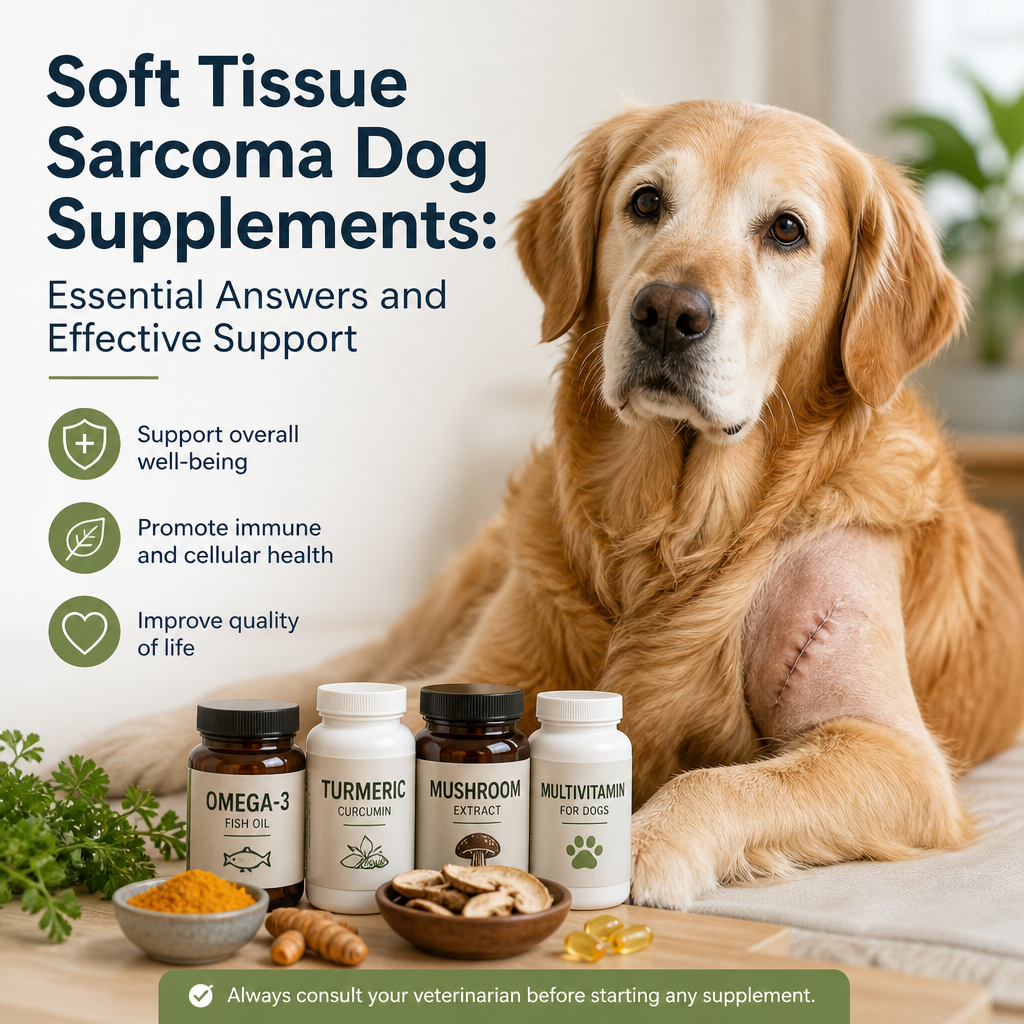
Soft Tissue Sarcoma Dog Supplements may provide supportive nutrition for dogs diagnosed with cancer, but they should never replace veterinary treatment. These tumors develop in connective tissues such as muscle, fat, nerves, blood vessels, and fibrous tissue. Treatment commonly involves surgery, radiation therapy, chemotherapy, or careful monitoring, depending on the tumor’s grade, location, size, and spread. Supplements can sometimes help maintain appetite, muscle condition, digestion, and general well-being when used thoughtfully and under veterinary supervision.
Soft tissue sarcomas are a broad group of tumors. Some grow slowly and remain localized, while others are more aggressive and may spread to distant organs. A veterinarian usually recommends diagnostic testing such as a fine-needle aspirate, biopsy, blood work, and imaging before creating a treatment plan.
The most important factors include whether the tumor can be completely removed, whether cancer cells remain at the surgical margins, and whether the disease has metastasized. A supplement cannot shrink a tumor reliably or eliminate cancer cells. However, appropriate nutritional support may help a dog cope with the physical demands of illness and treatment.
When families first hear the diagnosis, they often search for soft tissue sarcoma dog supplements because they want to do something supportive right away. That instinct is understandable, but the best first step is usually a treatment plan built around the tumor’s behavior and the dog’s overall health.
In everyday practice, soft tissue sarcoma dog supplements are most useful when they are chosen with a clear purpose. For one patient, the goal may be to preserve weight and muscle. For another, the goal may be to improve stool quality during a medication change. For a third, the most important aim may be to reduce stress around eating. The diagnosis may be the same, but the supportive plan should still be individualized.
What dog sarcoma support should include
Effective dog sarcoma support begins with the basics: adequate calories, high-quality protein, hydration, pain control, restful sleep, and regular veterinary monitoring. A dog that is losing weight, refusing food, vomiting, or experiencing diarrhea needs medical attention rather than a supplement alone.
Nutrition should be tailored to the individual dog. Many dogs with cancer benefit from highly digestible foods containing sufficient protein and calories. Some veterinary diets are formulated for dogs with cancer or reduced appetite. Homemade diets may also be appropriate in certain cases, but they should be designed by a veterinary nutritionist to avoid deficiencies.
Emotional support matters as well. Maintaining a familiar routine, providing comfortable bedding, limiting unnecessary stress, and adjusting exercise to the dog’s energy level can improve daily quality of life.
When a dog is undergoing treatment, supportive care often changes from week to week. Appetite may fluctuate after surgery or during a chemotherapy cycle. Mobility may improve after pain control is adjusted. Digestive comfort may change after antibiotic use. That is why soft tissue sarcoma dog supplements should be reviewed often instead of being chosen once and forgotten.
Soft Tissue Sarcoma Dog Supplements and daily care
When used correctly, soft tissue sarcoma dog supplements may fit into a larger plan that prioritizes comfort, appetite, and body condition. The goal is not to replace standard treatment, but to support the dog while therapy is underway or when palliative care is the main focus.
In practice, the most helpful supplement choices often support practical goals rather than the cancer itself. For example, one dog may need help keeping weight on, while another may need better stool quality, and another may need joint comfort after surgery or reduced mobility.
Soft Tissue Sarcoma Dog Supplements are most useful when the treatment team already understands the dog’s eating habits, medication list, and current lab work. That context makes it easier to choose a product that is useful without creating avoidable risks.
Owners sometimes hope that supplements alone will make the cancer easier to manage. In reality, the strongest results usually come from combining thoughtful nutrition, careful monitoring, appropriate pain relief, and whatever cancer-directed therapy the veterinarian recommends. When soft tissue sarcoma dog supplements are part of that bigger picture, they are more likely to be beneficial.
Potential supplements for dogs with sarcoma
Several supplement categories are commonly discussed in canine cancer care. Their usefulness depends on the dog’s diagnosis, current medications, blood work, and overall condition.
When people ask which soft tissue sarcoma dog supplements are best, the answer is rarely the same for every case. A supplement that helps a thin, picky eater may be unnecessary for a dog that is stable and comfortable. Likewise, a product that is well tolerated at home may still be inappropriate during surgery planning or radiation therapy.
Omega-3 fatty acids
Fish oil provides EPA and DHA, which may support normal inflammatory balance and help maintain skin, coat, and general health. Some veterinary nutrition plans use omega-3 fatty acids to support dogs with cancer, particularly when appetite or body condition is declining.
The product should be tested for purity and appropriate for dogs. Too much fish oil can cause digestive upset, weight gain, or problems with blood clotting. Dogs scheduled for surgery or those taking anticoagulant medications may require special precautions.
Because fish oil is one of the more common options in soft tissue sarcoma dog supplements, owners often ask whether a higher dose is better. In most cases, the answer is no; the safest dose is the one matched to the dog’s size, diet, and concurrent treatment plan.
Omega-3 products can also be helpful when a dog’s coat becomes dull or when calorie intake is inconsistent. That does not make them a cancer treatment, but it does make them a practical part of supportive care when the veterinarian approves their use.
Antioxidants
Antioxidants such as vitamins C and E, selenium, and certain plant compounds are often included in soft tissue sarcoma dog supplements. Their role is complicated. While antioxidants can protect cells from oxidative stress, high-dose supplementation may interfere with some cancer treatments, particularly treatments that rely partly on oxidative damage.
For this reason, antioxidant products should not be started during chemotherapy or radiation without approval from the veterinary oncologist. More is not necessarily better, and concentrated human products may contain unsafe ingredients.
If a veterinarian does recommend an antioxidant, the exact product, dose, and timing should be reviewed carefully. That kind of detail matters because even a supplement that seems harmless may change how a treatment works when it is given at the wrong time.
Medicinal mushrooms
Products containing compounds from mushrooms such as turkey tail are sometimes used as complementary support. Early research has explored immune-related effects, but evidence in dogs remains limited and product quality varies significantly. Supplements may differ in extraction methods, concentration, purity, and labeling accuracy.
A veterinary professional should review the exact product before use, especially if the dog has liver disease, is taking immunosuppressive drugs, or is receiving chemotherapy.
Owners researching soft tissue sarcoma dog supplements often see mushroom products promoted as immune support. The idea sounds appealing, but the quality of the evidence and the quality of the product are both important. A trustworthy brand with clear labeling is preferable to a heavily marketed product with vague ingredient claims.
Probiotics and digestive support
Probiotics may help some dogs manage digestive changes associated with stress, diet changes, antibiotics, or cancer treatment. They are not a treatment for sarcoma, but maintaining a healthy intestinal environment can support appetite and nutrient absorption.
Choose a veterinary-formulated product and monitor for gas, loose stool, or worsening gastrointestinal signs. Dogs with severe illness or compromised immune systems may need additional caution.
Digestive support can also include bland, easily digestible meals, smaller and more frequent feedings, and good hydration. In many cases, that combination does more for a dog’s comfort than any single supplement.
Joint and mobility supplements
Tumors affecting limbs, muscles, or nerves can make movement painful. Glucosamine, chondroitin, and related ingredients may support joint health, although they do not treat the tumor itself. Pain management should be directed by a veterinarian, since prescription medications, physical therapy, weight control, and environmental modifications may be more effective.
Owners comparing options often ask whether soft tissue sarcoma dog supplements can improve mobility. They may help with comfort in some cases, but they work best when matched to the dog’s condition and used alongside the treatment plan.
Mobility support can also include simple daily changes, such as non-slip rugs, raised food bowls, short leash walks, and easy access to rest areas. These adjustments often make a bigger difference than any single product.
In dogs with a painful limb mass or after surgery, even modest changes can matter. A supportive harness, careful stair management, and a well-padded recovery area may reduce strain and make movement less stressful. Supplements can be part of that plan, but they are only one piece of comfort care.
Appetite and calorie support
Some dogs with cancer benefit from supplements or nutrient-dense toppers that encourage eating. This may include veterinary-approved calorie boosters, palatable broths made for dogs, or products designed to support recovery after illness. Appetite support is especially important when a dog is losing muscle or leaving food in the bowl.
These products should be chosen with the same caution as other soft tissue sarcoma dog supplements. A tempting food topper is not useful if it causes diarrhea, worsens nausea, or pushes the dog away from a balanced diet. The best choice is one the dog actually enjoys and tolerates consistently.
Safety considerations before using supplements
Supplements for dogs with sarcoma can interact with medications, affect bleeding, alter blood sugar, or place extra stress on the liver and kidneys. Always provide the veterinarian with a complete list of supplements, medications, treats, and human foods the dog receives.
Avoid products containing xylitol, garlic, excessive vitamin D, stimulants, or undisclosed herbal blends. Human supplements are particularly risky because they may contain ingredients or dosages unsuitable for dogs. Products with independent quality testing and clear ingredient labels are preferable.
It is also important to introduce only one new product at a time. This makes it easier to identify side effects. Stop the supplement and contact the veterinarian if the dog develops vomiting, diarrhea, weakness, unusual bruising, loss of appetite, jaundice, or changes in drinking and urination.
Before trying soft tissue sarcoma dog supplements, it is wise to ask whether the dog is stable enough for any new addition. If surgery, chemotherapy, or radiation is planned, timing may matter as much as the ingredient list.
The same caution applies when owners are comparing multiple soft tissue sarcoma dog supplements at once. Adding several products together can make it difficult to know which one is helping and which one may be causing a problem.
Quality control is another major issue. Two products with the same label may not contain the same active ingredients, and some may include amounts far different from what appears on the package. When possible, choose brands that publish testing results or use third-party certification. That extra step can reduce risk, especially for dogs already receiving cancer therapy.
It also helps to remember that supplements can be inappropriate at different stages of care. A product that is fine for a stable patient may need to be paused before anesthesia. Another may be safe during recovery but not during active treatment. The safest approach is to treat soft tissue sarcoma dog supplements as part of the medical plan, not as separate wellness items.
Questions to discuss with the veterinary team
Before adding soft tissue sarcoma dog supplements, ask:
Is this product compatible with the planned treatment?
Could it affect bleeding or anesthesia?
Does the dog need additional calories or protein?
Are liver and kidney values suitable for this supplement?
What dosage is appropriate for the dog’s weight?
Should the supplement be stopped before surgery?
How will success or side effects be monitored?
A veterinary oncologist, primary-care veterinarian, or board-certified veterinary nutritionist can help create a safe, individualized plan. For dogs with other tumor concerns, the article on skin cancer in dogs offers another useful example of how diagnostics and treatment planning can differ.
When owners bring a product list to the appointment, it helps the veterinary team compare the proposed soft tissue sarcoma dog supplements against the dog’s diagnosis, current medications, and treatment goals. That conversation can prevent risky overlaps and unnecessary spending.
It can be helpful to write down exactly when each supplement was started, what dose is being used, and whether any changes have appeared since then. A simple log makes follow-up visits more productive and helps the veterinarian judge whether a supplement is genuinely useful.
Measuring meaningful support
The goal of supplementation should be practical and measurable. Track appetite, body weight, stool quality, activity, comfort, sleep, and enjoyment of normal routines. Regular weigh-ins can reveal gradual muscle or fat loss before it becomes obvious. Photographs and brief daily notes may help the veterinary team recognize changes.
Ultimately, the best supplements for dogs with sarcoma are those that fit into a broader care plan. Surgery, cancer-directed treatment, pain control, nutrition, hydration, and quality-of-life monitoring remain the foundation of care. With careful veterinary guidance, targeted soft tissue sarcoma dog supplements may offer additional support while minimizing unnecessary risks.
When used with realistic expectations, soft tissue sarcoma dog supplements can be one small part of a thoughtful care plan. They may help a dog eat a little better, feel a little steadier, or maintain strength during treatment, but they work best when the medical plan is already clear and well supervised.
Owners should also look for the kind of progress that matters most to the individual dog. Better appetite, easier movement, less digestive upset, or improved energy after treatment may be more meaningful than any promise on a label. In that sense, the best soft tissue sarcoma dog supplements are the ones that support the dog’s real-life comfort and fit safely into the veterinarian’s plan.
When there is uncertainty, it is better to pause and ask than to guess. A brief conversation with the care team can often clarify whether a product is worth using, when it should be given, and whether it should be stopped before a procedure. That careful approach gives soft tissue sarcoma dog supplements a better chance of helping without creating avoidable problems.
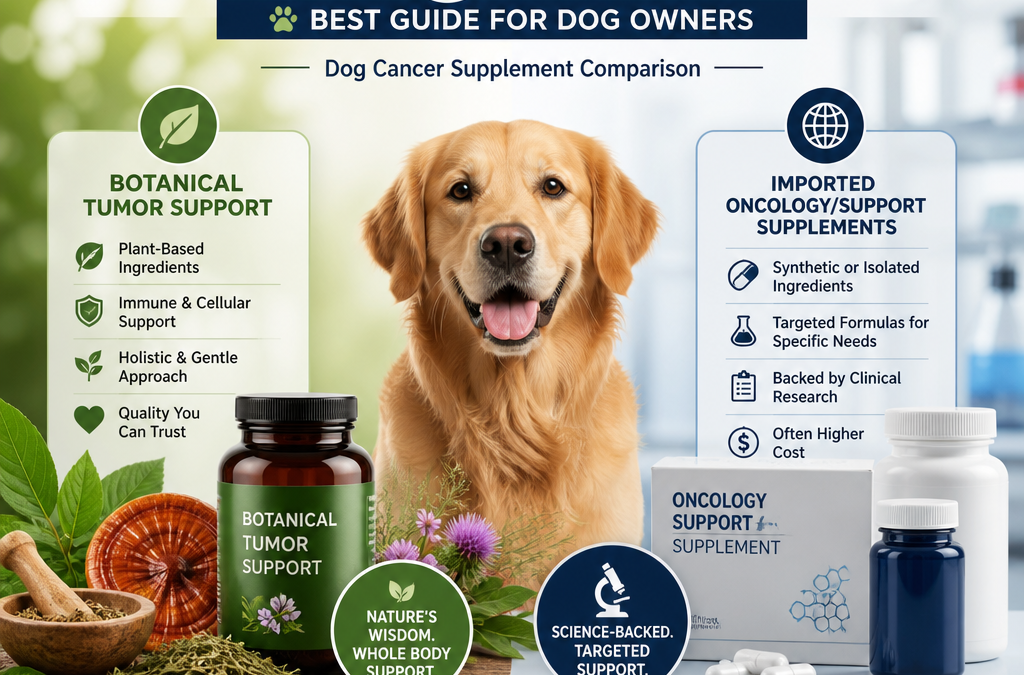
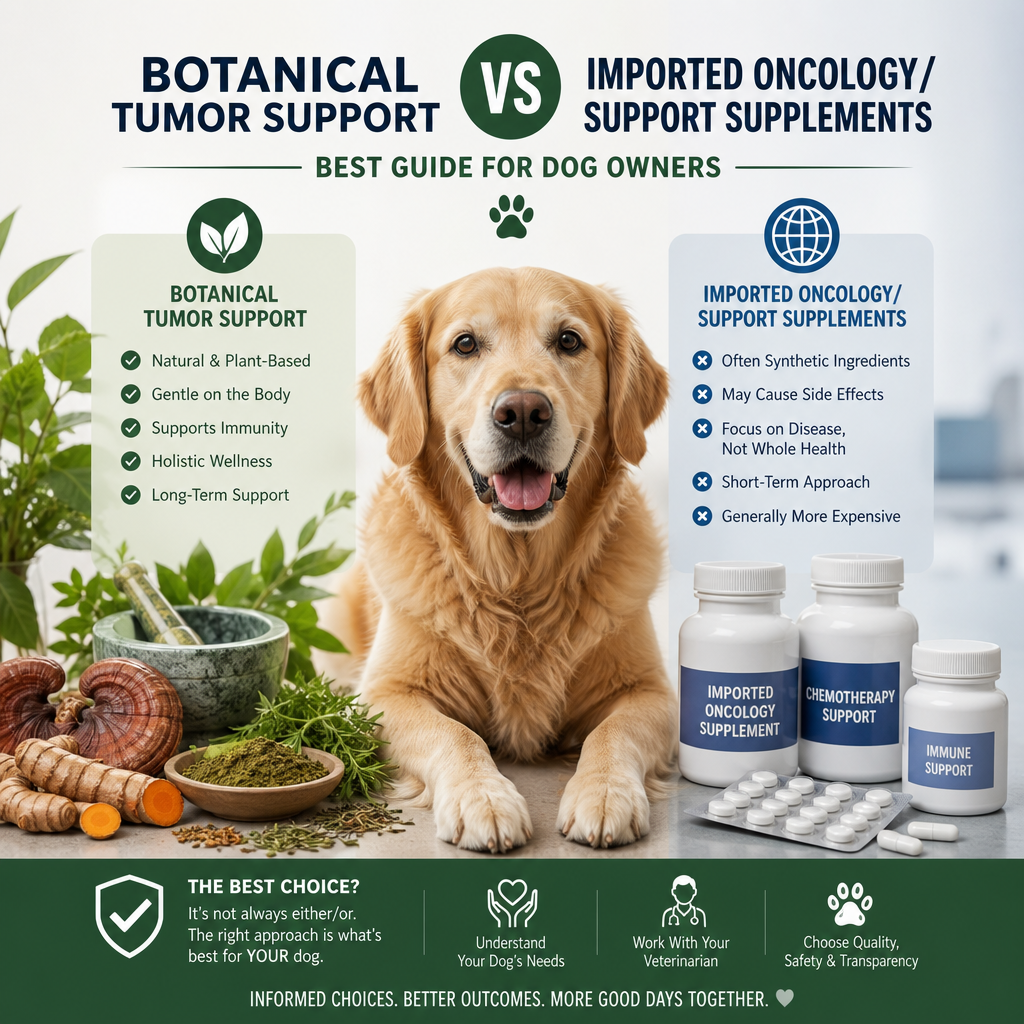
Botanical tumor support vs Imported oncology/support supplements is an important comparison for dog owners exploring complementary care during a cancer diagnosis. Although supplements may help support nutrition, comfort, or general well-being, they are not substitutes for veterinary oncology, surgery, chemotherapy, radiation, or other evidence-based treatments. The safest choice depends on the dog’s diagnosis, current medications, organ health, treatment goals, and the quality of the product itself.
Understanding the dog cancer supplement comparison
A dog cancer supplement comparison should begin with realistic expectations. Most supplements are designed to support a specific area of health rather than eliminate a tumor. Products may aim to support appetite, digestion, immune function, antioxidant balance, mobility, or recovery during treatment. However, marketing language can make supportive products sound like cancer cures, which may lead owners to delay appropriate veterinary care.
“Botanical tumor support” generally refers to formulas containing plant-derived ingredients such as medicinal mushrooms, turmeric compounds, green tea extracts, milk thistle, or other herbs. Imported oncology or support supplements may contain similar ingredients, but they can also include specialized compounds, vitamins, minerals, enzymes, or blends developed and manufactured in another country. The label’s origin alone does not determine whether a product is effective or safe.
For dog owners in Malta, the decision often comes down to transparency, veterinary guidance, and whether the supplement fits the dog’s treatment plan. When evaluating botanical tumor support vs Imported oncology/support supplements, it helps to focus on what the product actually does, not just how it is advertised. That same mindset is useful when comparing products for appetite support, liver support, joint comfort, or immune modulation, because the best choice is the one that matches the dog’s needs and treatment goals.
It is also helpful to remember that cancer care is not only about the tumor itself. Dogs may lose weight, feel nauseous, sleep more, or become less active during treatment, and these changes can influence which supplement category seems most appealing. In some cases, a simple supportive formula is enough to help with comfort and nutrition. In other cases, a more carefully selected imported product may offer clearer dosing, better labeling, or stronger manufacturing controls. The point is not to choose based on trends, but to choose based on the dog’s situation.
Good decision-making starts with a complete picture of the dog’s age, cancer type, stage, current medications, laboratory results, and concurrent health problems. A dog with liver changes, for example, may need a very different support approach from a dog with a tumor but otherwise normal bloodwork. For that reason, botanical tumor support vs Imported oncology/support supplements should be viewed as part of a broader veterinary plan rather than a stand-alone solution.
Botanical tumor support: potential benefits and limitations
Botanical formulas appeal to many owners because they are associated with traditional medicine and naturally occurring compounds. Some botanical ingredients have been investigated in laboratory, animal, or limited clinical research for antioxidant, anti-inflammatory, or immune-modulating activity. For example, certain mushroom extracts are studied for compounds that may influence immune signaling, while milk thistle is commonly used in products intended to support liver function.
However, laboratory findings do not automatically translate into meaningful tumor control in dogs. A compound may affect cancer cells in a test tube but have limited absorption, inconsistent dosing, or different effects inside a living animal. The available evidence may also vary substantially by cancer type, product formulation, and dose.
Another challenge is standardization. Two products may list the same herb but contain different concentrations of active compounds. Extraction methods, growing conditions, storage, and processing can all influence potency. A high-quality botanical supplement should identify the source, standardized constituents when applicable, recommended dosing, lot information, expiration date, and independent testing.
Natural does not mean risk-free. Botanicals can cause digestive upset, allergic reactions, sedation, changes in blood pressure, or effects on the liver and kidneys. Some may influence blood clotting or alter how prescription medications are metabolized. These concerns are especially important before surgery or when a dog is receiving chemotherapy, steroids, pain medication, anticoagulants, or other treatments.
Owners comparing botanical tumor support vs Imported oncology/support supplements should also remember that a traditional ingredient can still be poorly formulated. A well-known herb in a weak or contaminated product may be less useful than a carefully manufactured imported formula with stronger quality control. In practical terms, the best botanical product is usually the one that is transparent, conservatively dosed, and easy for the veterinary team to review.
There are situations where botanical support can be a reasonable part of care, especially when the goal is to support digestion, appetite, or general resilience rather than to treat the cancer directly. Even then, the supplement should be treated like any other active product. Owners should not assume that “gentle” or “plant-based” automatically means safe in every patient, particularly in dogs with chronic illness or dogs taking multiple medications.
One common problem is overestimating what botanical products can accomplish. A supportive herb or mushroom extract may help a dog feel better, but it will not replace surgery for a removable mass, chemotherapy for a systemic disease, or pain control for a painful tumor. If a product is advertised as a cure, the claim should be viewed with caution. A realistic evaluation of botanical tumor support vs Imported oncology/support supplements always begins with what the product can and cannot reasonably do.
Imported oncology and support supplements
Imported oncology or support supplements may offer sophisticated formulations and concentrated ingredients. Some are produced by companies with extensive research programs, veterinary distribution networks, or manufacturing standards that exceed basic supplement requirements. Certain products may also provide detailed technical information, certificates of analysis, and veterinary dosing guidance.
At the same time, imported products can be difficult to evaluate when labeling is incomplete or written according to regulations that differ from those in the owner’s country. Ingredient names, serving sizes, quality standards, and claims may not be directly comparable. A product sold online may also be exposed to heat, humidity, or prolonged shipping, potentially affecting stability.
Owners should be cautious with products that make strong claims such as “shrinks tumors,” “replaces chemotherapy,” or “works for every type of cancer.” These statements are warning signs, particularly when they are supported mainly by testimonials rather than controlled veterinary research. A reputable supplement company should clearly explain intended use, limitations, contraindications, and manufacturing controls.
For additional background on canine cancer warning signs, this guide from VCA Hospitals on cancer in dogs is a useful starting point for owners who want to understand symptoms and treatment considerations before choosing supportive products.
Imported formulas can sometimes be more consistent than locally sourced alternatives because they may come from companies that specialize in veterinary supplements and invest in quality assurance. Still, imported does not automatically mean superior. If the product is difficult to verify, lacks clear batch information, or uses vague proprietary blends, then its origin offers little advantage. The better question is whether the supplement can be traced, explained, and safely used alongside the dog’s current care.
Another practical issue is access. Some imported supplements are expensive, hard to reorder, or unavailable in a timely way if the dog does well on them. That matters because consistency is important in supportive care. If the owner cannot reliably obtain the same formula, a veterinary team may prefer a more stable and locally accessible option, provided it meets quality standards. In this sense, the choice between botanical tumor support vs Imported oncology/support supplements should include cost, availability, and continuity of care, not just the label or the marketing story.
Key factors in choosing between supplement types
The most useful way to approach botanical tumor support vs Imported oncology/support supplements is to compare evidence and quality rather than country of origin. Consider the following factors:
Ingredient transparency
The label should list every active and inactive ingredient, amounts per serving, and the form used. Proprietary blends that hide individual quantities make it difficult to assess dosing or identify possible interactions.
Manufacturing quality
Look for good manufacturing practice standards, batch or lot numbers, expiration dates, and independent testing for contamination. Testing should address heavy metals, pesticides, microbes, and, where relevant, potency and adulteration.
Veterinary compatibility
The product should be reviewed by the veterinarian managing the dog’s cancer. A veterinary oncologist or integrative veterinary professional can assess whether the supplement fits the dog’s treatment plan.
Evidence and intended purpose
Ask what the product is actually intended to support. A supplement for appetite, joint comfort, or liver support should not be presented as a direct antitumor therapy. Evidence is more useful when it relates to the exact ingredient, dose, formulation, and condition being treated.
Dose and patient-specific risks
A dose appropriate for one dog may be unsuitable for another. Small dogs, senior dogs, dogs with liver or kidney disease, and dogs taking multiple medications require particular caution. Children and dogs may also be exposed accidentally if products are stored carelessly, especially when formulas contain concentrated extracts or sweeteners that are unsafe for pets.
When you compare products, it can help to think in terms of four questions: Is the ingredient list clear? Is the quality verified? Does the product have a plausible purpose for this dog? And can it be used safely with the current treatment plan? If the answer to any of these questions is uncertain, the product deserves a more cautious review. That cautious approach is especially important for botanical tumor support vs Imported oncology/support supplements because both categories can be marketed with persuasive language that hides real limitations.
Owners sometimes assume that a larger ingredient list means a stronger product. In practice, more ingredients can mean more uncertainty, more opportunities for interactions, and less clarity about which component is helping. A carefully selected single-ingredient formula may be easier to monitor than a complex blend, especially when a dog is already receiving prescription treatment.
It is also wise to ask whether the product has a reasonable shelf life and how it should be stored in warm or humid conditions. In Malta, storage conditions matter more than many owners realize. Heat and moisture can affect powder stability, capsule integrity, and liquid formulations. Even a well-made product can underperform if it is not stored correctly, which is another reason the product’s practical handling matters as much as its origin.
Possible interactions with cancer treatment
Supplements can affect cancer care in several ways. Antioxidant-heavy products may theoretically interfere with treatments that rely partly on oxidative damage, although the clinical importance depends on the specific drug and dose. Herbs that affect liver enzymes may change medication levels in the bloodstream. Ingredients that influence clotting can increase surgical or bleeding risks. Minerals and fiber may also affect absorption of certain medications.
For these reasons, owners should provide the veterinary team with the complete product label, not just the brand name. It is often wise to stop nonessential supplements before a planned procedure, but the timing should be determined by the veterinarian. Never discontinue prescribed cancer medication in favor of a supplement without professional guidance.
When discussing botanical tumor support vs Imported oncology/support supplements, it is also useful to ask whether the product has any published interaction data. Even limited evidence can help a veterinarian decide if the supplement should be avoided, delayed, or monitored more closely during treatment.
Potential interactions are not limited to prescription chemotherapy. Supplements can also interact with anesthetics, anti-nausea drugs, pain medications, anticonvulsants, steroids, and thyroid medication. Some products may seem harmless because they are sold as wellness formulas, yet their active compounds can still alter metabolism or organ function. That is why a label review is never optional when cancer treatment is underway.
Dog owners should also pay attention to symptoms that could signal a problem after starting a new product. Vomiting, diarrhea, sudden lethargy, bruising, unusual thirst, poor appetite, or yellowing of the gums are all reasons to contact the veterinarian promptly. If any of these signs appear soon after a new supplement is introduced, the product may need to be stopped until the team can assess the situation.
A practical decision-making approach
Start by identifying the dog’s diagnosis, stage, treatment plan, and current symptoms. Next, define a specific supportive goal, such as maintaining calorie intake, easing gastrointestinal upset, supporting mobility, or addressing a documented nutritional deficiency. Avoid adding several products at once because doing so makes it difficult to determine which one caused a benefit or side effect.
Introduce only one new supplement at a time, use the recommended dose, and monitor appetite, stool quality, energy, drinking, urination, skin changes, and any signs of pain or bleeding. Report vomiting, diarrhea, weakness, jaundice, unusual bruising, or sudden behavioral changes promptly.
A balanced diet, adequate hydration, pain control, prescribed treatment, emotional comfort, and regular veterinary monitoring usually have a greater effect on quality of life than an unverified supplement. In many cases, the best product is not the one with the longest ingredient list but the one with transparent labeling, reliable testing, a clear purpose, and veterinary oversight.
Dog owners often ask whether imported products are automatically better than botanical formulas. In reality, botanical tumor support vs Imported oncology/support supplements should be weighed by safety, consistency, and fit for the individual dog rather than by assumptions about what sounds more advanced or more natural. A product that matches the dog’s symptoms and works with the treatment plan is usually more valuable than one that simply appears modern or traditional.
If the dog is already on a carefully managed cancer protocol, a supplement should be added only when it has a clear reason to be there. For example, a dog with reduced appetite may benefit from nutritional support, while a dog with a sensitive stomach may need a gentler formula or no supplement at all. The goal is to make life easier for the dog, not to create another variable to monitor.
Keeping a simple log can be very helpful. Note the product name, dose, start date, and any changes in appetite, stool quality, energy, or comfort. This record gives the veterinarian a clearer picture of whether the product is helping. It also reduces guesswork when several supportive measures are being considered. In complex cases, that level of organization can make botanical tumor support vs Imported oncology/support supplements much easier to compare in a meaningful way.
Helpful questions to ask before buying
Before choosing a product, ask the seller or veterinary team the following questions:
What is the exact intended use of this supplement?
Are all ingredients and amounts listed clearly on the label?
Has the product been tested for contaminants and potency?
Is there any evidence in dogs, not only in cell or laboratory studies?
Could this product interact with my dog’s prescriptions or upcoming procedure?
How should the supplement be stored in Malta’s climate to preserve stability?
These questions can quickly separate serious products from vague marketing. They also make it easier to compare botanical tumor support vs Imported oncology/support supplements without relying on packaging claims alone.
If you are still undecided after asking these questions, a good next step is to ask the veterinarian whether the goal is symptom support, nutritional support, or possible anti-inflammatory support. A product that fits one of those goals clearly may be worth a trial, while a product with no clear purpose usually is not. That kind of filtering keeps the plan focused and reduces the chance of unnecessary supplements.
Owners can also ask whether a product has any official batch testing, a recognizable manufacturer, or a published contact point for product safety questions. Companies that stand behind their formula are usually willing to provide more than marketing language. This can be particularly helpful if you are comparing a locally available botanical formula with an imported product that seems more polished on paper but is harder to verify in practice.
What good supportive care looks like
Supportive care works best when it is practical and measurable. That means setting a realistic goal, such as improved appetite, steadier weight, less nausea, or better energy, and then tracking whether the supplement actually helps. If there is no clear benefit after a reasonable trial, the product may not be worth continuing.
Supportive care also means keeping the whole dog in view. Senior dogs with cancer may need joint support, digestive support, and appetite support at the same time, but the best plan is still one that is simple enough to monitor. If you are already reading about senior dog cancer care, it may help to review broader guidance such as senior dog cancer risks and aging dog health alongside supplement choices.
Because owners sometimes search for botanical tumor support vs Imported oncology/support supplements when they are overwhelmed by choices, the safest answer is usually the same: choose the product with the clearest evidence, the cleanest label, and the strongest veterinary oversight.
Good supportive care also respects the limits of supplements. Even a well-chosen product cannot correct every issue in a cancer patient. A dog may still need pain medication, anti-nausea treatment, dietary changes, or a modified exercise routine. When supplements are used as one small part of a complete plan, they are more likely to be helpful. When they are treated as a replacement for diagnosis or treatment, the risk to the dog increases.
In many households, the simplest supportive plan is also the best one. One supplement, one purpose, one monitoring process, and one supervising veterinarian often produces better results than a long list of products with overlapping claims. This is especially true when owners are trying to decide between botanical tumor support vs Imported oncology/support supplements and need a clear, manageable path forward.
Final perspective
Botanical tumor support vs Imported oncology/support supplements should be evaluated through the same essential standards: safety, evidence, quality, transparency, and compatibility with veterinary treatment. Plant-based ingredients can be useful in selected situations, and imported formulas may offer valuable research or manufacturing expertise, but neither category is automatically superior.
The most responsible dog cancer supplement comparison focuses on the individual patient rather than promotional claims. Supplements may play a supportive role when carefully selected, but cancer care should remain centered on an accurate diagnosis, an individualized treatment plan, and ongoing communication with the veterinary team.
For dog owners in Malta, that approach is especially important because the best choice may differ based on availability, shipping conditions, and local veterinary recommendations. With the right guidance, botanical tumor support vs Imported oncology/support supplements can be compared in a way that supports your dog’s health without replacing proven treatment.
To summarize the decision simply: choose products that are transparent, clinically reasonable, and easy to monitor. Avoid products that promise cure-level results or hide key details behind a polished label. When in doubt, ask the veterinary team to review the formula before starting it. That small step can prevent unnecessary risk and make supportive care more effective over time.
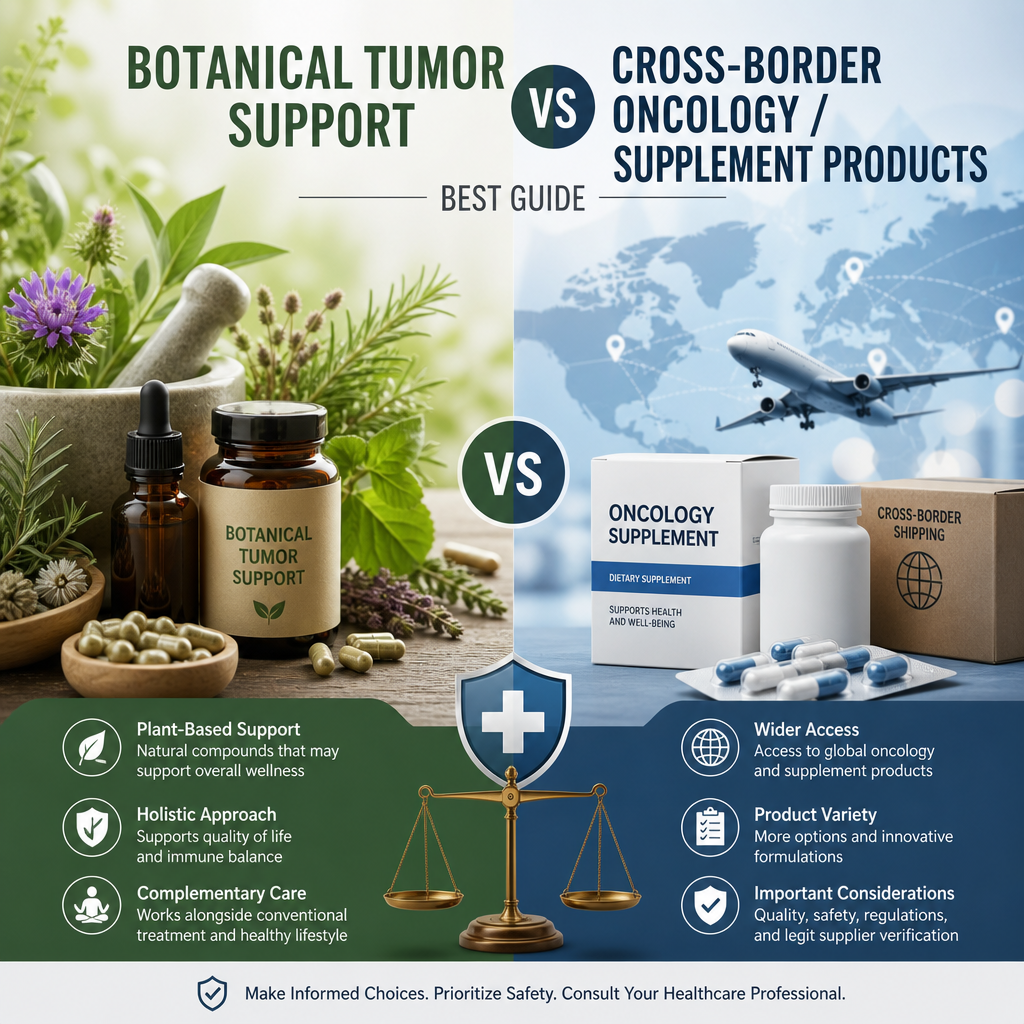
Botanical tumor support vs Cross-border oncology / supplement products is an important comparison for pet owners exploring additional support for a dog with cancer. While supplements may help address nutrition, inflammation, appetite, or general wellness, they are not interchangeable with veterinary oncology treatment. The most responsible approach is to understand what each option can and cannot do, assess product quality carefully, and use any supplement only as part of a veterinarian-guided care plan.
Botanical tumor support vs Cross-border oncology / supplement products
Botanical tumor support usually refers to plant-derived compounds used alongside conventional cancer care. These may include medicinal mushrooms, turmeric-derived curcuminoids, green tea compounds, milk thistle, boswellia, or other herbal ingredients. Their proposed roles can include antioxidant activity, immune support, digestive support, and assistance with maintaining quality of life.
In a practical sense, botanical tumor support is often chosen because owners want something gentle, familiar, and compatible with routine care. That interest is understandable, especially when a dog is dealing with appetite changes, fatigue, or treatment side effects. Even so, every botanical product should be judged by the same standards used for any active health product. The question is not whether a supplement sounds natural; the question is whether it is appropriate for the specific dog, the specific diagnosis, and the current oncology plan.
Cross-border oncology or supplement products are a broader category. They may include prescription medications, imported veterinary products, compounded formulas, nutritional products, and nonprescription supplements purchased from another country. The phrase “cross-border” does not automatically indicate that a product is superior or unsafe. It means that additional questions must be asked about manufacturing standards, labeling, storage, legal status, and veterinary oversight.
In other words, botanical tumor support vs Cross-border oncology / supplement products is not a contest between good and bad products. It is a comparison between different product categories that may vary widely in purpose, quality, and evidence. A responsible dog owner should look beyond the country of origin and focus on safety, formulation, and clinical fit.
The key distinction is that botanical support is defined primarily by its ingredients and intended supportive role, whereas cross-border oncology products may range from evidence-based medical treatments to products with limited documentation. Comparing them requires more than looking at marketing claims or ingredient lists.
For many owners, the central issue is not whether a product is local or imported, but whether it fits the dog’s diagnosis and treatment plan. That is why veterinary review matters in any dog cancer supplement comparison.
What botanical tumor support may offer
A carefully selected botanical formula can sometimes complement a dog’s cancer care plan. Depending on the ingredients, possible goals may include:
Supporting appetite and digestion
Helping maintain body condition
Providing nutrients during recovery
Supporting normal inflammatory pathways
Offering compounds with antioxidant or immune-modulating properties
Promoting general comfort and wellness
These goals are supportive rather than curative. That distinction matters, because many owners search for botanical tumor support after conventional care has already started or when they are trying to reduce discomfort without adding unnecessary complexity. Used appropriately, some products may help a dog feel better or tolerate a treatment plan more comfortably. Used poorly, the same products may create confusion, side effects, or interactions.
However, evidence varies substantially from one ingredient to another. Research conducted in laboratory cells, rodents, or humans cannot automatically be applied to dogs. Dosage, absorption, metabolism, and toxicity may differ among species. Even a plant that is traditionally used in people may be inappropriate for dogs in concentrated extract form.
Botanical products should therefore be assessed by their specific ingredients, amounts, formulation, and intended use—not simply by the words “natural,” “herbal,” or “holistic.” Natural substances can produce side effects and may interact with chemotherapy, radiation, surgery, steroids, pain medicines, or drugs processed by the liver.
When families search for botanical tumor support, they are often trying to do something proactive and gentle. The most useful products are the ones that make sense on paper, have a clear rationale, and fit the dog’s actual needs. In many cases, the best results come from matching the product to a very specific goal rather than trying to do everything at once.
If owners want to understand the biology behind a tumor diagnosis before selecting any supportive product, it can help to review how tumor behavior, immune imbalance, and treatment response differ from one case to another. A broader resource such as Dog Cancer Biology Helpful Immune Imbalance & Tumor Factors can provide helpful context.
Understanding cross-border oncology and supplement products
Imported or cross-border products can create both opportunities and risks. Some may contain ingredients unavailable locally, while others may be marketed under regulatory systems that differ from those in the dog’s home country. Product names, concentrations, dosing instructions, and quality standards may not translate clearly between markets.
When discussing botanical tumor support vs Cross-border oncology / supplement products, one of the most important practical differences is regulation. A botanical product may be sold as a supplement with minimal oversight in one country but require more specific labeling or approvals in another. Likewise, an oncology-related product may be standard in one market and difficult to evaluate in another because instructions, language, or dosage conventions differ.
Important concerns include:
Unclear ingredient amounts: A label may list a proprietary blend without stating the quantity of each active ingredient.
Different quality controls: Manufacturing, testing, contamination screening, and batch consistency can vary.
Storage and shipping issues: Heat, humidity, delays, or improper packaging may reduce product stability.
Counterfeit or mislabeled products: Online marketplaces can make it difficult to verify the original manufacturer.
Regulatory differences: A product legally sold as a supplement in one country may be classified differently elsewhere.
Limited veterinary guidance: Instructions may be written for humans or based on assumptions that do not apply to dogs.
A product’s foreign origin is not proof of effectiveness, and local availability is not proof of poor quality. The practical question is whether the product has reliable documentation and can be safely integrated into the dog’s treatment plan.
For dogs already receiving treatment, cross-border products should be checked carefully for ingredient overlap, hidden excipients, and dosing inconsistencies. This is especially important if the dog has a sensitive stomach, liver disease, kidney disease, or a history of medication intolerance. Even a helpful product can become a problem if the concentration is different from what the owner expects.
Dog cancer supplement comparison: the most important criteria
A useful dog cancer supplement comparison should focus on safety, transparency, evidence, and compatibility with treatment. Consider the following criteria before making a decision.
Ingredient transparency
Choose products that identify every active ingredient and provide the amount per serving. Avoid vague blends that make it impossible to calculate a meaningful dose. The label should also disclose inactive ingredients, allergens, preservatives, and flavoring agents when relevant.
Good labeling is especially important when owners are weighing botanical tumor support vs Cross-border oncology / supplement products, because the labels may follow different national standards. A clear label makes it easier to compare ingredients fairly and to discuss the product with the veterinarian.
Manufacturing and testing
Look for products made in facilities that follow recognized quality standards. Independent testing for contaminants, heavy metals, pesticides, microbes, and accurate ingredient levels provides greater confidence. A certificate of analysis can be helpful, although it should come from a credible laboratory and correspond to the specific product batch.
If the product is imported, ask whether the same batch was tested before export, after arrival, or not at all. That detail matters because transport conditions can influence stability and shelf life. A supplement that is well made but poorly stored may not perform as expected.
Veterinary compatibility
Your veterinarian should know about every supplement your dog receives. This is especially important before surgery or when the dog is receiving chemotherapy, radiation, targeted medication, anticoagulants, nonsteroidal anti-inflammatory drugs, anticonvulsants, or corticosteroids. Some supplements may affect bleeding, blood pressure, liver enzymes, immune activity, or drug absorption.
Veterinary compatibility should also be considered in relation to the dog’s age, breed, weight, and concurrent illnesses. Senior pets may process certain compounds more slowly, and small dogs can be more sensitive to dosing errors. A product that seems mild in theory may still be too concentrated for a frail patient.
Evidence and realistic claims
Be cautious of products claiming to cure cancer, replace chemotherapy, dissolve tumors, or guarantee survival. These statements are warning signs. A trustworthy product generally presents supportive goals rather than promises of a cure and distinguishes laboratory findings from clinical evidence.
The best way to evaluate these claims is to ask what type of evidence exists. Is there data from dogs, or only from laboratory models? Was the study small, uncontrolled, or based on a different species? Strong claims should be backed by stronger evidence, not just by testimonials or sales language.
Dog-specific formulation
Human products may contain ingredients that are unsuitable for dogs, including xylitol, excessive vitamin D, concentrated essential oils, or inappropriate mineral levels. A canine product should still be evaluated carefully, but it is often easier to assess when the formulation and directions are specifically designed for veterinary use.
Another point to remember in botanical tumor support vs Cross-border oncology / supplement products is that “for pets” does not automatically mean “safe for every pet.” The dog’s medical history should always guide the final decision.
Potential risks of combining supplements with cancer treatment
The most serious mistake is assuming that a supplement is harmless because it is natural. Certain concentrated botanicals can affect liver enzymes and potentially change how medications are metabolized. Others may increase bleeding risk, alter blood sugar, cause gastrointestinal upset, or stimulate the immune system in ways that are undesirable for a particular treatment plan.
Antioxidant supplements also require thoughtful discussion. Antioxidants may support normal cells under some conditions, but their use during radiation or certain chemotherapy protocols may be controversial because treatment can partly rely on oxidative mechanisms. The right decision depends on the specific cancer, medication, timing, and overall health of the dog.
Dogs with liver disease, kidney disease, clotting disorders, diabetes, seizure disorders, or gastrointestinal problems may face additional risks. Puppies, senior dogs, and underweight patients may also respond differently to concentrated products.
These concerns do not mean botanical options have no place in care. They mean that a dog cancer supplement comparison should always include safety first, especially when a dog is already on prescription therapy. Even supportive ingredients should be handled like real medical tools, not like flavorless food additives.
A cautious owner should also avoid layering too many supplements at once. Multiple products can lead to overlapping ingredients, unintended high doses, or confusion when side effects occur. Simplicity often makes monitoring safer and more effective.
How to make a safer decision
Start by identifying the primary goal. Is the aim to support appetite, maintain weight, ease digestive problems, address a documented deficiency, or provide general nutritional support? A clear goal helps prevent the use of multiple overlapping products.
Next, gather complete product information, including photographs of the label, serving size, manufacturer, lot number, and suggested dose. Share this information with the veterinary team. Ask whether any ingredient conflicts with the dog’s diagnosis or current medications.
Introduce only one new product at a time, unless a veterinarian gives different instructions. This makes it easier to identify side effects. Monitor appetite, vomiting, diarrhea, energy, thirst, urination, skin changes, and any unusual behavior. Stop the product and contact the veterinarian if concerning symptoms appear.
Regular monitoring may include bloodwork, weight checks, liver and kidney assessments, and evaluation of tumor response. Supplements should never delay imaging, surgery, oncology consultations, pain management, or other recommended care.
It can also help to review primary-source product or ingredient information from recognized medical references. For example, the PubMed research database is a reliable place to verify whether a botanical ingredient has been studied in dogs or in related species.
Owners comparing botanical tumor support vs Cross-border oncology / supplement products may also want to ask practical questions before purchasing. What is the exact active ingredient? Is the dose expressed clearly? Has the product been used in dogs, or only discussed in human studies? Can the manufacturer explain the source and testing process? These questions help turn a marketing decision into a health decision.
If a product must be imported, confirm how it will be shipped, whether it requires refrigeration, and how long it remains stable after opening. Ask whether the package includes a lot number and expiration date. These details may seem minor, but they matter when a dog’s treatment depends on consistent quality.
The role of quality of life
Cancer care is not measured only by tumor size or survival time. Appetite, comfort, mobility, sleep, interaction, hydration, and enjoyment of daily activities are also important. A supplement may be worthwhile if it supports a specific quality-of-life objective and does not interfere with effective treatment.
Some dogs benefit most from symptom support rather than aggressive product use. For example, if appetite is poor, a product that helps with digestion or palatability may matter more than one that promises broad anti-tumor activity. If joint stiffness or discomfort is the main problem, then quality-of-life support may take priority over other claims.
The strongest plan usually combines evidence-based veterinary oncology with individualized nutrition, pain control, symptom management, and honest monitoring. Botanical products can have a place in that plan, but they should be selected with the same caution applied to any active medical substance.
Ultimately, botanical tumor support vs Cross-border oncology / supplement products is not a simple contest between “natural” and “medical” options. The safest choice depends on the dog’s diagnosis, treatment protocol, health status, product quality, and veterinary supervision. Transparent labeling, realistic expectations, and careful monitoring are the foundation of responsible supplement use.
For owners comparing options across markets, this discussion also fits into a broader decision-making process that includes local availability, cost, and follow-up care. A lower-priced product is not automatically better if the dosing is unclear or the source cannot be verified. Likewise, a premium imported product is not automatically worth the price unless it has a clear role in the care plan.
Every dog cancer supplement comparison should balance hope with evidence. Botanical support may be useful, and imported products may have a place, but neither should replace clinical judgment. A product earns trust when it is transparent, practical, and appropriate for the dog in front of you.
In practice, the best answer is rarely the most dramatic one. A carefully chosen botanical formula, used for the right reason, may help. A cross-border product may also be appropriate if it is well documented and professionally supervised. The key is to protect the dog, not the marketing claim. When owners keep that priority in mind, botanical tumor support vs Cross-border oncology / supplement products becomes a clearer and safer decision.
Botanical Tumor Support vs Cross-border Supplements is an important comparison for dog owners seeking additional support after a canine cancer diagnosis. Supplements may help address nutrition, inflammation, appetite, or general wellness, but they are not substitutes for veterinary diagnosis and treatment. The safest decisions come from understanding what each product category can realistically provide, how quality is verified, and whether the product fits the dog’s specific condition and treatment plan.
Understanding the dog cancer supplement comparison
A dog cancer supplement comparison should begin with purpose rather than marketing claims. Some products are designed to provide broad nutritional support, while others focus on botanical ingredients traditionally associated with immune balance, antioxidant activity, or digestive health. Cross-border supplements may include products purchased from another country, imported through online marketplaces, or formulated under regulatory systems that differ from those in the owner’s home country.
These categories are not automatically superior or inferior to one another. Their value depends on the ingredients, manufacturing standards, dosage accuracy, veterinary oversight, and the individual dog’s health status. A supplement that is reasonable for a dog receiving palliative care may not be appropriate for a dog undergoing surgery, chemotherapy, radiation, or targeted treatment.
Cancer is also not one disease. Lymphoma, mast cell tumors, osteosarcoma, hemangiosarcoma, and other cancers have different biological behaviors and treatment requirements. Therefore, a product should never be selected solely because it is promoted as a general “cancer cure” or “tumor eliminator.”
When owners compare options, the goal is not to find a miracle product. The real goal is to identify a product that supports comfort, nutrition, and daily function without creating new risks. In practice, botanical tumor support vs Cross-border supplements becomes a question of evidence, quality, and fit.
It also helps to separate emotional pressure from medical reality. Online ads, influencer posts, and anecdotal stories can make a supplement look indispensable, but every dog responds differently. A practical decision starts with diagnosis, treatment goals, lab results, and the veterinarian’s view of what the dog can safely tolerate right now.
For example, a dog with a sensitive stomach may need a very simple formula, while a dog with poor appetite may benefit more from nutrition support than from a long list of botanical ingredients. That is why the same product can be useful for one patient and unhelpful for another.
What botanical tumor support may include
Botanical tumor support generally refers to formulas containing plant-derived ingredients. Common examples may include medicinal mushrooms, turmeric-derived compounds, milk thistle, green tea extracts, boswellia, or other herbs. Depending on the formulation, these ingredients may be marketed for antioxidant support, inflammatory balance, liver health, immune function, or appetite and digestion.
The potential advantage of a well-formulated botanical product is that its ingredient purpose can often be clearly defined. A veterinarian may be able to review the formula and determine whether it could complement the dog’s care plan. Products from reputable manufacturers may also provide standardized extracts, certificates of analysis, batch information, and testing for contaminants.
However, “natural” does not mean risk-free. Botanicals can affect blood clotting, blood pressure, liver enzymes, sedation, or gastrointestinal function. Some may interfere with the metabolism of prescription medications. Others may be unsuitable before surgery or during specific chemotherapy protocols. Concentrated extracts can also be much stronger than the whole plant forms used in traditional diets.
Owners researching botanical tumor support vs Cross-border supplements should also remember that a product’s origin does not tell the whole story. A carefully made botanical formula can be safer than a poorly labeled imported product, and a cross-border product can be safer than a local one if it has stronger documentation and better quality control.
For background on ingredient safety and regulatory oversight in animal supplements, the U.S. Food and Drug Administration provides a helpful overview of pet food and supplement labeling standards at the FDA pet food and supplement guidance page.
When reviewing a botanical formula, pay close attention to whether the ingredients are standardized. Standardization matters because “turmeric,” for example, can mean very different levels of active compounds depending on the extract, while mushroom products may vary widely in beta-glucan content and processing method. The label should make it easier, not harder, to understand what the dog is actually receiving.
It is also worth asking whether the formula is intended for short-term support or long-term use. Some botanical ingredients may be better suited to a limited trial, followed by monitoring and reassessment. A supplement that sounds appealing in theory may still be a poor fit if the dog’s stool quality declines or if the product causes vomiting, lethargy, or medication interactions.
Evaluating cross-border supplements
Cross-border supplements can provide access to products, ingredients, or formulations that are not widely available locally. Some overseas manufacturers maintain excellent quality-control systems and publish detailed information about testing and production. In certain cases, international products may offer useful specialized formulas or clearly stated ingredient standards.
The challenge is that regulatory requirements vary significantly between countries. A product labeled as a supplement in one region may be subject to different manufacturing, claims, testing, and labeling rules elsewhere. Translation issues can make dosage instructions unclear, while online listings may omit expiration dates, lot numbers, storage conditions, or complete ingredient disclosures.
Importation also creates practical risks. Heat, humidity, and extended shipping can damage sensitive ingredients. Customs delays may expose products to unsuitable conditions. Counterfeit or gray-market products can appear identical to legitimate products but contain incorrect concentrations or undisclosed substances.
Before purchasing a cross-border supplement, owners should verify the manufacturer’s physical location, contact details, lot-specific testing, expiration date, recommended canine dosage, and ingredient quantities. It is also wise to avoid products that promise guaranteed tumor shrinkage, claim to replace chemotherapy, or rely mainly on testimonials.
In a careful comparison, botanical tumor support vs Cross-border supplements should be judged by traceability and transparency. If a company cannot explain where the product was made, how it was tested, or what each dose contains, the label should be treated with caution.
Practical signs of a more trustworthy product
Clear ingredient amounts per serving
Batch or lot number printed on the package
Recent expiration date and storage instructions
Independent testing or a certificate of analysis
Species-specific dosing guidance for dogs
Simple contact information for the manufacturer
These details do not guarantee effectiveness, but they do help owners make a more informed choice. In many cases, the safest option is the one with the clearest documentation.
When a cross-border product appears attractive because it is cheaper or easier to order online, pause and check whether the savings come with hidden risks. A lower upfront price can be offset by poor quality control, uncertain storage conditions, or a lack of support if something goes wrong. In sensitive cases, predictability is often more valuable than convenience.
Safety matters more than product origin
The most meaningful difference in a dog cancer supplement comparison is not whether a product is domestic, botanical, or imported. It is whether the product is transparent, tested, and medically appropriate. A trustworthy label should identify every active and inactive ingredient, provide amounts per serving, and explain storage and dosing instructions.
Quality indicators may include independent laboratory testing, current certificates of analysis, contamination screening, and good manufacturing practices. Testing should ideally address heavy metals, pesticides, microbes, solvents, and adulterated pharmaceutical substances. Owners should be cautious when a company refuses to provide documentation or uses vague phrases such as “proprietary cancer blend” without listing quantities.
Veterinary review is especially important when a dog has reduced liver or kidney function, a bleeding disorder, diabetes, seizures, digestive disease, or a history of medication sensitivity. Puppies, elderly dogs, and dogs with poor appetite may also require more careful dosing.
Botanical Tumor Support vs Cross-border Supplements can both become risky if the product is too concentrated, poorly labeled, or combined with several other remedies at once. More ingredients do not always mean more benefit.
Owners should also remember that a supplement can affect the practical side of care even when it does not cause a dramatic side effect. For example, a product that slightly reduces appetite may be a problem for a dog already struggling to maintain body weight. Likewise, a formula that causes mild diarrhea can still matter if the dog is frail, dehydrated, or recovering from treatment.
Safety is therefore not just about avoiding emergencies. It is also about protecting daily comfort, preserving nutrition, and reducing the chance that a supportive product becomes one more burden on an already stressed patient.
Why ingredient interactions matter
Some botanical ingredients may affect clotting or liver metabolism, while others can change how a drug is absorbed or broken down. That means a supplement can look harmless on a shelf and still create complications once it is given alongside prescription therapy. This is one reason veterinarians often ask for the full label before approving a new product.
Interactions are not limited to cancer drugs. Pain relievers, anti-nausea medications, antibiotics, steroids, and even anesthesia protocols can all be affected by supplements in different ways. A careful review of the dog’s full medication list is essential before adding anything new.
If a supplement contains several plant extracts, the interaction review becomes more complicated. In that case, it may be useful to introduce the product only when the treatment schedule is stable and the dog’s baseline condition is well documented. That makes it easier to spot whether any change is truly related to the supplement.
Questions to discuss with the veterinarian
Before adding any supplement, owners should provide the veterinarian with the complete product label and answer several practical questions:
– What is the intended purpose of the supplement?
– Could any ingredient interact with chemotherapy, steroids, pain medication, antibiotics, or anesthesia?
– Is the dosage appropriate for the dog’s weight and organ function?
– Should the product be stopped before surgery or a treatment session?
– What side effects should be monitored?
– Are there better-supported nutritional options?
– How will success or intolerance be evaluated?
Keeping a written supplement record can prevent accidental duplication. Some products contain overlapping ingredients, such as turmeric, vitamin E, omega-3 fatty acids, or medicinal mushrooms. Combining several formulas may increase the risk of excessive dosing without providing additional benefit.
When owners bring a product label to the appointment, the discussion is usually more productive. That is especially true when the topic is botanical tumor support vs Cross-border supplements, because the veterinarian can compare ingredient quality, dose, and timing against the dog’s current treatments.
It can also help to prepare a short list of priorities before the visit. For example, is the main goal better appetite, calmer digestion, more energy, or improved comfort? Clear goals allow the veterinarian to assess whether a supplement is likely to be useful or whether the focus should stay on diet adjustment, anti-nausea therapy, pain control, or a different supportive strategy.
Owners who are unsure how a supplement fits into a broader care plan should ask for simple language, not just technical terms. A good discussion should leave the family with a clear yes, no, or “not right now,” along with the reason behind the recommendation.
Monitoring the dog after supplementation
A supplement should be introduced only when the dog’s veterinary team understands the plan. Starting one product at a time makes it easier to identify benefits or adverse reactions. Owners should monitor appetite, stool quality, vomiting, energy, thirst, urination, skin changes, bruising, and behavior.
Any sudden deterioration, persistent vomiting or diarrhea, refusal to eat, unusual bleeding, breathing difficulty, collapse, or severe lethargy requires prompt veterinary attention. A supplement should be discontinued only according to veterinary guidance when stopping suddenly could affect treatment, but most nonessential products can be reassessed if adverse effects appear.
It is also important to define realistic goals. Improved appetite, stable weight, better stool quality, or improved comfort may be meaningful outcomes. A supplement should not be judged solely by whether a visible tumor changes, and no product should delay proven cancer treatment.
For many dogs, the most meaningful sign that a product is helping is subtle: more consistent eating, less digestive upset, or steadier energy. Those day-to-day improvements matter more than dramatic promises, especially when the discussion centers on botanical tumor support vs Cross-border supplements.
A simple monitoring log can be very useful. Write down the product name, dose, time given, food taken with it, and any changes observed over the next several days. This record makes follow-up visits more productive and helps the veterinary team decide whether to continue, adjust, or stop the product.
If the dog is already receiving multiple therapies, tracking becomes even more important. Owners may otherwise mistake a natural fluctuation in appetite or comfort for a supplement effect. Documentation helps separate coincidence from true response.
Making a responsible choice
For many families, the best approach is to prioritize veterinary treatment, adequate calories and protein, hydration, pain control, and quality of life before considering supplemental products. Botanical tumor support may be reasonable when the formula is transparent and compatible with medical care. Cross-border supplements may also be considered when the manufacturer demonstrates reliable testing and the product can be legally and safely obtained. If you are comparing product options in other European markets, you may also find it useful to review Ocoxin Pets Alternative: 7 Best Affordable Dog Tumor Supplements in the UK for a broader look at formulation and support style.
Ultimately, botanical tumor support vs Cross-border supplements is less about choosing a winning category and more about evaluating evidence, safety, transparency, and individual suitability. A careful dog cancer supplement comparison helps owners move beyond bold claims and focus on what can genuinely support their dog without creating additional risks.
When in doubt, ask the veterinarian to review the label before the first dose. That simple step can prevent avoidable problems and keep the plan aligned with the dog’s treatment goals. In the end, botanical tumor support vs Cross-border supplements should be assessed by how well the product fits the dog, not by how loudly it is marketed.
Responsible choices usually come from patience. It is better to spend a little extra time confirming the origin, formulation, and purpose of a product than to rush into a purchase because a page promises fast results. A careful, evidence-aware approach protects the dog and gives owners more confidence in the plan.
Practical checklist before you buy
Before ordering any supplement, pause and review the basics. This step can prevent wasted money and reduce the chance of avoidable side effects.
Confirm the dog’s diagnosis and treatment stage.
Ask whether the product is meant for support, comfort, or nutrition.
Check the full ingredient list and serving size.
Look for batch numbers, testing details, and expiration dates.
Review storage instructions and shipping conditions.
Verify that the dosage is written clearly for dogs.
Share the label with the veterinarian before the first use.
This checklist is especially useful when comparing botanical tumor support vs Cross-border supplements because the marketing language may sound similar even when the quality signals are very different. The label should answer the practical questions without forcing the owner to guess.
How to evaluate labels and claims
Supplement labels can be persuasive, but not all persuasive labels are reliable. A responsible label usually identifies the active ingredients, the amount per dose, and the intended use in clear language. It should not depend on vague claims about “detox,” “immune boosting,” or “natural cancer reversal” without supporting detail.
Beware of terms that sound scientific but do not tell you much about the actual product. Words like “advanced,” “extra strength,” or “professional grade” can be marketing language rather than quality proof. Likewise, before-and-after photos and emotional testimonials may not reflect how the product works in real veterinary practice.
When evaluating botanical tumor support vs Cross-border supplements, ask whether the claims match the evidence available on the label or from the manufacturer. If the product seems to promise more than any supplement realistically can, the safest answer is often to walk away.
It is also smart to check whether the label matches the website description exactly. Differences in ingredient amounts, serving recommendations, or product names can indicate poor quality control. Consistency across packaging and online information is a good sign; confusion is not.
Supportive care goals for dogs with cancer
Supportive care should aim to improve the dog’s day-to-day experience. That may include preserving appetite, easing digestion, maintaining body weight, reducing discomfort, and helping the dog stay engaged with family life. Supplements can play a role, but only when they are part of a broader plan.
In many cases, the most helpful improvements are modest and practical. A dog that eats a little more consistently, tolerates medication better, or rests more comfortably may be doing better even if the tumor itself has not changed. Those outcomes matter because they affect the dog’s overall well-being.
That is why the discussion around botanical tumor support vs Cross-border supplements should remain grounded in real-life care goals. The best product is the one that supports the dog safely, fits the treatment plan, and can be monitored over time.
If a product cannot do those things, it is not the right choice, no matter how appealing it looks online. Clear labeling, veterinary review, and realistic expectations remain the foundation of good decision-making for dogs with cancer.
In summary, botanical tumor support vs Cross-border supplements is a question of quality, compatibility, and trust. The right choice should support the dog’s comfort and treatment plan while avoiding unnecessary risk.