
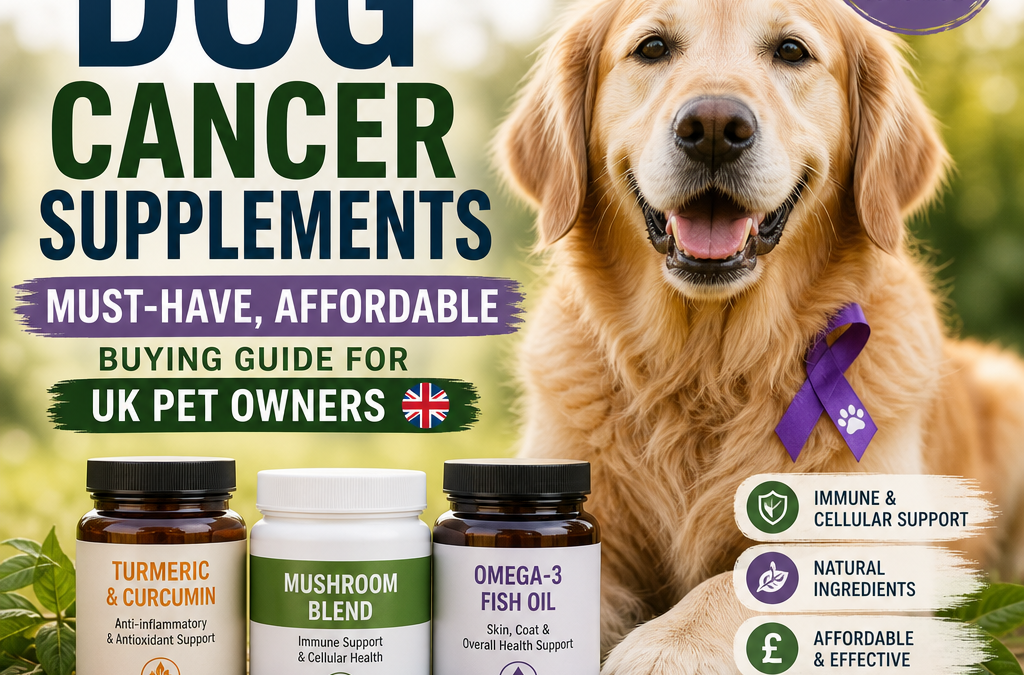
Dog Cancer Supplements can provide useful nutritional support during a dog’s cancer treatment, but they should never replace veterinary care. For UK pet owners, the challenge is choosing safe, affordable products from a crowded market while avoiding exaggerated claims. The right supplement may help maintain appetite, body condition, digestion, mobility, or general wellbeing, yet suitability depends on the dog’s diagnosis, medication, age, and overall health.
Table of Contents
What Are Dog Cancer Supplements?
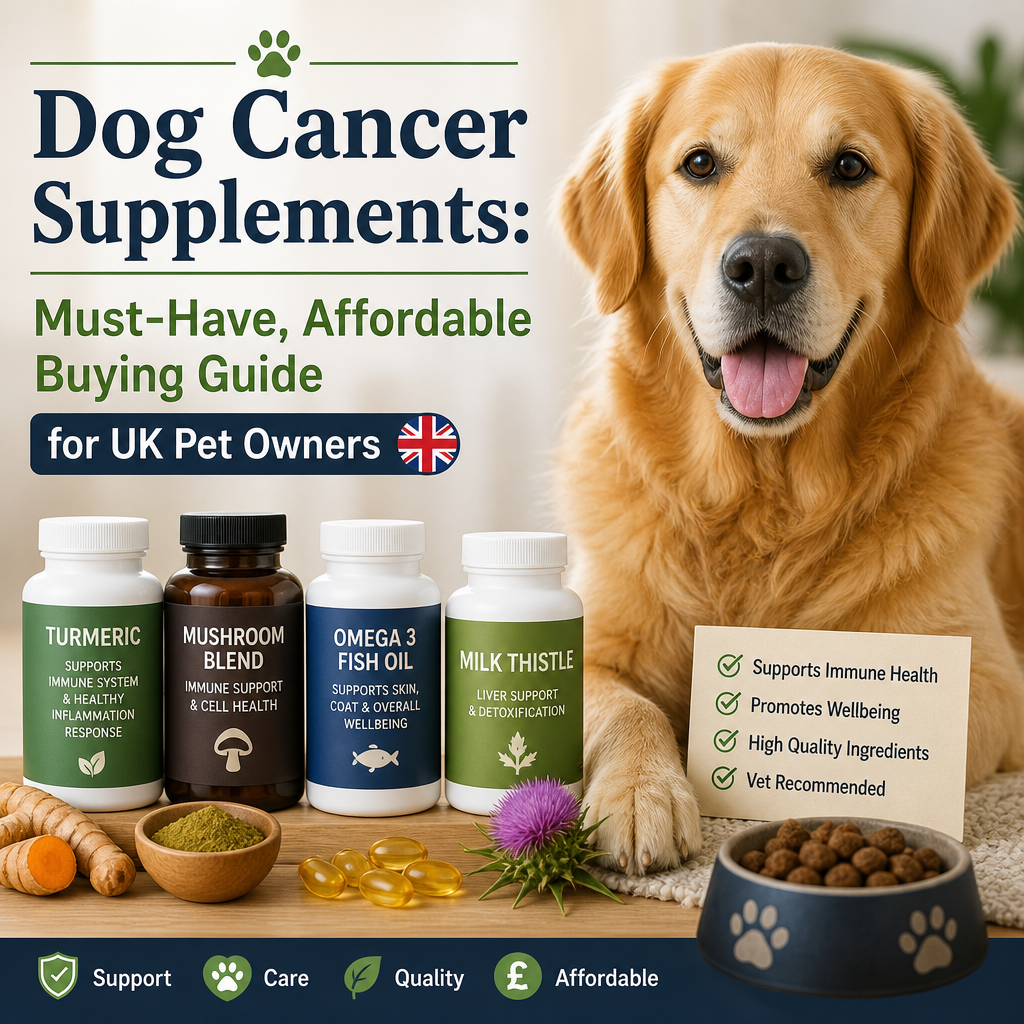
Dog Cancer Supplements are products designed to support a dog’s nutritional needs during cancer or cancer treatment. They may contain omega-3 fatty acids, antioxidants, vitamins, minerals, medicinal mushrooms, probiotics, or other ingredients. Some are formulated specifically for dogs, while others are marketed as general wellness products. For readers comparing options, a helpful overview is also available in Best Diet and Supplements for Dogs with Cancer: A Comprehensive Guide.
Cancer can affect the body in several ways. Dogs may lose weight, experience reduced appetite, develop digestive problems, or become less active. Surgery, chemotherapy, radiotherapy, and medication can add further physical stress. A carefully selected supplement may help support normal body functions, but it cannot eliminate a tumour or guarantee a particular outcome.
The most important foundation remains appropriate veterinary treatment, a complete diet, regular monitoring, and good pain and symptom control.
Potential Benefits of Cancer Supplements for Dogs
The possible benefits vary according to the ingredients and the dog’s individual needs. Common reasons a vet may consider supplementation include:
- Supporting calorie intake and maintaining body weight
- Providing omega-3 fatty acids for general nutritional support
- Helping maintain healthy skin and coat
- Supporting normal digestion and stool quality
- Replacing a confirmed nutrient deficiency
- Supporting mobility in dogs affected by weakness or reduced activity
- Helping maintain appetite or energy as part of a wider care plan
It is important to distinguish between supportive care and cancer treatment. Claims that dog cancer supplements can cure cancer, shrink tumours, or replace chemotherapy should be treated with caution. In the UK, products cannot be assumed to have proven medical effects simply because they feature testimonials, natural ingredients, or impressive marketing language.
When chosen carefully, dog cancer supplements can also make it easier to keep a consistent routine at home. That matters because stable routines often help dogs eat better, rest more comfortably, and cope with treatment changes in a calmer way.
Key Ingredients to Consider
Omega-3 fatty acids
Fish oil containing EPA and DHA is commonly included in dog cancer supplements. These fatty acids support normal inflammatory processes and may be useful for general health. They can also contribute to skin, coat, and joint support.
Quality matters. Look for a product that clearly states the amount of EPA and DHA rather than listing only the total amount of fish oil. Fish oil can cause digestive upset in some dogs and may not be suitable alongside certain medications or before surgery without veterinary guidance.
Probiotics and digestive support
Some dogs experience changes in appetite, stool consistency, or digestion during treatment. A veterinary probiotic may help support a balanced gut environment. Choose a product made for dogs, with clear storage instructions and identifiable strains.
Probiotics are not appropriate for every patient, especially dogs with severe immune compromise or serious gastrointestinal disease. Ask your vet before introducing one.
Antioxidants
Antioxidants such as vitamins C and E, selenium, and plant compounds are often included in cancer support products. However, high-dose antioxidants may not always be suitable during chemotherapy or radiotherapy because some treatments rely partly on oxidative mechanisms. The timing and dose are therefore important.
Never add multiple antioxidant products together without professional advice. More is not necessarily better, and excessive supplementation can create risks.
Medicinal mushrooms and herbal ingredients
Mushroom extracts, turmeric, milk thistle, and other botanicals are frequently promoted in dog cancer supplements. Evidence differs considerably between ingredients, products, and conditions. “Natural” does not automatically mean safe: herbal products can interact with prescription medicines, affect blood clotting, or influence liver metabolism.
A vet should review the full ingredient list before use, particularly if your dog is receiving chemotherapy, steroids, anti-inflammatory drugs, or medication for seizures. For a deeper look at herbal approaches, see Cancer-Fighting Supplements for Dogs Through Traditional Chinese Veterinary Medicine.
If you are comparing broader supportive options, reading about Revolutionary Anti-Cancer Supplements for Dogs: Boosting Health with Chinese Herbs may also help you understand how herbal products are sometimes positioned and why ingredient transparency matters.
How to Choose Affordable Products in the UK
Price should be assessed by cost per daily serving, not just the package price. A large tub may appear economical but could provide fewer doses than a smaller, more concentrated product. Compare the amount of active ingredient, serving instructions, postage, and subscription terms.
Look for:
- A complete ingredient list with precise quantities
- Clear dosing guidance based on body weight
- A batch number, expiry date, and manufacturer details
- Products specifically manufactured for pets
- Transparent contact information and UK availability
- Independent quality testing where available
- Packaging that explains storage and safe use
Avoid products that promise guaranteed cures, use vague proprietary blends, or rely entirely on dramatic before-and-after stories. A supplement sold through a reputable veterinary practice or established UK retailer may cost slightly more but can offer better traceability and guidance.
When you are comparing dog cancer supplements, it can also help to look for brands that publish clear manufacturing standards and contact details. For general product safety information, the U.S. FDA guidance on pet foods and treats is a useful reference point for understanding label claims and quality concerns.
Safety Comes Before Savings
Before giving dog cancer supplements, discuss the product with your veterinary team. Provide the exact name, ingredient list, and proposed dose. This is especially important if your dog has kidney disease, liver disease, diabetes, bleeding problems, digestive illness, or a reduced immune system.
Introduce only one new supplement at a time. Monitor for vomiting, diarrhoea, constipation, reduced appetite, itching, lethargy, or unusual changes in behaviour. Stop the product and contact your vet if concerning symptoms appear.
Keep supplements away from children and pets, and follow storage instructions carefully. Human supplements should not be used unless a vet specifically confirms that the formulation and dose are appropriate. Some products contain ingredients that are harmful to dogs, including xylitol in certain human formulations.
If your dog is already taking prescribed medication, ask whether the supplement could interfere with absorption or increase side effects. That extra check can prevent problems and is one of the simplest ways to keep dog cancer supplements useful rather than risky.
Building a Practical Support Plan
A dog cancer support supplement should fit into a broader care plan. Begin with the basics: a nutritionally complete diet, access to fresh water, suitable exercise, comfortable bedding, and regular veterinary reviews. Record your dog’s appetite, weight, stool quality, activity, and symptoms so changes can be identified early.
Ask the vet what the main priority is. One dog may need calorie support, while another may benefit more from digestive care or help maintaining mobility. Targeting a specific need is usually safer and more affordable than buying several overlapping products.
Supplements should also be reviewed over time. A product that is suitable before surgery may not be appropriate during recovery, and a supplement used during one treatment phase may need to be stopped before another. Regular review helps prevent unnecessary expense and reduces the risk of interactions.
Used carefully, dog cancer supplements can form one part of compassionate, evidence-informed care. The best choice is not necessarily the most expensive or heavily advertised option, but one with a clear purpose, reliable ingredients, sensible dosing, and approval from your dog’s veterinary team.
For more background on supportive care options, you may also find Saving Your Pet’s Life: How Nutritional Supplements Can Help Cats and Dogs Fight Cancer helpful. In some cases, the right supplement can make day-to-day care feel more manageable, especially when appetite, digestion, or energy levels are changing. That is why dog cancer supplements should be chosen with a practical goal, not just a marketing promise.
It is also sensible to review the ingredient list against your dog’s current treatment plan. If your vet has prescribed medication, ask whether the supplement could affect absorption, clotting, or liver processing. This matters because dog cancer supplements are often sold as “all-in-one” solutions, yet a single ingredient may be useful in one situation and unhelpful in another.
Some owners prefer a simple approach: one targeted product, one clear reason for use, and one follow-up review. That approach can reduce waste and limit confusion. If a product does not clearly help, it may be better to stop it and reallocate the budget to a better-quality diet, pain management, or an evidence-based supportive option.
Finally, remember that dog cancer supplements are only one part of care. Good nutrition, a calm home environment, and regular check-ins with your vet remain the most important practical steps. When used thoughtfully, they can complement treatment without adding unnecessary risk.
In short, the most effective dog cancer supplements are the ones that match your dog’s needs, fit your budget, and are backed by sensible veterinary advice. That balanced approach gives you the best chance of supporting comfort and quality of life without wasting money on unnecessary products.