
Dog Tumour Supplements can provide supportive nutrition for some dogs, but they should never replace veterinary diagnosis or cancer treatment. A tumour may be benign or malignant, and different cancers respond differently to diet, medication, surgery, chemotherapy, and other therapies. Before adding any supplement, speak with your veterinarian—ideally a veterinary oncologist—to check whether it is appropriate for your dog’s condition, current medication, appetite, liver function, and kidney health.
Table of Contents
- What are dog tumour supplements?
- The most useful dog tumour support supplement categories
- Omega-3 fatty acids
- Medicinal mushrooms
- Antioxidant vitamins and minerals
- Digestive and appetite support
- Supplements for dogs with tumours: safety comes first
- How to compare a dog tumour support supplement
- Diet and lifestyle remain fundamental
- A practical approach for pet owners
What are dog tumour supplements?
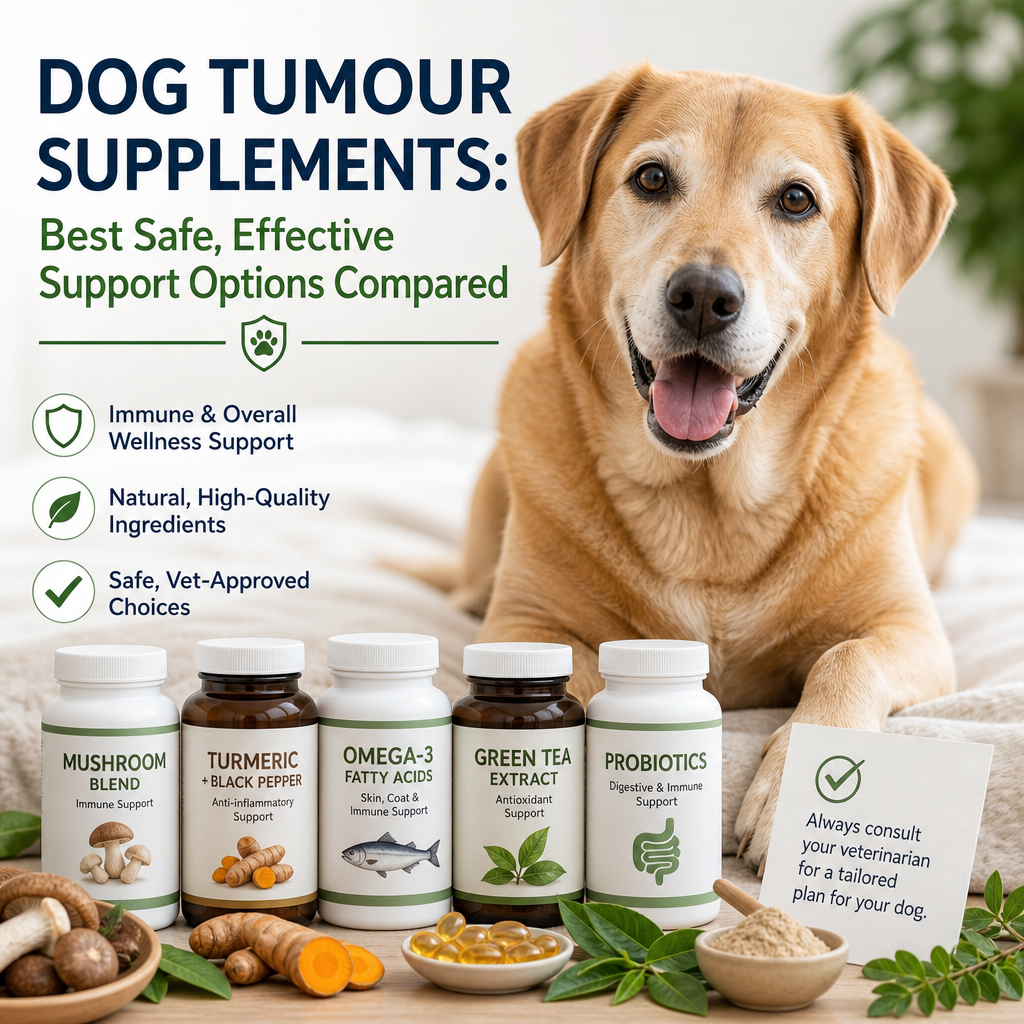
Dog Tumour Supplements are products intended to support general health during or after a cancer diagnosis. They may contain omega-3 fatty acids, medicinal mushrooms, antioxidants, vitamins, minerals, digestive support ingredients, or herbal compounds. Their purpose is usually to help maintain body condition, support normal immune function, promote appetite or digestion, and improve overall wellbeing.
However, supplements do not “cure” cancer. Claims that a product can dissolve tumours, replace chemotherapy, or guarantee remission should be treated with caution. A reputable supplement should be presented as supportive care, with clear ingredient quantities, appropriate dosing guidance, quality testing, and realistic claims.
When pet owners compare dog tumour supplements, the most important question is not which product sounds strongest on the label, but which one is safest and most appropriate for the dog’s diagnosis and treatment plan. In many cases, the best choice is a simple formula with transparent ingredients rather than a complex blend with vague marketing language.
For dogs already receiving treatment, dog tumour supplements should be considered part of a broader care plan that includes nutrition, pain control, monitoring, and follow-up visits. That makes the decision less about trends and more about what fits the individual patient.
The most useful dog tumour support supplement categories
Not every product marketed as a cancer aid is actually helpful. A careful comparison should focus on ingredients that may support comfort, appetite, inflammation control, or nutritional status without adding unnecessary risks. The following categories are the most commonly discussed in dog tumour supplements.
Many owners begin with a broad search for dog tumour supplements, then narrow the choices after learning which ingredients have the most practical value. That approach helps avoid unnecessary spending on products that sound impressive but offer little usable information.
Omega-3 fatty acids
Marine omega-3 fatty acids, particularly EPA and DHA, are among the better-studied nutritional options for dogs with cancer. They may help support a healthy inflammatory response and can contribute to skin, coat, cardiovascular, and joint health. Some veterinary diets designed for cancer support include increased levels of omega-3 fatty acids.
Fish oil is the most common source, although products vary considerably in purity and concentration. Choose a supplement that lists the actual amount of EPA and DHA rather than simply stating the total amount of fish oil. Veterinary guidance is especially important for dogs with pancreatitis, bleeding disorders, planned surgery, or those taking anticoagulant medication.
Possible side effects include loose stools, vomiting, fishy odour, and excess calories. Poor-quality oils may also be oxidised or contaminated, so third-party testing is valuable. If you are comparing dog tumour supplements for a dog with a sensitive stomach, omega-3 products often deserve a closer look because the form, dose, and freshness can make a real difference.
For broader background on how these fats are assessed in pet nutrition, the Tufts Clinical Nutrition Service offers helpful educational resources for pet owners.
Medicinal mushrooms
Mushrooms such as turkey tail, shiitake, maitake, and reishi are used in some supplements for dogs with tumours. Turkey tail has attracted particular interest because of research into compounds called polysaccharopeptides, including PSP and PSK. Early research suggests potential immune-related benefits, but evidence in dogs remains limited and does not establish mushrooms as a standalone cancer treatment.
Product quality is critical. A mushroom powder made from the whole fruiting body may differ substantially from an extract, and labels should identify the mushroom species and extraction method. Dogs with autoimmune disease, liver problems, or those receiving immune-modulating drugs may require extra caution. Some mushrooms can also interact with medications.
When considering dog tumour supplements in this category, it is wise to ask whether the formula provides meaningful quantities or only a small “fairy dust” blend. A single well-characterised mushroom ingredient is often easier to evaluate than a long proprietary mixture.
Some pet owners are drawn to mushroom products because they appear natural and gentle, but dog tumour supplements still need the same careful label review as any other health product. Natural origin does not remove the need for evidence, dose clarity, or veterinary oversight.
Antioxidant vitamins and minerals
Vitamins E and C, selenium, and other antioxidants are frequently included in canine cancer supplements. These nutrients are essential in appropriate amounts, but more is not necessarily better. High doses can cause harm, and the effects of concentrated antioxidants during chemotherapy or radiation therapy are not fully settled.
Some oncologists recommend avoiding high-dose antioxidant products during particular treatments because certain therapies may partly rely on oxidative damage to abnormal cells. Other clinicians may approve carefully selected nutritional support. The timing, dose, and treatment protocol matter, so always coordinate antioxidant use with the veterinary cancer team.
This is one reason dog tumour supplements should be reviewed alongside the full treatment plan rather than purchased in isolation. A product that seems harmless on its own may not be suitable during a specific phase of therapy.
In practice, the safest dog tumour supplements are often those that provide moderate, clearly listed amounts rather than extreme megadoses. That gives the veterinary team room to individualise care without guessing what is hidden in a proprietary blend.
Digestive and appetite support
Cancer, stress, medication, and treatment can all affect appetite and digestion. Probiotics, prebiotics, fibre, and digestive enzymes may be useful in selected cases, especially when a dog has changes in stool quality or is taking antibiotics. Their value depends on the underlying problem, and they should not delay investigation of persistent vomiting, diarrhoea, weight loss, or refusal to eat.
A highly palatable, complete veterinary diet may be more beneficial than adding several separate products. Maintaining calorie and protein intake is often a central part of supportive care, particularly when a dog is losing muscle or struggling to eat. In practice, the most effective dog tumour supplements are often the ones that help the dog keep eating consistently.
Owners comparing dog tumour supplements should also think about practicality. A product that smells strong, requires many capsules, or causes stomach upset may be less useful than a simpler option that the dog will actually take every day.
To understand how nutrition fits into cancer care, see this overview of treatment options for canine mediastinal tumours, which shows how supportive care is often paired with veterinary treatment rather than used alone.
Supplements for dogs with tumours: safety comes first
Natural does not automatically mean safe. Herbal ingredients can alter liver enzymes, affect blood clotting, change blood pressure, or interfere with prescription medicines. This is particularly important if a dog is receiving chemotherapy, steroids, non-steroidal anti-inflammatory drugs, seizure medication, or medication for heart disease.
Avoid products containing unknown proprietary blends, excessive doses of fat-soluble vitamins, xylitol, garlic, onion, or other ingredients toxic to dogs. Human supplements are not automatically suitable because they may contain unsafe additives or inappropriate concentrations.
Introduce only one new product at a time, using the veterinarian’s recommended dose. Monitor for vomiting, diarrhoea, lethargy, itching, changes in thirst, bleeding, or worsening appetite. Stop the supplement and contact the veterinary practice if concerning signs develop.
Safety checks matter just as much as ingredient quality when evaluating dog tumour supplements. A product that is well formulated but poorly matched to your dog’s health status can still cause problems.
It also helps to bring the bottle or label to the clinic. That allows your veterinarian to review the ingredient list in the context of diagnosis, current laboratory work, and any prescription medicines already in use.
How to compare a dog tumour support supplement
A sensible comparison should focus on evidence, safety, and transparency rather than marketing language. Look for:
- A complete ingredient list with exact quantities
- Clear dosing instructions based on body weight
- Batch or third-party quality testing
- Contact details for the manufacturer
- Veterinary or nutritional expertise behind the formulation
- No claims that the product cures or eliminates cancer
- Appropriate storage instructions and expiry information
It is also worth checking whether the product is designed for dogs rather than adapted from a human formula. Supplements should complement a balanced diet, not replace it.
If you are comparing dog tumour supplements side by side, ask a simple question: would you be comfortable using this product if your dog were already taking several medications? If the label does not make that easy to answer, it may not be the right choice.
Another useful step is to compare the supplement against your dog’s real needs. A dog that is losing weight may need calorie support more than a large antioxidant formula, while a dog with poor stool quality may benefit more from digestive support than from a mushroom blend.
When owners take time to compare dog tumour supplements carefully, they are more likely to select a product that fits the treatment plan and less likely to buy something that sounds promising but adds confusion.
Diet and lifestyle remain fundamental
The most effective supportive plan is usually broader than a single supplement. Regular veterinary reviews can monitor tumour progression, pain, weight, hydration, blood results, and treatment response. A complete and palatable diet, adequate water intake, gentle exercise where tolerated, comfortable bedding, dental care, and stress reduction can all contribute to quality of life.
Do not make extreme dietary changes without professional advice. Raw diets may increase infection risks, particularly in dogs whose immune systems are affected by cancer or treatment. Very low-carbohydrate or high-fat diets may also be unsuitable for dogs with pancreatitis, digestive disease, or other medical conditions.
In many cases, dog tumour supplements work best when they are part of a simple, sustainable routine that supports hydration, eating, and comfort. That approach is usually more useful than chasing aggressive claims or stacking multiple products at once.
Nutrition decisions should stay flexible. A dog that tolerates one supplement well today may need a different plan later if appetite changes, medications are adjusted, or lab work shows a new concern. That is another reason to keep dog tumour supplements under active veterinary review instead of assuming the original choice will always remain the best one.
A practical approach for pet owners
Start by identifying the main goal: maintaining weight, supporting digestion, managing inflammation, or improving general nutritional intake. Ask the veterinarian whether a supplement is suitable for the specific tumour and treatment plan. Review the complete ingredient label and provide a full list of every medication, treat, vitamin, and herbal product your dog receives.
Keep a simple record of appetite, body weight, stool quality, energy, and any side effects. This helps the veterinary team determine whether the supplement is genuinely useful. In many cases, one carefully selected product is safer and easier to assess than a combination of several overlapping formulas.
Used responsibly, dog tumour supplements may offer supportive benefits as part of an individualised care plan. Their role is to complement evidence-based veterinary treatment, good nutrition, and close monitoring—not to replace them.
For dogs already undergoing cancer care, the safest results usually come from coordinated decision-making. If you are unsure whether dog tumour supplements belong in your dog’s plan, ask your veterinary team to help you compare the options based on diagnosis, treatment stage, and current medications.
Dog Tumour Supplements are best viewed as support tools, not miracle solutions. With the right guidance, they can fit into a thoughtful plan that prioritises safety, comfort, and quality of life.
When in doubt, choose the simplest option with the clearest label, then reassess after a short trial period with your veterinary team. That method keeps the focus on your dog’s wellbeing and makes it easier to tell whether a product is truly helping.
For general disease risk and early warning signs in different breeds, you may also find this guide to Poodle cancer risks and early tumour signs useful when discussing broader prevention and monitoring with your vet.
Reputable owners often combine a careful supplement review with regular check-ins, weight monitoring, and symptom tracking. That practical routine is usually more valuable than any single product promise, especially when the goal is long-term comfort and stability.
Before making changes, it can help to write down the exact product name, dose, and reason for use. This makes it easier to assess whether the supplement is helping and reduces the chance of accidental duplication if another clinician adds medication later.
If your dog’s appetite is still poor despite supportive care, ask whether the issue is nausea, pain, constipation, anxiety, or treatment side effects. Correcting the underlying cause often does more than adding another supplement to the regimen.
In the end, thoughtful use of dog tumour supplements is about precision, not quantity. The best choice is the one that is easy to explain, easy to monitor, and genuinely compatible with your dog’s medical plan.