
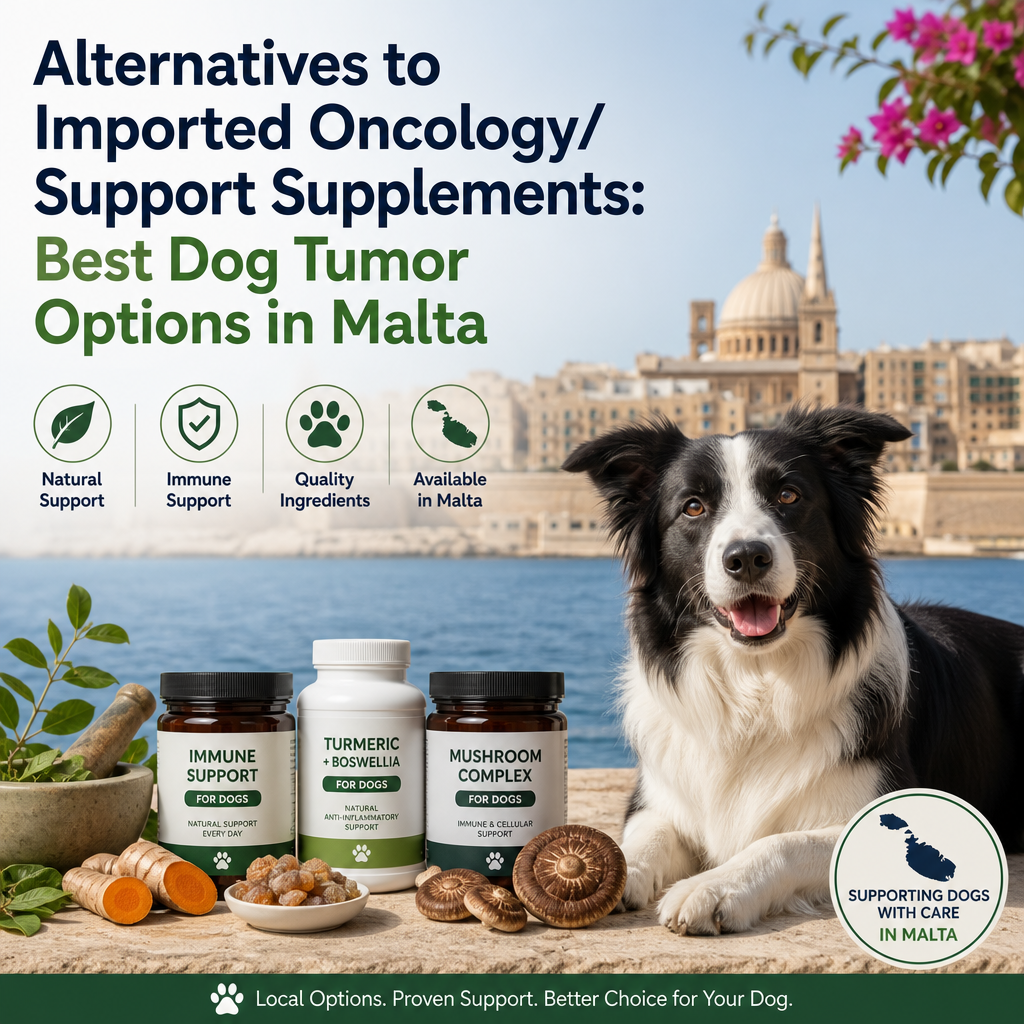
Alternatives to Imported oncology/support supplements are becoming increasingly important for dog owners in Malta who want reliable, practical, and locally accessible ways to support a dog diagnosed with cancer. Imported products can be expensive, difficult to find, or delayed by shipping and supply issues. However, choosing a suitable replacement should never mean replacing veterinary treatment. The safest approach is to combine professional medical care with carefully selected nutritional and supportive options that suit the dog’s diagnosis, medication, appetite, and overall health.
Table of Contents
- Why dog owners seek supplement alternatives in Malta
- Dog tumor supplement alternatives: what should they support?
- Food-based support and locally available nutrition
- Omega-3 fatty acids and digestive support
- Herbal and “natural” products require caution
- Finding reliable options in Malta
- Monitoring the dog’s response
Why dog owners seek supplement alternatives in Malta
Many oncology supplements are manufactured abroad and sold through international websites. Although these products may contain useful ingredients, Maltese dog owners can face several challenges, including high delivery costs, customs delays, limited availability, unclear storage conditions, and changes in product formulation. Some supplements may also be unavailable when they are needed most.
Local alternatives can offer greater convenience and continuity. A veterinarian, veterinary pharmacy, or qualified animal nutrition professional may be able to recommend products that are available in Malta or through established European suppliers. This can make it easier to maintain a consistent routine and obtain advice about dosage, interactions, and suitability.
The most important consideration is not whether a product is imported or locally sourced. It is whether the product is safe, appropriately formulated, quality controlled, and relevant to the individual dog’s needs.
In many cases, owners are not looking for a miracle product. They are looking for a dependable plan that can be repeated every day without stress, delivery delays, or unclear instructions. That practical side matters because consistency is often what makes supportive care feel manageable during a difficult diagnosis. When the routine is easier to follow, it is also easier for the veterinary team to see whether the dog is benefiting from the chosen support.
Owners may also want to avoid products that appear impressive online but do not fit the realities of a cancer patient. A supplement that is hard to source, needs complicated handling, or has vague ingredient information may create more problems than it solves. For this reason, alternatives to Imported oncology/support supplements should always be evaluated with the same level of care as prescription medicines.
Dog tumor supplement alternatives: what should they support?
There is no single supplement that treats every type of canine cancer. Supportive products are generally used to help maintain nutrition, body condition, digestion, mobility, immune function, or quality of life during veterinary treatment.
Common goals may include:
- Supporting appetite in dogs that are eating less
- Providing extra calories or highly digestible nutrition
- Helping maintain muscle mass and body weight
- Supporting normal digestion and stool quality
- Providing selected omega-3 fatty acids
- Supporting joint comfort and mobility
- Replacing nutrients lost through vomiting or diarrhea
- Helping older or medically fragile dogs maintain daily function
A supplement should be selected according to the dog’s condition rather than based on broad claims about “fighting cancer.” A dog receiving chemotherapy may have different nutritional needs from a dog recovering from surgery, while a dog with kidney disease, liver disease, diabetes, or pancreatitis may need to avoid certain ingredients entirely.
For readers looking for breed-specific cancer awareness and early warning signs, the article on Chest Lumps Dogs: Helpful Tumor Causes Insight may also be useful.
Dog tumor supplement alternatives are most useful when they answer a specific problem. For example, a dog that is losing weight may need a calorie-dense food or a digestible topper more than a capsule advertised as a cancer support aid. A dog with nausea may need a different strategy entirely, such as smaller meals, anti-nausea medication prescribed by a vet, or a bland diet that does not irritate the stomach. Matching the support to the problem keeps care targeted and easier to assess.
This is also why the label matters so much. The same marketing term can be used on products with very different ingredients, strengths, and intended uses. Two supplements may both be described as supportive, but one might be designed for joint health while another focuses on digestive balance. Reading the details carefully helps owners choose dog tumor supplement alternatives that are actually relevant to the treatment plan.
It is worth remembering that supportive care has limits. Even when alternatives to Imported oncology/support supplements are chosen well, they do not replace surgery, chemotherapy, or radiotherapy when those treatments are recommended. Their role is to support the dog through treatment and help preserve comfort, condition, and daily function.
Food-based support and locally available nutrition
One of the simplest alternatives to imported oncology products is a carefully planned nutritional strategy. Many dogs benefit from highly digestible, complete veterinary diets, especially when appetite, digestion, or weight maintenance is a concern. These diets are usually available through veterinary clinics and pet supply providers in Malta.
In some cases, a veterinarian may approve small additions such as cooked lean meat, plain fish, or an appropriate carbohydrate source. These additions should remain balanced and should not displace the complete diet. Homemade diets can become deficient in calcium, vitamins, minerals, or essential fatty acids if they are not formulated professionally.
For dogs with poor appetite, feeding smaller meals several times a day may be more effective than offering one large portion. Warming food slightly can improve aroma, while feeding in a calm location may reduce stress. Hydration is also essential, particularly in Malta’s warm climate. Fresh water should always be available, and a veterinarian should assess any dog that is drinking excessively, vomiting, or showing signs of dehydration.
Practical food support is often easier to maintain than a long list of separate capsules or powders. A balanced diet may provide the foundation, while a targeted supplement is used only if it adds a clear benefit. That approach can reduce cost, simplify daily care, and make it easier to monitor appetite and stool quality. It also helps avoid the confusion that sometimes happens when a dog is given several imported products at once and no one is sure which one is helping.
Some owners also find that feeding schedules matter almost as much as ingredient choice. A dog with cancer may do better with gentle routine changes such as earlier meals, fewer treats that interfere with appetite, or a consistent feeding location. These small adjustments are not dramatic, but they can make a real difference when the dog is already coping with illness, medication, or a reduced interest in food.
Omega-3 fatty acids and digestive support
Omega-3 fatty acids, particularly EPA and DHA, are sometimes included in supportive nutrition plans for dogs with cancer or chronic inflammation. They may also support skin, coat, and general wellness. Fish oil products should be selected carefully, with attention to purity, concentration, oxidation, and the actual amount of EPA and DHA rather than simply the total oil volume.
Digestive support may include veterinary probiotics or specific fiber products. These can be useful for some dogs experiencing changes in stool quality, stress-related digestive upset, or treatment-associated gastrointestinal symptoms. However, not every probiotic is appropriate for every patient, and severe diarrhea, blood in the stool, repeated vomiting, or abdominal pain requires veterinary attention rather than self-treatment.
For nutritional reference on omega-3 use in animal health, the VCA Hospitals overview of omega-3 fatty acids for dogs and cats is a helpful educational resource.
Omega-3 products are often discussed as alternatives to Imported oncology/support supplements because they are widely available and comparatively easy to source. Even so, not every fish oil is suitable for a cancer patient. Some products are too low in active omega-3 content to be useful, while others may be poorly stored or may upset the stomach if introduced too quickly. A quality product and a sensible dose matter more than the label’s marketing language.
Digestive support deserves the same careful attention. A probiotic may help one dog but be unnecessary for another, and fiber can improve stool consistency in some cases while making diarrhea or reduced appetite worse in others. The best results usually come from a gradual, monitored approach rather than from stacking multiple products at once. For dogs already receiving treatment, any new digestive aid should be discussed with the veterinary team before it is started.
When used appropriately, omega-3s and digestive aids can be practical dog tumor supplement alternatives. They may not be dramatic, but they can contribute to a steadier daily routine. That stability matters when the overall goal is to keep the dog eating, hydrated, and comfortable through ongoing care.
Herbal and “natural” products require caution
Natural products are often marketed as gentle alternatives to imported oncology supplements, but natural does not automatically mean safe. Herbal ingredients can affect blood clotting, liver enzymes, blood pressure, sedation, or the way chemotherapy and other medicines work.
Products containing concentrated turmeric, medicinal mushrooms, milk thistle, cannabidiol, or other botanicals should only be used after consultation with the treating veterinarian. The evidence for many cancer-related claims remains limited, and product quality can vary substantially. Supplements purchased online may contain inaccurate ingredient levels, contaminants, or ingredients that are not clearly declared.
Avoid products that promise to cure tumors, replace chemotherapy, or guarantee rapid results. Responsible supportive care focuses on measurable goals such as maintaining appetite, weight, comfort, energy, and hydration.
This caution is especially important when owners are under pressure to “do something” quickly. Cancer diagnoses can create urgency, and that urgency can make bold claims sound convincing. Still, a product is only useful if it can be used safely alongside the dog’s existing treatment plan. That is why alternatives to Imported oncology/support supplements should be reviewed just as carefully as prescription medications.
If a product contains several herbs, extracts, or proprietary blends, the risk of uncertainty increases. It may be impossible to tell which ingredient is responsible for a side effect or whether the dose is appropriate for a small or medically fragile dog. Clear labeling, dependable sourcing, and professional guidance are far more valuable than vague promises. In supportive cancer care, clarity is a major advantage.
Finding reliable options in Malta
When comparing alternatives in Malta, start with the dog’s veterinary team. Ask whether the proposed product is suitable alongside surgery, chemotherapy, radiation, steroids, pain medication, antibiotics, or other prescriptions. A veterinary clinic may also identify locally stocked products or trusted European suppliers with appropriate quality controls.
Check the label for:
- Full ingredient quantities
- Manufacturer and batch information
- Expiry date and storage instructions
- Species and weight guidance
- Contact details for the manufacturer
- Independent quality or laboratory testing where available
Keep a written record of every supplement, including the brand, dose, and starting date. This helps the veterinarian identify possible side effects or interactions. Introduce only one new product at a time, unless a veterinary professional gives different instructions.
It can also help to ask practical questions before buying. Is the product available consistently from a local supplier? Does it need refrigeration? Is the dose easy to measure? Will it fit into the dog’s daily routine without creating conflict at mealtimes? These details may seem small, but they often determine whether a supplement is actually sustainable over weeks or months.
For dogs whose owners are comparing supportive care options for different breeds, it can be helpful to read broader cancer-awareness resources as well. Breed-specific information often gives a clearer picture of why early monitoring matters and why supplementation should never be viewed in isolation. For example, the article on Irish Setter Cancer Risks: Essential Early Tumor Signs to Know provides useful context for owners who want to understand tumor risk and early detection.
Monitoring the dog’s response
Supportive supplements should be evaluated by their practical effect. Owners can monitor appetite, body weight, stool quality, vomiting, drinking, energy, mobility, sleep, and general comfort. Sudden weight loss, persistent lethargy, difficulty breathing, uncontrolled pain, repeated vomiting, or refusal to eat should be reported promptly.
A product that is tolerated by one dog may cause problems in another. For this reason, dog tumor supplement alternatives should be personalized and reviewed regularly. The goal is to support quality of life without adding unnecessary cost, digestive stress, or treatment complications.
Keeping notes on appetite and weight can be especially useful when using alternatives to Imported oncology/support supplements. Even a simple weekly record can show whether the dog is maintaining condition or slipping slowly over time. If the dog’s response changes, that information helps the veterinary team adjust the plan sooner rather than later.
Owners should also watch for subtle changes that may not seem urgent at first. A dog that is slightly less enthusiastic at mealtimes, sleeping more, or drinking differently may be signaling that the current support plan needs review. That is another reason regular follow-up is valuable: it keeps supportive care aligned with the dog’s real-world needs rather than with assumptions made at the start of treatment.
For dog owners in Malta, locally accessible nutrition, veterinary-approved supplements, careful monitoring, and regular medical follow-up can provide meaningful support when imported products are unavailable. The best plan is not necessarily the most expensive or heavily marketed option; it is the one that is safe, transparent, practical, and appropriate for the dog’s complete medical picture. In many cases, the most effective alternatives to Imported oncology/support supplements are the ones that keep treatment consistent, reduce delays, and fit the dog’s everyday needs.
When comparing alternatives to Imported oncology/support supplements, focus on safety, evidence, and convenience rather than bold promises. The right support plan may include diet adjustments, omega-3s, probiotics, and other veterinary-approved products, but it should always be tailored to the dog’s diagnosis and overall health. With good guidance, alternatives to Imported oncology/support supplements can be a practical part of a wider cancer-care plan in Malta.
Choosing alternatives to Imported oncology/support supplements safely starts with a clear conversation with the veterinary team. Ask which ingredients are most useful for the dog’s current treatment plan, which products are available locally, and which options should be avoided because of drug interactions or medical conditions. This approach is especially helpful when appetite changes, digestive issues, or weight loss are part of the cancer journey.
Before buying anything, compare labels, dosing directions, and the company’s quality information. A product that looks appealing online may not be the best match for your dog’s stage of disease or medication schedule. When in doubt, the most practical alternatives to Imported oncology/support supplements are usually the ones that are transparent, easy to source, and simple to use consistently.
It also helps to keep expectations realistic. Supportive care may improve comfort, energy, and nutritional intake, but it is not a substitute for surgery, chemotherapy, pain control, or follow-up exams. With the right guidance, alternatives to Imported oncology/support supplements can complement treatment without adding unnecessary complications.
What to ask your veterinarian about alternatives to Imported oncology/support supplements
When discussing alternatives to Imported oncology/support supplements, ask whether the product is appropriate for the dog’s diagnosis, current medications, and eating habits. It is also worth asking how long the product should be used, what benefits to watch for, and which warning signs would mean it should be stopped. Clear instructions make it easier to track whether the support plan is actually helping.
If your dog has a sensitive stomach, a history of pancreatitis, or another chronic illness, the same supplement may not be suitable for every case. That is why alternatives to Imported oncology/support supplements should be viewed as part of an individualized plan rather than a one-size-fits-all solution. The right choice is the one that supports daily comfort and fits the dog’s broader medical needs.
For owners who want to stay organized, a simple log of meals, supplements, symptoms, and medication times can be very useful. This makes follow-up appointments more productive and helps the veterinary team refine the plan over time. In many households, alternatives to Imported oncology/support supplements become most effective when they are paired with careful observation and regular check-ins.
Another helpful habit is to review the plan after any change in treatment, appetite, or mobility. A supplement that made sense during recovery from surgery may not be the best fit during chemotherapy or in a later stage of illness. Regular reassessment keeps the support plan responsive and prevents the dog from being stuck with something that no longer serves a clear purpose.
For owners who want broader context on tumor awareness and early detection, the article on Keeshond Cancer Risks: Essential Early Tumor Signs to Know is another useful read. Education, observation, and veterinary follow-up work best together, especially when the goal is to choose practical alternatives to Imported oncology/support supplements that can be maintained safely over time.