
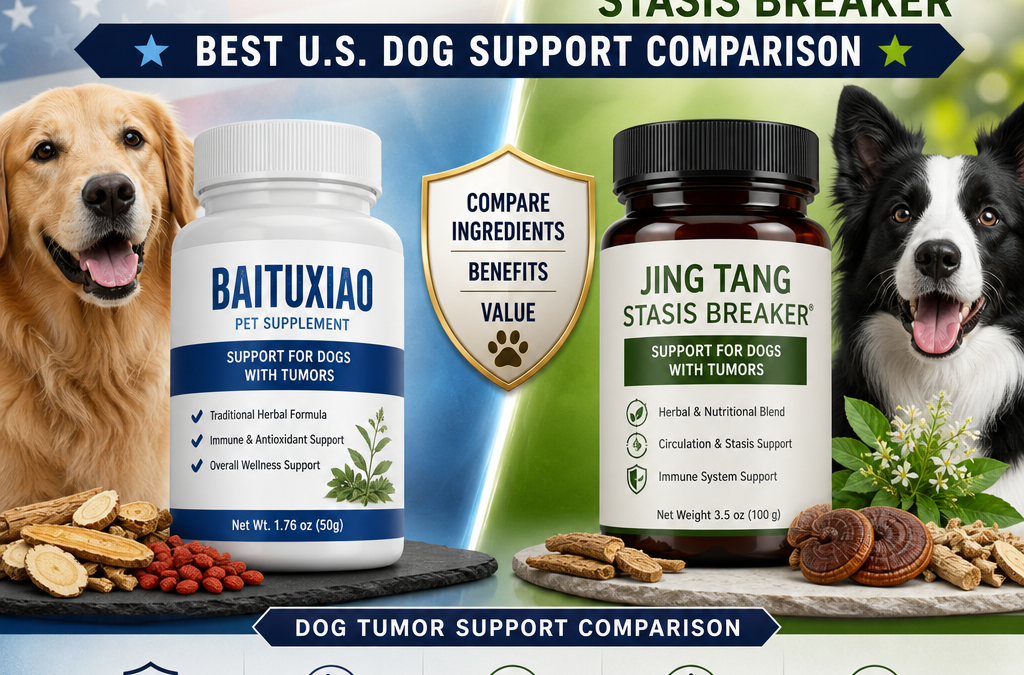
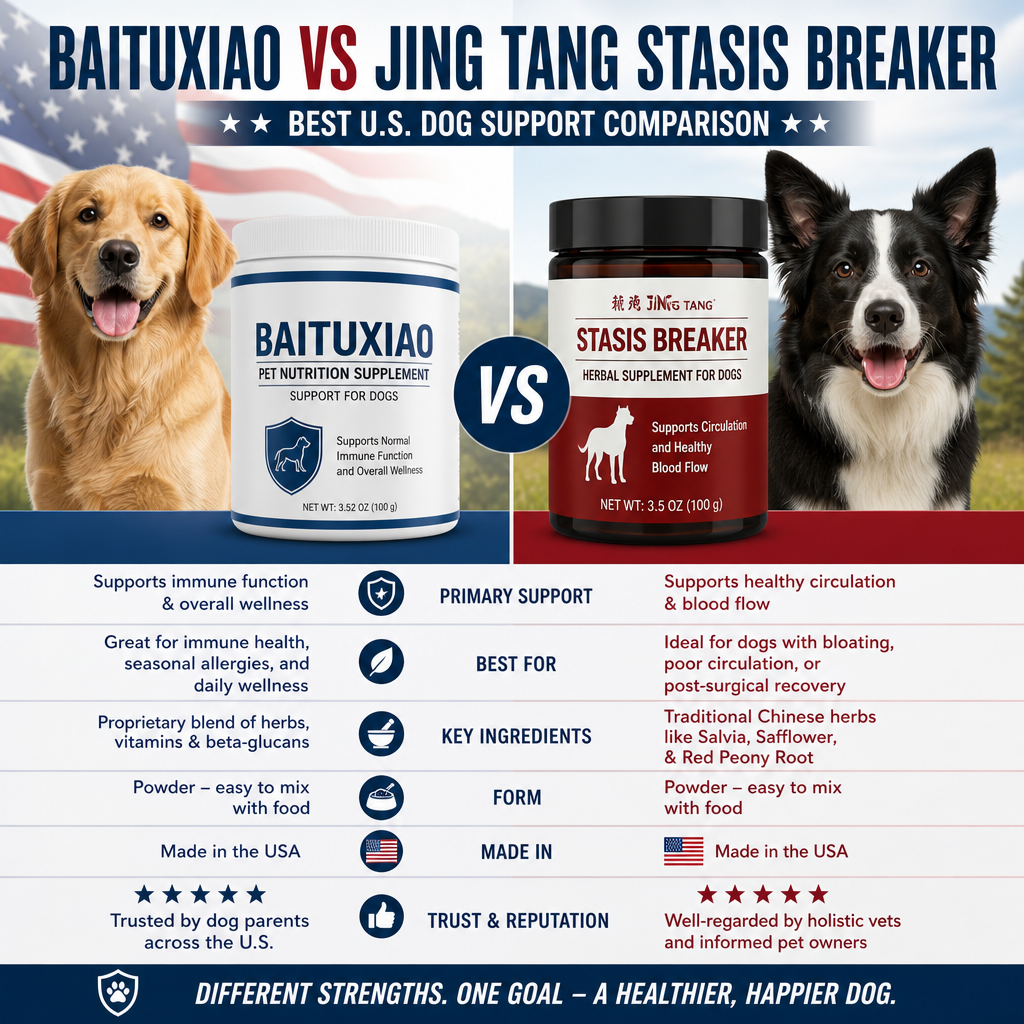
Baituxiao vs Jing Tang Stasis Breaker is a common comparison among U.S. dog owners exploring complementary support for dogs with lumps, masses, or other serious health concerns. Although both products are associated with traditional Chinese herbal approaches, they are not interchangeable, and neither should replace veterinary diagnosis or treatment. The most useful comparison focuses on ingredients, intended use, product format, safety, sourcing, and how each option fits into a veterinarian-guided care plan.
For many owners, the search begins after a new lump is found and a veterinarian recommends monitoring or testing. At that point, Baituxiao vs Jing Tang Stasis Breaker becomes less about brand names and more about whether a herbal formula is appropriate for the dog’s specific condition. That question matters because some masses are benign, some are inflammatory, and some are malignant.
Understanding the Dog Tumor Support Comparison
When a dog develops a lump, the first step should always be a veterinary examination. A mass may be benign, inflammatory, infectious, or cancerous, and its appearance alone cannot determine what it is. Fine-needle aspiration, biopsy, blood testing, imaging, or other diagnostics may be recommended before any supplement is introduced.
The phrase “dog tumor support comparison” generally refers to evaluating complementary products that may be used alongside conventional care. These products are typically marketed to support circulation, immune balance, digestion, comfort, or overall vitality. They are not proven cures for cancer, and evidence for many herbal formulas in canine oncology remains limited compared with evidence for surgery, chemotherapy, radiation, pain management, and other established treatments.
For many owners, the real challenge is understanding how support products fit into a broader care plan. That is why Baituxiao vs Jing Tang Stasis Breaker should be discussed with a veterinarian who can review the dog’s diagnosis, medications, and treatment priorities before any supplement is started. In the same way, a support product should never delay a needed diagnosis or a timely procedure.
It is also helpful to remember that supportive care is not one-size-fits-all. A small, slow-growing mass in an older dog may call for different follow-up than a rapidly enlarging lump, a painful swelling, or a tumor that affects eating, walking, or breathing. The more complete the medical picture, the easier it is to judge whether a herbal product belongs in the plan.
What Is Baituxiao?
Baituxiao is a traditional Chinese herbal formula commonly marketed for support related to masses, lumps, circulation, and immune function. Product formulations can vary by manufacturer, but Baituxiao products often contain a blend of herbs traditionally selected to help “break blood stasis,” move stagnant energy, reduce phlegm accumulation, and support the body’s response to abnormal tissue changes.
In practical terms, Baituxiao is often considered when a dog has a diagnosed mass or a condition involving swelling or tissue changes. Some owners choose it as part of a broader integrative plan, especially when working with a veterinarian familiar with traditional Chinese veterinary medicine. Baituxiao vs Jing Tang Stasis Breaker comparisons often start here because both products are discussed in the same general support category, yet their ingredient profiles and clinical uses may differ.
However, the exact ingredient list matters. Different brands may use different herbs, concentrations, extraction methods, and quality-control standards. Owners should read the label carefully rather than assuming that all Baituxiao products are identical. A formula that sounds familiar may still vary enough to affect dosage, safety, or how it fits with other therapies.
If you are reviewing support options for a lump or mass, it also helps to understand the broader diagnostic picture. A related resource on dog belly lumps and abdominal tumors can help owners ask better questions before choosing a supplement. That context is useful because the location of a mass can influence what tests, treatment steps, and monitoring are needed next.
Baituxiao may also be discussed when owners want a formula that feels aligned with a more proactive supportive plan. Even so, it should be viewed as one piece of care rather than a standalone solution. The veterinarian’s role is to determine whether the product matches the dog’s current needs and whether any existing conditions make it a poor fit.
What Is Jing Tang Stasis Breaker?
Jing Tang Stasis Breaker is another traditional Chinese herbal product used in veterinary settings. As its name suggests, the formula is generally associated with the traditional concept of blood stasis. It may be recommended by practitioners seeking to support circulation and balance in dogs with masses, chronic inflammation, or other conditions interpreted through a traditional Chinese medicine framework.
Jing Tang formulas are often distributed through veterinary channels, and the product may be used as part of a customized treatment strategy. The specific formula, dosage, and duration can depend on the dog’s size, diagnosis, constitution, medications, and overall health. In a careful Baituxiao vs Jing Tang Stasis Breaker review, those practical differences matter as much as the marketing language on the label.
Because herbal formulas can affect different body systems, Jing Tang Stasis Breaker should not be treated as automatically safe simply because it is natural. Professional guidance is especially important for dogs with liver or kidney disease, bleeding disorders, gastrointestinal sensitivity, or multiple prescriptions. Dogs receiving chemotherapy or pain medications may also need closer monitoring.
For owners who want a primary source on product safety and supplement principles, the American Veterinary Medical Association’s guide to dietary supplements for pets is a useful starting point. It reinforces the idea that supplements are best used with veterinary oversight, not instead of it.
Jing Tang Stasis Breaker is often considered by owners who want a more structured herbal approach under professional guidance. Still, the product should be evaluated in the same way as any other supplement: by asking what it contains, why it is being used, and how the dog will be monitored over time. That is the practical side of the Baituxiao vs Jing Tang Stasis Breaker comparison.
Baituxiao vs Jing Tang Stasis Breaker: Key Differences
The main difference in the Baituxiao vs Jing Tang Stasis Breaker discussion is often the formulation and clinical context in which each product is used. Both may share broad traditional goals, but their herbs and proportions can differ significantly.
Baituxiao is commonly positioned as a more direct mass-support formula, with marketing that emphasizes abnormal tissue, lumps, and immune or circulation support. Jing Tang Stasis Breaker is generally presented as a stasis-focused formula used within a traditional veterinary framework. In some cases, a veterinarian may select one based on the dog’s traditional diagnosis rather than the name or location of the mass alone.
Product format can also differ. Baituxiao may be sold as capsules, tablets, or powder depending on the supplier. Jing Tang Stasis Breaker may also be available in multiple forms, but availability and labeling can vary by distributor. Palatability is important because a supplement that a dog refuses is unlikely to be useful. Owners comparing Baituxiao vs Jing Tang Stasis Breaker should therefore consider not just the theory behind each product, but also whether the dog can actually take it consistently.
Another distinction is practitioner familiarity. Some integrative veterinarians may regularly use Jing Tang products and have established dosing protocols. Others may be more familiar with Baituxiao or with a different herbal approach. The most appropriate choice is often the one a qualified professional can identify, monitor, and adjust responsibly.
In the same way that veterinarians compare formulas rather than brand names alone, they also look at the underlying disease. If a dog has a skin mass, a review of skin cancer in dogs and other carcinomas may be more relevant than the supplement label itself. The best supportive plan always starts with the medical problem, not the product category.
Owners may also notice that some formulas are discussed as part of broader wellness support while others are framed more specifically around tumor-related care. That difference in positioning can be helpful, but it does not replace a diagnosis. A mass that changes quickly or causes discomfort should be examined promptly regardless of which herbal product seems appealing.
Practical comparison points for dog owners
When looking at Baituxiao vs Jing Tang Stasis Breaker, consider these practical questions:
- What exact herbs are included in the formula?
- Is the product intended for general circulation support or for mass-related support?
- What dosage is recommended for the dog’s weight and condition?
- Are there known interactions with current medications?
- Can the product be sourced consistently from a reputable supplier?
- Will the veterinarian be able to follow the dog’s response over time?
These questions help keep the comparison grounded in real-world care rather than speculation. They also reduce the chance of buying a supplement that looks promising but does not fit the dog’s medical situation.
Ingredients and Quality Control Matter Most
A meaningful Jing Tang Stasis Breaker comparison should examine the actual ingredient panel rather than relying only on the product name. Look for complete labeling, botanical names where available, batch information, expiration dates, manufacturer contact details, and clear dosing instructions.
Quality control is especially important with herbal supplements. Contamination, substitution, inaccurate potency, and undeclared ingredients can create avoidable risks. Choose products from reputable suppliers that use appropriate testing for identity, purity, heavy metals, microbes, and other contaminants.
Owners should also be cautious with products purchased through unfamiliar online marketplaces. Counterfeit or improperly stored supplements may not match the original formulation. A veterinary clinic, established distributor, or manufacturer with transparent quality policies is generally a safer source.
Some dog owners searching for the right product also read about comparable supplement options in other countries. For example, the article on K9 Immunity Alternative: Best Affordable Dog Tumor Supplements in France shows how ingredient quality and veterinary oversight remain more important than brand familiarity. That same principle applies when comparing Baituxiao vs Jing Tang Stasis Breaker in the U.S. market.
When comparing any herbal formula, it helps to ask three practical questions: what is in the bottle, how was it made, and who is monitoring the dog’s response? If those answers are unclear, the product may not be the right choice.
Ingredient transparency is especially useful when a dog is already receiving supportive therapies. A list of herbs is not enough if the label does not explain strength, preparation method, or suggested use. Clear information makes it easier for the veterinarian to judge whether the formula is compatible with surgery, pain relief, anti-nausea medication, or other treatment goals.
Safety, Interactions, and Monitoring
Herbal products may interact with conventional medications. Potential concerns can include effects on blood clotting, blood pressure, liver enzymes, sedation, immune activity, or gastrointestinal function. Dogs scheduled for surgery may need to stop certain supplements in advance, particularly when a formula could influence bleeding risk.
A veterinarian should review all medications and supplements, including fish oil, anti-inflammatory drugs, steroids, chemotherapy agents, antibiotics, and other herbal products. This is especially important for dogs undergoing cancer treatment, because interactions may affect treatment tolerance or laboratory results. The Baituxiao vs Jing Tang Stasis Breaker decision should never be made in isolation from the rest of the treatment plan.
Monitoring should include appetite, vomiting, diarrhea, stool changes, energy level, thirst, urination, skin reactions, and any change in the mass itself. Routine bloodwork may be appropriate depending on the dog’s diagnosis and the herbs being used. Stop the product and contact a veterinarian if serious or sudden symptoms develop.
Good monitoring also means tracking what changes and when. If a dog seems more comfortable after starting a product, the benefit should still be assessed alongside medical findings, not just owner impression. Progress that looks promising at first can fade if the underlying condition is changing.
It is wise to keep a written record of the product name, batch number, start date, dose, and any observed response. That record can help the veterinarian identify patterns if the dog develops stomach upset, lethargy, changes in appetite, or a shift in the size or feel of the mass. A structured log is especially useful when several treatments are being used at once.
Signs that need prompt veterinary attention
- Sudden increase in lump size
- Ulceration or bleeding from a mass
- Loss of appetite or weight loss
- Repeated vomiting or diarrhea
- Breathing difficulty
- Pain, limping, or reduced mobility
- Marked lethargy or collapse
If any of these signs appear, the priority is veterinary care, not supplement shopping. Support products can only play a role when the dog is stable enough for them to be considered safely.
Which Option May Be More Appropriate?
There is no universally best choice in the Baituxiao vs Jing Tang Stasis Breaker comparison. The right decision depends on the dog’s diagnosis, treatment goals, medical history, current medications, and access to qualified veterinary oversight.
A veterinarian may recommend no herbal product at all if it could interfere with treatment or if the dog needs urgent surgery or other care. In other cases, an integrative veterinarian may select one formula, adjust the dose, or use it temporarily for a specific supportive goal.
The most responsible approach is to treat these products as complementary tools rather than cancer cures. A clear diagnosis, appropriate conventional treatment, nutritional support, pain control, and regular reassessment should remain central to the care plan.
Some owners compare formulas because they are looking for affordable support while they plan the next step in care. That makes timing important. If the mass is growing quickly, ulcerated, painful, or affecting walking or eating, the priority should be veterinary evaluation before any supplement decision.
In practical terms, Baituxiao may appeal to owners who want a formula commonly associated with mass support, while Jing Tang Stasis Breaker may fit a care plan created by a clinician who prefers that specific framework. Neither option should be chosen only because it is popular or easy to find online. The best choice is the one that matches the dog’s condition and the veterinarian’s plan.
For some dogs, the answer may be short-term use with close observation. For others, the veterinarian may prefer a different supplement strategy entirely. The point of the comparison is not to crown a winner, but to narrow the field to what is medically and practically sensible.
Making an Informed Decision
Before purchasing either product, gather the pathology or cytology report, current medication list, recent bloodwork, and complete medical history. Ask the veterinarian what the supplement is intended to support, how long it should be tried, what side effects to watch for, and when progress will be reassessed.
Owners should also define realistic goals. These might include maintaining appetite, supporting comfort, preserving normal activity, or helping a dog tolerate a broader treatment plan. Measuring these outcomes is more useful than relying only on changes in the size or appearance of a mass.
Ultimately, the best dog tumor support comparison is not simply a contest between two product names. It is an evaluation of evidence, safety, product quality, veterinary supervision, and the individual dog’s needs. With careful oversight, complementary medicine may have a place in supportive care, but informed decisions and timely veterinary treatment should always come first.
For more examples of how owners evaluate similar supportive formulas in a veterinary context, the discussion of Ocoxin Pets Alternative: 7 Best Affordable Dog Tumor Supplements in the UK can offer a useful point of reference. The same careful approach applies here: compare ingredients, confirm quality, and let the veterinarian guide the plan.
Seen this way, Baituxiao vs Jing Tang Stasis Breaker is less about choosing a better-sounding label and more about choosing a safer, better-matched support option. If a dog is already under veterinary care, the most useful next step is to bring the supplement questions to that same clinician and review them against the full treatment picture.
That final step matters because every dog is different. The right product for one patient may be unnecessary or inappropriate for another. When the decision is guided by diagnosis, safety, and follow-up, supportive care becomes more thoughtful and more effective.