

Ocoxin Pets is a nutritional support product designed for dogs and other companion animals, and it has attracted attention from United Kingdom owners looking for additional help during cancer treatment. An Ocoxin Pets review should begin with a clear distinction: this type of supplement is not a cure for cancer and should not replace veterinary diagnosis, surgery, chemotherapy, radiotherapy, pain relief, or other prescribed care. Its potential role is supportive, particularly when an illness or its treatment affects appetite, energy, hydration, and general wellbeing.
What is Ocoxin Pets?
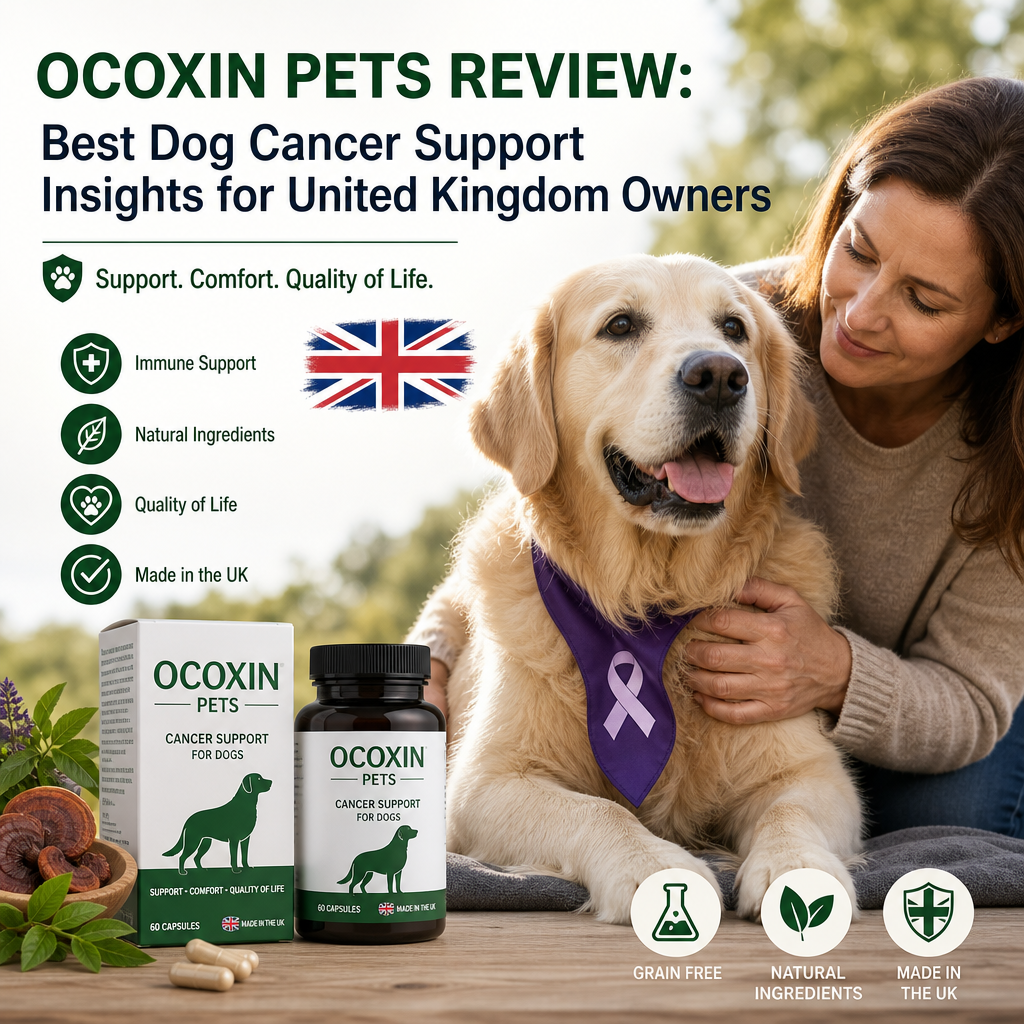
Ocoxin Pets is commonly described as a veterinary nutritional supplement containing a combination of ingredients intended to support the body during periods of illness. Formulations may include plant-derived compounds, vitamins, minerals, antioxidants, and other nutritional components. The exact ingredients, amounts, and recommended use can vary by product version and market, so owners should check the packaging and consult a veterinary professional before use.
Cancer can affect a dog in several ways. Some dogs experience reduced appetite, weight loss, fatigue, digestive problems, or a decline in muscle condition. Treatments can also create side effects, although responses vary considerably. A supplement may be considered as part of a broader care plan aimed at maintaining food intake, body condition, and quality of life.
The main point for owners is that a supplement should be viewed as an addition to professional care rather than an alternative to it. Cancer is not one single disease, and treatment decisions depend on tumour type, location, stage, the dog’s age, overall health, and individual response.
Ocoxin Pets dog cancer support: what might it offer?
Interest in Ocoxin Pets dog cancer support generally comes from its proposed nutritional and antioxidant properties. Owners may hope that it will help maintain appetite, support normal immune function, or assist general recovery. These are reasonable areas to discuss with a vet, especially when a dog is struggling with weight or energy.
However, evidence for supplements in canine cancer care is often more limited than promotional material suggests. Laboratory findings, studies in humans, and anecdotal reports cannot automatically be applied to every dog with cancer. A product may be well tolerated by one animal but unsuitable for another, particularly when the dog has liver disease, kidney disease, gastrointestinal problems, or is receiving multiple medicines.
Potential supportive aims may include:
- Helping maintain nutritional intake during illness
- Providing selected vitamins or other nutrients
- Supporting general condition when appetite is reduced
- Complementing a carefully monitored veterinary treatment plan
These possible benefits should be discussed in practical terms. For example, if a dog refuses food, is vomiting, or is losing weight rapidly, a supplement alone is unlikely to address the underlying problem. The vet may need to investigate pain, nausea, infection, obstruction, treatment side effects, or disease progression.
Some owners compare Ocoxin Pets with other supportive options, including diet changes and specialist products. If you are researching alternatives, this Ocoxin Pets Alternative: 7 Best Affordable Dog Tumor Supplements in the UK may help you understand how different support products are usually positioned.
For owners who want to compare another regional guide, this related article may also be useful: Ocoxin Pets alternative 5 Powerful Ways to Support Dogs in Spain.
Safety and possible side effects
“Natural” does not always mean risk-free. Ingredients that appear gentle may still cause digestive upset or interact with medicines. Dogs can also have individual sensitivities, and a product that is appropriate for one patient may not be appropriate for another.
Owners should monitor for signs such as vomiting, diarrhoea, constipation, worsening appetite, unusual tiredness, itching, swelling, or changes in drinking and urination. Any severe or persistent reaction should be reported to a veterinary practice promptly. A dog receiving chemotherapy, steroids, anti-inflammatory medicines, anticoagulants, or other prescriptions may require particular caution because supplements can potentially affect absorption, metabolism, or treatment decisions.
Before starting Ocoxin Pets, provide the vet with a complete list of everything the dog receives, including prescribed medicines, over-the-counter products, joint supplements, herbal remedies, and changes to diet. Do not exceed the recommended serving, and avoid combining several products with overlapping ingredients unless a professional has approved the plan.
For general pet safety guidance, the Royal Veterinary College provides useful educational information on caring for dogs with serious illness and seeking timely veterinary advice: Royal Veterinary College pet health information.
How United Kingdom owners should assess the product
For anyone researching Ocoxin Pets United Kingdom availability, purchasing from a reliable veterinary or specialist supplier is important. Check the label for the intended species, feeding instructions, batch information, storage requirements, and manufacturer details. Product claims should be read carefully, particularly where wording suggests that a supplement can treat, shrink, or eliminate cancer.
UK owners should also consider how the product fits within the services provided by their veterinary practice. A vet may recommend blood tests or follow-up examinations to monitor the dog’s response to treatment. In some cases, nutritional support from a veterinary nurse, clinical nutritionist, or oncology team may be more useful than adding a general supplement.
When ordering online, avoid products with unclear labelling, unrealistic promises, damaged packaging, or no transparent information about ingredients. It is also sensible to check whether the item is intended for use in the UK and whether storage or delivery conditions could affect quality.
Keep in mind that the best results usually come from combining any supplement with practical support at home, such as regular meal times, fresh water, a calm environment, and close monitoring for changes in appetite or comfort. These simple steps can make it easier to spot whether a product is helping at all.
A practical review of the evidence
An honest Ocoxin Pets review must balance possible benefits with the limitations of available evidence. Nutritional supplements can have a place in supportive care, but claims should not be confused with proof of anticancer effectiveness. The strongest decisions are based on the dog’s diagnosis, measurable health changes, veterinary supervision, and quality-of-life goals.
Keep a simple record of appetite, weight, energy, stools, vomiting, medication, and notable symptoms. This can help the vet determine whether the dog is improving, staying stable, or developing a problem. If there is no clear benefit after an agreed monitoring period, continuing indefinitely may not be worthwhile.
Owners should also focus on fundamentals: adequate calories, access to fresh water, pain control, nausea management, suitable exercise, a calm home environment, and regular veterinary reviews. These measures often have a more direct effect on daily wellbeing than any individual supplement.
When reviewing Ocoxin Pets dog cancer support, it helps to ask three simple questions: is the product safe for this dog, does it fit the current treatment plan, and is there a clear reason to believe it will improve comfort or nutrition? If the answer is not clear, the vet may suggest a different supportive approach.
Good decision-making often means matching support to the dog’s stage of illness. A dog that is stable and eating well may only need monitoring, while a dog with nausea or weight loss may need a broader plan that includes diet adjustment, medication review, and targeted symptom control. In that context, Ocoxin Pets may be one small part of care rather than the centre of it.
It is also worth remembering that not every dog with cancer has the same priorities. For some families, maintaining appetite and daily comfort matters most; for others, the focus may be on preparing for treatment or supporting recovery after a procedure. Any supplement should serve those priorities rather than distract from them.
Questions to discuss with your vet
Before using Ocoxin Pets, ask whether the product is suitable alongside the dog’s current medicines, whether any blood tests are needed, and how long a trial should last. You can also ask what signs would suggest the supplement is helping or causing trouble. Clear expectations make it easier to judge whether the product is worthwhile.
If your dog is already receiving a treatment plan, tell the vet exactly what you hope to achieve. The answer may be improved appetite, better energy, fewer digestive problems, or simply a supportive routine during a difficult period. Being specific can help the vet advise whether Ocoxin Pets fits the situation.
How to use it carefully in a treatment plan
If a vet agrees that the supplement is appropriate, introduce it gradually and keep everything else as consistent as possible. That makes it easier to tell whether any changes in appetite, stools, or energy are related to the product, another medicine, or the disease itself. A slow, measured approach is especially helpful in dogs that already have sensitive digestion.
Owners should also avoid assuming that a supplement can replace other supportive choices. For many dogs, the most useful plan includes a good-quality diet, symptom control, hydration support, and frequent reassessment. In some cases, adding one product to a complex treatment schedule can make care harder, not easier, if it is not clearly coordinated with the veterinary team.
Cost is another practical factor. A supplement that seems affordable at first may become expensive if used long term without measurable benefit. It is reasonable to set a review date, discuss the expected outcome in advance, and stop if the product does not seem to make a meaningful difference.
Owners sometimes ask whether they should use the supplement before, during, or after treatment. There is no universal answer. The timing depends on the dog’s diagnosis, the type of treatment, the current symptoms, and whether the vet thinks the product could help maintain condition or interfere with care. This is why professional guidance matters.
In everyday practice, the best outcome is usually realistic, not dramatic. A supportive supplement may help a dog eat a little better, remain a bit stronger, or feel more settled through treatment. Even small improvements can matter when the goal is comfort and quality of life.
Before changing any routine, make sure the whole household understands the plan. One person giving extra treats, another changing the diet, and a third adding supplements without coordination can make it difficult to judge what is actually helping. A simple written plan can prevent confusion.
Final considerations
Ocoxin Pets may be considered as part of a carefully supervised supportive-care plan for some dogs with cancer. Its value is most appropriately judged by safety, tolerability, nutritional relevance, cost, and whether it contributes to the dog’s comfort and quality of life. It should never delay diagnosis or replace evidence-based cancer treatment.
For United Kingdom owners, the best approach is to discuss the product openly with the treating vet, verify the formulation and source, introduce it cautiously, and monitor the dog closely. A well-informed plan recognises both the potential role of nutritional support and the importance of realistic expectations when managing canine cancer.
Used carefully, Ocoxin Pets dog cancer support may have a place in some treatment plans, but it works best when it is part of a broader, vet-led strategy focused on comfort, nutrition, and quality of life.
In summary, the most useful Ocoxin Pets review is not about promises of a cure. It is about whether the product fits a dog’s needs, sits safely alongside veterinary care, and supports the day-to-day goal that matters most: helping the dog stay as comfortable and nourished as possible.