
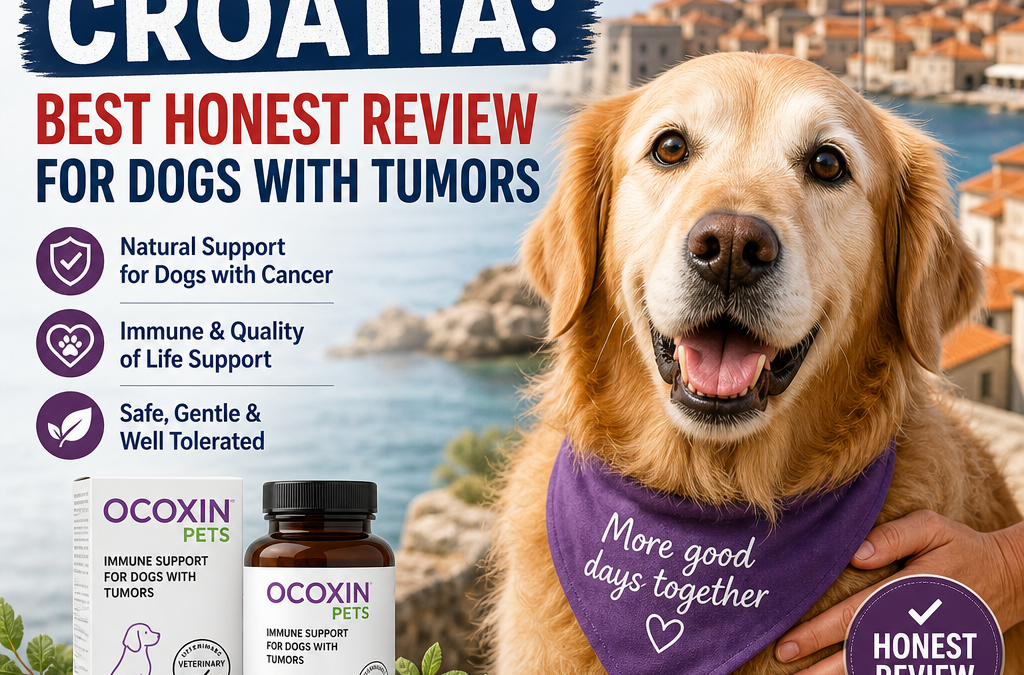
Ocoxin Pets is a nutritional supplement designed to support dogs and cats during serious illness, including cancer treatment. For pet owners searching for Ocoxin Pets Croatia, the most important question is not whether a supplement can “cure” a tumor, but whether it may offer useful nutritional and immune support alongside professional veterinary care. This honest review explains what the product is, what it may do, its limitations, safety considerations, and how Croatian pet owners should approach its use.
Table of Contents
- What Is Ocoxin Pets?
- Ocoxin Pets dog cancer support: What can it realistically offer?
- Ocoxin Pets review: Potential advantages
- Important limitations and possible risks
- How to use Ocoxin Pets responsibly in Croatia
- Questions to ask the veterinarian
- Other supportive options to discuss
- Practical home care tips during treatment
- Final assessment
What Is Ocoxin Pets?
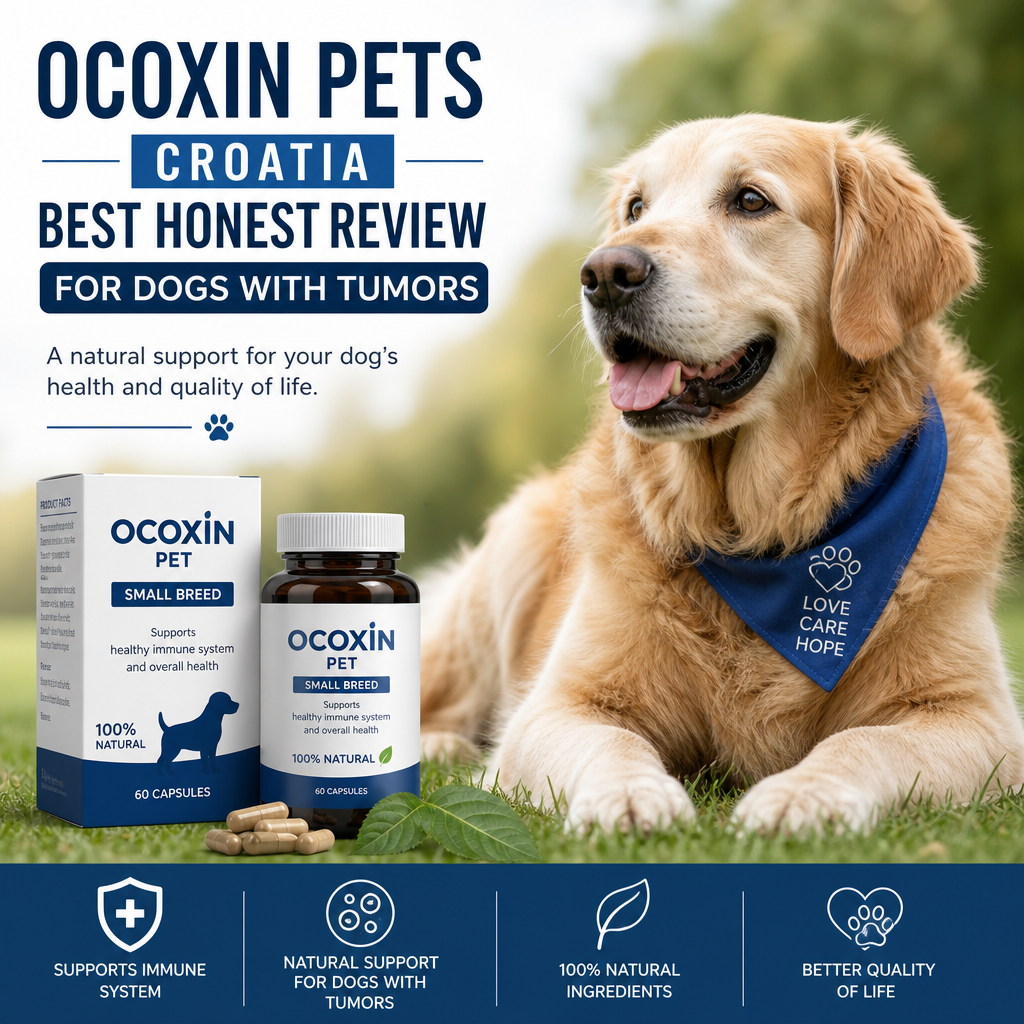
Ocoxin Pets is generally presented as a veterinary nutritional supplement containing a combination of plant-based compounds, vitamins, minerals, antioxidants, and other nutrients. Its formulation is intended to help support an animal’s overall condition when the body is under stress.
Dogs with tumors may experience reduced appetite, weight loss, fatigue, digestive problems, inflammation, or weakening during surgery, chemotherapy, radiation, or palliative care. A supplement such as Ocoxin Pets may be used as part of a broader supportive plan, but it should not replace diagnosis or treatment prescribed by a veterinarian.
The exact ingredients and concentrations can vary by market and product version, so pet owners in Croatia should carefully read the current label and official product information. It is also wise to verify that the product is intended specifically for animals and to purchase it from a reliable veterinary pharmacy, clinic, or authorized distributor.
When owners first discover a tumor diagnosis, it is common to look for every possible way to help. That is understandable. Still, the safest decision is to separate emotional hope from medical evidence. Supportive supplements can have a place, but they should be selected carefully and used with realistic expectations.
Ocoxin Pets dog cancer support: What can it realistically offer?
The phrase Ocoxin Pets dog cancer support is often used to describe the product’s potential role in helping dogs maintain strength and nutritional status during cancer care. This support may include several areas:
- Helping provide nutrients when appetite is reduced
- Supporting normal energy metabolism
- Supplying antioxidants and plant-derived compounds
- Assisting general immune function
- Helping maintain body condition during prolonged illness
- Supporting recovery after medical procedures
These benefits should be understood as supportive rather than curative. Cancer is not one single disease. Different tumors behave differently, and the best treatment depends on the tumor’s type, location, stage, and biological characteristics.
A supplement may help a dog cope better with illness, but there is no reliable basis for claiming that Ocoxin Pets eliminates tumors, replaces chemotherapy, prevents metastasis, or guarantees longer survival. Responsible product use requires realistic expectations.
In day-to-day practice, “support” may mean helping a dog eat a little better, remain more comfortable, or keep a steadier routine while undergoing veterinary treatment. Those are meaningful goals, especially for a dog that is losing weight or becoming tired. However, these goals are different from shrinking a tumor or changing the overall course of cancer on their own.
For owners, that distinction matters. A supplement can be useful if it fits into the plan, but it should never create the impression that medical treatment is optional. If a dog has a treatable tumor, timely diagnosis and a proper treatment strategy are usually the most important factors.
Ocoxin Pets review: Potential advantages
A balanced Ocoxin Pets review should consider both possible benefits and limitations. One potential advantage is that the product is formulated for companion animals rather than being a general human supplement. Veterinary-oriented formulations may be easier to administer and more appropriate for an animal’s nutritional needs.
Another possible advantage is convenience. Dogs undergoing cancer treatment may be reluctant to eat, and a palatable liquid, powder, or other easy-to-administer form can be simpler for owners than combining several separate products. Consistent administration is often important when a supplement is being used as part of a long-term care plan.
Some owners may also appreciate the product’s focus on supportive nutrition. Maintaining appetite, hydration, muscle mass, and comfort is a central part of cancer care. Even when a supplement does not directly affect the tumor, helping a dog remain nourished and comfortable can be valuable.
Ocoxin Pets may also appeal to owners because it is often discussed as part of a broader wellness approach rather than a single-purpose product. In real life, dogs with tumors often need more than one kind of support. They may need pain relief, anti-nausea care, appetite stimulation, dietary adjustment, and close follow-up. A supplement that fits into that larger framework can feel more practical than a one-note product.
For readers comparing supportive products, our guide to affordable dog tumor supplements in the UK can help you understand how different options are positioned for dogs with cancer-related needs.
However, positive experiences from individual owners should not be confused with clinical proof. Testimonials can be encouraging, but they cannot establish that a product works for every dog or every type of cancer.
Another potential advantage is that the supplement may be easier to discuss with a veterinarian than unregulated internet remedies. Because the label is more specific than many over-the-counter products, it is often easier for the veterinary team to review ingredients, identify concerns, and decide whether the supplement belongs in the care plan.
Important limitations and possible risks
The main limitation is the lack of strong, independent clinical evidence proving that Ocoxin Pets can treat cancer or significantly extend survival. Marketing language may describe immune support, antioxidant activity, or improved vitality, but these claims do not automatically demonstrate a tumor-fighting effect in real-world veterinary patients.
Supplements can also cause problems. A dog may develop vomiting, diarrhea, reduced appetite, or an allergic reaction. More importantly, some ingredients can interact with prescription medicines, chemotherapy drugs, corticosteroids, anticoagulants, or supplements already being used.
Antioxidants require particular care during cancer treatment. Their role is complex, and the effect may depend on the type of therapy, dosage, and timing. Owners should never assume that “natural” means risk-free. A veterinarian familiar with the dog’s medical history should review the full ingredient list before use.
Dogs with kidney disease, liver disease, diabetes, pancreatitis, pregnancy, or multiple medications may need additional caution. The appropriate dose may also depend on body weight, age, nutritional status, and the product’s formulation.
It is also important to remember that a dog can appear to “do better” for reasons that are unrelated to the supplement itself. Better appetite from medication, improved hydration, calmer handling, or the natural ups and downs of the disease can all influence day-to-day observations. That is why supplement decisions should be based on veterinary advice and ongoing monitoring, not on one good or bad day.
To better understand general nutrition and oncology considerations, the National Cancer Institute’s overview of dietary supplements and cancer care explains why supplementation should be handled carefully during treatment.
There is also a practical risk in delaying proven therapy while waiting for a supplement to work. If a tumor is growing quickly or causing pain, breathing problems, bleeding, or severe weight loss, the veterinarian may need to act immediately. Supplements are best viewed as additions to care, not substitutes for urgent treatment.
How to use Ocoxin Pets responsibly in Croatia
For anyone researching Ocoxin Pets Croatia, the first step is to speak with the treating veterinarian. Bring the packaging or a clear photograph of the ingredient list to the appointment. The veterinarian can assess whether the supplement is compatible with the dog’s diagnosis and current treatment.
Use only the recommended animal dosage. Do not increase the amount because the dog appears weak, and do not combine it with several other immune or antioxidant products without professional guidance. Keep a simple record of administration, appetite, bowel movements, energy, weight, and any unusual symptoms.
Product authenticity and storage also matter. Buy from a trustworthy source and check the expiration date, seal, batch information, and storage instructions. Avoid products with damaged packaging or unclear labeling. When ordering from another country, confirm shipping conditions, legal requirements, and whether the item has been stored correctly.
If you are comparing regional options, this article on affordable Ocoxin Pets alternatives for dogs with tumors in the Netherlands shows how owners often evaluate supportive care products alongside veterinary advice.
Owners in Croatia should also keep local access in mind. If a product is difficult to source consistently, it may not be the best long-term option for a dog that needs regular support. Availability, cost, and reliability all matter when treatment is ongoing. A supplement that can only be obtained sporadically may be less helpful than a more stable plan based on widely available nutrition and veterinary medication.
When possible, ask the clinic whether the product should be given with food, on an empty stomach, or at a specific time relative to other medicines. Small details can affect tolerance. For example, some dogs tolerate supplements better when they are introduced gradually, while others do best when the routine stays exactly the same every day.
What supportive care should look like alongside supplementation
When a dog has a tumor, the supplement itself is only one small part of the bigger picture. The most useful supportive care plans often focus on practical goals that improve daily comfort and help the dog maintain strength.
These can include:
- Monitoring body weight every one to two weeks
- Adjusting meals for appetite changes
- Using prescription diets if recommended by the veterinarian
- Managing nausea, pain, or constipation promptly
- Making water easily available throughout the day
- Reducing stress at home and keeping routines predictable
In some cases, the veterinarian may recommend a different nutritional strategy altogether, especially if the dog has a sensitive stomach, poor tolerance for supplements, or advanced disease. That is why no single product should be viewed as a complete solution.
Supportive care also includes watching for changes that may not seem obvious at first. A dog that stops jumping onto the sofa, sleeps more than usual, eats more slowly, or seems less interested in walks may be telling you something important. Noticing those changes early can help the veterinarian adjust treatment before the dog becomes significantly weaker.
Hydration matters as much as calories in many cancer cases. A dog that is drinking poorly may struggle even if appetite seems acceptable. If your veterinarian recommends wet food, broth-like toppers, or other feeding strategies, those may be just as important as any supplement.
Practical home care tips during treatment
For many families, the hardest part of cancer care is the day-to-day routine at home. A supplement may be part of that routine, but the overall environment often has a bigger effect on comfort and quality of life. Simple changes can make a noticeable difference.
Helpful home care habits may include:
- Offering smaller meals more often instead of one large meal
- Keeping food bowls easy to reach for older or weak dogs
- Using consistent feeding times to reduce stress
- Watching for hiding, restlessness, or breathing changes
- Recording appetite and stool quality in a notebook or phone app
- Keeping the dog warm, clean, and comfortable
If a dog is receiving chemotherapy or other intensive treatment, home monitoring becomes even more important. Owners are often the first to notice side effects such as diarrhea, lethargy, poor appetite, or vomiting. Reporting these signs quickly can help the veterinary team make better decisions about the next step.
It may also help to create a simple daily schedule. Dogs often feel calmer when meals, walks, medication, and rest happen at roughly the same times each day. A stable routine can reduce stress and make it easier to tell whether a supplement is truly helping or whether the dog is simply having a good day.
If more than one caregiver is involved, write down the plan so everyone gives the same dose at the same time. Supplement mistakes are more common when family members, neighbors, or pet sitters share responsibility without a clear record.
Questions to ask the veterinarian
Before starting Ocoxin Pets, owners may wish to ask:
- Is this supplement appropriate for my dog’s tumor type and current health?
- Could it interfere with chemotherapy, radiation, surgery, or other medicines?
- What dose and schedule are suitable for my dog?
- Which side effects should prompt discontinuation?
- Should blood tests, weight, appetite, or kidney and liver function be monitored?
- Are there better-supported nutritional options for this particular case?
These questions help transform supplement use from an internet-driven decision into a coordinated part of veterinary care.
It is also reasonable to ask whether the dog’s current treatment plan is aimed at cure, control, or comfort. The answer can change how a supplement fits into the bigger picture. For a dog receiving palliative care, comfort and appetite may matter most. For a dog undergoing active treatment, avoiding interactions may be the priority.
Other supportive options to discuss
Some owners want to know whether there are alternatives that may fit their dog better. Depending on the diagnosis, the veterinarian may suggest appetite support, prescription nutrition, anti-nausea medication, pain control, omega-3 fatty acids, or other targeted supportive measures.
For a broader comparison of affordable supportive products, our article on dog tumor support options in Spain may also help readers explore how different supplements are discussed in real-world care decisions.
Because every dog’s needs are different, the best choice is not necessarily the most popular product. It is the one that fits the medical plan, is tolerated well, and supports the dog’s comfort and quality of life.
In some cases, the most effective “alternative” is not another supplement at all. It may be a diet change, better pain control, or a medication that reduces nausea and allows the dog to eat normally again. When the dog is more comfortable, the overall care plan often becomes easier for both the pet and the family.
How to judge whether a supplement is helping
Owners often want a simple answer to a difficult question: is it working? The honest answer is that supportive supplements usually need a practical evaluation rather than a dramatic one. Instead of expecting the tumor to disappear, look for signs such as steadier appetite, better energy, fewer digestive problems, or improved willingness to move around.
A useful evaluation period should be discussed with the veterinarian. If there is no meaningful benefit after a reasonable trial, or if side effects appear, it may be better to stop and redirect efforts elsewhere. Continuing an expensive or inconvenient supplement without clear value is rarely the best use of resources.
It can help to compare your dog with their own baseline rather than with another dog. The goal is not perfection. The goal is a better day-to-day quality of life than the dog would have had without the extra support.
Final assessment
Ocoxin Pets may have a role as supportive nutrition for some dogs with tumors, especially when appetite, energy, or general condition is affected. Nevertheless, an honest Ocoxin Pets review must emphasize that it is not a proven cancer cure and should never replace surgery, chemotherapy, radiation, pain management, nutritional planning, or regular veterinary monitoring.
For pet owners in Croatia, the safest approach is to treat Ocoxin Pets as an optional supportive product whose usefulness depends on the individual dog. Evidence-based cancer treatment should remain the foundation, while any supplement should be selected with veterinary guidance, realistic expectations, and close observation of the animal’s response.
In short, the most responsible use of Ocoxin Pets is as one possible piece of a veterinarian-guided care plan, not as a standalone answer to cancer. That perspective helps Croatian owners make calmer, more informed decisions for their dogs.