
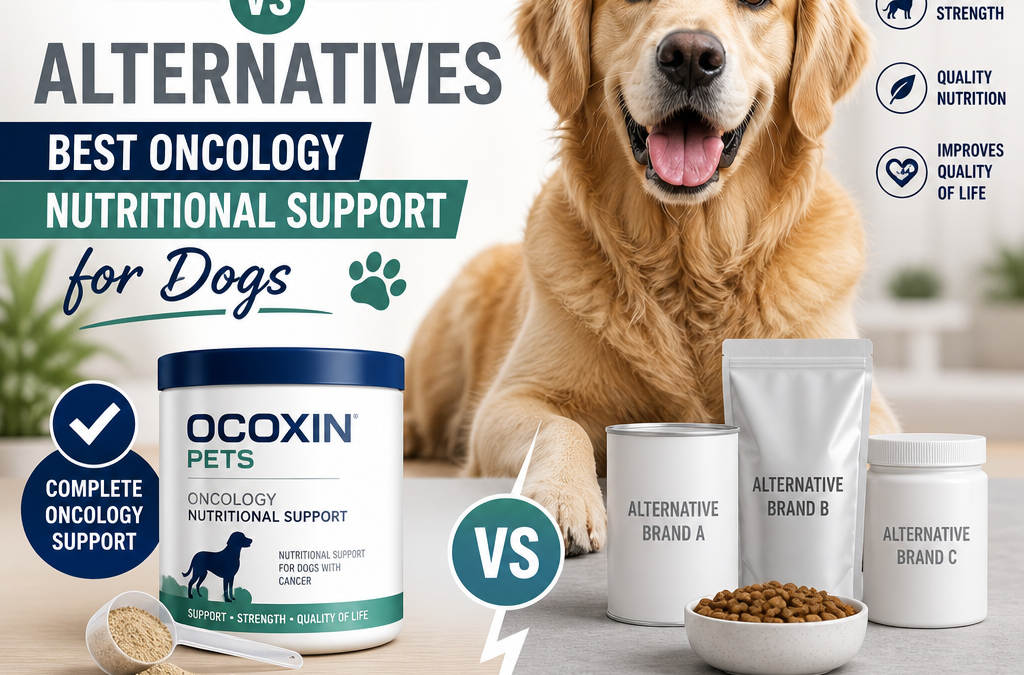
Ocoxin Pets vs Alternatives is an important comparison for dog owners seeking supportive nutrition during cancer care. A diagnosis of cancer can raise difficult questions about appetite, weight, energy, treatment tolerance, and overall quality of life. Nutritional products cannot replace surgery, chemotherapy, radiation, or veterinary supervision, but they may help support a dog’s condition as part of a broader treatment plan.
The best choice depends on the dog’s diagnosis, treatment schedule, current diet, bloodwork, appetite, digestive health, and individual response. Understanding the differences between products can help owners discuss practical options with a veterinarian or veterinary oncologist.
Table of Contents
What Is Oncology Nutritional Support?
Oncology nutritional support refers to dietary strategies, supplements, and therapeutic foods intended to help dogs maintain strength and body condition during cancer treatment. Cancer and its therapies may affect metabolism, appetite, digestion, hydration, and muscle mass. Some dogs lose weight rapidly, while others experience nausea, diarrhea, constipation, or changes in food preferences.
A nutritional support plan may include:
- A complete and balanced therapeutic diet
- Calorie-dense food for dogs with reduced appetite
- High-quality protein to help preserve lean muscle
- Omega-3 fatty acids, when appropriate
- Antioxidant management tailored to the treatment plan
- Digestive support, such as carefully selected fiber or probiotics
- Appetite and nausea medications prescribed by a veterinarian
- Hydration support when drinking or eating is reduced
Nutritional products should be viewed as complementary tools. They are not designed to destroy tumors, cure cancer, or independently improve survival. Their primary purpose is to help maintain nutritional status and quality of life.
In practice, oncology nutritional support works best when it is individualized. A dog with a mast cell tumor, lymphoma, osteosarcoma, or a metastatic mass may have very different nutritional needs. Some patients need more calories and palatability, while others need better digestive tolerance or support for medication-related side effects. That is why Ocoxin Pets vs alternatives should always be considered in the context of the dog’s full medical picture.
Owners should also remember that cancer itself can change how a dog processes nutrients. Muscle loss may begin before obvious weight loss is noticed, and a dog may still appear “well fed” while body condition is declining. That makes routine rechecks, weight monitoring, and body condition scoring especially valuable during treatment.
How Ocoxin Pets May Fit Into a Support Plan
Ocoxin Pets is marketed as a nutritional supplement for dogs and cats requiring additional support during serious illness, including cancer care. Its formulation typically includes a combination of nutritional and plant-derived ingredients. Depending on the specific product and regional formulation, ingredients may include compounds such as beta-glucans, vitamins, minerals, amino acids, and botanical extracts.
The potential appeal of Ocoxin Pets is its multi-ingredient approach. Rather than focusing on only calories, fatty acids, or digestive health, it is intended to provide broader nutritional support. Some owners and veterinary professionals consider this type of supplement when a dog is undergoing intensive treatment or needs additional support beyond a standard diet.
However, product suitability should be assessed carefully. Ingredient lists and concentrations matter, and formulations can change. Dogs may also react differently to botanical ingredients or concentrated supplements. A veterinarian should review the product before use, especially if the dog is receiving chemotherapy, corticosteroids, nonsteroidal anti-inflammatory drugs, anticoagulants, or other medications.
For readers comparing options, the American College of Veterinary Internal Medicine provides a helpful overview of evidence-based veterinary care through its oncology resources: ACVIM veterinary oncology resources.
When Ocoxin Pets is discussed in the clinic, the conversation usually centers on three questions: does the product fit the dog’s current needs, is it safe with the present treatment plan, and can it be given consistently without upsetting appetite or digestion? Those questions are often more useful than focusing only on marketing claims. If the answer is yes, then Ocoxin Pets vs alternatives may become a practical discussion about convenience, ingredients, and tolerability.
It is also helpful to understand what a supplement can and cannot do. A supplement may support energy, appetite, or nutrient intake, but it does not remove the need for diagnostic monitoring. Bloodwork, imaging, and follow-up exams remain important because changes in tumor behavior, inflammation, or organ function can alter nutritional needs quickly.
Ocoxin Pets vs Alternatives: Key Comparison Factors
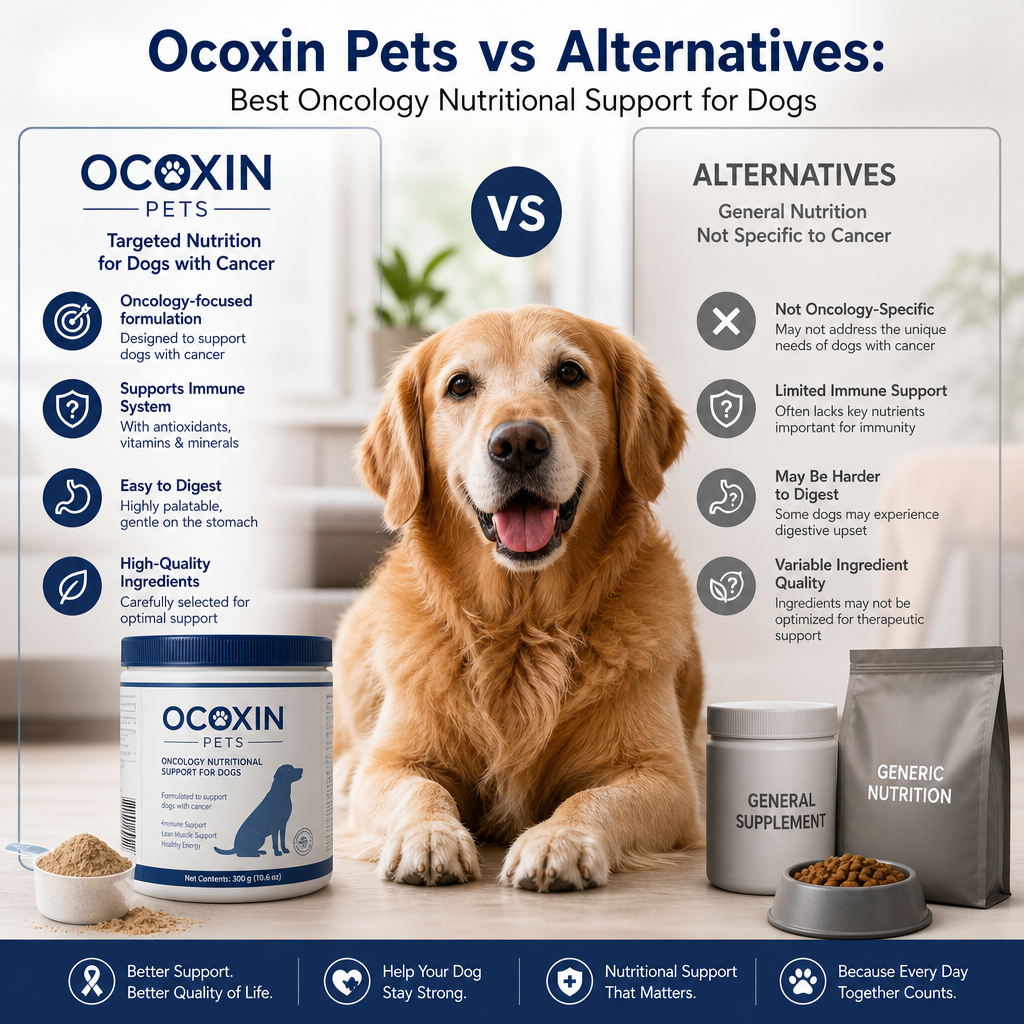
When evaluating Ocoxin Pets vs alternatives, it helps to compare products according to their purpose rather than treating every supplement as interchangeable.
In practice, Ocoxin Pets vs alternatives should be reviewed based on the dog’s current needs, the treatment plan, and how easy the product is to use every day. Some dogs need more calories, while others need a product that is easier to tolerate during nausea or digestive upset.
The phrase Ocoxin Pets vs alternatives is useful because it forces a more specific comparison. Not every option is trying to do the same job. One product may support digestion, another may increase calorie intake, and another may combine multiple ingredients in a broader formula. Understanding that difference can prevent wasted money and reduce the risk of choosing a supplement that sounds impressive but does little for the individual dog.
1. Nutritional completeness
Some products are complete therapeutic diets, while others are supplements designed to be added to normal food. A complete diet supplies essential nutrients in appropriate proportions. A supplement may provide selected ingredients but cannot meet all dietary requirements.
If a dog is eating poorly, a veterinary therapeutic diet or calorie-dense complete food may be more important than a broad supplement. Conversely, a dog already eating adequately may only need targeted support.
2. Calorie and protein content
Weight loss and muscle loss are common concerns in canine cancer patients. A supplement with appealing ingredients may not provide enough calories or protein to address these problems. Owners should check whether a product meaningfully contributes to daily energy needs.
Protein requirements vary according to kidney function, liver health, tumor type, treatment, and the dog’s overall condition. There is no single cancer diet suitable for every patient. Restricting protein without veterinary guidance may worsen muscle loss.
3. Ingredient transparency
Clear labeling is essential. Owners should look for exact ingredient names, quantities, feeding instructions, expiration dates, and quality-control information. Products that use vague proprietary blends can be difficult to evaluate, particularly when a dog is taking multiple medications.
A supplement should also be sourced from a reputable manufacturer with appropriate testing and manufacturing standards. “Natural” does not automatically mean safe, effective, or free from drug interactions.
4. Evidence and realistic expectations
Research on veterinary cancer supplements is often limited compared with research on standard cancer treatments. Some ingredients have laboratory or preliminary evidence, but laboratory findings do not necessarily prove that a product improves outcomes in dogs.
The most realistic goals of oncology nutritional support are maintaining appetite, body weight, hydration, comfort, and activity. Claims that a supplement can shrink tumors or replace conventional therapy should be treated with caution.
When owners compare Ocoxin Pets vs alternatives, it is usually most helpful to ask a simple question: does this option improve eating, comfort, or nutrition in a measurable way? That question often reveals whether a supplement is truly useful for the individual dog.
Another useful question is whether the product can be integrated into normal routines. If a dog dislikes the taste, resists administration, or becomes nauseated after dosing, even a well-formulated product may fail in real-world use. Ease of administration matters because supportive care only works if the dog actually receives it. That is one reason why many veterinarians compare Ocoxin Pets vs alternatives in terms of compliance, not just ingredients.
Common Dog Tumor Support Options
There are several categories of dog tumor support options, and each addresses different needs.
These dog tumor support options may be combined in some cases, but they should be matched carefully to the dog’s medical status. A plan that works well for one patient may be inappropriate for another, especially during chemotherapy or when digestive issues are present.
Looking at dog tumor support options side by side can make the decision much easier for owners. Some options are designed for overall nutrition, others for symptom control, and others for specific clinical goals such as maintaining lean body mass or supporting digestion. The best choice often combines several simple strategies rather than relying on one product to do everything.
Therapeutic veterinary diets
Veterinary diets may be useful when a dog has poor appetite, gastrointestinal problems, food intolerance, kidney disease, or another condition affecting nutritional requirements. Some are formulated to be highly digestible or energy dense. Others are designed for specific medical conditions.
The best diet is the one the dog will eat consistently while still meeting medical needs. Sudden dietary changes can cause digestive upset, so transitions should generally be gradual unless a veterinarian recommends otherwise.
Therapeutic diets are often overlooked because owners focus on supplements first. In reality, a diet that the dog accepts well can provide a stronger foundation than a supplement added to food the dog refuses. That is why Ocoxin Pets vs alternatives should include a look at the full feeding plan, not just a single bottle or sachet.
Omega-3 fatty acids
Fish oil provides EPA and DHA, which may support normal inflammatory regulation and help maintain skin, coat, and general health. Omega-3 products vary considerably in purity and concentration. Excessive doses can cause gastrointestinal upset or affect platelet function, so dosing should be determined by a professional.
For some dogs, omega-3 support may be most useful when body condition is stable and the goal is long-term maintenance. For others, it can be part of a broader plan to support comfort and general health during treatment. The most important point is that omega-3 products should be selected carefully, because quality and concentration vary widely.
Probiotics and digestive support
Dogs receiving chemotherapy or antibiotics may develop changes in bowel habits. A veterinary probiotic or carefully selected fiber source may help some patients, although it is not appropriate for every dog. Severe diarrhea, vomiting, blood in the stool, or dehydration requires prompt veterinary attention rather than relying on supplements.
Digestive support is especially important when appetite is inconsistent. If a dog feels nauseous or has loose stools, the owner may mistakenly think the cancer itself is the main issue, when the true problem could be a medication effect, a food intolerance, or gut irritation. Addressing these issues can make any cancer support plan more effective.
Appetite and nausea management
Prescription medications can be among the most effective forms of nutritional support. Anti-nausea treatment, appetite stimulation, pain control, and treatment of constipation may allow a dog to eat more successfully. Addressing the underlying problem is often more helpful than adding another supplement.
This is a major reason oncology care should be individualized. If a dog is not eating, the right response may be medication, feeding adjustments, pain relief, or a change in food texture and temperature. Supplements can still be helpful, but they should not distract from more urgent supportive care.
Homemade diets formulated by a veterinary nutritionist
Some owners prefer home-prepared food because it may be more appealing to the dog. However, improvised recipes can be deficient in essential nutrients or inappropriate for a dog’s medical condition. A board-certified veterinary nutritionist can create a balanced recipe that accounts for diagnosis, treatment, allergies, and calorie needs.
For a related discussion of supportive feeding choices, see this internal guide on best supplements for dogs with cancer.
Home-prepared feeding can be especially valuable for dogs with declining appetite, because it allows for texture, flavor, and moisture adjustments. Warmed food, smaller meals, and added broth or water may improve acceptance. Even so, the recipe must remain nutritionally complete. That balance can be hard to achieve without expert input.
Other supportive approaches may also be discussed with the veterinary team, including additional calorie boosters, altered meal timing, and symptom-directed medications. When used together, these measures can often improve daily intake more reliably than any single product. That is why owners comparing Ocoxin Pets vs alternatives should avoid thinking in terms of “best in all cases” and instead focus on “best for this dog right now.”
Safety Considerations During Cancer Treatment
Supplements can interact with medications or affect treatment tolerance. Certain botanical ingredients may influence liver enzymes, blood clotting, immune activity, or the metabolism of chemotherapy drugs. High doses of antioxidants may also be unsuitable in particular treatment plans, depending on the therapy and veterinary guidance.
Before starting Ocoxin Pets or any alternative, provide the veterinary team with:
- The complete product label
- The planned daily dose
- All current medications
- Other supplements and treats
- Recent bloodwork, if available
- Information about appetite, stool quality, vomiting, and weight changes
Stop and seek veterinary advice if the dog develops worsening vomiting, diarrhea, facial swelling, breathing difficulty, marked lethargy, or refusal to eat.
Safety also includes monitoring the dog’s response after any new product is introduced. Owners should watch for changes in stool quality, appetite, energy, scratching, swelling, or reluctance to take the supplement. If a product seems to upset the stomach, it may be better to stop it and reassess rather than trying to push through adverse effects.
In oncology care, timing matters. Some supplements may be acceptable during one stage of treatment but not another. A product that seems useful before chemotherapy could become less appropriate during periods of low appetite or low platelets. The veterinary team can help determine whether a change in treatment phase also means a change in nutritional support.
Owners who want a broader overview of cancer spread and follow-up care may also find this internal resource useful: metastasis dogs helpful cancer spread and tumor growth.
It can also be helpful to track every new product in a simple notebook or phone note. Record the date started, dose, feeding time, and any side effects. If several changes happen at once, it becomes difficult to identify what helped and what caused problems. Keeping clear notes makes Ocoxin Pets vs alternatives a more objective discussion at the next recheck.
Choosing the Most Appropriate Option
The most suitable oncology nutritional support is determined by the dog’s needs, not by marketing claims or the number of ingredients in a product. A dog losing weight may need calorie and protein support first. A dog with gastrointestinal symptoms may need digestibility and nausea control. A dog eating well may benefit from a simpler, targeted supplement—or may not need supplementation at all.
Owners should monitor body weight, muscle condition, appetite, water intake, stool quality, energy, and comfort. Keeping a daily record can help the veterinarian identify trends and adjust the plan quickly.
Ocoxin Pets may be a reasonable option for some dogs when used under veterinary supervision, but it is not automatically superior to therapeutic diets, omega-3 products, digestive support, prescription medications, or a carefully formulated home-prepared diet. Comparing purpose, evidence, safety, nutritional value, and compatibility with cancer treatment provides a more reliable path toward supporting a dog’s health and quality of life.
Ultimately, Ocoxin Pets vs alternatives should be decided with the same goal in mind: preserving comfort, maintaining nutrition, and supporting the dog through treatment in the safest way possible. That approach usually leads to better conversations, better expectations, and a more practical care plan.
For many families, the decision becomes easier when they separate “supportive” from “curative.” Supportive nutrition can improve day-to-day functioning, but it should not be expected to treat cancer on its own. Once that distinction is clear, Ocoxin Pets vs alternatives becomes a structured, patient-specific choice rather than a general product debate.
In summary, the best plan is the one that helps the dog eat, maintain weight, tolerate treatment, and stay comfortable with minimal risk. That may be Ocoxin Pets for one patient, but a therapeutic diet, probiotic, omega-3 supplement, or prescription appetite support may be better for another. Careful monitoring and regular veterinary guidance remain the foundation of every good decision.