by TCMVET | Aug 16, 2026 | Research and News
Mastzelltumor Hund Nahrungsergänzung kann eine medizinische Behandlung nicht ersetzen, aber bestimmte Ergänzungsmittel können die allgemeine Versorgung eines erkrankten Hundes begleitend unterstützen. Entscheidend ist, jede Maßnahme mit der behandelnden Tierärztin oder dem behandelnden Tierarzt abzustimmen. Bei Mastzelltumoren hängen Prognose und Therapie unter anderem von Tumorgrad, Lage, Größe, Ausbreitung und dem Gesundheitszustand des Hundes ab.
Was ist ein Mastzelltumor beim Hund?
Mastzelltumoren entstehen aus Mastzellen des Immunsystems. Diese Zellen enthalten unter anderem Histamin und weitere Botenstoffe, die bei einer Tumorerkrankung vermehrt freigesetzt werden können. Dadurch können Symptome wie Juckreiz, Rötungen, Schwellungen, Erbrechen, Durchfall oder Appetitlosigkeit auftreten. In manchen Fällen verändern sich die Beschwerden sogar kurzfristig, wenn der Tumor berührt oder gereizt wird.
Die wichtigste Behandlung richtet sich nach dem individuellen Befund. Häufig steht eine operative Entfernung im Mittelpunkt. Je nach Situation können zusätzlich bildgebende Untersuchungen, Medikamente, Bestrahlung oder eine onkologische Therapie sinnvoll sein. Nahrungsergänzungsmittel sollten dabei ausschließlich als begleitende Unterstützung betrachtet werden.
Gerade weil der Verlauf sehr unterschiedlich sein kann, ist eine nüchterne, gut abgestimmte Betreuung wichtig. Die Frage nach einer passenden Mastzelltumor Hund Nahrungsergänzung stellt sich meist dann, wenn Besitzerinnen und Besitzer die Behandlung sinnvoll ergänzen möchten, ohne in die ärztliche Therapie einzugreifen. Genau dafür ist eine klare Abstimmung mit der Tierarztpraxis so entscheidend.
Wenn Sie sich allgemein über tiermedizinisch begleitete Ernährungsansätze informieren möchten, bietet auch die MSD Veterinary Manual hilfreiche Hintergrundinformationen zu Symptomen, Diagnostik und Behandlungsmöglichkeiten bei Tumorerkrankungen.
Worum geht es bei der begleitenden Ernährung?
Bei Tumorerkrankungen denken viele zuerst an einzelne „Wirkstoffe“. In der Praxis zählt aber das Gesamtbild: verträgliches Futter, ausreichende Energie, gute Verdaulichkeit, stabile Medikamentengabe und ein möglichst stressarmes Umfeld. Eine passende Mastzelltumor Hund Nahrungsergänzung kann nur dann sinnvoll sein, wenn sie in dieses Gesamtbild passt.
Manche Hunde fressen zeitweise schlechter, andere haben Magen-Darm-Beschwerden oder reagieren empfindlicher auf neue Produkte. Dann ist weniger oft mehr. Eine kleine, gezielt ausgewählte Ergänzung ist meist hilfreicher als mehrere Präparate gleichzeitig. Zusätzlich sollten Halterinnen und Halter darauf achten, ob sich Symptome nach einer Umstellung verändern.
In der begleitenden Versorgung geht es außerdem darum, realistische Ziele zu setzen. Nicht jede Gabe muss auf den Tumor selbst zielen. Häufig stehen Wohlbefinden, bessere Futteraufnahme, ein stabilerer Kotabsatz oder die Unterstützung nach einer Operation im Vordergrund. Genau in diesem Rahmen kann eine Mastzelltumor Hund Nahrungsergänzung sinnvoll eingebettet werden, ohne falsche Erwartungen zu wecken.
Auch das Tempo ist wichtig: Ein neuer Zusatz sollte nie gleichzeitig mit mehreren anderen Veränderungen begonnen werden. Wird Futter umgestellt, kommt ein Medikament hinzu oder steht ein Eingriff an, dann lassen sich Reaktionen nur schwer zuordnen. Eine schrittweise Vorgehensweise macht die Begleitung deutlich sicherer und nachvollziehbarer.
Mastzelltumor Hund Nahrungsergänzung: Worauf kommt es an?
Bei der Auswahl eines Präparats sind Qualität, Dosierung und Verträglichkeit wichtiger als eine möglichst lange Zutatenliste. Ein Nahrungsergänzungsmittel sollte zum Alter, Gewicht, Gesundheitszustand und zur aktuellen Medikation des Hundes passen. Besonders wichtig ist die Rücksprache, wenn Leber oder Nieren belastet sind, der Hund Kortison oder andere Medikamente erhält oder bereits Magen-Darm-Beschwerden zeigt.
Seriöse Produkte liefern klare Angaben zu Inhaltsstoffen und Mengen. Vorsicht ist bei Präparaten geboten, die pauschal eine Heilung versprechen oder eine tierärztliche Therapie ersetzen sollen. Auch natürliche Stoffe können Nebenwirkungen verursachen oder Wechselwirkungen mit Arzneimitteln eingehen.
Eine gute Mastzelltumor Hund Nahrungsergänzung sollte außerdem praktisch sein: einfache Dosierung, nachvollziehbare Zusammensetzung und ein Herstellungsstandard, dem man vertrauen kann. Wenn ein Hund empfindlich auf Geschmack, Geruch oder Kapseln reagiert, ist ein anderes Produkt häufig sinnvoller als ein „stärkeres“.
Wichtig ist auch, die Angaben des Herstellers kritisch zu lesen. Ein hoher Wirkstoffgehalt klingt nicht automatisch besser, wenn die Verträglichkeit leidet oder die Menge für einen kleinen Hund zu hoch ausfällt. Gerade bei sensiblen Patienten ist eine übersichtliche Rezeptur oft die vernünftigere Wahl. So lässt sich eine Mastzelltumor Hund Nahrungsergänzung besser an die tatsächliche Alltagssituation anpassen.
Wer die Begleitung strukturiert angehen möchte, kann vorab drei Fragen klären: Was soll das Präparat konkret unterstützen? Wie wird geprüft, ob es hilft? Und wann wird es wieder abgesetzt, falls Unverträglichkeiten auftreten? Diese einfache Vorgehensweise hilft dabei, die Entscheidung sachlich zu halten und unnötige Experimente zu vermeiden.
Welche Rolle spielt die tierärztliche Abstimmung?
Die tierärztliche Abstimmung ist besonders wichtig, weil Mastzelltumoren häufig mit Medikamenten behandelt werden, die selbst auf Verdauung, Blutgerinnung oder das Immunsystem wirken können. Auch vor Operationen oder Narkosen muss geprüft werden, ob bestimmte Zusätze rechtzeitig pausiert werden sollten. Eine ungeprüfte Mastzelltumor Hund Nahrungsergänzung kann sonst mehr Fragen aufwerfen als lösen.
In der Praxis lohnt es sich, eine Liste aller aktuell verwendeten Präparate mitzunehmen. Dazu gehören nicht nur Medikamente, sondern auch Kauartikel, Öle, Pulver, Kräuterprodukte und Vitaminmischungen. So lassen sich Dopplungen vermeiden und mögliche Wechselwirkungen schneller erkennen.
Besonders hilfreich ist es, Veränderungen zu dokumentieren. Wenn Appetit, Kotbeschaffenheit, Hautveränderungen oder die allgemeine Aktivität nach Beginn einer Ergänzung auffallen, kann die Praxis das besser einordnen. Eine Mastzelltumor Hund Nahrungsergänzung sollte nämlich immer im Kontext des gesamten Krankheitsverlaufs betrachtet werden.
Omega-3-Fettsäuren aus Fischöl
Omega-3-Fettsäuren, insbesondere EPA und DHA, werden häufig als Bestandteil einer unterstützenden Ernährung eingesetzt. Sie können zur normalen Funktion von Haut, Herz-Kreislauf-System und Immunsystem beitragen. Außerdem werden sie bei entzündlichen Prozessen und zur Unterstützung der allgemeinen körperlichen Verfassung diskutiert.
Wichtig ist die Verwendung eines gereinigten Produkts mit nachvollziehbarer Dosierung. Fischöl kann bei empfindlichen Hunden Magen-Darm-Beschwerden auslösen und die Blutgerinnung beeinflussen. Deshalb sollte die Gabe insbesondere vor einer Operation oder zusammen mit gerinnungshemmenden Medikamenten tierärztlich abgestimmt werden.
Wenn die Tierärztin oder der Tierarzt eine Ergänzung in diesem Bereich befürwortet, kann Omega-3 zu den am häufigsten erwogenen Bestandteilen einer Mastzelltumor Hund Nahrungsergänzung gehören. Dennoch gilt: Nicht jedes Produkt ist gleich, und nicht jeder Hund verträgt die gleiche Menge.
Für viele Halter ist außerdem wichtig, dass sich Fischöl leicht mit dem Futter kombinieren lässt. Das ist praktisch, wenn der Hund phasenweise wählerisch ist oder mehrere Arzneien bekommt. Trotzdem gilt auch hier: Eine gute Mastzelltumor Hund Nahrungsergänzung sollte nie ohne Rücksprache hochdosiert begonnen werden, nur weil sie allgemein als gesund gilt.
Antioxidative Mikronährstoffe
Vitamine und Spurenelemente wie Vitamin E, Zink oder Selen erfüllen wichtige Aufgaben im normalen Stoffwechsel. Sie können bei einem nachgewiesenen Mangel sinnvoll sein. Eine großzügige Dosierung „auf Verdacht“ ist jedoch nicht automatisch hilfreich. Einige Vitamine können sich bei Überdosierung anreichern oder unerwünschte Wirkungen verursachen.
Eine ausgewogene, bedarfsgerechte Ernährung bildet daher die Grundlage. Bei Hunden mit schlechtem Appetit, Gewichtsverlust oder erhöhtem Nährstoffbedarf kann eine tierärztliche Ernährungsberatung helfen, die Versorgung gezielt anzupassen.
Auch hier ist die Mastzelltumor Hund Nahrungsergänzung vor allem dann interessant, wenn ein echter Bedarf vorliegt oder wenn die Versorgung in einer sensiblen Krankheitsphase stabilisiert werden soll. Eine Blutuntersuchung oder eine sorgfältige klinische Einschätzung kann helfen, unnötige Produkte zu vermeiden.
Antioxidative Mikronährstoffe werden oft als besonders „stark“ wahrgenommen, doch entscheidend bleibt die passende Menge. Gerade bei einem Hund mit Vorerkrankungen sollte keine pauschale Hochdosierung erfolgen. Im Alltag ist es meist sinnvoller, Defizite zu erkennen und gezielt auszugleichen, statt mehrere Präparate gleichzeitig einzusetzen. So bleibt die Mastzelltumor Hund Nahrungsergänzung übersichtlich und nachvollziehbar.
Kurkuma, Weihrauch und andere pflanzliche Produkte
Pflanzliche Inhaltsstoffe werden oft als Ergänzungsmittel bei Tumorerkrankungen beworben. Dazu gehören beispielsweise Kurkuma, Weihrauch oder bestimmte Pilzextrakte. Die wissenschaftliche Datenlage ist je nach Substanz sehr unterschiedlich und lässt sich nicht ohne Weiteres von Laboruntersuchungen auf den erkrankten Hund übertragen.
Kurkuma wird zum Beispiel häufig wegen seiner entzündungsbezogenen Eigenschaften verwendet. Die Aufnahme im Körper ist jedoch begrenzt, und Produkte unterscheiden sich stark in Zusammensetzung und Konzentration. Weihrauch kann bei manchen Hunden Magen-Darm-Probleme auslösen. Pilzextrakte können immunologisch wirksam sein und sollten daher nicht ohne fachliche Begleitung eingesetzt werden.
Wer sich für pflanzliche Optionen interessiert, sollte besonders kritisch auf Herkunft, Standardisierung und mögliche Wechselwirkungen achten. Eine Mastzelltumor Hund Nahrungsergänzung mit pflanzlichen Bestandteilen ist nur dann sinnvoll, wenn sie mit der laufenden Therapie kompatibel ist und keine zusätzlichen Risiken schafft.
Hinzu kommt, dass pflanzliche Produkte oft als „natürlich“ vermarktet werden, obwohl ihre Zusammensetzung stark schwanken kann. Bei einem Hund mit sensibler Verdauung kann genau das problematisch sein. Deshalb ist es besser, einzelne Produkte sorgfältig zu prüfen, als viele unterschiedliche Produkte gleichzeitig zu starten. Eine begleitende Mastzelltumor Hund Nahrungsergänzung sollte im Idealfall transparent, standardisiert und gut dokumentiert sein.
Was ist bei Operation und Narkose zu beachten?
Steht ein chirurgischer Eingriff an, müssen alle Ergänzungen vorab besprochen werden. Manche Öle, Pflanzenstoffe oder hochdosierte Vitamine können die Blutgerinnung beeinflussen oder die Narkoseplanung erschweren. Auch Magenreizungen, Durchfall oder Erbrechen kurz vor der Operation sind unerwünscht.
Die Tierarztpraxis entscheidet, welche Produkte vor einem Eingriff weitergegeben werden können und welche rechtzeitig pausiert werden sollten. Diese Abstimmung ist besonders wichtig, wenn die Mastzelltumor Hund Nahrungsergänzung mehrere unterschiedliche Inhaltsstoffe enthält oder wenn der Hund zusätzlich Medikamente gegen Schmerzen, Übelkeit oder Entzündungen erhält.
Gerade vor einer Operation ist eine ruhige, klare Struktur hilfreich. Je weniger unbekannte Faktoren hinzukommen, desto besser lässt sich die Situation einschätzen. Deshalb sollten neue Präparate in dieser Phase möglichst nicht mehr begonnen werden.
Probiotika und Unterstützung des Magen-Darm-Trakts
Wenn ein Hund unter Durchfall, Erbrechen oder einer gestörten Verdauung leidet, können Probiotika oder spezielle Diätfuttermittel unter Umständen hilfreich sein. Ein stabiles Magen-Darm-System ist besonders wichtig, wenn Medikamente verabreicht werden oder der Hund durch die Erkrankung weniger frisst.
Allerdings sind Verdauungsprobleme bei einem Mastzelltumor nicht immer harmlos. Sie können mit der Freisetzung von Histamin oder anderen Tumorfolgen zusammenhängen. Anhaltender Durchfall, schwarzer Kot, wiederholtes Erbrechen oder starke Schwäche müssen deshalb zeitnah tierärztlich abgeklärt werden.
In der Praxis kann eine gezielt eingesetzte Mastzelltumor Hund Nahrungsergänzung mit probiotischem Schwerpunkt helfen, die Darmflora zu stabilisieren, wenn sie gut vertragen wird. Trotzdem sollte ein solches Präparat nicht als „Lösung“ für akute Beschwerden verstanden werden.
Wichtig ist außerdem die Geduld. Die Wirkung auf den Verdauungstrakt zeigt sich nicht immer sofort, und manche Hunde benötigen eine kurze Eingewöhnungszeit. Wenn jedoch die Beschwerden zunehmen oder der Hund das Präparat verweigert, sollte man die Gabe lieber prüfen als stur fortsetzen.
Weitere begleitend erwogene Optionen
Neben den bereits genannten Präparaten werden manchmal auch weitere Ergänzungen diskutiert, etwa bestimmte Aminosäuren, hautunterstützende Fettsäuren oder individuell zusammengestellte Diätbausteine. Ob solche Produkte sinnvoll sind, hängt stark vom jeweiligen Hund ab. Ein älterer Hund mit Appetitverlust benötigt andere Unterstützung als ein junges Tier nach einer Operation.
Gerade bei komplexen Fällen ist es hilfreich, die Ziele klar zu definieren: Soll die Verdauung unterstützt werden, die Hautbarriere, der Appetit oder das allgemeine Wohlbefinden? Erst wenn dieses Ziel feststeht, kann eine sinnvolle Auswahl getroffen werden. Eine gut geplante Mastzelltumor Hund Nahrungsergänzung sollte deshalb immer zielgerichtet und nicht beliebig eingesetzt werden.
Auch die Form der Gabe spielt eine Rolle. Manche Hunde nehmen Öl problemlos auf, andere bevorzugen Pulver oder Kapseln. Für einen kranken oder wählerischen Hund ist die am besten akzeptierte Form meist die beste Wahl, selbst wenn sie in der Theorie nicht „perfekt“ wirkt.
Im Alltag hilft oft eine einfache Routine: feste Fütterungszeiten, kurze Beobachtungsnotizen und klare Regeln für neue Produkte. So bleibt die Begleitung übersichtlich, und Veränderungen werden schneller erkannt. Eine sorgsam ausgewählte Mastzelltumor Hund Nahrungsergänzung ist dann eher Teil eines durchdachten Gesamtkonzepts als ein isolierter Versuch.
Mastzelltumor Hund Unterstützung im Alltag
Neben geeigneten Ergänzungsmitteln umfasst die Mastzelltumor Hund Unterstützung vor allem eine gute Beobachtung und eine möglichst stressarme Versorgung. Sinnvoll ist es, Veränderungen an der Haut zu dokumentieren, etwa durch Fotos und Notizen zu Größe, Farbe, Schwellung oder Reaktion auf Berührung. Auch Appetit, Gewicht, Kotabsatz, Erbrechen, Juckreiz und Energielevel sollten regelmäßig beobachtet werden.
Der Hund sollte bedarfsgerecht und schmackhaft ernährt werden. Bei Appetitlosigkeit können mehrere kleine Mahlzeiten hilfreich sein, sofern die Tierarztpraxis nichts anderes empfiehlt. Ausreichend Ruhe, ein gleichbleibender Tagesablauf und sanfte Bewegung können das Wohlbefinden fördern, ohne den Hund zu überfordern.
Zu einer guten Alltagsbegleitung gehört auch, neue Präparate nicht gleichzeitig einzuführen. So lässt sich besser erkennen, ob eine Mastzelltumor Hund Nahrungsergänzung tatsächlich gut vertragen wird oder ob einzelne Bestandteile Probleme machen. Ein langsames Vorgehen ist fast immer sicherer als viele Änderungen auf einmal.
Wenn sich der Zustand des Hundes verändert, sollten Halter nicht nur an Futter und Ergänzungen denken, sondern auch an Schmerz, Stress und mögliche Nebenwirkungen von Medikamenten. Der Alltag mit einem Tumorpatienten kann fordernd sein, doch kleine, konsequente Maßnahmen bringen häufig mehr als große, schwer kontrollierbare Experimente. Die beste Mastzelltumor Hund Nahrungsergänzung ist deshalb oft die, die sich in eine ruhige, verlässliche Routine einfügt.
Ergänzungsmittel sicher einsetzen
Vor der Gabe eines neuen Präparats sollten folgende Punkte geklärt werden:
- Welche Diagnose und welcher Tumorgrad liegen vor?
- Welche Medikamente erhält der Hund aktuell?
- Steht eine Operation oder andere Behandlung bevor?
- Bestehen Erkrankungen von Leber, Nieren oder Magen-Darm-Trakt?
- Welche Dosierung ist für Gewicht und Gesundheitszustand geeignet?
- Woran lässt sich erkennen, dass das Präparat nicht vertragen wird?
Bei Schwellungen, Atemproblemen, Kreislaufschwäche, blutigem oder schwarzem Kot, starkem Erbrechen oder plötzlich ausgeprägter Teilnahmslosigkeit ist sofort tierärztliche Hilfe erforderlich. Diese Anzeichen sollten nicht mit Nahrungsergänzungsmitteln selbst behandelt werden.
Wenn eine neue Mastzelltumor Hund Nahrungsergänzung ausprobiert wird, ist ein kurzer Beobachtungszeitraum sinnvoll. So lassen sich Appetit, Kotbeschaffenheit, Aktivität und mögliche Hautreaktionen besser einordnen. Bei Unsicherheit ist es immer vernünftiger, das Präparat zu pausieren und Rücksprache zu halten.
Praktisch ist ein einfaches Protokoll: Startdatum, Produktname, Dosierung, Futterart und beobachtete Veränderungen notieren. Das klingt schlicht, hilft aber enorm, wenn später geprüft werden soll, ob ein Präparat tatsächlich passt. Eine gut dokumentierte Mastzelltumor Hund Nahrungsergänzung spart oft Zeit und verhindert unnötige Wiederholungen.
Häufige Fragen zur begleitenden Unterstützung
Kann Nahrungsergänzung den Tumor beeinflussen?
Nahrungsergänzungsmittel können die ärztliche Behandlung nicht ersetzen. Sie können jedoch begleitend zur allgemeinen Versorgung beitragen, etwa wenn der Hund schlechter frisst, empfindlich reagiert oder ein klarer Nährstoffbedarf besteht.
Wie viele Präparate sind sinnvoll?
So wenige wie möglich und so gezielt wie nötig. Eine überschaubare Auswahl macht die Kontrolle einfacher und senkt das Risiko von Unverträglichkeiten. Oft ist eine einzelne, gut verträgliche Ergänzung sinnvoller als ein ganzer Mix.
Wann sollte ich besonders vorsichtig sein?
Vor Operationen, bei Blutverdünnern, bei Leber- oder Nierenerkrankungen und bei Magen-Darm-Problemen ist besondere Vorsicht geboten. Auch neue Beschwerden nach Beginn einer Ergänzung sollten ernst genommen werden.
Wie erkenne ich eine gute Qualität?
Hilfreich sind transparente Herstellerangaben, klare Dosierungsinformationen und ein Produkt, dessen Zusammensetzung verständlich erklärt wird. Wenn ein Präparat viele ungeprüfte Versprechen macht, ist Skepsis angebracht. Eine gute Mastzelltumor Hund Nahrungsergänzung überzeugt durch Nachvollziehbarkeit, nicht durch große Werbeworte.
Praktische Schritte für den Alltag
Wenn Sie eine begleitende Unterstützung aufbauen möchten, kann diese Reihenfolge helfen: Erst die tierärztliche Therapie sichern, dann das Futter prüfen, anschließend nur bei Bedarf ein Ergänzungsmittel ergänzen. So bleibt die Belastung für den Hund gering und die Kontrolle hoch.
Viele Halter profitieren davon, zunächst nur ein Thema anzugehen: zum Beispiel Verdauung oder Appetit. Sobald klar ist, ob ein Präparat gut vertragen wird, kann später über weitere Schritte gesprochen werden. Genau dieses schrittweise Vorgehen macht eine Mastzelltumor Hund Nahrungsergänzung am Ende oft sinnvoller und sicherer als ein schneller Start mit mehreren Produkten.
Auch kleine Verbesserungen zählen. Wenn ein Hund wieder etwas besser frisst, weniger Magenbeschwerden zeigt oder sich nach der Operation stabiler fühlt, kann das den Alltag deutlich erleichtern. Dennoch sollte immer im Blick bleiben, dass die eigentliche Tumorbehandlung davon unberührt bleibt.
Fazit
Ein Mastzelltumor beim Hund erfordert eine individuell geplante tiermedizinische Behandlung. Ergänzungsmittel können je nach Situation die allgemeine Ernährung, Haut, Verdauung oder körperliche Widerstandskraft begleiten, sind jedoch kein Ersatz für Operation, Medikamente oder onkologische Kontrollen. Besonders Omega-3-Fettsäuren, ausgewählte Mikronährstoffe und Probiotika können in passenden Fällen interessant sein. Pflanzliche Präparate sollten wegen möglicher Wechselwirkungen und begrenzter Studienlage besonders sorgfältig geprüft werden. Die sicherste Strategie besteht aus einer guten tierärztlichen Betreuung, einer bedarfsgerechten Ernährung und einer genau abgestimmten Mastzelltumor Hund Nahrungsergänzung.
by TCMVET | Aug 16, 2026 | Research and News
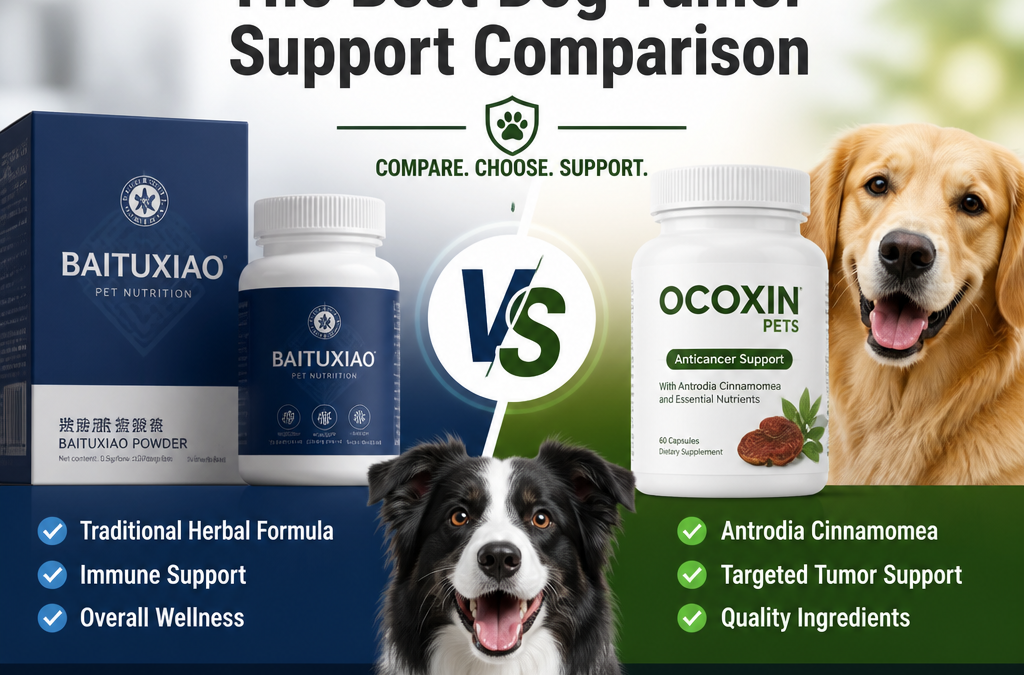
Baituxiao vs Ocoxin Pets is a comparison many dog owners explore after a veterinarian identifies a tumor or unexplained mass. Both products are marketed as supportive formulas, but they should not be viewed as replacements for diagnosis, surgery, chemotherapy, radiation, or other veterinary treatments. The right choice depends on the dog’s condition, current medications, nutritional needs, and the veterinarian’s assessment of the tumor.
Why dog tumor support requires a careful approach
A tumor is an abnormal growth of cells, but the word does not automatically indicate cancer. Some growths are benign, while others are malignant and may spread to nearby tissues or distant organs. Before choosing any supplement, a dog should receive appropriate diagnostic testing, which may include a physical examination, bloodwork, fine-needle aspiration, biopsy, ultrasound, or radiographs.
Supportive products may help address general wellness, appetite, antioxidant intake, inflammation, or recovery needs. However, evidence for supplements in canine cancer care varies widely. A product should never delay a biopsy, allow a rapidly growing mass to go unchecked, or replace a treatment plan created by a qualified veterinarian. For more background on abdominal swelling and masses, see this helpful guide to dog belly lumps and abdominal tumors.
When owners are searching for the best way to support a dog with a mass, they often compare more than one formula at the same time. That makes Baituxiao vs Ocoxin Pets a practical starting point, but only if the decision is grounded in diagnosis, not guesswork. In many cases, a veterinarian will also review whether the dog needs pain control, diet changes, or monitoring before recommending any supportive product.
It is also worth remembering that the same lump can behave very differently from one dog to another. A slow-growing skin mass, an internal abdominal lesion, and a rapidly enlarging soft-tissue tumor do not call for the same approach. That is why any Baituxiao vs Ocoxin Pets discussion should begin with diagnosis, stage, and overall health status rather than brand preference.
Baituxiao vs Ocoxin Pets: key differences
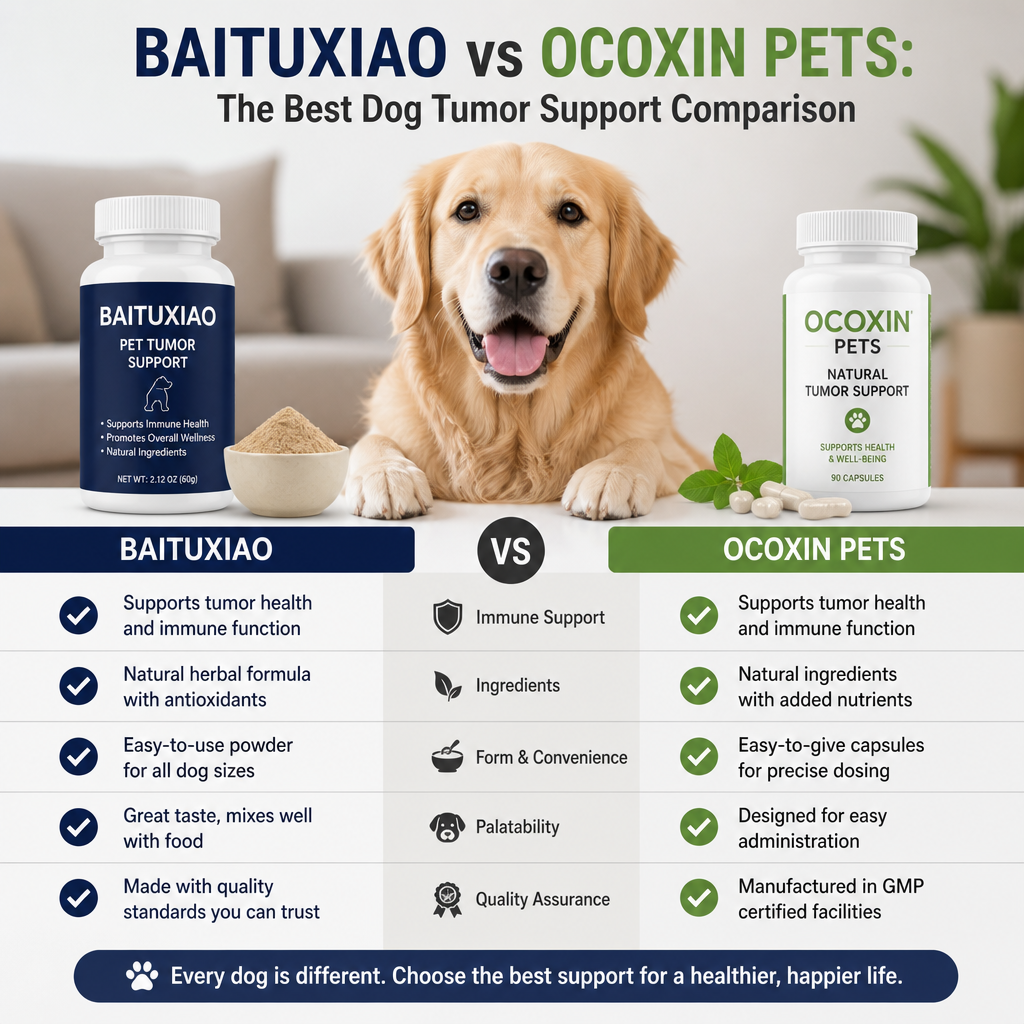
Baituxiao and Ocoxin Pets are often discussed in the context of complementary support for dogs with tumors. Their formulations, ingredient profiles, manufacturing standards, and intended uses may differ depending on the product version and market. Because supplement formulas can change, owners should always read the current label and confirm the ingredients with a veterinarian.
Baituxiao is commonly presented as a traditional herbal support formula. Products in this category may contain several botanical ingredients selected for their traditional uses related to circulation, inflammation, immune balance, or general vitality. Its multi-herb approach may appeal to owners looking for a plant-based supplement, but herbal products can still have pharmacological effects. “Natural” does not necessarily mean risk-free.
Ocoxin Pets is generally positioned as a nutritional and antioxidant support formula for companion animals. Such formulas may include vitamins, minerals, amino acids, antioxidants, or other nutrients intended to support appetite, energy, immune function, and recovery. The nutritional focus may make it attractive for dogs experiencing reduced appetite, weight loss, or treatment-related weakness, although the actual benefits depend on the individual dog and the full ingredient list.
The most important distinction in an Ocoxin Pets comparison is not simply whether one product is herbal and the other is nutritional. Owners should compare the complete labels, dosage instructions, quality controls, possible interactions, and the specific goals of supplementation. In practical terms, Baituxiao vs Ocoxin Pets is less about branding and more about fit, safety, and veterinary compatibility. For some dogs, the better choice may be neither product if the main issue is pain, nausea, or poor food intake that needs medical management first.
If the care plan already includes chemotherapy or surgery, the timing of each supplement matters too. A formula that seems helpful on paper may still be a poor match if it conflicts with the treatment schedule or complicates monitoring. That is another reason a veterinarian should review the full Baituxiao vs Ocoxin Pets picture before anything is started.
Ingredient safety and possible interactions
Dogs with cancer may be taking multiple medications, including pain relievers, anti-inflammatory drugs, antibiotics, anti-nausea medicines, steroids, or chemotherapy agents. Some herbs and concentrated nutrients can affect blood clotting, blood pressure, liver enzymes, or the way medications are metabolized.
This is especially important before surgery. Certain supplements may increase bleeding risk or interfere with anesthesia and should be stopped only under veterinary direction. Dogs with liver disease, kidney disease, diabetes, seizure disorders, or gastrointestinal problems may also require additional caution.
When reviewing Baituxiao vs Ocoxin Pets, provide the veterinarian with:
- The complete product label and ingredient amounts
- The dog’s weight, age, and medical history
- All prescription medications and other supplements
- The diagnosis or suspected diagnosis
- Any planned surgery, chemotherapy, or radiation
- Changes in appetite, stool, energy, or behavior
Do not combine several immune-support or antioxidant products without professional guidance. More supplements do not necessarily provide more benefit and may make side effects harder to identify. In a dog already coping with a tumor, the goal is to simplify risk, not add uncertainty.
If you want a broader example of how tumor-related symptoms can affect daily care, the article on Alaskan Malamute cancer risks and early tumor signs shows why early monitoring matters. That same principle applies when choosing any supportive formula. Owners should also watch for vomiting, reduced appetite, diarrhea, unusual bruising, or increased thirst after starting a new product.
When in doubt, ask the veterinary team whether the supplement should be paused before procedures, bloodwork, or imaging. A few days of careful timing can prevent complications and make it easier to interpret results. This is especially relevant when Baituxiao vs Ocoxin Pets is being considered alongside prescription cancer care.
Dog tumor support comparison: matching the product to the goal
A useful dog tumor support comparison begins with the reason supplementation is being considered. Different dogs may need different forms of support.
For a dog maintaining weight and appetite, a balanced diet, adequate calories, hydration, and treatment of nausea may be more important than adding another supplement. For a dog recovering from surgery, protein intake, wound monitoring, pain control, and restricted activity may be the main priorities. For a dog receiving chemotherapy, preventing dehydration and managing gastrointestinal side effects may take precedence.
Some owners seek antioxidants or herbal ingredients because they hope to support the immune system or reduce inflammation. These goals are understandable, but they should be discussed with the veterinary oncology team. In some treatment settings, high-dose antioxidants may be inappropriate, while in others a veterinarian may consider a carefully selected nutritional supplement reasonable.
When comparing Baituxiao vs Ocoxin Pets, it helps to write down the main goal first. Is the priority appetite support, nutrient replacement, comfort, or recovery after a procedure? That simple question can make the decision much clearer and keep the discussion focused on the dog’s real needs. For example, a dog that is eating poorly may need targeted nutritional help, while a dog with a stable mass may only need monitoring and a balanced diet.
One practical way to think about the decision is to match the formula to the situation:
- Appetite loss: ask whether the product supports food intake or whether a prescription appetite stimulant is more appropriate.
- Recovery phase: confirm whether the supplement fits post-operative care and does not interfere with healing.
- Active treatment: check compatibility with chemotherapy, pain medication, and anti-nausea drugs.
- Long-term monitoring: keep the plan simple so changes in the mass are easier to notice.
Questions to ask before choosing
Before starting any supplement, ask whether the dog needs support during active treatment, post-operative recovery, or long-term monitoring. Also ask whether the product can be used safely with current prescriptions and whether follow-up testing is needed after the first few weeks.
It is also reasonable to ask how success will be measured. If the supplement is intended to support appetite, what change should owners expect and within what time frame? If the aim is comfort, what signs would show that the plan is not helping? Clear goals make Baituxiao vs Ocoxin Pets easier to evaluate and prevent unnecessary trial-and-error.
How to evaluate quality
Quality is a major factor in any Ocoxin Pets comparison or Baituxiao review. Look for clear labeling, manufacturer contact information, batch or lot identification, expiration dates, storage instructions, and dosage guidance based on body weight. Independent quality testing or certification can provide additional reassurance, although it does not prove that a product treats cancer.
Avoid products that make guaranteed claims such as curing tumors, replacing chemotherapy, shrinking every mass, or extending life in all dogs. Strong medical claims without reliable clinical evidence are warning signs. A responsible supplement manufacturer should clearly state that the product is supportive and should be used alongside veterinary care.
Owners should also be cautious with products purchased from unofficial marketplaces. Improper storage, counterfeit packaging, expired inventory, or altered formulas can create unnecessary risks.
For readers who want a reputable medical reference on tumor warning signs in dogs, the Merck Veterinary Manual overview of tumors in dogs is a useful starting point. It offers general educational information that can help owners discuss findings with their veterinarian.
Another quality check is transparency. If a label uses vague terms such as “proprietary blend” without clear amounts, it may be harder for the veterinary team to judge safety. When possible, choose products that provide full ingredient disclosure so the comparison between Baituxiao vs Ocoxin Pets stays grounded in facts rather than marketing language.
Monitoring your dog after starting a supplement
If a veterinarian approves a supplement, introduce it according to the recommended instructions and monitor the dog closely. Record appetite, water intake, stool quality, vomiting, energy, weight, and any changes in the tumor or surrounding skin. Contact the veterinary clinic if the dog develops persistent diarrhea, vomiting, facial swelling, breathing difficulty, unusual bruising, severe lethargy, or a sudden decline.
A supplement should be discontinued and reviewed with a veterinarian if adverse effects appear. It is also important to schedule follow-up examinations and recommended imaging. A mass that seems unchanged externally may still be changing internally, so clinical monitoring remains essential.
If the dog is already being treated for a suspected or confirmed cancer, the monitoring plan should be written down so everyone in the household knows what to track. That includes medication timing, food intake, stool changes, and any visible changes in the lump or surrounding tissue.
In many homes, the person giving the supplement is not the same person who attends follow-up appointments. A simple log can help everyone stay aligned. Note the date the supplement started, the dose given, any missed doses, and any new symptoms. That record may help the veterinarian decide whether the product is helping or whether the plan should be adjusted.
Be especially alert during the first one to two weeks. That is often when appetite changes, stomach upset, or unusual tiredness appear. If those signs follow the start of Baituxiao vs Ocoxin Pets, the veterinarian may recommend stopping the product, changing the dose, or selecting a different supportive approach.
Making a responsible choice
There is no universal winner in the Baituxiao vs Ocoxin Pets discussion. Baituxiao may be considered by owners interested in a multi-herbal approach, while Ocoxin Pets may be considered when nutritional and antioxidant support is the primary goal. Neither description is enough to determine which product is appropriate for a particular dog.
The best decision is based on the diagnosis, treatment plan, ingredient safety, product quality, and measurable health goals. Discuss the options with the veterinarian before starting either product, especially when the dog is undergoing cancer treatment or has surgery scheduled. Supportive care works best when it complements evidence-based veterinary medicine rather than competing with it.
In short, Baituxiao vs Ocoxin Pets should be treated as a veterinary-guided comparison, not a shopping decision made in isolation. With the right diagnostics, clear goals, and careful monitoring, owners can choose the most sensible supportive option for their dog. If the case changes, the plan should change too, because tumor care is rarely static and rarely one-size-fits-all.
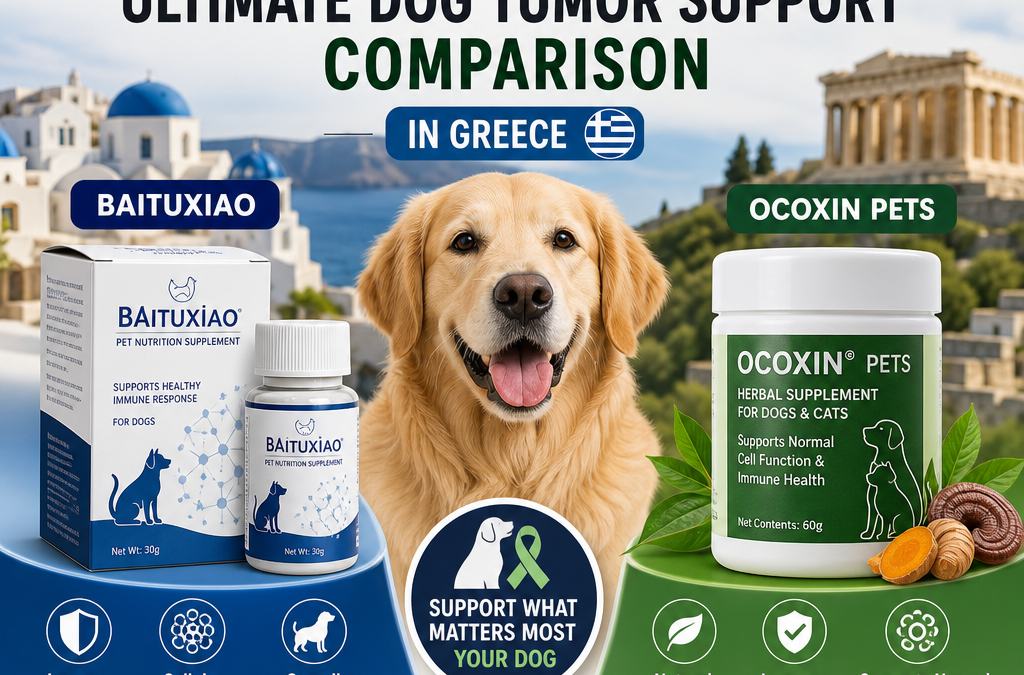
by TCMVET | Aug 16, 2026 | Research and News
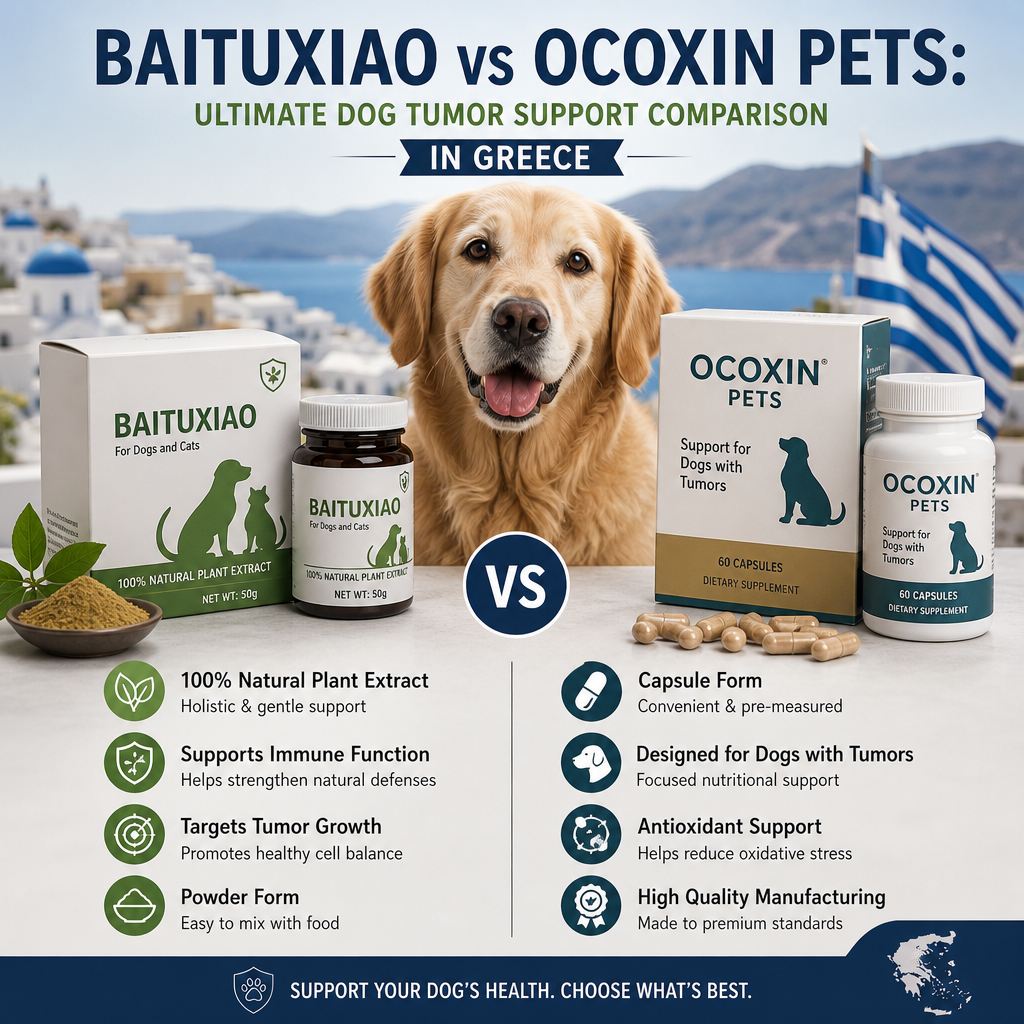
Baituxiao vs Ocoxin Pets is a comparison many dog owners in Greece may consider when looking for supportive care during a canine tumor diagnosis. Both products are discussed as complementary options, but they are not substitutes for veterinary diagnosis, surgery, chemotherapy, radiation therapy, or other evidence-based treatment. Understanding their intended use, ingredients, safety considerations, and practical availability can help owners make more informed decisions alongside their veterinarian.
Why supportive care matters for dogs with tumors
A tumor diagnosis can affect a dog’s appetite, energy, digestion, mobility, immune function, and overall quality of life. Depending on the type and location of the tumor, a dog may need a combination of medical treatment, pain control, nutritional support, monitoring, and emotional care.
Supportive products are generally used to complement a treatment plan rather than cure cancer. Their potential role may include helping maintain appetite, supporting normal metabolic function, providing antioxidants, or assisting general wellbeing. However, the value of any supplement depends on the specific dog, tumor type, medication schedule, bloodwork, and nutritional status.
Before introducing a new product, owners should speak with a veterinarian—ideally a veterinary oncologist. Some supplements can interact with prescribed medicines, affect blood clotting, influence liver enzymes, or complicate anesthesia and surgery.
For a broader discussion of tumor-related warning signs, owners may also find this guide helpful: dog belly lumps Helpful Essential facts on abdominal tumors.
Baituxiao vs Ocoxin Pets: key differences
The Baituxiao vs Ocoxin Pets discussion usually centers on formulation, intended positioning, availability, and how each product fits into an individual dog’s care plan. Product formulas can vary by market, manufacturer, and packaging, so owners should always check the current label rather than relying solely on online descriptions.
Baituxiao is commonly presented as a traditional herbal or botanical-based supportive product. Its ingredients may be promoted for immune and general health support, but herbal formulas can be complex. The presence of multiple plant-derived ingredients means that dosage, sourcing, purity, and potential interactions deserve close attention. “Natural” does not automatically mean risk-free, especially for dogs receiving chemotherapy, corticosteroids, anti-inflammatory medicines, anticoagulants, or liver-metabolized drugs.
Ocoxin Pets is generally positioned as a veterinary nutritional supplement intended to support dogs and cats during demanding health conditions. It is associated with a combination of nutritional and antioxidant ingredients, although the exact formulation should be confirmed from the product’s official label and local distributor. Its use may be considered when a veterinarian wants to support appetite, nutritional status, or general condition as part of broader oncology care.
The most important distinction is not which product appears more powerful in advertising. The key question is whether the ingredients, dosage, and quality controls are appropriate for the dog’s diagnosis and current treatment. In practice, the safest choice is the one that fits the full care plan for Baituxiao vs Ocoxin Pets without adding unnecessary risk.
Ocoxin Pets comparison: what owners should evaluate
A useful Ocoxin Pets comparison should look beyond claims and consider several practical factors:
Ingredient transparency
Owners should review the full ingredient list, active quantities, serving instructions, additives, and storage requirements. A product with clearly stated amounts is easier for a veterinarian to assess. Avoid relying on vague claims such as “detoxifying,” “anti-tumor,” or “immune boosting” without supporting clinical information. This is especially important when comparing Baituxiao vs Ocoxin Pets for a dog already receiving treatment.
Evidence and realistic expectations
Supplements may have laboratory or preliminary research behind individual ingredients, but this does not prove that the finished product treats cancer in dogs. Evidence for supportive care is often different from evidence for tumor shrinkage or prolonged survival. A responsible approach is to view these products as possible adjuncts, not anticancer cures.
Tolerance and administration
Some dogs accept tablets or powders easily, while others develop nausea, diarrhea, constipation, or food refusal. A supplement that cannot be administered consistently may not be useful. The veterinarian can help determine whether the product should be given with food, separated from other medicines, or stopped before a procedure. For some dogs, the better option in Baituxiao vs Ocoxin Pets may be the one that is simply easier to tolerate.
Quality and purchase source
In Greece, availability may depend on veterinary clinics, specialized pet pharmacies, authorized distributors, and online retailers. Buyers should check packaging, batch information, expiry dates, storage conditions, and the credibility of the seller. Imported products should be accompanied by clear labeling and appropriate instructions in accordance with local requirements.
For an example of how supplement alternatives are evaluated in other markets, see Ocoxin Pets Alternative: 7 Best Affordable Dog Tumor Supplements in the UK.
For readers comparing more than one brand, the same checklist can also be used in a broader Ocoxin Pets comparison: ingredient clarity, dosing, tolerance, and the seller’s reliability matter more than marketing language.
Dog tumor support comparison: safety comes first
A dog tumor support comparison should always begin with safety rather than marketing. Dogs with cancer may have reduced liver or kidney function, low platelet counts, anemia, dehydration, or a sensitive digestive system. These conditions can change how a supplement is tolerated.
Extra caution is needed when a dog is scheduled for surgery or biopsy. Some botanical ingredients may influence bleeding or interact with anesthesia. Supplements should also be reviewed before chemotherapy because antioxidant products and herbal compounds may theoretically affect treatment pathways, although the significance varies by ingredient and protocol.
Owners should contact their veterinarian promptly if a dog develops repeated vomiting, severe diarrhea, facial swelling, breathing difficulty, unusual bruising, marked lethargy, jaundice, or refusal to eat after starting a product. Keeping a written list of every medicine, supplement, and treat can make veterinary consultations more effective.
For a trusted reference on how veterinarians explain warning signs and diagnostic next steps, the Merck Veterinary Manual provides a helpful overview of cancer in dogs: Merck Veterinary Manual: cancer and tumors of dogs.
How veterinarians may assess the options
A veterinarian may consider the dog’s tumor type, stage, treatment goal, age, weight, body condition, blood test results, and current symptoms. For example, a dog undergoing chemotherapy may need a different supportive strategy from a dog recovering from surgery or receiving palliative care.
The veterinarian may also prioritize proven measures such as adequate calories and protein, pain relief, anti-nausea medication, hydration, dental care, and regular monitoring. In many cases, these interventions have a clearer and more immediate effect on quality of life than an unproven supplement.
Owners should ask practical questions: Is this product appropriate for the diagnosed tumor? Could it interact with current medication? Should it be stopped before surgery? What symptoms should be monitored? How long should it be used before its value is reassessed?
If you want to compare another region-specific option, this article may also be useful: K9 Immunity Alternative: Best Affordable Dog Tumor Supplements in France.
When a veterinarian reviews Baituxiao vs Ocoxin Pets, the final recommendation often depends less on brand recognition and more on the dog’s current appetite, liver values, medication list, and the owner’s ability to monitor changes at home. This practical review can make the comparison more useful than online claims alone.
Choosing responsibly in Greece
For Greek dog owners, the best choice is usually the product that can be verified, administered correctly, and integrated safely into the dog’s veterinary plan. A lower price or stronger online claim should not outweigh reliable labeling and professional guidance.
When comparing Baituxiao vs Ocoxin Pets, consider the dog’s medical records, the product’s official formulation, the veterinarian’s experience, and the ability to monitor results. Keep expectations realistic: supportive supplements may help some aspects of wellbeing, but they should never delay diagnosis or replace recommended cancer treatment.
Ultimately, the goal of any dog tumor support comparison is not to identify a universal winner. It is to select a safe, transparent, and clinically sensible option—or to decide that no supplement is appropriate at a particular stage of treatment. Close veterinary supervision, honest evaluation, and attention to daily quality of life remain the most reliable foundation for caring for a dog with cancer.
When in doubt, ask your veterinarian to review the exact label and dosing plan before you begin. That simple step can make a meaningful difference in safety, comfort, and long-term care. For many owners, this is the most reassuring way to approach Baituxiao vs Ocoxin Pets without letting marketing override medical judgment.
In many cases, the safest decision is to treat Baituxiao vs Ocoxin Pets as a veterinary discussion, not a shopping decision. That mindset keeps the focus on the dog’s actual condition, the current treatment plan, and the practical goal of maintaining comfort.
Owners can also keep a short observation log after starting any supplement. Note appetite, stool quality, energy level, vomiting, and any changes in pain or behavior. This simple record helps the veterinarian judge whether Baituxiao vs Ocoxin Pets is fitting well or whether the product should be stopped.
If a product is being considered alongside prescription medication, ask the clinic whether timing matters. Even small details, such as giving a supplement with food or separating it from another medicine, may affect tolerance. The more carefully Baituxiao vs Ocoxin Pets is introduced, the easier it is to notice what truly helps.
For dogs with advanced disease, the goal may shift from aggressive support to comfort-focused care. In that setting, a supplement should only stay in the plan if it improves daily wellbeing and does not create stress for the dog or owner. That is another reason Baituxiao vs Ocoxin Pets should be reviewed regularly rather than assumed to be a permanent choice.
As with any supportive product, results are rarely immediate or dramatic. A sensible approach is to allow enough time for monitoring, then reassess with the veterinarian using the dog’s real-world response. By doing that, Baituxiao vs Ocoxin Pets becomes part of a thoughtful care plan instead of a guess.
by TCMVET | Aug 16, 2026 | Research and News
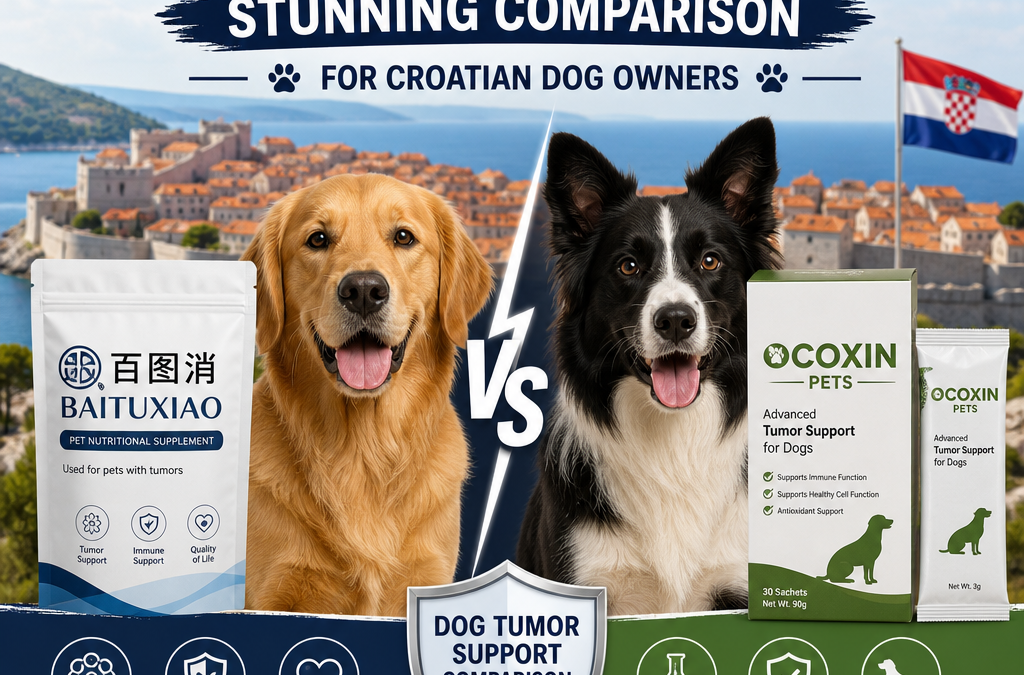
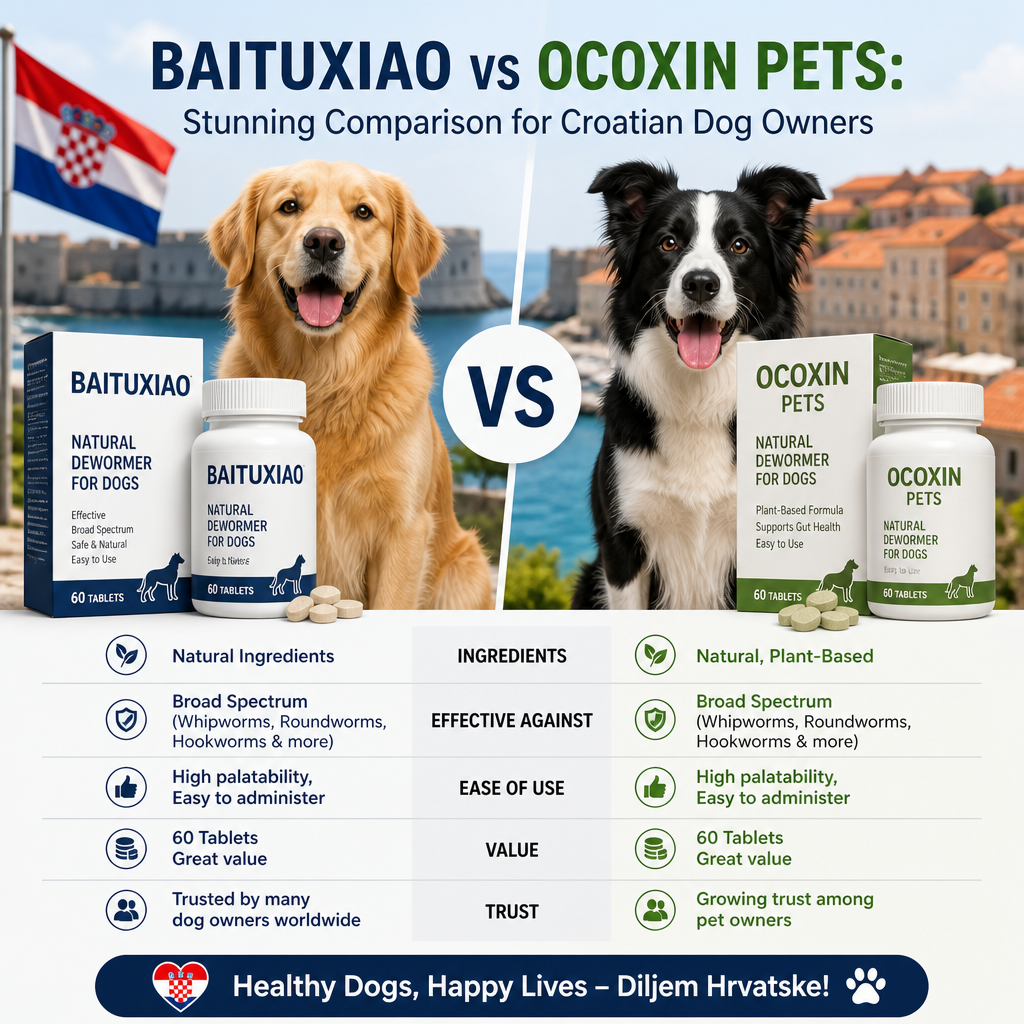
Baituxiao vs Ocoxin Pets is a comparison many Croatian dog owners may consider when looking for supportive products for a dog with a tumor or another serious health condition. Both products are discussed as complementary options, but they should not be treated as substitutes for veterinary diagnosis, surgery, chemotherapy, radiation, or prescribed medication. Understanding their ingredients, intended use, safety considerations, and practical availability can help owners make more informed decisions together with their veterinarian.
Why a careful dog tumor support comparison matters
A tumor diagnosis can be overwhelming. Owners often search for supplements that might support appetite, energy, immunity, or general wellbeing during treatment. However, the word “support” is important. Supplements are not proven cures for cancer, and evidence may vary considerably between ingredients and products.
A proper dog tumor support comparison should examine more than marketing claims. It should consider the dog’s diagnosis, age, weight, liver and kidney function, current medication, treatment plan, and ability to tolerate oral products. A supplement that appears suitable for one dog may be inappropriate for another, especially when chemotherapy, corticosteroids, anti-inflammatory drugs, or anticoagulants are involved.
Veterinary guidance is particularly important because some natural compounds can affect blood clotting, liver enzymes, digestion, or the way medicines are absorbed and processed. If the dog is already weak, losing weight, or struggling with nausea, even a well-meaning supplement plan can become counterproductive without proper oversight.
That is why the Baituxiao vs Ocoxin Pets discussion should begin with the dog’s medical needs, not the product label. The most important question is not which option sounds more impressive, but which one fits the current stage of care.
Baituxiao vs Ocoxin Pets: what are they designed to provide?
Baituxiao is commonly presented as a traditional Chinese medicine-based product intended to provide supportive care for dogs with masses or tumor-related concerns. Its formulation may include a combination of herbal ingredients, with the exact composition depending on the manufacturer, market, and product version. Such products are generally promoted for immune, circulation, inflammation, or overall vitality support.
Ocoxin Pets is typically described as a nutritional supplement designed for dogs and cats requiring additional support during illness or recovery. It is associated with ingredients such as antioxidants, vitamins, minerals, and other nutritional components, although the precise formula should always be checked on the current packaging or official product documentation.
The central difference is often the formulation philosophy. Baituxiao is generally associated with a multi-herbal traditional approach, while Ocoxin Pets is more closely associated with a nutritional and antioxidant-support approach. Neither category automatically makes one product better. Suitability depends on the individual dog and the advice of the veterinary team.
In practical terms, a careful owner should compare the two products based on the dog’s diagnosis, ease of administration, any concurrent treatment, and known sensitivities. A product that is easier to give consistently may be more useful than one with a more complex or uncertain regimen.
When conducting an Ocoxin Pets comparison, owners should begin with the full ingredient label rather than relying solely on promotional descriptions. Important details include the concentration of active compounds, calorie content, sweeteners, preservatives, allergens, and the recommended serving size.
A nutritional supplement may be useful when a dog has reduced appetite, weight loss, weakness, or increased nutritional needs. Antioxidant ingredients are often included because oxidative stress can increase during illness, but antioxidants should not be assumed to directly eliminate cancer cells. Their role is generally supportive and must be considered alongside the treatment plan.
Owners should also verify whether Ocoxin Pets is appropriate during chemotherapy or radiation. Some clinicians may prefer carefully timed or moderate antioxidant supplementation, while others may recommend avoiding particular products depending on the treatment protocol. The answer is not universal.
For a balanced overview of supplement safety and supportive care principles, the American Veterinary Medical Association’s cancer care guidance for pets is a helpful reference.
When reviewing the formula, it helps to look for practical points that matter in real life: whether the product is shelf-stable, whether it needs refrigeration after opening, how palatable it is, and whether the directions are easy to follow. In a long treatment plan, those details can affect whether the supplement is actually used as intended.
If the dog has a sensitive stomach, the owner should ask whether the product can be given with food and whether the dose can be split across the day. These small adjustments often improve tolerability and make supportive care more sustainable.
For owners who want another point of comparison, Ocoxin Pets Alternative: 7 Best Affordable Dog Tumor Supplements in the UK can help frame the wider supportive-care landscape without replacing veterinary advice.
Herbal products can contain biologically active compounds, and “natural” does not mean risk-free. Baituxiao or similar multi-ingredient products may interact with medication or cause digestive upset in sensitive dogs. Potential concerns can include vomiting, diarrhea, reduced appetite, sedation, allergic reactions, or changes in liver-related blood results.
Because herbal formulas can vary, Croatian owners should check whether the product has a clearly stated ingredient list, batch information, storage guidance, and reliable distribution channel. Products purchased through unofficial websites or social media sellers may have uncertain authenticity or handling conditions.
A veterinarian should be informed about every supplement the dog receives. This includes products used only occasionally, such as herbal powders, immune boosters, oils, or human vitamins. Combining several supplements can unintentionally duplicate ingredients or increase the risk of adverse effects.
In a practical Baituxiao vs Ocoxin Pets review, that safety step often matters more than the brand name itself. A well-chosen plan should always match the dog’s current treatment and lab results.
Owners sometimes assume that if one product is “more natural,” it must be gentler. In reality, herbal blends can be more complex than simple nutritional formulas because the number of active constituents is larger and the interaction profile may be less predictable. That is why a cautious, evidence-aware approach is essential.
If the dog has a history of liver disease, kidney disease, pancreatitis, or clotting problems, the threshold for caution should be even higher. In those cases, the veterinarian may recommend avoiding a supplement altogether or using only a carefully monitored option.
Comparing practical use for Croatian dog owners
Availability and convenience are also relevant. Croatian owners may need to consider whether a product can be obtained through a veterinary clinic, pharmacy, authorized online retailer, or international shipment. Import rules, delivery conditions, labeling language, and customer support can differ.
Serving instructions should be based on the dog’s body weight and the specific product label. Never assume that a human dose can be adapted for a dog. Small breeds are especially vulnerable to dosing errors, while large dogs may require a carefully calculated amount rather than an arbitrary scoop.
The format can matter as well. A dog experiencing nausea may reject tablets or powders, while another may accept a liquid or product mixed with food. If appetite is poor, owners should avoid forcing supplements in a way that creates food aversion or stress.
Practical use should also include monitoring. If a dog starts any new supportive product, owners can track appetite, energy, stool quality, vomiting, and comfort level. That simple record helps make the next Baituxiao vs Ocoxin Pets decision more objective and less based on guesswork.
It can also help to check how the product fits into the full daily routine. Dogs in treatment often already receive pain relief, anti-nausea medication, antibiotics, or special diets. Adding another item to the schedule should make care easier, not more confusing. A product that can be given consistently at the right time may be preferable to one that is theoretically interesting but difficult to use.
In some cases, cost and supply stability matter as much as formulation. If a supplement is difficult to reorder or varies in quality between sellers, it may be hard to rely on over time. A dependable source from an authorized channel is generally the better option.
How to evaluate the dog’s response over time
Supportive supplements are often judged by day-to-day changes rather than dramatic transformations. A dog may eat a little better, seem more comfortable, or tolerate treatment with less stress. Those are meaningful improvements, but they should still be assessed carefully and documented.
Owners should note the starting date, the dose used, and any changes in appetite, drinking, bowel movements, sleep, or interaction with the family. This creates a practical record that helps the veterinarian decide whether the product is worth continuing.
If the dog seems worse after starting a supplement, do not assume that the timing is accidental. Even if the supplement is not the cause, the reaction should be discussed promptly. A timely adjustment can prevent a mild problem from becoming a bigger one.
For dogs with chronic disease, a good rule is to evaluate benefit within a reasonable period and not continue indefinitely without review. Supportive products should earn their place in the care plan through visible, practical value.
What to watch for after starting a supplement
Even a product that seems gentle can cause problems in individual dogs. Watch closely for changes during the first week and after any dose change. Common warning signs include drooling, reduced interest in food, loose stool, repeated vomiting, abdominal discomfort, itching, restlessness, or unusual lethargy.
If a dog is already receiving cancer therapy, any sudden decline should be reported promptly. The supplement may not be the cause, but it should be part of the full clinical picture. This is especially true when there is dehydration, weight loss, jaundice, bleeding, or a rapid change in behavior.
Owners should also remember that “more” is not better. Doubling the dose does not make a supportive supplement work faster, and it can increase the chance of side effects. One careful dose, used consistently and reviewed by a veterinarian, is usually the safer approach.
For general nutrition and oral-support planning during illness, the WSAVA Global Nutrition Guidelines offer useful veterinary nutrition principles.
If the dog develops digestive upset, it may be necessary to pause the product and reassess the whole plan. Sometimes the best decision is to simplify care temporarily rather than push through a reaction that is making the animal feel worse.
Questions to discuss with the veterinarian
Before choosing between Baituxiao and Ocoxin Pets, ask the veterinarian:
- What type of tumor has been diagnosed, and what is the treatment objective?
- Could this product interfere with surgery, chemotherapy, radiation, steroids, or pain medication?
- Does the dog need blood tests before starting it?
- Is the liver and kidney function adequate for the proposed ingredients?
- What signs of intolerance should prompt immediate discontinuation?
- How long should the product be used before its effects are assessed?
- Is the supplement suitable if the dog has vomiting, diarrhea, diabetes, or another chronic condition?
It is also helpful to establish realistic goals. Improvements in appetite, body weight, activity, comfort, or quality of life can be meaningful, but they do not necessarily indicate that a tumor is shrinking. Tumor response must be assessed through veterinary examinations and appropriate imaging.
Owners may also ask whether a product is worth trying only after the dog is stabilized, or whether it could be started earlier. That timing question can matter a great deal when the pet is weak, nauseated, or recovering from a procedure.
When a supplement may not be the right choice
There are situations where the safest answer is not to add a new product at all. If the dog is vomiting repeatedly, refusing food, dehydrated, or showing signs of organ dysfunction, a supplement may delay more important care if it is introduced too soon.
Likewise, if the dog is already taking several medications with narrow safety margins, even a benign-looking ingredient list can create uncertainty. In those situations, simplifying the regimen may protect the dog better than adding another supportive product.
This does not mean that every supplement should be avoided. It means that timing, monitoring, and veterinary judgment matter. A thoughtful plan can reduce risk and make supportive care more useful.
Which option is better?
There is no universally superior answer in the Baituxiao vs Ocoxin Pets debate. Baituxiao may appeal to owners seeking a multi-herbal supportive formula, whereas Ocoxin Pets may be considered by those looking for a nutritional or antioxidant-oriented supplement. The best choice depends on the dog’s medical history, the product’s verified formulation, and the veterinary treatment plan.
A responsible approach is to prioritize proven cancer care, maintain adequate nutrition and hydration, monitor comfort, and use supplements only when their potential benefits outweigh their risks. Keep a record of the product name, dose, start date, appetite, stool quality, energy, and any unusual symptoms. This information helps the veterinarian evaluate whether continuing the supplement is sensible.
For Croatian dog owners, the safest decision is not based on which product has the strongest advertising. It is based on transparent ingredients, reliable sourcing, professional supervision, and the dog’s individual needs. A thoughtful Ocoxin Pets comparison or broader dog tumor support comparison should always place evidence-based veterinary care and quality of life first. In other words, the best Baituxiao vs Ocoxin Pets choice is the one that fits the dog, the diagnosis, and the treatment plan—not the one with the boldest claims.
If you are comparing Baituxiao vs Ocoxin Pets for a dog in Croatia, remember that small details can change the answer. The ingredient list, the stage of disease, the dog’s appetite, and the veterinarian’s opinion all matter. A calm, well-documented approach usually leads to better decisions than switching products too quickly.
In the end, the goal is not to find a miracle product. The goal is to support the dog safely, reduce stress, and make the overall care plan as effective and comfortable as possible. That is the most practical way to approach Baituxiao vs Ocoxin Pets in real-world decision-making.
Across the full decision process, the phrase Baituxiao vs Ocoxin Pets should serve as a reminder to compare ingredients, veterinary compatibility, and real-life use rather than chasing promises. When owners revisit Baituxiao vs Ocoxin Pets after speaking with the veterinarian, the focus should still be on safety, monitoring, and the dog’s comfort.
In many cases, the most useful result of a Baituxiao vs Ocoxin Pets review is not a dramatic product ranking but a clearer understanding of what the dog actually needs. If supportive care is appropriate, the same Baituxiao vs Ocoxin Pets comparison can help owners choose a product that fits the treatment plan more naturally and can be used consistently. If supportive care is not appropriate, the comparison still helps clarify why a different approach is better. Either way, Baituxiao vs Ocoxin Pets should be discussed as part of a broader veterinary plan, not as a standalone answer.
For owners who want to keep the discussion practical, one final note is worth repeating: Baituxiao vs Ocoxin Pets is only helpful when it leads to better questions, better monitoring, and better coordination with the veterinary team. That is the safest and most realistic way to evaluate Baituxiao vs Ocoxin Pets for a dog in Croatia.
by TCMVET | Aug 16, 2026 | Research and News
Mast Cell Tumour Supplements for Dogs may provide supportive nutrition during cancer care, but they should never replace veterinary diagnosis, surgery, chemotherapy, radiation, or prescribed medication. Mast cell tumours can behave very differently from one dog to another, so the safest approach is to use supplements only as part of an individualized treatment plan. A veterinarian or veterinary oncologist can help identify useful options, avoid harmful interactions, and monitor whether a product is truly helping.
Understanding mast cell tumours in dogs
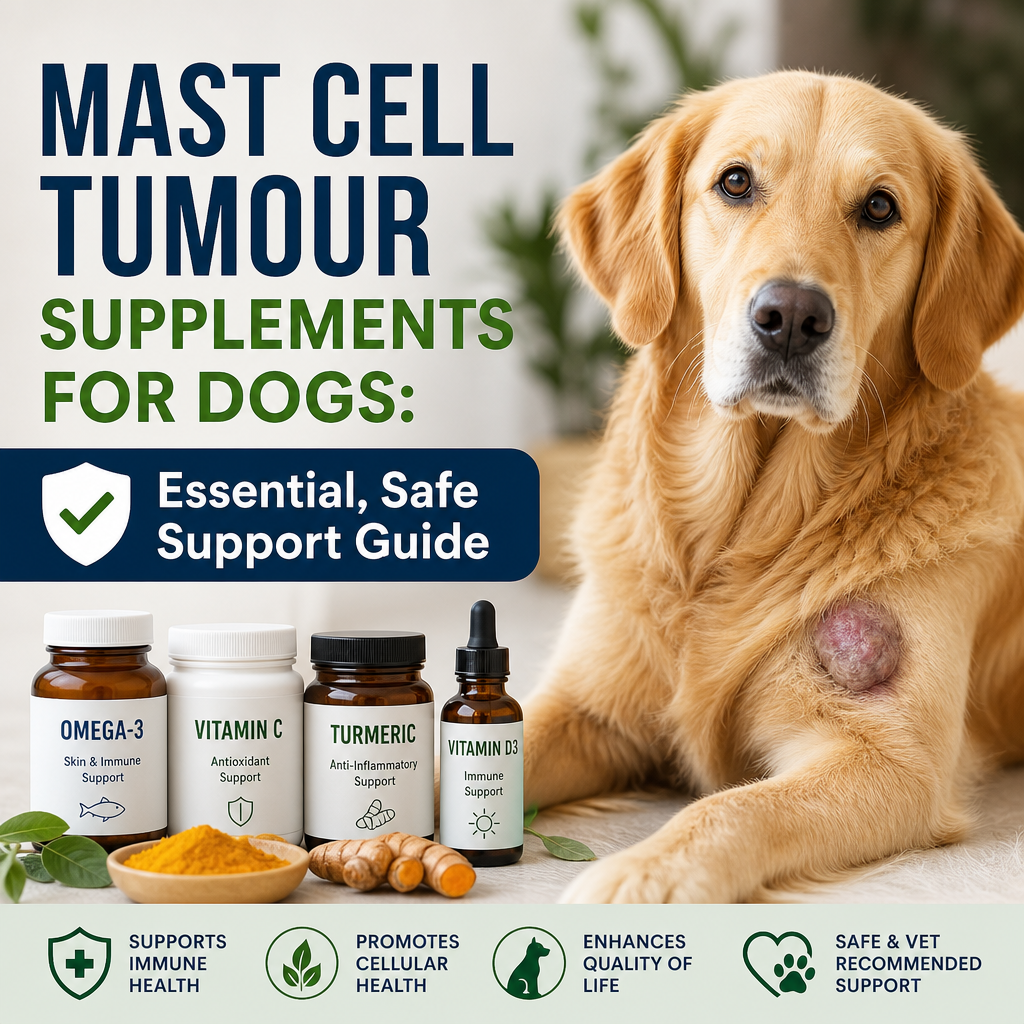
Mast cells are immune cells involved in inflammation and allergic responses. When these cells become cancerous, they form mast cell tumours, most commonly in the skin but sometimes in deeper tissues or internal organs. Some tumours remain relatively localized, while others invade surrounding tissue or spread to lymph nodes, the spleen, liver, or bone marrow.
Mast cell tumours can release substances such as histamine and heparin. This may cause swelling, redness, itching, stomach irritation, vomiting, diarrhoea, or, in severe cases, gastrointestinal ulceration and bleeding. Because of these effects, supportive care often focuses not only on the tumour itself but also on digestion, appetite, inflammation, comfort, and overall resilience.
Tumour grade, stage, location, size, surgical margins, and the dog’s general health all influence treatment. Supplements cannot reliably shrink a tumour or determine its behaviour. Their role is more limited: supporting normal body functions and helping a dog tolerate appropriate medical care.
In many cases, owners start researching Mast Cell Tumour Supplements for Dogs soon after diagnosis because they want to do something proactive. That instinct is understandable, and it can be helpful when it leads to careful, veterinarian-guided decisions rather than rushed product choices.
Choosing mast cell tumour supplements for dogs safely
The word “natural” does not automatically mean safe. Mast cell tumour supplements for dogs can affect blood clotting, liver enzymes, blood pressure, immune activity, and the absorption or effectiveness of medication. Some may also worsen stomach irritation, which is especially important for dogs whose mast cells are releasing large amounts of histamine.
Before introducing any product, provide the veterinarian with a complete list of medications, supplements, treats, and prescription diets. This list should include product names, ingredients, concentrations, and serving sizes. Choose products manufactured for dogs by reputable companies that provide batch testing or independent quality verification. Human supplements may contain unsafe ingredients, excessive doses, sweeteners such as xylitol, or combinations designed for human metabolism rather than canine physiology.
It is usually best to introduce one product at a time. This makes it easier to identify side effects and determine whether the supplement has a meaningful benefit. Stop the product and contact the veterinary team if the dog develops repeated vomiting, diarrhoea, unusual bruising, worsening lethargy, facial swelling, breathing difficulty, or a sudden change in appetite.
For more background on oncology support options, see best supplements for dogs with cancer.
In everyday care, many owners ask which mast cell tumour supplements for dogs are worth discussing first. The answer depends on the dog’s current medication list, eating habits, and whether the main concern is inflammation, digestion, or recovery after treatment.
When a dog is already taking prescribed medicine, even a simple product can matter. That is why mast cell tumour supplements for dogs should always be reviewed alongside the full treatment plan rather than chosen in isolation.
It also helps to think in terms of goals. Some supplements are meant to support calorie intake, others aim to reduce irritation in the gut, and a few are chosen for potential anti-inflammatory effects. Clear goals make mast cell tumour supplements for dogs easier to evaluate and reduce the chance of adding products that do not fit the dog’s needs.
Omega-3 fatty acids and nutritional support
Fish-derived omega-3 fatty acids, particularly EPA and DHA, are among the more commonly discussed options for dogs with cancer. They may support normal inflammatory balance and help maintain skin, coat, and general nutritional health. Omega-3s are not a cure for mast cell tumours, but they may be useful in selected dogs as part of a broader dietary plan.
Dosage matters. High amounts can cause loose stools, contribute excess calories, or potentially affect platelet function. Caution is especially important before surgery or when a dog receives medication that influences clotting. A veterinarian should determine the appropriate amount based on body weight, diet, health status, and treatment schedule.
A veterinary nutritionist can also assess whether the dog is receiving enough calories and protein. Maintaining body condition is often more important than adding multiple supplements. A complete, balanced diet that the dog willingly eats is generally the foundation of nutritional support.
If the dog is losing weight or eating less, mast cell tumour supplements for dogs should never be used as a shortcut for nutrition. Instead, the care team may need to adjust the diet, manage nausea, or address pain and stomach irritation first.
Some dogs tolerate fish oil well, while others develop soft stool or fishy burps. When that happens, the issue may be the dose, the product quality, or the dog’s current digestive sensitivity. Monitoring tolerance is part of using mast cell tumour supplements for dogs responsibly, especially during active cancer treatment.
Antioxidants, medicinal mushrooms, and herbal products
Antioxidants are frequently marketed for cancer support, but more is not always better. Some antioxidants may be appropriate in certain circumstances, while high-dose products could theoretically interfere with treatments that rely partly on oxidative damage. The evidence for many cancer supplements in dogs remains limited, and results from laboratory studies do not automatically apply to living animals.
Medicinal mushrooms, turmeric, green tea extracts, milk thistle, and other herbal ingredients are also commonly promoted as dog mast cell tumour supplements. Their quality and concentration can vary substantially. Some herbs may affect liver enzymes or medication metabolism; others may increase bleeding risk or cause gastrointestinal upset. Turmeric products, for example, are not interchangeable, and concentrated extracts may have different effects from small amounts used in food.
These products should be considered only after the oncology team reviews the full ingredient list. Avoid proprietary blends that do not disclose exact amounts. A product with many ingredients may sound comprehensive but can make interactions and side effects difficult to identify.
If you are comparing herbal support options, you may also find this guide useful: Dog Vitality Herbs: Helpful Natural Support Tips.
Some families search for mast cell tumour supplements for dogs because they want something gentle and reassuring. That goal is understandable, but even plant-based products can be powerful enough to interfere with treatment or worsen digestive signs.
For that reason, the best mast cell tumour supplements for dogs are usually the simplest ones, chosen for a clear purpose and monitored closely for benefit or side effects.
It is also worth remembering that supplement quality can vary from batch to batch. Choosing products with transparent labels and veterinary-quality manufacturing standards gives mast cell tumour supplements for dogs a better chance of being both safe and consistent.
Digestive and immune support
Because mast cell tumours may contribute to stomach irritation, digestive support can be important. However, probiotics, digestive enzymes, fibre products, and acid-reducing strategies should be selected according to the dog’s symptoms and diagnosis. A probiotic may help some dogs with stool consistency, while another dog may need a medical evaluation for ulcers, pancreatitis, infection, or treatment-related side effects.
Veterinarians may prescribe antihistamines or stomach-protective medication when appropriate. These are not supplements, but they can be a central part of mast cell tumour dog support, particularly when histamine-related symptoms are present. Never substitute an over-the-counter human product without veterinary guidance, since some formulations contain dangerous additives or unsuitable combinations.
Immune “boosters” deserve special caution. A strong immune response is not always beneficial in cancer, and unregulated products may stimulate inflammation or interfere with treatment. The goal should be balanced, evidence-informed support rather than indiscriminate immune stimulation.
In practical terms, mast cell tumour supplements for dogs should be matched to the symptom pattern. A dog with soft stool may need a different approach from one with nausea, itching, or a poor appetite.
Digestive support is often most effective when it is paired with stable routines. Feeding the same diet consistently, offering small meals if advised, and watching for subtle changes in stool or appetite can help the veterinary team decide whether mast cell tumour supplements for dogs are actually helping or whether another part of the treatment plan needs attention.
Supplements around surgery and cancer treatment
Many supplements should be stopped before surgery because they may affect clotting, blood pressure, sedation, or anaesthesia. The veterinary team should know about every product well in advance of an operation. Do not assume that a supplement is harmless simply because it has been used for months.
During chemotherapy or radiation, the oncology team may recommend continuing, adjusting, or avoiding specific products. Treatment plans vary, and timing can matter. A supplement that is reasonable during recovery may not be appropriate immediately before chemotherapy, radiation, or another procedure.
Keep a written record of the dog’s medications, supplements, doses, and symptoms. This can help the veterinary team identify patterns, adjust treatment, and avoid accidental duplication of ingredients.
When planning procedures, it is smart to review mast cell tumour supplements for dogs at the same time as prescription drugs. That simple step can reduce the risk of bleeding issues, stomach upset, or unwanted drug interactions.
If the dog is recovering from surgery, the first priorities are usually pain control, wound healing, appetite, and comfort. Supplements may still have a place, but mast cell tumour supplements for dogs should be held or restarted only when the surgeon or oncologist feels the timing is appropriate.
For families seeking broader guidance during active treatment, the article on chemo natural support can provide additional context about supportive care that works alongside conventional oncology. That kind of planning is especially useful when mast cell tumour supplements for dogs are being considered during a changing treatment schedule.
A practical approach to mast cell tumour dog support
Effective support usually begins with the basics:
- Follow the tumour treatment plan and attend recommended staging or monitoring appointments.
- Provide a complete, balanced diet that maintains a healthy body condition.
- Track appetite, weight, stool quality, vomiting, itching, swelling, energy, and pain.
- Ask about prescription antihistamines or stomach protection when relevant.
- Introduce only one supplement at a time and use veterinarian-approved doses.
- Avoid products with vague labels, unverified claims, or undisclosed ingredients.
- Reassess supplements regularly rather than continuing them automatically.
Contact a veterinarian promptly if the dog has repeated vomiting, black or bloody stools, pale gums, collapse, severe weakness, sudden swelling, difficulty breathing, or rapidly worsening skin changes. These signs may indicate a serious mast cell reaction, gastrointestinal bleeding, tumour progression, or another urgent condition.
The most valuable mast cell tumour supplements for dogs are not necessarily the ones with the longest ingredient lists. Safe, useful support depends on the individual dog, the tumour’s behaviour, current treatment, and careful professional supervision. Supplements may complement cancer care, but informed veterinary management remains the essential foundation.
For official guidance on canine cancer information, the American College of Veterinary Surgeons offers a helpful overview of mast cell tumours in dogs.
Used thoughtfully, mast cell tumour supplements for dogs can be one part of a careful comfort plan, but they work best when the oncology team leads the overall strategy.
Before adding anything new, review mast cell tumour supplements for dogs with your veterinarian so the product choice, dose, and timing fit the dog’s treatment stage.
If the goal is long-term quality of life, mast cell tumour supplements for dogs should support eating, digestion, and recovery without distracting from proven medical care.
With clear monitoring and professional guidance, mast cell tumour supplements for dogs can be used more safely and with more realistic expectations.
In the end, good cancer support is less about buying many products and more about making thoughtful choices. When mast cell tumour supplements for dogs are selected carefully, they may fit into a plan that protects comfort, preserves nutrition, and respects the dog’s medical needs.
Owners who stay observant and communicate regularly with the veterinary team are usually best positioned to notice whether mast cell tumour supplements for dogs are useful, unnecessary, or causing problems. That ongoing review is what makes supportive care safer over time.
Even when a supplement appears promising, it should still be viewed as one tool among many. Rest, pain management, diet, follow-up exams, and timely adjustments to treatment all matter just as much as mast cell tumour supplements for dogs.
When in doubt, choose the simplest option that addresses a real problem and ask the oncologist how it fits into the broader plan. That approach keeps mast cell tumour supplements for dogs grounded in practicality, safety, and the dog’s quality of life.
