
Immune / medicinal mushrooms are increasingly discussed by Bulgarian dog owners looking for complementary support when a pet has a tumor. These products may contain compounds associated with immune regulation and antioxidant activity, but they are not replacements for veterinary diagnosis, surgery, chemotherapy, radiation, or other evidence-based cancer care. The safest approach is to view them as potential adjuncts, selected with a veterinarian who understands the dog’s diagnosis, medications, and overall health.
For many owners, the appeal of immune / medicinal mushrooms is simple: they seem natural, familiar, and easy to add to a care plan. But natural does not automatically mean appropriate, and a product that sounds supportive on paper may not be the best choice for a specific dog. In practice, the most useful question is not whether mushrooms are popular, but whether a specific formula is transparent, well-made, and suitable for the dog’s condition. That is the standard this guide uses throughout.
Inhaltsverzeichnis
Why medicinal mushrooms are considered for dogs with tumors
Immune / medicinal mushrooms contain biologically active substances such as beta-glucans, triterpenes, polysaccharides, and other compounds. Researchers have studied several mushroom species for their possible effects on immune signaling, inflammation, oxidative stress, and cellular activity. However, results from laboratory or human research cannot automatically be applied to dogs with cancer.
Dogs may respond differently depending on their breed, age, tumor type, liver and kidney function, and current treatment. A supplement that is tolerated by one dog may cause digestive upset or interact with medication in another. For this reason, mushroom products should be evaluated as part of an individual veterinary plan rather than treated as universal cancer remedies.
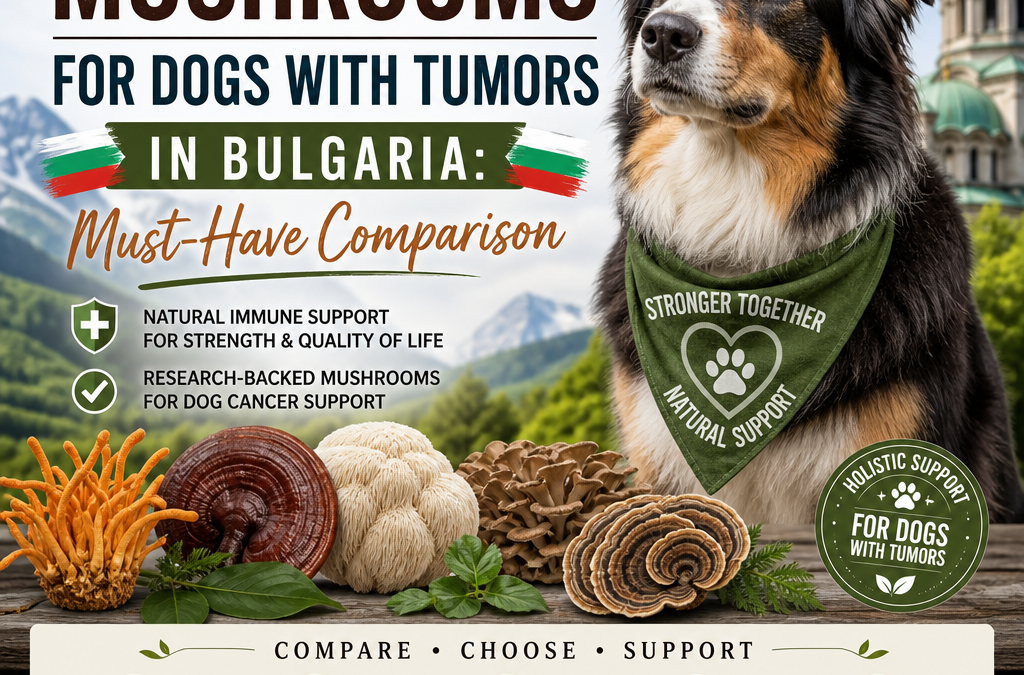
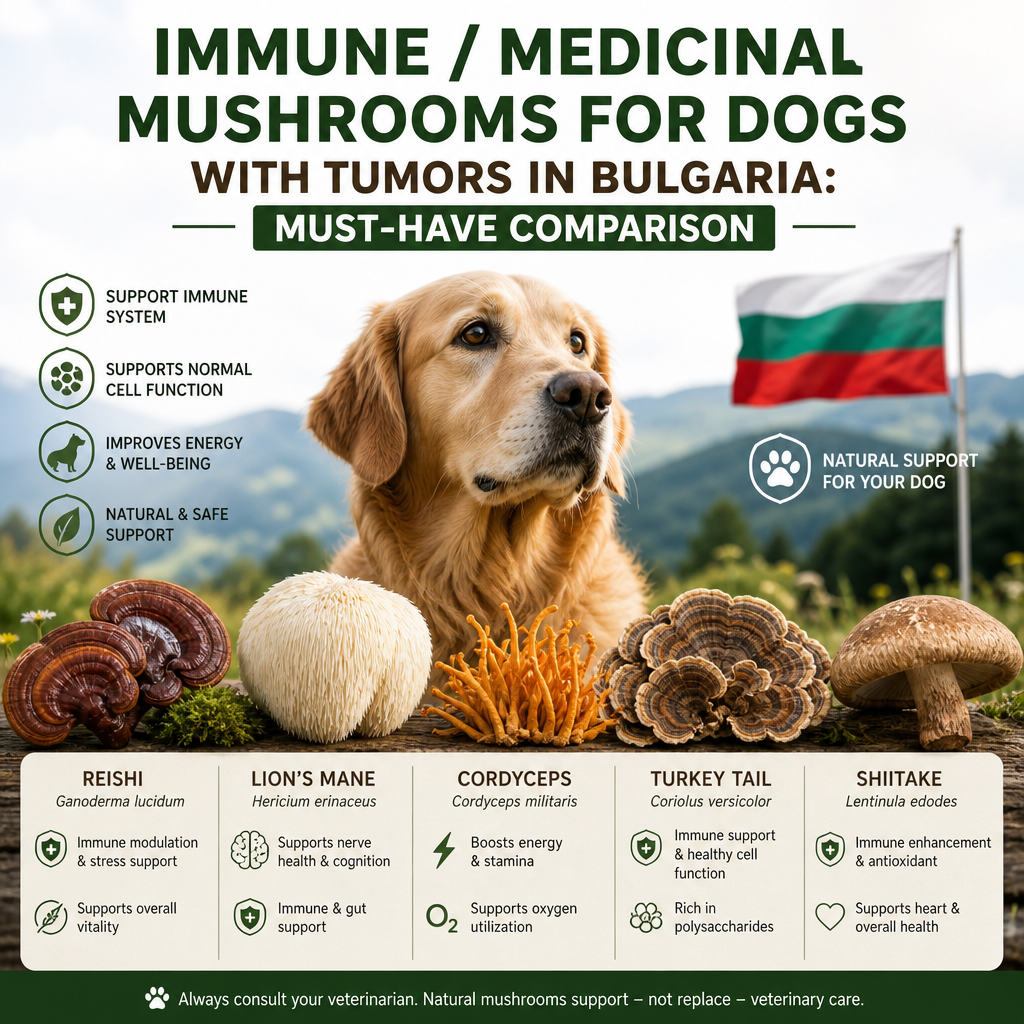
Commonly discussed species include turkey tail, reishi, shiitake, maitake, and cordyceps. Turkey tail is often mentioned in connection with canine cancer research, particularly because of compounds such as polysaccharide-K and polysaccharide peptide. Reishi is traditionally associated with immune and inflammatory support, while shiitake and maitake are valued for their beta-glucan content. Cordyceps products are marketed for vitality and stamina, although the quality and relevance of available evidence vary considerably.
For owners comparing options in Bulgaria, the goal is not to find a miracle product. The goal is to identify a supplement that fits the dog’s condition, is manufactured responsibly, and can be used without distracting from proven care. That is why immune / medicinal mushrooms should be reviewed with the same care as any other supportive product.
What owners should expect from immune / medicinal mushrooms
In a realistic care plan, immune / medicinal mushrooms are best viewed as supportive products rather than primary treatments. They may be used to complement an oncology protocol, but they should not be expected to replace diagnostics, staging, or follow-up. The more complex the dog’s medical history, the more important it becomes to avoid assumptions based on marketing language alone.
Some owners hope a supplement will provide a visible change in a few days. In reality, when a mushroom formula is helpful, the effects are usually subtle and gradual. The most meaningful outcomes are often better appetite, steadier energy, improved tolerance of the routine, or simply no adverse reaction at all. Those are useful goals, but they are not the same as proof of anti-tumor activity.
It is also worth remembering that cancer care is not one-size-fits-all. A dog with mast cell disease, lymphoma, a soft tissue sarcoma, or an oral tumor may need very different support. The same applies to immune / medicinal mushrooms: the right product for one case may be a poor fit for another. This is one reason the advice of an oncology-aware veterinarian matters so much.
Dog cancer supplements Bulgaria: what to compare
When reviewing dog cancer supplements Bulgaria, the first priority should be product quality rather than attractive claims. A responsible comparison should examine the following factors.
Mushroom species and extract type
A label should clearly identify the mushroom species and the part used. Products made from fruiting bodies may differ from products made primarily from mycelium or grain-grown material. Neither label alone guarantees effectiveness, but vague descriptions make meaningful evaluation difficult.
The extraction method also matters. Hot-water extraction is commonly used to make polysaccharides more available, while alcohol extraction may target other compounds, including certain triterpenes. Some formulas use dual extraction. The manufacturer should explain the process instead of simply listing “mushroom complex” without details.
When the label is incomplete, the buyer is left guessing. That makes it harder to compare two products fairly and harder still to discuss them with a veterinarian. Transparency is especially important because the phrase immune / medicinal mushrooms covers many different ingredients, concentrations, and production methods.
Standardization and active compounds
A reputable product should provide information about beta-glucan content or other measurable constituents. “Total polysaccharides” is not always equivalent to beta-glucans, and a high number on the label may be misleading if it includes inactive or poorly defined material.
Look for batch testing, certificates of analysis, and testing for heavy metals, pesticides, bacteria, molds, and unwanted contaminants. This is especially important because mushrooms can accumulate substances from their growing environment.
If you want to compare formulations more carefully, a trusted educational source such as the National Center for Complementary and Integrative Health can help you understand how supplement quality and evidence are typically evaluated.
For dog cancer supplements Bulgaria, standardization is often the difference between a product that merely sounds sophisticated and one that can be reviewed in a meaningful way. If a seller cannot explain what is standardized, what is tested, or what each serving contains, the product deserves caution.
Dosage transparency
Dog supplements should provide dosage guidance based on body weight, but veterinary advice remains essential. The appropriate amount may differ according to the extract’s concentration, the dog’s condition, and whether the product is being used alongside chemotherapy, corticosteroids, nonsteroidal anti-inflammatory drugs, or other treatments.
Avoid products that encourage very high doses without explaining the evidence or safety limits. More is not necessarily better, particularly when concentrated extracts are involved.
Good labeling should answer practical questions quickly: How much is in each capsule or scoop? How many milligrams are in a daily serving? Is the formula designed for small dogs, large dogs, or all sizes? Can the dose be divided easily? These details make a supplement easier to use correctly and easier to compare against other options.
Herstellungsstandards
Choose products manufactured under clear quality-control procedures. Information about the producer, country of manufacture, batch number, expiry date, storage requirements, and contact details should be easy to find. Products sold through Bulgarian veterinary clinics, established pharmacies, or transparent specialist retailers may be easier to verify than anonymous listings on online marketplaces.
Owners who are also comparing regional support options may find it useful to review our guide on Stärkung des Immunsystems von Hunden mit Mastzelltumoren, since the same quality standards often apply.
A serious manufacturer should also be willing to answer basic questions about sourcing and testing. That does not guarantee clinical benefit, but it does reduce uncertainty. In a category filled with broad claims, the ability to document what is inside the bottle matters more than the size of the promise on the front label.
Ingredient simplicity and suitability for dogs
Some mushroom products are made for humans and then marketed as if they were equally suitable for pets. That can create avoidable problems. Human supplements may include sweeteners, herbs, flavors, or extra vitamins that are unnecessary or potentially unsuitable for dogs. In a dog with cancer, simplicity is usually better than a long ingredient list.
When a formula contains many added ingredients, it becomes harder to know what is doing what. It also becomes harder to identify the cause of a side effect if one appears. A more focused formula is generally easier to evaluate, especially when immune / medicinal mushrooms are being used only as a supportive option.
Potenzielle Vorteile und Einschränkungen
Mushroom-based supplements may offer supportive benefits in some dogs, such as helping maintain appetite, energy, or general wellbeing. Certain compounds may influence immune activity, but immune stimulation is not automatically beneficial in every cancer case. Some tumors and autoimmune conditions require careful immune management, and the biological effects of a supplement may be unpredictable.
It is also important to distinguish between supporting quality of life and treating the tumor itself. A dog may appear more energetic after starting a supplement, but that does not prove the tumor is shrinking. Tumor response should be assessed through veterinary examinations and appropriate imaging or laboratory tests.
Evidence for specific mushroom extracts in canine oncology remains limited compared with the evidence for established cancer treatments. Owners should therefore be cautious about claims that a product can “cure,” “dissolve,” or “kill” tumors. Such statements are warning signs, especially when they are not supported by controlled veterinary studies.
In practical terms, immune / medicinal mushrooms may fit best when the aim is to support comfort and routine rather than to promise disease control. This is especially true for dogs already receiving a treatment plan from an oncology team.
There are also situations where a supplement may be a poor fit even if the ingredients sound appealing. For example, a dog with a sensitive stomach may struggle with concentrated extracts. A dog with a bleeding risk may need extra caution before surgery. A dog with immune-mediated disease may require a very different approach from a dog with a solid tumor. The label alone cannot answer those questions.
That is why owners should think in terms of balance. A helpful supportive product should fit into the larger plan without creating confusion, interaction risks, or false reassurance. Even a reputable formula is only one small part of a much broader care strategy.
Signs a mushroom product may not be worth the risk
Some warning signs are easy to spot once you know what to look for. Be skeptical if the product:
- Promises a cure or guarantees tumor shrinkage.
- Does not clearly identify the mushroom species or extract type.
- Hides the dose behind a proprietary blend.
- Uses vague terms like “immune booster” without details.
- Lacks batch testing or contaminant information.
- Has many unnecessary additives for flavor or color.
- Offers no clear guidance for dog-safe use.
When several of these signs appear together, it is usually wiser to choose a different product. In the long run, transparency saves time and reduces the chance of disappointment.
Dog tumor support Bulgaria: using supplements safely
Dog tumor support Bulgaria should begin with communication between the owner and the veterinary team. Before introducing a mushroom supplement, provide the veterinarian with the complete label, ingredient list, proposed dosage, and information about every other product the dog receives.
Extra caution is needed for dogs with liver disease, kidney disease, bleeding disorders, gastrointestinal problems, or immune-mediated conditions. Supplements may also be inappropriate before surgery or during periods when blood clotting, blood pressure, or immune function must be tightly controlled.
Possible adverse effects include diarrhea, vomiting, reduced appetite, itching, or lethargy. Stop the product and contact a veterinarian if severe or persistent symptoms occur. Keep a written record of when the supplement was started, the dosage used, changes in appetite and behavior, and any side effects. This makes it easier to determine whether the product is helping, causing problems, or having no noticeable effect.
Never delay urgent care while waiting for a supplement to work. Difficulty breathing, collapse, uncontrolled bleeding, repeated vomiting, severe pain, inability to urinate, or sudden neurological changes require immediate veterinary attention.
When in doubt, ask the clinic to review the full plan before adding any new supportive product. That precaution is especially useful when using immune / medicinal mushrooms alongside prescription medication.
Owners should also be cautious about stacking multiple supportive products at once. Even if each product seems harmless on its own, combining several supplements can make it difficult to know which item is useful and which one is creating side effects. A simpler plan is usually easier to monitor and safer to adjust.
Fragen, die Sie Ihrem Tierarzt stellen sollten
If you are considering immune / medicinal mushrooms, these questions can help guide the conversation:
- Is this supplement appropriate for my dog’s diagnosis and treatment plan?
- Could it interact with any current medication?
- What side effects should I watch for?
- Wie lange sollten wir es ausprobieren, bevor wir entscheiden, ob es hilft?
- What monitoring should be done while my dog takes it?
These questions turn the supplement decision into a practical clinical discussion instead of a guess. That is especially valuable when the dog is already dealing with pain, fatigue, or multiple appointments.
How to make a practical comparison
A simple comparison table or checklist can help owners assess products consistently. Consider the mushroom species, extraction method, beta-glucan information, dosage per kilogram, contaminant testing, manufacturing location, veterinary guidance, and total monthly cost. Also check whether the product is intended for dogs rather than humans. Human formulations may contain ingredients that are unsuitable for animals, including sweeteners, herbs, concentrated vitamins, or excessive minerals.
Price should not be the only deciding factor. A cheaper product may contain very little active extract, while a more expensive product may provide better testing and clearer standardization. Compare the amount of active material per serving rather than comparing package prices alone.
In Bulgaria, product availability can change between veterinary pharmacies, specialized online stores, and clinics. Regardless of where a supplement is purchased, owners should be able to obtain complete labeling and basic quality information. A lack of transparency is a stronger reason to avoid a product than a lack of impressive marketing language is a reason to buy one.
For dogs whose owners are considering a broader list of tumor-support options, it can also help to compare formulations against articles such as Alternativen zu Heilpilzen / Veterinärmykotherapie: 7 Beste Hund Tumor Ergänzungen in der Schweiz. Even if the market differs by country, the same comparison logic still applies.
When comparing immune / medicinal mushrooms, it can be useful to score each product on a simple scale: clarity of ingredients, quality of testing, ease of dosing, and veterinary suitability. A product that scores well in all four areas is usually preferable to one that merely claims to be advanced or natural.
Sample comparison checklist
- Exact mushroom species listed on the label
- Extract method explained clearly
- Beta-glucan or active compound information provided
- Batch testing or certificate of analysis available
- Dog-specific dosing instructions included
- No unnecessary additives or sweeteners
- Veterinary review completed before use
This type of checklist is practical because it turns a confusing marketplace into a more organized decision. Instead of focusing on claims, the owner can focus on evidence, safety, and fit.
A balanced role in canine cancer care
Immune / medicinal mushrooms may have a place in supportive canine care, but their role should remain realistic and carefully monitored. The strongest plan combines an accurate diagnosis, a treatment strategy designed by a veterinarian, pain and nausea control when needed, suitable nutrition, regular follow-up, and attention to the dog’s comfort.
Supplements can sometimes be considered when their ingredients are known, their quality is verifiable, and potential interactions have been reviewed. They should never replace professional cancer treatment or create false hope. For Bulgarian dog owners comparing dog cancer supplements Bulgaria and dog tumor support Bulgaria options, the most valuable choice is one based on evidence, transparency, and veterinary supervision rather than promises of a miracle cure.
Used carefully, immune / medicinal mushrooms may be one part of a broader supportive plan. Used carelessly, they can add cost, confusion, and risk without clear benefit. That is why the best decisions are usually the most balanced ones.
For many dogs, the goal is not dramatic change but steady support over time. If a product helps the dog eat better, tolerate treatment more comfortably, and maintain a stable routine without side effects, that may be meaningful. If it creates uncertainty, digestive issues, or false confidence, it is probably not the right choice.
In the end, good supplement decisions are less about hype and more about discipline. Check the label, review the evidence, confirm safety, and keep the veterinarian involved. That approach gives immune / medicinal mushrooms their best chance to play a useful, limited role within a thoughtful cancer care plan.