
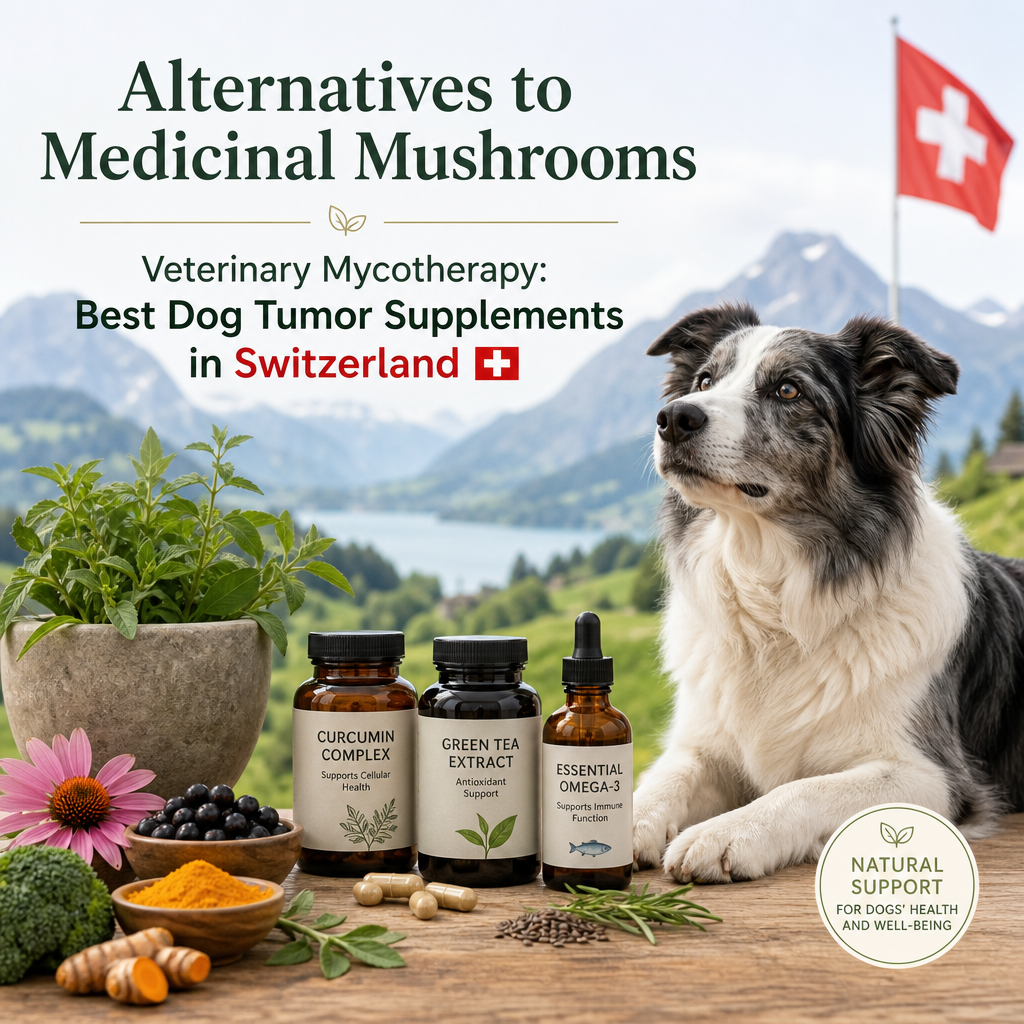
Alternatives to Medicinal mushrooms / veterinary mycotherapy are increasingly discussed by dog owners in Switzerland seeking supportive options during cancer care. Although mushroom extracts may be useful in some veterinary protocols, they are not the only supplements worth considering. Several evidence-informed nutritional approaches may help support appetite, body condition, digestion, immune function, and quality of life. Any supplement should be selected with a veterinarian, especially when a dog has a tumor or is receiving surgery, chemotherapy, radiation, corticosteroids, or pain medication.
Table of Contents
- Understanding dog tumor supplement alternatives
- Omega-3 fatty acids
- High-quality protein and amino acid support
- Antioxidant support: benefits and precautions
- Digestive and appetite support
- Cannabinoid and herbal products
- Choosing supplements in Switzerland
- Monitoring the response
- A balanced approach to supportive care
Understanding dog tumor supplement alternatives
A supplement cannot replace tumor removal, chemotherapy, radiation therapy, targeted treatment, or appropriate palliative care. Its role is usually supportive: helping a dog maintain strength, tolerate treatment, preserve muscle mass, and continue eating and drinking comfortably.
The best choice depends on the tumor type, stage of disease, current medications, blood results, kidney and liver function, and the dog’s overall condition. A product that is appropriate for one patient may be unsuitable for another. For example, a dog with pancreatitis may require a very different nutritional plan from a dog with weight loss caused by intestinal cancer.
Owners should also distinguish between a complete veterinary diet and an isolated supplement. A complete diet provides balanced protein, fat, carbohydrates, vitamins, and minerals. Supplements are intended to complement—not replace—that foundation.
For context on how tumor signs can vary by breed and cancer type, owners may also find this guide helpful: Chest Lumps Dogs: Helpful Tumor Causes Insight.
Why the phrase alternatives to Medicinal mushrooms / veterinary mycotherapy matters
The phrase alternatives to Medicinal mushrooms / veterinary mycotherapy is useful because many owners want supportive care choices beyond mushroom-based protocols. In practice, alternatives to Medicinal mushrooms / veterinary mycotherapy may include omega-3s, better protein intake, digestive support, and carefully selected herbs or cannabinoids when appropriate. The right plan depends on the dog, the cancer, and the treatment schedule.
Omega-3 fatty acids
Fish oil containing EPA and DHA is one of the most commonly considered dog tumor supplement alternatives. These long-chain omega-3 fatty acids may support normal inflammatory regulation and help maintain skin, coat, and general nutritional health. They can also contribute valuable calories for dogs that are losing weight, although they should be introduced carefully.
The amount matters. Human products may contain additional ingredients, flavorings, or unsuitable concentrations, so a veterinary product is generally preferable. Excessive oil can cause diarrhea, vomiting, weight gain, or pancreatitis in susceptible animals. Omega-3 products may also influence blood clotting and should be discussed before surgery or when a dog is taking anticoagulant medication.
When used correctly, omega-3 support can fit into a broader plan of dog tumor supplement alternatives that aims to protect comfort and nutrition without overcomplicating treatment.
Among alternatives to Medicinal mushrooms / veterinary mycotherapy, omega-3 fatty acids are often chosen first because they are familiar, measurable, and relatively easy to monitor. They are not a cure, but they can be a practical part of supportive care.
High-quality protein and amino acid support
Cancer and chronic illness can contribute to muscle loss, particularly when appetite is poor. Adequate, digestible protein is therefore central to supportive nutrition. Depending on the dog’s condition, a veterinarian may recommend a highly digestible clinical diet, calorie-dense food, or carefully selected amino acid support.
Protein recommendations should not be made without considering kidney and liver function. Some dogs benefit from increased protein availability, while others need a controlled nutritional plan because of organ disease. Homemade diets can become deficient in calcium, trace minerals, or essential vitamins unless formulated by a veterinary nutrition professional.
Among dog tumor supplement alternatives, protein-focused support is often one of the most practical ways to help maintain lean body mass and daily energy. This is especially important when a dog has a reduced appetite after treatment or feels full after only a few bites.
In many cases, alternatives to Medicinal mushrooms / veterinary mycotherapy work best when they help the dog eat enough of a complete diet. A supplement that supports protein intake can be more useful than one that sounds impressive but does not improve daily nutrition.
Antioxidant support: benefits and precautions
Antioxidants are often included in veterinary diets and supplements because they help protect cells from oxidative stress. Vitamins such as vitamin E, vitamin C, selenium, and certain plant compounds may have a role in general nutritional support.
However, high-dose antioxidant supplementation during chemotherapy or radiation is not automatically harmless. Some cancer treatments rely partly on oxidative mechanisms, and the interaction between concentrated antioxidants and specific protocols remains complex. This does not mean that all antioxidants must be avoided; it means that dosage and timing should be guided by the treating veterinarian.
A balanced commercial diet is usually safer than combining several overlapping products. Owners should check labels carefully to avoid unintentionally giving excessive amounts of fat-soluble vitamins or minerals. In practice, carefully chosen dog tumor supplement alternatives are usually more helpful than stacking multiple products with the same ingredient profile.
For broader background on evidence-based cancer support in animals, the American College of Veterinary Internal Medicine provides useful educational material at ACVIM.
When comparing alternatives to Medicinal mushrooms / veterinary mycotherapy, antioxidant support should be viewed as one tool rather than a standalone strategy. The goal is steady, safe support, not a dramatic promise.
Digestive and appetite support
Nausea, constipation, diarrhea, and appetite loss can significantly affect a dog’s quality of life. Veterinary probiotics may help selected dogs with digestive imbalance, particularly after antibiotic treatment or during periods of gastrointestinal stress. Their effects vary by bacterial strain, so products made specifically for dogs are preferable to general human probiotics.
Appetite support may include warming food, offering smaller meals more frequently, improving texture, or using a prescription appetite stimulant. Herbal products should be approached cautiously. “Natural” does not automatically mean safe, and some botanicals can affect the liver, kidneys, blood pressure, or the metabolism of cancer medicines.
In many cases, digestive care becomes one of the most important dog tumor supplement alternatives because a dog that feels nauseated will struggle to benefit from any nutritional plan.
For some patients, alternatives to Medicinal mushrooms / veterinary mycotherapy are most valuable when they make eating easier. Better appetite often leads to better energy, stronger recovery, and improved day-to-day comfort.
Practical feeding ideas during cancer care
Some dogs do better with soft meals, while others prefer firmer textures or lightly warmed food. A veterinary team may also suggest splitting daily calories into four or more small meals. These changes do not replace medical treatment, but they can make dog tumor supplement alternatives easier to tolerate.
Cannabinoid and herbal products
CBD and other hemp-derived products are available in Switzerland, but their use in dogs with tumors requires particular care. Product quality, cannabinoid concentration, contamination, and legal labeling can vary. CBD may cause drowsiness, digestive signs, or changes in liver enzyme activity, and it can interact with medications.
Herbal blends may contain ingredients that influence clotting, sedation, immune activity, or drug metabolism. Products marketed with claims to “shrink tumors” or “cure cancer” should be treated with skepticism. Reliable supportive care focuses on measurable outcomes such as appetite, comfort, mobility, hydration, and body weight rather than dramatic promises.
When owners compare dog tumor supplement alternatives, the most useful products are the ones that can be monitored and adjusted safely over time. That same principle applies to alternatives to Medicinal mushrooms / veterinary mycotherapy: the best option is the one that fits the patient and can be tracked in real life.
Choosing supplements in Switzerland
When comparing dog tumor supplement alternatives in Switzerland, owners should look for transparent labeling, batch information, veterinary-quality manufacturing, and clear instructions for dogs. Swiss veterinary practices, animal hospitals, and reputable pharmacies can provide more reliable guidance than anonymous online sellers.
It is useful to bring every product to the veterinary appointment, including oils, powders, treats, herbal drops, and human medications. The veterinarian can check for duplicate ingredients, calculate the total daily dose, and determine whether a product should be stopped before surgery or changed during chemotherapy.
Swiss dogs may also receive care across cantonal or national borders, so keeping written records is helpful. A treatment and supplement list should include the product name, ingredients, concentration, dose, start date, and any observed side effects.
If you are comparing supplement options against the background of breed-related cancer risk, this related article may help: Irish Setter Cancer Risks: Essential Early Tumor Signs to Know.
In Switzerland, alternatives to Medicinal mushrooms / veterinary mycotherapy should also be reviewed against the dog’s current medications and planned procedures. Even helpful products can become a problem if they are started or stopped without coordination.
Questions to ask before buying
- What is the exact ingredient list and concentration?
- Is the product intended for dogs, not humans?
- Could it interfere with surgery, chemotherapy, or pain medication?
- Does the manufacturer provide batch testing or quality control?
- What signs mean the supplement should be stopped?
Monitoring the response
Supportive supplements should be judged by practical indicators. Track body weight, appetite, stool quality, vomiting, energy, hydration, pain signs, and mobility. Blood tests may be necessary when a product affects the liver, kidneys, immune system, or blood clotting.
Stop a supplement and contact the veterinary team if the dog develops repeated vomiting, severe diarrhea, facial swelling, unusual bleeding, marked lethargy, yellowing of the gums or eyes, or a sudden decline. Regular reassessment is especially important because nutritional needs can change as the disease or treatment progresses.
In practice, dog tumor supplement alternatives should be reviewed just as carefully as prescription medicines because their effects and interactions can still matter.
For owners evaluating alternatives to Medicinal mushrooms / veterinary mycotherapy, monitoring also helps separate a true benefit from a coincidental change. If appetite, comfort, or stool quality improves, the product may have a role; if not, the plan should be simplified.
A balanced approach to supportive care
The most effective plan is rarely a single “best” product. It usually combines appropriate tumor treatment, a complete and palatable diet, pain and nausea control, hydration, gentle activity, and carefully selected supplementation. Alternatives to Medicinal mushrooms / veterinary mycotherapy can be valuable when they address a specific need, but they should be chosen according to the individual dog rather than marketing trends.
For owners in Switzerland, the safest path is to work with the veterinary oncology team and use supplements as part of a documented, monitored care plan. Thoughtful nutritional support cannot guarantee a change in tumor behavior, but it may help a dog remain more comfortable, resilient, and engaged in daily life.
Before adding any supplement, revisit the goal: support the dog, reduce avoidable side effects, and keep care simple enough to monitor well. That approach usually leads to the best results from dog tumor supplement alternatives.
Used carefully, alternatives to Medicinal mushrooms / veterinary mycotherapy can fit into a broader plan that prioritizes comfort, nutrition, and quality of life. The most helpful option is usually the one that is safe, realistic, and tailored to the dog in front of you.