
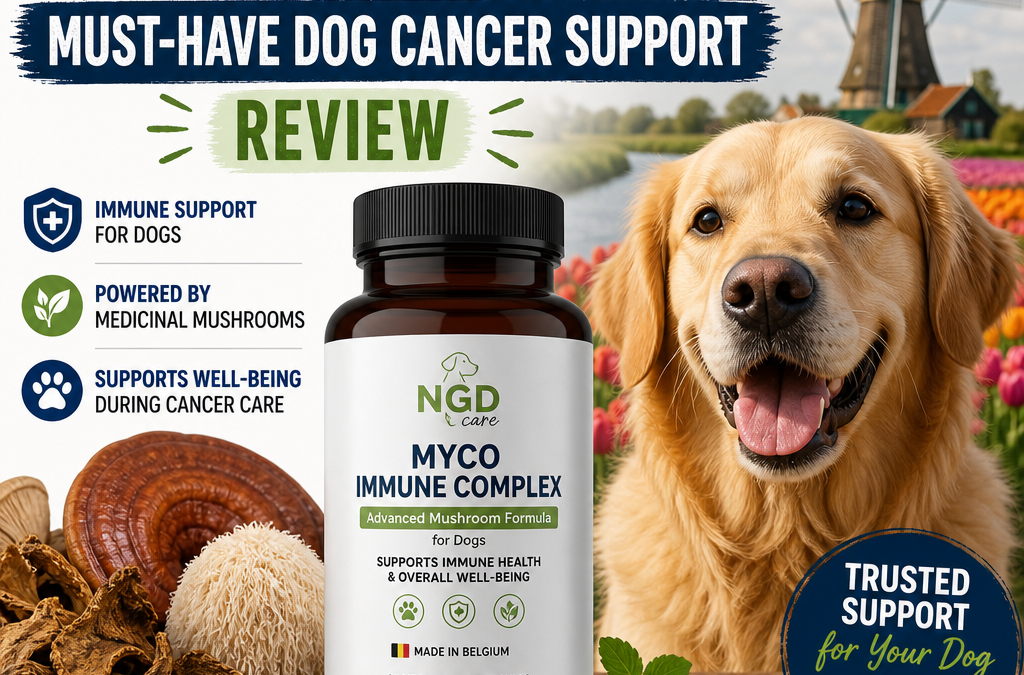
NGD Care Myco Immune Complex is a nutritional supplement designed to support dogs whose immune systems may need additional nutritional assistance, including dogs undergoing veterinary care for serious conditions. Interest in mushroom-based formulas has grown among pet owners in the Netherlands because certain medicinal mushrooms contain naturally occurring compounds associated with immune function. However, a supplement should complement—not replace—professional veterinary diagnosis and treatment.
Tabla de Contenidos
- What is NGD Care Myco Immune Complex?
- NGD Care Myco Immune Complex dog cancer support
- Beneficios y limitaciones potenciales
- NGD Care Myco Immune Complex review: what should owners assess?
- Safety and veterinary guidance
- NGD Care Myco Immune Complex Netherlands: purchasing considerations
- A balanced approach to canine cancer care
What is NGD Care Myco Immune Complex?
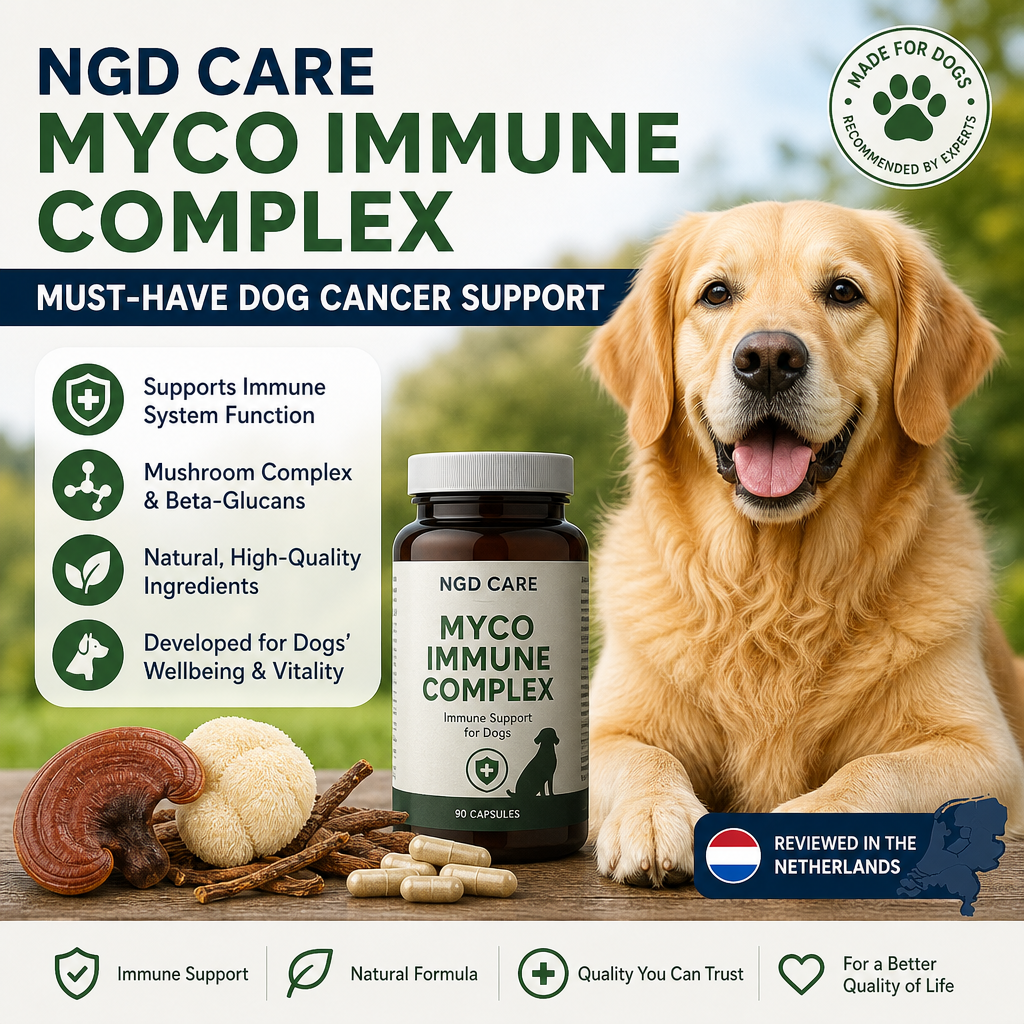
NGD Care Myco Immune Complex is generally positioned as a mushroom-based immune-support formula for dogs. Products in this category commonly contain extracts from medicinal fungi such as turkey tail, reishi, maitake, shiitake, or cordyceps. These mushrooms are valued for compounds including beta-glucans, polysaccharides, triterpenes, and other bioactive constituents.
The purpose of a formula like this is usually to provide nutritional support for normal immune function, resilience, and overall wellbeing. It may be considered for senior dogs, dogs recovering from illness, or dogs receiving treatment for cancer. The exact ingredients, concentrations, extraction methods, and recommended serving size should always be checked on the current product label, since formulas can change.
It is also important to distinguish between immune support and cancer treatment. No supplement can reliably cure cancer, eliminate tumors, or replace surgery, chemotherapy, radiation, or other treatments recommended by a veterinarian. A responsible approach uses supplements only as part of a broader care plan.
NGD Care Myco Immune Complex dog cancer support
Many dog owners search for NGD Care Myco Immune Complex dog cancer support after receiving a difficult diagnosis. Their interest is understandable: they want to help their dog maintain strength, appetite, comfort, and quality of life during treatment. Mushroom extracts are often discussed in veterinary nutrition because beta-glucans may interact with immune cells and may help support normal immune responses.
However, scientific evidence for medicinal mushrooms in canine cancer care remains developing. Some laboratory and small-scale studies are encouraging, but results from laboratory research do not automatically prove that a supplement will treat cancer in a household pet. The type of cancer, disease stage, treatment plan, general health, and individual response all matter.
A supplement may be considered as supportive nutrition, but it should never delay a veterinary appointment. Dogs with suspected or confirmed cancer need an individualized plan. This may include diagnostic imaging, blood tests, biopsy results, pain management, dietary adjustments, and monitoring for treatment side effects.
For a broader overview of integrative support options, many owners also review TCM Vet resources while continuing to follow their own veterinarian’s guidance.
Beneficios y limitaciones potenciales
The potential appeal of a mushroom complex lies in its nutritional profile. Depending on the formula, possible goals may include:
- Supporting normal immune system activity
- Helping maintain vitality in older or recovering dogs
- Proporcionar compuestos antioxidantes
- Supporting appetite and general wellbeing
- Complementing a balanced diet during veterinary care
These possible benefits should be viewed realistically. A supplement is not guaranteed to improve survival, shrink a tumor, or prevent recurrence. It may also take time before any noticeable change occurs, and some dogs may experience no visible benefit at all.
Quality is another important consideration. Mushroom supplements differ substantially in the species used, the part of the mushroom included, the extraction process, and the amount of active compounds. A product made from concentrated fruiting-body extracts may not be equivalent to one made primarily from mycelium or powder. Clear labeling and reliable manufacturing are therefore essential.
When possible, it helps to compare product claims with recognized background information on medicinal mushrooms from the Centro Nacional de Salud Complementaria e Integrativa de EE. UU., especially when you want a cautious, evidence-based starting point.
NGD Care Myco Immune Complex review: what should owners assess?
Anyone reading an NGD Care Myco Immune Complex review should look beyond promotional claims. A useful review should explain the formula, intended use, serving instructions, safety considerations, and practical experience without presenting the product as a guaranteed cure.
Before buying, check whether the label identifies each mushroom species and gives clear dosing guidance based on a dog’s weight. It is also worth checking the batch information, expiry date, storage instructions, and manufacturer details. Independent quality testing, where available, can provide additional reassurance about contamination, potency, and consistency.
Customer reviews may describe changes in appetite, energy, digestion, or general comfort, but these observations are subjective. A dog may improve because of veterinary treatment, recovery from an infection, dietary changes, or natural fluctuations in symptoms. Reviews can be useful for understanding palatability and ease of use, but they cannot replace controlled clinical evidence.
Because every case is different, a careful NGD Care Myco Immune Complex review should also ask whether the product fits the dog’s current medicines, diagnosis, and nutrition plan. That practical check matters as much as the marketing language on the package.
Safety and veterinary guidance
Natural does not automatically mean risk-free. Some mushroom ingredients may cause digestive upset, loose stools, nausea, or reduced appetite. Dogs with allergies, liver disease, kidney disease, autoimmune disorders, bleeding problems, or significant chronic illness may require particular caution.
Potential interactions with medicines are also important. Dogs receiving chemotherapy, corticosteroids, immunosuppressive drugs, anticoagulants, or other prescription treatments should not start a supplement without veterinary approval. A veterinarian may recommend avoiding certain products around surgery or adjusting monitoring based on the dog’s condition.
Introduce any new supplement gradually and follow the label rather than assuming that a larger amount will provide greater support. Monitor for vomiting, diarrhea, unusual tiredness, itching, changes in drinking or urination, or any worsening of the dog’s condition. Stop use and contact a veterinarian if concerning symptoms appear.
It is also wise to keep a short log of the first two weeks of use, including appetite, stool quality, energy, and any medication changes. That simple record can help your veterinary team decide whether the supplement is helping, neutral, or unsuitable.
NGD Care Myco Immune Complex Netherlands: purchasing considerations
For owners searching for NGD Care Myco Immune Complex Netherlands, availability, shipping conditions, and product authenticity deserve attention. Buy from a reputable retailer or an authorized source whenever possible. Avoid products with damaged seals, unclear labels, missing batch information, or exaggerated medical promises.
Dutch pet owners should also consider whether the product is appropriately labeled for the local market and whether customer support can answer questions about ingredients and dosage. Imported supplements may have different labeling standards, serving instructions, or regulatory classifications. A veterinary clinic in the Netherlands can help assess whether the product is suitable alongside the dog’s current care.
Cost is another practical factor. Long-term supplementation can become expensive, especially for larger dogs. Compare the amount of active ingredients, serving size, and total monthly cost rather than comparing container prices alone.
For official guidance on veterinary medicines and animal health regulation in the Netherlands, it can be helpful to review the Dutch government’s veterinary medicines and animal health information before making a purchase decision.
A balanced approach to canine cancer care
The most valuable role for a supplement is usually supportive rather than curative. A dog with cancer also benefits from regular veterinary monitoring, appropriate pain control, adequate hydration, a complete and palatable diet, stress reduction, and plenty of rest. Keeping a simple record of appetite, weight, energy, bowel movements, and symptoms can help the veterinary team identify changes early.
NGD Care Myco Immune Complex may be worth discussing with a veterinarian as one part of an individualized support plan. The decision should be based on the dog’s diagnosis, medications, overall health, and treatment goals. Used cautiously and with realistic expectations, a mushroom-based formula may offer nutritional support, but informed veterinary care remains the foundation of responsible cancer management. For many families, the best results come from combining sound medical treatment with careful supportive care rather than relying on any single product.
In that context, NGD Care Myco Immune Complex can be viewed as one possible tool, not a replacement for the treatment plan your veterinarian recommends.